


Accessibility links

Breaking News

Cubans Mourn Revolutionary Leader Fidel Castro

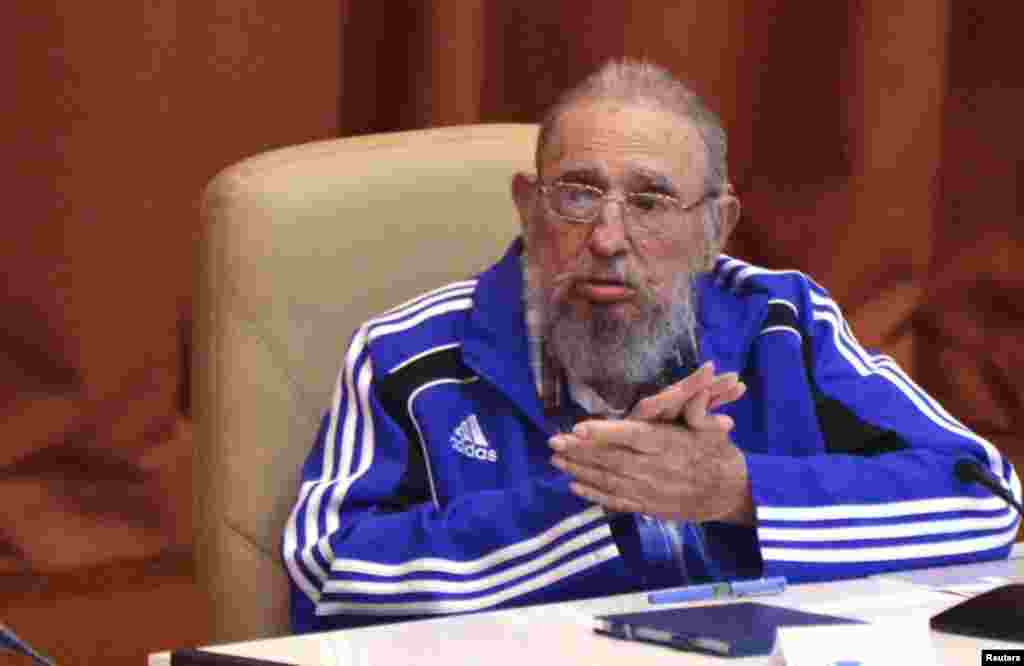
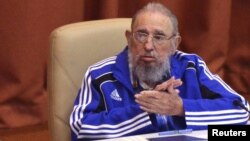
A frail-looking Fidel Castro at the Cuban Communist Party congress in Havana earlier this year.

Cuba is mourning its revolutionary leader and former President Fidel Castro.

The 90-year-old’s death was announced on November 26, plunging the country into nine days of mourning.

Flags are flying at half-staff on government buildings and shows and concerts have been canceled, as many Cubans are feeling grief at the loss of someone who led the communist island nation for nearly half a century.

Mass rallies are planned for the coming days to honor Castro, whose remains were to be cremated at a private ceremony in the capital on November 26.

The urn with his ashes are to be taken to the eastern city of Santiago to be laid to rest on December 4.

The announcement of Castro’s death prompted tributes from some world leaders and less effusive reactions from others, including U.S. President-elect Donald Trump.

"While Cuba remains a totalitarian island, it is my hope that today marks a move away from the horrors endured for too long, and toward a future in which the wonderful Cuban people finally live in the freedom they so richly deserve," Trump said in a statement.

Meanwhile, thousands of Cuban exiles living in the U.S. city of Miami took to the streets to celebrate Castro's demise.

Castro was admired by many leftists around the world, who saw him as a visionary who stood up to U.S. domination of Latin America, and brought healthcare and education to the poor, inspiring socialist movements across the world.

But his critics accused him of being an autocrat who cracked down on dissent with brutal force.

WATCH: Fidel Castro's Death Is Announced On Cuban TV
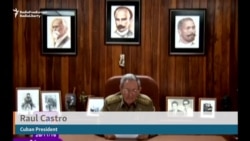
Fidel Castro's Death Announced On Cuban TV
please wait

No media source currently available

0:00 0:01:18 0:00

​Trump, who takes office in January, had taken a tough line on Cuba during the campaign, when he threatened to reverse the historic rapprochement between the United States and the island nation if Castro did not allow "religious and political freedom for the Cuban people and the freeing of political prisoners."

U.S. President Barack Obama offered his condolences to Castro's family in a statement and added that history would judge Castro's impact on Cuba and around the world.

"At this time of Fidel Castro's passing, we extend a hand of friendship to the Cuban people," Obama said. "History will record and judge the enormous impact of this singular figure on the people and world around him."

Castro lived long enough to see Obama visit Cuba earlier this year, the first trip by a U.S. president in 88 years.

Castro did not meet Obama and wrote a scathing column condemning his "honey-coated" words and reminding Cubans of the numerous U.S. efforts to overthrow and weaken Cuba's communist government.

Russian President Vladimir Putin praised Castro as the "symbol of an era" in a telegram to Raul Castro, and later called the Cuban president to offer condolences on the death of his brother, the Kremlin said.

Putin called Fidel Castro a "distinguished statesman," a "sincere and reliable friend of Russia," and a "patriot who selflessly served his country and won the love of the Cuban people and the respect of the entire international community."

Former Soviet leader Mikhail Gorbachev hailed Castro for "strengthening" his island nation.

"Fidel stood up and strengthened his country during the harshest American blockade, when there was colossal pressure on him and he still took his country out of this blockade to a path of independent development," the Interfax news agency quoted Gorbachev as saying.

Venezuela's socialist President Nicolas Maduro said that "revolutionaries of the world must follow his legacy."

Fidel Castro: A Life In Pictures
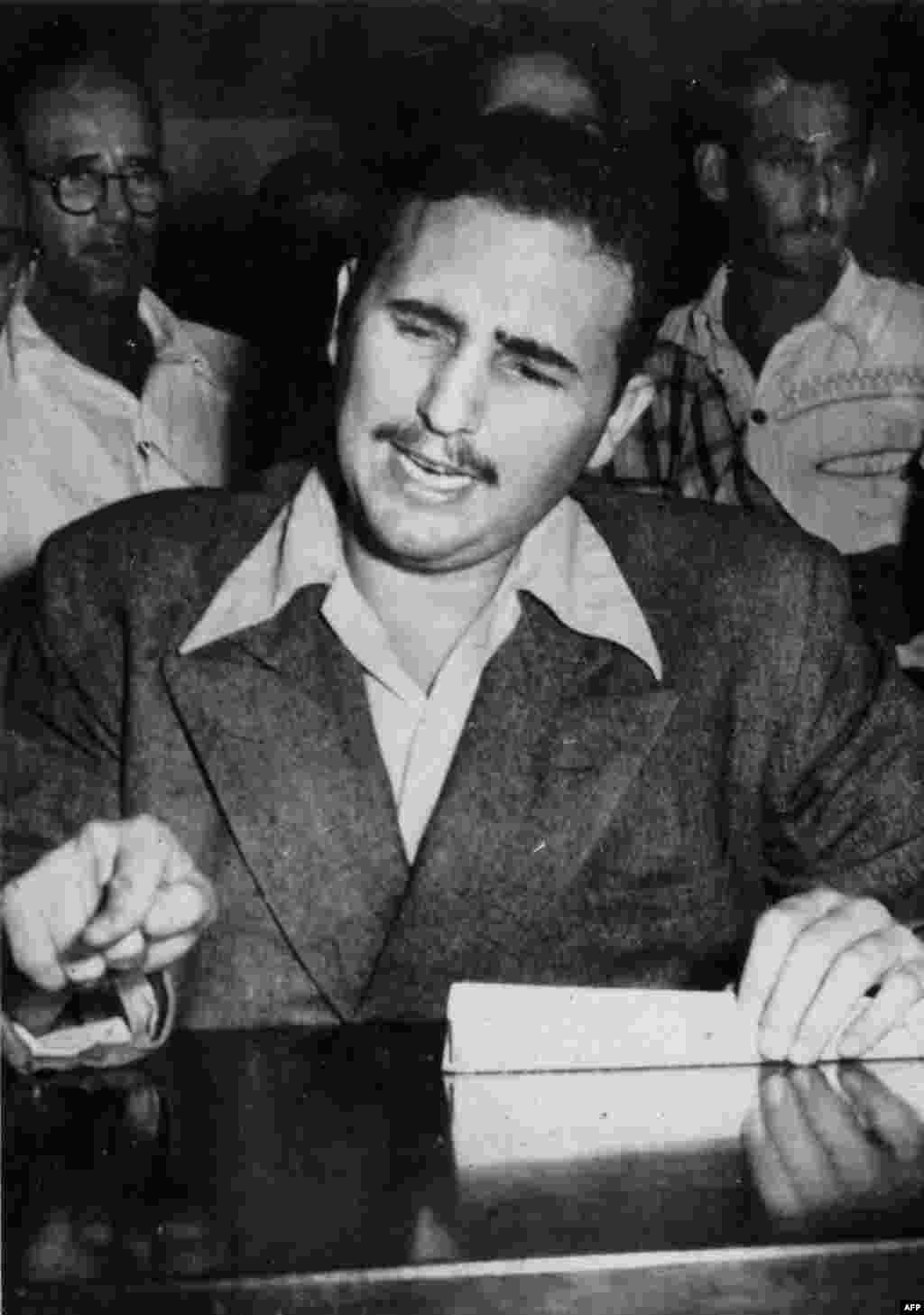
Fidel Castro as a young Marxist activist in 1953. 
1/16 Fidel Castro as a young Marxist activist in 1953. 
Fidel Castro, the man who led Cuba for nearly five decades, has died at the age of 90. After sweeping to power in a communist uprising in 1959, Castro served as prime minister or president of the Caribbean island state for nearly 50 years.
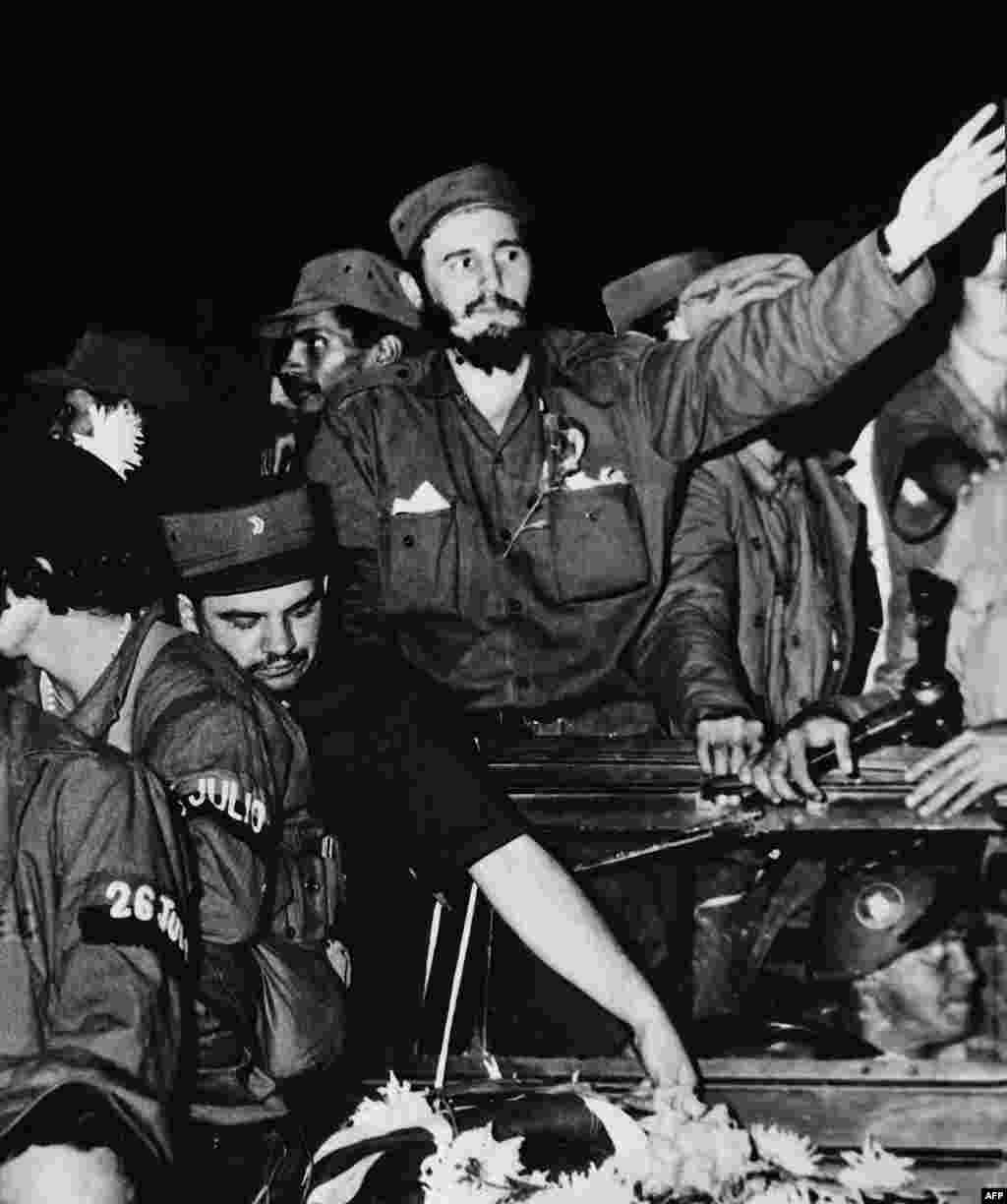
Surrounded by members of his leftist guerrilla movement, Castro (center) waves to crowds in Cienfuegos shortly after ousting Cuban dictator Fulgencio Batista in 1959. 
2/16 Surrounded by members of his leftist guerrilla movement, Castro (center) waves to crowds in Cienfuegos shortly after ousting Cuban dictator Fulgencio Batista in 1959. 
Fidel Castro, the man who led Cuba for nearly five decades, has died at the age of 90. After sweeping to power in a communist uprising in 1959, Castro served as prime minister or president of the Caribbean island state for nearly 50 years.
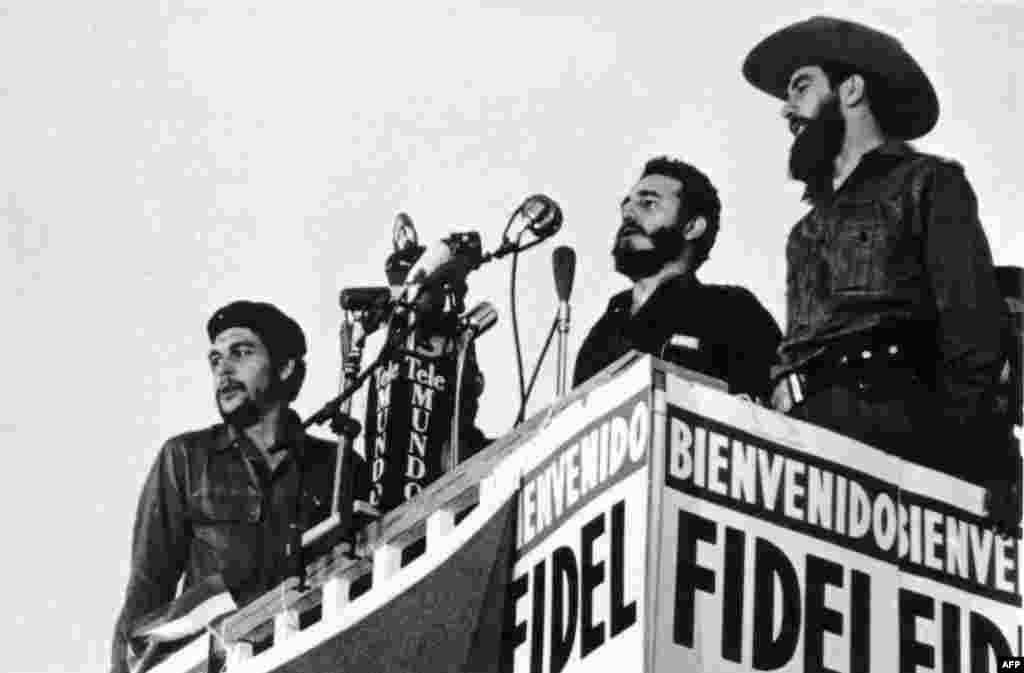
Castro (center) delivers a speech in Havana in 1959. Fellow revolutionaries Camilo Cienfuegos (right) and Ernesto Che Guevara (left) stand beside him. 
3/16 Castro (center) delivers a speech in Havana in 1959. Fellow revolutionaries Camilo Cienfuegos (right) and Ernesto Che Guevara (left) stand beside him. 
Fidel Castro, the man who led Cuba for nearly five decades, has died at the age of 90. After sweeping to power in a communist uprising in 1959, Castro served as prime minister or president of the Caribbean island state for nearly 50 years.
Castro wears a chapka near Moscow during an official visit to the Soviet Union in January 1964. 
4/16 Castro wears a chapka near Moscow during an official visit to the Soviet Union in January 1964. 
Fidel Castro, the man who led Cuba for nearly five decades, has died at the age of 90. After sweeping to power in a communist uprising in 1959, Castro served as prime minister or president of the Caribbean island state for nearly 50 years.
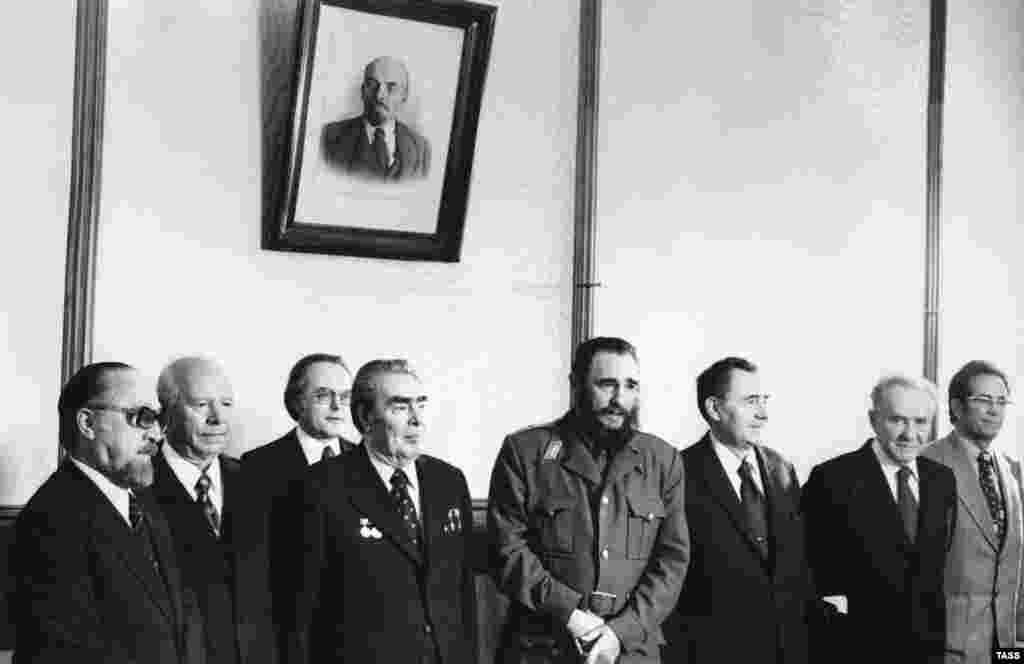
Fidel Castro poses under a portrait of Vladimir Lenin before having talks with Soviet leader Leonid Brezhnev (fourth from left). 
5/16 Fidel Castro poses under a portrait of Vladimir Lenin before having talks with Soviet leader Leonid Brezhnev (fourth from left). 
Fidel Castro, the man who led Cuba for nearly five decades, has died at the age of 90. After sweeping to power in a communist uprising in 1959, Castro served as prime minister or president of the Caribbean island state for nearly 50 years.
Castro (right) meets with Palestinian leader Yasser Arafat in 1970.
6/16 Castro (right) meets with Palestinian leader Yasser Arafat in 1970.
Fidel Castro, the man who led Cuba for nearly five decades, has died at the age of 90. After sweeping to power in a communist uprising in 1959, Castro served as prime minister or president of the Caribbean island state for nearly 50 years.
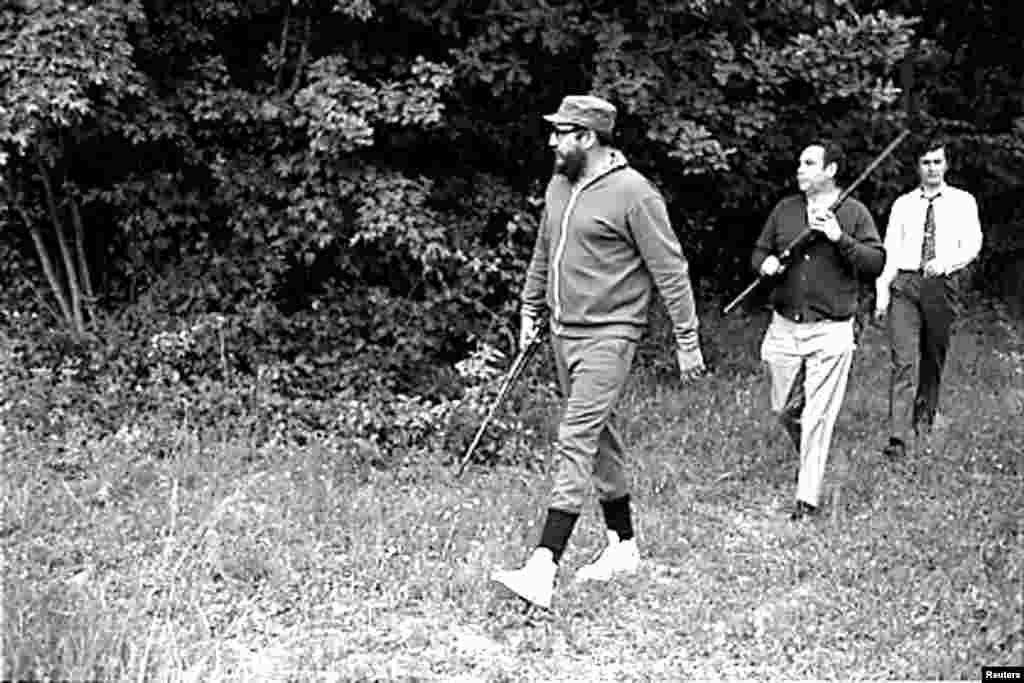
Castro (front) managed a spot of hunting while on a visit to Romania in May 1972 when the country was ruled by communist dictator Nicolae Ceausescu. 
7/16 Castro (front) managed a spot of hunting while on a visit to Romania in May 1972 when the country was ruled by communist dictator Nicolae Ceausescu. 
Fidel Castro, the man who led Cuba for nearly five decades, has died at the age of 90. After sweeping to power in a communist uprising in 1959, Castro served as prime minister or president of the Caribbean island state for nearly 50 years.
Castro (right) and then-Soviet leader Mikhail Gorbachev exchange documents during a treaty signing ceremony in Havana in 1989. 
8/16 Castro (right) and then-Soviet leader Mikhail Gorbachev exchange documents during a treaty signing ceremony in Havana in 1989. 
Fidel Castro, the man who led Cuba for nearly five decades, has died at the age of 90. After sweeping to power in a communist uprising in 1959, Castro served as prime minister or president of the Caribbean island state for nearly 50 years.
A dove rests on Castro's shoulders as he addresses Cuban youth in 1989 during celebrations marking the 30th anniversary of the country's communist revolution. 
9/16 A dove rests on Castro's shoulders as he addresses Cuban youth in 1989 during celebrations marking the 30th anniversary of the country's communist revolution. 
Fidel Castro, the man who led Cuba for nearly five decades, has died at the age of 90. After sweeping to power in a communist uprising in 1959, Castro served as prime minister or president of the Caribbean island state for nearly 50 years.
Fidel Castro (center) with guides and security agents at the Great Wall of China while on a state visit in December 1995. 
10/16 Fidel Castro (center) with guides and security agents at the Great Wall of China while on a state visit in December 1995. 
Fidel Castro, the man who led Cuba for nearly five decades, has died at the age of 90. After sweeping to power in a communist uprising in 1959, Castro served as prime minister or president of the Caribbean island state for nearly 50 years.
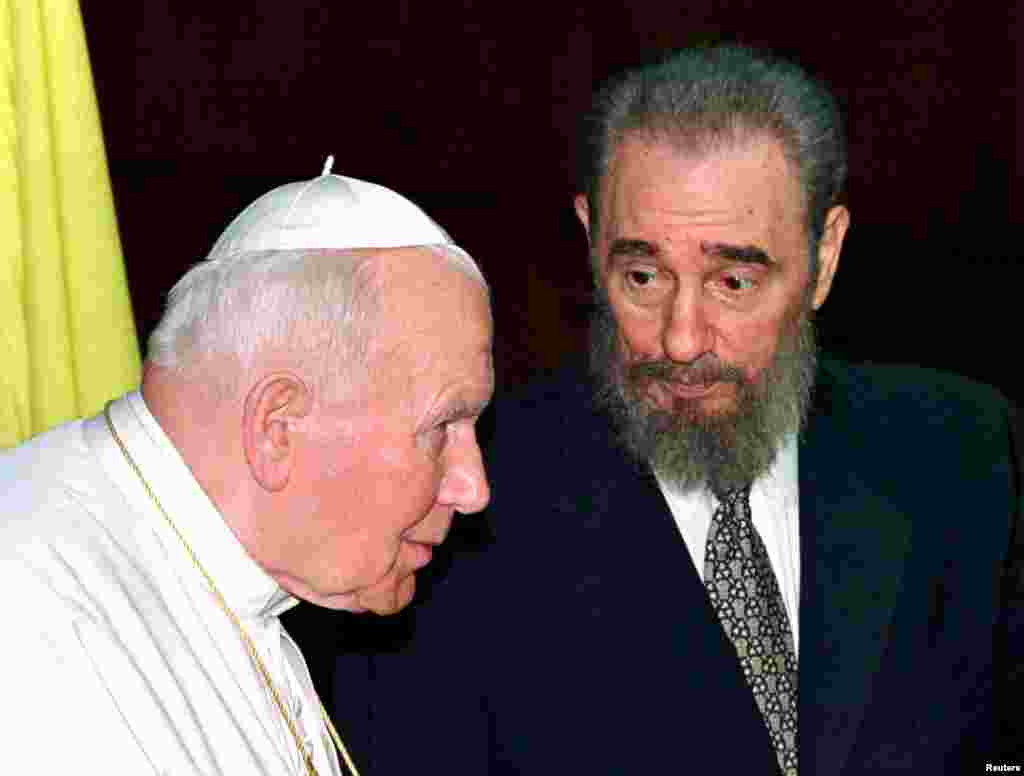
Castro talks to Pope John Paul II during the latter's visit to Havana in January 1998. 
11/16 Castro talks to Pope John Paul II during the latter's visit to Havana in January 1998. 
Fidel Castro, the man who led Cuba for nearly five decades, has died at the age of 90. After sweeping to power in a communist uprising in 1959, Castro served as prime minister or president of the Caribbean island state for nearly 50 years.
Castro (center) is helped by his bodyguards after he fell over at the end of a speech following a graduation ceremony in central Cuba in October 2004.
12/16 Castro (center) is helped by his bodyguards after he fell over at the end of a speech following a graduation ceremony in central Cuba in October 2004.
Fidel Castro, the man who led Cuba for nearly five decades, has died at the age of 90. After sweeping to power in a communist uprising in 1959, Castro served as prime minister or president of the Caribbean island state for nearly 50 years.
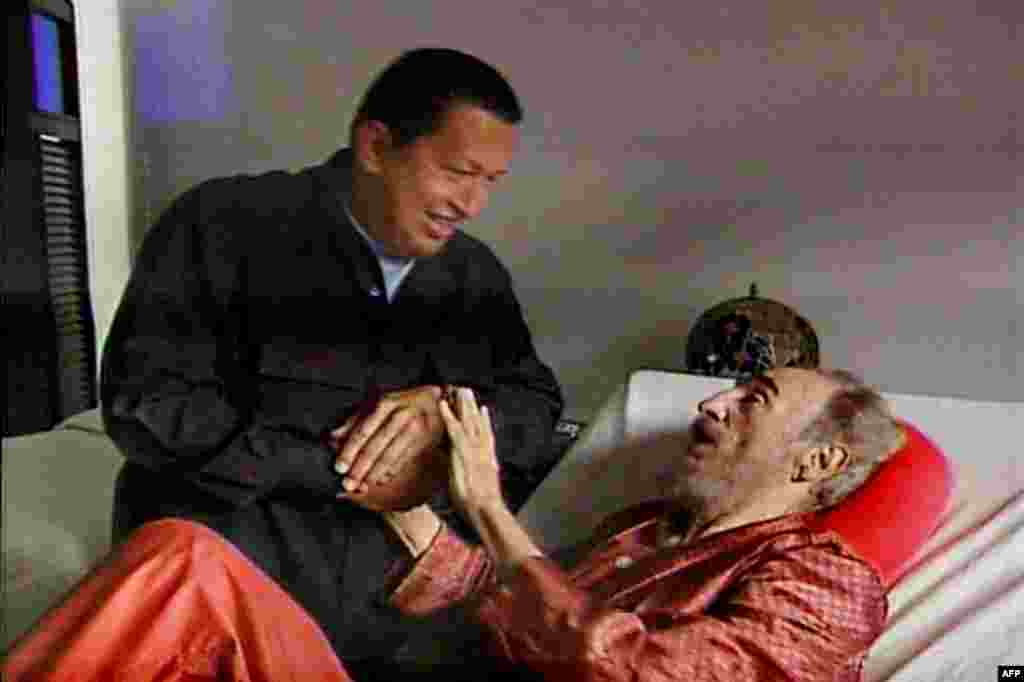
Venezuelan President Hugo Chavez pays a visit to an ailing Castro in Havana in September 2006. Despite his failing health, the Cuban leader outlived Chavez, who died of complications from cancer in 2013. 
13/16 Venezuelan President Hugo Chavez pays a visit to an ailing Castro in Havana in September 2006. Despite his failing health, the Cuban leader outlived Chavez, who died of complications from cancer in 2013. 
Fidel Castro, the man who led Cuba for nearly five decades, has died at the age of 90. After sweeping to power in a communist uprising in 1959, Castro served as prime minister or president of the Caribbean island state for nearly 50 years.
Holding a Cuban flag, Castro listens to a speaker during the May Day parade in Havana's Revolution Square in 2005.
14/16 Holding a Cuban flag, Castro listens to a speaker during the May Day parade in Havana's Revolution Square in 2005.
Fidel Castro, the man who led Cuba for nearly five decades, has died at the age of 90. After sweeping to power in a communist uprising in 1959, Castro served as prime minister or president of the Caribbean island state for nearly 50 years.
A frail-looking Fidel Castro at the Cuban Communist Party congress in Havana earlier this year.
15/16 A frail-looking Fidel Castro at the Cuban Communist Party congress in Havana earlier this year.
Fidel Castro, the man who led Cuba for nearly five decades, has died at the age of 90. After sweeping to power in a communist uprising in 1959, Castro served as prime minister or president of the Caribbean island state for nearly 50 years.
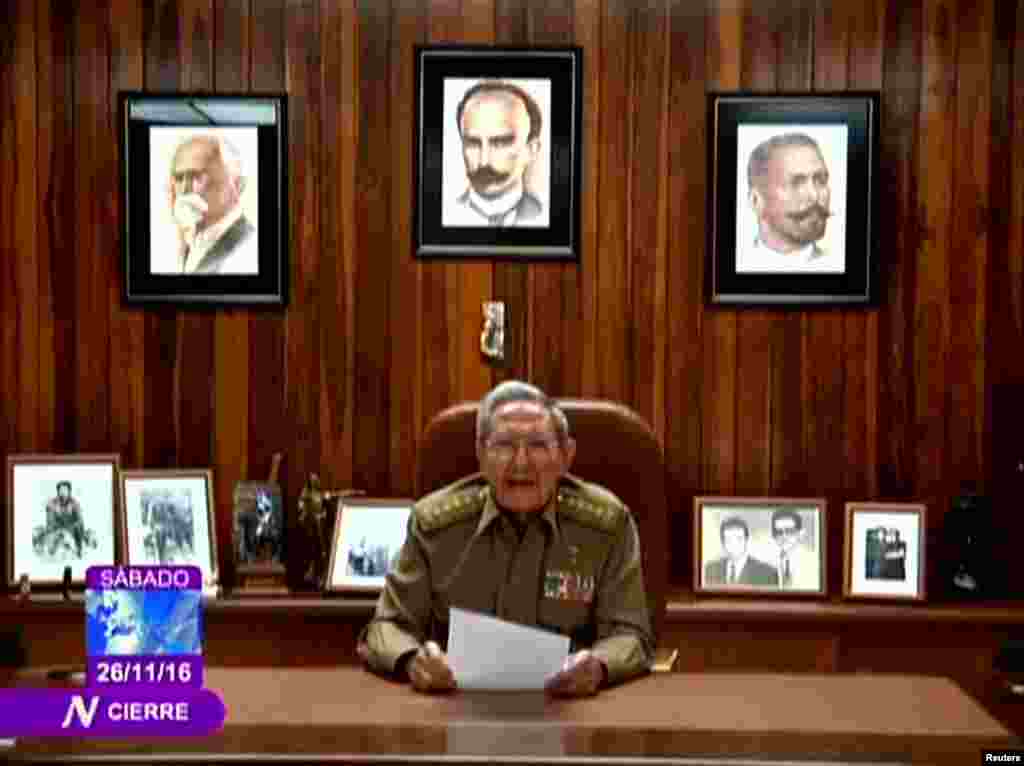
Cuba's current president, Raul Castro, announces the death of his brother, Fidel, on state television on November 26. 
16/16 Cuba's current president, Raul Castro, announces the death of his brother, Fidel, on state television on November 26. 
Fidel Castro, the man who led Cuba for nearly five decades, has died at the age of 90. After sweeping to power in a communist uprising in 1959, Castro served as prime minister or president of the Caribbean island state for nearly 50 years.
Previous slide
Next slide

Indian Prime Minister Narendra Modi called Castro "one of the most iconic personalities of the 20th century," in a tweet.

"I lament the death of Fidel Castro Ruz, leader of the Cuban revolution and emblematic reference of the 20th century," Mexican President Enrique Pena Nieto said on Twitter.

French President Francois Hollande said Castro embodied the "hopes and disappointments" of the Cuban revolution, noting concerns over human rights abuses under the Castro regime.

Over the years, Castro’s regime has been regularly criticized by human rights groups and Western governments for persecuting dissidents and jailing them without trial.

Hollande met Castro in May, 2015 during the first ever visit by a French head of state to Cuba since the Cuban revolution.

South African President Jacob Zuma thanked the Cuban leader for his support in the struggle to overthrow apartheid.

"President Castro identified with our struggle against apartheid. He inspired the Cuban people to join us in our own struggle,” Zuma said.

Chinese President Xi Jinping, in a message read out during the country’s main TV channel newscast, said, "Comrade Castro will live forever."

Suffering from an unspecified serious intestinal illness, Castro temporarily stepped down in July, 2006, before formally handing over power to his brother in 2008.

He ruled the island as a one-party state for nearly 50 years.

OBITUARY: Fidel Castro, 1926-2016

In his final years, Castro wrote opinion columns for the state media but rarely made public appearances.

He made his most extensive public appearance in years, on the final day of the country’s Communist Party congress in April.

"Soon I'll be like all the others. The time will come for all of us, but the ideas of the Cuban communists will remain as proof that on this planet, if one works with fervor and dignity, they can produce the material and cultural goods that human beings need and that need to be fought for without ever giving up," Castro said.

A central figure in the Cold War, Castro’s rule was marked by the U.S-backed Bay of Pigs invasion in 1961 and the Cuban missile crisis a year later, which brought the world the closest it has been to nuclear war.

Under Castro, Cuba survived a crippling U.S. trade embargo, as well as dozens of assassination plots.

Several years after Castro stepped down, in December 2014, Raul Castro agreed to reestablish diplomatic ties and end decades of hostility with the United States.

Castro's death seems unlikely to trigger a crisis, as Raul has maintained a firm hold on power in the last decade. He has kept dissidents largely in check and economic reform limited.

Raul Castro has vowed to step down when his term ends in 2018. He has designated Vice President Miguel Diaz-Canel as his successor.

With reporting by AFP, the BBC, AP, and Reuters
  • 16x9 Image

    RFE/RL

    RFE/RL journalists report the news in 24 languages in 18 countries where a free press is banned by the government or not fully established. We provide what many people cannot get locally: uncensored news, responsible discussion, and open debate.

This item is part of
XS
SM
MD
LG