



Shipspotting Photos Highlight Ferocity Of Black Sea Drone War
- By Reuters and
- Amos Chapple
Images captured by maritime enthusiasts along the Turkish coast offer a glimpse into the intensity of the ongoing war on Black Sea shipping by Ukrainian and Russian attack drone teams.
1
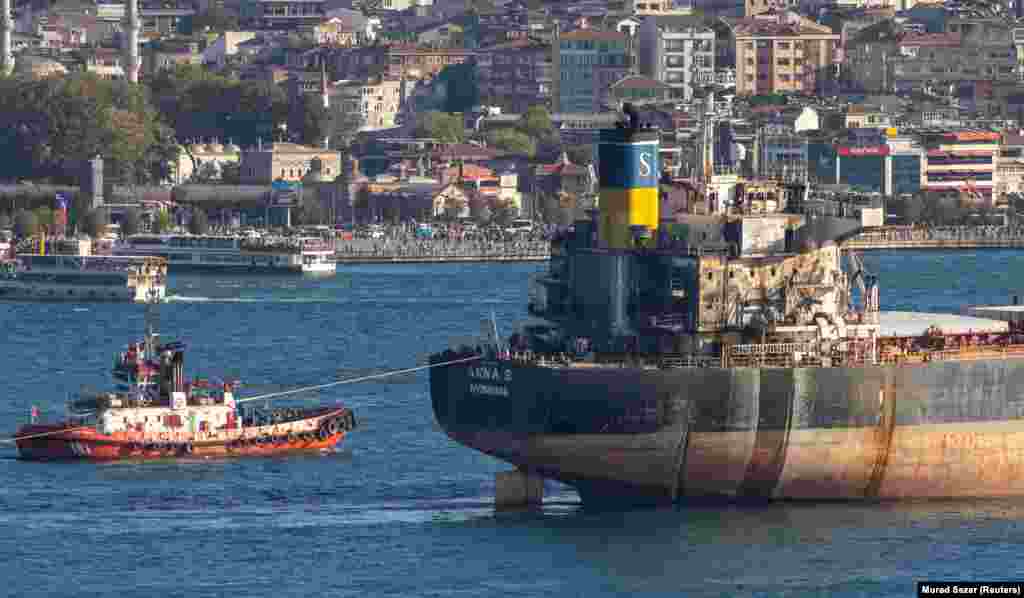
This September 1 image showing the severely damaged Anna S being towed through the Bosphorus Strait is one of several recent photos snapped from the Turkish coast that highlight the escalating war on shipping in the Black Sea.
The Greek-owned bulk carrier was reportedly targeted by five aerial drones as it neared the Russian port of Novorossiysk to fill up with grain on August 17. All 20 Filipino sailors and its Romanian captain were able to escape the vessel unhurt.
The Greek-owned bulk carrier was reportedly targeted by five aerial drones as it neared the Russian port of Novorossiysk to fill up with grain on August 17. All 20 Filipino sailors and its Romanian captain were able to escape the vessel unhurt.
2
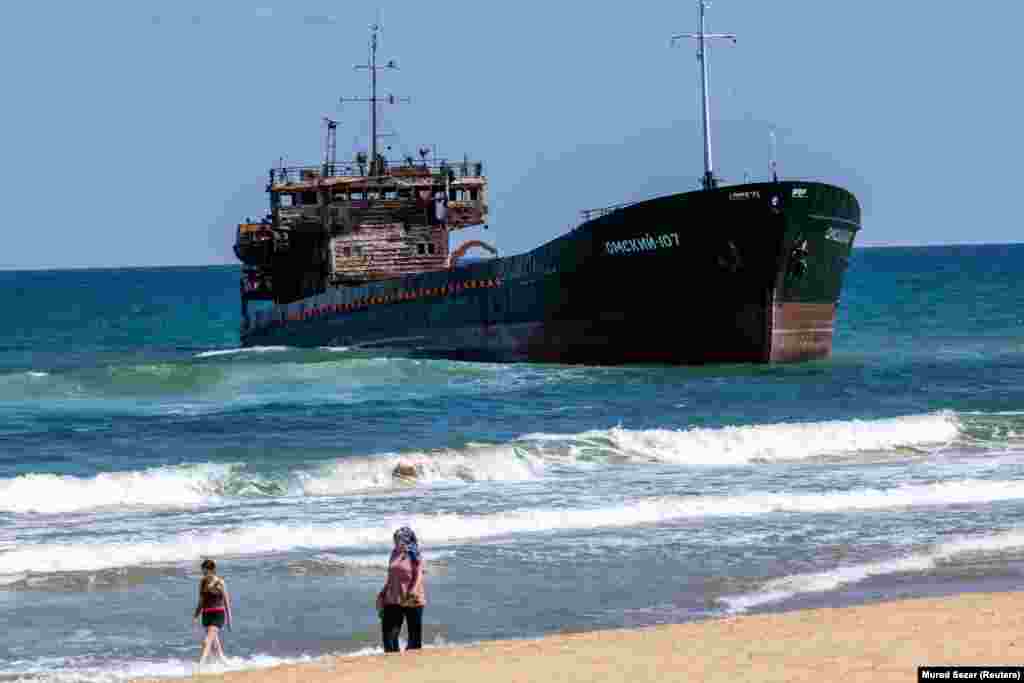
The Russian-flagged Omskiy-107 photographed on September 1 after running aground near Istanbul. The cargo ship's crew had abandoned the vessel after it was attacked by drones near Novorossiysk at an unknown date in August.
Tomas Alexa, a senior analyst with maritime risk management firm Ambrey, told RFE/RL that attacks on shipping in the Black Sea have surged since Ukraine launched Operation Molochka in early July. The drone campaign aims to disrupt maritime trade routes that Russia relies on for revenue.
Tomas Alexa, a senior analyst with maritime risk management firm Ambrey, told RFE/RL that attacks on shipping in the Black Sea have surged since Ukraine launched Operation Molochka in early July. The drone campaign aims to disrupt maritime trade routes that Russia relies on for revenue.
![The Liberian-flagged bulk carrier Great Ocean, showing damage from an apparent drone strike, is towed through the Bosphorus on August 20.Alexa said the list of apparent targets has recently expanded "from tankers to dry-cargo vessels," and the danger for seamen has intensified. Aerial drone strikes targeting accommodation blocks, he said, “were rare before [Ukraine's Operation Molochka]. He added that "Russia has responded in kind, but with fewer merchant ships available as targets it has concentrated more on ports."](https://gdb.rferl.org/fa6a0e47-f224-4d47-2060-08decad58b60_w1024_q10_s.jpg)
3
The Liberian-flagged bulk carrier Great Ocean, showing damage from an apparent drone strike, is towed through the Bosphorus on August 20.
Alexa said the list of apparent targets has recently expanded "from tankers to dry-cargo vessels," and the danger for seamen has intensified. Aerial drone strikes targeting accommodation blocks, he said, “were rare before [Ukraine's Operation Molochka]. He added that "Russia has responded in kind, but with fewer merchant ships available as targets it has concentrated more on ports."
Alexa said the list of apparent targets has recently expanded "from tankers to dry-cargo vessels," and the danger for seamen has intensified. Aerial drone strikes targeting accommodation blocks, he said, “were rare before [Ukraine's Operation Molochka]. He added that "Russia has responded in kind, but with fewer merchant ships available as targets it has concentrated more on ports."
4
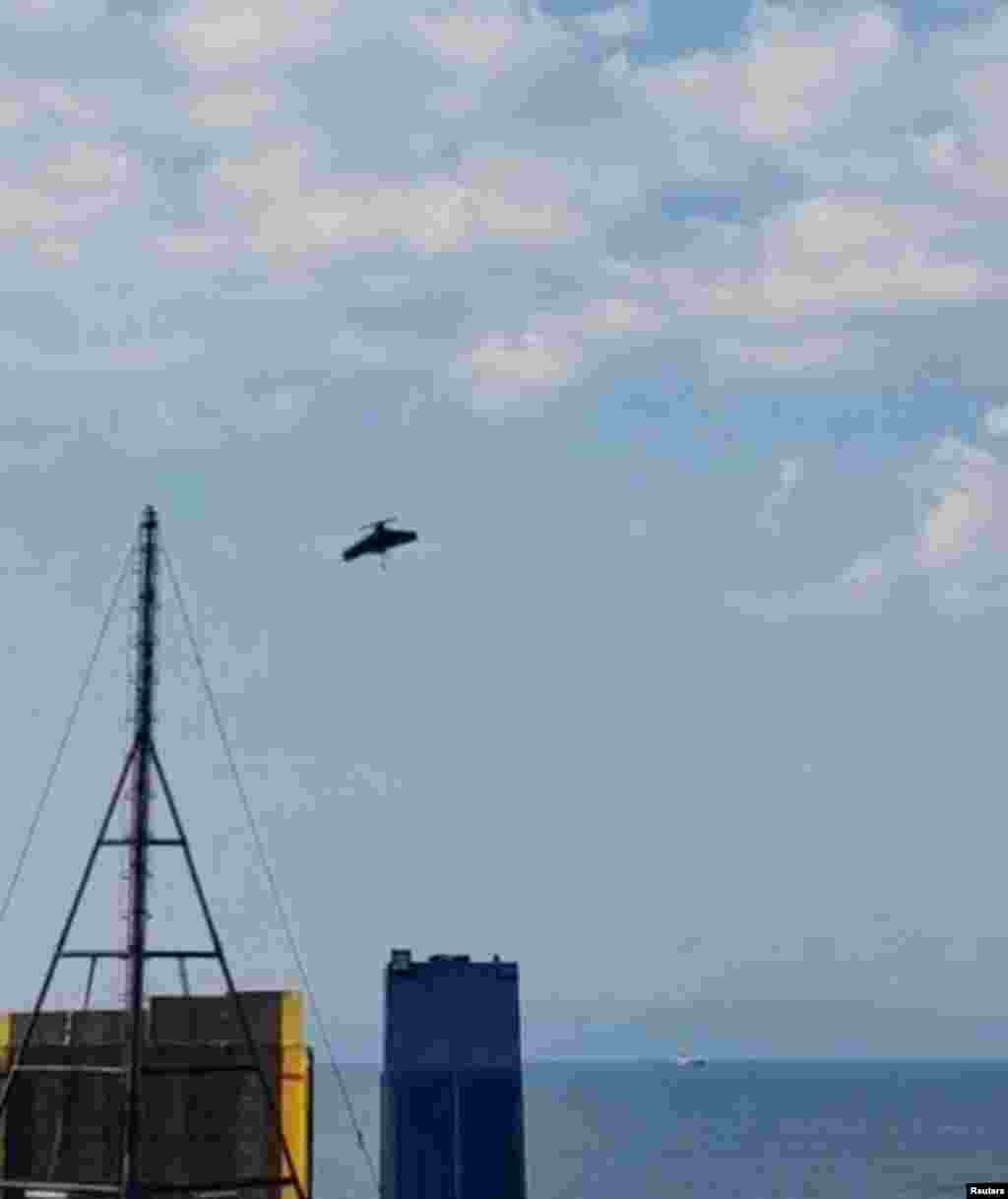
An aerial drone shown attacking the Turkish-owned cargo vessel Nadezhda, near Novorossiysk on August 3 in a strike that seriously injured three sailors.
The UN's International Maritime Organization condemned the recent surge in attacks on shipping in the Black Sea in which several merchant seamen have been killed. "Seafarers should never become casualties of conflicts to which they are not a party," the organization's head, Arsenio Dominguez, said in a statement.
The UN's International Maritime Organization condemned the recent surge in attacks on shipping in the Black Sea in which several merchant seamen have been killed. "Seafarers should never become casualties of conflicts to which they are not a party," the organization's head, Arsenio Dominguez, said in a statement.
5
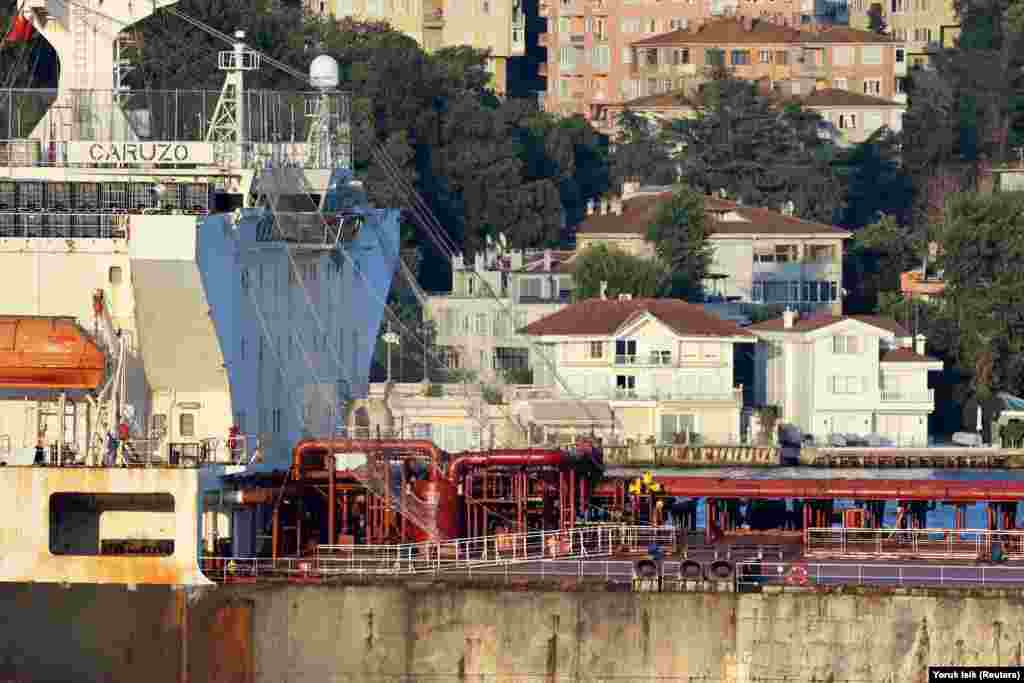
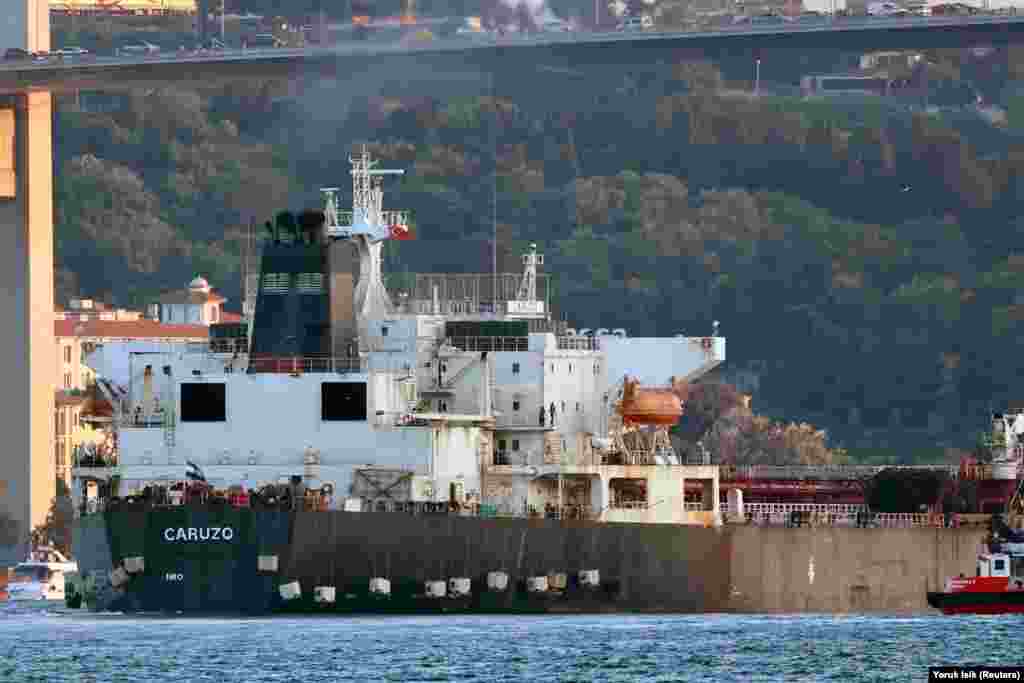
Some ships operating on the Black Sea, such as the Caruzo oil tanker (pictured) that passed through the Bosphorus on August 11, have been photographed with anti-drone netting draped from crew quarters.
Mehmet Yapici, an Istanbul-based marine photographer, told RFE/RL that among shipspotters, "the general consensus is that equipping ships with anti-drone nets would not be effective" against attack drones.
Mehmet Yapici, an Istanbul-based marine photographer, told RFE/RL that among shipspotters, "the general consensus is that equipping ships with anti-drone nets would not be effective" against attack drones.
6
Water tanks dangle from the rear of the hull of the Caruzo as it steams through the Bosphorus. The tanks are believed to be an effort to shield the engine of the ship from marine drone attacks.
A recent Ambrey report said the Russia-Ukraine conflict on the Black Sea "is increasingly spilling beyond its traditionally recognised high-risk zones," in part due to explosives-packed marine drones drifting into the body of water after losing power or communications.
A recent Ambrey report said the Russia-Ukraine conflict on the Black Sea "is increasingly spilling beyond its traditionally recognised high-risk zones," in part due to explosives-packed marine drones drifting into the body of water after losing power or communications.
7
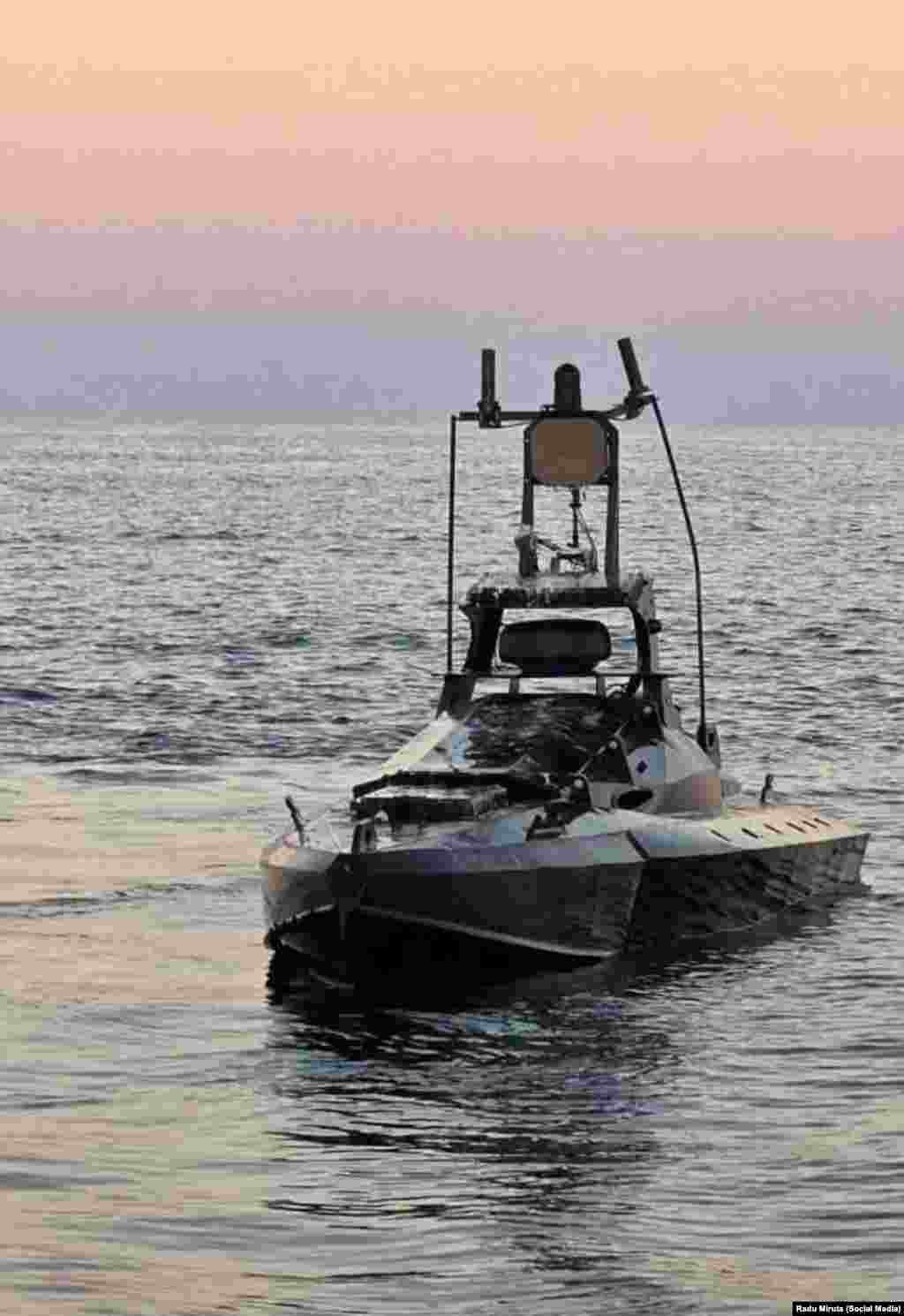
An unidentified marine drone seen near the Romanian coast on August 20 after its operators apparently lost control of the vessel. The drone was later destroyed by Romanian fighter jets.
With the Black Sea viewed as an increasingly risky location for merchant vessels, Alexa said the number of port calls along both Russian and Ukrainian coasts "are significantly down." War risk insurance premiums have jumped as much as tenfold since the beginning of the year, the analyst added.
With the Black Sea viewed as an increasingly risky location for merchant vessels, Alexa said the number of port calls along both Russian and Ukrainian coasts "are significantly down." War risk insurance premiums have jumped as much as tenfold since the beginning of the year, the analyst added.
8
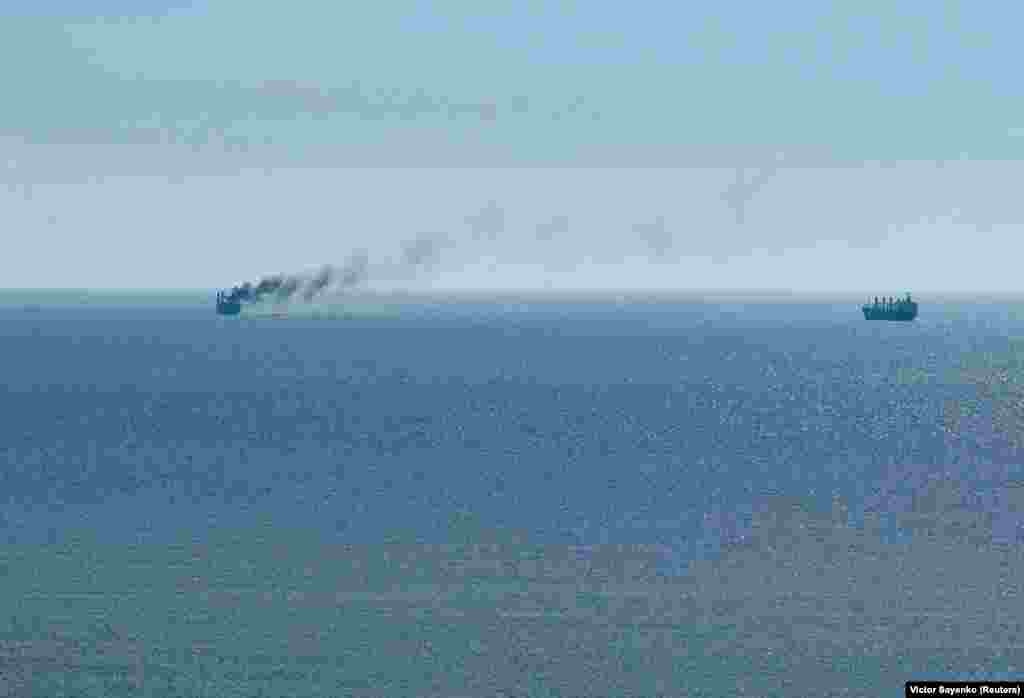
A ship burns after a reported drone strike off the coast of Odesa on July 14.
Risk perception has "hardened" among those who once made their living from the Black Sea, Alexa said. "Owners are refusing to send ships into the northern Black Sea, and crews are reluctant to sail there."
Risk perception has "hardened" among those who once made their living from the Black Sea, Alexa said. "Owners are refusing to send ships into the northern Black Sea, and crews are reluctant to sail there."


