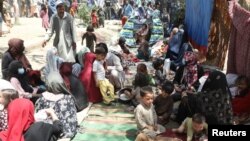
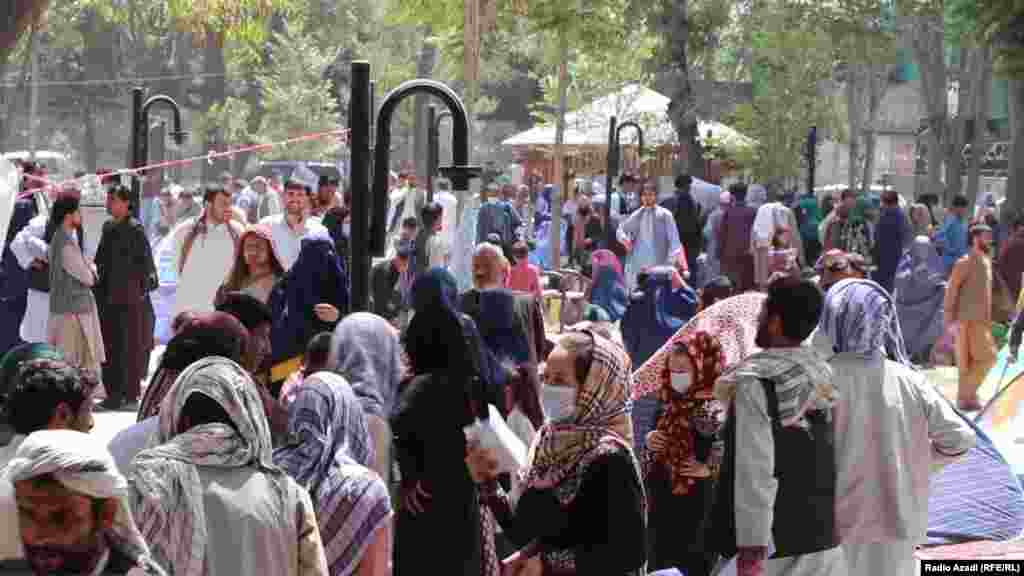
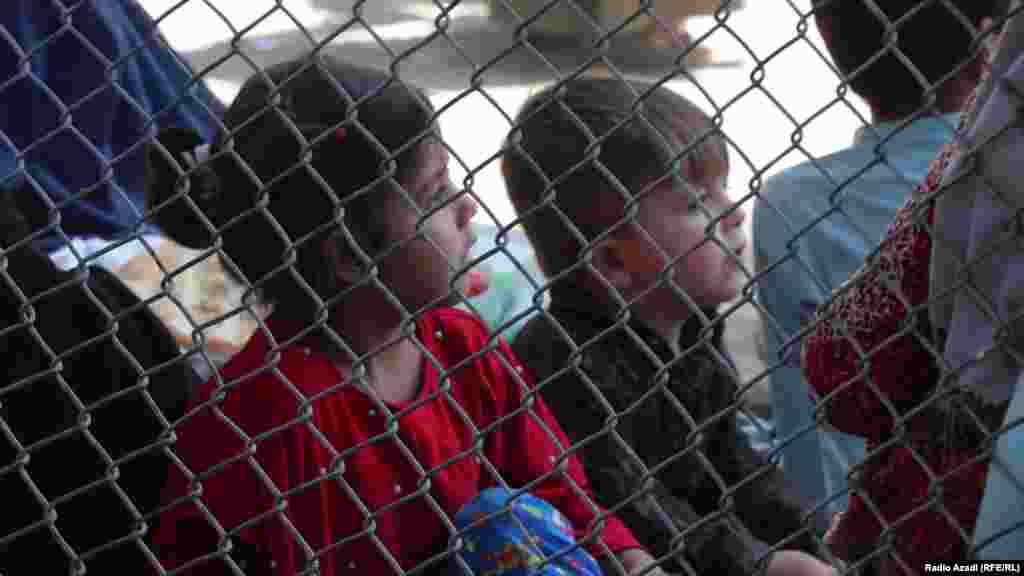
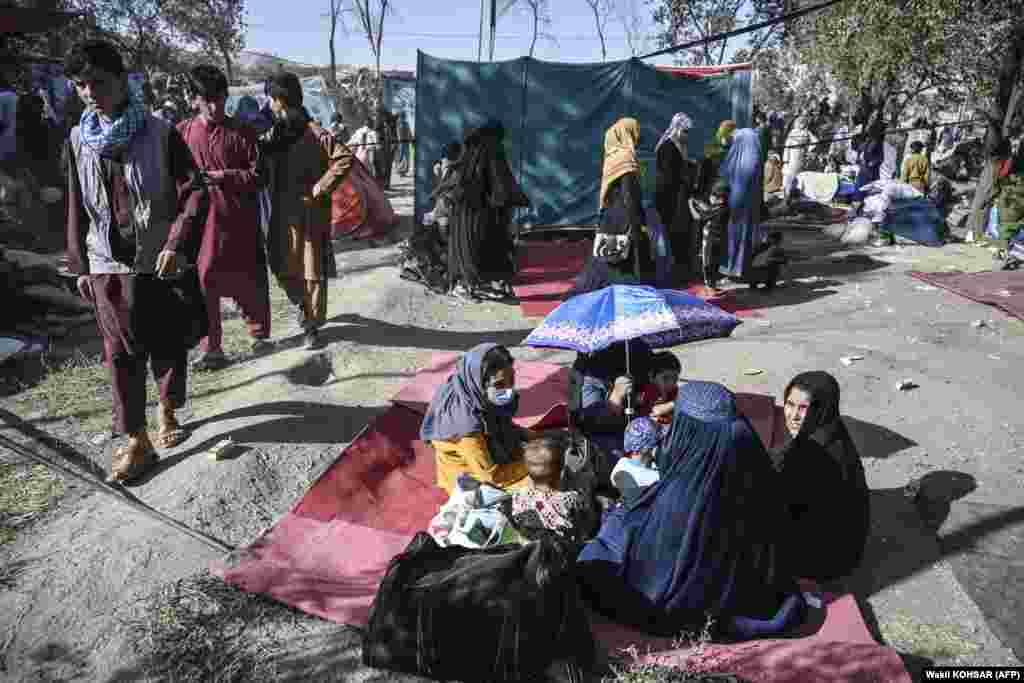
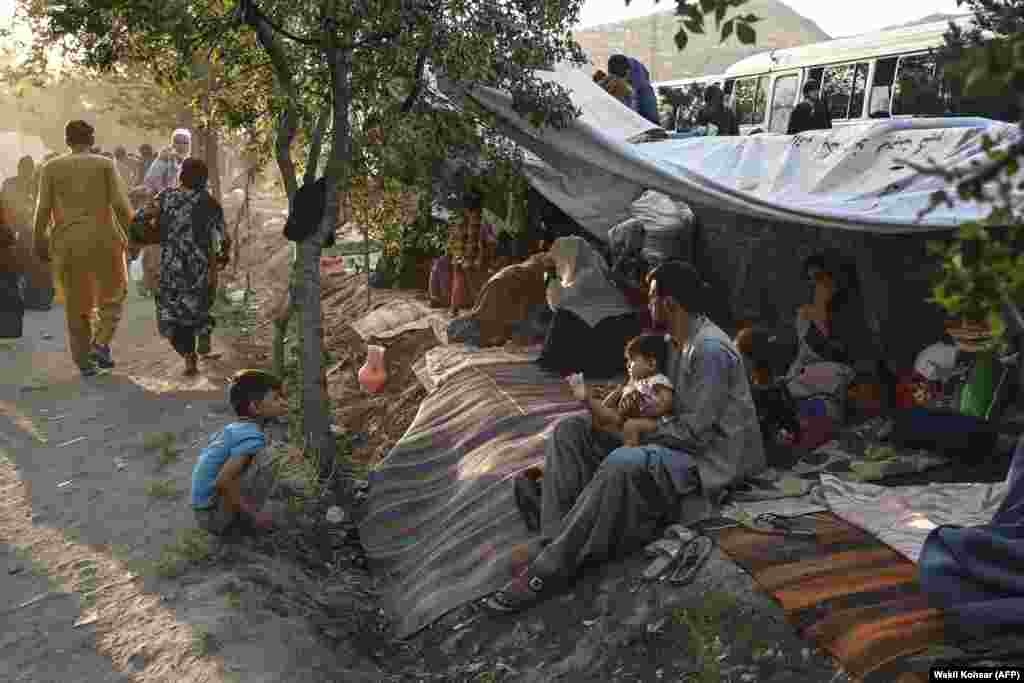
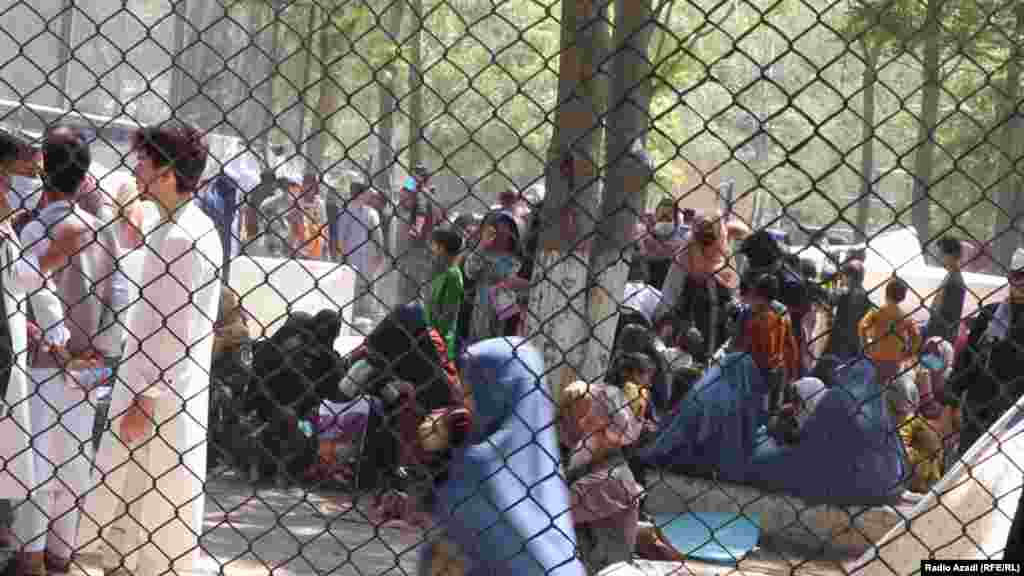
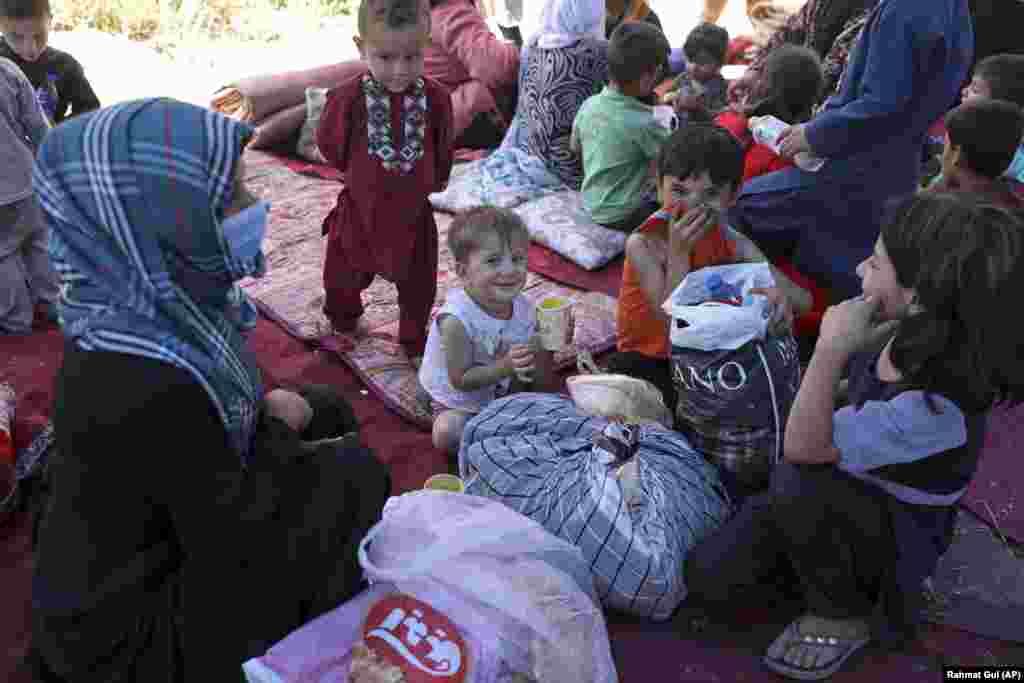
Internally displaced families from northern provinces who fled due to the fighting between the Taliban and Afghan security forces take shelter in a public park in Kabul.
KABUL -- The road to Kabul's international airport is clogged with thousands of people who are rushing to leave the country.
Thousands of others stand in long queues, stretching for kilometers, outside the capital's only passport office, desperately trying to secure travel documents.
Others frantically rush around downtown Kabul, a city of some 5 million people, running last-minute errands before fleeing their homes.
The fear and panic gripping Kabul is palpable as the Taliban militant group marches on the capital following a devastating, monthslong military offensive during which it has seized large swaths of the war-torn country.
"It's a feeling of shock and sadness compounded by brutal uncertainty," says Timor Sharan, a former civil servant and the director of the Afghanistan Policy Lab, a Kabul-based think tank. "Shopping in the city today, I felt people were gripped by a sense of being stuck; stuck in an uncertain future and never able to dream, aspire, think, and believe anymore."
The Taliban has captured 24 of Afghanistan's 34 provincial capitals as of late on August 14 and seized control of over half of the country's roughly 400 districts in a blistering campaign since the start of the final withdrawal of foreign troops on May 1.
After effectively seizing control of Afghanistan's west, south, and most of the north, the extremist group is advancing on Kabul, directly threatening the survival of the internationally-backed central government. Residents fear a bloody Taliban takeover of the city and the prospect of living under the brutal, oppressive rule of the fundamentalist Islamist group.
"People are terrified," says Jawid Ahmadi, a Kabul resident. "On the streets and bazaars, every single person is talking about how to leave Afghanistan."
Ahmadi says he applied for passports for his family of four. It is a process that usually requires three working days but now takes up to three months, he says. The fee for a passport has also soared, from around $80 several months ago to almost $500 -- a huge price for many Afghans.
Some 20,000 to 30,000 Afghans are fleeing abroad every week, according to the International Organization for Migration, which says that as many as 1.5 million Afghans could flee westward this year.
Fleeing Fighting, Afghans Flood Into Kabul And Gather At Pakistan Border
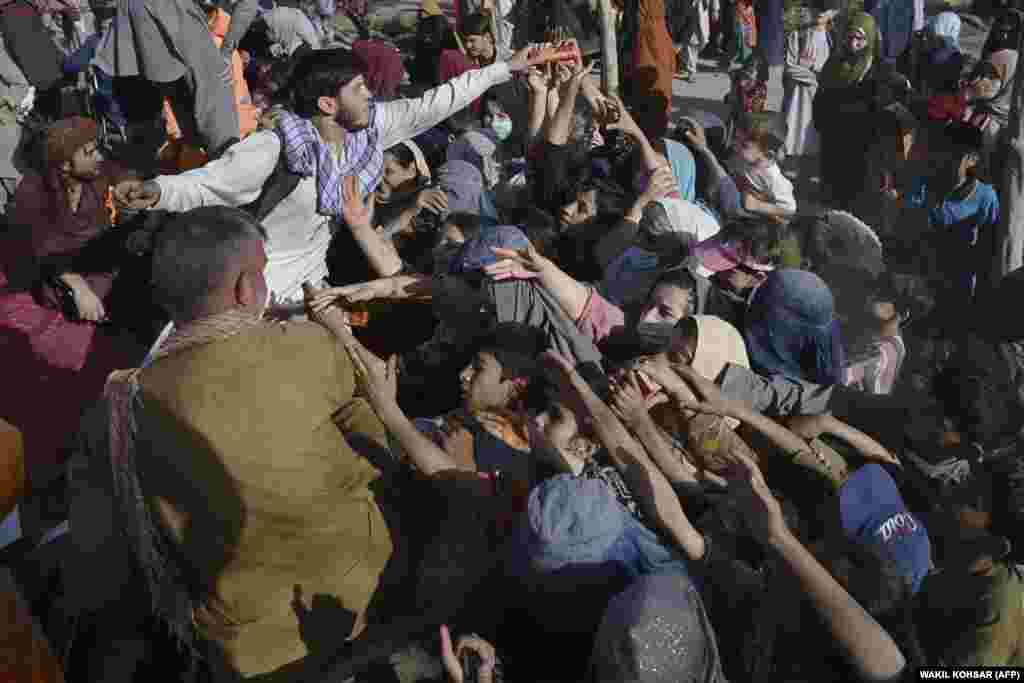
Tens of thousands of people have been flooding into the Afghan capital, Kabul, and gathering at the Pakistan border to escape the escalating fighting between Taliban militants and government forces. As more provincial capitals fell to the Taliban, Afghanistan's Refugees and Repatriations Ministry said that more than 35,000 families had arrived in the capital over the last week and that officials are struggling to provide them food and shelter.
Show moreShow less
2/18Thousands of internally displaced people (IDPs) flooded into Kabul's northern Khair Khana district on August 11. Many traveled from Badakhshan, Baghlan, Kunduz, Takhar, and other Afghan provinces that have been overrun by Taliban militants.
Tens of thousands of people have been flooding into the Afghan capital, Kabul, and gathering at the Pakistan border to escape the escalating fighting between Taliban militants and government forces. As more provincial capitals fell to the Taliban, Afghanistan's Refugees and Repatriations Ministry said that more than 35,000 families had arrived in the capital over the last week and that officials are struggling to provide them food and shelter.
Show moreShow less
3/18Children who have fled recent fighting find safety in the Afghan capital, Kabul.
Tens of thousands of people have been flooding into the Afghan capital, Kabul, and gathering at the Pakistan border to escape the escalating fighting between Taliban militants and government forces. As more provincial capitals fell to the Taliban, Afghanistan's Refugees and Repatriations Ministry said that more than 35,000 families had arrived in the capital over the last week and that officials are struggling to provide them food and shelter.
Show moreShow less
4/18Internally displaced Afghan families rest in a field in Kabul after fleeing Kunduz and Takhar provinces, where fighting raged between Taliban militants and Afghan security forces.
Tens of thousands of people have been flooding into the Afghan capital, Kabul, and gathering at the Pakistan border to escape the escalating fighting between Taliban militants and government forces. As more provincial capitals fell to the Taliban, Afghanistan's Refugees and Repatriations Ministry said that more than 35,000 families had arrived in the capital over the last week and that officials are struggling to provide them food and shelter.
Show moreShow less
5/18Some Afghan families have been living in tents at a makeshift camp in the Sara-e Shamali district of Kabul.
Tens of thousands of people have been flooding into the Afghan capital, Kabul, and gathering at the Pakistan border to escape the escalating fighting between Taliban militants and government forces. As more provincial capitals fell to the Taliban, Afghanistan's Refugees and Repatriations Ministry said that more than 35,000 families had arrived in the capital over the last week and that officials are struggling to provide them food and shelter.
Show moreShow less
6/18Internally displaced Afghans sit under their shelters at the Sara-e Shamali camp in Kabul.
Tens of thousands of people have been flooding into the Afghan capital, Kabul, and gathering at the Pakistan border to escape the escalating fighting between Taliban militants and government forces. As more provincial capitals fell to the Taliban, Afghanistan's Refugees and Repatriations Ministry said that more than 35,000 families had arrived in the capital over the last week and that officials are struggling to provide them food and shelter.
Show moreShow less
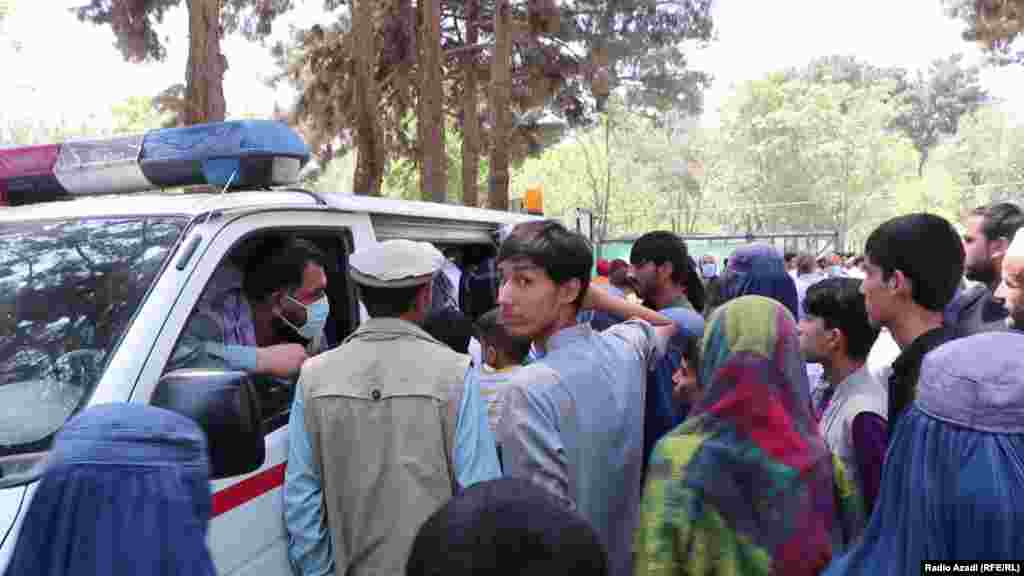
7/18People seeking medical care gather around an ambulance in Kabul's northern Khair Khana district on August 11.
Tens of thousands of people have been flooding into the Afghan capital, Kabul, and gathering at the Pakistan border to escape the escalating fighting between Taliban militants and government forces. As more provincial capitals fell to the Taliban, Afghanistan's Refugees and Repatriations Ministry said that more than 35,000 families had arrived in the capital over the last week and that officials are struggling to provide them food and shelter.
Show moreShow less
8/18Displaced Afghans have been living in this Kabul park.
Tens of thousands of people have been flooding into the Afghan capital, Kabul, and gathering at the Pakistan border to escape the escalating fighting between Taliban militants and government forces. As more provincial capitals fell to the Taliban, Afghanistan's Refugees and Repatriations Ministry said that more than 35,000 families had arrived in the capital over the last week and that officials are struggling to provide them food and shelter.
Show moreShow less
9/18Displaced children from Afghanistan's northern provinces take refuge in a public park in Kabul.
Tens of thousands of people have been flooding into the Afghan capital, Kabul, and gathering at the Pakistan border to escape the escalating fighting between Taliban militants and government forces. As more provincial capitals fell to the Taliban, Afghanistan's Refugees and Repatriations Ministry said that more than 35,000 families had arrived in the capital over the last week and that officials are struggling to provide them food and shelter.
Show moreShow less
10/18An Afghan child receives medical treatment in a Kabul park.
Tens of thousands of people have been flooding into the Afghan capital, Kabul, and gathering at the Pakistan border to escape the escalating fighting between Taliban militants and government forces. As more provincial capitals fell to the Taliban, Afghanistan's Refugees and Repatriations Ministry said that more than 35,000 families had arrived in the capital over the last week and that officials are struggling to provide them food and shelter.
Show moreShow less
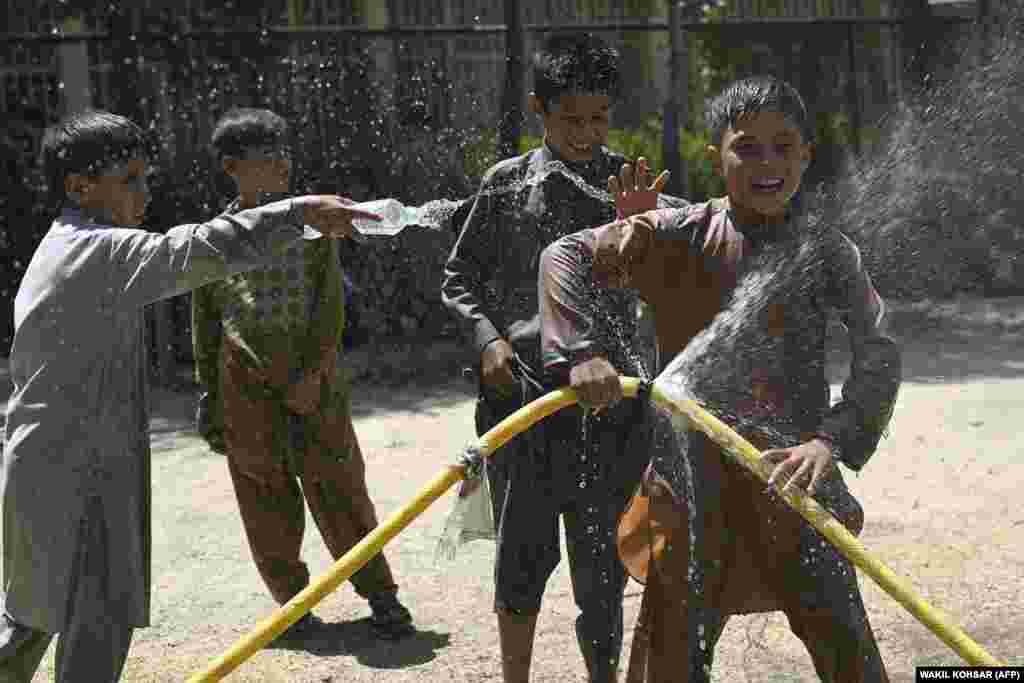
11/18Afghan children cool off while playing with a hose at the Shahr-e Naw park in Kabul.
Tens of thousands of people have been flooding into the Afghan capital, Kabul, and gathering at the Pakistan border to escape the escalating fighting between Taliban militants and government forces. As more provincial capitals fell to the Taliban, Afghanistan's Refugees and Repatriations Ministry said that more than 35,000 families had arrived in the capital over the last week and that officials are struggling to provide them food and shelter.
Show moreShow less
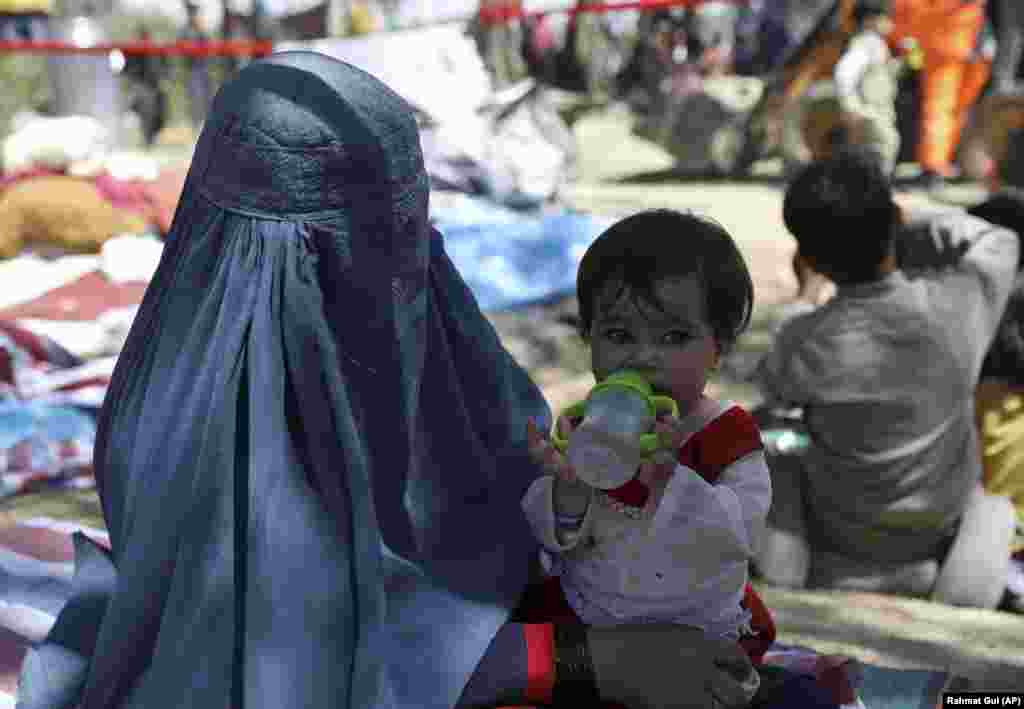
12/18An Afghan woman and child in a Kabul public park.
Tens of thousands of people have been flooding into the Afghan capital, Kabul, and gathering at the Pakistan border to escape the escalating fighting between Taliban militants and government forces. As more provincial capitals fell to the Taliban, Afghanistan's Refugees and Repatriations Ministry said that more than 35,000 families had arrived in the capital over the last week and that officials are struggling to provide them food and shelter.
Show moreShow less
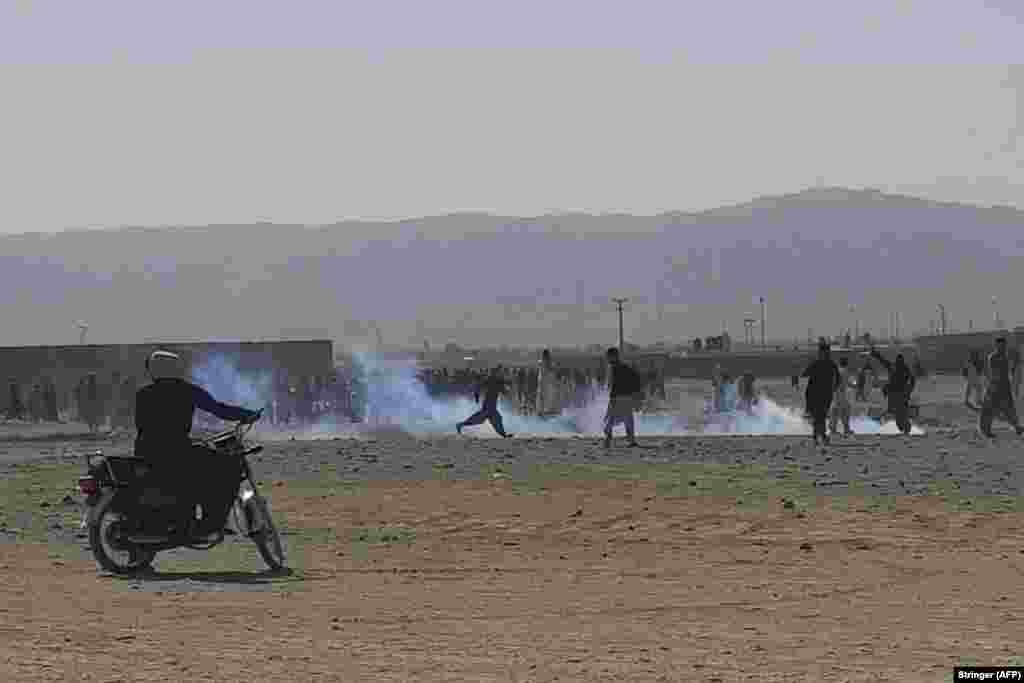
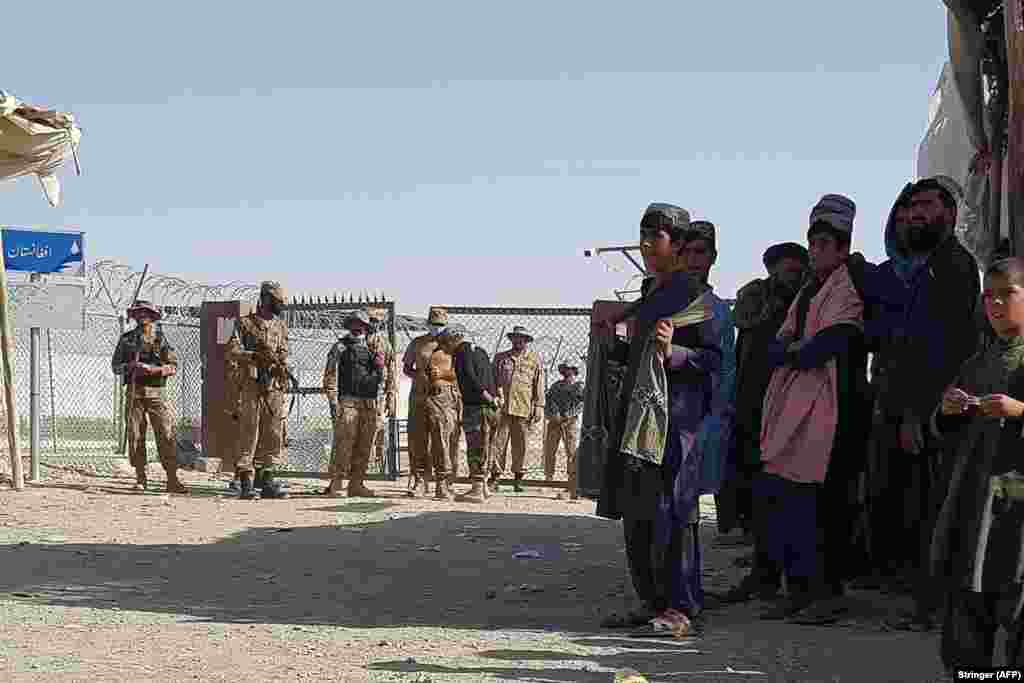
13/18Pakistani security forces use tear gas to disperse displaced Afghans who were gathering at the Pakistani border on August 12. Many Afghans want to get to the Pakistani city of the Chaman border crossing, but it was closed after the Taliban took control of the Kandahar side.
Tens of thousands of people have been flooding into the Afghan capital, Kabul, and gathering at the Pakistan border to escape the escalating fighting between Taliban militants and government forces. As more provincial capitals fell to the Taliban, Afghanistan's Refugees and Repatriations Ministry said that more than 35,000 families had arrived in the capital over the last week and that officials are struggling to provide them food and shelter.
Show moreShow less
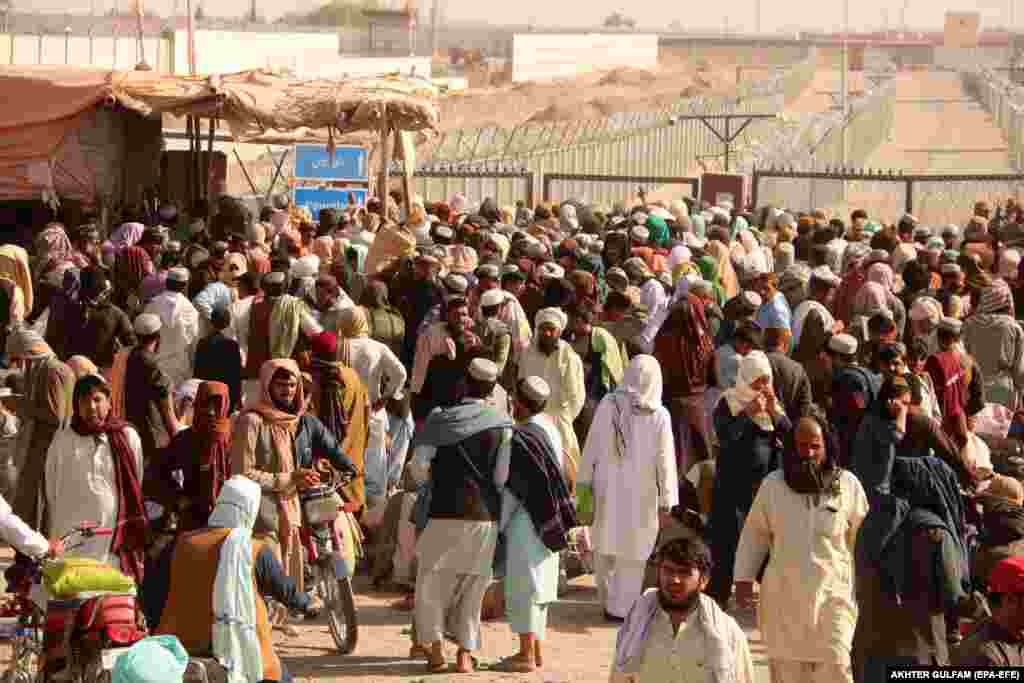
14/18People stranded at the Afghan-Pakistan border on August 11 after the Chaman crossing was closed. The Taliban's shadow governor for Kandahar Province issued a statement a week before, announcing the closure of the border.
Tens of thousands of people have been flooding into the Afghan capital, Kabul, and gathering at the Pakistan border to escape the escalating fighting between Taliban militants and government forces. As more provincial capitals fell to the Taliban, Afghanistan's Refugees and Repatriations Ministry said that more than 35,000 families had arrived in the capital over the last week and that officials are struggling to provide them food and shelter.
Show moreShow less
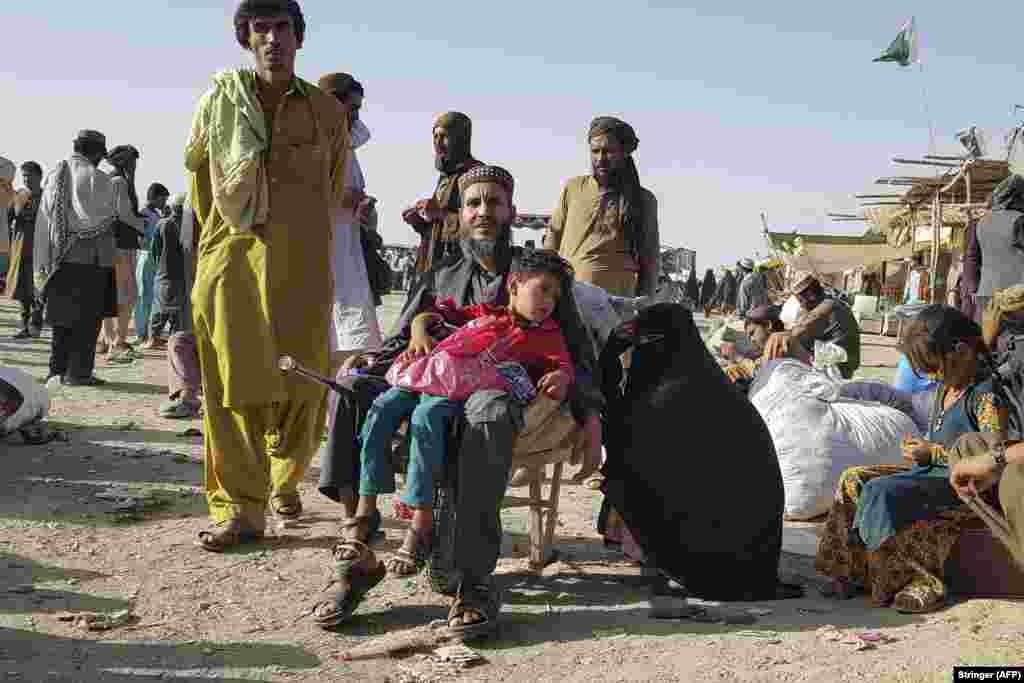
15/18Afghan families stranded at the Afghan-Pakistan border on August 12. The Taliban has taken control of most of Kandahar Province and there has been heavy fighting in the provincial capital as government forces try to hold onto Kandahar city.
Tens of thousands of people have been flooding into the Afghan capital, Kabul, and gathering at the Pakistan border to escape the escalating fighting between Taliban militants and government forces. As more provincial capitals fell to the Taliban, Afghanistan's Refugees and Repatriations Ministry said that more than 35,000 families had arrived in the capital over the last week and that officials are struggling to provide them food and shelter.
Show moreShow less
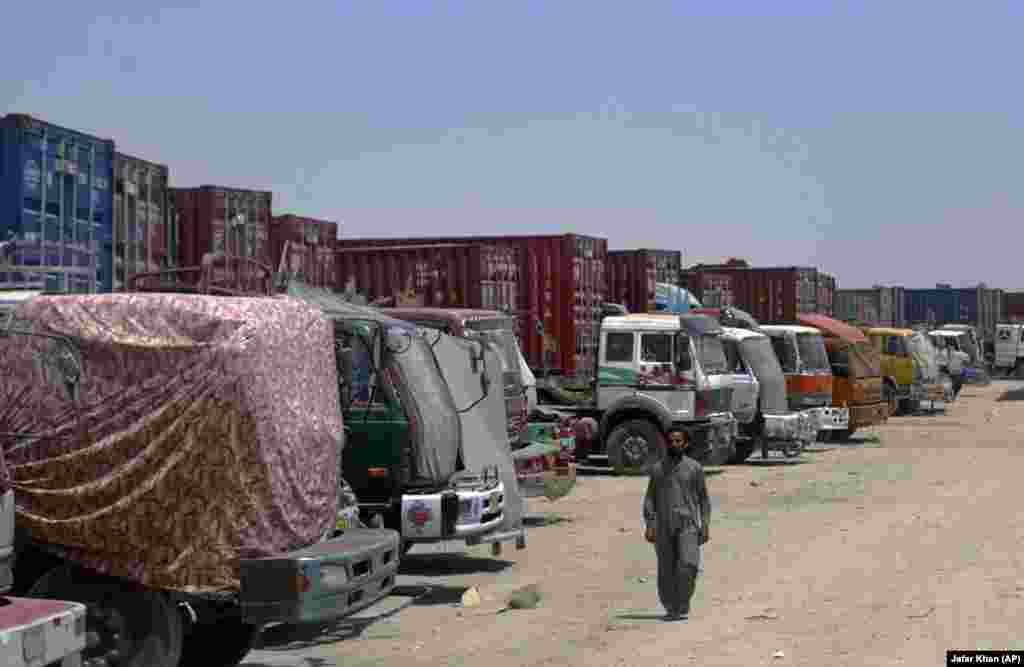
16/18A driver walks past Afghan-bound trucks stuck at the Chaman border crossing.
Tens of thousands of people have been flooding into the Afghan capital, Kabul, and gathering at the Pakistan border to escape the escalating fighting between Taliban militants and government forces. As more provincial capitals fell to the Taliban, Afghanistan's Refugees and Repatriations Ministry said that more than 35,000 families had arrived in the capital over the last week and that officials are struggling to provide them food and shelter.
Show moreShow less
17/18Pakistani soldiers stand guard as stranded Afghans wait for the reopening of the border crossing on August 12.
Tens of thousands of people have been flooding into the Afghan capital, Kabul, and gathering at the Pakistan border to escape the escalating fighting between Taliban militants and government forces. As more provincial capitals fell to the Taliban, Afghanistan's Refugees and Repatriations Ministry said that more than 35,000 families had arrived in the capital over the last week and that officials are struggling to provide them food and shelter.
Show moreShow less
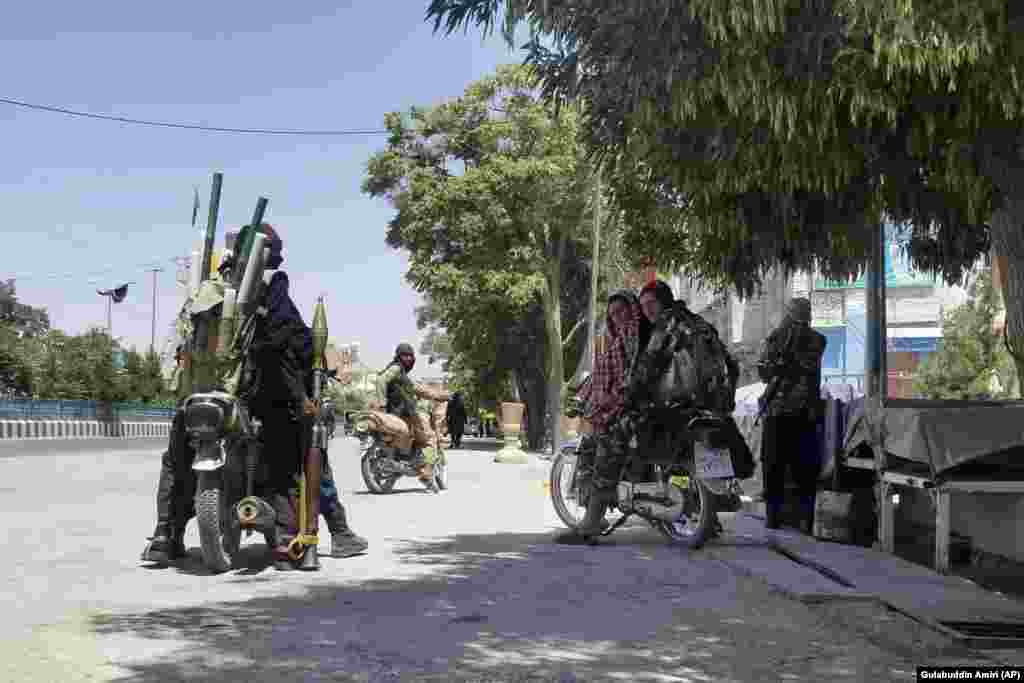
18/18Taliban fighters took control of Ghazni, the capital of Ghazni Province, on August 12. It becomes the 10th Afghan provincial capital to fall to the militants over the past week. Ghazni is located 150 kilometers southwest of Kabul and has major strategic importance. It lies along the Kabul-Kandahar highway that connects the capital with militant strongholds in the south.
Tens of thousands of people have been flooding into the Afghan capital, Kabul, and gathering at the Pakistan border to escape the escalating fighting between Taliban militants and government forces. As more provincial capitals fell to the Taliban, Afghanistan's Refugees and Repatriations Ministry said that more than 35,000 families had arrived in the capital over the last week and that officials are struggling to provide them food and shelter.
Show moreShow less
Previous slide
Next slide
Meanwhile, the price of some food staples like flour has surged by 30 percent, while gas prices have almost doubled in recent weeks, even as poverty spreads and a humanitarian crisis worsens.
Fear Of Taliban Attack
Kabul residents express mounting fears over a possible Taliban military assault on the densely populated city, a worst-case scenario that would lead to lead to wide-scale casualties and destruction.
"A Taliban military takeover of Kabul would result in the loss of everything that was gained in the last 20 years," says Haroun Rahimi, an assistant professor of law at the American University of Afghanistan in Kabul. "It would also be very bloody," he adds. "People are not only scared of losing their rights but also afraid of dying."
Afghan President Ashraf Ghani on August 14 said his "focus is on preventing further instability, violence, and displacement of my people," as pressure grew on him to resign, a move that might end the fighting and pave the way for an interim government that includes the Taliban.
His comments came as the insurgents advanced on Kabul.
The Taliban seized Pul-e Alam, the provincial capital of Logar Province, on August 13. The city is just 70 kilometers from Kabul.
The next day the Taliban had captured the entire province. Hoda Ahmadi, a lawmaker from Logar, said the militants had reached Chahar Asyab, a strategic district in Kabul Province that lies just 11 kilometers south of the city's borders.
During the country's devastating civil war in the 1990s, Hekmatyar Gulbuddin, one of the country's most notorious ex-warlords and a former militant leader, used Chahar Asyab as a base from which to indiscriminately fire thousands of rockets at Kabul that killed tens of thousands of people.
Repressive Laws
There is also dread among residents in Kabul, which has witnessed major social, economic, and democratic gains over the past 20 years, that their hard-won rights will be rolled back.
The extremist group has reimposed many of the repressive laws and retrograde policies that defined its brutal 1996-2001 rule, when the Islamist group gained notoriety for oppressing women, massacring ethnic and religious minorities, and publicly executing alleged criminals.
In many new areas under its control, the Taliban has forced women to cover themselves from head to toe in a burqa, banned them from working outside the home, severely limited girls' education, and required women to be accompanied by a male relative if they leave their homes.
There have also been several reports of young women being forced to marry Taliban fighters.
Meanwhile, men have been banned from trimming or shaving their beards. They have also been forced to pray five times a day, while listening to music and watching television are again outlawed in some areas.
Human rights groups and the Afghan government have also reported summary executions taking place of government officials and captured Afghan soldiers.
A Taliban fighter stands with his rifle in the city of Ghazni on August 14.
After seizing control of the western city of Herat on August 12, Taliban fighters paraded two alleged looters through the streets, with black char smeared on their faces.
In the southern city of Kandahar, which was also captured on August 12, the insurgents were reported to have forced nine female employees of a bank to leave and warned them not to return to their jobs. They were escorted home.
Written by Frud Bezhan in Prague with contributions from RFE/RL's Radio Azadi correspondents in Afghanistan. Their names are being withheld for their safety
RFE/RL's Radio Azadi is one of the most popular and trusted media outlets in Afghanistan. Nearly half of the country's adult audience accesses Azadi's reporting on a weekly basis.
Frud Bezhan is Senior Regional Editor in the English-language Central Newsroom at RFE/RL, leading coverage of the Middle East, South Asia, and Central Asia. Previously, he was the Regional Desk Editor for the Near East, with a primary focus on Iran, Afghanistan, and Pakistan. As a correspondent, he reported from Afghanistan, Turkey, Kosovo, and Western Europe.