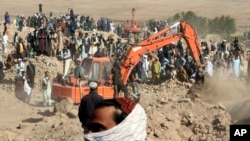
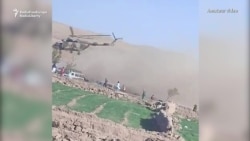
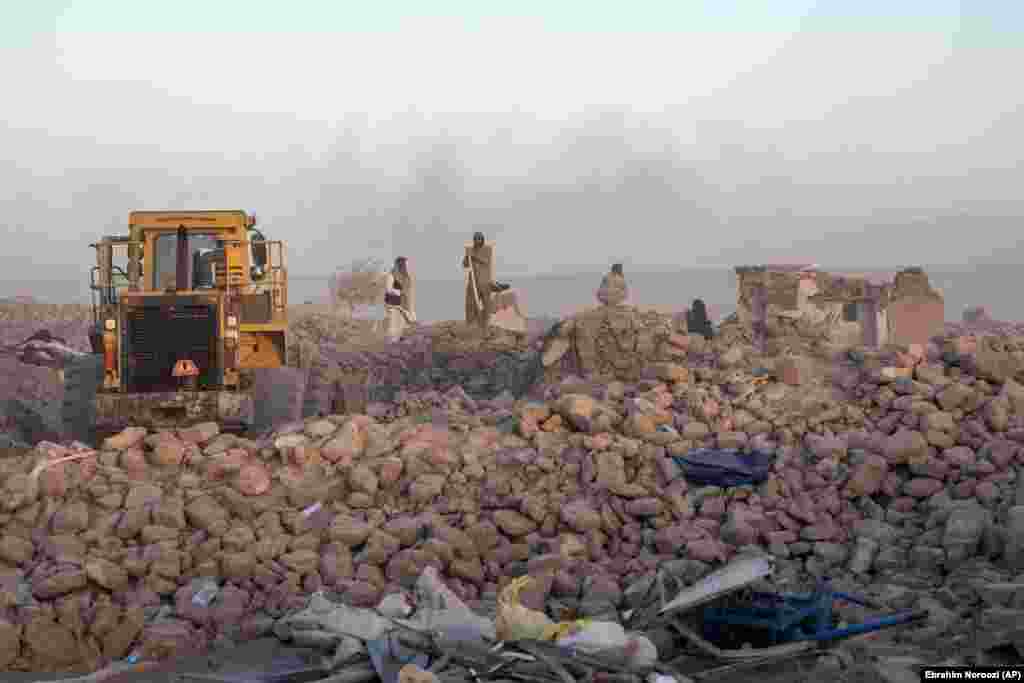
An excavator removes mud from a collapsed house amid the search for victims after an earthquake in the Zindah Jan district of Herat Province in western Afghanistan.
Aid workers have reached some earthquake-stricken areas of western Afghanistan and started distributing emergency food supplies to those affected as rescue efforts continued after a series of powerful earthquakes caused widespread destruction and reportedly killed more than 2,000 people in the quake-prone mountainous country's worst natural disaster in years.
Wahid Amani, a spokesman for the United Nations' World Food Program (WFP) has told RFE/RL that emergency aid has been delivered to several hundred people in Herat Province so far.
"We are prepared to deliver emergency food aid to some 20,000 people" Amani said, adding that the UN food agency was ready to increase that number to 70,000 people.
In addition to the WFP, the UN's World Health Organization (WHO) has rushed teams to the areas of Herat worst affected by the temblors. WHO employees are already in the field helping with the efforts to rescue and treat people still under the rubble, the Afghan branch of the WHO told RFE/RL.
The WHO has put the number affected at more than 11,000 people.
Alaa Abouzeid, the head of the WHO's emergency response in Afghanistan, told Reuters that women and children make up about two-thirds of those hospitalized in Herat with severe injuries.
A number of countries, institutions, and individual business people have announced immediate assistance to the victims.
Volunteers have transported truckloads of food, tents, and blankets to the worst-stricken areas some 30 kilometers northwest of Herat city, capital of the same-named province.
The rugged area is difficult to reach, and local officials have given conflicting casualty tolls from the earthquake.
Searching For Survivors And The Dead As Afghan Quake Toll Continues To Rise
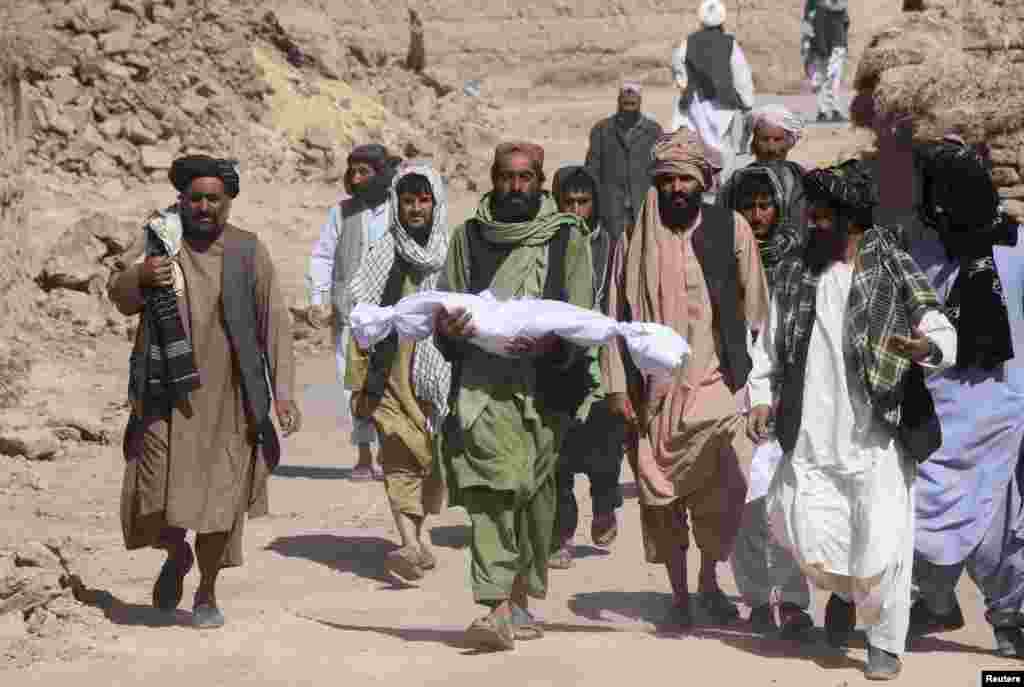
1/14A man carries the lifeless body of his child, who was killed during an earthquake in the village of Sarbuland in Herat Province's Zindah Jan district on October 8.
Aid workers have reached some quake-stricken areas of western Afghanistan and started distributing emergency food supplies to those affected as rescue efforts continued after a series of powerful temblors killed at least 2,000 people.
International relief organizations are scrambling to provide aid to victims in western Afghanistan following a series of powerful earthquakes that left widespread destruction in their wake. More than 2,000 people have reportedly been killed in the country's worst natural disaster in years.
Show moreShow less
2/14Afghan men search for earthquake victims in Zindah Jan.
Wahid Amani, a spokesman for the United Nations' World Food Program (WFP) has told RFE/RL that emergency aid has been delivered to several hundred people in Herat Province so far.
"We are prepared to deliver emergency food aid to some 20,000 people" Amani said, adding that the UN food agency was ready to increase that number to 70,000 people.
International relief organizations are scrambling to provide aid to victims in western Afghanistan following a series of powerful earthquakes that left widespread destruction in their wake. More than 2,000 people have reportedly been killed in the country's worst natural disaster in years.
Show moreShow less
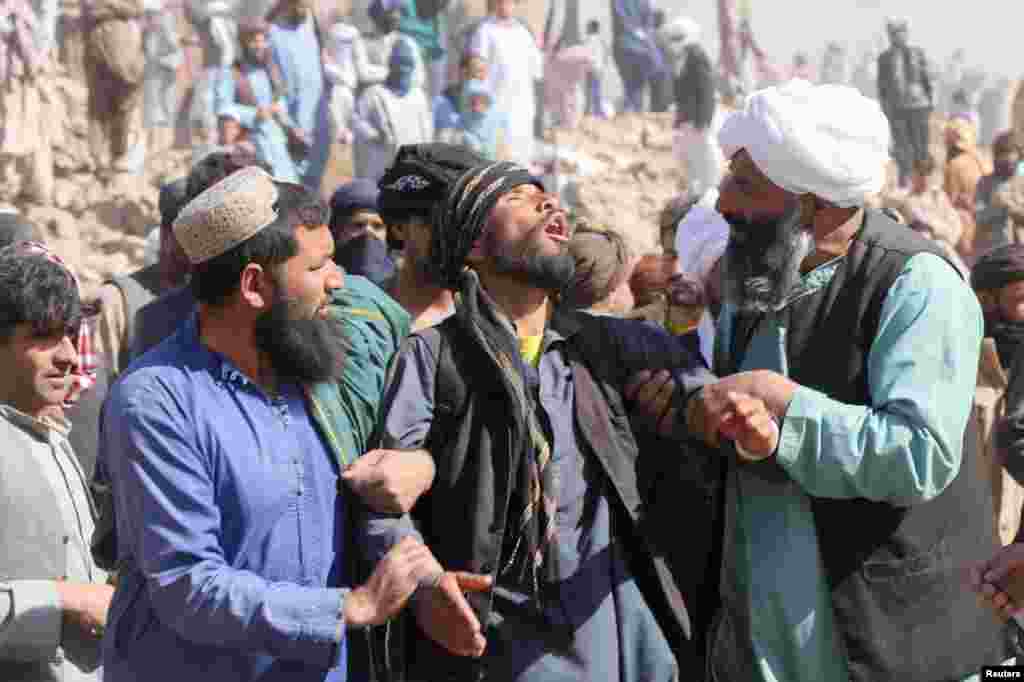
3/14 A man cries out during search and rescue operations.
International relief organizations are scrambling to provide aid to victims in western Afghanistan following a series of powerful earthquakes that left widespread destruction in their wake. More than 2,000 people have reportedly been killed in the country's worst natural disaster in years.
Show moreShow less
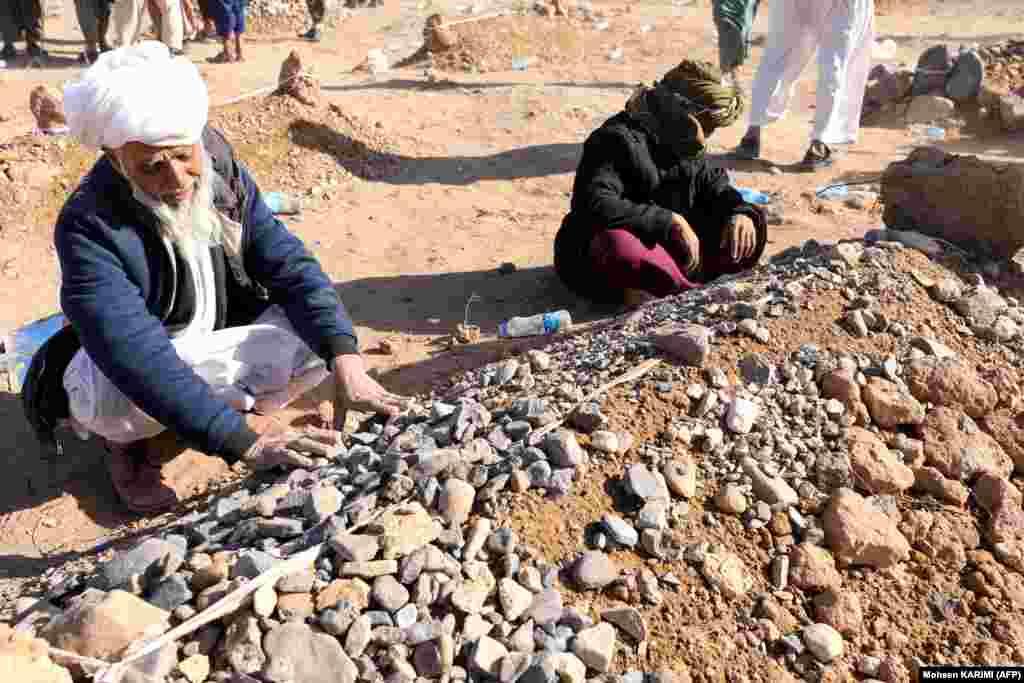
4/14Mourners sit beside graves after funeral prayers for their relatives.
In addition to the WFP, teams from the UN's World Health Organization (WHO) have rushed to the areas of Herat worst affected by the quakes. WHO employees are already in the field helping with efforts to rescue and treat people still under the rubble, the organization's Afghan branch told RFE/RL.
International relief organizations are scrambling to provide aid to victims in western Afghanistan following a series of powerful earthquakes that left widespread destruction in their wake. More than 2,000 people have reportedly been killed in the country's worst natural disaster in years.
Show moreShow less
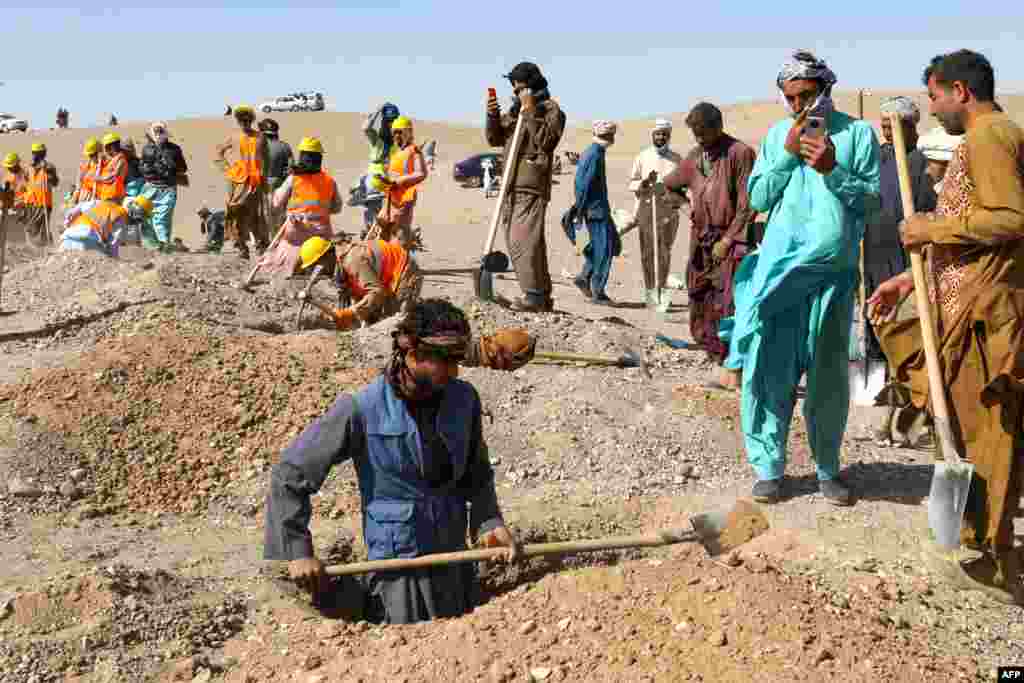
5/14Afghans dig graves for earthquake victims.
The WHO has put the number of those affected at more than 11,000 people.
International relief organizations are scrambling to provide aid to victims in western Afghanistan following a series of powerful earthquakes that left widespread destruction in their wake. More than 2,000 people have reportedly been killed in the country's worst natural disaster in years.
Show moreShow less
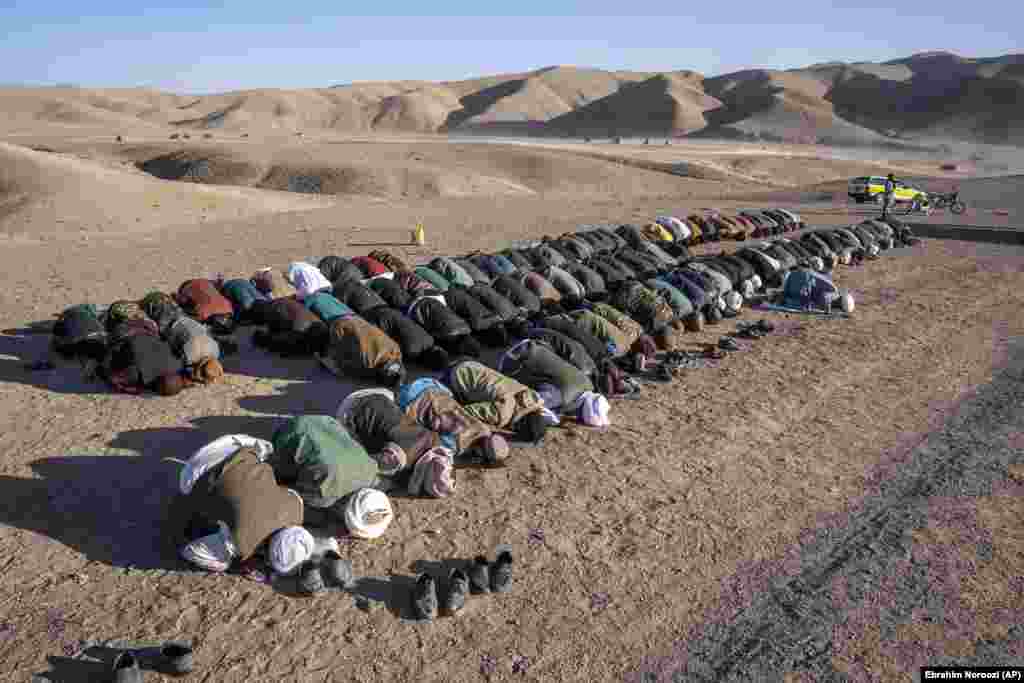
6/14Afghans pray for relatives who were killed in an earthquake at a burial site in Zindah Jan.
The rugged area is difficult to reach, and local officials have given conflicting casualty tolls from the series of quakes in the area. On October 8, a member of the Taliban-led government said the updated death toll had surpassed 2,000.
International relief organizations are scrambling to provide aid to victims in western Afghanistan following a series of powerful earthquakes that left widespread destruction in their wake. More than 2,000 people have reportedly been killed in the country's worst natural disaster in years.
Show moreShow less
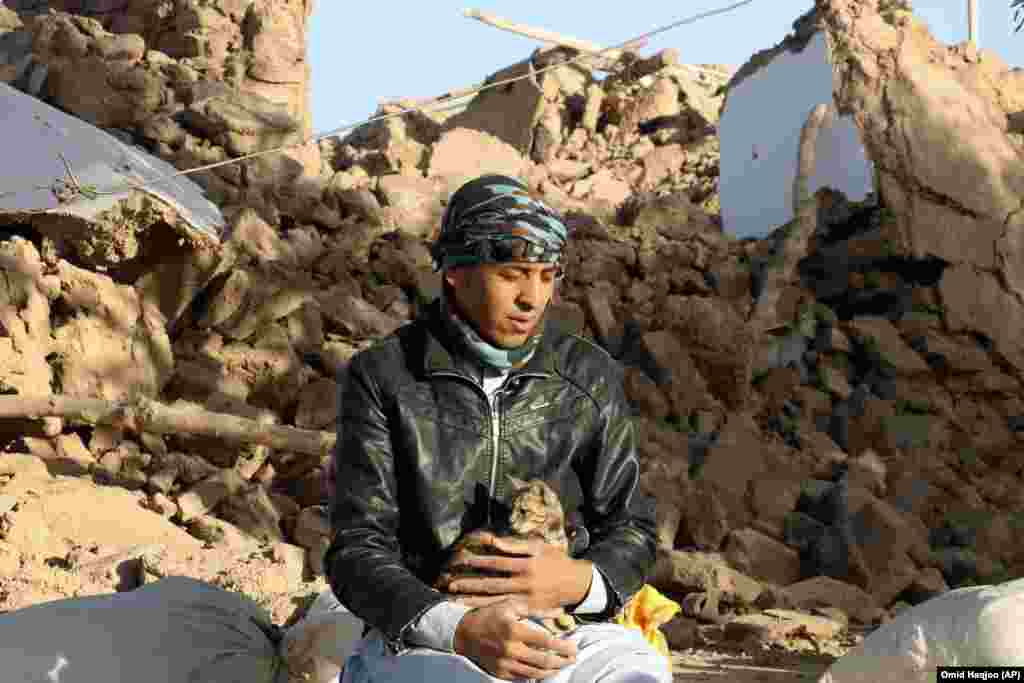
7/14 An Afghan youth holds his cat as he sits in a courtyard of his destroyed home.
Mullah Janan Sayeeq, a spokesman for the Taliban's Ministry of Disasters, told a news conference that 2,440 people were dead, about 10,000 were injured, and that more than 2,000 houses had been damaged or destroyed. Afghanistan's disaster agency said on October 8 that 2,053 people had been killed.
Neither estimate could be independently confirmed.
International relief organizations are scrambling to provide aid to victims in western Afghanistan following a series of powerful earthquakes that left widespread destruction in their wake. More than 2,000 people have reportedly been killed in the country's worst natural disaster in years.
International relief organizations are scrambling to provide aid to victims in western Afghanistan following a series of powerful earthquakes that left widespread destruction in their wake. More than 2,000 people have reportedly been killed in the country's worst natural disaster in years.
Show moreShow less
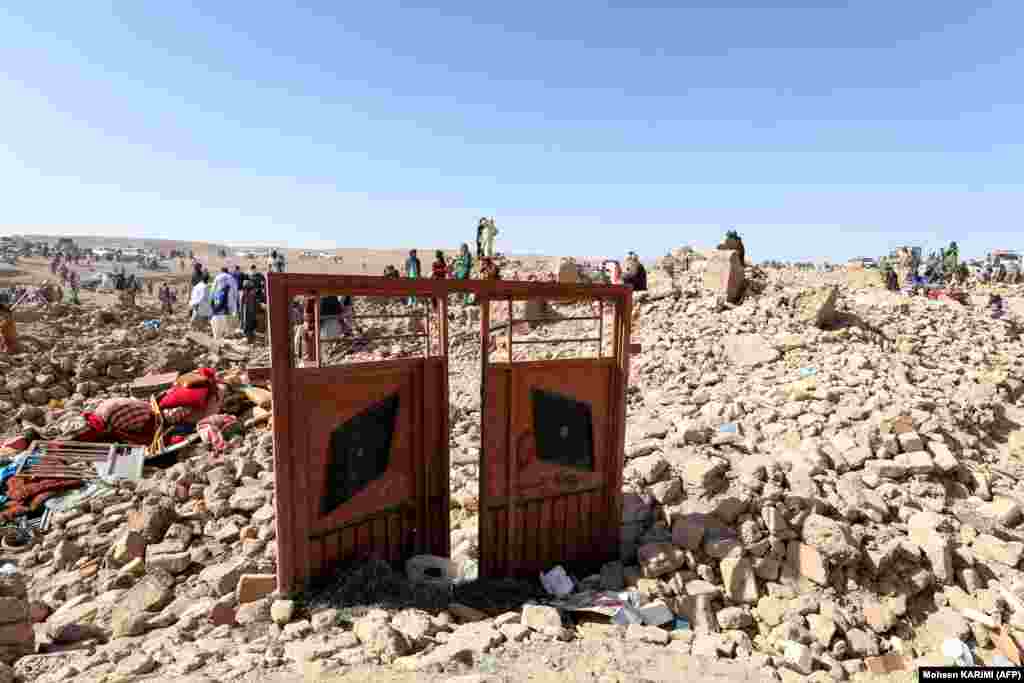
9/14A man surveys quake damage to a house.
The epicenter of the first earthquake was some 40 kilometers northwest of Herat, which has some 700,000 people in the city and the surrounding area. It was followed by at least three major aftershocks.
International relief organizations are scrambling to provide aid to victims in western Afghanistan following a series of powerful earthquakes that left widespread destruction in their wake. More than 2,000 people have reportedly been killed in the country's worst natural disaster in years.
Show moreShow less
10/14Afghan residents clear debris as they continue their search for bodies in the rubble of homes destroyed during the earthquakes.
International relief organizations are scrambling to provide aid to victims in western Afghanistan following a series of powerful earthquakes that left widespread destruction in their wake. More than 2,000 people have reportedly been killed in the country's worst natural disaster in years.
Show moreShow less
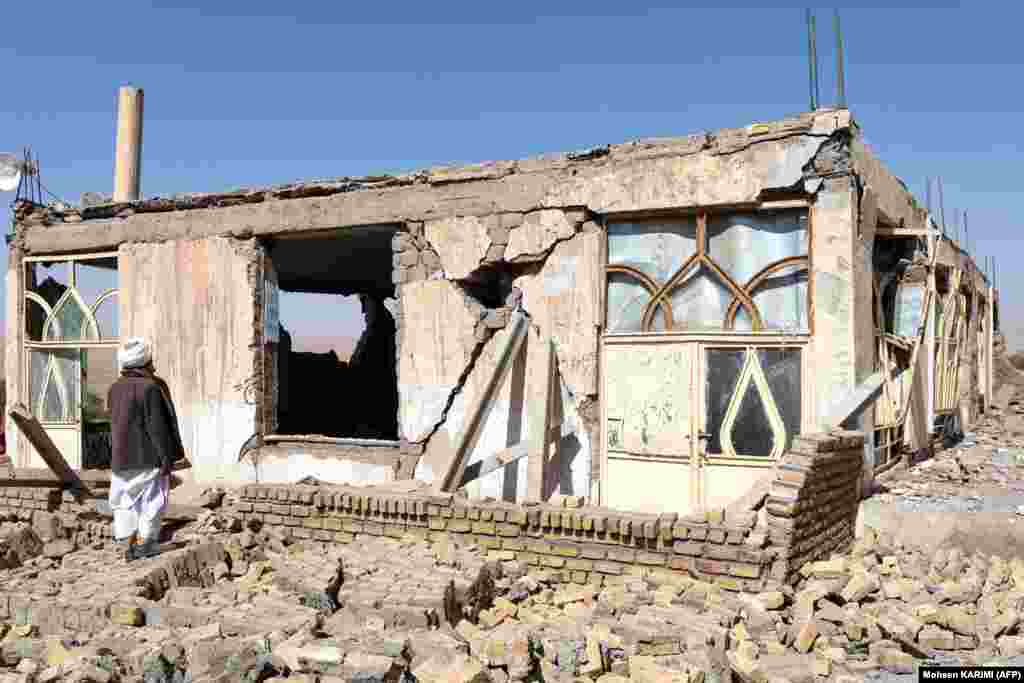
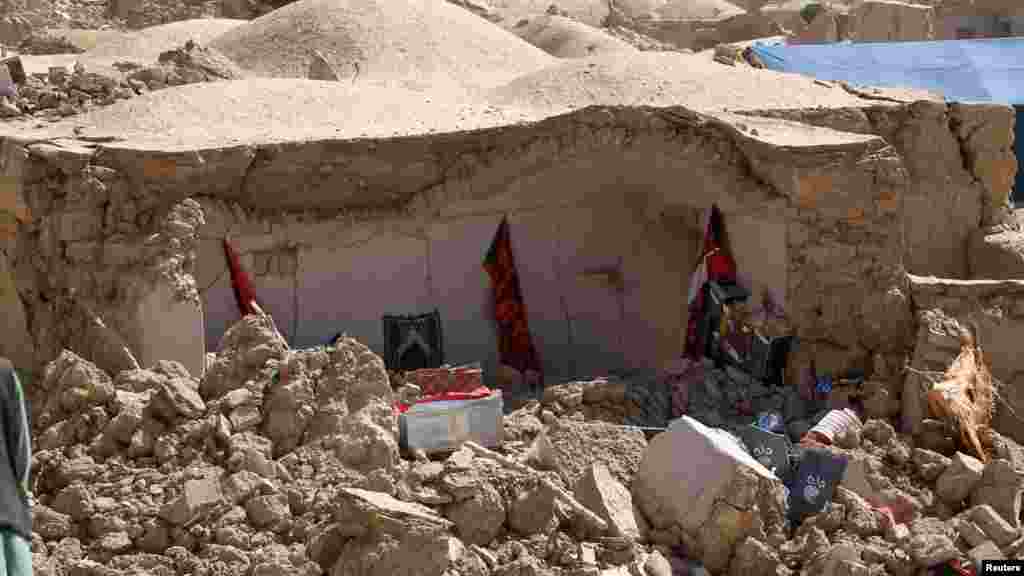
11/14A view of a house damaged in the series of quakes.
International relief organizations are scrambling to provide aid to victims in western Afghanistan following a series of powerful earthquakes that left widespread destruction in their wake. More than 2,000 people have reportedly been killed in the country's worst natural disaster in years.
Show moreShow less
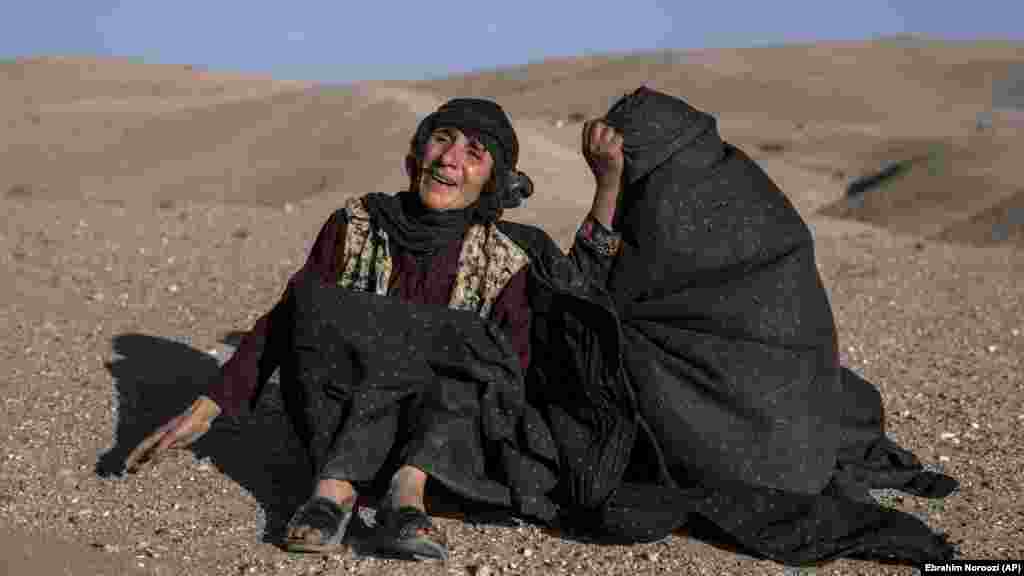
12/14Afghan women mourn the death of relatives who were killed in the earthquakes.
International relief organizations are scrambling to provide aid to victims in western Afghanistan following a series of powerful earthquakes that left widespread destruction in their wake. More than 2,000 people have reportedly been killed in the country's worst natural disaster in years.
Show moreShow less
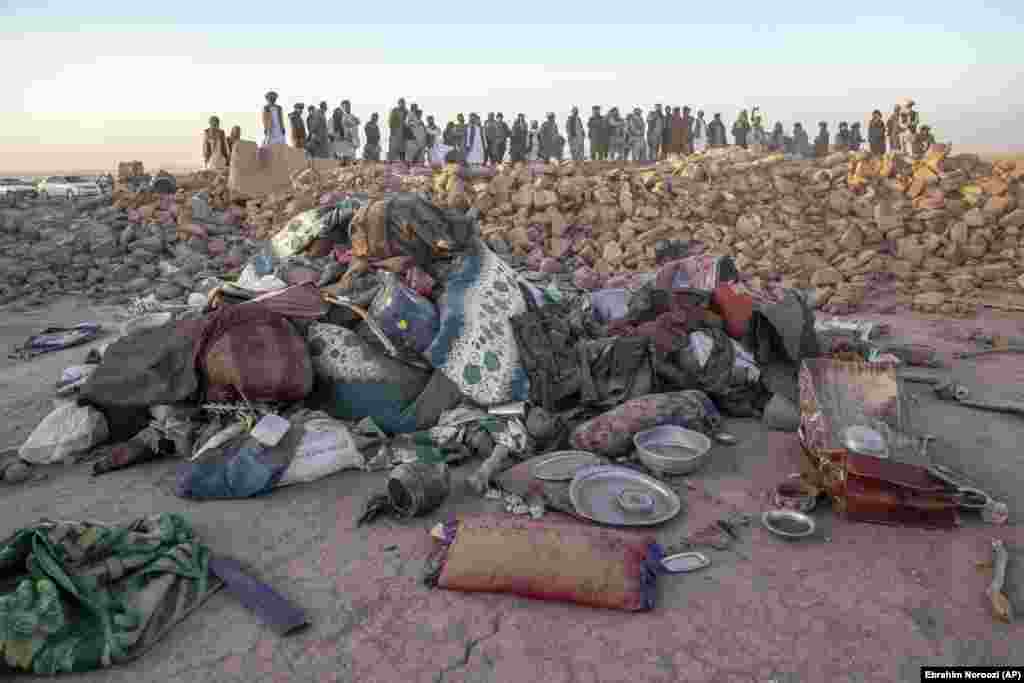
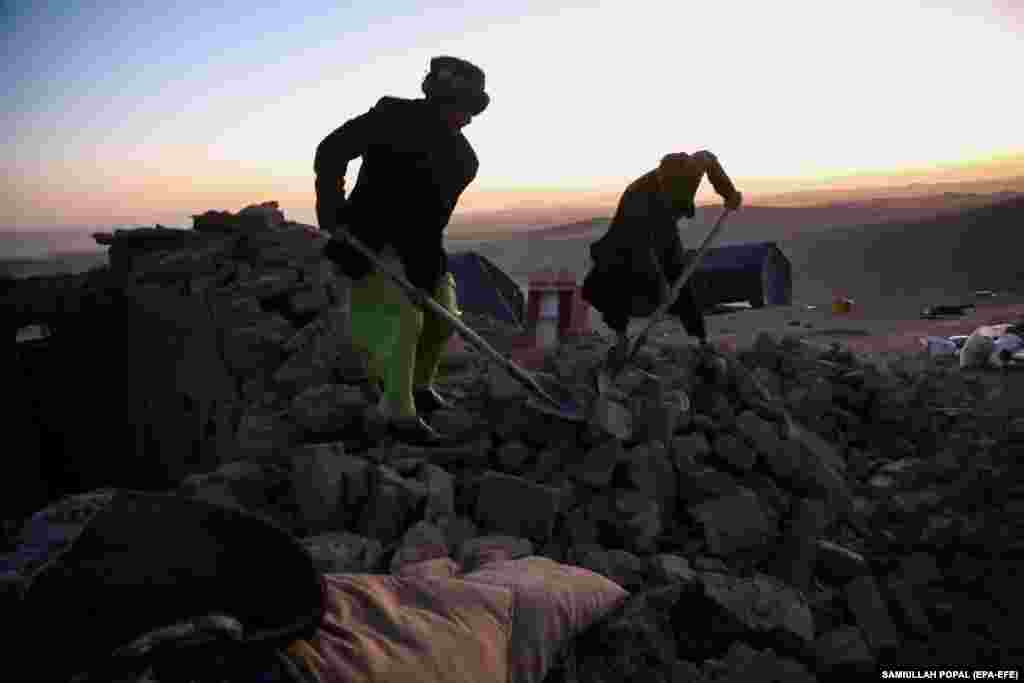
13/14Men search for belongings to salvage as the day turns to night.
The U.S. Geological Survey recorded the largest of the earthquakes at a magnitude of 6.3, with the latest aftershock coming about 30 kilometers northeast of the city of Zindah Jan, which has a population of about 70,000 people.
International relief organizations are scrambling to provide aid to victims in western Afghanistan following a series of powerful earthquakes that left widespread destruction in their wake. More than 2,000 people have reportedly been killed in the country's worst natural disaster in years.
Show moreShow less
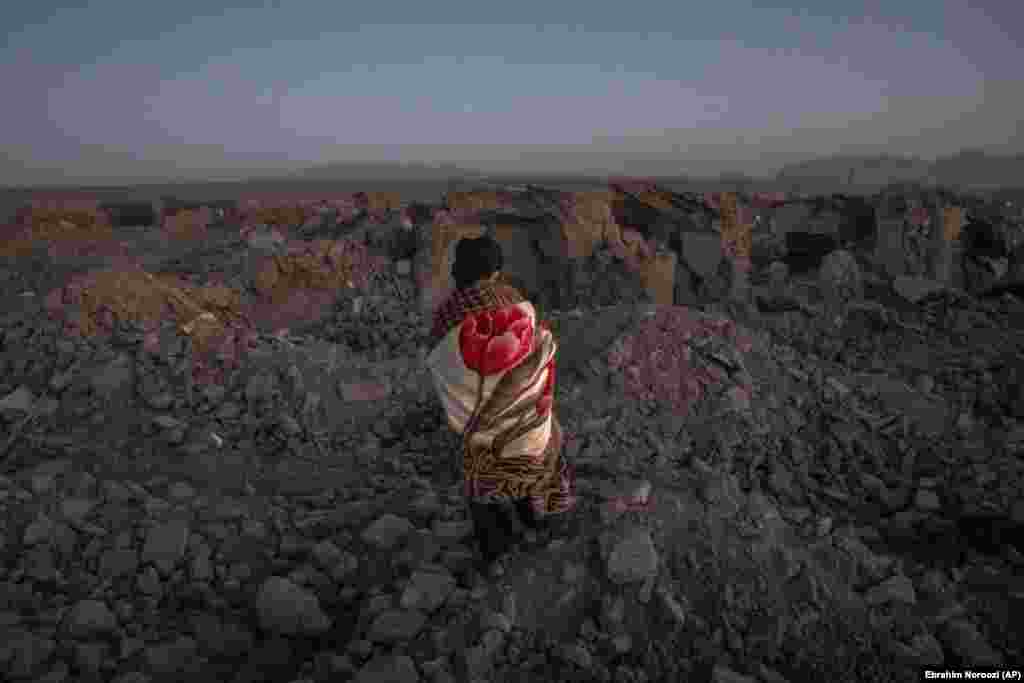
14/14An Afghan man searches for victims in the dusk.
Disaster authority spokesperson Mohammad Abdullah Jan said four villages in the Zindah Jan district in Herat Province bore the brunt of the quake and aftershocks.
International relief organizations are scrambling to provide aid to victims in western Afghanistan following a series of powerful earthquakes that left widespread destruction in their wake. More than 2,000 people have reportedly been killed in the country's worst natural disaster in years.
Show moreShow less
Previous slide
Next slide
Mullah Janan Sayeeq, spokesman for the Ministry of Disasters, told a news conference on October 9 that 4,000 people were killed or injured in the earthquake. He did not provide a breakdown but said the exact number of dead and injured would be shared with the public after search-and-rescue operations conclude.
The United Nations estimates that 1,023 people were killed and 1,663 people injured in 11 villages in the Zindah Jan district of Herat Province alone.
Nearly 2,000 houses in 20 villages were destroyed, the Taliban has said.
None of the estimates could be independently confirmed.
The epicenter of the first earthquake was some 40 kilometers northwest of Herat, which has some 700,000 people in the city and the surrounding area. It was followed by at least three major aftershocks.
The U.S. Geological Survey (USGS) recorded the largest of the temblors at a magnitude of 6.3, with the latest aftershock coming about 30 kilometers northeast of the city of Zindah Jan, which has a population of about 70,000 people.
“This earthquake was preceded by a 6.3 earthquake that occurred approximately 30 minutes before,” the USGS said.
Disaster authority spokesperson Mohammad Abdullah Jan said four villages in the Zindah Jan district in Herat Province bore the brunt of the quake and aftershocks.
RFE/RL's Radio Azadi is one of the most popular and trusted media outlets in Afghanistan. Nearly half of the country's adult audience accesses Azadi's reporting on a weekly basis.