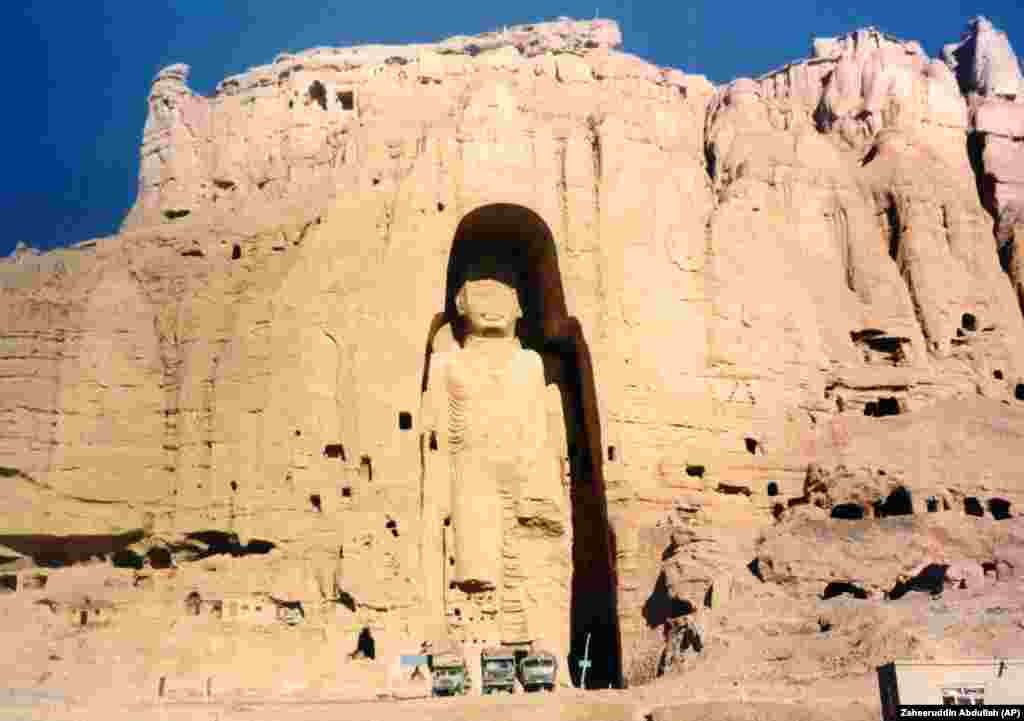
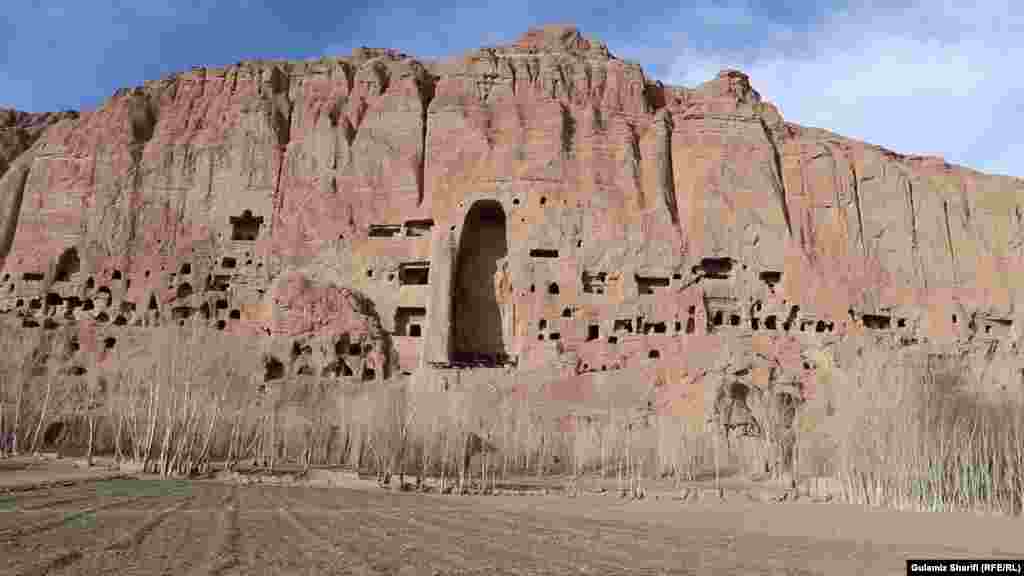
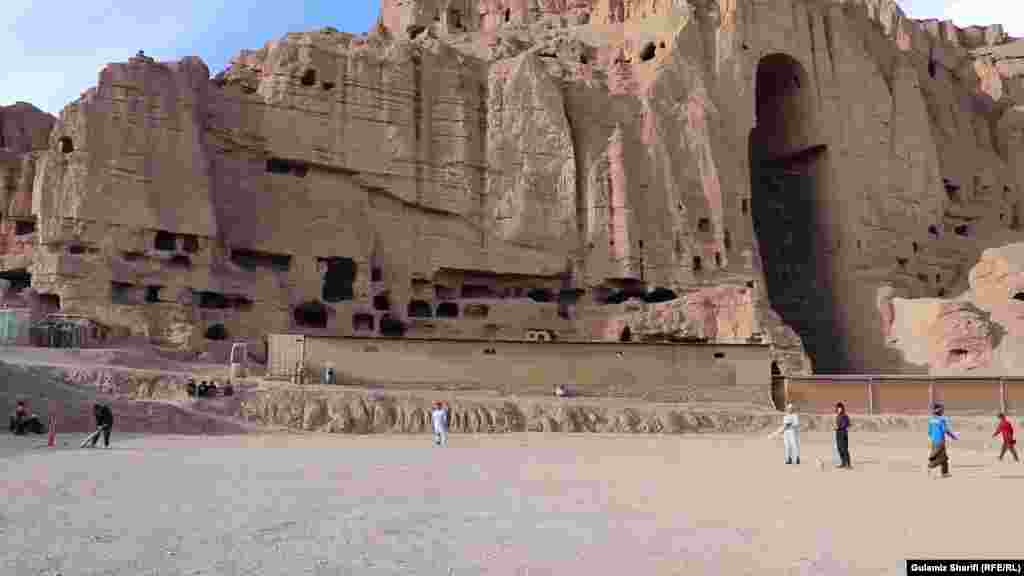
This photo shows dozens of caves and the empty alcove that once housed Solsol, a 55-meter high statue of the Buddha.
Twenty years after the Taliban blew up two famous Buddha statues, Afghans commemorated the tragic loss of their historical and cultural heritage on March 9 at a ceremony in the central Bamiyan valley.
In a nighttime display, one of the Buddha statues came back to life as a three-dimensional projection in the alcove that hosted it for centuries.
The illumination capped a day of commemorations organized by the Night with the Buddha project, including a lantern-lit procession as hundreds gathered at the base of the sandstone cliff where the statues once stood alongside caves, monasteries, and shrines.
The projection filled the alcove that once housed Solsol, a 55-meter high statue.
The Buddhas Of Bamiyan: Majesty And Tragedy
1/14The statue, known as Solsol or the Western Buddha, stood more than 50 meters tall. This photo was taken on November 28, 1997.
Taliban militants spent the early part of March 2001 systematically dynamiting two of Afghanistan's greatest historical and cultural treasures: the Buddhas of Bamiyan. Twenty years after their destruction, we look back at these iconic artefacts and how the site looks today.
Show moreShow less
2/14The smaller 38-meter statue, known as the Eastern Buddha.
Taliban militants spent the early part of March 2001 systematically dynamiting two of Afghanistan's greatest historical and cultural treasures: the Buddhas of Bamiyan. Twenty years after their destruction, we look back at these iconic artefacts and how the site looks today.
Show moreShow less
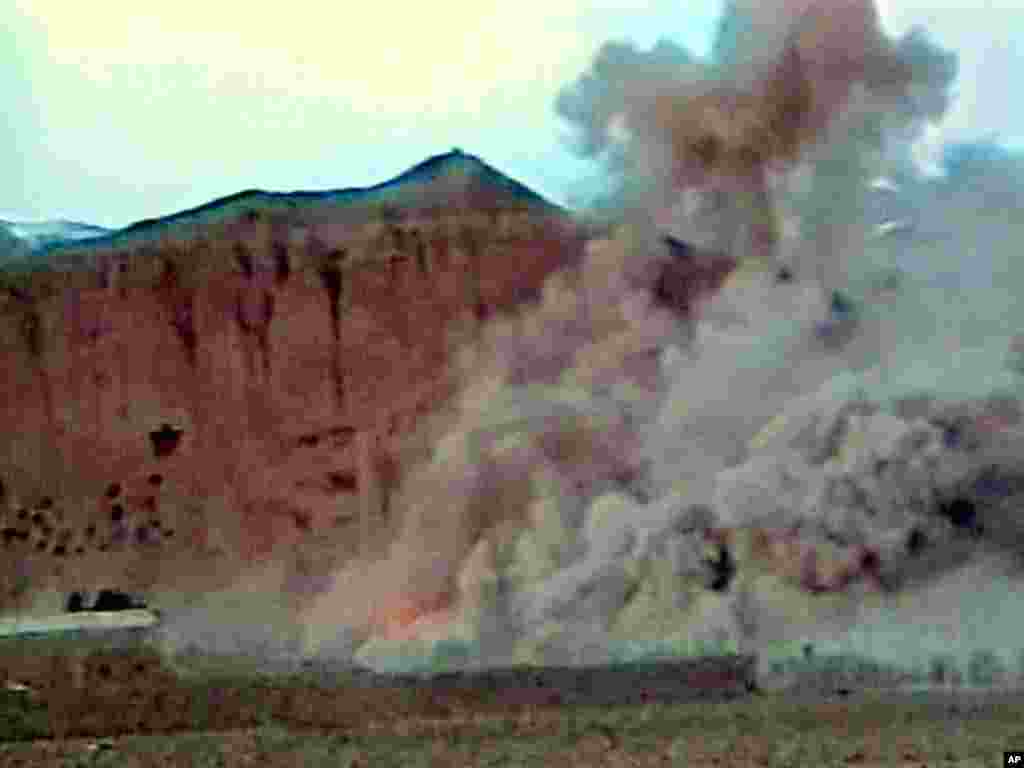
3/14Dynamite charges set by the Taliban destroy one of the Buddhas in March 2001. The Islamic militants had declared the statues to be "false idols" under their interpretation of Islamic law.
Taliban militants spent the early part of March 2001 systematically dynamiting two of Afghanistan's greatest historical and cultural treasures: the Buddhas of Bamiyan. Twenty years after their destruction, we look back at these iconic artefacts and how the site looks today.
Show moreShow less
4/14The empty space where a Buddha statue once stood in Bamiyan as it appeared in February 2021.
Taliban militants spent the early part of March 2001 systematically dynamiting two of Afghanistan's greatest historical and cultural treasures: the Buddhas of Bamiyan. Twenty years after their destruction, we look back at these iconic artefacts and how the site looks today.
Show moreShow less
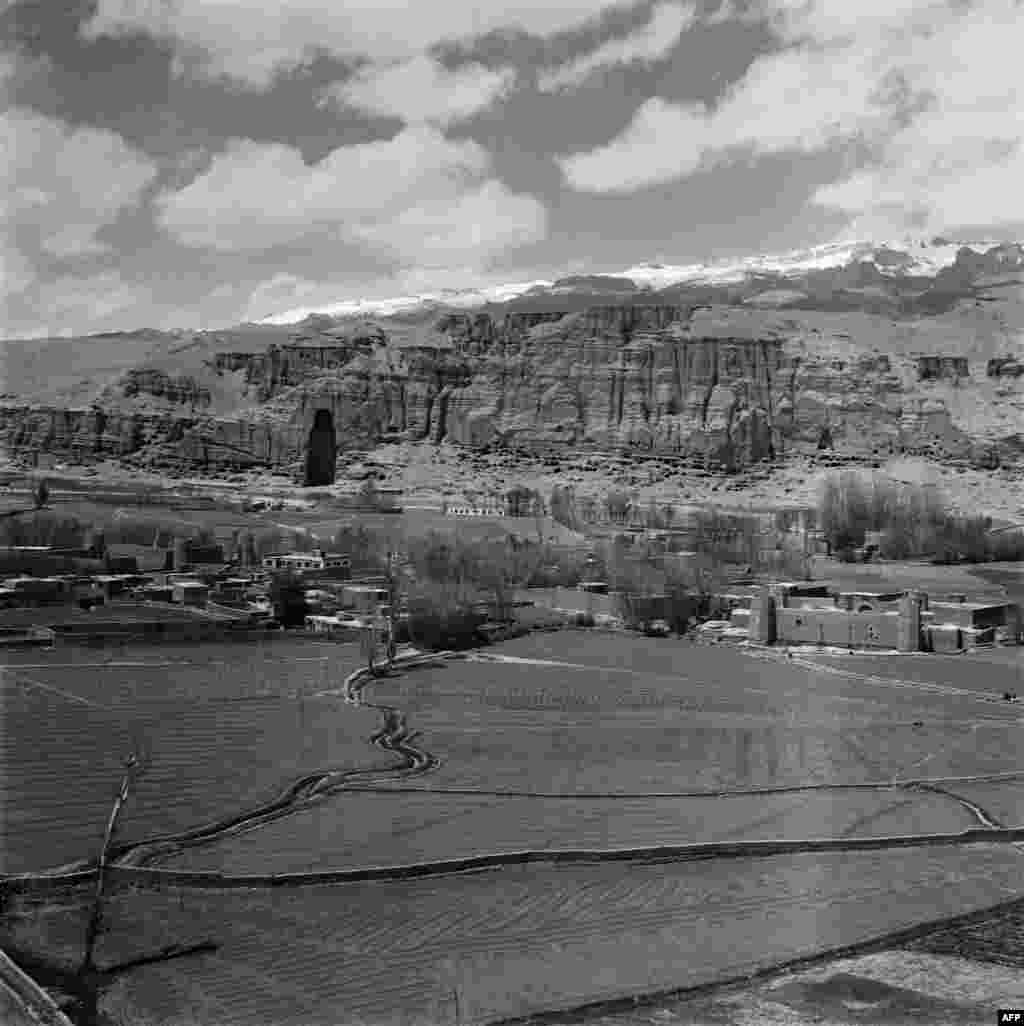
5/14A photo of the archaeological site at Bamiyan, which was taken in May 1968 during an official visit by French Prime Minister Georges Pompidou.
Taliban militants spent the early part of March 2001 systematically dynamiting two of Afghanistan's greatest historical and cultural treasures: the Buddhas of Bamiyan. Twenty years after their destruction, we look back at these iconic artefacts and how the site looks today.
Taliban militants spent the early part of March 2001 systematically dynamiting two of Afghanistan's greatest historical and cultural treasures: the Buddhas of Bamiyan. Twenty years after their destruction, we look back at these iconic artefacts and how the site looks today.
Show moreShow less
7/14The site of the Bamiyan Buddhas on December 7, 1997.
Taliban militants spent the early part of March 2001 systematically dynamiting two of Afghanistan's greatest historical and cultural treasures: the Buddhas of Bamiyan. Twenty years after their destruction, we look back at these iconic artefacts and how the site looks today.
Show moreShow less
8/14An explosion rips apart one of the Buddhas in March 2001.
Taliban militants spent the early part of March 2001 systematically dynamiting two of Afghanistan's greatest historical and cultural treasures: the Buddhas of Bamiyan. Twenty years after their destruction, we look back at these iconic artefacts and how the site looks today.
Show moreShow less
9/14Taliban militants stand amid the rubble of the destroyed treasures on March 26, 2001.
Taliban militants spent the early part of March 2001 systematically dynamiting two of Afghanistan's greatest historical and cultural treasures: the Buddhas of Bamiyan. Twenty years after their destruction, we look back at these iconic artefacts and how the site looks today.
Taliban militants spent the early part of March 2001 systematically dynamiting two of Afghanistan's greatest historical and cultural treasures: the Buddhas of Bamiyan. Twenty years after their destruction, we look back at these iconic artefacts and how the site looks today.
Taliban militants spent the early part of March 2001 systematically dynamiting two of Afghanistan's greatest historical and cultural treasures: the Buddhas of Bamiyan. Twenty years after their destruction, we look back at these iconic artefacts and how the site looks today.
Show moreShow less
12/14Shattered pieces of the Buddha statues at a UNESCO storage site in Bamiyan Province in November 2016. There has been talk over the years of restoring the statues.
Taliban militants spent the early part of March 2001 systematically dynamiting two of Afghanistan's greatest historical and cultural treasures: the Buddhas of Bamiyan. Twenty years after their destruction, we look back at these iconic artefacts and how the site looks today.
Show moreShow less
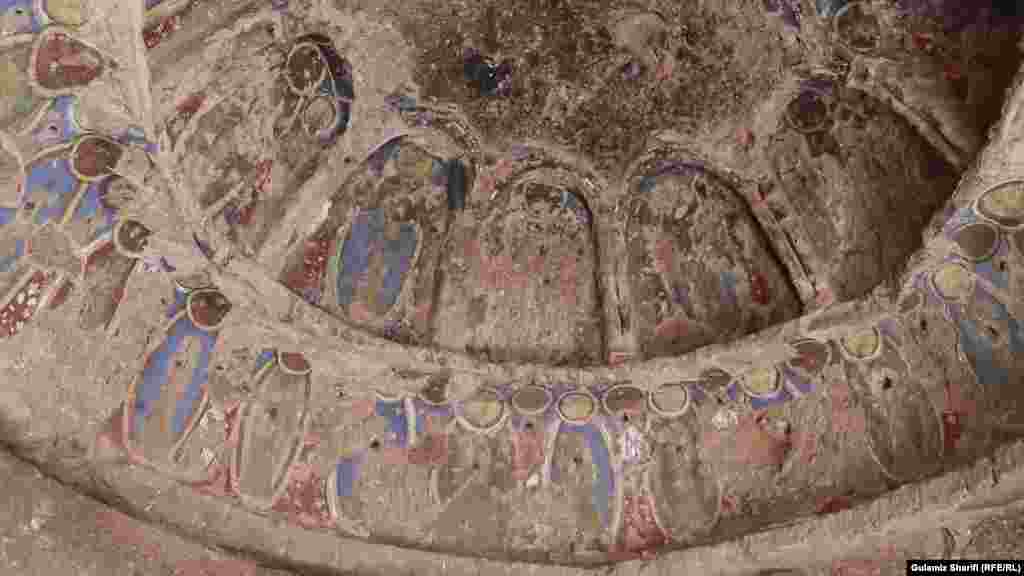
13/14Researchers have discovered that some of the murals on the walls behind where the statues once stood were created using oil-based paints as early as the mid-7th century. Photo from February 2021.
Taliban militants spent the early part of March 2001 systematically dynamiting two of Afghanistan's greatest historical and cultural treasures: the Buddhas of Bamiyan. Twenty years after their destruction, we look back at these iconic artefacts and how the site looks today.
Show moreShow less
14/14Boys play cricket at the site in February 2021.
Taliban militants spent the early part of March 2001 systematically dynamiting two of Afghanistan's greatest historical and cultural treasures: the Buddhas of Bamiyan. Twenty years after their destruction, we look back at these iconic artefacts and how the site looks today.
Show moreShow less
Previous slide
Next slide
Mohammad Tahir Zaheer, acting minister of information and culture, called the destructionof the ancient statues “a great cultural crime of the century” and urged the perpetrators be held to account.
Toward the end of the Taliban’s five-year reign in Afghanistan, the hard-line Islamic group declared the Buddha statues “false idols” and blew up the ancient figures in March 2001, drawing international condemnation.
The commemoration comes as concern mounts that the Taliban could return to power if U.S. troops are withdrawn from the war-torn country in the coming months as outlined in a deal between the militants and the United States.
Talks being held in Qatar between the Afghan government and the Taliban are stalled amid a surge of violence between the warring sides.
RFE/RL's Radio Azadi is one of the most popular and trusted media outlets in Afghanistan. Nearly half of the country's adult audience accesses Azadi's reporting on a weekly basis.