




Afghanistan has asked the US government to "act responsibly" amid reports that it plans to deport dozens of Afghans via Pakistan, possibly in the coming days.
The US State Department did not confirm the reported deportation of Afghans, with a spokesman adding in a statement to RFE/RL that "we affirm our position that all countries must be able to manage their borders and immigration processes in a manner that ensures the safety, security, and prosperity of their citizens."
Pakistani officials have remained tight-lipped about the reports. The country's Foreign Ministry did not respond to multiple attempts via direct telephone calls and e-mails for comment.
The California-based nongovernmental organization AfghanEvac said the US government is preparing to deport more than 150 Afghans on a charter flight out of Louisiana, reportedly "as soon as November 2."
Shawn VanDiver, president of the organization, said the flight carrying the Afghans -- including two women -- would land in Islamabad, and that he "does not know what agreement has been reached between Washington and Islamabad on the matter."

In a November 2 statement, Afghanistan's Taliban-led Foreign Ministry urged the United States to respect the "rights and legitimate aspirations" of Afghans facing deportation.
It added that the Taliban authorities were ready to "engage constructively" with Washington, taking into account the "existing realities and legitimate concerns" of both sides.
Quoting three US officials, the New York Times reported on October 30 that the Afghan immigrants are currently being held in Louisiana. The AP also published similar reports, citing what it said were court documents.
Because it has no formal diplomatic relations with the Taliban, the United States cannot arrange for the deportation of the detainees to Afghanistan. They will instead be sent to Pakistan, which would then send them on to Afghanistan.
In an apparent reference to Pakistan, the Taliban said that "third countries should not bargain over the fate of another country's nationals in pursuit of temporary and limited concessions or other considerations."

Once allies for decades, Pakistan and the Afghan Taliban have been in a diplomatic deadlock amid sporadic bloody clashes along the border between the two countries since October 2025.
Pakistan accuses the Afghan Taliban of providing sanctuary to the Tehrik-e Taliban Pakistan (TTP), also known as the Pakistani Taliban, on Afghan soil. The Afghan Taliban rejects the allegations, saying it would not allow anyone to use Afghanistan's territory against another country.
Immigrants' rights organizations have expressed concerns about threats to the lives of those being deported to Afghanistan, saying the immigrants targeted include relatives of people who assisted US forces before the military withdrawal in 2021.
Refugees International (RI), a US-based humanitarian advocacy organization, has asked for a halt to "this and future flights," saying the immigrants face "targeted persecution" from the Taliban.
The group's director, Yael Schacher, said in a statement on November 1 that although "we lack details about the deal with Pakistan," it is known that the "plane will be landing in a country that has engaged in mass forced expulsions to Afghanistan."

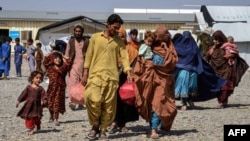
In a sweeping deportation campaign, Pakistan has sent approximately 2.5 million Afghans back to their war-torn country since September 2023.
Tens of thousands of Afghans fled their country following the Taliban takeover of Kabul in August 2021, thousands of whom still reside in Pakistan as they await resettlement in third counties.
Tens of thousands of Afghan immigrants are said to be residing in Pakistan.
While many Afghans fled their country fearing retaliatory measures by the Taliban, others escaped to avoid the Taliban bans on civil liberties such as education, music, and freedom of expression. Afghanistan is frequently ranked among the world's worst countries for violations of human rights, and women's rights in particular.
The United Nations has repeatedly warned that the Taliban's ban on girls' education in Afghanistan is creating a "lost generation."
According to the UN figures presented to the Security Council in June, approximately 3.8 million Afghan girls between the ages of 7 and 18 remained out of schools in the country.

