


Accessibility links

Breaking News

Armenia, Azerbaijan Mark One-Year Anniversary Of Start Of Karabakh War

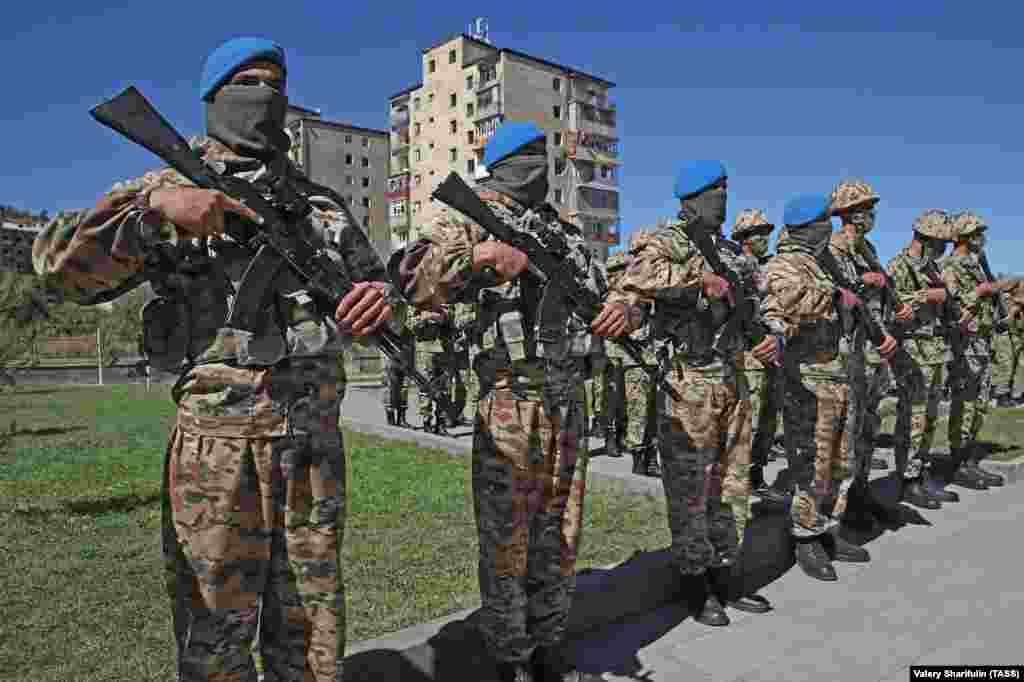
Azerbaijani servicemen take part in a parade in Susa/Shushi on September 27.

People in Azerbaijan and Armenia have marked the first anniversary of the start of the six-week war over the Nagorno-Karabakh region in which more than 6,600 people died and which ended with Azerbaijan regaining control of large swaths of territory.

Soldiers carrying photographs of comrades killed in the war marched through the center of the Azerbaijani capital, Baku. In Yerevan, the Armenian capital, thousands of people, including Prime Minister Nikol Pashinian, went to the Yerablur military cemetery to pay respects to soldiers buried there.

Nagorno-Karabakh is within Azerbaijan but had been under the control of ethnic Armenian forces backed by Armenia since the end of a separatist war in 1994.

Last year’s war ended when Pashinian signed a Russia-brokered cease-fire that granted Azerbaijan control of parts of Nagorno-Karabakh as well as adjacent territories occupied by Armenians.

Armenia, Azerbaijan Mark Anniversary Of Karabakh Campaign

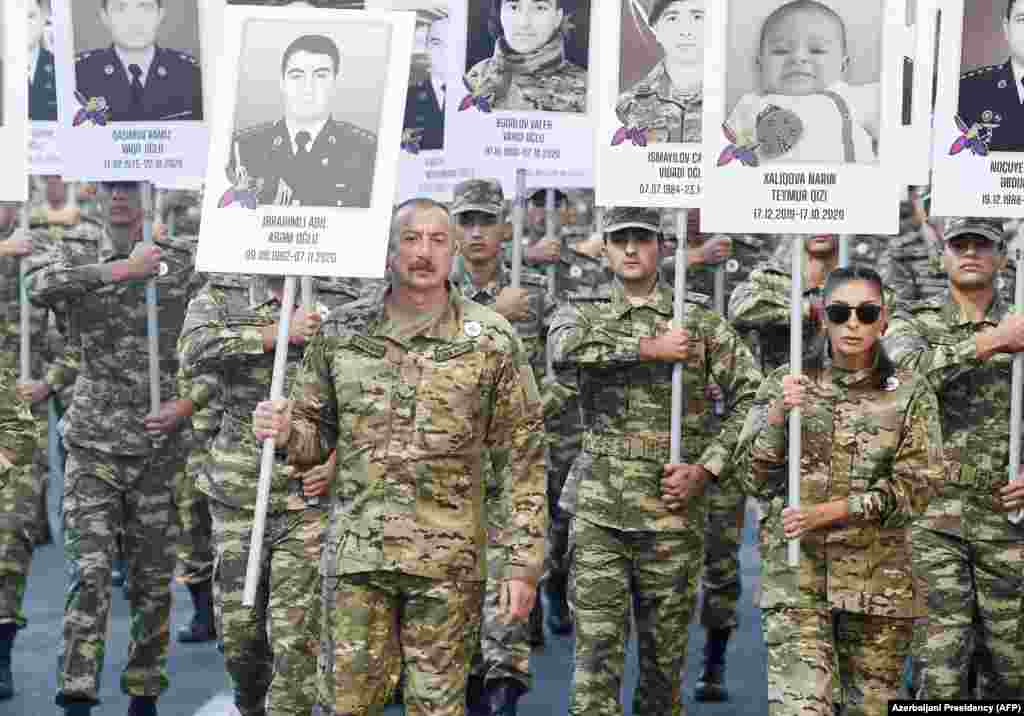
<p>Thousands of soldiers march through Baku on September 27. The marchers are holding placards depicting soldiers and civilians killed in 2020, the most intense escalation since the 1994 truce that turned the war between Armenia and Azerbaijan over the Nagorno-Karabakh region into a &quot;frozen conflict.&quot;</p>
1/8

Thousands of soldiers march through Baku on September 27. The marchers are holding placards depicting soldiers and civilians killed in 2020, the most intense escalation since the 1994 truce that turned the war between Armenia and Azerbaijan over the Nagorno-Karabakh region into a "frozen conflict."

Marches and vigils in Yerevan and Baku commemorated the thousands killed in fighting that began exactly one year ago and resulted in Azerbaijan recapturing land held for decades by ethnic Armenians.
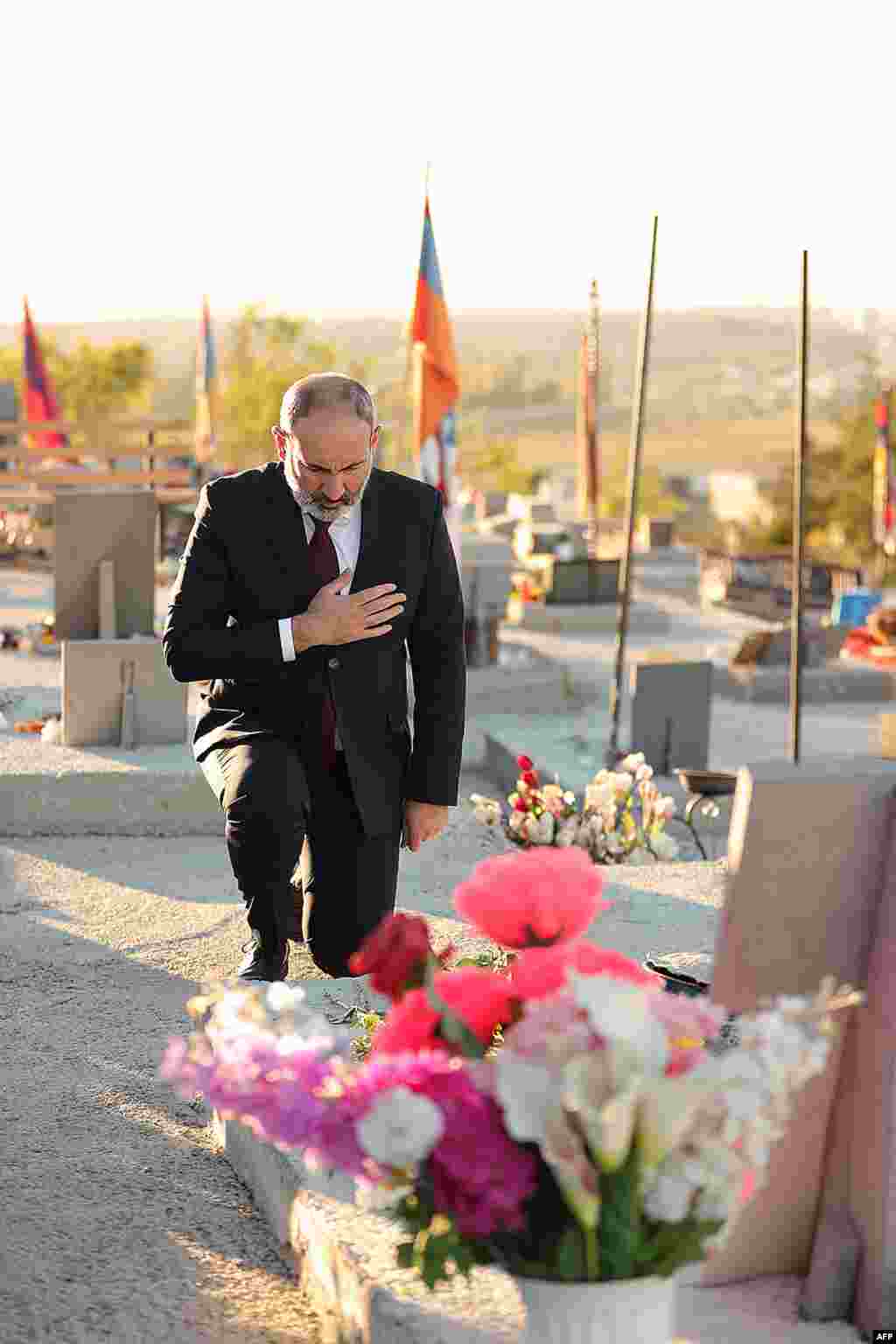
Armenian Prime Minister Nikol Pashinian kneels in the Yerablur Military Memorial Cemetery in Yerevan early on September 27 as commemorations of the 2020 fighting begin.
2/8 Armenian Prime Minister Nikol Pashinian kneels in the Yerablur Military Memorial Cemetery in Yerevan early on September 27 as commemorations of the 2020 fighting begin.
Marches and vigils in Yerevan and Baku commemorated the thousands killed in fighting that began exactly one year ago and resulted in Azerbaijan recapturing land held for decades by ethnic Armenians.
Azerbaijani President Ilham Aliyev and his wife, Vice President Mehriban Aliyeva, lead the march through Baku on September 27 to commemorate those killed during the six weeks of fighting. According to Azerbaijani officials, 2,905 Azerbaijani servicemen and 100 civilians died in the fighting.<br />
&nbsp;
3/8 Azerbaijani President Ilham Aliyev and his wife, Vice President Mehriban Aliyeva, lead the march through Baku on September 27 to commemorate those killed during the six weeks of fighting. According to Azerbaijani officials, 2,905 Azerbaijani servicemen and 100 civilians died in the fighting.
 
Marches and vigils in Yerevan and Baku commemorated the thousands killed in fighting that began exactly one year ago and resulted in Azerbaijan recapturing land held for decades by ethnic Armenians.
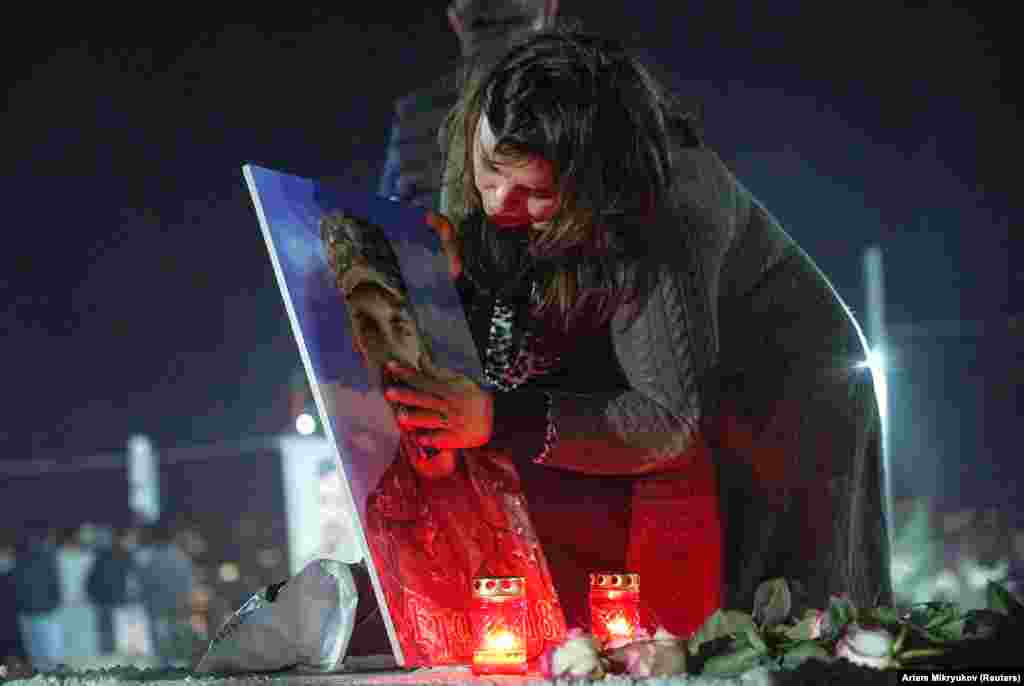
A woman mourns at the grave of a young soldier during a candlelight vigil in Armenia&rsquo;s Yerablur cemetery on the eve of the anniversary. A reported 4,025 ethnic Armenian fighters were killed in the conflict, along with 88 civilians. Amnesty International <a href="https://www.amnesty.org/en/latest/press-release/2020/12/armenia-azerbaijan-decapitation-and-war-crimes-in-gruesome-videos-must-be-urgently-investigated/" target="_blank">accused both sides of war crimes</a>, including gruesome executions.&nbsp;<br />
&nbsp;
4/8 A woman mourns at the grave of a young soldier during a candlelight vigil in Armenia’s Yerablur cemetery on the eve of the anniversary. A reported 4,025 ethnic Armenian fighters were killed in the conflict, along with 88 civilians. Amnesty International accused both sides of war crimes, including gruesome executions. 
 
Marches and vigils in Yerevan and Baku commemorated the thousands killed in fighting that began exactly one year ago and resulted in Azerbaijan recapturing land held for decades by ethnic Armenians.
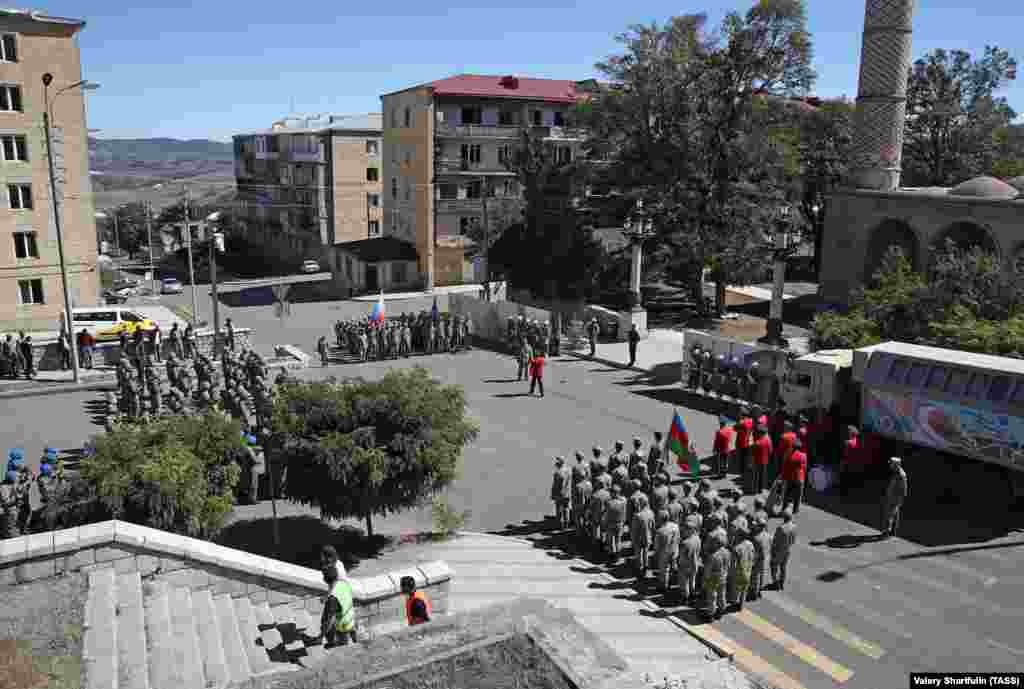
Azerbaijani servicemen in Susa, known as Shushi in Armenian, during a commemoration on September 27. The historic town was recaptured from ethnic Armenians by Azerbaijani forces in November 2020, shortly before a Russia-brokered cease-fire brought a halt to combat operations.
5/8 Azerbaijani servicemen in Susa, known as Shushi in Armenian, during a commemoration on September 27. The historic town was recaptured from ethnic Armenians by Azerbaijani forces in November 2020, shortly before a Russia-brokered cease-fire brought a halt to combat operations.
Marches and vigils in Yerevan and Baku commemorated the thousands killed in fighting that began exactly one year ago and resulted in Azerbaijan recapturing land held for decades by ethnic Armenians.
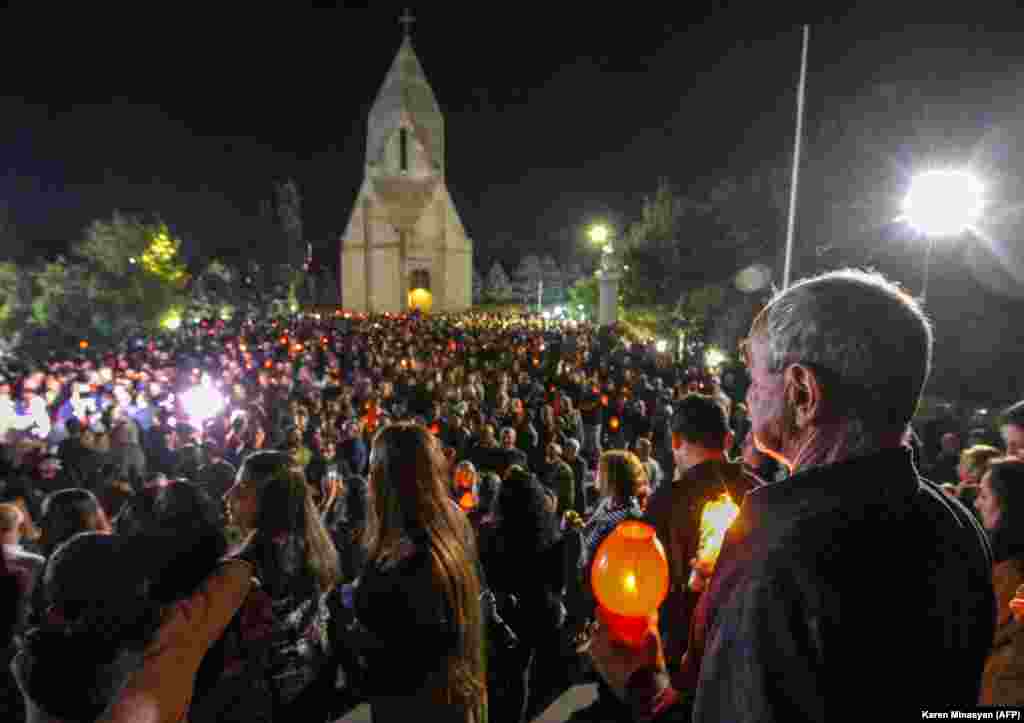
A candlelight vigil in Yerevan&#39;s Yerablur cemetery on the evening of September 26.&nbsp;
6/8 A candlelight vigil in Yerevan's Yerablur cemetery on the evening of September 26. 
Marches and vigils in Yerevan and Baku commemorated the thousands killed in fighting that began exactly one year ago and resulted in Azerbaijan recapturing land held for decades by ethnic Armenians.
Azerbaijani servicemen during a parade in Susa/Shushi on September 27. In a speech, Azerbaijan&rsquo;s authoritarian <a href="https://en.president.az/articles/53224">president referred to the 2020 fighting,</a> in which vast tracts of Azerbaijani land was retaken from ethnic Armenian fighters, as a &ldquo;holy war&rdquo; and declared, &ldquo;From now on, we will live as a victorious country, a victorious people, and we will build and restore the liberated lands.&rdquo;<br />
&nbsp;
7/8 Azerbaijani servicemen during a parade in Susa/Shushi on September 27. In a speech, Azerbaijan’s authoritarian president referred to the 2020 fighting, in which vast tracts of Azerbaijani land was retaken from ethnic Armenian fighters, as a “holy war” and declared, “From now on, we will live as a victorious country, a victorious people, and we will build and restore the liberated lands.”
 
Marches and vigils in Yerevan and Baku commemorated the thousands killed in fighting that began exactly one year ago and resulted in Azerbaijan recapturing land held for decades by ethnic Armenians.
A memorial service in Stepanakert, known as Xankendi in Azeri, on September 27. The city is the largest in the Nagorno-Karabakh region still under control of ethnic Armenians. Armenia&rsquo;s prime minister has vowed to commit to the &ldquo;revival and further development&rdquo; of those parts of the region that remain in Armenian hands.
8/8 A memorial service in Stepanakert, known as Xankendi in Azeri, on September 27. The city is the largest in the Nagorno-Karabakh region still under control of ethnic Armenians. Armenia’s prime minister has vowed to commit to the “revival and further development” of those parts of the region that remain in Armenian hands.
Marches and vigils in Yerevan and Baku commemorated the thousands killed in fighting that began exactly one year ago and resulted in Azerbaijan recapturing land held for decades by ethnic Armenians.
Previous slide
Next slide

The truce accord negotiated by Russian President Vladimir Putin also led to the deployment of 2,000 Russian peacekeeping forces in Nagorno-Karabakh and the so-called Lachin Corridor connecting the territory to Armenia.

Armenia says more than 3,700 Armenians and Nagorno-Karabakh residents died in the war. Azerbaijan said it lost 2,900 people.

Azerbaijan's Foreign Ministry issued a statement placing blame for the war on Armenia, saying: “One year ago today, the armed forces of the Republic of Azerbaijan began responsive measures to counter another military provocation from the armed forces of the Republic of Armenia.”

In a speech to mark the occasion, Azerbaijani President Ilham Aliyev again said that Azerbaijan’s victory in the war put an end to the conflict. “Azerbaijan restored its territorial integrity,” he said.

But Armenia's Foreign Ministry said “the 44-day war was a preplanned and prepared military aggression, the purpose of which was to finally close the Karabakh issue by exterminating the Armenian population.”

Armenia maintains that the conflict remains unresolved because there is still no agreement on Karabakh’s status, the main bone of contention.

The Armenian and Azerbaijani foreign ministers met in New York on September 24 for talks hosted by the U.S., Russian, and French diplomats co-chairing the OSCE Minsk Group. In a joint statement issued after the talks, the mediators reiterated that they are ready to “continue working with the sides to find comprehensive solutions to all remaining issues related to or resulting from the Nagorno-Karabakh conflict.”

With reporting by AP
  • 16x9 Image

    RFE/RL's Armenian Service

    RFE/RL’s Armenian Service, operating out of a bureau in Yerevan, is a leading source of trusted reporting and technical innovation, reaching outsized audiences when developments demand authoritative, up-to-the-minute news most.

  • 16x9 Image

    RFE/RL's Azerbaijani Service

    Despite near-total government control over the media, RFE/RL's Azerbaijani Service has built a high-impact social-media presence in Azerbaijan and a reputation as a leading source of independent news.

This item is part of
XS
SM
MD
LG