

Stitched Up: Belarusian Political Prisoners Highlighted Through Traditional Embroidery
- By Amos Chapple
An art initiative is reminding the world of the political prisoners held in Belarus through traditional cross-stitch embroidery.
1
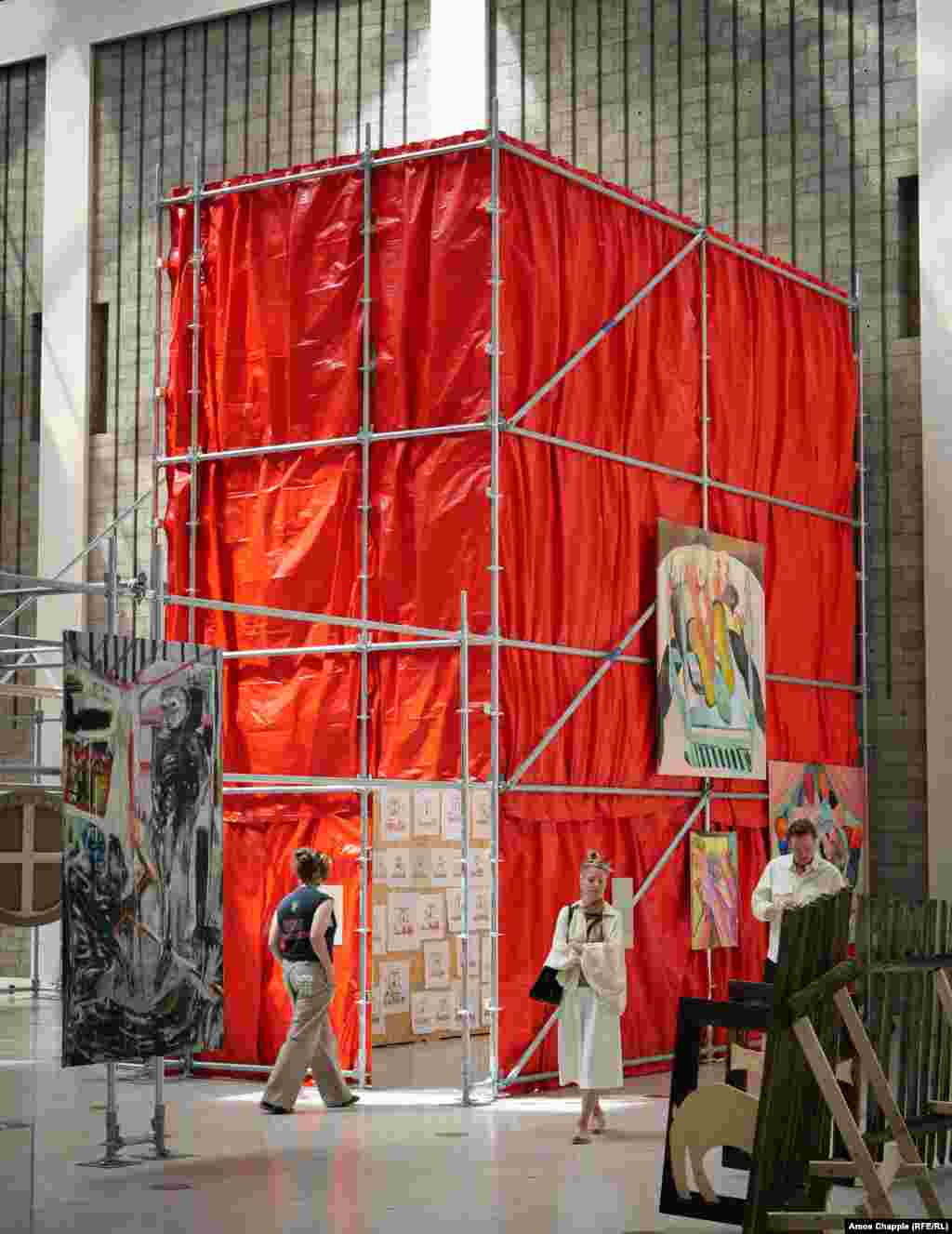
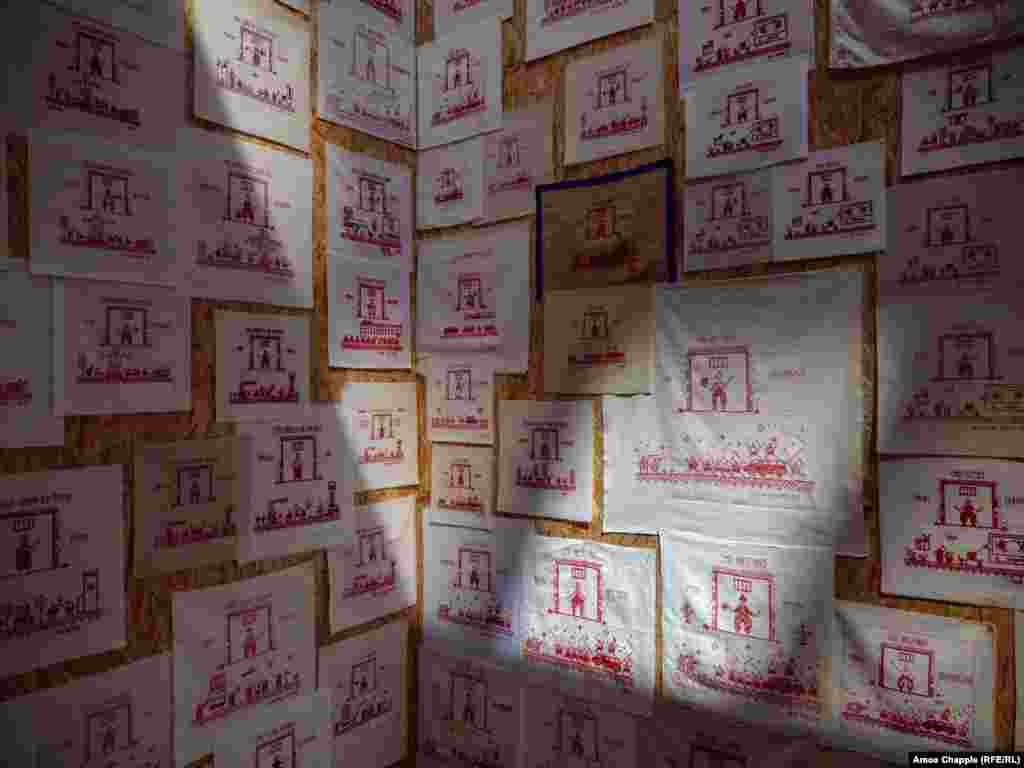
Inside this display in a Prague exhibition hall, the plight of political prisoners in Belarus is being highlighted in an art form usually associated with traditional Slavic clothing.

2
The exhibit, titled Framed In Belarus, uses cross-stitch embroidery to profile those arrested amid the police crackdown that followed Belarus's disputed 2020 presidential election. The work is part of the Matter of Art Biennale in Prague's National Gallery.
3
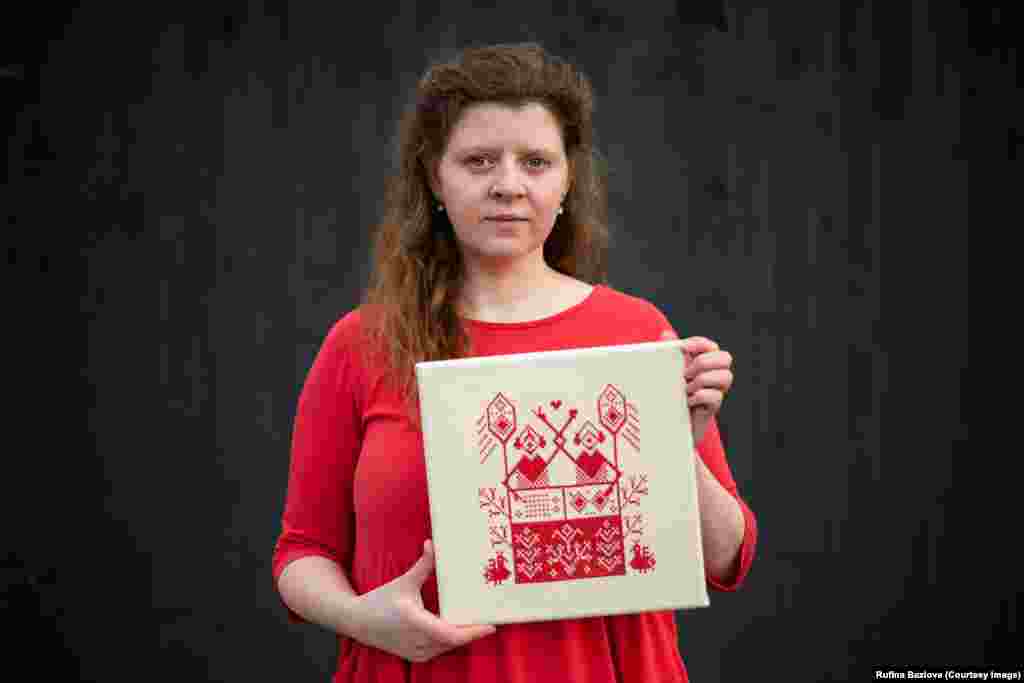
Rufina Bazlova (pictured) is the Czech-based Belarusian artist behind the project, which she began with art historian Sofia Tocar.
Framed In Belarus is a compilation of 681 embroideries stitched by volunteers from around the world who followed designs created by Bazlova.
Framed In Belarus is a compilation of 681 embroideries stitched by volunteers from around the world who followed designs created by Bazlova.
4
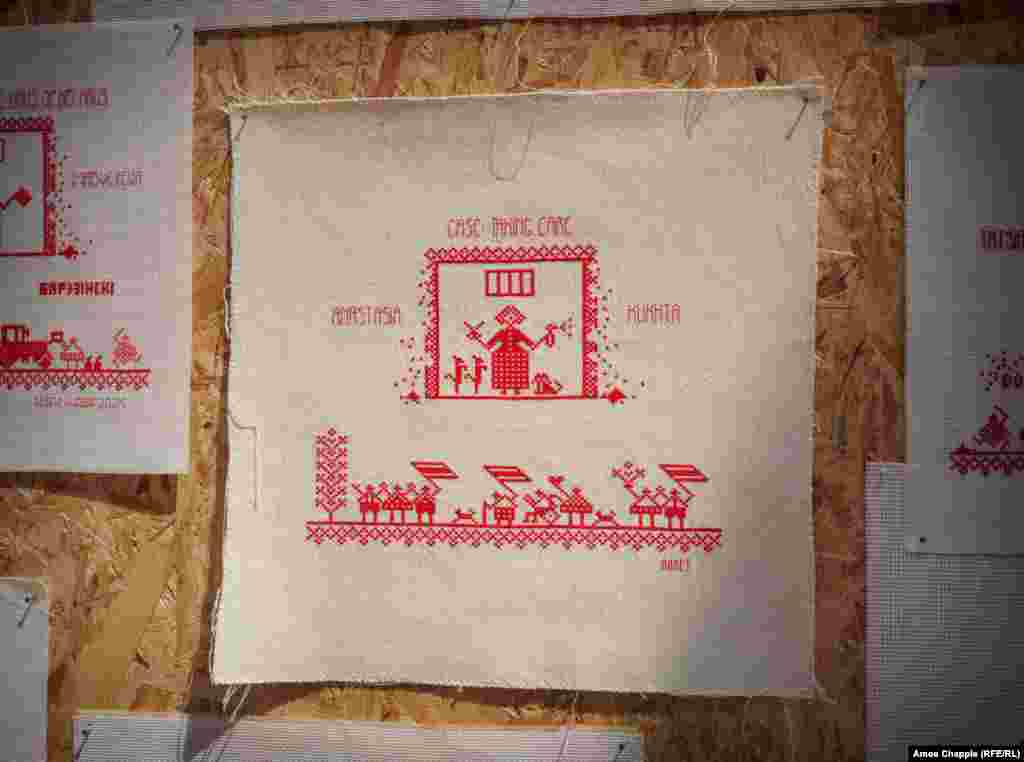
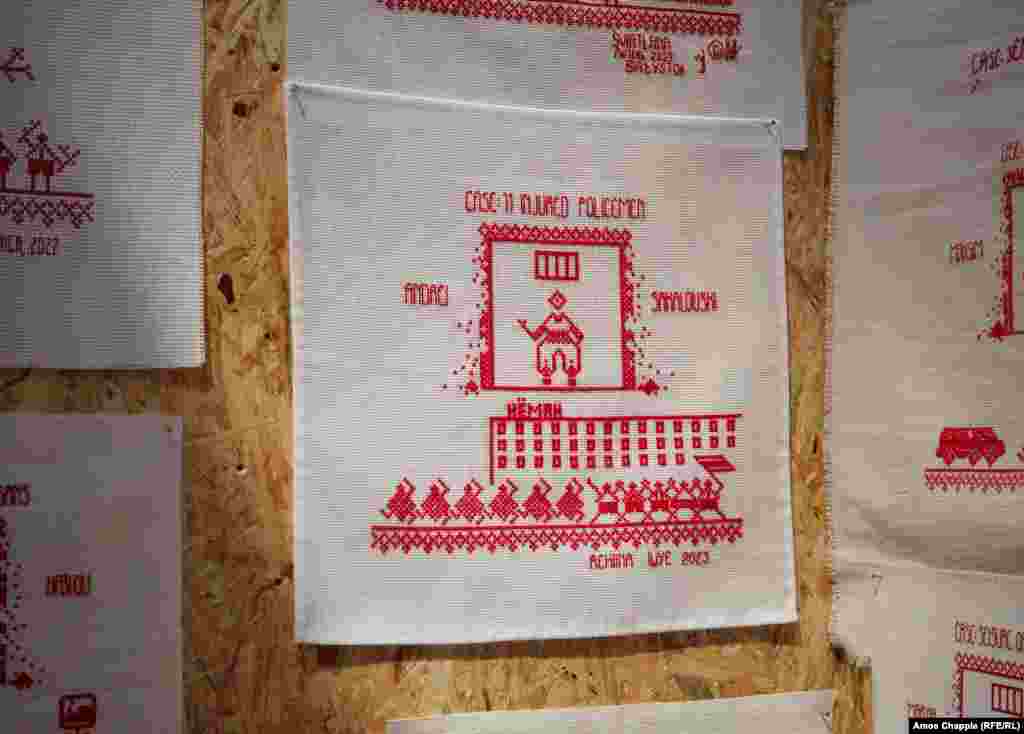
Each artwork highlights an individual prisoner.
This cross-stitch illustrates the case of Minsk woman Anastasia Kukhta who ran a hairdressing business until her arrest and imprisonment in 2022 after taking part in anti-government protests. She is serving a five-year sentence for charges that include association with an "extremist formation."
This cross-stitch illustrates the case of Minsk woman Anastasia Kukhta who ran a hairdressing business until her arrest and imprisonment in 2022 after taking part in anti-government protests. She is serving a five-year sentence for charges that include association with an "extremist formation."
5
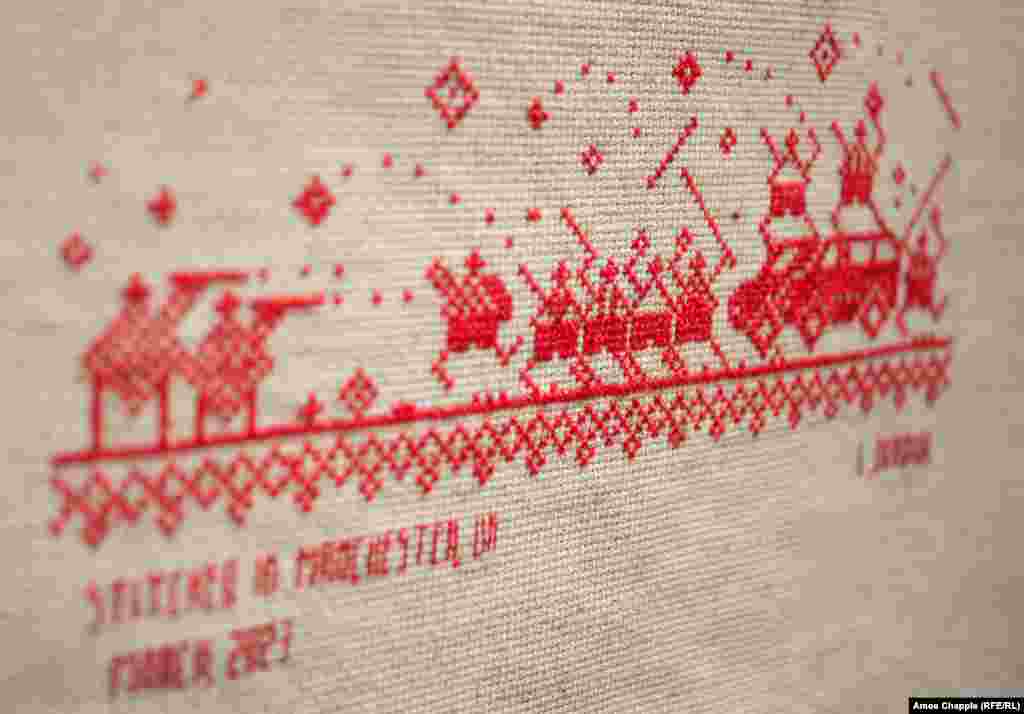
A detail of one panel showing protesters clashing with riot police in Brest.
Bazlova says the textile political art, which mimics the patterns used on traditional vyshyvanka shirts, is impactful precisely because it is not shocking. Unlike distressing documentary imagery of the postelection violence, cross-stitch depictions are "nice, even though they're speaking about hard topics," the artist told RFE/RL.
Bazlova says the textile political art, which mimics the patterns used on traditional vyshyvanka shirts, is impactful precisely because it is not shocking. Unlike distressing documentary imagery of the postelection violence, cross-stitch depictions are "nice, even though they're speaking about hard topics," the artist told RFE/RL.

6
A truck-mounted water cannon and protesters depicted in a cross-stitch panel.
Bazlova adds that the pictogram-like representations make it "immediately understandable what's going on" for both foreign and Belarusian audiences.
Bazlova adds that the pictogram-like representations make it "immediately understandable what's going on" for both foreign and Belarusian audiences.
7
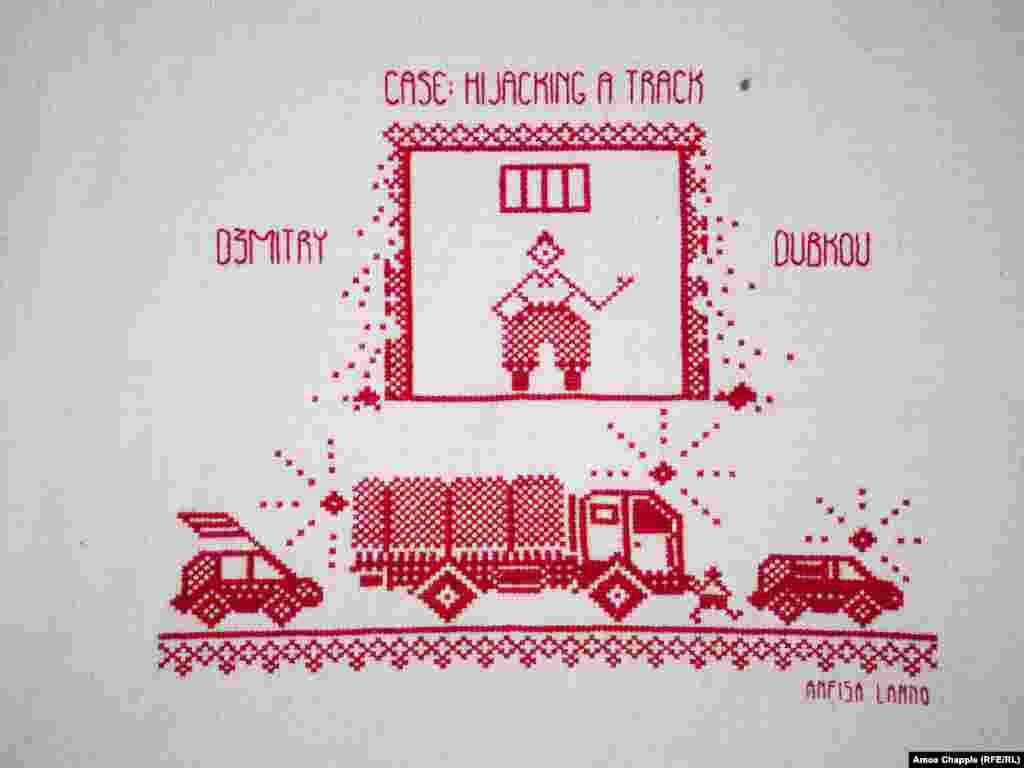
A depiction of Dzmitry Dubkou blocking a road with a street-cleaning truck in 2020. The Belarusian man was handed a seven-year prison sentence for charges including "deliberate blocking of transport." He was released in December 2025.
8
Bazlova has previously expressed misgivings about making art based on the hundreds of political prisoners in Belarus. She says she became determined to continue with the cross-stitch project after a conversation with the wife of one prisoner who told her, "the more we talk about them, the safer they are."
9
The exhibition runs until September 13 in the Great Hall of the National Gallery Prague.


