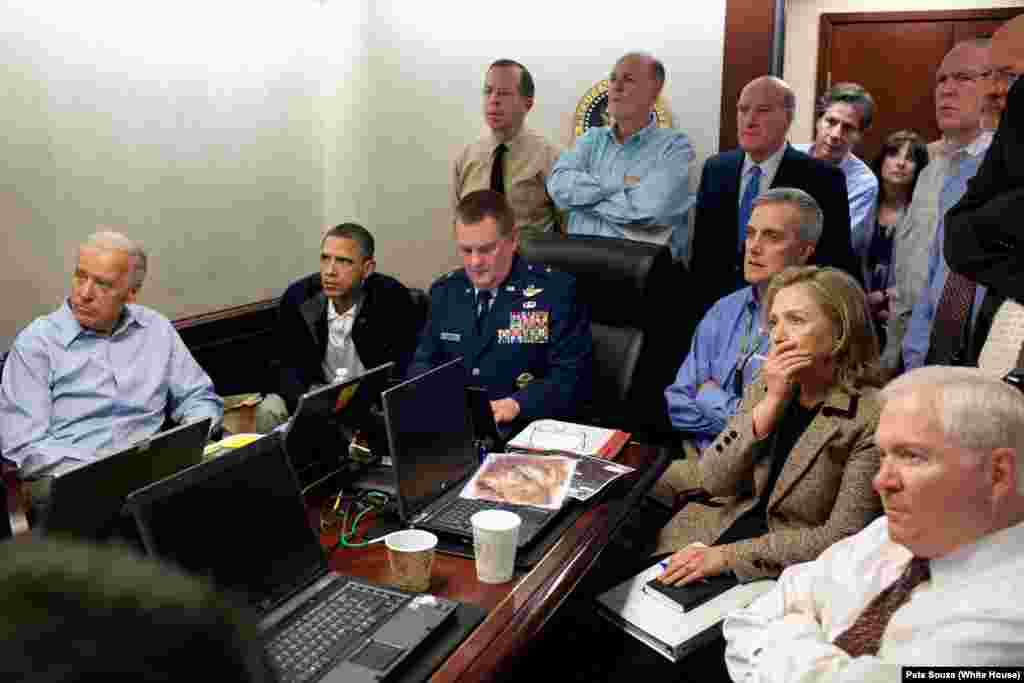
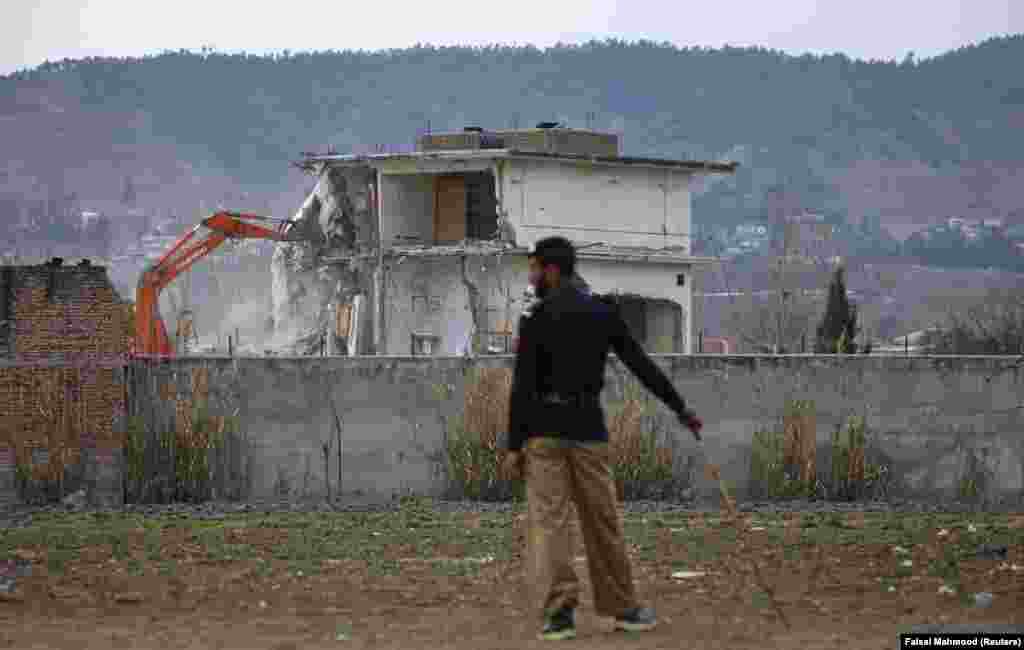
President Barack Obama (second from left) and then-Vice President Joe Biden (left) are shown in the Situation Room at the White House along with other senior officials to watch live video feed of the raid that killed Osama bin Laden in 2011.
President Joe Biden has used the 10th anniversary of the raid that killed Al-Qaeda chief Osama bin Laden to support his decision to pull troops out of Afghanistan.
In a statement released by the White House on May 2, the president said Al-Qaeda’s presence in Afghanistan has been “greatly degraded” as a result of the 9/11 mastermind’s death and nearly 20 years of war.
“We followed bin Laden to the gates of hell -- and we got him,” Biden said.
“We kept the promise to all those who lost loved ones on 9/11: that we would never forget those we had lost, and that the United States will never waver in our commitment to prevent another attack on our homeland and to keep the American people safe,” the president said.
“Now, as a result of those efforts, as we bring to an end America’s longest war and draw down the last of our troops from Afghanistan, Al-Qaeda is greatly degraded there,” he said.
Ten Years Later: The Killing Of Osama Bin Laden
1/19The September 11 terror attacks in New York (pictured), Washington, D.C., and Pennsylvania in 2001 gave renewed urgency to the hunt for Saudi terrorist leader Osama bin Laden. The search had begun in the 1990s.
On May 2, 2011, a night raid by elite U.S. commandos resulted in the death of the world’s most wanted man.
Show moreShow less
2/19A photograph believed to show bin Laden at a judo class in Saudi Arabia in the early 1980s. Bin Laden was the son of a billionaire construction mogul with close personal links to the Saudi royal family.
Jimmy Wu, a judo instructor who shared this photo from his time in Saudi Arabia, told Reuters that he remembers the tall martial arts student once scolding him after Wu's wife walked into the judo center, telling him that no women should be there. "[Bin Laden] did not approve [of her presence]," he said.
On May 2, 2011, a night raid by elite U.S. commandos resulted in the death of the world’s most wanted man.
Show moreShow less
3/19A training camp for jihadists fighting against the Soviet forces who invaded Afghanistan in 1979
Bin Laden used his inherited wealth to fund training camps in Pakistan, where foreign fighters could drill for combat and cross the border into Afghanistan to fight Soviet troops. The Saudi millionaire personally fought in the latter stages of the war, which ended in 1989 when the Soviet Union pulled out of Afghanistan.
On May 2, 2011, a night raid by elite U.S. commandos resulted in the death of the world’s most wanted man.
Show moreShow less
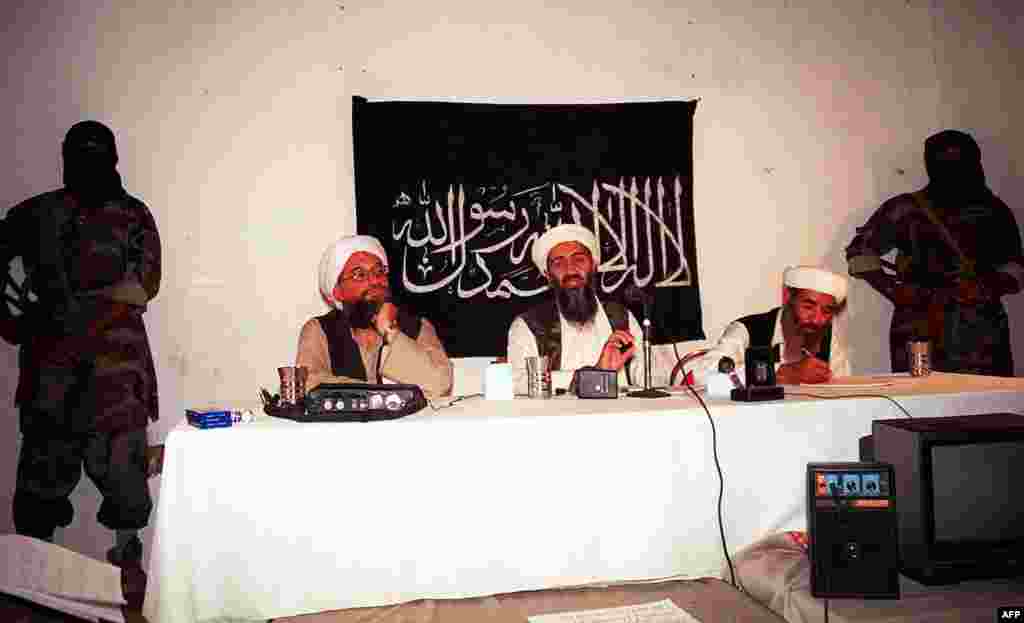
4/19Around the end of the Soviet-Afghan War, bin Laden (photographed at center in 1998) formed what became known as Al-Qaeda. The terrorist leader then declared war on “Jews and crusaders" and proclaimed that killing Westerners is "an individual duty for every Muslim.”
On May 2, 2011, a night raid by elite U.S. commandos resulted in the death of the world’s most wanted man.
Show moreShow less
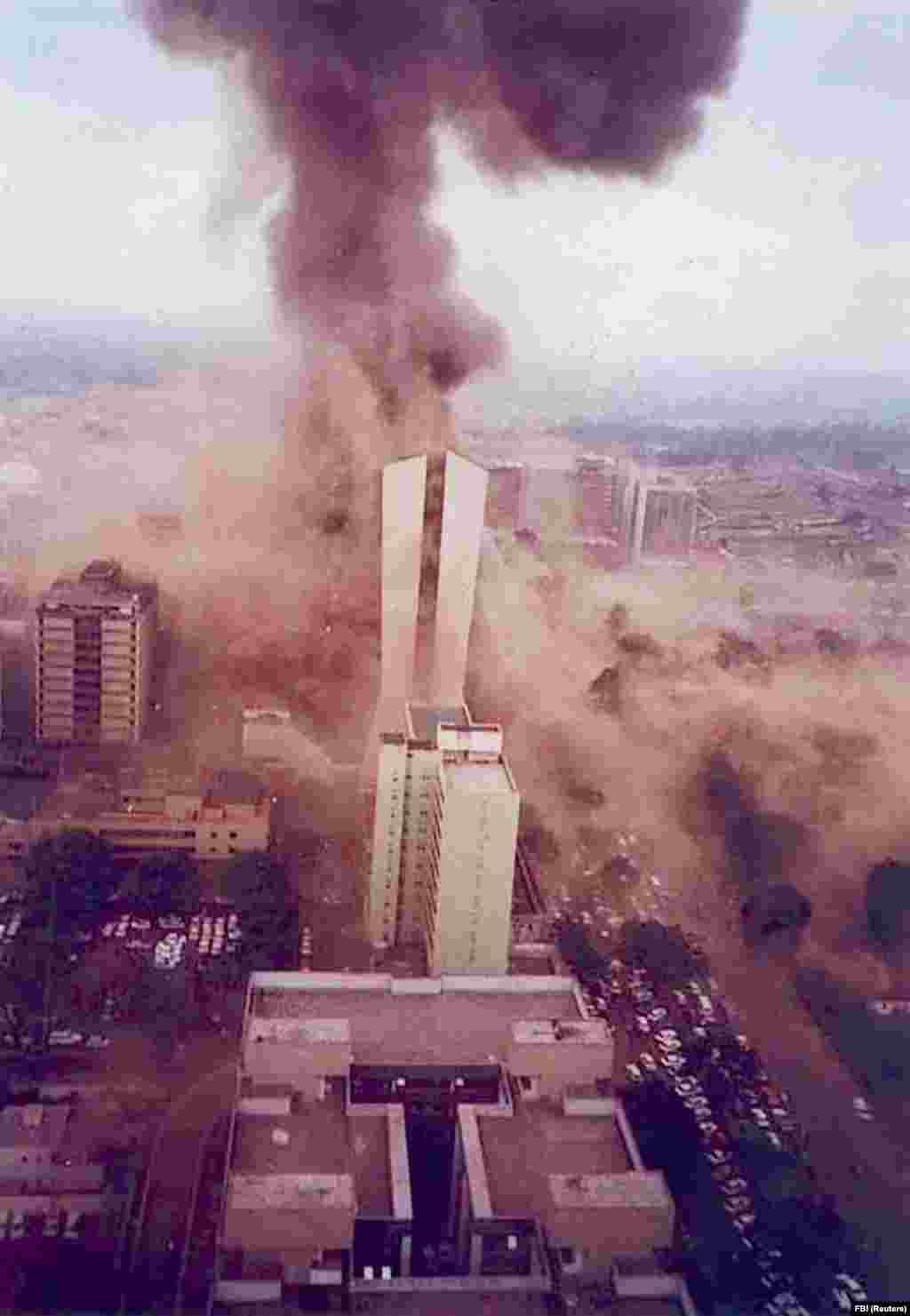
5/19A plume of smoke shoots into the sky moments after a truck-bomb explosion at the U.S. Embassy in Nairobi, Kenya, in 1998.
Through the 1990s, bin Laden claimed responsibility for several terror attacks, including the truck bombings of U.S. embassies in Kenya and Tanzania. The vast majority of the 224 people killed in the attacks were local Africans.
On May 2, 2011, a night raid by elite U.S. commandos resulted in the death of the world’s most wanted man.
Show moreShow less
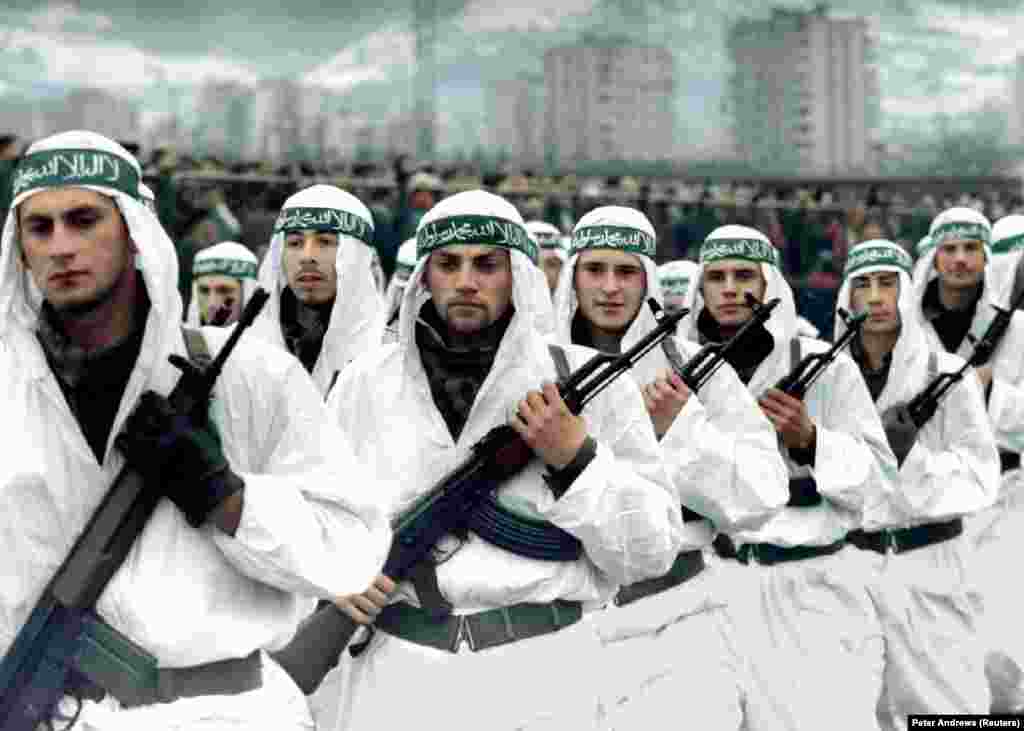
6/19A Muslim brigade of the Bosnian Army marches in a parade in Zenica in 1995.
Bin Laden is also widely believed to have been involved in helping channel foreign jihadists to fight alongside Bosnian Muslims during the wars in the 1990s in former Yugoslavia. The foreign Islamist fighters were notorious for their brutality.
On May 2, 2011, a night raid by elite U.S. commandos resulted in the death of the world’s most wanted man.
Show moreShow less
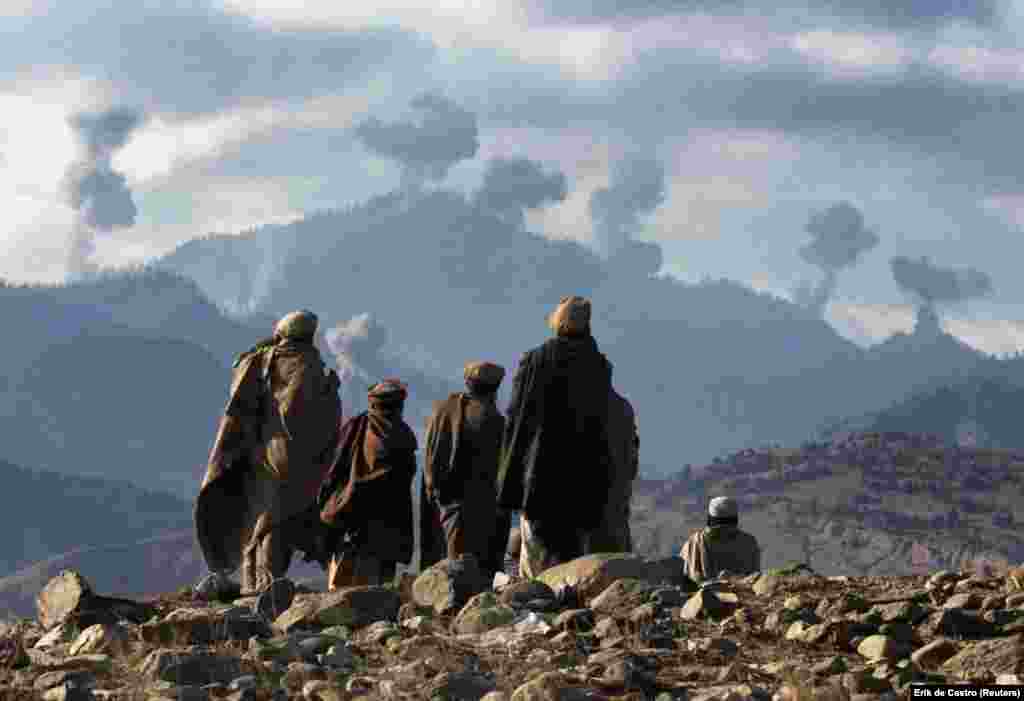
7/19Afghan fighters watch explosions from U.S. bombs rock Afghanistan’s Tora Bora mountain complex in December 2001.
When the United States invaded Afghanistan in the wake of the September 11 attacks, a massive aerial assault backed by ground fighters was launched on a series of mountain caves known as Tora Bora. Bin Laden and his Al-Qaeda fighters were believed to be hiding inside Tora Bora in those mountains before he escaped to Pakistan.
On May 2, 2011, a night raid by elite U.S. commandos resulted in the death of the world’s most wanted man.
Show moreShow less
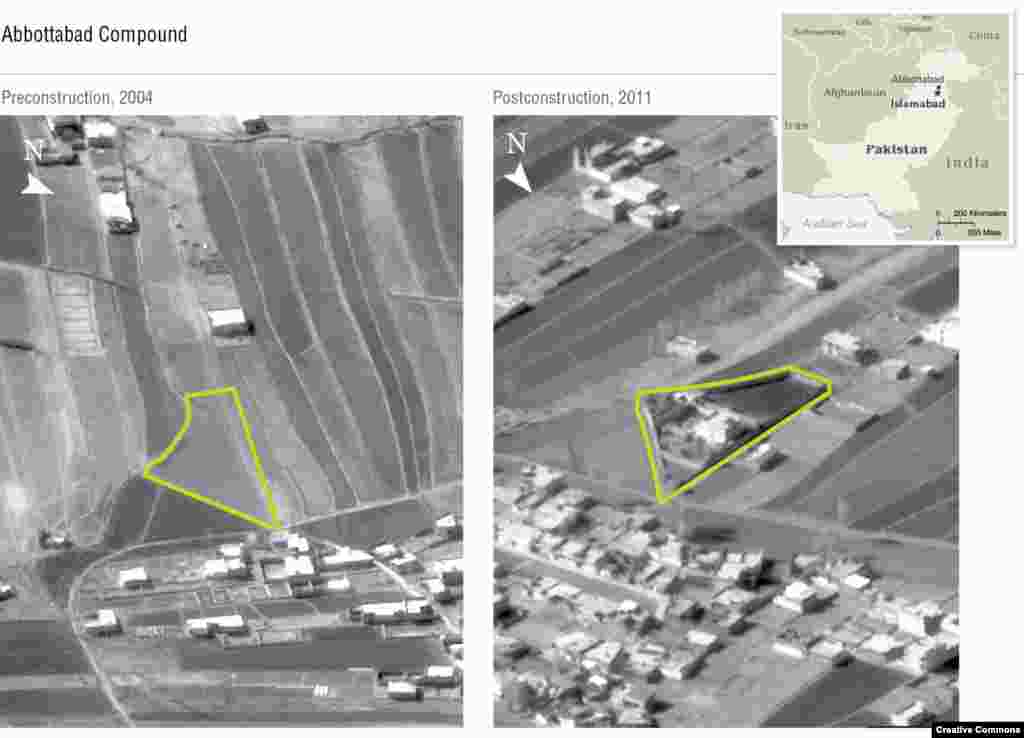
9/19CIA surveillance drone photos showing a new compound in Abbottabad
Bin Laden made his way to the northern Pakistani city of Abbottabad, where a large compound ringed with high walls was built around 2005. Locals noticed that the compound's residents burned their garbage instead of putting it out to be collected.
On May 2, 2011, a night raid by elite U.S. commandos resulted in the death of the world’s most wanted man.
Show moreShow less
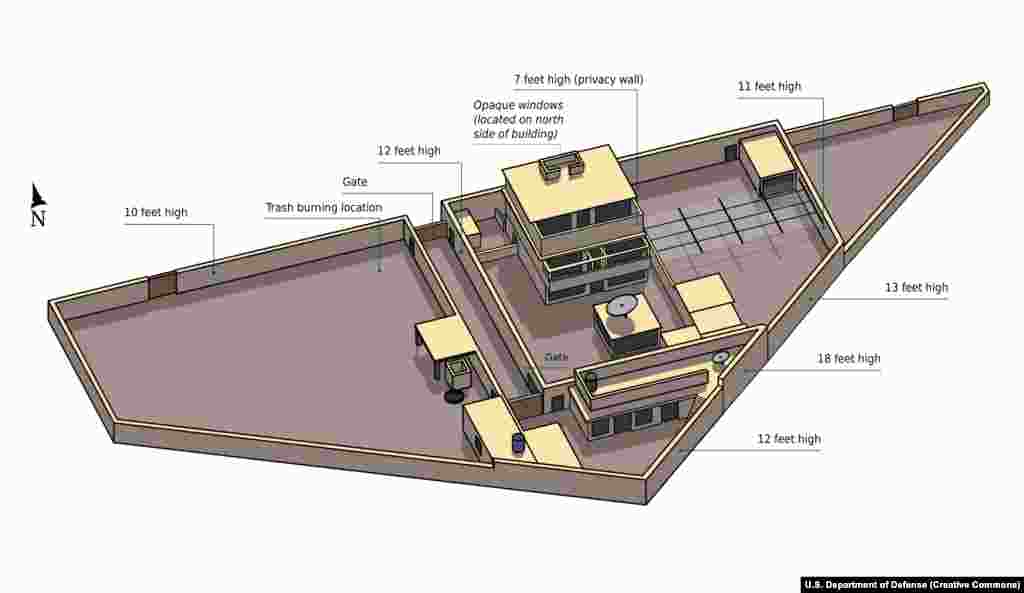
10/19An illustration of the Abbottabad compound, which featured a “privacy wall” on the upper balcony
Accounts differ as to how bin Laden was eventually tracked to the noticeable property, but spying on the building was reportedly relatively easy due to its height.
On May 2, 2011, a night raid by elite U.S. commandos resulted in the death of the world’s most wanted man.
Show moreShow less
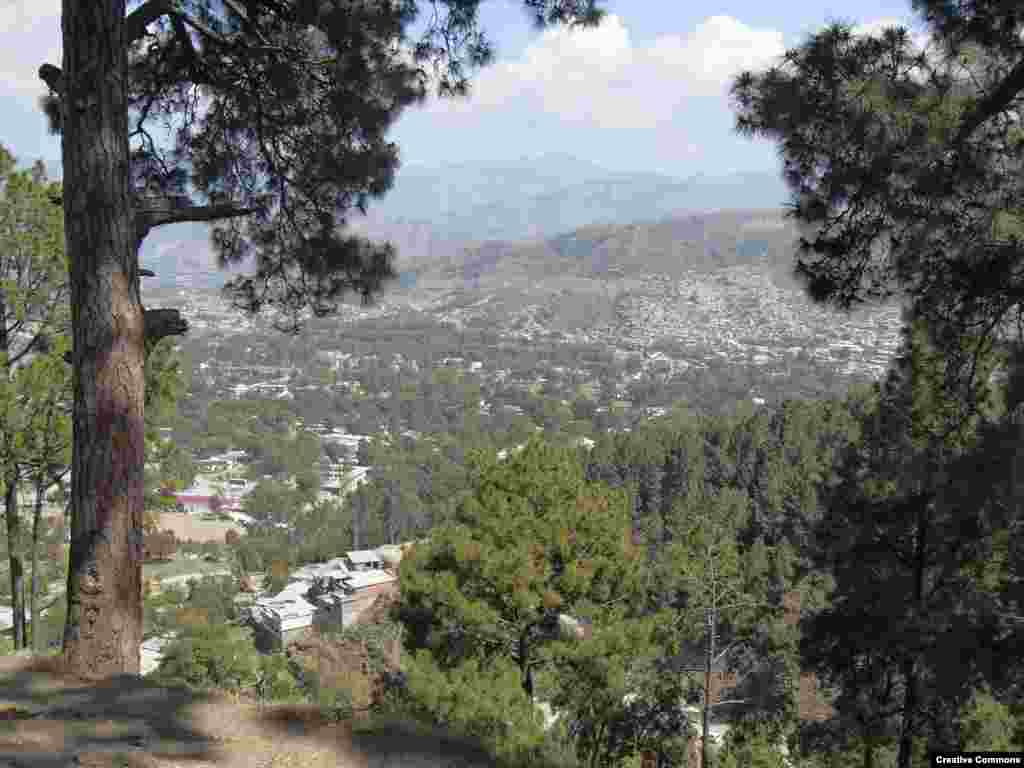
11/19A suburb in Abbottabad (file photo)
By 2010, a CIA surveillance team that had spent months in a nearby house “observing from behind mirrored glass” with telephoto lenses and infrared equipment was confident its mysterious inhabitants were bin Laden and his family.
On May 2, 2011, a night raid by elite U.S. commandos resulted in the death of the world’s most wanted man.
Show moreShow less
12/19U.S. Navy Seals during training (file photo)
In the early morning of May 2, 2011, dozens of U.S. Navy Seal commandos were flown from an air base in Afghanistan to the compound in Abottabad. The teams flew in stealth-coated helicopters and skimmed low above the terrain to avoid being detected by the Pakistani military.
On May 2, 2011, a night raid by elite U.S. commandos resulted in the death of the world’s most wanted man.
Show moreShow less
13/19U.S. President Barack Obama (second from left) and then-Vice President Joe Biden (left) along with members of the national security team watch the raid unfold.
Biden was reportedly the only top official who opposed the attack taking place at that time.
On May 2, 2011, a night raid by elite U.S. commandos resulted in the death of the world’s most wanted man.
Show moreShow less
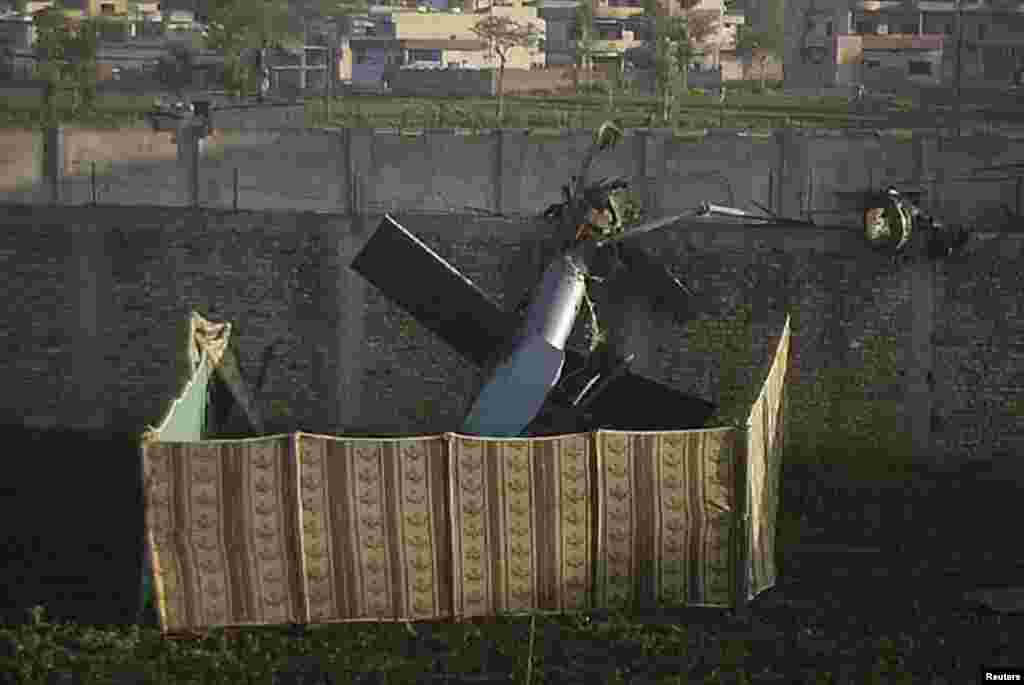
14/19The tail rotor of a destroyed U.S. helicopter at the compound
The raid began badly when turbulence created by the compound walls caused one helicopter to lose lift and crash. But the commandos and a trained Belgian Malinois dog forced their way inside the residence and killed bin Laden. The Navy Seals destroyed the downed chopper with explosives before cramming into another helicopter with bin Laden’s body for their escape.
On May 2, 2011, a night raid by elite U.S. commandos resulted in the death of the world’s most wanted man.
Show moreShow less
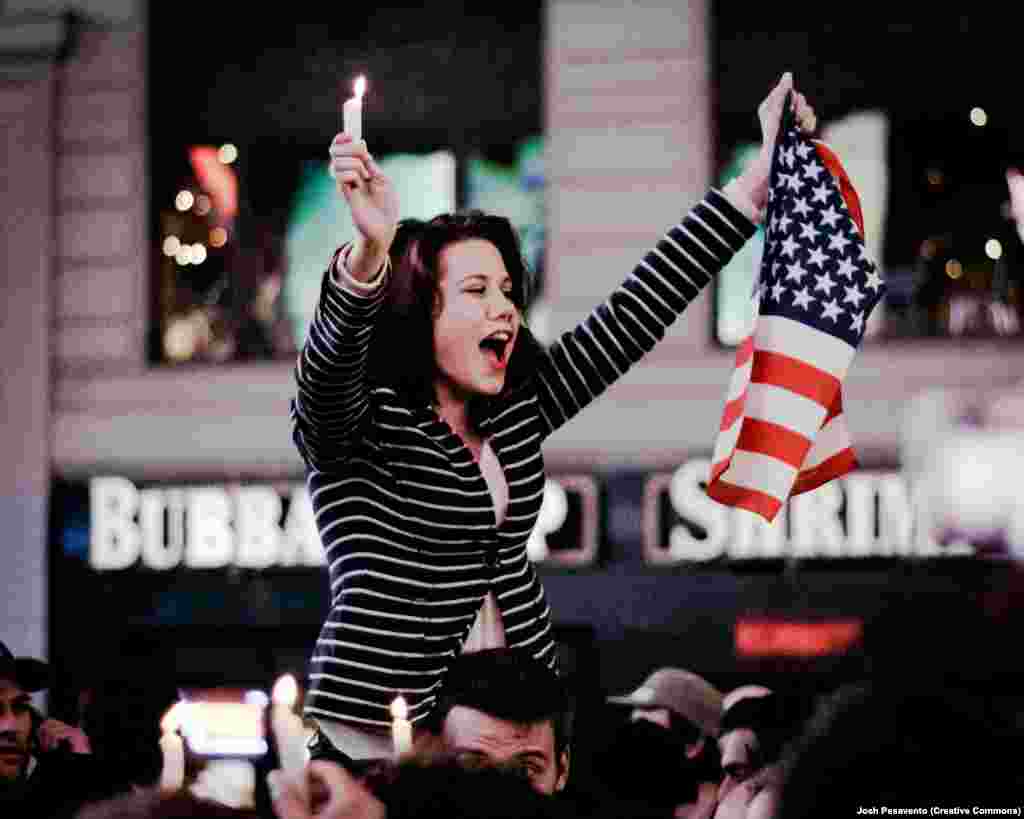
15/19A New Yorker celebrates the news of bin Laden’s killing.
After a DNA test on the Al-Qaeda leader’s corpse confirmed his identity, he was buried by U.S. forces at sea within 24 hours of his death, per Islamic custom.
On May 2, 2011, a night raid by elite U.S. commandos resulted in the death of the world’s most wanted man.
Show moreShow less
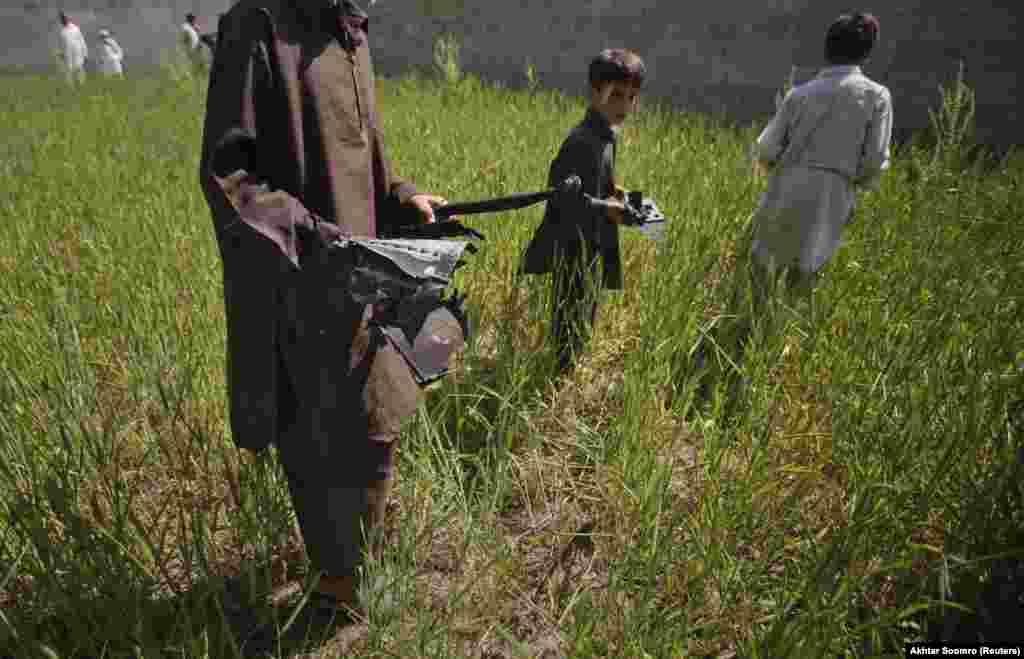
17/19Local boys collect pieces from a U.S. helicopter one day after it was destroyed by the American commandos after crashing at bin Laden's compound.
In 2020, Pakistani Prime Minister Imran Khan acknowledged probable “linkages” between his country’s military and bin Laden when the Al-Qaeda leader was hiding in Pakistan, but denied any high-level ties existed.
On May 2, 2011, a night raid by elite U.S. commandos resulted in the death of the world’s most wanted man.
Show moreShow less
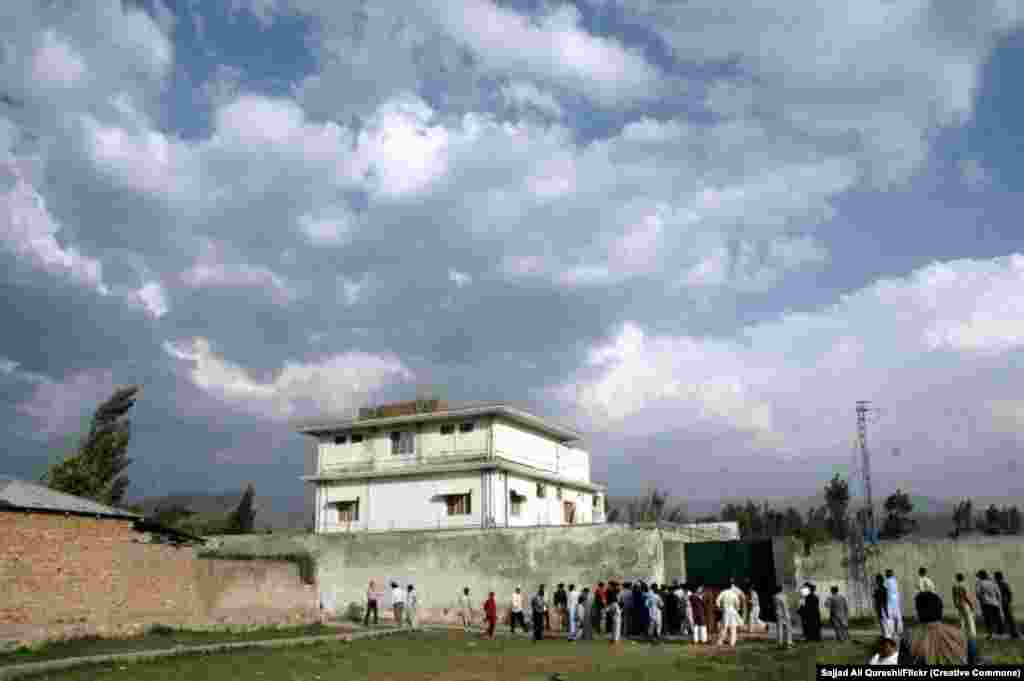
19/19A man walks in 2012 near the the place where bin Laden’s compound used to stand.
Satellite images from 2021 show dozens of new houses have been built in the neighborhood since 2011, but the former site of the compound remains empty and has been used by locals to play cricket.
On May 2, 2011, a night raid by elite U.S. commandos resulted in the death of the world’s most wanted man.
Show moreShow less
Previous slide
Next slide
Biden, who announced in April that he would end Washington's longest war by September 11, described the scene at the White House the night then-President Barack Obama approved a secret operation targeting the Al-Qaeda leader in Pakistan.
“Ten years ago, I joined President Obama and members of our national-security team, crowded into the Situation Room to watch as our military delivered long-awaited justice to Osama bin Laden. It is a moment I will never forget,” said Biden, who served as vice president under Obama.
The impending U.S. exit from Afghanistan has prompted concern about the ability of Afghan security forces to hold territory against the Taliban in the absence of a peace deal. It has also raised questions about the extent to which the Taliban has severed ties with Al-Qaeda, amid concern the international terrorist group could rebuild and plan new attacks on the United States and other targets.
Biden said the United States would continue to act against terrorist groups that have “metastasized around the world.”
“We will continue to monitor and disrupt any threat to us that emerges from Afghanistan. And we will work to counter terrorist threats to our homeland and our interests in cooperation with allies and partners around the world,” the president said.
RFE/RL journalists report the news in 24 languages in 18 countries where a free press is banned by the government or not fully established. We provide what many people cannot get locally: uncensored news, responsible discussion, and open debate.






![A photograph believed to show bin Laden at a judo class in Saudi Arabia in the early 1980s. Bin Laden was the son of a billionaire construction mogul with close personal links to the Saudi royal family.<br />
<br />
Jimmy Wu, a judo instructor who shared this photo from his time in Saudi Arabia, told Reuters that he remembers the tall martial arts student once scolding him after Wu's wife walked into the judo center, telling him that no women should be there. "[Bin Laden] did not approve [of her presence]," he said.](https://gdb.rferl.org/fceb6ad1-516b-486c-be4a-e409971bbd96_w1024_q10_s.jpg)