



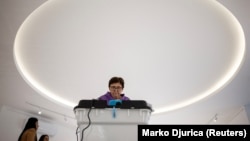
The first reactions of political leaders after the announcement of the preliminary election results were marked by messages of victory and the continuation of previous policies.
According to preliminary results, Party of Democratic Action (SDA) has reportedly won the largest number of votes in the election of the Bosnia and Herzegovina federation parliament, trailed by the Social Democratic Party of BiH, and the Croatian Democratic Union of BiH (HDZ BiH).
The SNSD -- the Alliance of Independent Social Democrats run by Milorad Dodik -- remains the single strongest political party in the entity of Republika Srpska, where it leads in the races for the National Assembly of Republika Srpska and the state parliament.
Citizens in Bosnia-Herzegovina cast their votes in elections to various bodies in the country’s multi-layered political system on October 4, with some candidates pushing for increased efforts at joining the European Union and NATO while veteran Bosnian Serb politician Milorad Dodik campaigned for a separatist agenda.
Dodik was not on any ballot, having been banned from public office, but his face was visible on billboards across the country’s Republika Srpska entity, where he remains a highly influential voice.
Voters were casting ballots for the country's central tripartite presidency and national parliament, alongside regional legislative races, in a complex political system set up under the Dayton agreement that ended the country’s 1990s war.
The turnout dropped 10 percent bellow the level of the last election in 2022. According to the Central Voter's Register, this time 42 percent of registered voters cast their ballots.

Bitter memories of that era have been revived by the recent death of Bosnian Serb military commander Ratko Mladic, who was convicted of genocide by The Hague tribunal for war crimes in Bosnia, and the subsequent hero’s funeral he received in Belgrade.
Biometric Voter Checks
"What I'm pinning my hopes on is that the younger generations coming through are far smarter than we ever were. I just hope they won't carry the same kind of fear that we do, the fear that has kept us retreating into our national camps for more than 30 years now,” said Sarajevo resident Suzanna Sacic on October 4.
“I'm not expecting any drastic changes here. Essentially, we're the type of society that's grown used to that kind of politics,” another voter, Ljubisa Acimovic, said in Republika Srpska's administrative center, Banja Luka.
In one preelection rally, Dodik called for the border between Republika Srpska and Serbia to be erased. Other nationalist politicians have called for a merger with Serbia.
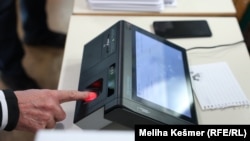
While the political divide still reflects the 1990s conflict, a new element in this election is biometric voter checks and ballot scanners. This led to some polling stations opening later than scheduled amid technical hiccups.
“Today we are testing something that will be the future of the electoral process, so we all have to be patient, because the benefits are many," Central Election Commission member Irena Hadziabdic said.

