


Accessibility links

Breaking News

Calls For Protests Against Kazakh 'Dictatorship' Fall Flat In Astana, Almaty

Mukhtar Ablyazov, former head of BTA Bank, who lives in France and positions himself as a political opponent of Kazakh President Nursultan Nazarbaev.

Calls for protests against Kazakhstan's authoritarian ruler by an exiled opposition leader on the 20th anniversary celebrations of Astana's establishment as the Kazakh capital appear to have fallen flat.

Security was tight late on July 6 at concerts marking the country's "Day of the Capital" in both Astana and the city it displaced as the seat of government, Almaty.

Police checked bags and identification documents of citizens entering a square in Almaty where a concert was taking place, and security officers remained out in force as the festivities continued late into the evening.

Mukhtar Ablyazov, a critic of longtime President Nursultan Nazarbaev who lives in exile, had called on followers in a Facebook posting to protest against what he called "the paranoid dictatorship" during the festivities, which coincided with Nazarbaev's birthday on July 6, when he turned 78.

But there were no signs of protests at the public events in either Astana or Almaty. Any demonstrations would have been illegal unless they were officially authorized by either the city or national government.

Ablyazov, a fugitive banker who established the opposition Democratic Choice of Kazakhstan (DVK) movement, has previously attempted to stage protests in Kazakhstan from a distance.

PHOTO GALLERY: Rising From The Steppe: Kazakhstan’s Capital Turns 20 (click to view)

Rising From The Steppe: Kazakhstan’s Capital Turns 20

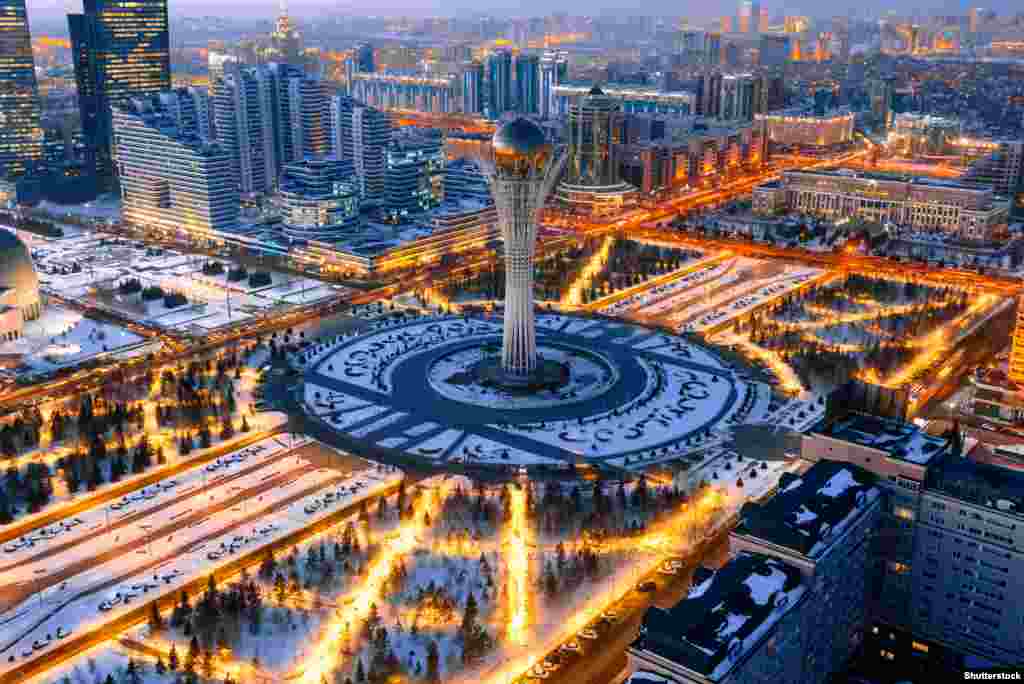
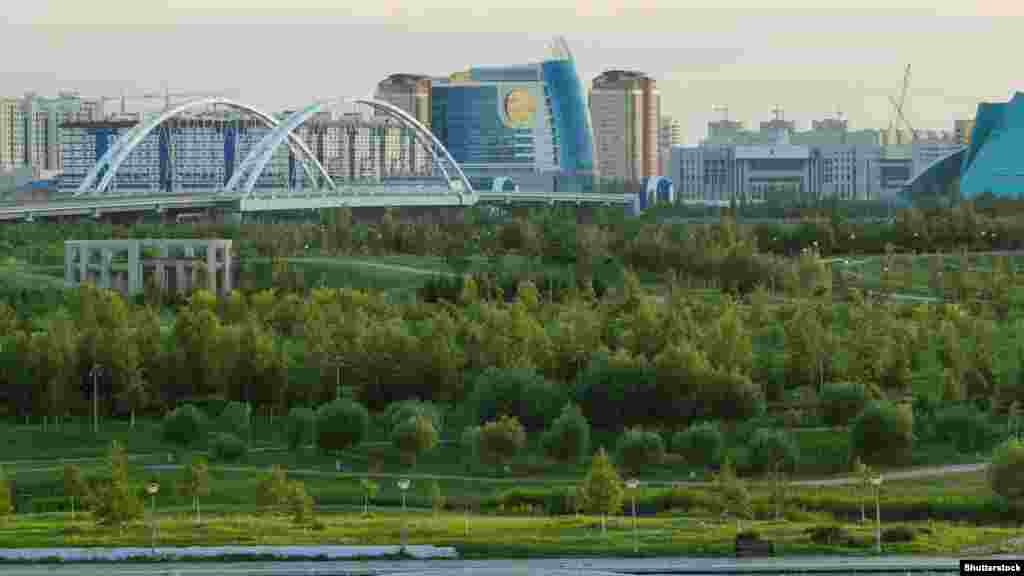
An overview of today's Astana with Kazakhstan's White House-like presidential palace in the center. 
1/18 An overview of today's Astana with Kazakhstan's White House-like presidential palace in the center. 
Once an obscure township on Kazakhstan’s wolf-plagued plains, Astana has outgrown its teen years and is now firmly established as the country’s capital city.
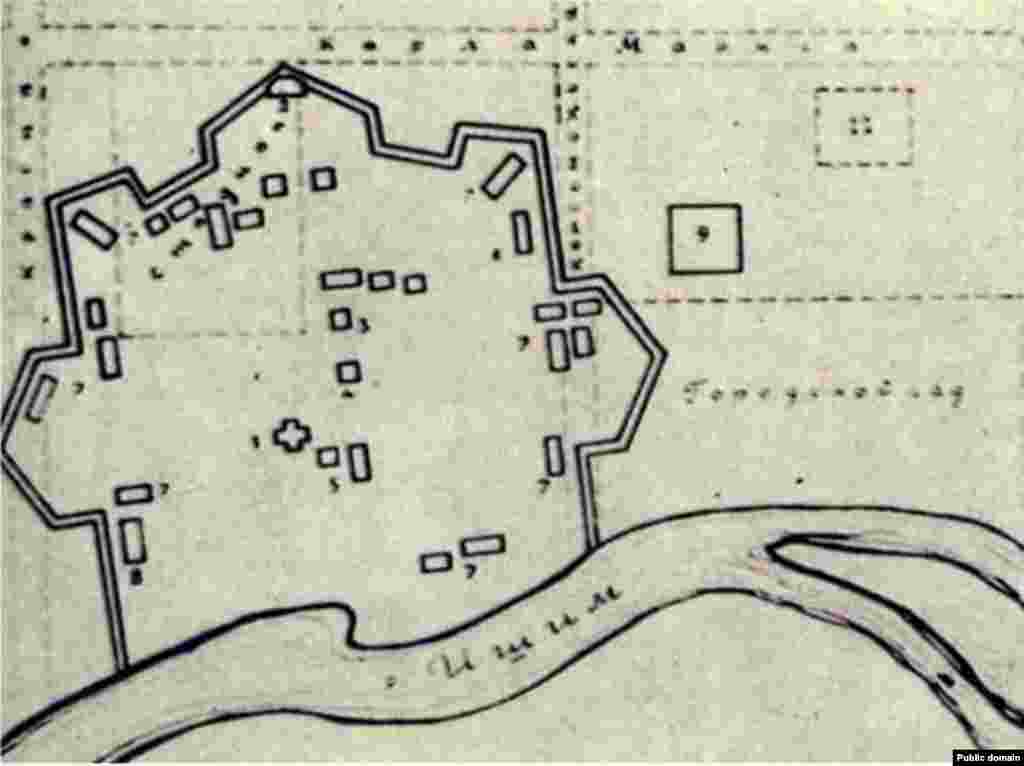
Today’s Astana began life in 1830 as a Cossack fortress looming over the Ishim River. By the end of that century, the outpost had grown into a bustling trading town, spiked with the spires of three Orthodox churches.
2/18 Today’s Astana began life in 1830 as a Cossack fortress looming over the Ishim River. By the end of that century, the outpost had grown into a bustling trading town, spiked with the spires of three Orthodox churches.
Once an obscure township on Kazakhstan’s wolf-plagued plains, Astana has outgrown its teen years and is now firmly established as the country’s capital city.
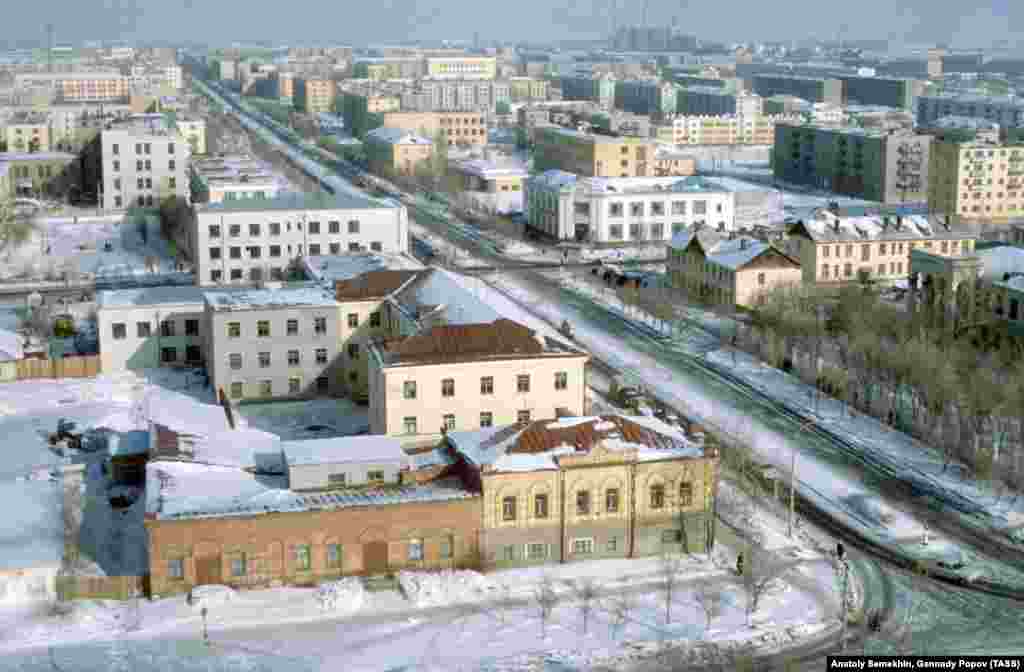
During the Soviet era, the town (pictured in 1979) was chosen as one of the centers for an ill-fated project to transform the steppes of the Kazakh Soviet Socialist Republic into a sea of wheat.
3/18 During the Soviet era, the town (pictured in 1979) was chosen as one of the centers for an ill-fated project to transform the steppes of the Kazakh Soviet Socialist Republic into a sea of wheat.
Once an obscure township on Kazakhstan’s wolf-plagued plains, Astana has outgrown its teen years and is now firmly established as the country’s capital city.
Soviet leader Nikita Khrushchev in a wheat field near today’s Astana in 1964. The town at the time was named Tselinograd, based on the Russian word “tselina,” meaning “virgin lands.”
4/18 Soviet leader Nikita Khrushchev in a wheat field near today’s Astana in 1964. The town at the time was named Tselinograd, based on the Russian word “tselina,” meaning “virgin lands.”
Once an obscure township on Kazakhstan’s wolf-plagued plains, Astana has outgrown its teen years and is now firmly established as the country’s capital city.
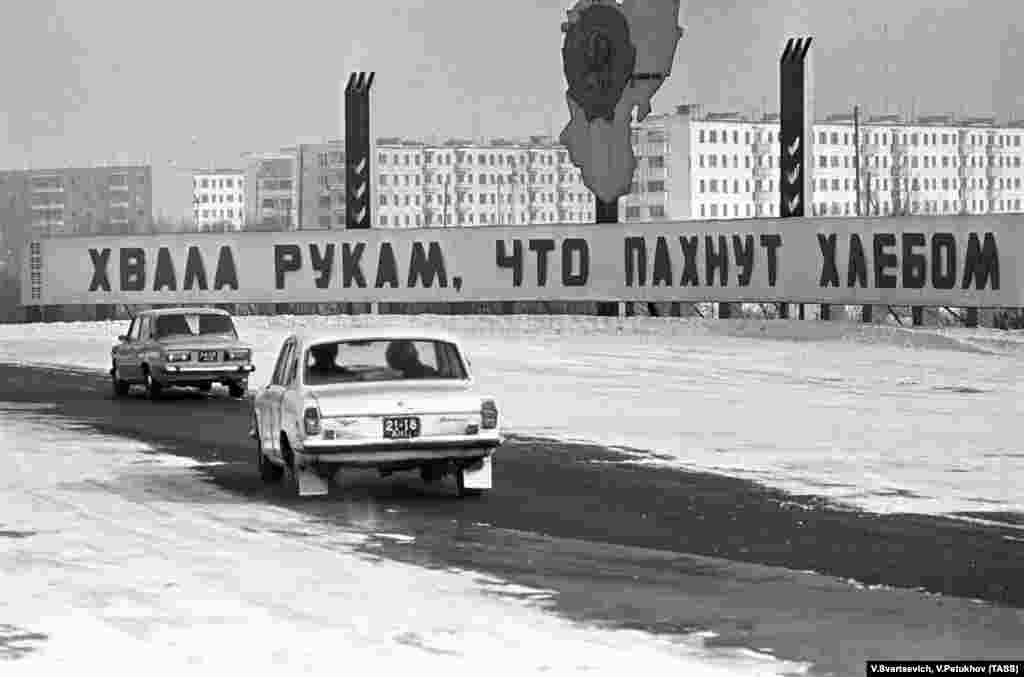
Tselinograd in 1984. The banner reads “Glory to the hands that smell of bread.”
5/18 Tselinograd in 1984. The banner reads “Glory to the hands that smell of bread.”
Once an obscure township on Kazakhstan’s wolf-plagued plains, Astana has outgrown its teen years and is now firmly established as the country’s capital city.
When the Soviet Union collapsed in 1991, Nursultan Nazarbaev, a top politician in the communist republic, became president of an independent Kazakhstan. His Soviet pedigree was apparent in his photo ops, as well as his “ruler-for-life” ambitions.
6/18 When the Soviet Union collapsed in 1991, Nursultan Nazarbaev, a top politician in the communist republic, became president of an independent Kazakhstan. His Soviet pedigree was apparent in his photo ops, as well as his “ruler-for-life” ambitions.
Once an obscure township on Kazakhstan’s wolf-plagued plains, Astana has outgrown its teen years and is now firmly established as the country’s capital city.
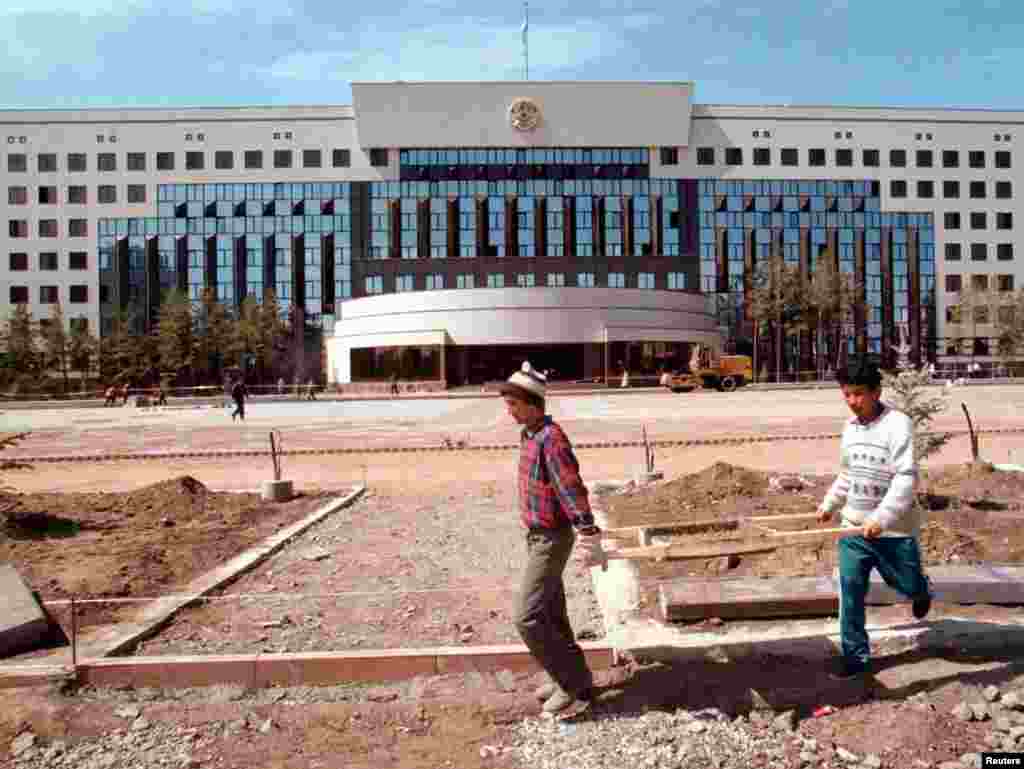
Workers outside the town’s new presidential palace in 1998. In the summer of that year, Nazarbaev decreed the former Tselinograd be renamed Astana, which means “capital” in the Kazakh language.
7/18 Workers outside the town’s new presidential palace in 1998. In the summer of that year, Nazarbaev decreed the former Tselinograd be renamed Astana, which means “capital” in the Kazakh language.
Once an obscure township on Kazakhstan’s wolf-plagued plains, Astana has outgrown its teen years and is now firmly established as the country’s capital city.
Astana became a city of cranes as the government relocated from Almaty and the population swelled from 326,000 in 1999 to over 1 million today.
8/18 Astana became a city of cranes as the government relocated from Almaty and the population swelled from 326,000 in 1999 to over 1 million today.
Once an obscure township on Kazakhstan’s wolf-plagued plains, Astana has outgrown its teen years and is now firmly established as the country’s capital city.
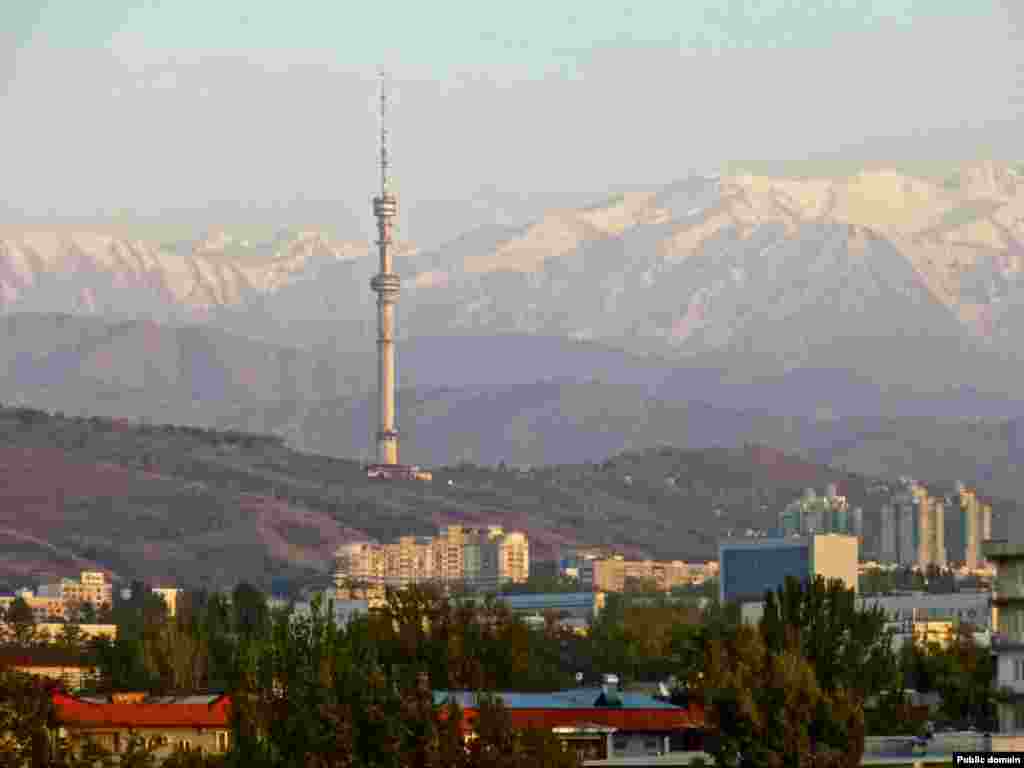
The official reason to relocate the capital from Almaty (pictured) was to avoid the earthquakes that rattle the town and to help spread wealth more evenly across the country. Many noted that Nazarbaev was also able to leave his political opposition behind as his government headed north to Astana. 
9/18 The official reason to relocate the capital from Almaty (pictured) was to avoid the earthquakes that rattle the town and to help spread wealth more evenly across the country. Many noted that Nazarbaev was also able to leave his political opposition behind as his government headed north to Astana. 
Once an obscure township on Kazakhstan’s wolf-plagued plains, Astana has outgrown its teen years and is now firmly established as the country’s capital city.
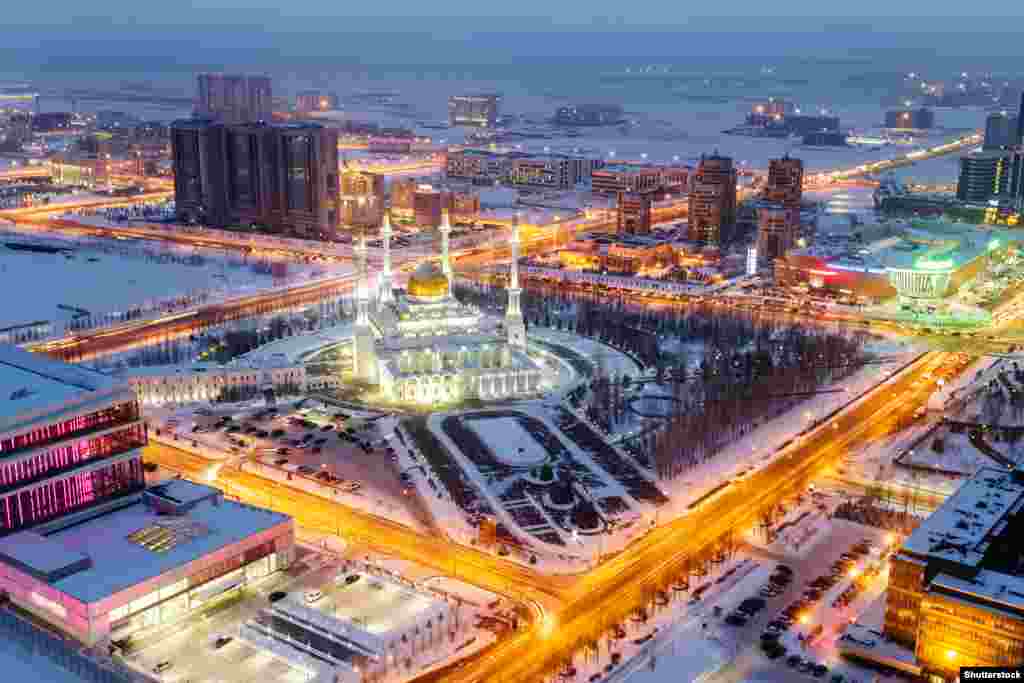
The Nur-Astana Mosque. Few expenses were spared as architects from around the world were flown into Astana to raise what looked like a kind of Asian Las Vegas from the steppe.
10/18 The Nur-Astana Mosque. Few expenses were spared as architects from around the world were flown into Astana to raise what looked like a kind of Asian Las Vegas from the steppe.
Once an obscure township on Kazakhstan’s wolf-plagued plains, Astana has outgrown its teen years and is now firmly established as the country’s capital city.
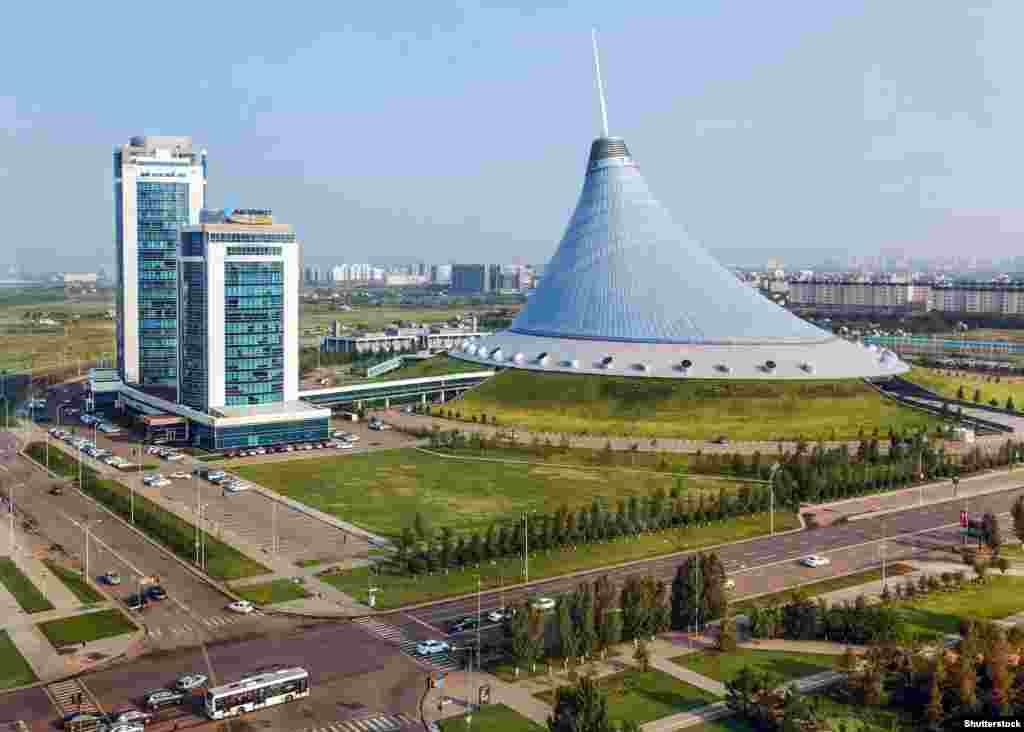
The giant Khan Shatyr or “Royal Marquee.”
11/18 The giant Khan Shatyr or “Royal Marquee.”
Once an obscure township on Kazakhstan’s wolf-plagued plains, Astana has outgrown its teen years and is now firmly established as the country’s capital city.
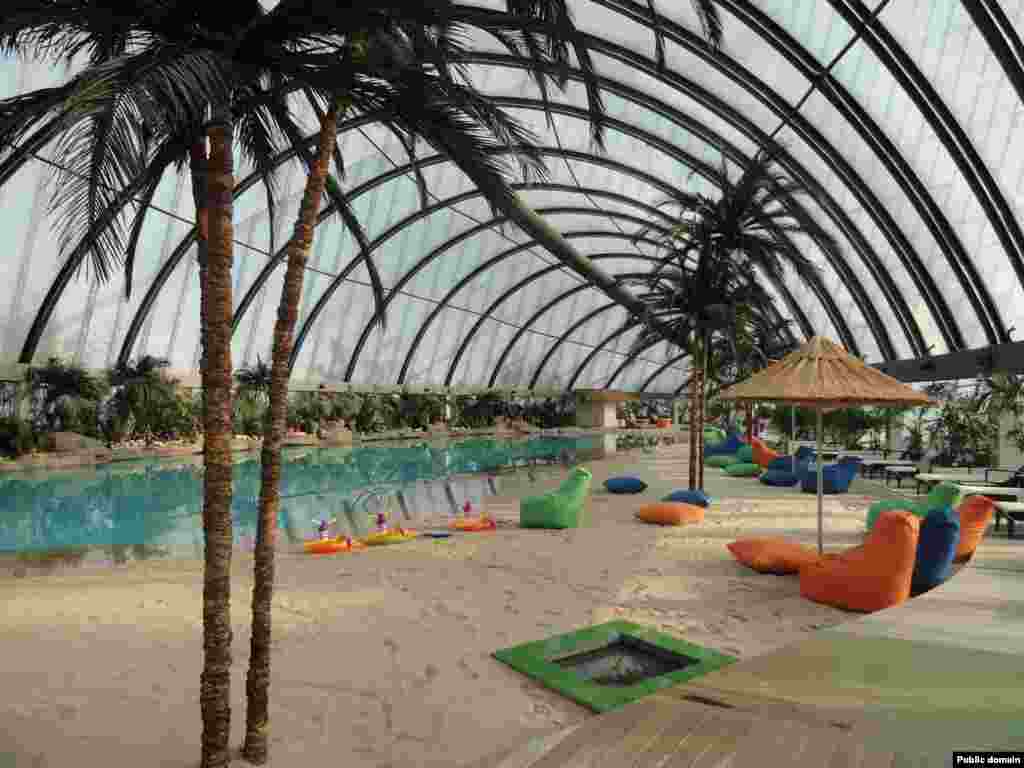
Inside the Khan Shatyr, an artificial beach stocked with sand from the Maldives awaits paying bathers. The extravagance of the new structures caused controversy in a country where the average annual household income around the time of Astana’s construction was less than $600.
12/18 Inside the Khan Shatyr, an artificial beach stocked with sand from the Maldives awaits paying bathers. The extravagance of the new structures caused controversy in a country where the average annual household income around the time of Astana’s construction was less than $600.
Once an obscure township on Kazakhstan’s wolf-plagued plains, Astana has outgrown its teen years and is now firmly established as the country’s capital city.
The Baiterek Tower, representing a Kazakh folktale about a bird that lays a golden egg in the branches of a poplar tree.
13/18 The Baiterek Tower, representing a Kazakh folktale about a bird that lays a golden egg in the branches of a poplar tree.
Once an obscure township on Kazakhstan’s wolf-plagued plains, Astana has outgrown its teen years and is now firmly established as the country’s capital city.
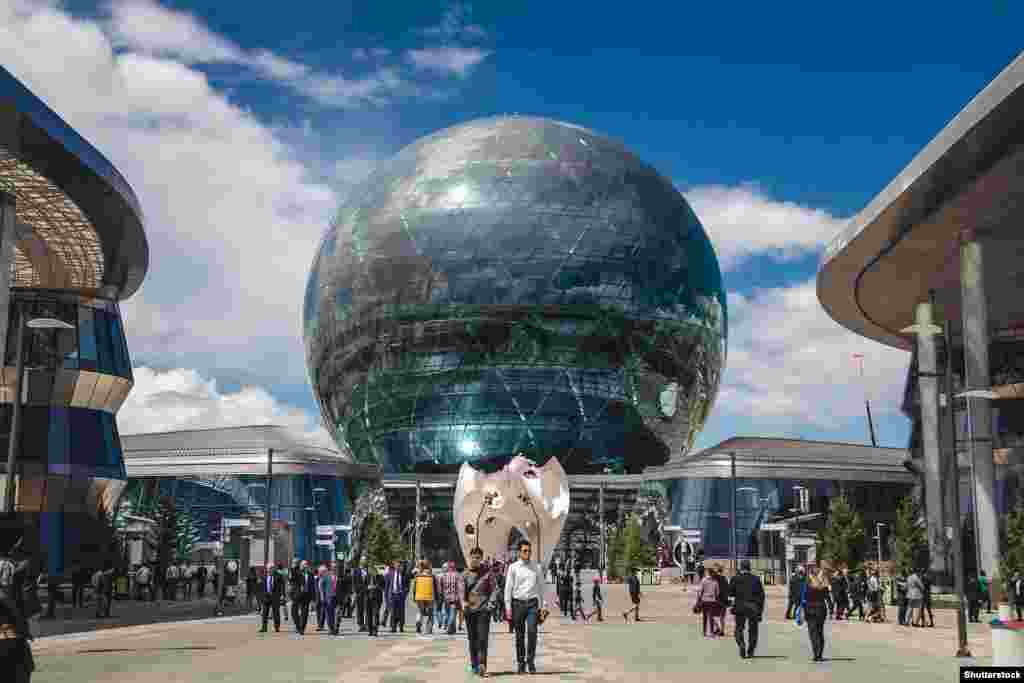
The sphere built for the 2017 World Expo, which Astana hosted. The U.S.-based Foreign Policy magazine had its website briefly blocked in Kazakhstan after calling the building the “Death Star.”
14/18 The sphere built for the 2017 World Expo, which Astana hosted. The U.S.-based Foreign Policy magazine had its website briefly blocked in Kazakhstan after calling the building the “Death Star.”
Once an obscure township on Kazakhstan’s wolf-plagued plains, Astana has outgrown its teen years and is now firmly established as the country’s capital city.
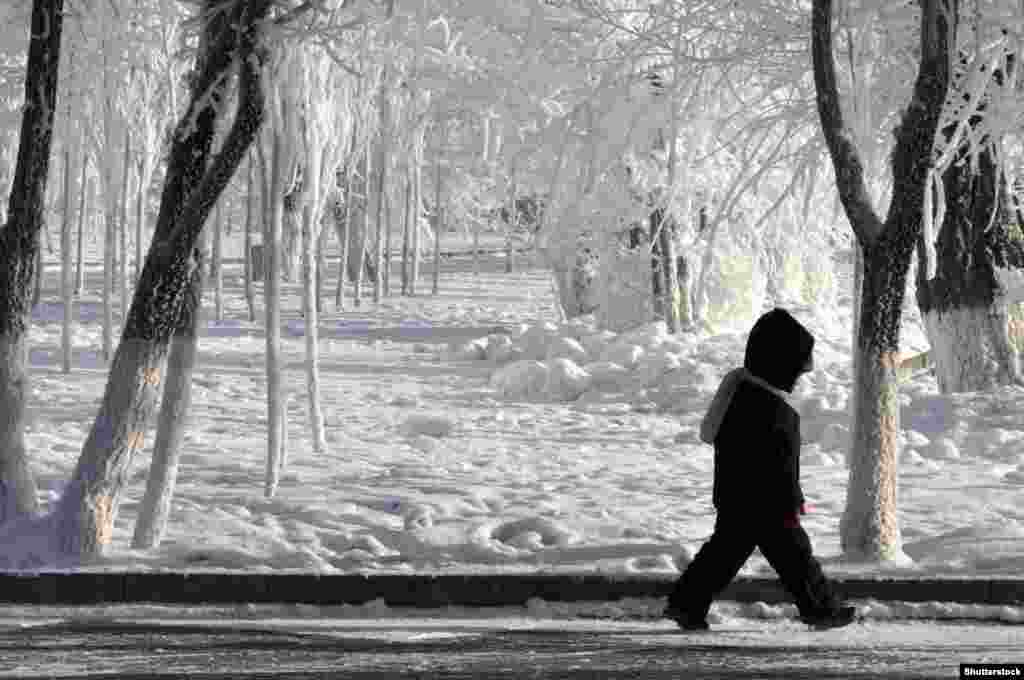
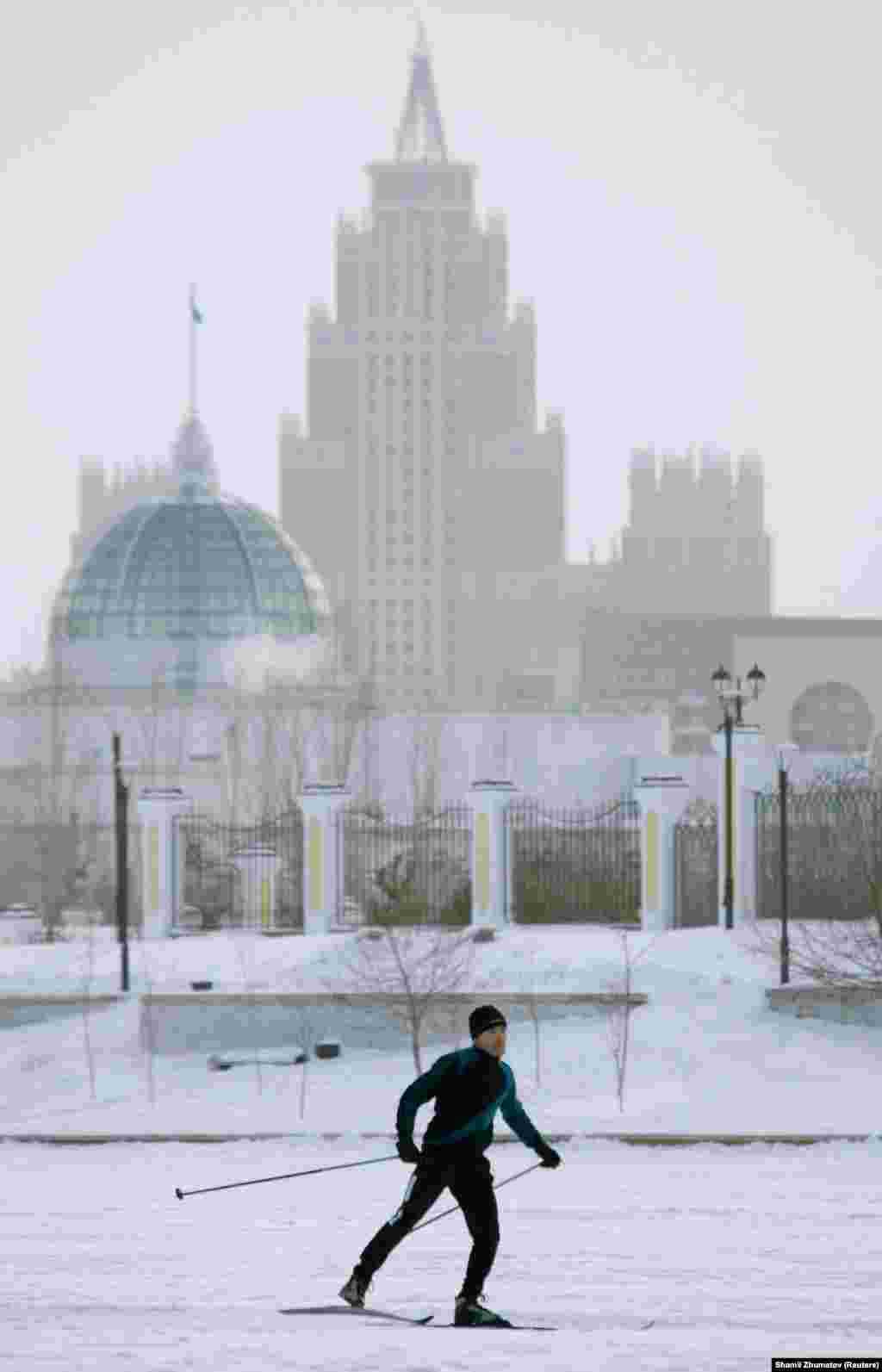
Among the biggest challenges for people relocating to Astana were the brutal winters -- only Mongolia’s capital, Ulan Bator, is colder -- and the winds that drive in across the plains.
15/18 Among the biggest challenges for people relocating to Astana were the brutal winters -- only Mongolia’s capital, Ulan Bator, is colder -- and the winds that drive in across the plains.
Once an obscure township on Kazakhstan’s wolf-plagued plains, Astana has outgrown its teen years and is now firmly established as the country’s capital city.
The answer to the city’s freezing winds was trees -- millions of them, to be planted in a “green ring” around the city.
16/18 The answer to the city’s freezing winds was trees -- millions of them, to be planted in a “green ring” around the city.
Once an obscure township on Kazakhstan’s wolf-plagued plains, Astana has outgrown its teen years and is now firmly established as the country’s capital city.
The millions of newly planted trees have reportedly lifted the average temperature by a fraction, and significantly dampened the wind. The planting project continues today.
17/18 The millions of newly planted trees have reportedly lifted the average temperature by a fraction, and significantly dampened the wind. The planting project continues today.
Once an obscure township on Kazakhstan’s wolf-plagued plains, Astana has outgrown its teen years and is now firmly established as the country’s capital city.
As Astana prepares to celebrate its 20th birthday on July 6, its inhabitants will also (perhaps somewhat unwittingly) be celebrating Nazarbaev, who timed the anniversary to coincide with his own 78th birthday. 
18/18 As Astana prepares to celebrate its 20th birthday on July 6, its inhabitants will also (perhaps somewhat unwittingly) be celebrating Nazarbaev, who timed the anniversary to coincide with his own 78th birthday. 
Once an obscure township on Kazakhstan’s wolf-plagued plains, Astana has outgrown its teen years and is now firmly established as the country’s capital city.
Previous slide
Next slide

An effort last month led to scores of citizens being detained in Almaty en route to the intended site of the demonstration.

A court in Kazakhstan banned the DVK movement in March, branding it an extremist organization.

Kazakhstan's crackdown on political opposition has left Ablyazov -- who was last year sentenced in absentia to seven years in prison on fraud charges -- as one of Nazarbaev's only notable political opponents.

During the celebrations on July 6, Astana hosted games of kokpar (a nomadic game played with a goat's carcass), an international music festival, and other events.

The city's International Financial Center threw open its doors to the public on July 5, with Nazarbaev presiding at a ceremony. The center is intended to attract international businesses and investment to Kazakhstan's energy-rich economy.

While the center is not expected to rival such global financial hubs as Hong Kong or Singapore anytime soon, Nazarbaev views it as vital to buffering Kazakhstan's economy from the booms and busts that derive from its heavy reliance on the volatile oil sector for growth and revenues.

The strongman has described the financial center as unique in the ex-Soviet region of Central Asia, since it will operate according to an independent legal structure based on English common law and will be overseen by Lord Harry Woolf, a former chief justice of England and Wales.

Glitzy Astana was Nazarbaev's brainchild. The city's main airport took his name last year, indicative of a pervasive leadership cult in the republic of 18 million people.

Nevertheless, many of Astana's 1 million residents compare the northern city unfavorably with the southern city of Almaty, citing its harsh cold winters and its geographical isolation, located not far from Russia's Siberian region.

The Financial Times newspaper earlier this year referred to Astana as a "bizarre" and "hastily built" vanity project, prompting a letter of denunciation from Kazakhstan's ambassador to Britain, Yerlan Idrissov.

With reporting by AFP
  • 16x9 Image

    RFE/RL's Kazakh Service

    RFE/RL's Kazakh Service offers informed and accurate reporting in the Kazakh and Russian languages about issues that matter in Kazakhstan, while providing a dynamic platform for audience engagement and the free exchange of news and ideas.

This item is part of
XS
SM
MD
LG