


Accessibility links

Breaking News

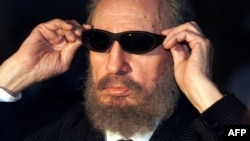
Fidel Castro: A Revolutionary Who Held Onto Power Through Repression

Although Fidel Castro sought to improve Cubans' access to health care, housing, and education, many of his achievements in these areas came at the cost of crushing freedom of expression on the Caribbean island.

Fidel Castro portrayed himself as a champion of the poor against repressive regimes.

But to stay in power for nearly 50 years, Castro created a tyrannical one-party state that jailed thousands of dissidents and suppressed freedom of expression, human rights groups say.

The former Cuban president, who died at age 90 on November 25, often won praise from socialists for leading a revolution in 1959 that toppled a corrupt government which ignored the dismal poverty in which many of its citizens lived.

After seizing power, Castro sought to improve social conditions by increasing ordinary Cubans' access to health services, housing, and education.

But those achievements came at the cost of crushing his fellow citizens' right to voice criticism or form political parties, according to activist groups and Cuban exiles. Human rights campaigners say the system he built continues suppressing human rights in Cuba today, despite Fidel's handing of power to his brother Raul in 2008 and increasing economic liberalization.

"Despite these achievements in areas of social policy, Fidel Castro's 49-year reign was characterized by a ruthless suppression of freedom of expression," Erika Guevara-Rosas, Americas Director at Amnesty International, said after his death. "The state of freedom of expression in Cuba, where activists continue to face arrest and harassment for speaking out against the government, is Fidel Castro's darkest legacy."

'Draconian Rule'

Many other human rights experts agree. Even as Castro launched drives that were unprecedented in Latin America to rapidly improve literacy and to train thousands of doctors, his rule distinguished itself as a repressive system that punished virtually all forms of opposition, they say.

"As other countries in the region turned away from authoritarian rule, only Fidel Castro's Cuba continued to repress virtually all civil and political rights," said Jose Miguel Vivanco, Americas director at Human Rights Watch (HRW). "Castro's draconian rule and the harsh punishments he meted out to dissidents kept his repressive system rooted firmly in place for decades."

OBITUARY: Fidel Castro, 1926-2016

Castro signaled his determination to brook no dissent almost immediately after taking power in 1959. He eliminated hundreds of members of the toppled government of Fulgencio Batista in a series of show trials and summary executions.

When faced with an international outcry over the executions, Castro gave an uncompromising public answer.

"Revolutionary justice is not based on legal precepts, but on moral conviction...we are not executing innocent people or political opponents," he said. We are executing murderers and they deserve it."

Fidel Castro: A Life In Pictures
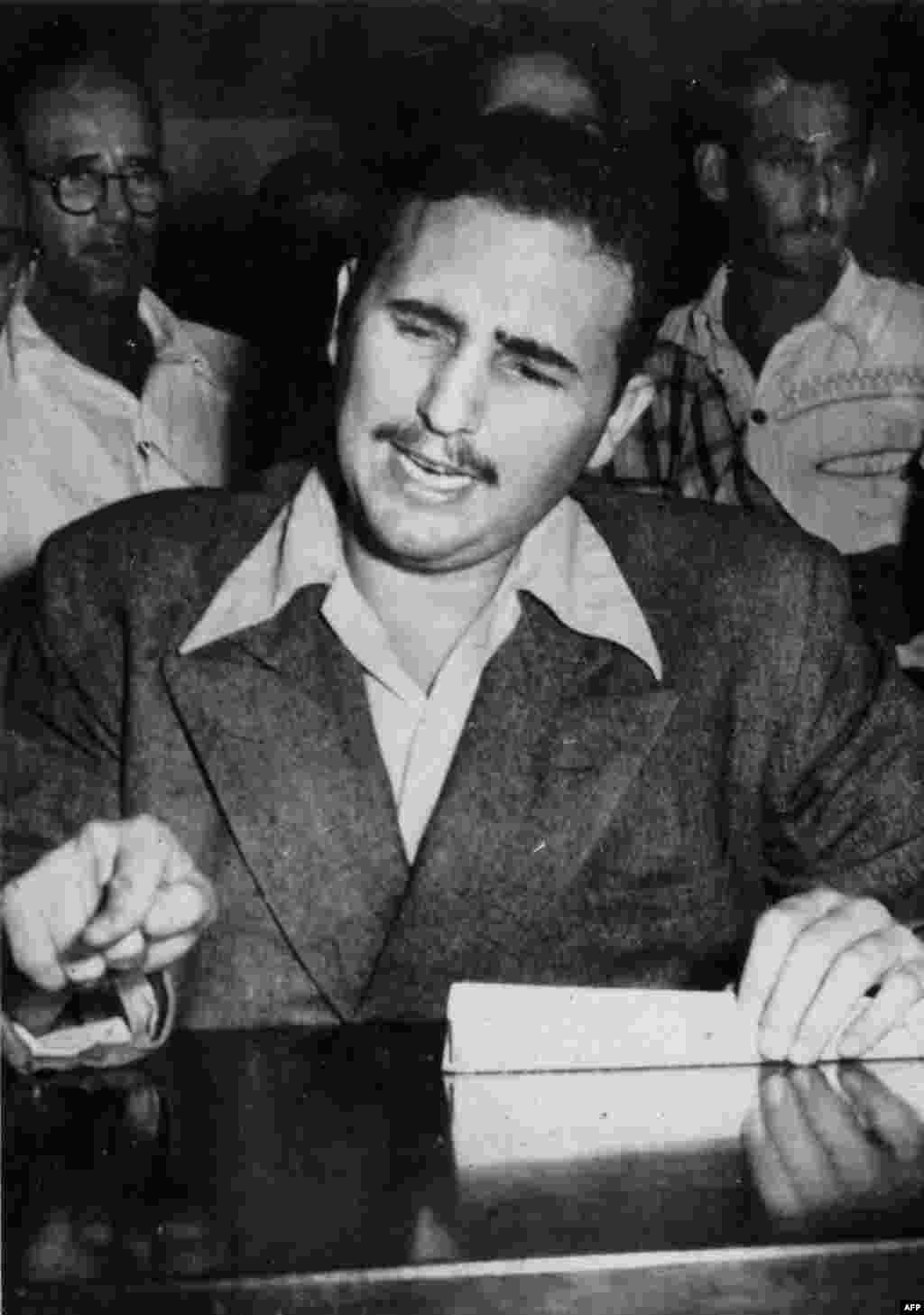
Fidel Castro as a young Marxist activist in 1953. 
1/16 Fidel Castro as a young Marxist activist in 1953. 
Fidel Castro, the man who led Cuba for nearly five decades, has died at the age of 90. After sweeping to power in a communist uprising in 1959, Castro served as prime minister or president of the Caribbean island state for nearly 50 years.
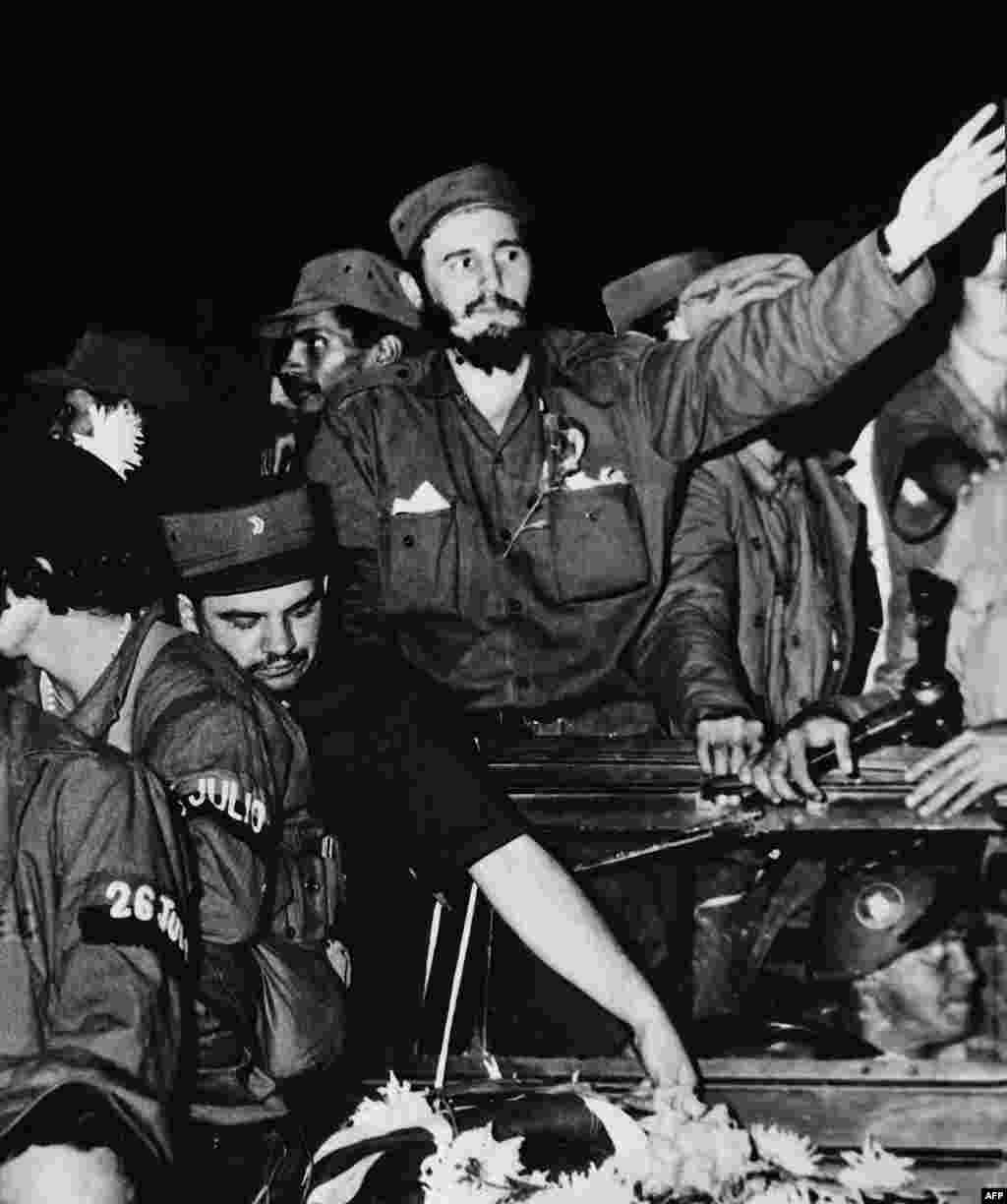
Surrounded by members of his leftist guerrilla movement, Castro (center) waves to crowds in Cienfuegos shortly after ousting Cuban dictator Fulgencio Batista in 1959. 
2/16 Surrounded by members of his leftist guerrilla movement, Castro (center) waves to crowds in Cienfuegos shortly after ousting Cuban dictator Fulgencio Batista in 1959. 
Fidel Castro, the man who led Cuba for nearly five decades, has died at the age of 90. After sweeping to power in a communist uprising in 1959, Castro served as prime minister or president of the Caribbean island state for nearly 50 years.
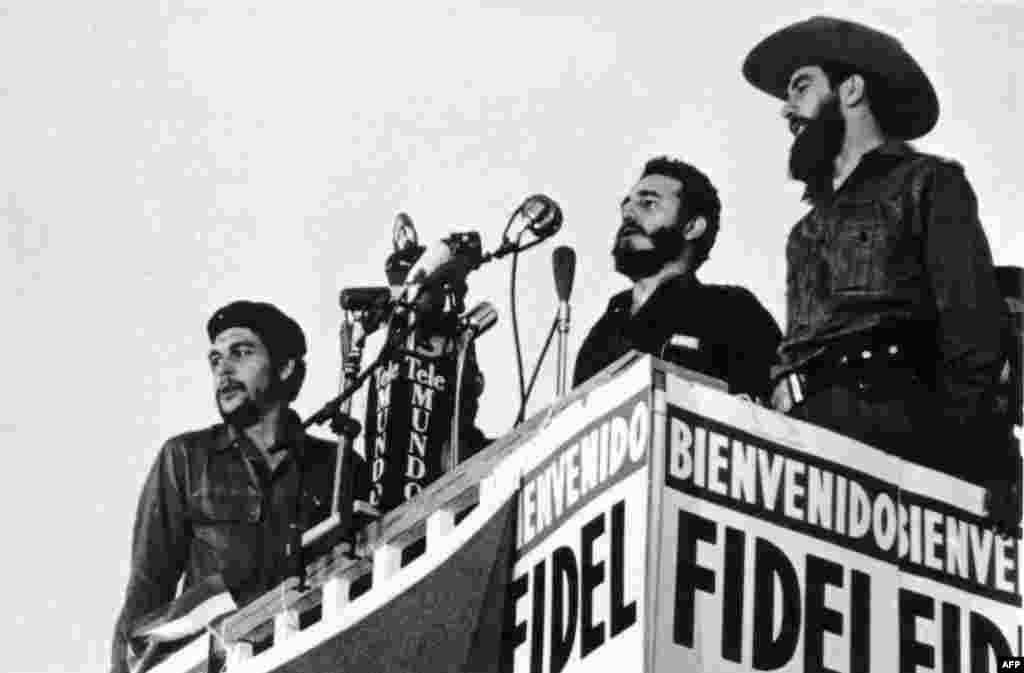
Castro (center) delivers a speech in Havana in 1959. Fellow revolutionaries Camilo Cienfuegos (right) and Ernesto Che Guevara (left) stand beside him. 
3/16 Castro (center) delivers a speech in Havana in 1959. Fellow revolutionaries Camilo Cienfuegos (right) and Ernesto Che Guevara (left) stand beside him. 
Fidel Castro, the man who led Cuba for nearly five decades, has died at the age of 90. After sweeping to power in a communist uprising in 1959, Castro served as prime minister or president of the Caribbean island state for nearly 50 years.
Castro wears a chapka near Moscow during an official visit to the Soviet Union in January 1964. 
4/16 Castro wears a chapka near Moscow during an official visit to the Soviet Union in January 1964. 
Fidel Castro, the man who led Cuba for nearly five decades, has died at the age of 90. After sweeping to power in a communist uprising in 1959, Castro served as prime minister or president of the Caribbean island state for nearly 50 years.
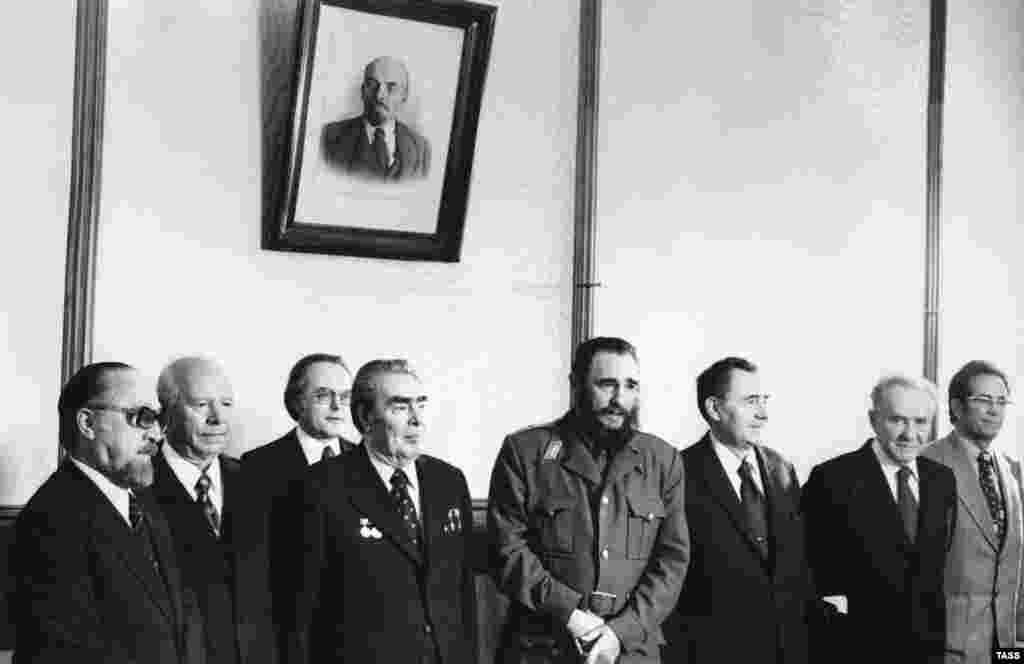
Fidel Castro poses under a portrait of Vladimir Lenin before having talks with Soviet leader Leonid Brezhnev (fourth from left). 
5/16 Fidel Castro poses under a portrait of Vladimir Lenin before having talks with Soviet leader Leonid Brezhnev (fourth from left). 
Fidel Castro, the man who led Cuba for nearly five decades, has died at the age of 90. After sweeping to power in a communist uprising in 1959, Castro served as prime minister or president of the Caribbean island state for nearly 50 years.
Castro (right) meets with Palestinian leader Yasser Arafat in 1970.
6/16 Castro (right) meets with Palestinian leader Yasser Arafat in 1970.
Fidel Castro, the man who led Cuba for nearly five decades, has died at the age of 90. After sweeping to power in a communist uprising in 1959, Castro served as prime minister or president of the Caribbean island state for nearly 50 years.
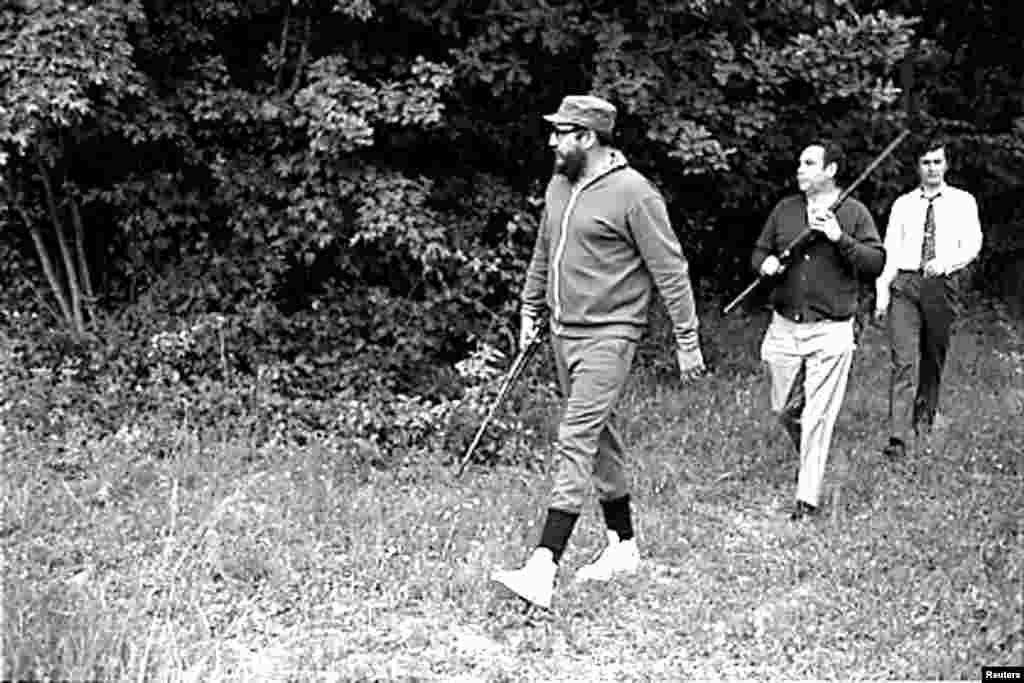
Castro (front) managed a spot of hunting while on a visit to Romania in May 1972 when the country was ruled by communist dictator Nicolae Ceausescu. 
7/16 Castro (front) managed a spot of hunting while on a visit to Romania in May 1972 when the country was ruled by communist dictator Nicolae Ceausescu. 
Fidel Castro, the man who led Cuba for nearly five decades, has died at the age of 90. After sweeping to power in a communist uprising in 1959, Castro served as prime minister or president of the Caribbean island state for nearly 50 years.
Castro (right) and then-Soviet leader Mikhail Gorbachev exchange documents during a treaty signing ceremony in Havana in 1989. 
8/16 Castro (right) and then-Soviet leader Mikhail Gorbachev exchange documents during a treaty signing ceremony in Havana in 1989. 
Fidel Castro, the man who led Cuba for nearly five decades, has died at the age of 90. After sweeping to power in a communist uprising in 1959, Castro served as prime minister or president of the Caribbean island state for nearly 50 years.
A dove rests on Castro's shoulders as he addresses Cuban youth in 1989 during celebrations marking the 30th anniversary of the country's communist revolution. 
9/16 A dove rests on Castro's shoulders as he addresses Cuban youth in 1989 during celebrations marking the 30th anniversary of the country's communist revolution. 
Fidel Castro, the man who led Cuba for nearly five decades, has died at the age of 90. After sweeping to power in a communist uprising in 1959, Castro served as prime minister or president of the Caribbean island state for nearly 50 years.
Fidel Castro (center) with guides and security agents at the Great Wall of China while on a state visit in December 1995. 
10/16 Fidel Castro (center) with guides and security agents at the Great Wall of China while on a state visit in December 1995. 
Fidel Castro, the man who led Cuba for nearly five decades, has died at the age of 90. After sweeping to power in a communist uprising in 1959, Castro served as prime minister or president of the Caribbean island state for nearly 50 years.
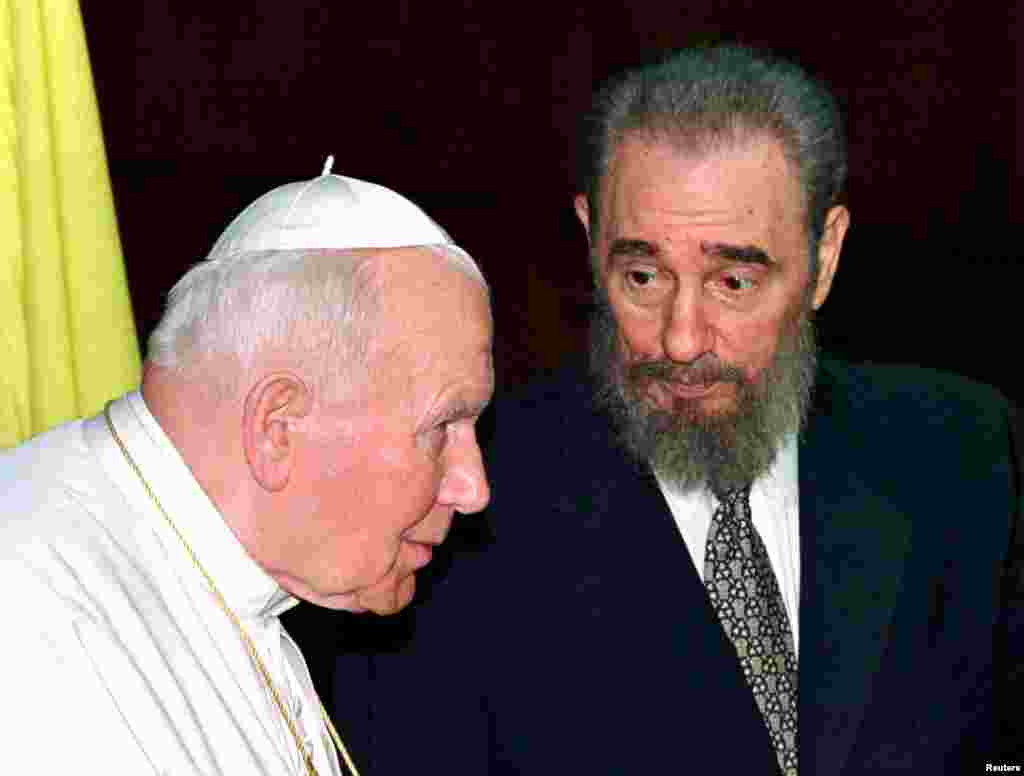
Castro talks to Pope John Paul II during the latter's visit to Havana in January 1998. 
11/16 Castro talks to Pope John Paul II during the latter's visit to Havana in January 1998. 
Fidel Castro, the man who led Cuba for nearly five decades, has died at the age of 90. After sweeping to power in a communist uprising in 1959, Castro served as prime minister or president of the Caribbean island state for nearly 50 years.
Castro (center) is helped by his bodyguards after he fell over at the end of a speech following a graduation ceremony in central Cuba in October 2004.
12/16 Castro (center) is helped by his bodyguards after he fell over at the end of a speech following a graduation ceremony in central Cuba in October 2004.
Fidel Castro, the man who led Cuba for nearly five decades, has died at the age of 90. After sweeping to power in a communist uprising in 1959, Castro served as prime minister or president of the Caribbean island state for nearly 50 years.
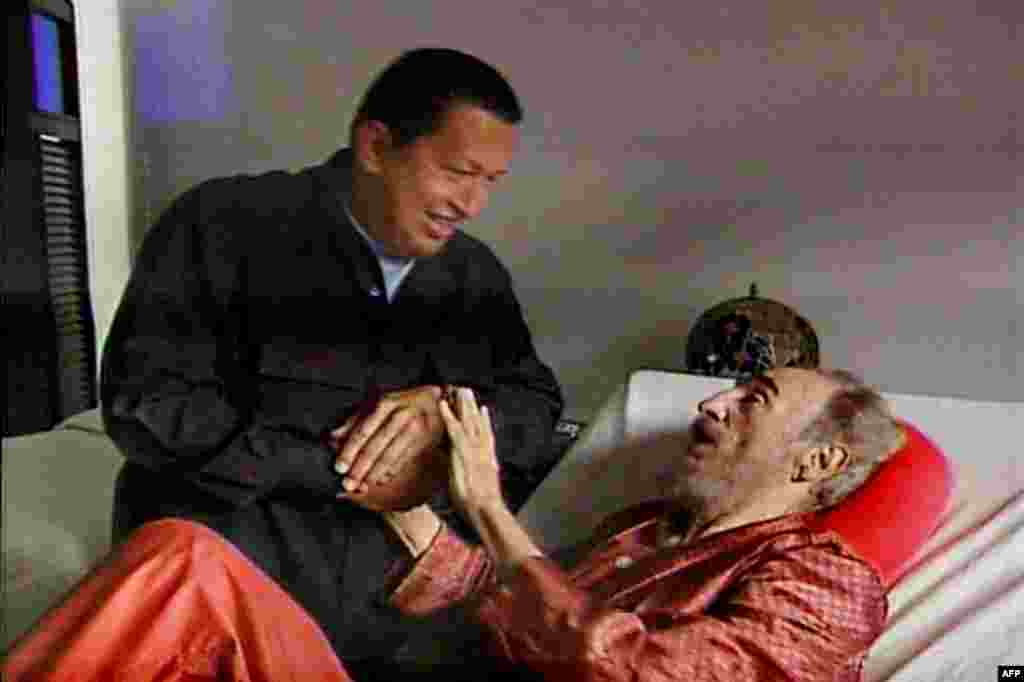
Venezuelan President Hugo Chavez pays a visit to an ailing Castro in Havana in September 2006. Despite his failing health, the Cuban leader outlived Chavez, who died of complications from cancer in 2013. 
13/16 Venezuelan President Hugo Chavez pays a visit to an ailing Castro in Havana in September 2006. Despite his failing health, the Cuban leader outlived Chavez, who died of complications from cancer in 2013. 
Fidel Castro, the man who led Cuba for nearly five decades, has died at the age of 90. After sweeping to power in a communist uprising in 1959, Castro served as prime minister or president of the Caribbean island state for nearly 50 years.
Holding a Cuban flag, Castro listens to a speaker during the May Day parade in Havana's Revolution Square in 2005.
14/16 Holding a Cuban flag, Castro listens to a speaker during the May Day parade in Havana's Revolution Square in 2005.
Fidel Castro, the man who led Cuba for nearly five decades, has died at the age of 90. After sweeping to power in a communist uprising in 1959, Castro served as prime minister or president of the Caribbean island state for nearly 50 years.
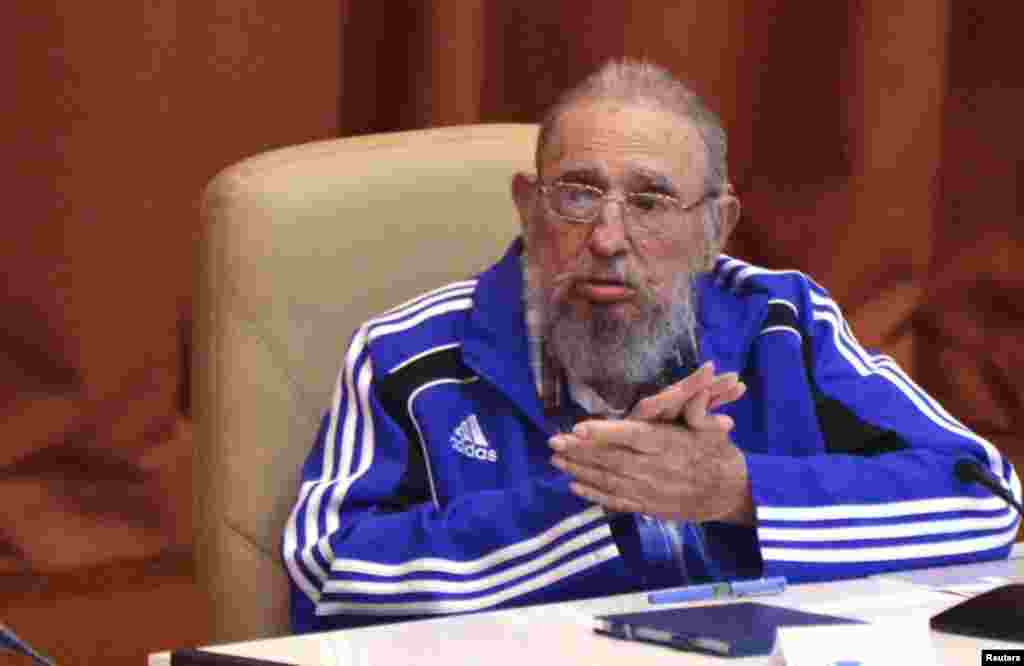
A frail-looking Fidel Castro at the Cuban Communist Party congress in Havana earlier this year.
15/16 A frail-looking Fidel Castro at the Cuban Communist Party congress in Havana earlier this year.
Fidel Castro, the man who led Cuba for nearly five decades, has died at the age of 90. After sweeping to power in a communist uprising in 1959, Castro served as prime minister or president of the Caribbean island state for nearly 50 years.
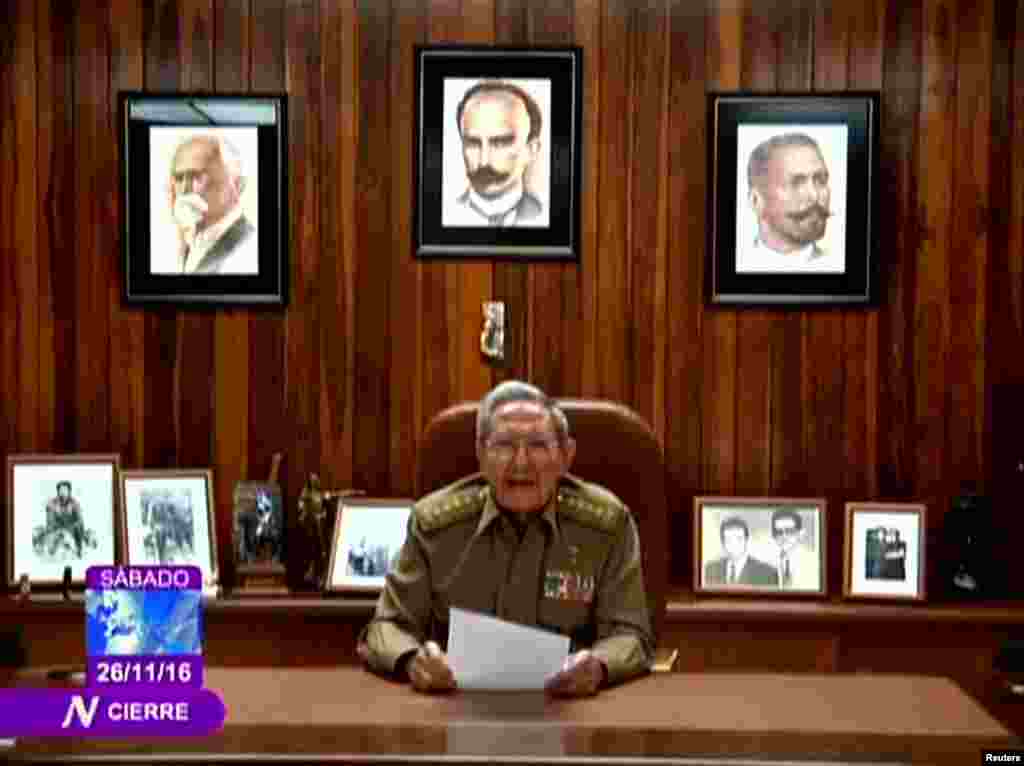
Cuba's current president, Raul Castro, announces the death of his brother, Fidel, on state television on November 26. 
16/16 Cuba's current president, Raul Castro, announces the death of his brother, Fidel, on state television on November 26. 
Fidel Castro, the man who led Cuba for nearly five decades, has died at the age of 90. After sweeping to power in a communist uprising in 1959, Castro served as prime minister or president of the Caribbean island state for nearly 50 years.
Previous slide
Next slide

Over the following decades, Castro devised a system in which executions for political activity were rare but imprisonment, harassment, and intimidation were commonplace.

HRW says that in 2003, during a period of heightened repression, 75 human rights activists and other critics of the government were tried behind closed doors and accused of being "mercenaries" of the United States -- Castro's declared archenemy.

"Many served years in inhumane prisons, where they were subjected to extended solitary confinement and beatings, and denied basic medical care for serious ailments," HRW said in a statement on November 26 regarding Castro's record.

"More than 50 of the remaining prisoners were released after Fidel Castro handed over power to his brother, most on the condition that they accept exile to Spain," it said.

According to a 2016 report by HRW, thousands of dissidents continue to be jailed in Cuba each year. The report says that the Cuban Commission for Human Rights and National Reconciliation, an independent human rights group that the government views as illegal, received more than 6,200 reports of arbitrary detentions from January through October 2015.

The large number of dissidents who are routinely detained or jailed comes despite some highly visible prisoner releases in recent years.

'Deaths, Pain, And Sacrifices'

One notable release was agreed in December 2014, when a detente was announced between Havana and Washington. In response to U.S. President Barack Obama's call for greater political freedom on Cuba, Raul Castro gave conditional release to 53 dissidents. Obama later made a landmark trip to the Caribbean island in March 2016 after the two governments restored diplomatic relations in July 2015. Ties had been severed between them since Cuba's 1959 revolution.

Even with such gestures, many observers say that intolerance of opposition is such a fundamental part of Fidel Castro's legacy that there is little likelihood the government will change direction now that he is dead.

"The primary objective of the Cuban regime today is the preservation of power as long as possible and while dissidents still have the potential to create the kind of unrest that might unsettle a Cuban leadership, they'll continue to repress," Brian Fonseca, director at Florida International University's Public Policy Institute, told Voice of America on November 26.

The Cuban government controls virtually all media in Cuba while tolerating a small number of independent bloggers who write on websites or publish tweets. Authorities routinely use preventive detention to keep activists from participating in peaceful marches or meetings. Artists and academics who demand greater freedom outside of closely controlled government organizations are routinely subjected to arrest or smear campaigns in the state press to discredit them.

Many who have suffered as a result of Castro's policies will not miss him.

"He is responsible for a huge number of deaths, pain, and sacrifices," Carlos Paya, brother of the late Cuban activist Oswaldo Paya, told the dpa news agency on August 26 from Madrid. "Those of us who have loved ones who have been victims of Castroism will not mourn this person."

Oswaldo Paya, who led Cuba's Christian Liberation Movement and received the European Parliament's Sakharov Prize for Freedom of Thought in 2002, died in a car crash in 2012 that his family believes was not an accident.

This item is part of
XS
SM
MD
LG