Tanker trucks used to transport fuel to NATO forces in Afghanistan are seen parked near oil terminals in the Pakistani port city of Karachi in May.
Pakistan has confirmed that it has decided to reopen NATO supply routes into Afghanistan that have been closed since November.
Qamar Zaman Kaira, minister of information, told reporters in Islamabad that the meeting of Pakistan's defense committee of the cabinet had decided to reopen the NATO routes.
The confirmation came soon after U.S. Secretary of State Hillary Clinton announced the supply lines would be reopened.
Clinton said that Pakistani Foreign Minister Hina Rabbani Khar had informed her via telephone on July 3 that "the ground supply lines into Afghanistan are opening."
Clinton also said she offered to Khar "sincere condolences" for losses suffered by the Pakistani military in botched U.S. air strikes that killed 24 Pakistani soldiers in a remote post on the Afghan border post on November 26.
U.S. State Department spokeswoman Victoria Nuland interpreted Clinton's remarks by saying that "the intent here is that we are both sorry for the losses suffered by both our countries in this fight against terrorists."
Long-Awaited Apology
The November air strikes on the Pakistani border post prompted Islamabad immediately to close all NATO supply routes into Afghanistan in response and sparked a major diplomatic rift between the two wary allies.
Islamabad had long said that Washington must apologize for the air strikes and fatalities before it would reopen the routes.
Sherry Rehman, Pakistan's ambassador in Washington, said on July 3 that ties between the two countries are now poised to improve.
"We appreciate Secretary Clinton's statement, and hope that bilateral ties can move to a better place from here," Rehman said.
'Larger Interest Of Peace And Security'
The State Department said that as part of the reopening, "Pakistan will continue not to charge any transit fee in the larger interest of peace and security in Afghanistan and the region."
"The [U.S.] secretary of defense has spoken to the fact that it was expensive for us during the period when the [ground lines of communication] were closed," Nuland told reporters. "One of the things that has resulted from this is that we have restored the [ground lines of communication] and we are going to be paying the exact same amount as we were paying before."
Earlier hopes of a deal on reopening the routes fell apart at a NATO summit in Chicago in May amid reports that Pakistan was demanding huge fees for each of the thousands of trucks that would rumble across the border every year.
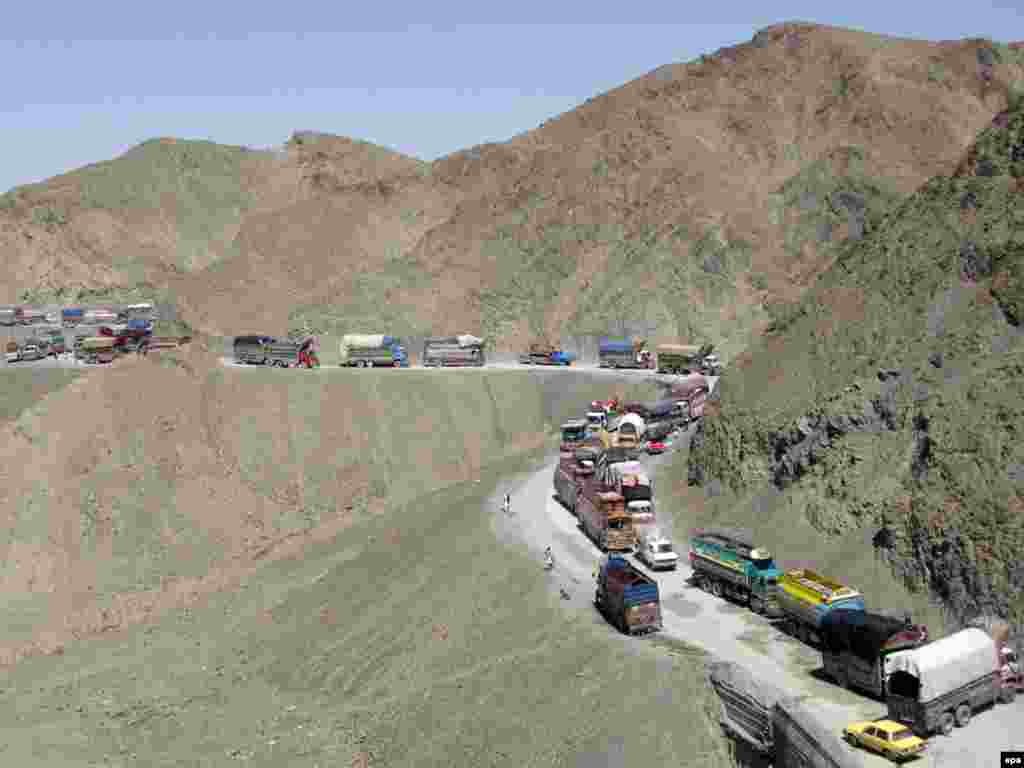
The blockade has forced NATO to rely on longer, more expensive northern routes to Afghanistan through Russia and Central Asia.
PHOTO GALLERY: Hauliers in Pakistan have awaited a green light since the routes were closed in November.
In Pakistan, NATO Truckers Await Green Light
1/20Men walk past fuel tankers, used to transport fuel to NATO forces in Afghanistan, parked near oil terminals in the Pakistani port city of Karachi.
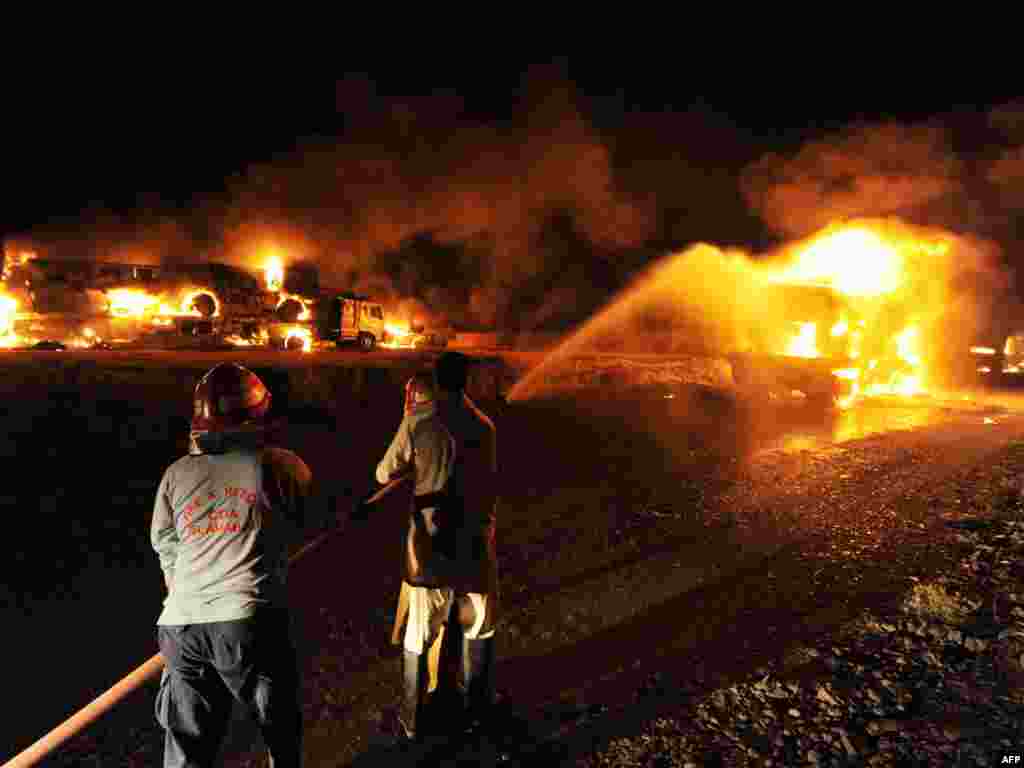
With Pakistan and the United States seemingly on the verge of an agreement to reopen ground supply lines into Afghanistan, haulers and their cargo were poised to restart the flow of fuel and other items that was interrupted more than five months ago. The NATO supply lines have long been a target for insurgents, with numerous attacks destroying countless trucks and costing lives.
Show moreShow less
2/20A man cleans a fuel tanker parked at a compound in Karachi on May 16, the day the Pakistani cabinet backed an agreement on reopening the supply route.
With Pakistan and the United States seemingly on the verge of an agreement to reopen ground supply lines into Afghanistan, haulers and their cargo were poised to restart the flow of fuel and other items that was interrupted more than five months ago. The NATO supply lines have long been a target for insurgents, with numerous attacks destroying countless trucks and costing lives.
Show moreShow less
3/20Tanker trucks parked near oil terminals in Karachi on May 15.
With Pakistan and the United States seemingly on the verge of an agreement to reopen ground supply lines into Afghanistan, haulers and their cargo were poised to restart the flow of fuel and other items that was interrupted more than five months ago. The NATO supply lines have long been a target for insurgents, with numerous attacks destroying countless trucks and costing lives.
Show moreShow less
4/20Laborers clean a tanker truck in Karachi ready to transport NATO goods on May 15.
With Pakistan and the United States seemingly on the verge of an agreement to reopen ground supply lines into Afghanistan, haulers and their cargo were poised to restart the flow of fuel and other items that was interrupted more than five months ago. The NATO supply lines have long been a target for insurgents, with numerous attacks destroying countless trucks and costing lives.
Show moreShow less
5/20NATO supply tankers gathered near oil terminals in the Pakistani port city of Karachi in 2011.
With Pakistan and the United States seemingly on the verge of an agreement to reopen ground supply lines into Afghanistan, haulers and their cargo were poised to restart the flow of fuel and other items that was interrupted more than five months ago. The NATO supply lines have long been a target for insurgents, with numerous attacks destroying countless trucks and costing lives.
Show moreShow less
6/20Fuel tankers are parked at a compound in Karachi on May 16.
With Pakistan and the United States seemingly on the verge of an agreement to reopen ground supply lines into Afghanistan, haulers and their cargo were poised to restart the flow of fuel and other items that was interrupted more than five months ago. The NATO supply lines have long been a target for insurgents, with numerous attacks destroying countless trucks and costing lives.
Show moreShow less
7/20Pakistan residents stand near fuel trucks that were set ablaze in the Bolan district of Balochistan Province in December.
With Pakistan and the United States seemingly on the verge of an agreement to reopen ground supply lines into Afghanistan, haulers and their cargo were poised to restart the flow of fuel and other items that was interrupted more than five months ago. The NATO supply lines have long been a target for insurgents, with numerous attacks destroying countless trucks and costing lives.
Show moreShow less
8/20Trucks block a highway that links the Pakistani city of Quetta with Kandahar, in Afghanistan.
With Pakistan and the United States seemingly on the verge of an agreement to reopen ground supply lines into Afghanistan, haulers and their cargo were poised to restart the flow of fuel and other items that was interrupted more than five months ago. The NATO supply lines have long been a target for insurgents, with numerous attacks destroying countless trucks and costing lives.
Show moreShow less
9/20Delays in November, with NATO-Pakistani relations in crisis over the death of 24 Pakistani troops in a NATO air strike earlier in the month.
With Pakistan and the United States seemingly on the verge of an agreement to reopen ground supply lines into Afghanistan, haulers and their cargo were poised to restart the flow of fuel and other items that was interrupted more than five months ago. The NATO supply lines have long been a target for insurgents, with numerous attacks destroying countless trucks and costing lives.
Show moreShow less
10/20Men remove logs near the site of burning oil tankers that were carrying supplies to foreign forces in Afghanistan after they were attacked on the outskirts of Quetta in October 2010.
With Pakistan and the United States seemingly on the verge of an agreement to reopen ground supply lines into Afghanistan, haulers and their cargo were poised to restart the flow of fuel and other items that was interrupted more than five months ago. The NATO supply lines have long been a target for insurgents, with numerous attacks destroying countless trucks and costing lives.
Show moreShow less
11/20A local watches fuel tankers burn from a median along the GT road in Nowshera, in Khyber Pakhtunkhwa Province, in October 2010.
With Pakistan and the United States seemingly on the verge of an agreement to reopen ground supply lines into Afghanistan, haulers and their cargo were poised to restart the flow of fuel and other items that was interrupted more than five months ago. The NATO supply lines have long been a target for insurgents, with numerous attacks destroying countless trucks and costing lives.
Show moreShow less
12/20Pakistani paramilitary troops stand guard as trucks carrying NATO supplies await clearance in Chaman in 2009.
With Pakistan and the United States seemingly on the verge of an agreement to reopen ground supply lines into Afghanistan, haulers and their cargo were poised to restart the flow of fuel and other items that was interrupted more than five months ago. The NATO supply lines have long been a target for insurgents, with numerous attacks destroying countless trucks and costing lives.
Show moreShow less
13/20A boy watches a plume of smoke rising from fuel trucks after they were attacked by unidentified gunmen on a highway near Shikarpur, Pakistan in 2011.
With Pakistan and the United States seemingly on the verge of an agreement to reopen ground supply lines into Afghanistan, haulers and their cargo were poised to restart the flow of fuel and other items that was interrupted more than five months ago. The NATO supply lines have long been a target for insurgents, with numerous attacks destroying countless trucks and costing lives.
Show moreShow less
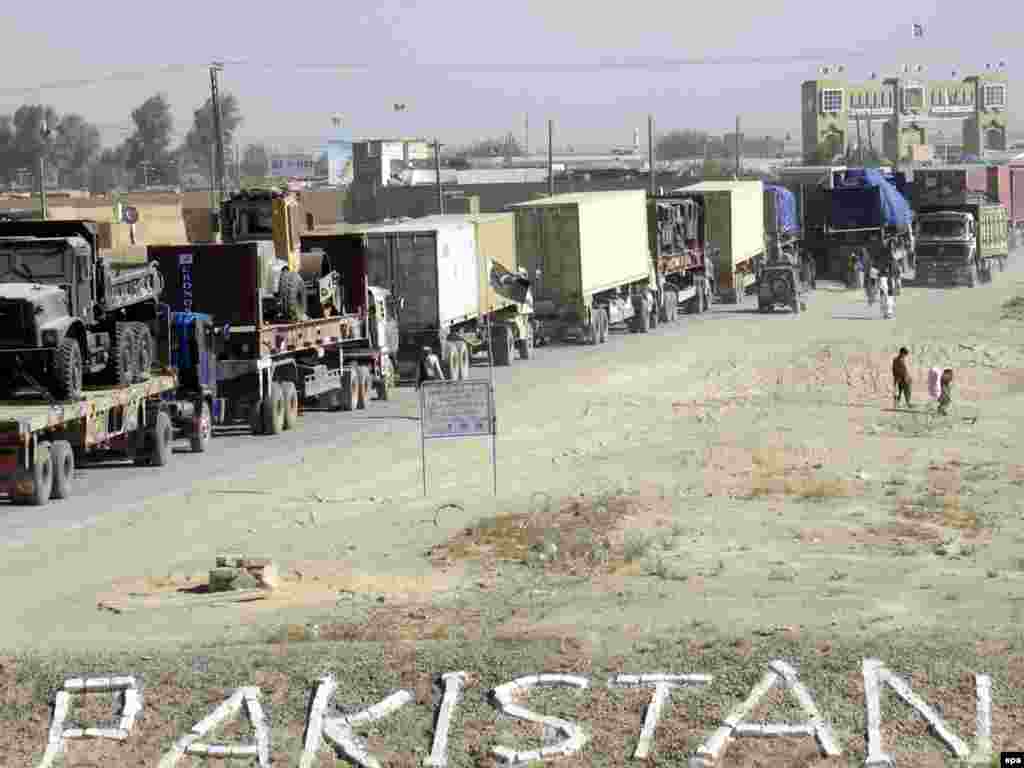
14/20Pakistani trucks carrying NATO supplies to Afghanistan await clearance at Chaman on the Pakistani border with Afghanistan in 2009.
With Pakistan and the United States seemingly on the verge of an agreement to reopen ground supply lines into Afghanistan, haulers and their cargo were poised to restart the flow of fuel and other items that was interrupted more than five months ago. The NATO supply lines have long been a target for insurgents, with numerous attacks destroying countless trucks and costing lives.
Show moreShow less
15/20Residents stand near fuel trucks set ablaze in the Bolan district of Balochistan Province in Pakistan in December.
With Pakistan and the United States seemingly on the verge of an agreement to reopen ground supply lines into Afghanistan, haulers and their cargo were poised to restart the flow of fuel and other items that was interrupted more than five months ago. The NATO supply lines have long been a target for insurgents, with numerous attacks destroying countless trucks and costing lives.
Show moreShow less
16/20Smoke rises past residents standing on the wall of a truck terminal where NATO fuel tankers were set ablaze in Quetta in December.
With Pakistan and the United States seemingly on the verge of an agreement to reopen ground supply lines into Afghanistan, haulers and their cargo were poised to restart the flow of fuel and other items that was interrupted more than five months ago. The NATO supply lines have long been a target for insurgents, with numerous attacks destroying countless trucks and costing lives.
Show moreShow less
17/20Firefighters try to extinguish burning NATO supply trucks carrying military vehicles and oil after militants attack on the outskirts of Islamabad in June 2010.
With Pakistan and the United States seemingly on the verge of an agreement to reopen ground supply lines into Afghanistan, haulers and their cargo were poised to restart the flow of fuel and other items that was interrupted more than five months ago. The NATO supply lines have long been a target for insurgents, with numerous attacks destroying countless trucks and costing lives.
Show moreShow less
18/20Truck drivers wait after security forces stopped NATO supply trucks in Quetta and Chaman after a NATO raid on a checkpoint in Mahmand in late November.
With Pakistan and the United States seemingly on the verge of an agreement to reopen ground supply lines into Afghanistan, haulers and their cargo were poised to restart the flow of fuel and other items that was interrupted more than five months ago. The NATO supply lines have long been a target for insurgents, with numerous attacks destroying countless trucks and costing lives.
Show moreShow less
19/20Trucks halted by Pakistani authorities near the border with Afghanistan in late November.
With Pakistan and the United States seemingly on the verge of an agreement to reopen ground supply lines into Afghanistan, haulers and their cargo were poised to restart the flow of fuel and other items that was interrupted more than five months ago. The NATO supply lines have long been a target for insurgents, with numerous attacks destroying countless trucks and costing lives.
Show moreShow less
20/20Trucks carrying the supplies for NATO forces in southwestern Afghanistan await clearance at the Pakistani border with Afghanistan in Chaman in September 2009.
With Pakistan and the United States seemingly on the verge of an agreement to reopen ground supply lines into Afghanistan, haulers and their cargo were poised to restart the flow of fuel and other items that was interrupted more than five months ago. The NATO supply lines have long been a target for insurgents, with numerous attacks destroying countless trucks and costing lives.
Show moreShow less
Previous slide
Next slide
Washington's announcement that the routes will now reopen comes after Pakistan's new prime minister, Raja Pervez Ashraf, earlier on July 3 acknowledged that continuing the seven-month blockade on NATO supplies into Afghanistan was negatively affecting relations with the United States and other NATO member states.
The Pakistani Taliban responded to the news on July 3 by threatening to attack NATO supply trucks and kill drivers if they try to resume supplies to troops in Afghanistan.
Taliban spokesman Ehsanullah Ehsan told AFP the Taliban "will not allow any truck to pass and will attack it."
The U.S. commander of NATO troops fighting the Taliban and remnants of Al-Qaeda, General John Allen, welcomed Pakistan's decision to reopen NATO supply lines into Afghanistan.
Allen made his remarks in a statement released in Kabul that also paid tribute to the "sacrifices" made by Pakistani, as well as Afghan and NATO troops in the war.
Relations between Islamabad and Washington had been particularly frigid since U.S. special forces carried out a secret cross-border operation from Afghanistan that killed Al-Qaeda leader Osama bin Laden at a compound in Abbotabad, Pakistan.
Based on reporting by AP, AFP, Reuters, and RFE/RL