



Gandhara Briefing: Decapitating The Pakistani Taliban, Afghan Brain Drain, Private Schools Close In Kabul
PAKISTAN -- Pakistani militant Omar Khalid Khorasani is seen at an undisclosed location near the Pak-Afghan border, undated
Dear Reader,
Welcome to Gandhara's weekly newsletter. This briefing brings you the best of our reporting from Afghanistan and Pakistan.
If you’re new to the newsletter or haven't subscribed yet, you can do so here.
This week's Gandhara Briefing brings insight into the killing of top Pakistani Taliban commanders, the brain drain from Afghanistan, and why private schools are shutting down in the country.
Peace Talks And The TTP
Radio Mashaal broke the news about the killing of three top commanders of the Tehrik-e Taliban Pakistan (TTP) inside Afghanistan this week. They included Abdul Wali, alias Omar Khalid Khorasani, one of the most notable Pakistani Taliban commanders.
In an analysis, Daud Khattak assessed whether the killings could end the TTP's delicate peace talks with Islamabad. The murky killings have also possibly exposed the frictions within the hard-line organization, which is allied with the Afghan Taliban, Al-Qaeda, and other Islamist militant groups.
"The TTP may not be interested in scrapping it because it is the Pakistani state that is making compromises," Muhammad Amir Rana, an Islamabad-based security analyst, said of the talks that began earlier this year and have so far seen the release of more than 100 TTP militants in return for a cease-fire.
Hundreds of TTP fighters have already returned to the parts of Khyber Pakhtunkhwa they had fled because of military operations years ago.
Residents of Dir and Swat protested against their return this week, while the residents of North Waziristan have been protesting for nearly a month.
Afghan Brain Drain
Michael Scollon writes about the large-scale exodus of Afghan professionals and educated middle class from Afghanistan since the Taliban takeover nearly a year ago.
The brain drain is particularly difficult for a country that barely recovered from its human resource losses during the war against Soviet occupation in the 1980s and the civil war in the 1990s.
The departure of those who were educated abroad has retarded Afghanistan's development.
"Losing such human capital, simply put, is disastrous for Afghanistan," said Weeda Mehran, an Afghanistan expert at the University of Exeter, adding that the loss of trained professionals has hit health care, education, security, and judicial sectors hard.
"We always have to start from scratch in Afghanistan to make some progress, if at all," said Sima Stanekzai, who rose through the ranks to eventually become the deputy governor of Jowzjan Province.
Afghan Private Schools Take A Major Hit
Radio Azadi reports on why private schools are closing across Afghanistan. More than 200 schools have already shut their doors to students in the Afghan capital, Kabul.
"Our school was shut because of economic difficulties," said Maiwand Mangal, whose school, Nawakht, recently ended its lessons. "We could not raise funds to pay rent for the building we were letting."
Our photo gallery captures how the economic collapse has triggered a hunger crisis in Afghanistan:
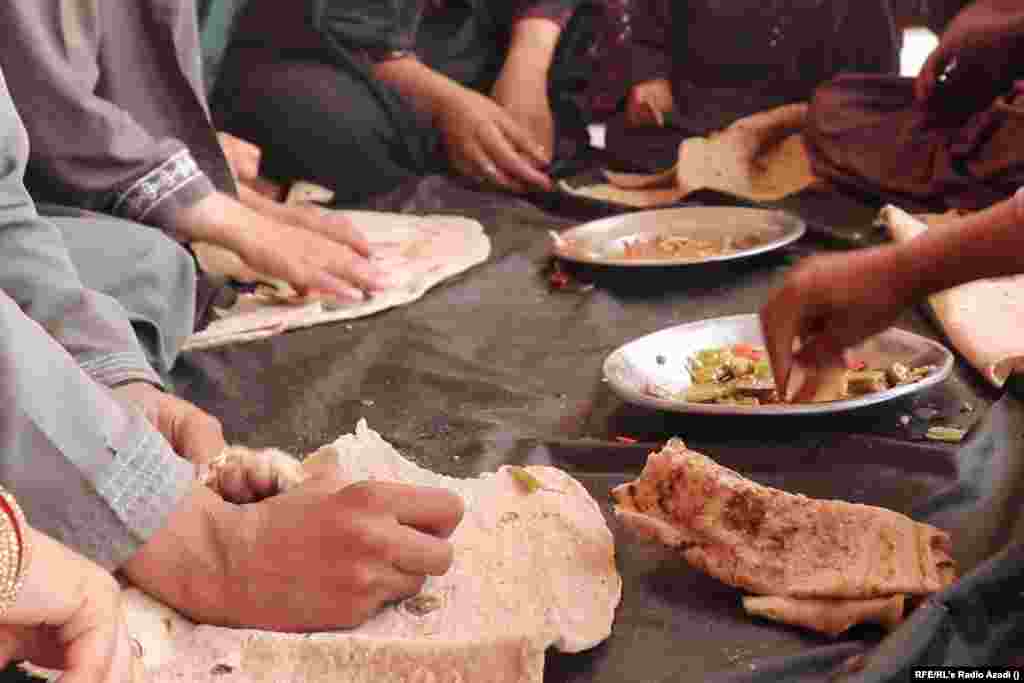
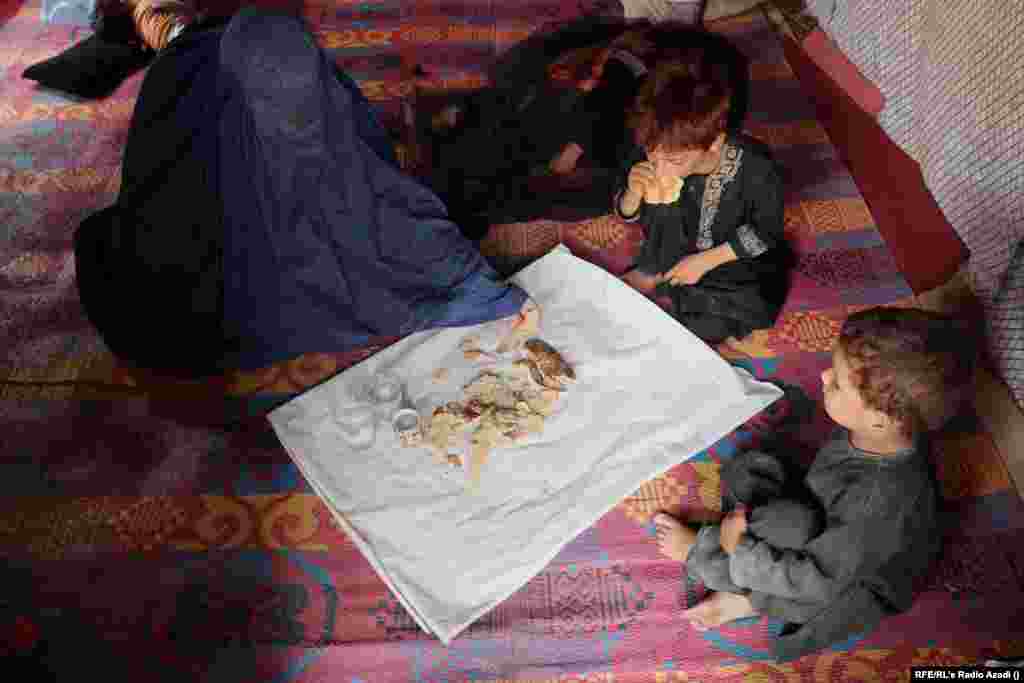
Afghanistan's Bare Dastarkhaans Reveal Rising Poverty, Hunger Under The Taliban
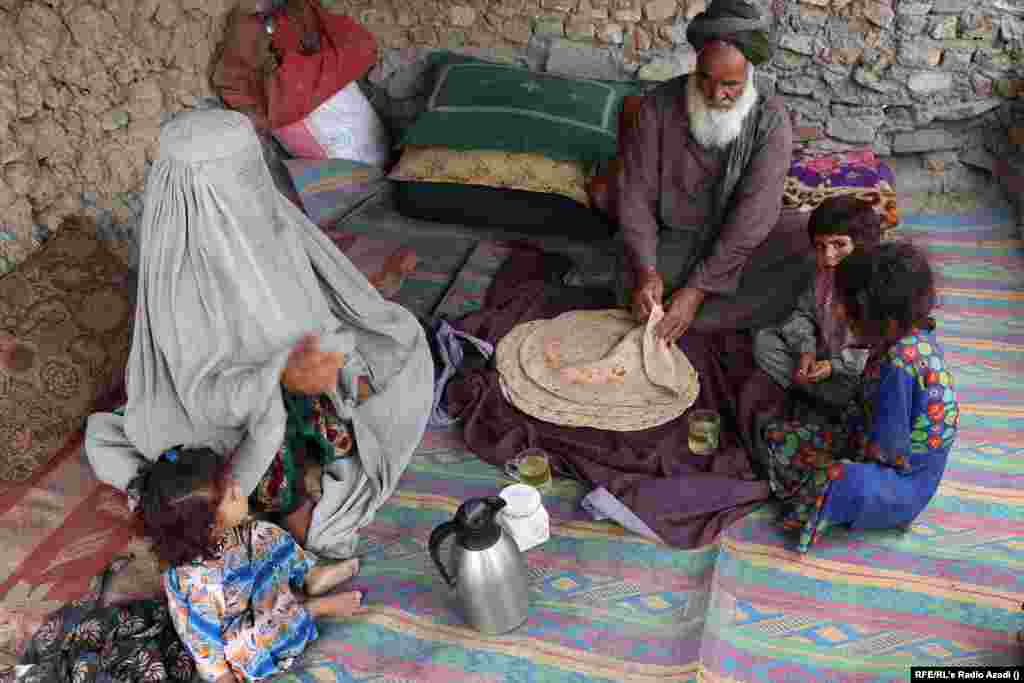
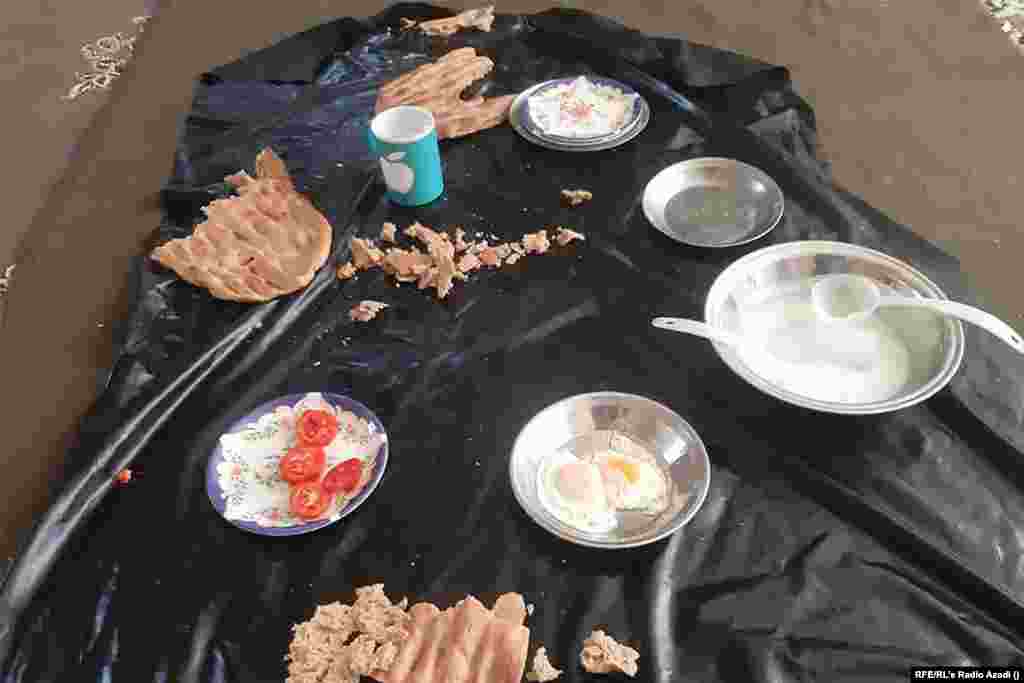
1/8This family in Kandahar eats bread with tea for breakfast.
Women and children are the most vulnerable to hunger. Earlier this year, the United Nations Children's Fund (UNICEF) warned that some 1.1 million Afghan children under the age of 5 risked dying of severe acute malnutrition, while more than 3.2 million children faced malnutrition.
The Taliban’s takeover of Afghanistan in August 2021 triggered the collapse of the country's aid-dependent economy, leading to rising food prices and soaring unemployment. The economic crunch has fueled a hunger crisis in the country of some 40 million people.
2/8Hasibullah is a resident of Firozkoh, the provincial capital of central Ghor Province. “Before the Taliban takeover, I had a job and earned a living. I could afford to feed my family well. Unfortunately, those days are over. Food is very expensive. I feel ashamed that I cannot give my kids the food they need or want. It really pains me.”
The Taliban’s takeover of Afghanistan in August 2021 triggered the collapse of the country's aid-dependent economy, leading to rising food prices and soaring unemployment. The economic crunch has fueled a hunger crisis in the country of some 40 million people.
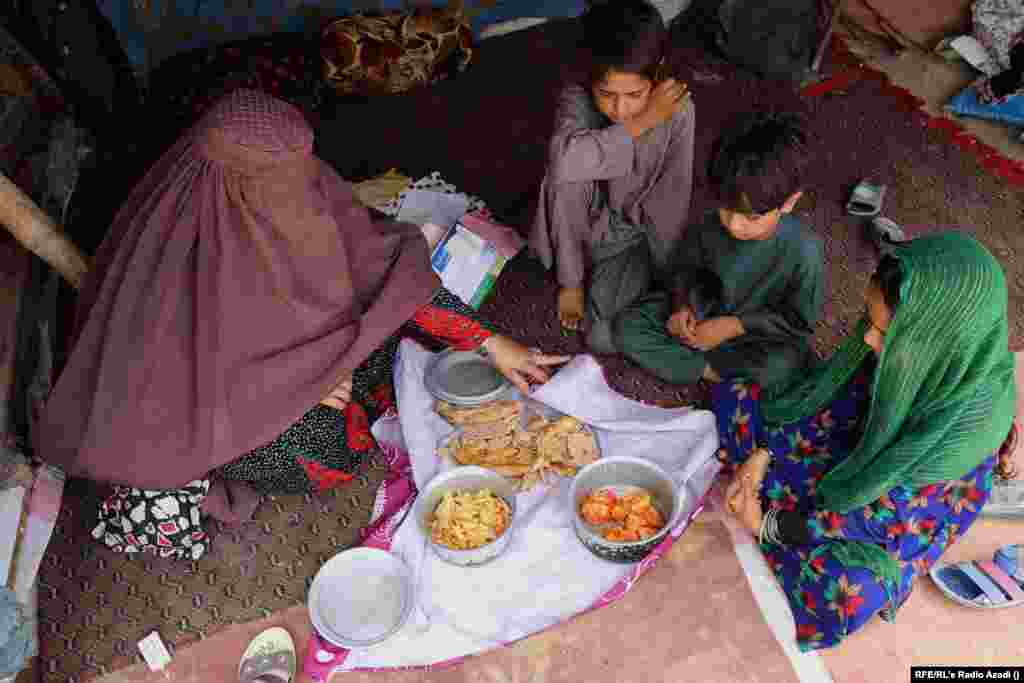
3/8Pashtana, a widow, also lives in Kandahar city. She and her three children eat potatoes for lunch. Pashtana used to beg until it was banned in the city by the Taliban. The militant group provides her with a bag of flour, rice, and cooking oil each month. But she says this does not meet the family’s needs.
The Taliban’s takeover of Afghanistan in August 2021 triggered the collapse of the country's aid-dependent economy, leading to rising food prices and soaring unemployment. The economic crunch has fueled a hunger crisis in the country of some 40 million people.
4/8“In the past, we could regularly buy meat, rice, and vegetables," says Ahmad Zia, a resident of the western province of Farah. "Now I’m unemployed and we cannot afford many food items. Now, we are lucky if we afford to buy meat once a month.”
The Taliban’s takeover of Afghanistan in August 2021 triggered the collapse of the country's aid-dependent economy, leading to rising food prices and soaring unemployment. The economic crunch has fueled a hunger crisis in the country of some 40 million people.
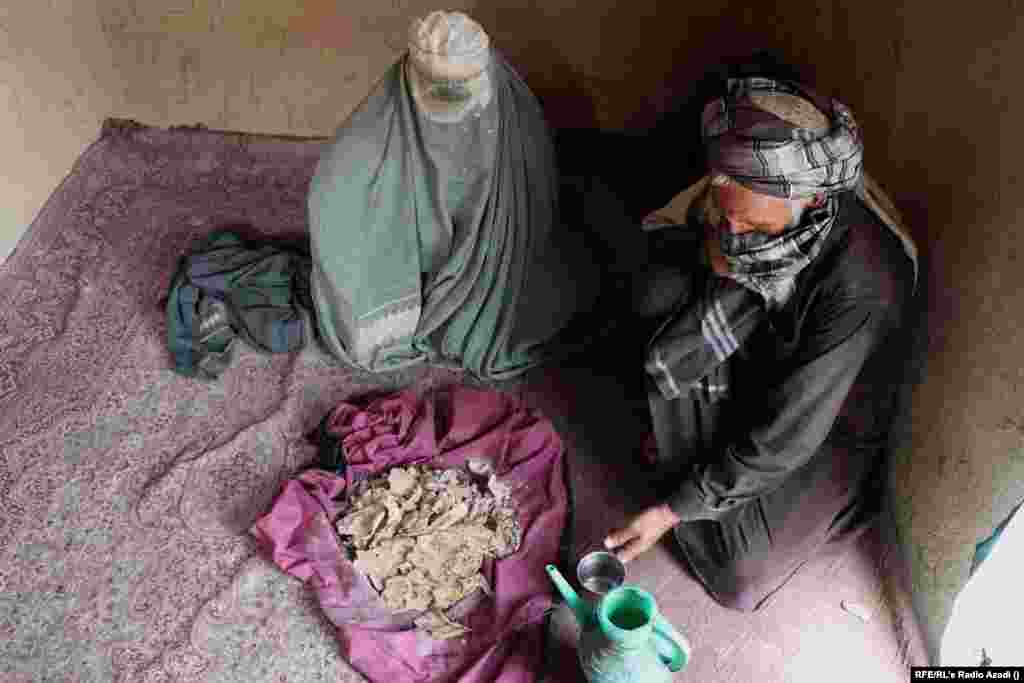
5/8This couple lives in the southern city of Kandahar. They eat scraps of dry bread with water for breakfast. The man is unemployed, and the couple relies on handouts in order to survive.
The Taliban’s takeover of Afghanistan in August 2021 triggered the collapse of the country's aid-dependent economy, leading to rising food prices and soaring unemployment. The economic crunch has fueled a hunger crisis in the country of some 40 million people.
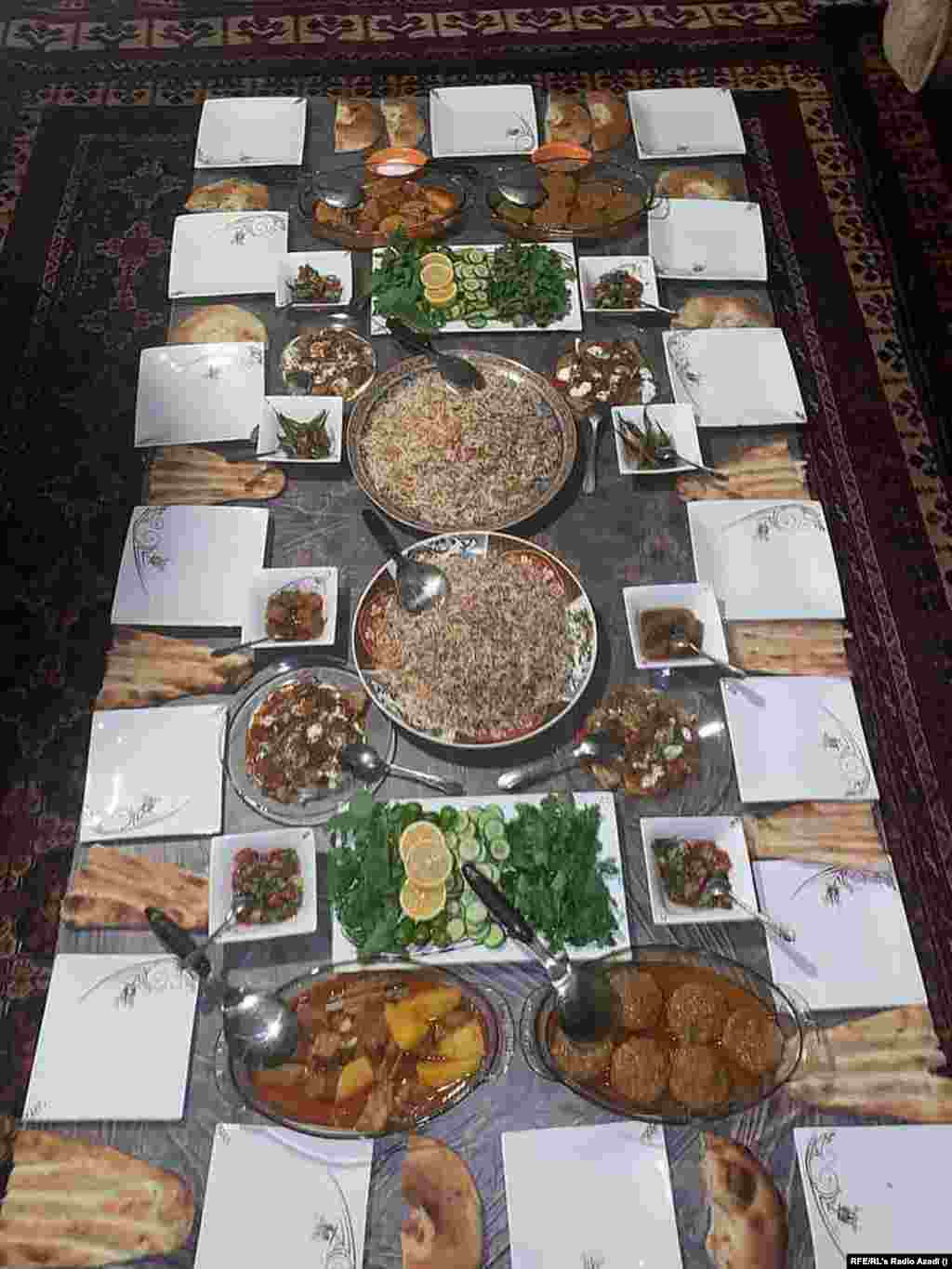
6/8Before the Taliban seized power, Hasibullah says his family would regularly buy meat, fresh vegetables, and fruit. Here, Hasibullah provides a photo of what his dining rug looked like a year ago.
The Taliban’s takeover of Afghanistan in August 2021 triggered the collapse of the country's aid-dependent economy, leading to rising food prices and soaring unemployment. The economic crunch has fueled a hunger crisis in the country of some 40 million people.
7/8Khan Mohammad, who lives in the city of Tarinkot, has nine children. Here, the farmer eats lunch with his children at home. Mohammad says they do not eat anything for dinner.
The Taliban’s takeover of Afghanistan in August 2021 triggered the collapse of the country's aid-dependent economy, leading to rising food prices and soaring unemployment. The economic crunch has fueled a hunger crisis in the country of some 40 million people.
8/8Zarmina, a widow, has two children. She lives in the southern city of Lashkar Gah. She and her children eat bread and drink water for lunch.
In March, the World Food Program said that almost 100 percent of female-headed households are facing "insufficient food consumption." Households headed by women are the most vulnerable group among the nearly 9 million Afghans, and the WFP warns they are at risk of "famine-like" conditions.
The Taliban’s takeover of Afghanistan in August 2021 triggered the collapse of the country's aid-dependent economy, leading to rising food prices and soaring unemployment. The economic crunch has fueled a hunger crisis in the country of some 40 million people.
Previous slide
Next slide
Azim Maidanwal, the head of the Afghan private school association, said the COVID-19 pandemic and the collapse of Afghanistan's pro-Western government last year ravaged their schools.
"Many owners simply walked away from their schools by locking the doors," he said. "They even left behind their desks and chairs."
Teenage Afghan Girl Questions Taliban
In a video report, we take you to meet a teenage Afghan schoolgirl who aspires to be a digital artist.
"Why are you taking away our rights?" she asks the Taliban, who have banned teenage girls from education since returning to power last year.
"It is our right to be educated. We don't want the history to be repeated," she said, referring to the Taliban's first stint in power from 1996-2001 when women were banned from education, the workplace, and social life.

Abubakar Siddique, a journalist for RFE/RL's Radio Azadi, specializes in the coverage of Afghanistan and Pakistan. He is the author of The Pashtun Question: The Unresolved Key To The Future Of Pakistan And Afghanistan. He also writes the Azadi Briefing, a weekly newsletter that unpacks the key issues in Afghanistan.