Ivan Vejvoda of the German Marshall Fund weighs in on the recent arrest of Radko Mladic, an event that has been welcomed as a positive move for the Balkans and a critical step toward Serbia's European Union integration. Mladic's arrest came just weeks after the leader of Bosnia's Bosnian Serb entity tried to push through a referendum that indirectly pressed for its separation from Bosnia, raising international concerns over possible growing instability in the region.
The referendum was tabled after strong words from the United Nations, but until Mladic's arrest in Belgrade last week, the Balkans seemed headed for trouble. What does the Mladic incident hold for the region's future? Vejvoda, who served as foreign policy adviser to two Serbian prime ministers prior to his current post as vice president for German Marshall Fund programs, discusses the issue with RFE/RL's Nenad Pejic.
RFE/RL: Mr. Vejvoda, we, I guess, both agree that the Serbian position at an international level has been much stronger at the moment [following Mladic's capture]. What kind of gains do you think Serbia could get?
Ivan Vejvoda: Serbia has relieved itself of this huge burden and, I would say, improved its image significantly by arresting the most-wanted indicted war criminal, Radko Mladic. And it opens the way for Serbia's continuing EU integration process, I would say, now, like other postcommunist countries.
RFE/RL: I talked to several experts on the link that Mladic could have on Bosnia. They are divided. Some think that [Serbian President Boris] Tadic will continue supporting, at least for a while, [Republika Srpska President Milorad] Dodik, in order to get himself closer to the hard-liners. Others think that [in] its candidacy for the EU, Tadic will actually need to push Dodik much more to meet [the] needs of a functional state than towards separation. What is your opinion?
Vejvoda: I think that President Tadic has been very clear in all of his international and domestic statements about the sovereignty and integrity of Bosnia and that nothing can be brought into question.
But I think that if one judges the regional cooperation that is one of the most foremost goals and reconciliation -- which has been demonstrated in particular in the cases of Serbia [and] Croatia coming much closer and opening all the issues that stand between them -- I think that is the sign of where this will go. [That is,] that Bosnia-Herzegovina [is probably] identified as the most challenging issue in the Balkans -- more so even than Kosovo, when one looks at U.S. foreign policy or even Brussels and the European Union -- [and] that both Serbia and Croatia will be watched very carefully. How they act and speak when Bosnia and Herzegovina is concerned in this, it is my expectation that it will be, to speak very simply, the "constructive scenario" from Serbia vis-a-vis Bosnia, that will be preponderant over the other [scenario].
IN PHOTOS: The whirlwind 24 hours that culminated in the extradition by Serbia of Ratko Mladic to the International Criminal Tribunal for the former Yugoslavia in The Hague:
Extraditing Ratko Mladic
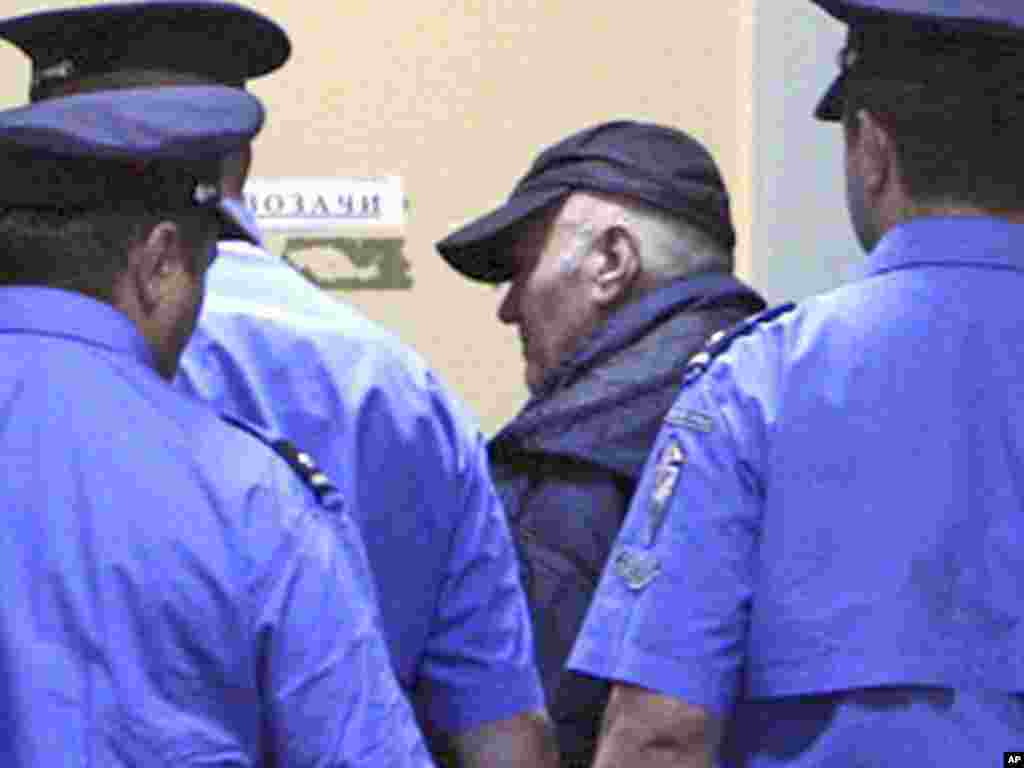
1/16A handout image released by the Serbian government on May 26 of a 69-year-old Ratko Mladic entering a court in Belgrade in police custody. AP photo/Serbian Government
Wartime Bosnian Serb general and indicted war criminal Ratko Mladic was at the center of the storm on May 31, when he was extradited to face an international war crimes tribunal in The Hague over alleged atrocities committed during the 1992-95 war.
Show moreShow less
2/16A photo provided by "Press" newspaper on May 28 shows Mladic at an undisclosed location in Serbia after his arrest on May 26. EPA photo
Wartime Bosnian Serb general and indicted war criminal Ratko Mladic was at the center of the storm on May 31, when he was extradited to face an international war crimes tribunal in The Hague over alleged atrocities committed during the 1992-95 war.
Show moreShow less
3/16The Belgrade grave of Ratko Mladic's daughter, Ana, who committed suicide in 1994. Mladic was accompanied to the gravesite ahead of the rejection of his appeal against extradition on May 31. AFP photo by Andrej Isakovic
Wartime Bosnian Serb general and indicted war criminal Ratko Mladic was at the center of the storm on May 31, when he was extradited to face an international war crimes tribunal in The Hague over alleged atrocities committed during the 1992-95 war.
Show moreShow less
4/16In the heart of Serb-dominated Republika Srpska, in Bosnia, supporters of Ratko Mladic in Banja Luka protested his detention and extradition on May 31 in the hours before the court's rejection of his appeal.
Wartime Bosnian Serb general and indicted war criminal Ratko Mladic was at the center of the storm on May 31, when he was extradited to face an international war crimes tribunal in The Hague over alleged atrocities committed during the 1992-95 war.
Show moreShow less
5/16A man chants slogans while holding a flag and a photos of Ratko Mladic in Banja Luka. More than 10,000 people gathered in the city center of the Republika Srpska's capital to show their support for Mladic on May 31. AP photo by Amel Emric
Wartime Bosnian Serb general and indicted war criminal Ratko Mladic was at the center of the storm on May 31, when he was extradited to face an international war crimes tribunal in The Hague over alleged atrocities committed during the 1992-95 war.
Show moreShow less
6/16Mladic supporters in Banja Luka, Republika Srpska, in Bosnia, expressing outrage over his arrest and possible extradition on May 31. Photo by Erduan Katana
Wartime Bosnian Serb general and indicted war criminal Ratko Mladic was at the center of the storm on May 31, when he was extradited to face an international war crimes tribunal in The Hague over alleged atrocities committed during the 1992-95 war.
Show moreShow less
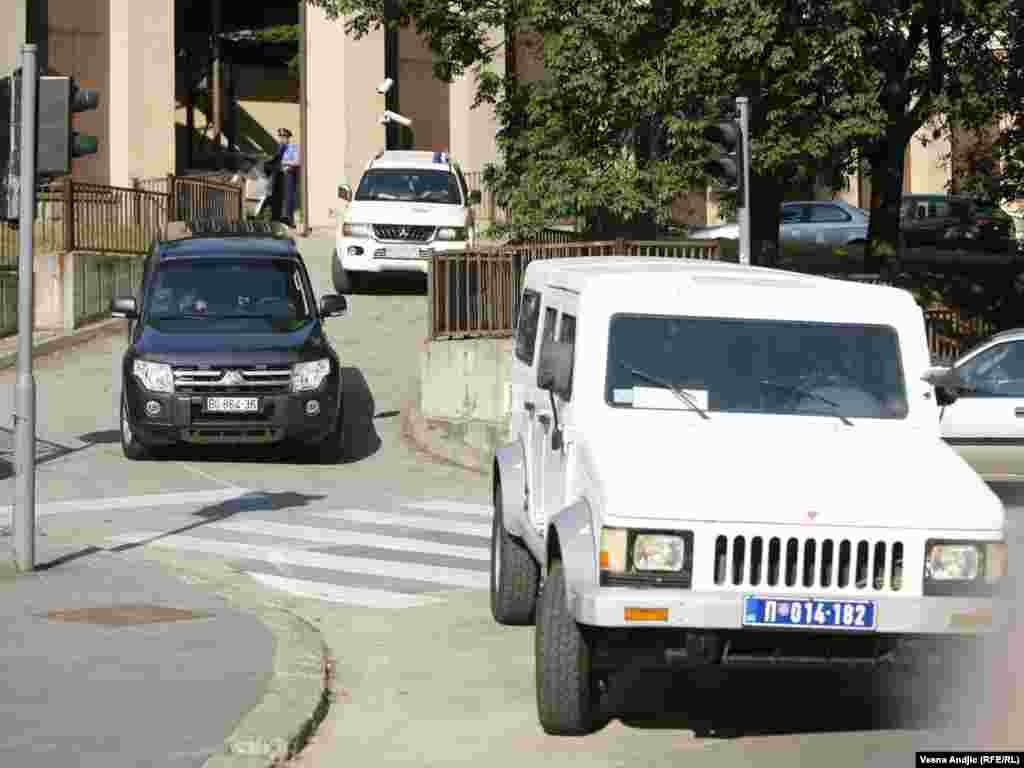
7/16Serbian forces secure a convoy allegedly carrying Bosnian Serb ex-army chief from court to Belgrades airport. AFP photo by Andrej Isakovic
Wartime Bosnian Serb general and indicted war criminal Ratko Mladic was at the center of the storm on May 31, when he was extradited to face an international war crimes tribunal in The Hague over alleged atrocities committed during the 1992-95 war.
Show moreShow less
8/16A Serbian government airplane thought to be carrying Ratko Mladic departs from Belgrade, headed for The Netherlands.
Wartime Bosnian Serb general and indicted war criminal Ratko Mladic was at the center of the storm on May 31, when he was extradited to face an international war crimes tribunal in The Hague over alleged atrocities committed during the 1992-95 war.
Show moreShow less
9/16The white car car thought to be transporting Mladic from the Belgrade court to the airplane to take him to the Hague under heavy protection by Serbian security forces. AP photo by Vadim Ghirda
Wartime Bosnian Serb general and indicted war criminal Ratko Mladic was at the center of the storm on May 31, when he was extradited to face an international war crimes tribunal in The Hague over alleged atrocities committed during the 1992-95 war.
Show moreShow less
10/16The convoy allegedly carrying Mladic to the airport in Belgrade. He was thought to be inside the white, heavily fortified vehicle. AFP photo by Marko Djokovic
Wartime Bosnian Serb general and indicted war criminal Ratko Mladic was at the center of the storm on May 31, when he was extradited to face an international war crimes tribunal in The Hague over alleged atrocities committed during the 1992-95 war.
Show moreShow less
11/16The convoy allegedly carrying Mladic arrives at Belgrade airport.
Wartime Bosnian Serb general and indicted war criminal Ratko Mladic was at the center of the storm on May 31, when he was extradited to face an international war crimes tribunal in The Hague over alleged atrocities committed during the 1992-95 war.
Show moreShow less
12/16The airplane thought to be carrying Mladic from Belgrade touches down at Rotterdam's airport, a short helicopter ride away from the international war crimes tribunal's detention facilities in The Hague. REUTERS photo by Toussaint Kluiters/United Photos
Wartime Bosnian Serb general and indicted war criminal Ratko Mladic was at the center of the storm on May 31, when he was extradited to face an international war crimes tribunal in The Hague over alleged atrocities committed during the 1992-95 war.
Show moreShow less
13/16A member of the Dutch special forces guard at the Scheveningen prison in The Hague ahead of Mladic's expected arrival on May 31. AFP photo by ANP/Robin Utrecht
Wartime Bosnian Serb general and indicted war criminal Ratko Mladic was at the center of the storm on May 31, when he was extradited to face an international war crimes tribunal in The Hague over alleged atrocities committed during the 1992-95 war.
Show moreShow less
14/16One of two helicopters believed to be carrying Mladic departs from Rotterdam airport in The Netherlands to deliver him to The Hague and the International Criminal Tribunal for the former Yugoslavia, an institution which has sought him for nearly 16 years on genocide and other alleged atrocities charges. REUTERS photo by Robin van Lonkhuijsen
Wartime Bosnian Serb general and indicted war criminal Ratko Mladic was at the center of the storm on May 31, when he was extradited to face an international war crimes tribunal in The Hague over alleged atrocities committed during the 1992-95 war.
Show moreShow less
15/16An aerial view taken on May 27 of the Scheveningen detention center near The Hague where defendants are held for proceedings before the International Criminal Tribunal for the former Yugoslavia (ICTY). AFP photo by Robin Utrecht
Wartime Bosnian Serb general and indicted war criminal Ratko Mladic was at the center of the storm on May 31, when he was extradited to face an international war crimes tribunal in The Hague over alleged atrocities committed during the 1992-95 war.
Show moreShow less
16/16A helicopter believed to be carrying extradited war crimes suspect Ratko Mladic arrives at the Scheveningen prison facility in The Hague on May 31, nearly 16 years after his indictment. REUTERS by Michael Kooren
Wartime Bosnian Serb general and indicted war criminal Ratko Mladic was at the center of the storm on May 31, when he was extradited to face an international war crimes tribunal in The Hague over alleged atrocities committed during the 1992-95 war.
Show moreShow less
Previous slide
Next slide
RFE/RL:You mentioned Kosovo. Do you think this is just a coincidence that President Tadic, in his address to the journalists the day Mladic was arrested, did mention requests that the UN should start investigating alleged organ trafficking in Kosovo? Was this just a coincidence or is there something behind that?
Vejvoda: I don't think this is a coincidence. We can speak to the merit of mentioning that issue at the moment of the arrest of Mladic; but if I can interpret what the intention was, I think it's a sense of a need for international justice -- that if we are to be serious about international justice, then all crimes need to be treated equally no matter where they happened and who committed them....
RFE/RL:The media today in Serbia [are] talking much more about the EU and what Serbia gains with becoming [an] EU member, but much, much less about the crimes committed by Mladic's troops, or crimes he's supposed to be responsible for. Don't you think that facing the past is something that Serbia still has to do?
Vejvoda: Absolutely. And, in fact, I would say all the crimes that have been committed in the name of Serbia and its citizens are something that will live with us for a long time.... I would say that in the immediate [future], politicians and media are looking for the benefits of a difficult decision that was a long time coming, and maybe all too long; but now this, I think there's a huge sense of relief -- if I'm to interpret public opinion -- which finally removes a huge burden. I will recall that most democratic Serbian leaders over these past 10 years have said [that] every day without Mladic in The Hague is a day lost for Serbia.
Now, finally, Serbia has, I would say, an open road with that greatest of conditionalities being removed. The work of society with itself is something that will take decades, as we know; but it is important that this issue of facing the past is also being dispensed at the level of both international justice in The Hague and within domestic war crimes tribunals in Serbia and in the other countries that were involved in this.
Life is, in a way, also dictating a reconciliation to what the Anglo-Saxon world calls the people-to-people contact. But that does not exonerate this longer-term work, where societies will have to confront themselves for their responsibility and how they allowed something that should not have happened in Europe at the end of the 20th century.