


Accessibility links

Breaking News

The Air Strikes Have Paused, But Iranians Worry About What Comes Next

Listen
7 min

This audio is automated

Learn more

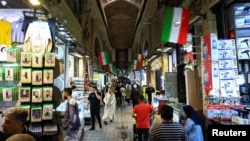
Shoppers walk through Tehran's Grand Bazaar on April 13.

On April 9, a day after a cease-fire was announced between the United States, Iran, and Israel, Maryam (not her real name) took her three cats and returned to her apartment after spending nearly six weeks at a friend's house in a northern neighborhood of Tehran.

She said she couldn't handle the bombings on her own, and her friend had invited her to stay. Maryam, who is in her late 40s, said she felt relieved when the cease-fire was announced. But she quickly adds that she's still very worried about the future.

"The first thing we say to each other these days is: 'We survived,'" she said.

"I'm glad the war is over. At the same time, I still feel we are in a state of limbo, and I'm worried the economic situation will become worse than before," she added.
The constant US and Israeli air strikes that had rocked the country since February 28 stopped with the cease-fire agreement that led to peace talks last weekend in Islamabad.

But more than 20 hours of negotiations failed to lead to an agreement, and while President Donald Trump said just after the end of the talks that the US delegation became "very friendly" and "respectful" of Iran's delegation, he also called for a full blockade of the Strait of Hormuz to begin on April 13.

He added in a social media post that the US military remains "fully 'LOCKED AND LOADED,' and could "finish up the little that is left of Iran!"

"Will the cease-fire hold? And what happens after two weeks when it's over?" Maryam said, adding that she doesn't think she can cope with any further bombings.

"It was terrible. I feel exhausted and I'm still very anxious.... Everyone is taking medicine for their nerves. The price of [the antidepressant drug] Asentra has multiplied, and it is hard to find in Tehran," she said.

'Expecting The Worst'

Maryam said there were no shortages in the Iranian capital during the hostilities, which lasted nearly six weeks, but prices climbed astronomically.

"On the one hand, everything seemed like before -- except for the bombings and the sound of jets and drones. On the other hand, nothing was normal," she said.

In Photos: Week Six Of The Iran War
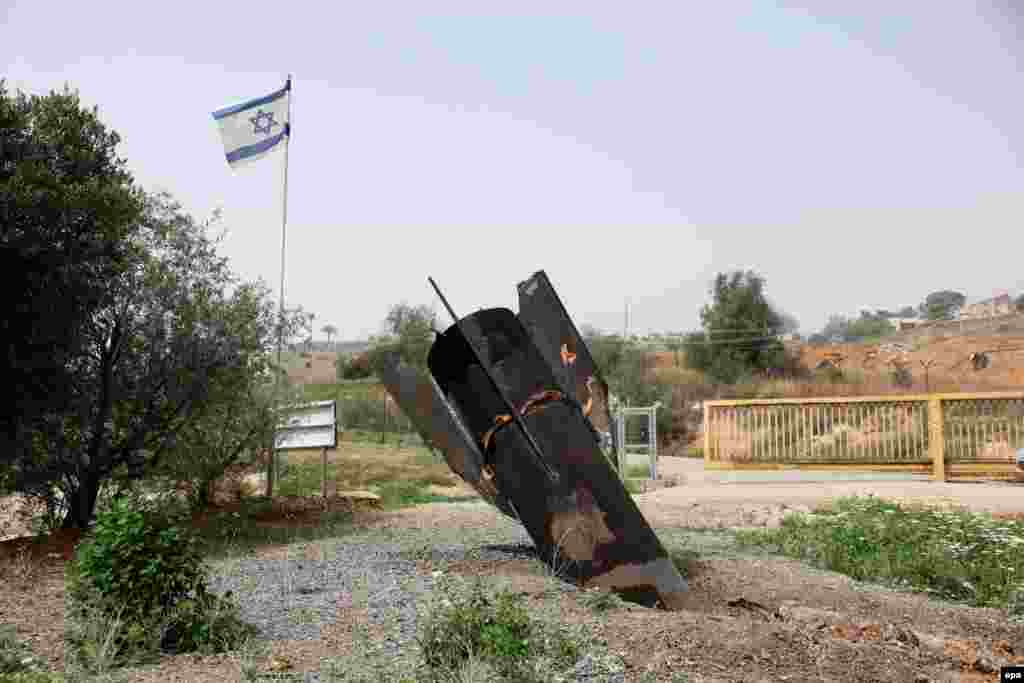
The tail of an Iranian ballistic missile landed in Shadmot Mehola, an Israeli settlement in the West Bank. Iran launched a fresh barrage of missiles targeting Israel, with projectiles and intercepted debris falling across the West Bank on April 4.
1/17 The tail of an Iranian ballistic missile landed in Shadmot Mehola, an Israeli settlement in the West Bank. Iran launched a fresh barrage of missiles targeting Israel, with projectiles and intercepted debris falling across the West Bank on April 4.
Images from the sixth week of the US-Israeli war with Iran and the beginning of a fragile temporary cease-fire.
Iranian drone attacks also continued to target Gulf nations on April 4. This oil facility in Basra, Iraq, was damaged.
2/17 Iranian drone attacks also continued to target Gulf nations on April 4. This oil facility in Basra, Iraq, was damaged.
Images from the sixth week of the US-Israeli war with Iran and the beginning of a fragile temporary cease-fire.
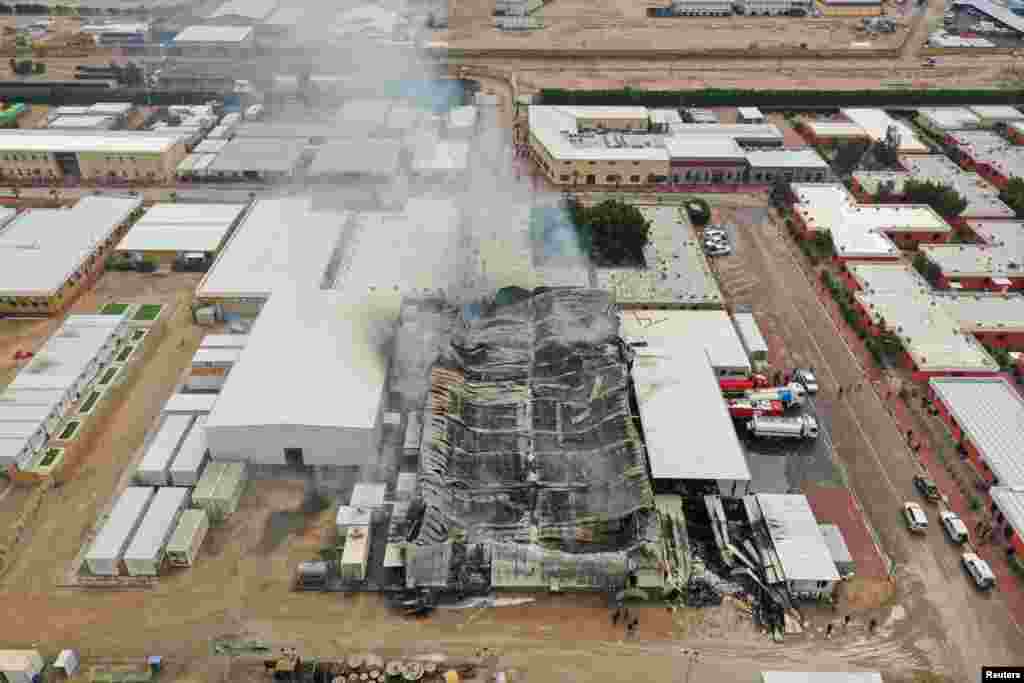
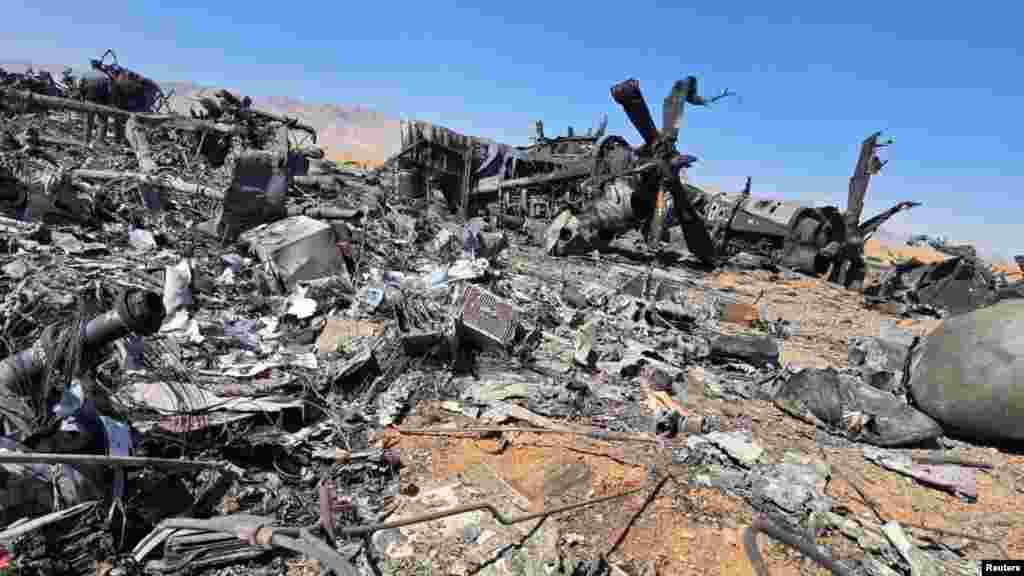
An image released on April 5 by Iran's Islamic Revolutionary Guards Corps allegedly showed aircraft destroyed during a US mission to find a stranded airman. A second US crew member from a downed F-15E in Iran was rescued by special forces, Washington said.
3/17 An image released on April 5 by Iran's Islamic Revolutionary Guards Corps allegedly showed aircraft destroyed during a US mission to find a stranded airman. A second US crew member from a downed F-15E in Iran was rescued by special forces, Washington said.
Images from the sixth week of the US-Israeli war with Iran and the beginning of a fragile temporary cease-fire.
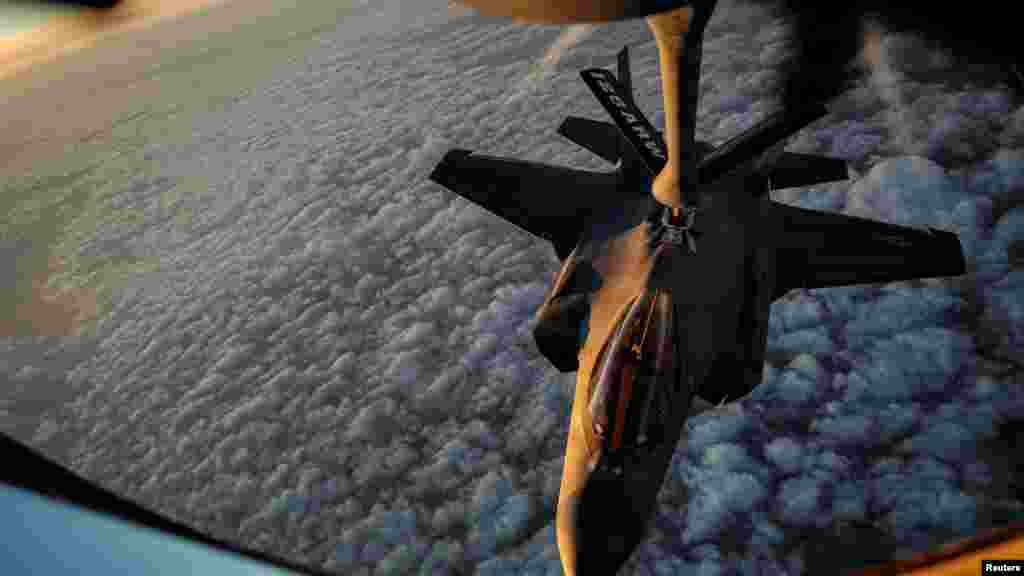
A US Air Force KC-135 Stratotanker aircraft refuels a F-35A Lightning II aircraft at an undisclosed location on April 5.
4/17 A US Air Force KC-135 Stratotanker aircraft refuels a F-35A Lightning II aircraft at an undisclosed location on April 5.
Images from the sixth week of the US-Israeli war with Iran and the beginning of a fragile temporary cease-fire.
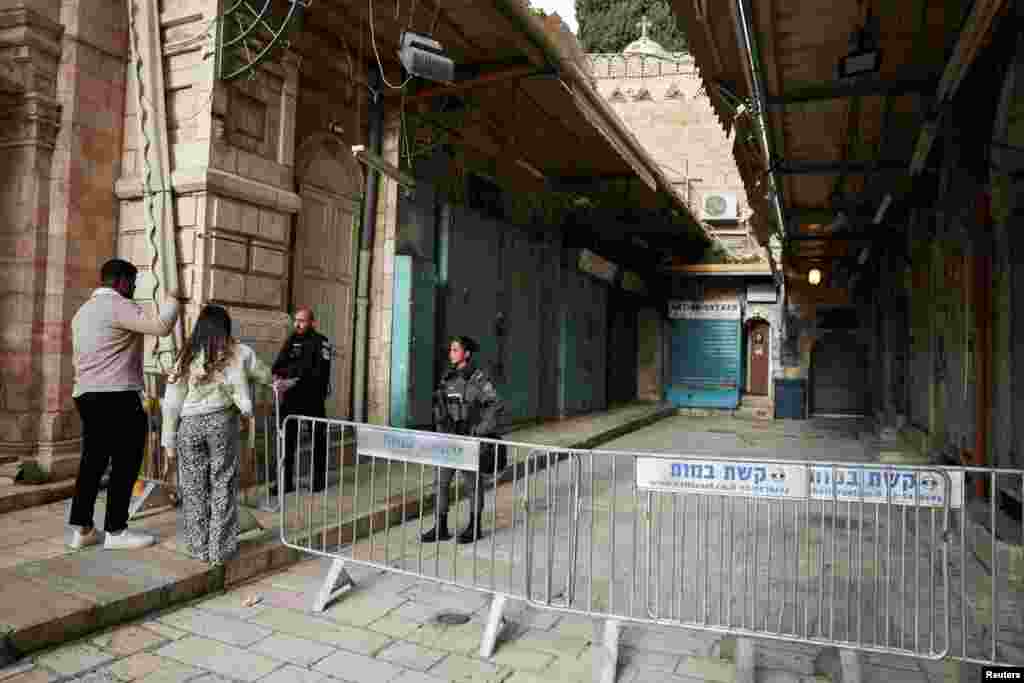
Christian worshippers are stopped by Israeli security officers outside the Church of the Holy Sepulchre in Jerusalem after being blocked from attending Easter Monday events on April 5. Restrictions were placed on large gatherings amid the conflict with Iran.
5/17 Christian worshippers are stopped by Israeli security officers outside the Church of the Holy Sepulchre in Jerusalem after being blocked from attending Easter Monday events on April 5. Restrictions were placed on large gatherings amid the conflict with Iran.
Images from the sixth week of the US-Israeli war with Iran and the beginning of a fragile temporary cease-fire.
Smoke rises following strikes on Tehran on April 7.
6/17 Smoke rises following strikes on Tehran on April 7.
Images from the sixth week of the US-Israeli war with Iran and the beginning of a fragile temporary cease-fire.
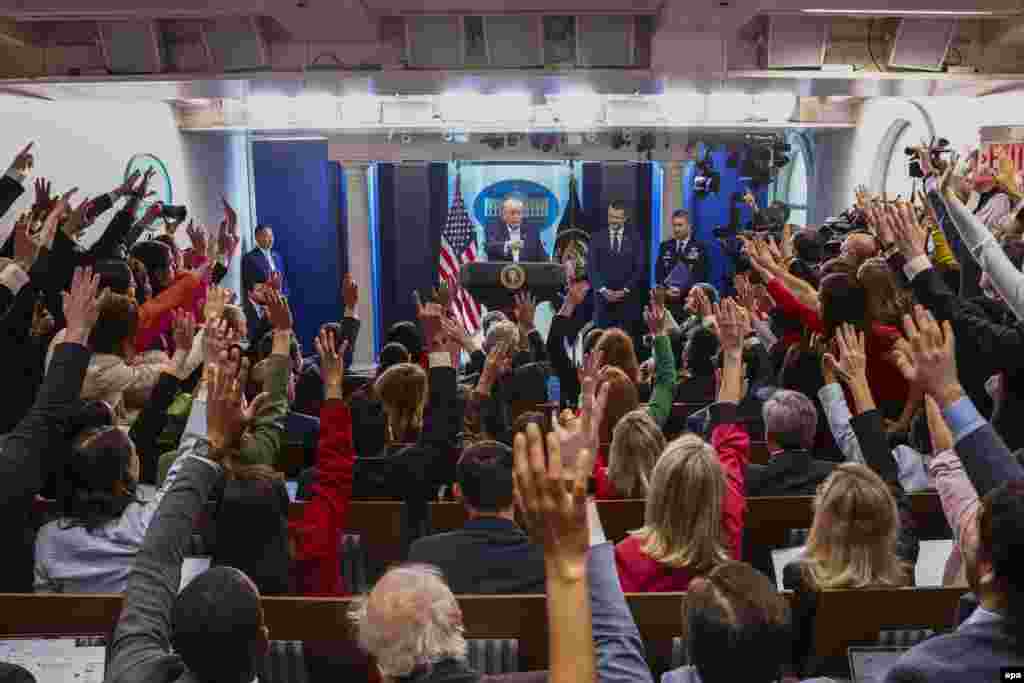
US President Donald Trump holds a White House press briefing on April 6, a day before the United States reached a last-minute cease-fire agreement with Iran. In a social media post on April 7, Trump wrote that "a whole civilization will die tonight" if Iran failed to reach a deal.
7/17 US President Donald Trump holds a White House press briefing on April 6, a day before the United States reached a last-minute cease-fire agreement with Iran. In a social media post on April 7, Trump wrote that "a whole civilization will die tonight" if Iran failed to reach a deal.
Images from the sixth week of the US-Israeli war with Iran and the beginning of a fragile temporary cease-fire.
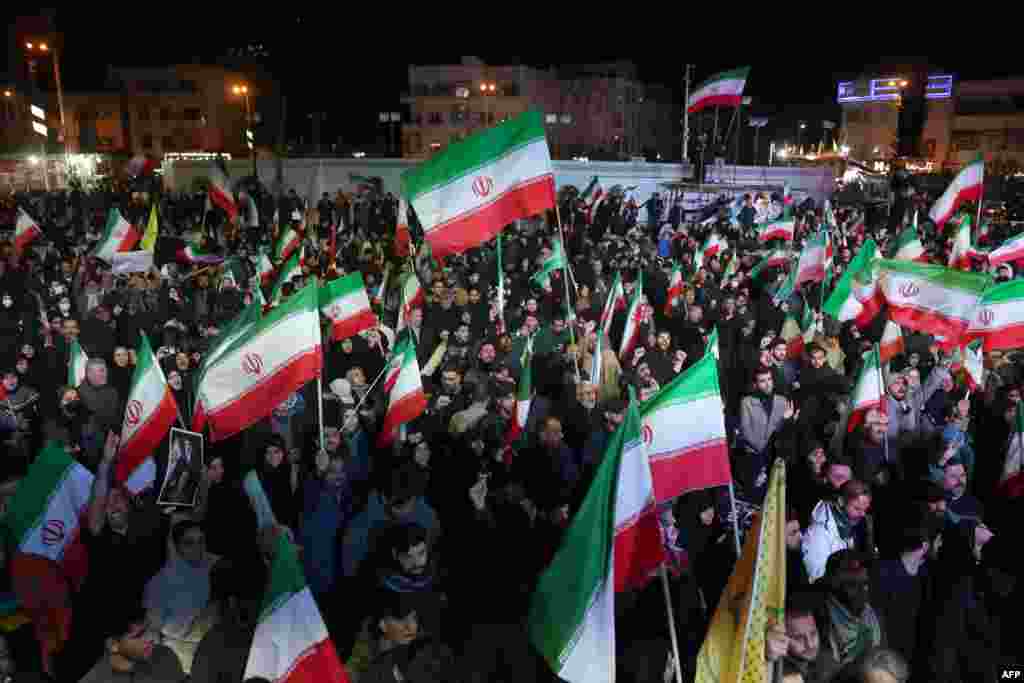
Iranians gather on Enqelab Square in Tehran on April 8 reacting to news of the temporary cease-fire between Washington and Tehran.
8/17 Iranians gather on Enqelab Square in Tehran on April 8 reacting to news of the temporary cease-fire between Washington and Tehran.
Images from the sixth week of the US-Israeli war with Iran and the beginning of a fragile temporary cease-fire.
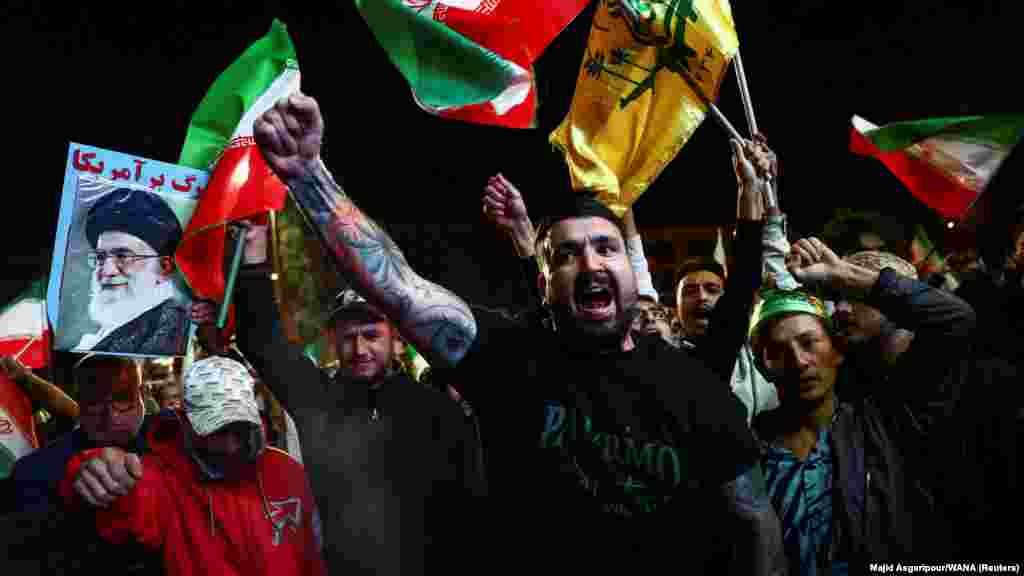
In Tehran, government supporters took to the streets after the two-week cease-fire deal was announced.
9/17 In Tehran, government supporters took to the streets after the two-week cease-fire deal was announced.
Images from the sixth week of the US-Israeli war with Iran and the beginning of a fragile temporary cease-fire.
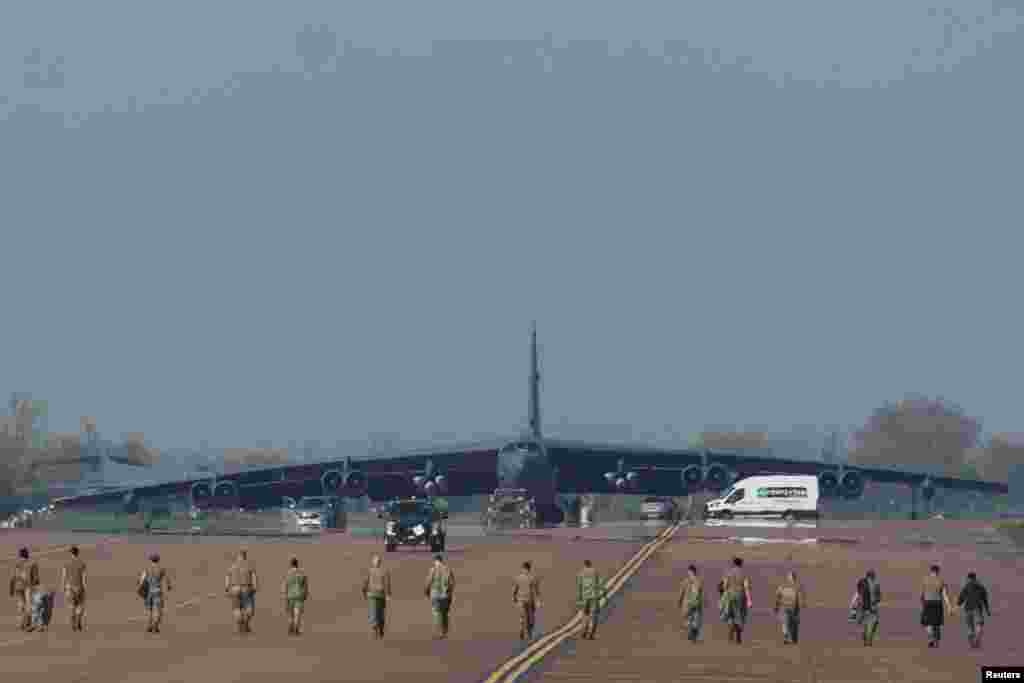
A US B-52 Stratofortress bomber returns to the RAF Fairford airbase in Gloucestershire, Britain, on April 8 still loaded with munitions following the announcement of a two-week cease-fire in the Iran war.
10/17 A US B-52 Stratofortress bomber returns to the RAF Fairford airbase in Gloucestershire, Britain, on April 8 still loaded with munitions following the announcement of a two-week cease-fire in the Iran war.
Images from the sixth week of the US-Israeli war with Iran and the beginning of a fragile temporary cease-fire.
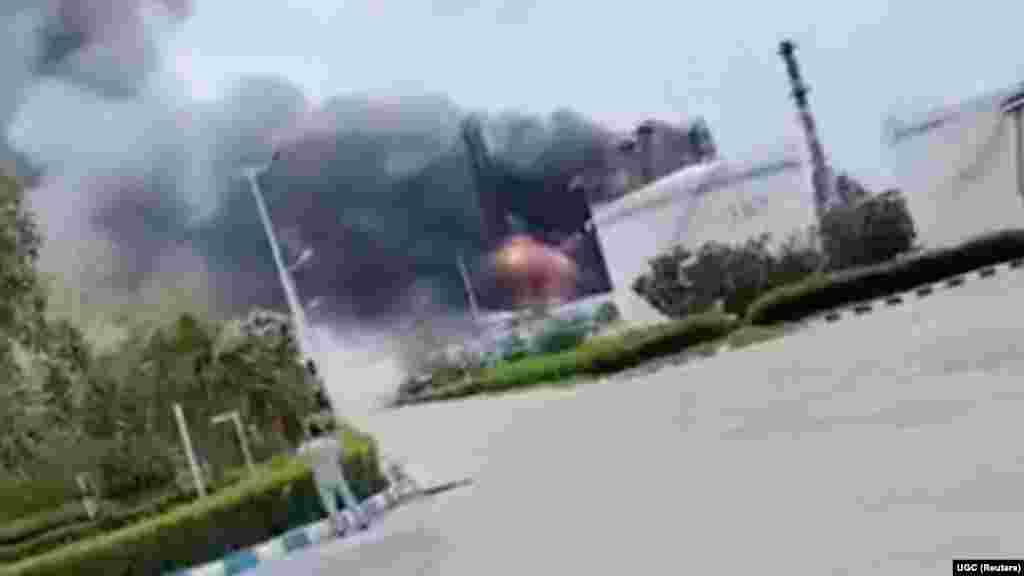
Hours after the cease-fire was announced, Iran claimed one of its oil refineries was targeted on Lavan Island, Hormozgan Province. Video appeared on social media showing smoke and flames at the installation.
11/17 Hours after the cease-fire was announced, Iran claimed one of its oil refineries was targeted on Lavan Island, Hormozgan Province. Video appeared on social media showing smoke and flames at the installation.
Images from the sixth week of the US-Israeli war with Iran and the beginning of a fragile temporary cease-fire.
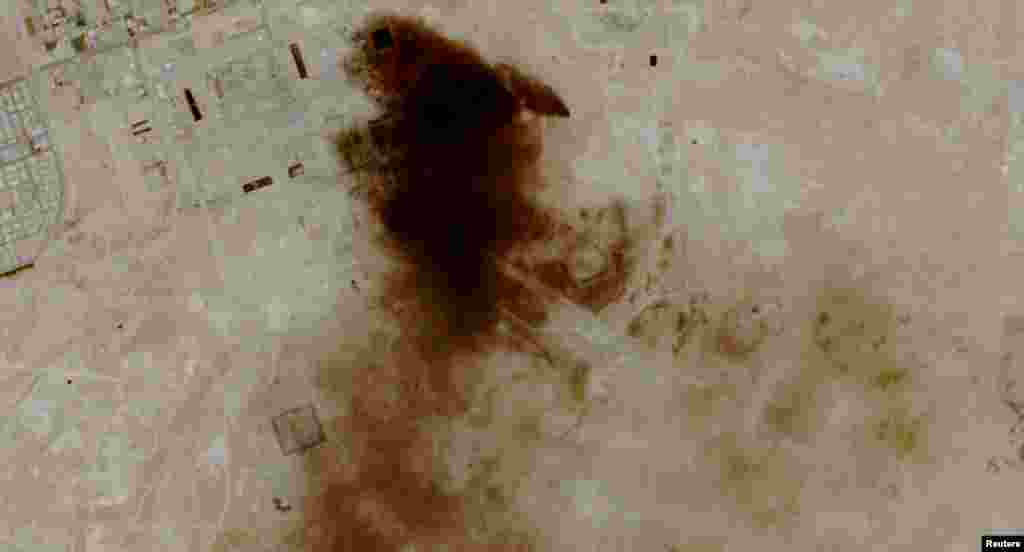
A satellite image of smoke billowing from the Aramco oil facility in Abqaiq, Saudi Arabia, on April 8. The reported attack highlighted the fragility of the truce and came just hours after the announcement of the temporary cease-fire deal between the United States and Iran.
12/17 A satellite image of smoke billowing from the Aramco oil facility in Abqaiq, Saudi Arabia, on April 8. The reported attack highlighted the fragility of the truce and came just hours after the announcement of the temporary cease-fire deal between the United States and Iran.
Images from the sixth week of the US-Israeli war with Iran and the beginning of a fragile temporary cease-fire.
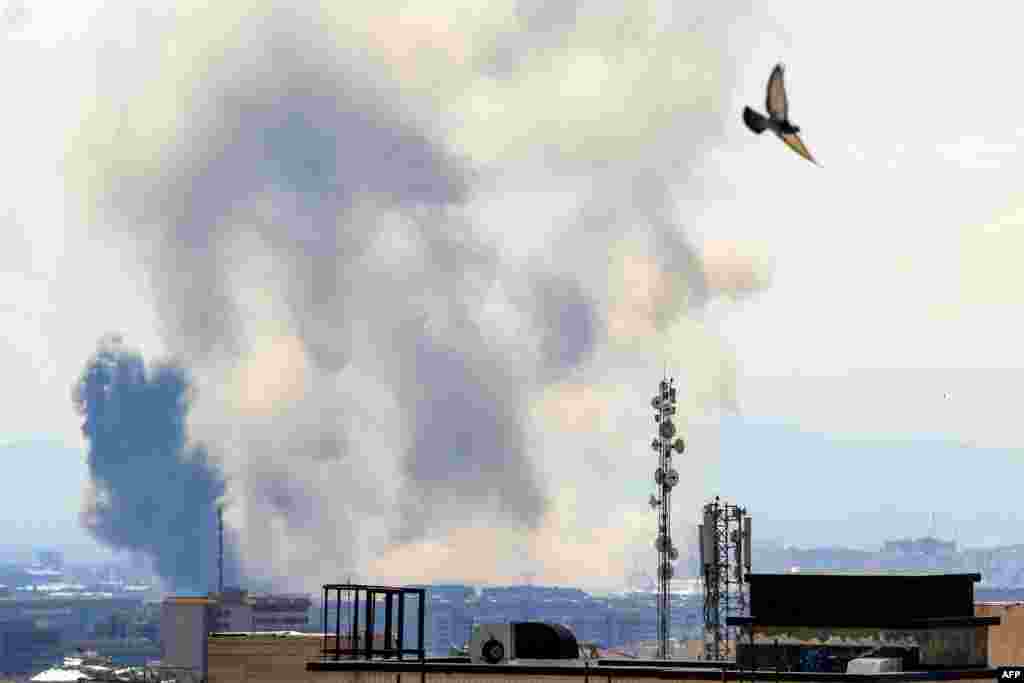
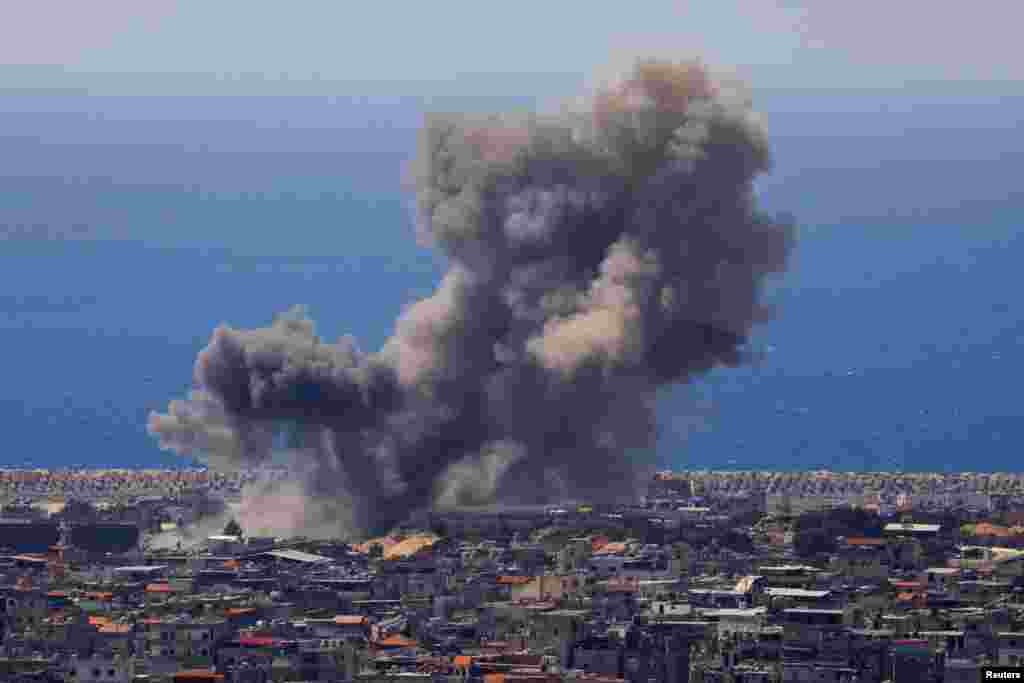
Smoke rises from the southern suburbs of Beirut on April 8 as Israel launched its biggest strikes of the war to date in Lebanon.
13/17 Smoke rises from the southern suburbs of Beirut on April 8 as Israel launched its biggest strikes of the war to date in Lebanon.
Images from the sixth week of the US-Israeli war with Iran and the beginning of a fragile temporary cease-fire.
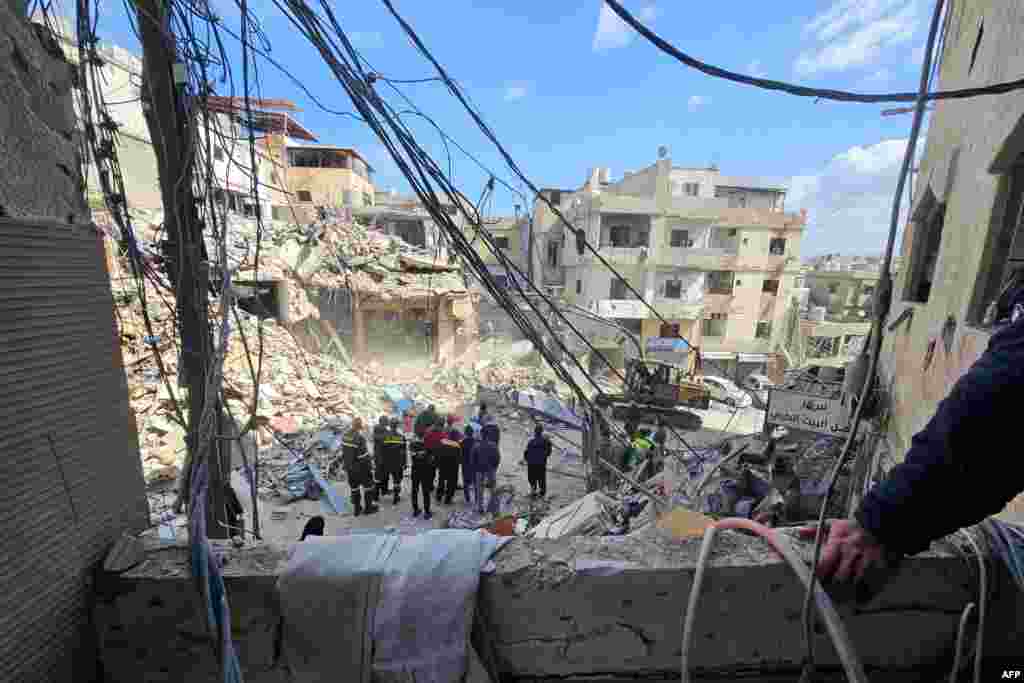
Workers clear rubble from the Bir Hassan neighborhood in Beirut's southern suburbs on April 9. Israel says strikes on Hezbollah are not covered by the cease-fire, while Tehran says the conflict with its Lebanon-based proxy is also part of the deal.
14/17 Workers clear rubble from the Bir Hassan neighborhood in Beirut's southern suburbs on April 9. Israel says strikes on Hezbollah are not covered by the cease-fire, while Tehran says the conflict with its Lebanon-based proxy is also part of the deal.
Images from the sixth week of the US-Israeli war with Iran and the beginning of a fragile temporary cease-fire.
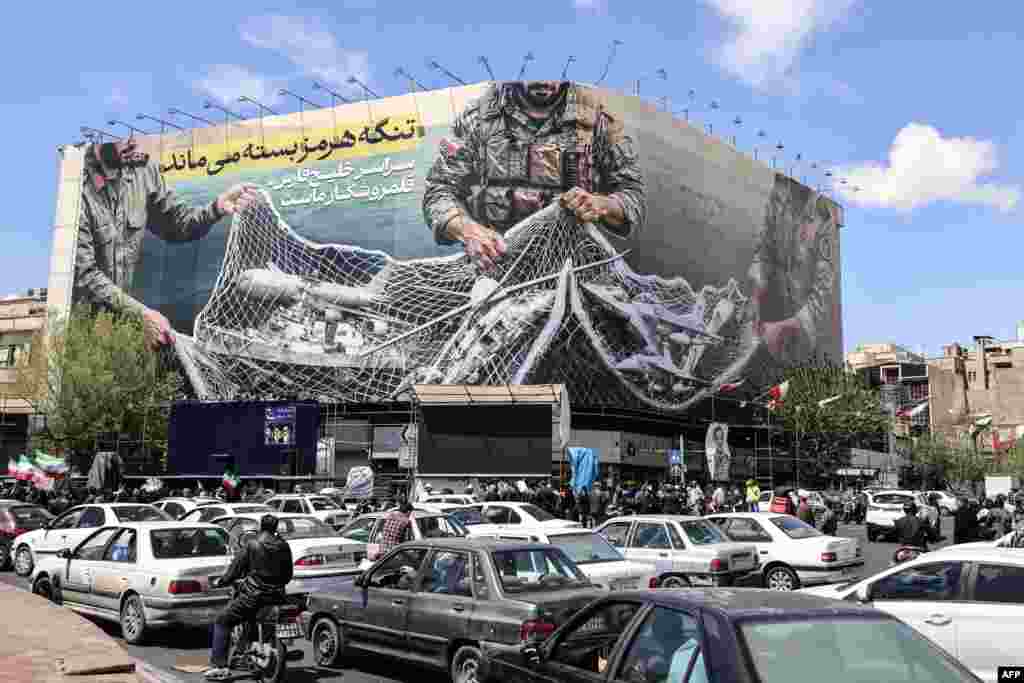
After the two-week cease-fire was announced, a large billboard remained on Tehran's Revolution Square reading "The Strait of Hormuz remains closed." Under the agreement, Iran was supposed to reopen the vital shipping route for global oil and gas exports from the Persian Gulf, but only a handful of vessels were getting through.
15/17 After the two-week cease-fire was announced, a large billboard remained on Tehran's Revolution Square reading "The Strait of Hormuz remains closed." Under the agreement, Iran was supposed to reopen the vital shipping route for global oil and gas exports from the Persian Gulf, but only a handful of vessels were getting through.
Images from the sixth week of the US-Israeli war with Iran and the beginning of a fragile temporary cease-fire.
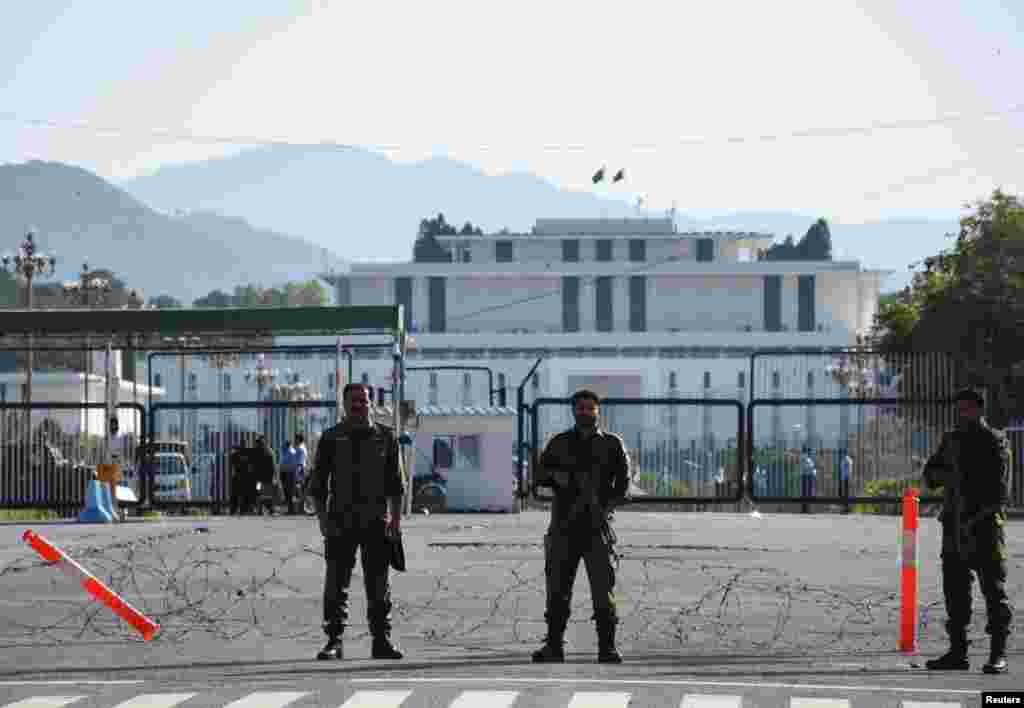
Pakistani security forces stand outside the country's presidential residence on April 10 as Islamabad prepared to host peace talks.
16/17 Pakistani security forces stand outside the country's presidential residence on April 10 as Islamabad prepared to host peace talks.
Images from the sixth week of the US-Israeli war with Iran and the beginning of a fragile temporary cease-fire.
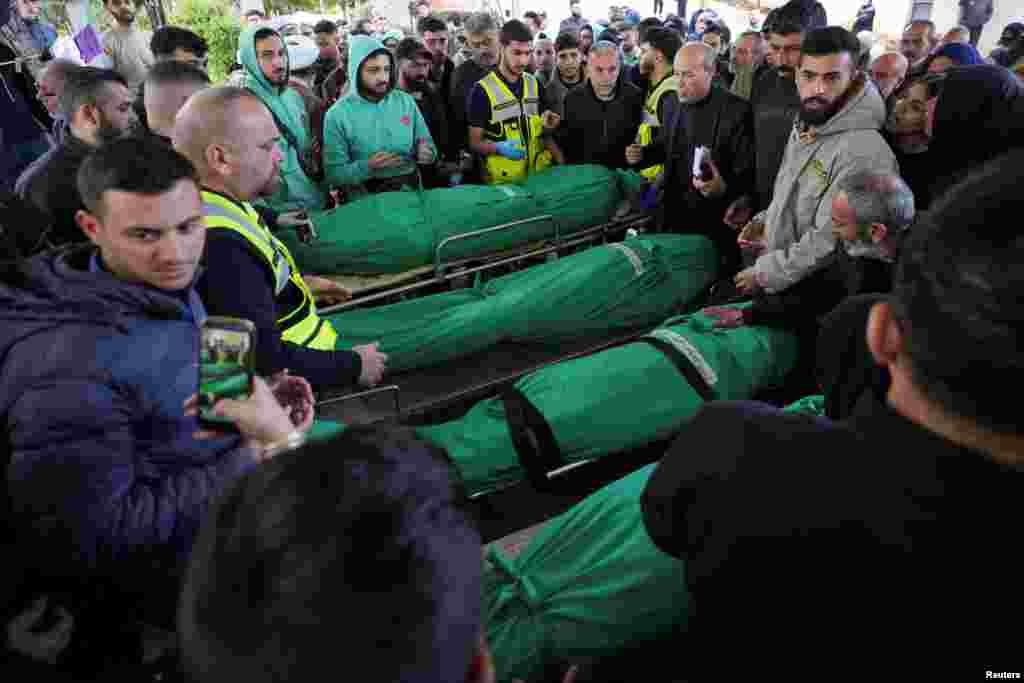
Mourners attend a funeral in Sidon, Lebanon, on April 10 for people killed in an Israeli strike that hit a cafe.
17/17 Mourners attend a funeral in Sidon, Lebanon, on April 10 for people killed in an Israeli strike that hit a cafe.
Images from the sixth week of the US-Israeli war with Iran and the beginning of a fragile temporary cease-fire.
Previous slide
Next slide

At night, regime supporters took to the streets, chanting pro-government slogans and playing religious and patriotic songs through loudspeakers. Meanwhile, checkpoints were set up throughout the city where Basij militia inspected people's mobile phones and cars.

Leila, a mother of two, said she had been stopped at a checkpoint in Tehran's Niavaran neighborhood, where Basij forces inspected her car.

"I wasn't wearing a head scarf, but they didn't mention it. They were polite and only asked me to open my trunk," she said.

She described it as a show of force: "They want to say, we're still here."

Leila said that, in another part of the city, she saw two police officers sitting at a desk in the street talking to a pair of men she believed were drug addicts. She described the scene as "surreal."

"The police stations have been bombed, so they're working in the open air," she said.
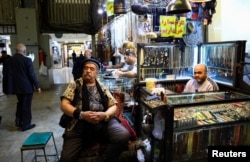
Vendors sit at their shops selling jewelry and accessories at Tehran's Grand Bazaar on April 13.

Like Maryam, Leila is worried about the days and months to come.

"They bombed us and left us with a younger Khamenei," she said, referring to Mojtaba Khamenei -- who succeeded his father, Ali Khamenei, as Iran's supreme leader after the ayatollah died in an air strike.

"No one knows whether he's really alive or what he's capable of. There's damage to our infrastructure and the deaths of many innocent people."

Maryam said April 8 was one of the worst nights, when many were expecting the United States to bomb Iran's power plants and send the country back to the "Stone Age."

"We all took showers, washed our clothes, charged our phones and power banks and stocked up on water bottles and cans, expecting the worst," she said.

According to Maryam, many Iranians had initially supported military intervention, hoping it would bring down the Islamic republic, which many despise. The war followed a brutal state crackdown on anti-regime protests in January that killed thousands of people.

"When the war started and they killed Khamenei, some were hopeful. But later they realized what war really is," she said. "They saw the destruction to infrastructure and realized they could have been killed, too."

'Those Who Can Will Emigrate'

Iran said over 3,000 people were killed in US-Israeli strikes, which were launched on February 28. Iran's Red Crescent Society said last week that 857 schools and educational spaces as well as 338 hospitals and clinics were damaged in the war. Meanwhile, according to Iran's Cultural Heritage Ministry, 140 landmarks were destroyed or damaged in the strikes.

Leila said many are now in a state of "hopelessness" and "anxiety."

"Those who can will emigrate," she said.

Ali, a businessman in the Iranian capital, is also worried about the future.

"Many will be jobless because of the war. They hit the Mobarakeh steel factory and our petrochemical plants -- tens of thousands have lost their jobs," he said.
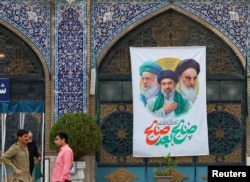
People stand at the Tehran Bazaar Central Mosque on April 13.

Ali said many of his friends had hoped the war would bring an end to the Islamic republic.

"Instead, it badly damaged Iran, not the Islamic republic," he said, noting that civilian infrastructure and historic palaces were destroyed in the strikes.

He added that the economic fallout is worsening, with layoffs spreading and many losing their livelihoods due to Internet restrictions.

"My friend is a language teacher. He hasn't had any income since January," Ali said. "There are many like him. People who rely on the Internet to make a living are now struggling, surviving on savings that will soon run out. We are stuck between a regime that takes away our most basic rights and two countries that were bombing us."

During the conflict, he said many people suffered because of the state-imposed Internet restrictions, which prevented them from accessing information and connecting with loved ones.

Despite the cease-fire, the Internet blackout remains in place, leaving millions of Iranians in digital darkness.

The Internet connectivity monitor Netblocks said on April 5 that Iran's ongoing Internet shutdown is the longest nationwide Internet shutdown on record in any country.

  • 16x9 Image

    Golnaz Esfandiari

    Golnaz Esfandiari is managing editor of RFE/RL's Radio Farda, which breaks through government censorship to deliver accurate news and provide a platform for informed discussion and debate to audiences in Iran. She has reported from Afghanistan and Haiti and is one of the authors of The Farda Briefing newsletter. Her work has been cited by The New Yorker, The New York Times, The Washington Post, and other major publications. Born and raised in Tehran, she is fluent in Persian, French, English, and Czech.

This item is part of
XS
SM
MD
LG