





Trump Says Renewed Military Campaign Against Iran Won't Last 'Too Long'
US President Donald Trump said on September 2 that the renewed US military campaign against Iran would not continue for "too long" but that the United States was prepared to launch further strikes at any time.
His comments came after the United States carried out strikes on Iranian targets the night before, in the latest escalation between Washington and Tehran.
"It was a very heavy attack last night, and we're prepared to do another one any time we want," Trump told reporters at the White House about the recent US strikes against Iran.
"We took out all of the new equipment that they tried to build along the Strait of Hormuz -- some defensive, some offensive," he added.
The US President claimed Iranian forces were trying to build a rocket designed to drop mines and that US forces had destroyed it. He also said Iran had been working to restore its radar and missile systems, which were also targeted by the United States.
Kuwait Says Air Defenses Intercept Missile, Drone Attacks
Kuwait’s military said the country’s air defenses were responding to incoming missile and drone attacks.
In a social media post early on September 3, it blamed the attacks on Iran, urging residents to follow security and safety instructions issued by the authorities.
The military said explosions heard over Kuwait were the result of air defense systems intercepting incoming targets.
The development came after the United States targeted Iran in its latest military strikes on September 1, with Tehran retaliating by targeting US allies in the Gulf, including Jordan and Kuwait.
Iran Moves To Tighten Grip On The Internet With New Bill

Iranian lawmakers have drafted a new draft bill designed to intensify online censorship and limit Internet access in the country.
The Cyberspace Regulation Plan is a revised version of an earlier draft bill that was abandoned after triggering fierce criticism in the country of some 90 million people.
The new proposed legislation excludes some of the most controversial provisions in the earlier bill, called the Cyberspace Protection Bill, but critics say the goal remains the same.
The new bill was presented to lawmakers on August 26, although it is unclear when it will be voted on.
The new bill would tighten state control over the Internet and give command of the country's Internet gateways to the Supreme Cyberspace Council, which is tasked with monitoring and filtering the Internet in Iran and whose members are handpicked by the country's supreme leader.
"The Supreme Cyberspace Council is simultaneously the rule-maker, legislator, regulator and, in a sense, judge," Slovenia-based Iranian cybersecurity expert Puyesh Azizeddin told RFE/RL's Radio Farda. "The plan has concentrated all of these powers in the council."
To read the full report by RFE/RL's Kian Sharifi and Radio Farda, click here.
Iranian Military Says It Attacked Targets In Kuwait, UAE
Iran's military announced that it carried out missile and drone attacks on US bases in Kuwait and the United Arab Emirates on the morning of September 3.
In a statement, the military said it had attacked and hit the US military's satellite communication systems, equipment depots, and fighter aircraft hangars at the Ahmed Al-Jaber base in Kuwait with missiles and drones.
The same statement reported a missile and drone attack on the US military's force deployment location and radar systems at the Al-Minhad base in the UAE.
The UAE has not yet confirmed any new attacks on the country, but the Kuwaiti Army confirmed on September 3 that it had been targeted by Iranian missile and drone attacks.
Kuwait's Foreign Ministry also issued a statement strongly condemning Iran's new attacks, calling them "a direct threat to the security, stability, and safety of Kuwait's citizens and residents" and "a flagrant violation of international law."
It said it reserved the right to take all necessary measures "to preserve sovereignty, ensure security, and defend its territory and vital facilities against any aggression or threat."
6 Ships Passed Through Strait of Hormuz On September 2, Kpler Says
The passage of ships through the strategic Strait of Hormuz remained at its lowest level -- just six ships a day -- on September 2, compared with data from the previous 10 days.
Data collected by the Kpler ship-tracking company on September 2, which was released on September 3, showed only six ships passed through the waterway as compared to 11 on September 1 and an average of 13 ships a day in the past 10 days.
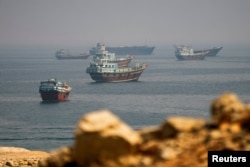
Because some ships turn off their locator transmitters while passing through the strait, the data may not reflect the exact number of ships.
The Strait of Hormuz has effectively been closed by Iran since the beginning of the Middle East conflict in late February. The vital waterway previously accounted for 20 percent of global oil and gas supplies.
Earlier, US President Donald Trump claimed an average of 30 ships pass through the strait each night with the help of the US military. Trump did not specify the average time frame for the passing of the ships through the strait.
The US-Iran conflict has disrupted a major part of global oil supplies and caused fuel prices to skyrocket on international markets.
Iran Says 18 People Killed In Latest US Strikes
The spokesman for Iran's Health Ministry said the death toll from the latest US attacks had reached 18.
Hossein Kermanpour posted a message on X saying that between 8:30 p.m. on August 30 through 8:30 p.m. on September 2, "18 people were killed and 142 injured" as a result of the attacks.
In his message, the government official did not differentiate between whether the dead were military or civilian, but he wrote that the number included two women and a child.
Iranian officials had previously said four people, including a child, were killed in a strike on a wedding ceremony in the Kuhestak area of Hormozgan Province. Iranian officials said dozens of others were wounded in the alleged September 1 strike in Kuhestak, a town along the coast of the Strait of Hormuz, a major flashpoint in the confrontation with the United States.
The Iranian Red Crescent Society said shrapnel from the alleged US attack struck a residential home where a wedding party was being held.
The deputy security and law enforcement officer of the Khuzestan governor's office had reported that "seven people were killed" in Ahvaz and Aghajari, and news agencies close to Iran's Islamic Revolutionary Guards Corps (IRGC) had also reported the killing of "four IRGC aerospace officers" in Kermanshah, as well as "three Basij forces" on Lavan Island.
Tasnim News Agency, which is close to the IRGC, reported that three Iranian Army pilots were killed in a US attack on Iran on the night of September 1.
The news agency, publishing the names and pictures of these pilots, said two of them were naval pilots and one was an air force pilot, but did not say where or how they were killed.
Oil Prices Hit 5-Week High Amid Renewed US-Iran Strikes
Oil prices reached their highest levels in about five weeks amid renewed fighting between the United States and Iran and concerns about disruptions to crude supplies through the Strait of Hormuz.
Brent crude briefly rose above $97 per barrel on September 2, reaching a roughly five-week high, before retreating a day later. U.S. West Texas Intermediate crude also rose sharply earlier in the week but remained around $91 per barrel on September 3.
Early on September 3, Brent was trading at about $95.20 a barrel, down around 0.45 percent, while WTI was at about $90.77, down 0.26 percent, according to Reuters.
The increase in oil prices came amid renewed US-Iran hostilities and concerns that further fighting could disrupt oil supplies from the Middle East, particularly through the Strait of Hormuz.
On September 2, US President Donald Trump said the United States was prepared to carry out another attack on Iran "anytime we want," while also saying the renewed US military campaign would not last "too long."
Iran, meanwhile, launched retaliatory attacks against US positions in the Gulf. The Islamic Revolutionary Guards Corps and Iranian military authorities said they had targeted US facilities in Kuwait and the United Arab Emirates on September 3.
Qatar Condemns Iranian Attacks on Kuwait
Qatar has condemned Iran's latest attacks against Kuwait and called them a breach of international law that represents a "dangerous escalation" in the region.
The Qatari Foreign Affairs Ministry said in a statement on September 3 that the renewed attacks would complicate efforts to contain tensions and undermine political and diplomatic efforts to end the conflict.
Earlier on September 3, the Iranian military announced that it had carried out strikes on US bases in Kuwait and the United Arab Emirates.
The statement said the US military's satellite communication systems, equipment depots, and fighter aircraft hangars were hit at the Ahmed Al-Jaber base in Kuwait in the fresh attacks using missiles and drones.
Qatar called the attacks a "flagrant violation" of the sovereignty and territorial integrity of Kuwait, adding that Qatar "holds the Islamic republic of Iran legally responsible for these attacks and their repercussions and consequences."
Expressing solidarity with the state of Kuwait, the statement announced Qatar's support for "all measures it takes to safeguard its sovereignty and security."
Several Gulf countries, including Qatar, have been targeted by Iranian missiles and drones since the beginning of the US-Iran conflict on February 28.
The state of Qatar has served as a key mediator alongside Pakistan, in efforts to resolve the conflict.
On August 27, Qatari Prime Minister Sheikh Mohammed bin Abdulrahman bin Jassim Al Thani visited Tehran and held talks with senior Iranian officials in a bid to de-escalate tensions.
IRGC Vows to Avenge 'Civilian Deaths'
Iran’s Islamic Revolutionary Guards Corps (IRGC) has vowed to avenge the killing of "civilians" in an air strike allegedly carried out by the United States earlier this week.
Iranian authorities say at least four people, including a child, were killed and 68 others injured in an strike that hit a wedding party in the country's south in the night of September 1-2.
The US Central Command said that its forces "never target civilians." Captain Tim Hawkins, spokesperson for the US CENTCOM, told RFE/RL that "we are aware of reports, which originated from Iranian state media. The US military never targets civilians, unlike the IRGC."
In a statement carried by Iran's state television, IRGC chief Ahmad Vahidi said the "blood of these oppressed martyrs will not go unanswered."
The midnight strike was carried out in Kuhestak, a town along the coast of the Strait of Hormuz. Earlier, Iranian officials labeled the attack a "war crime," alleging it was carried out by the Untied States.
Iran and the United States have resumed tit-for-tat attacks following a lull of several weeks since July.
On September 3, Iran launched missile and drone attacks against neighboring Kuwait and the United Arab Emirates, calling them retaliation for US strikes on targets inside Iran.
w
UN Special Rapporteur: Iranian People Caught Between Foreign Aggression And Internal Repression
Referring to the renewed US attacks on Iran, Mai Sato, the UN special rapporteur on human rights in Iran, called an end to "external attacks" and "internal repression" in the country.
In a post on X on September 3, Sato wrote: "The people of Iran are caught between foreign aggression and domestic repression; both foreign aggression and domestic repression must end, but above all, the war must end."
Citing figures from Iran's Health Ministry, which reported that 18 people had been killed and 108 others injured in US attacks on the evening of September 1, Sato said the strikes had targeted Kuhestak, a fishing town on the Strait of Hormuz. She added that "a house where a family was holding a wedding celebration was also targeted."
Sato said the new attacks had compounded the suffering of ordinary Iranians.
"In reflecting on this year, what stands out most is the scale of the violence and the number of lives lost," she wrote.
Sato's comments come amid renewed US-Iran hostilities and her continuing warnings about the human rights situation in Iran. She has also stressed that military action should not be viewed as a solution to Iran's problems.