


Likelihood Of US Strikes On Iran 'Very High' Amid Military Buildup, Drills
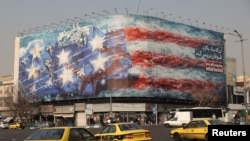
A billboard on Tehran's Enqelab Square depicts Iranian missiles striking a US aircraft carrier on January 26.
The United States is deploying jet fighters, air defenses, and an air carrier with thousands of troops to the Middle East, in a move that has heightened tensions with Iran and increased the likelihood of military action, experts say.
US President Donald Trump threatened military strikes against Iran after the authorities killedthousands of people in a brutal crackdown on anti-government protests. Trump recently backed away, although he has not ruled out an attack on the Islamic republic.
Experts say the military buildup along with planned US naval exercises in the region increases the pressure on Iran and provides more offensive military options if Washington chooses to attack Iran.
"This can be a message to Iran that we're ready, our capabilities are in place," Farzin Nadimi, a senior fellow at the Washington Institute for Near East Policy, told RFE/RL's Radio Farda.
Gutted Mosques, Eerie Calm In Tehran After Unrest
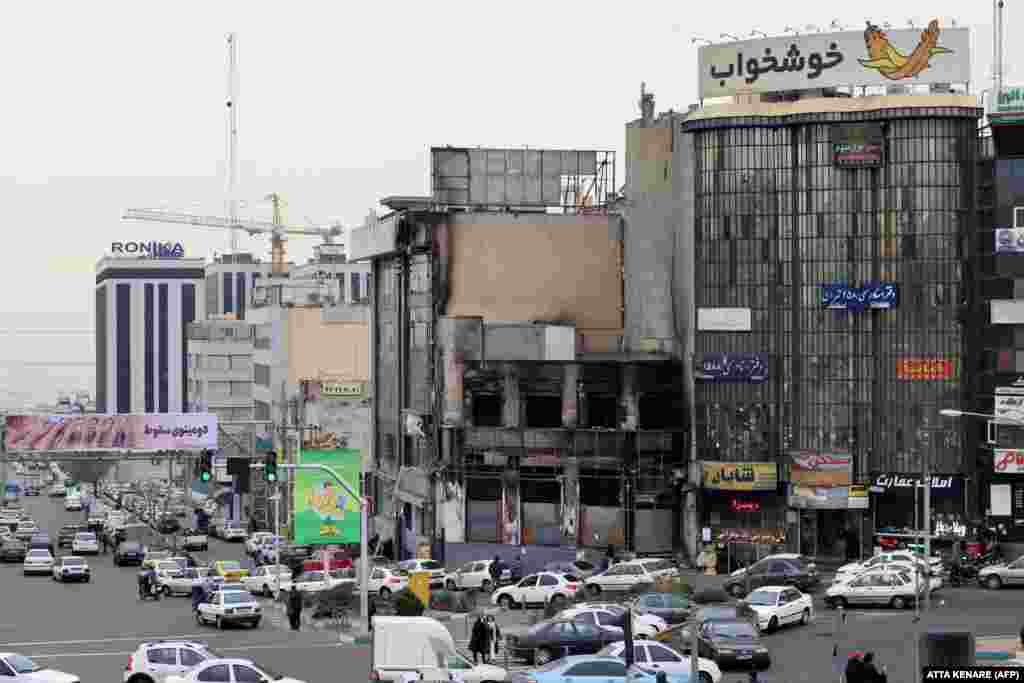
1/11A building in Tehran that was torched during the biggest protests seen in Iran since the Islamic Revolution of 1979.
Photos released on January 19 and 20 show the aftermath in Tehran of massive protests that swept Iran over recent weeks before being crushed by the country's security apparatus.
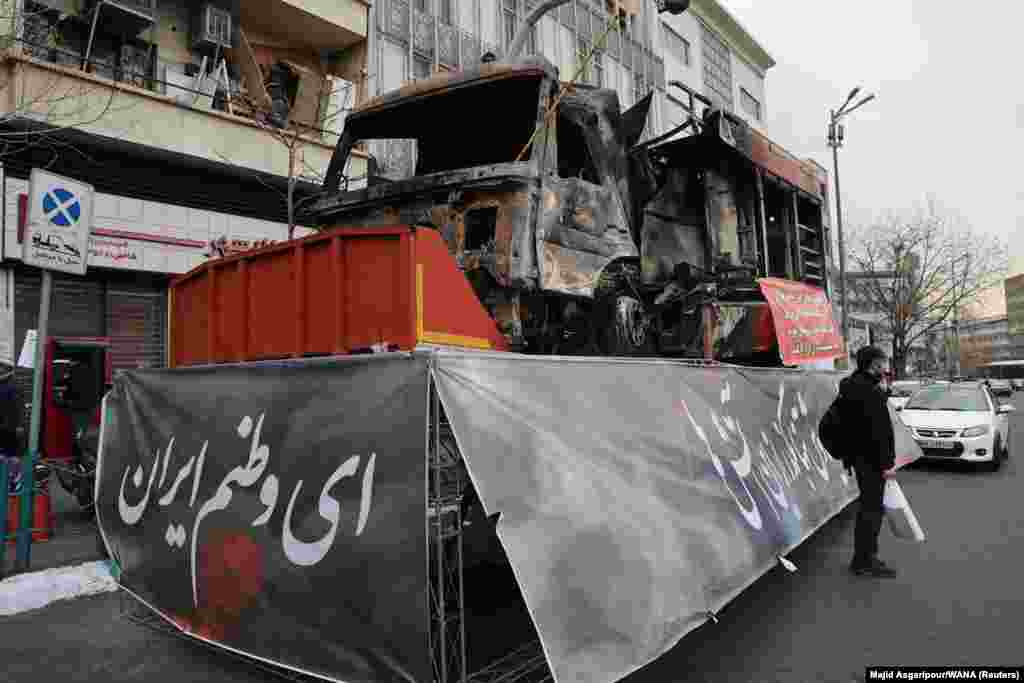
2/11A fire truck that was burned during the unrest on display in Tehran. A Persian banner around the truck says: "Iran, o my country."
Mass unrest began in Tehran on December 28 amid a collapse in the value of Iran's currency, coupled with surging inflation.
Photos released on January 19 and 20 show the aftermath in Tehran of massive protests that swept Iran over recent weeks before being crushed by the country's security apparatus.
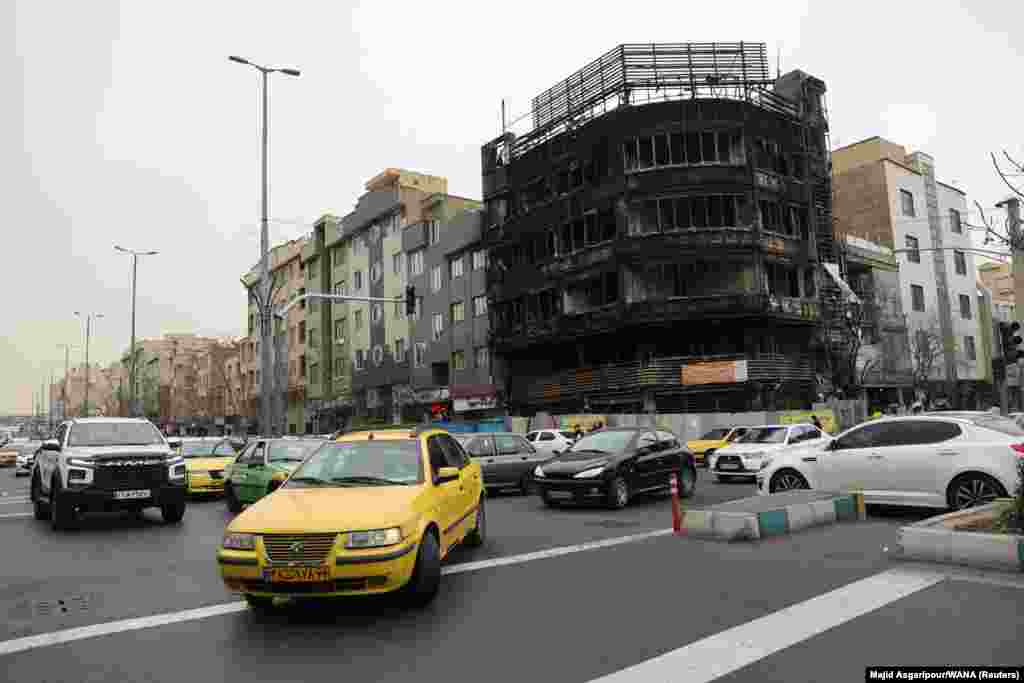
3/11A burned-out building in central Tehran.
US-based rights group HRANA says more than 4,500 people were killed throughout Iran amid a crackdown on the protests, with tens of thousands arrested.
Photos released on January 19 and 20 show the aftermath in Tehran of massive protests that swept Iran over recent weeks before being crushed by the country's security apparatus.
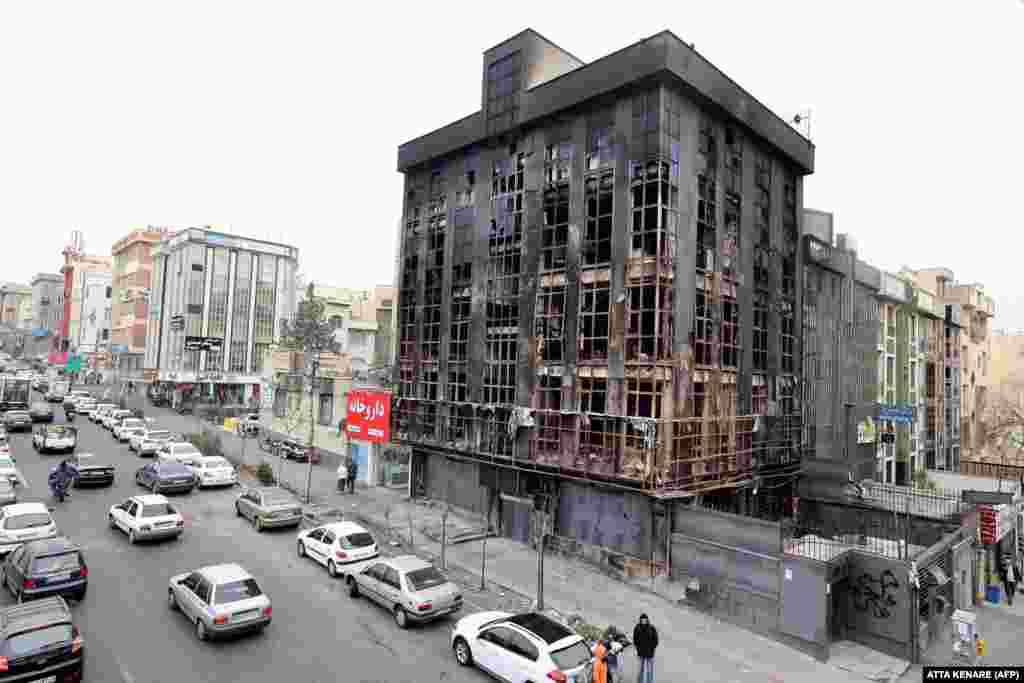
4/11A torched building in Tehran that was linked to Ayandeh Bank, a company that collapsed in October amid corruption allegations.
Some observers say the bank's demise contributed to the economic storm that precipitated the mass protests.
Photos released on January 19 and 20 show the aftermath in Tehran of massive protests that swept Iran over recent weeks before being crushed by the country's security apparatus.
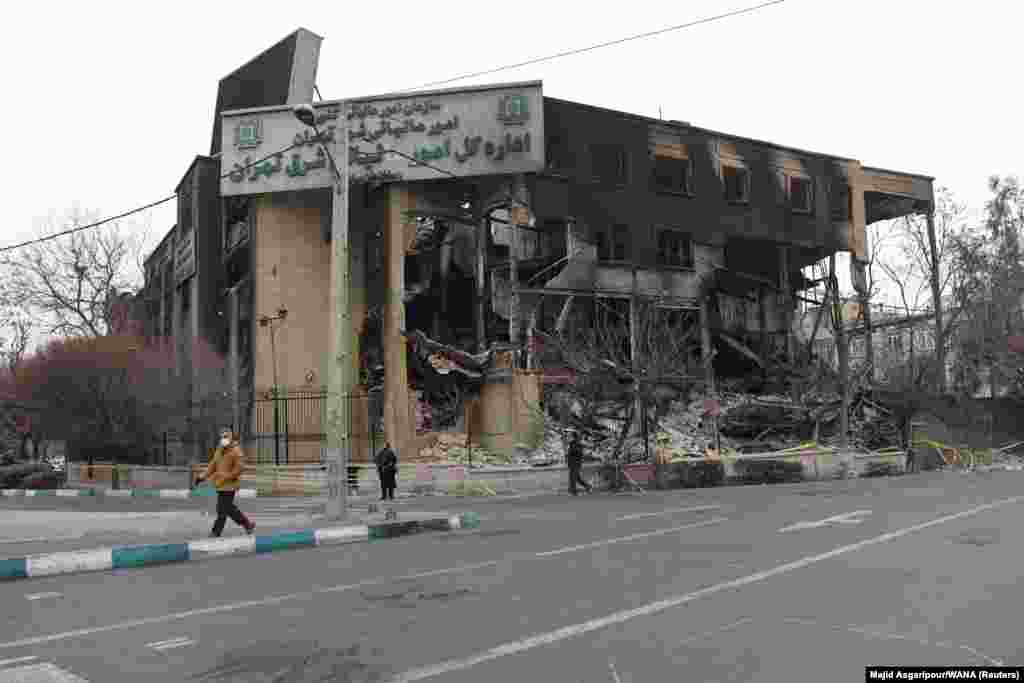
5/11A state tax building in Tehran that was destroyed by fire during the unrest.
Photos released on January 19 and 20 show the aftermath in Tehran of massive protests that swept Iran over recent weeks before being crushed by the country's security apparatus.
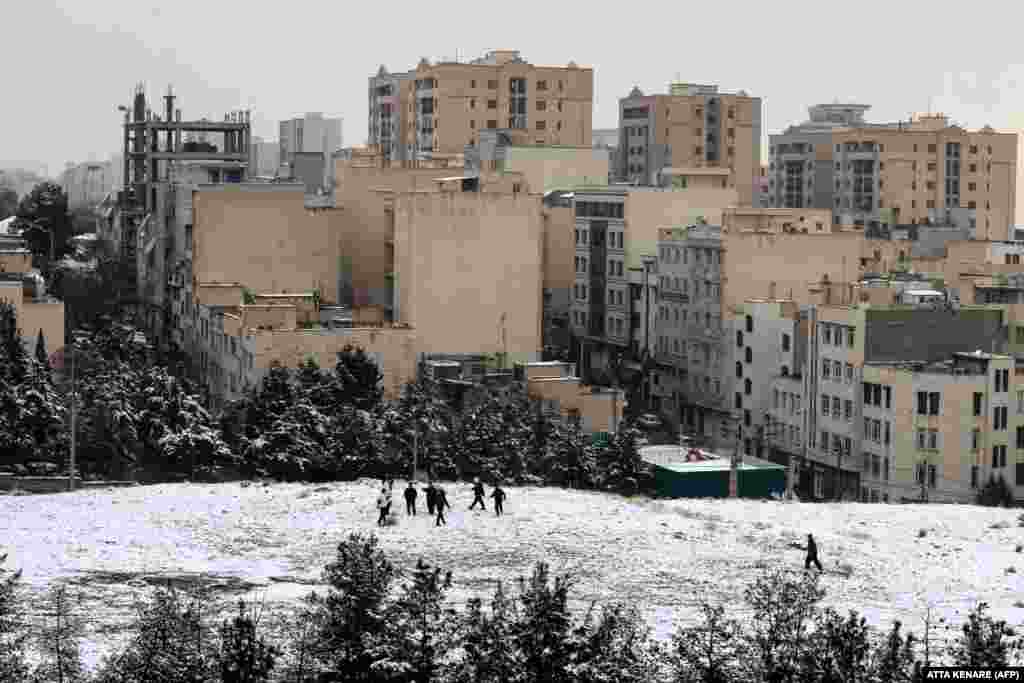
6/11Boys play in the snow in a suburb of Tehran on January 20.
Images such as this, released by photographers accredited to work in Iran, emphasize a return to normal life after the violence of recent days, but sources told RFE/RL's Radio Farda on January 17 that Tehran is effectively under martial law, with people being stopped at random and having their phones inspected for links to the protests.
Photos released on January 19 and 20 show the aftermath in Tehran of massive protests that swept Iran over recent weeks before being crushed by the country's security apparatus.
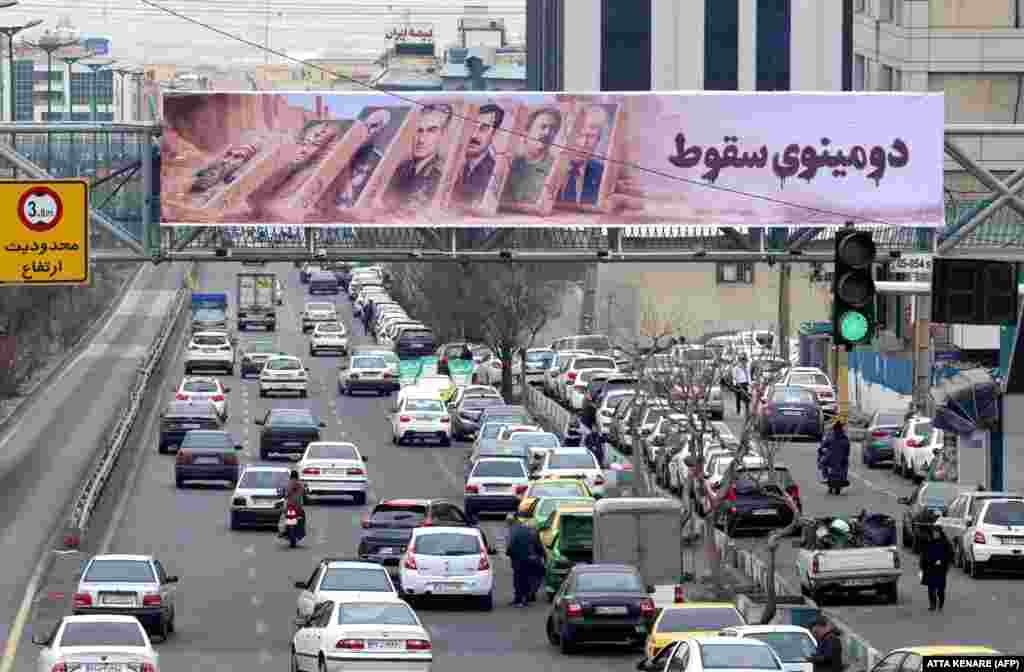
7/11A propaganda banner showing historical leaders and US President Donald Trump. The Persian text says "dominoes fall."
Photos released on January 19 and 20 show the aftermath in Tehran of massive protests that swept Iran over recent weeks before being crushed by the country's security apparatus.
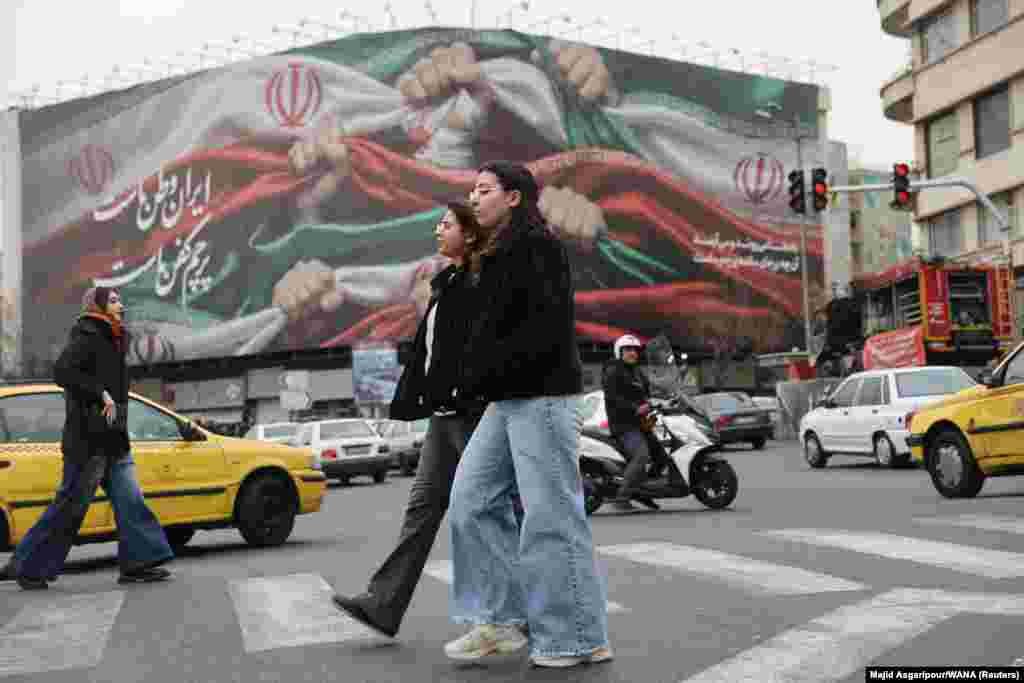
8/11Women walk in Tehran's central Revolution Square. The banner in the background reads: "Iran is our country, its flag our burial shroud."
Photos released on January 19 and 20 show the aftermath in Tehran of massive protests that swept Iran over recent weeks before being crushed by the country's security apparatus.
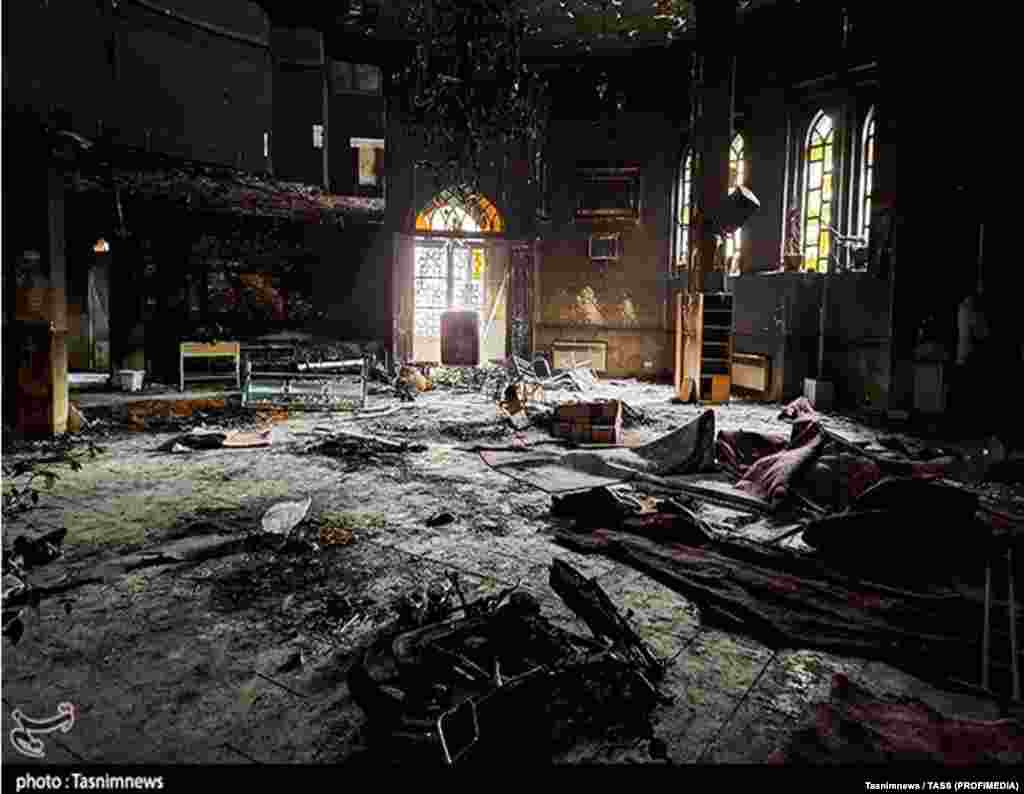
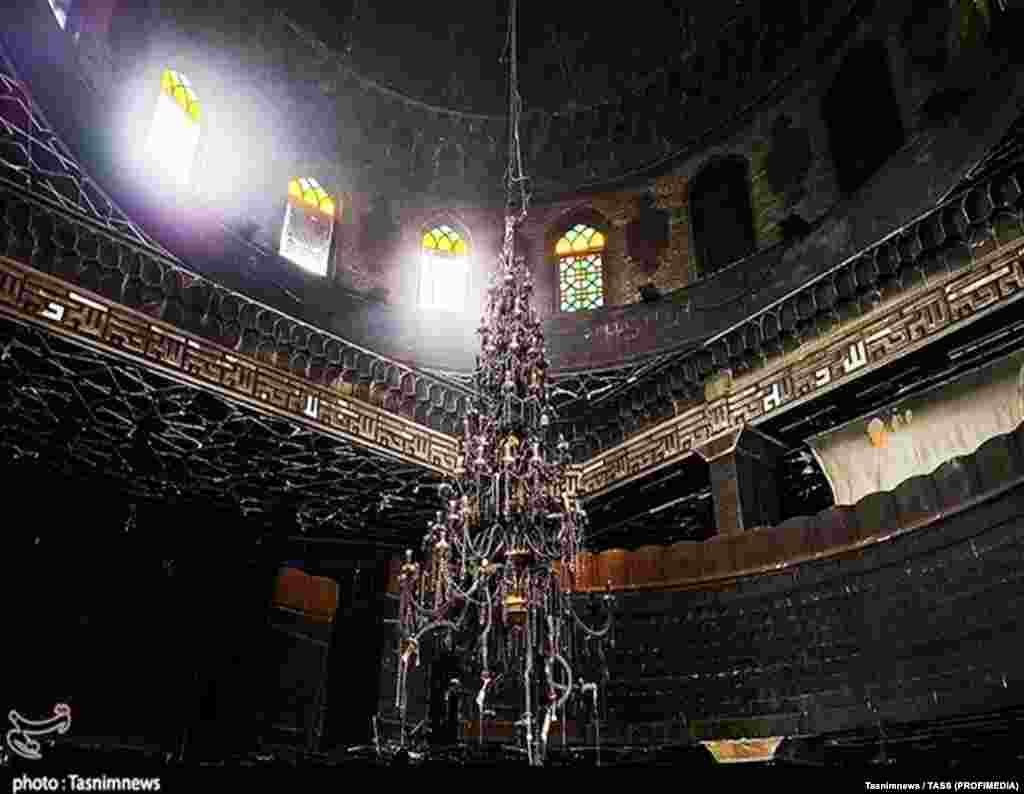
9/11The interior of the Abuzar Mosque in Tehran after it was targetedduring the mass uprising.
The mosque was the site of an attempted assassinationof Ayatollah Ali Khamenei in 1981. Khamenei was a presidential candidate at the time and now rules the country as Iran's supreme leader.
Photos released on January 19 and 20 show the aftermath in Tehran of massive protests that swept Iran over recent weeks before being crushed by the country's security apparatus.
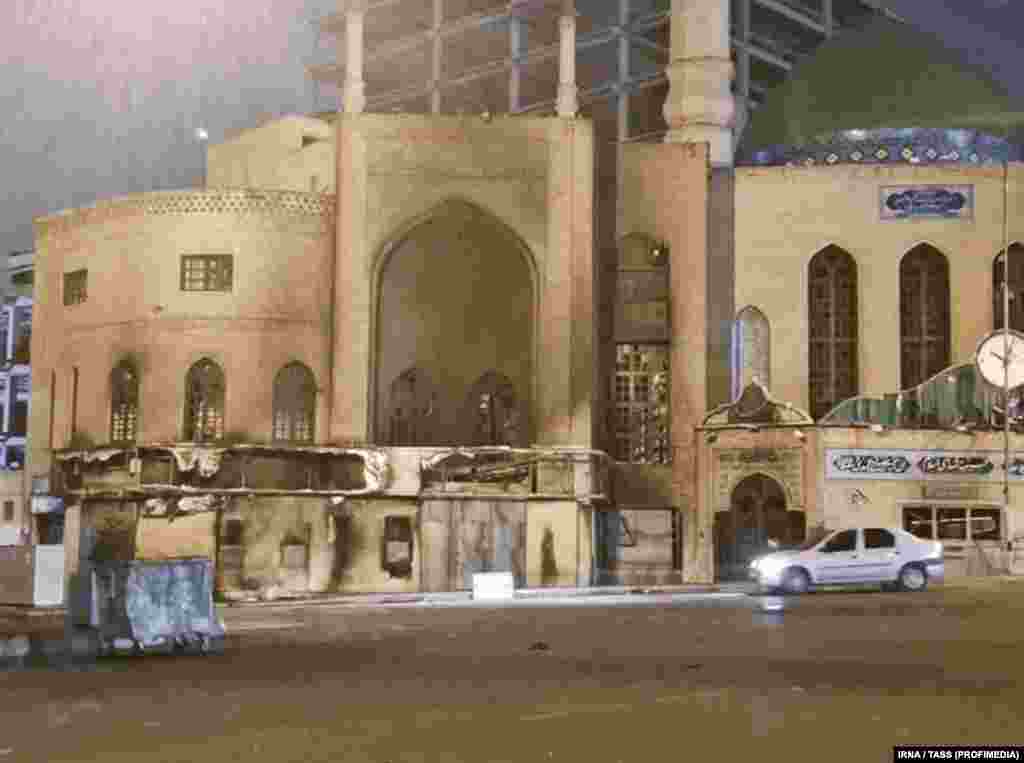
10/11The interior of the gutted Abuzar Mosque.
Analysts say the targeting of Mosques by protestors is in part due to many such religious buildings being used as recruitment and training centers for the Basij, a pro-regime paramilitary force.
Photos released on January 19 and 20 show the aftermath in Tehran of massive protests that swept Iran over recent weeks before being crushed by the country's security apparatus.
11/11The fire-damaged Al-Rasul mosque in Tehran that was damaged by fire during the unrest.
Some say another reason for targeting mosques is the Islamist ideology at the heart of Iran's current government. "Everything the regime does -- every excuse or explanation -- is wrapped in the cloak of religion," one commentator wrote.
Photos released on January 19 and 20 show the aftermath in Tehran of massive protests that swept Iran over recent weeks before being crushed by the country's security apparatus.
Previous slide
Next slide
Nadimi added that the chances of US strikes on Iran were "very high," pointing to the "overtly aggressive" military buildup in the Persian Gulf.
The aircraft carrier USS Abraham Lincoln and three accompanying destroyers are headed toward the Middle East carrying over 5,000 troops. US Central Command has said that F-15E Strike Eagle fighter jets were deployed to the region.
Meanwhile, the US Air Force saidon January 25 that it was set to launch a multiday military exercise across the Middle East "to demonstrate the ability to deploy, disperse, and sustain combat airpower" in the region.
The activity is reminiscent of last year when the United States moved military assets to the region before Israel and then Washington carried out air strikes targeting Iran's nuclear sites.
The Islamic Revolutionary Guards Corps (IRGC), the elite branch of Iran's armed forces, has responded by raising alert levels and urging Iranian-backed armed groups in Iraq, Lebanon, and Yemen to support Tehran.
Fraught With Risks
US media reports say Trump is weighing up a range of military options against Iran -- from a sustained aerial campaign that could last weeks or months to modest and largely symbolic strikes targeting Iran's security forces. Nonmilitary options, including additional economic sanctions, have also been reportedly discussed.
Experts say any US military action against Iran is fraught with risks and could drag in the entire region. Tehran has vowed to hit US bases in the Persian Gulf as well as Israel, a key US ally.
"The costs are unpredictable -- retaliation against US allies and attacks on Persian Gulf shipping. Regional partners don't want to pay that price," Mehrdad Khansari, a former Iranian diplomat, told Radio Farda.
Regional countries have privately urged Washington to exercise restraint, concerned that a US-Iran conflict could trigger a wider conflict.
Khansari argued that an aerial campaign alone, without a ground incursion, would not lead to regime change, if that was even Washington's end goal.
A ground invasion of Iran, the largest and most populous country in the Middle East, is considered a nonstarter by many military experts.
"It keeps the file open -- like the Sword of Damocles hanging over the regime -- but air strikes alone cannot topple the regime or eliminate its security forces," he said, speculating that government forces would simply hide during strikes and reemerge afterward.
How Might A Strike Unfold?
Nadimi said planned US military exercises in the coming days could provide cover for actual operations.
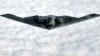
He said the United States could use electronic warfare and cyberattacks to disrupt Iranian radar and communications networks. Stealth bombers and fighter jets could then penetrate air defenses in radio silence, striking command centers and missile sites.
But Iran would not be defenseless in case of a conflict, experts say.
Iran possesses cruise missiles capable of threatening US warships in the Persian Gulf's confined waters, as well as ballistic missiles that could hit regional bases. Iran has even alluded to this, erecting a large banner in a major square in Tehran over the weekend depicting a US aircraft carrier struck by a deluge of missiles.
Even if Washington resorts to a largely symbolic strike, Iran is likely to respond in kind, Nadimi said.

With reporting by Roya Karimi Majd, Hannah Kaviani, and Hooman Askary of RFE/RL's Radio Farda
Kian Sharifi is a feature writer specializing in Iranian affairs in RFE/RL's Central Newsroom in Prague. He got his start in journalism at the Financial Tribune, an English-language newspaper published in Tehran, where he worked as an editor. He then moved to BBC Monitoring, where he led a team of journalists who closely watched media trends and analyzed key developments in Iran and the wider region.
RFE/RL's Radio Farda breaks through government censorship to deliver accurate news and provide a platform for informed discussion and debate to audiences in Iran.