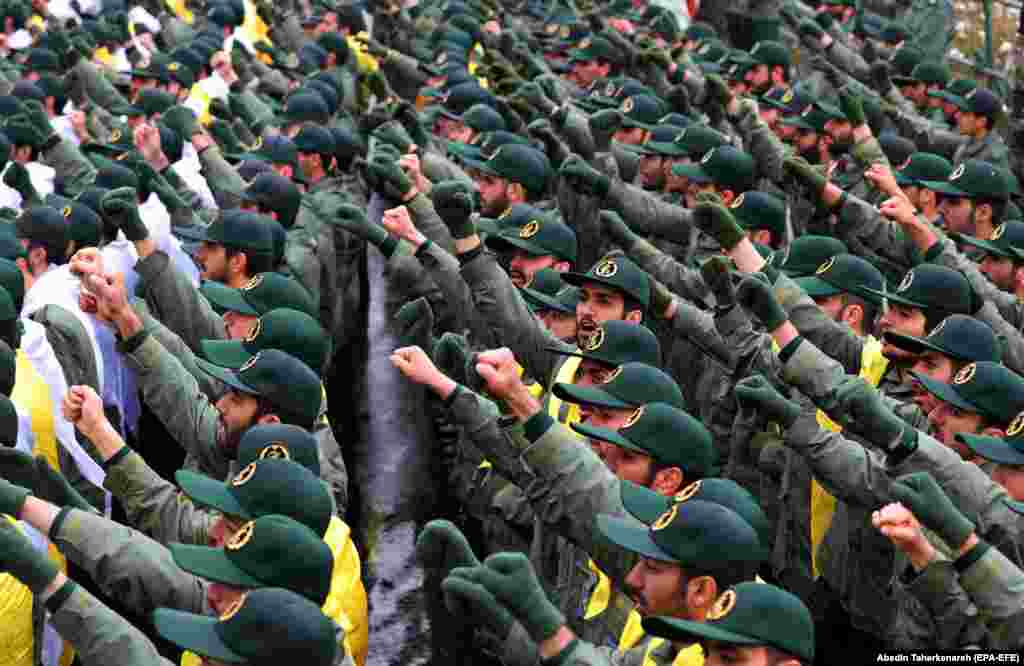
1/9Members of the Islamic Revolutionary Guards Corps raise their fists while shouting slogans on Azadi (Freedom) Square in Tehran.
Iran has marked the 40th anniversary of the 1979 Islamic revolution that ended the monarchy and heralded the start of four decades of clerical rule.
Show moreShow less
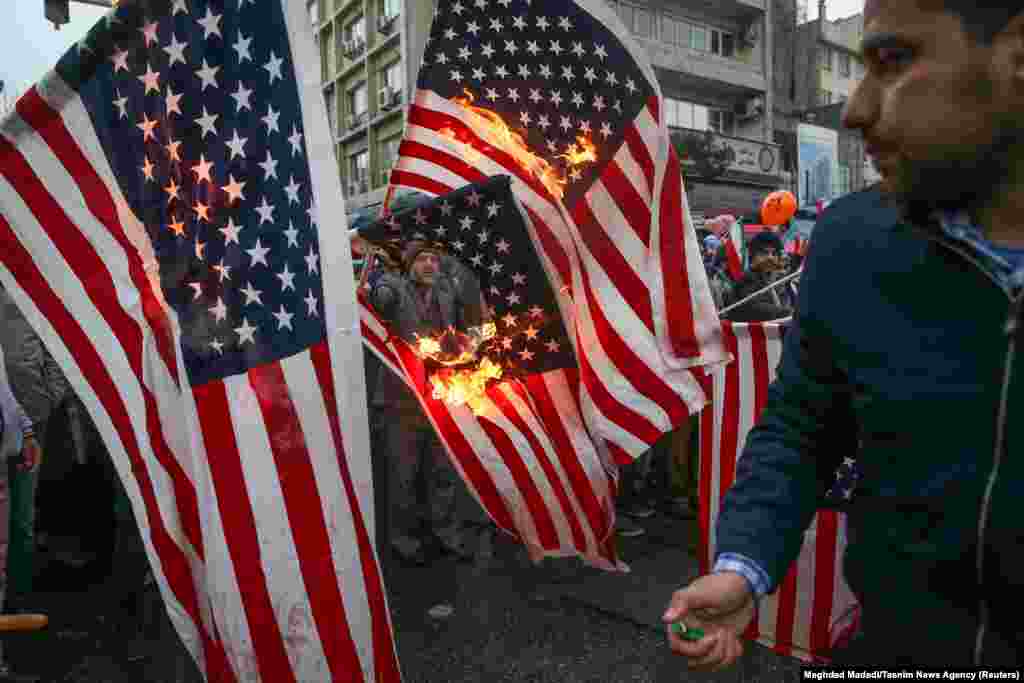
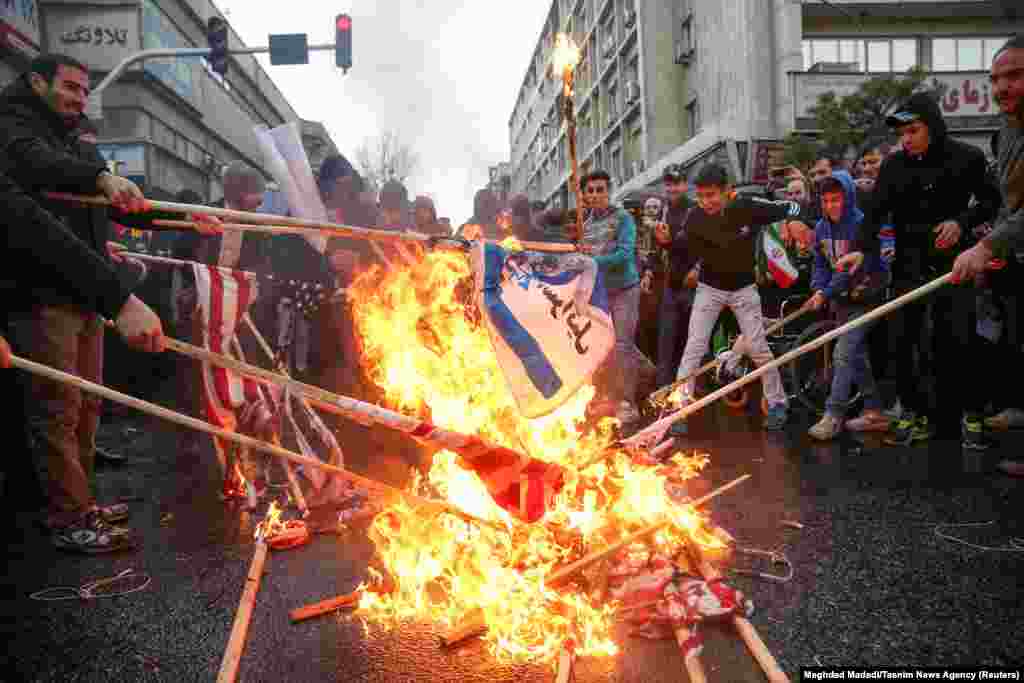
2/9Iranians burn U.S. and Israeli flags in Tehran.
Iran has marked the 40th anniversary of the 1979 Islamic revolution that ended the monarchy and heralded the start of four decades of clerical rule.
Show moreShow less
3/9
Iran has marked the 40th anniversary of the 1979 Islamic revolution that ended the monarchy and heralded the start of four decades of clerical rule.
Show moreShow less
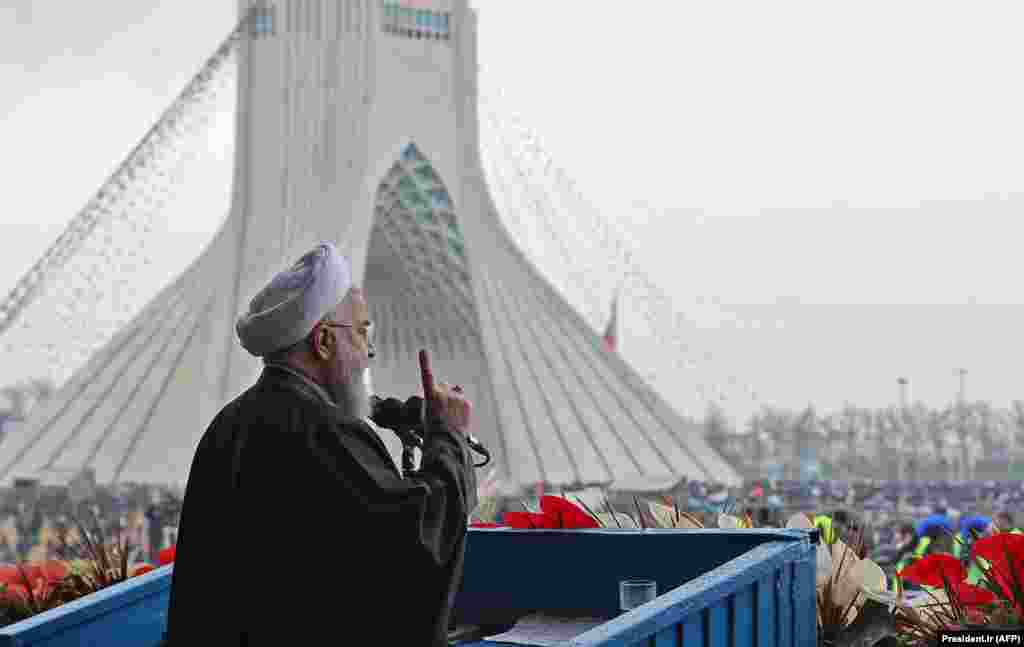
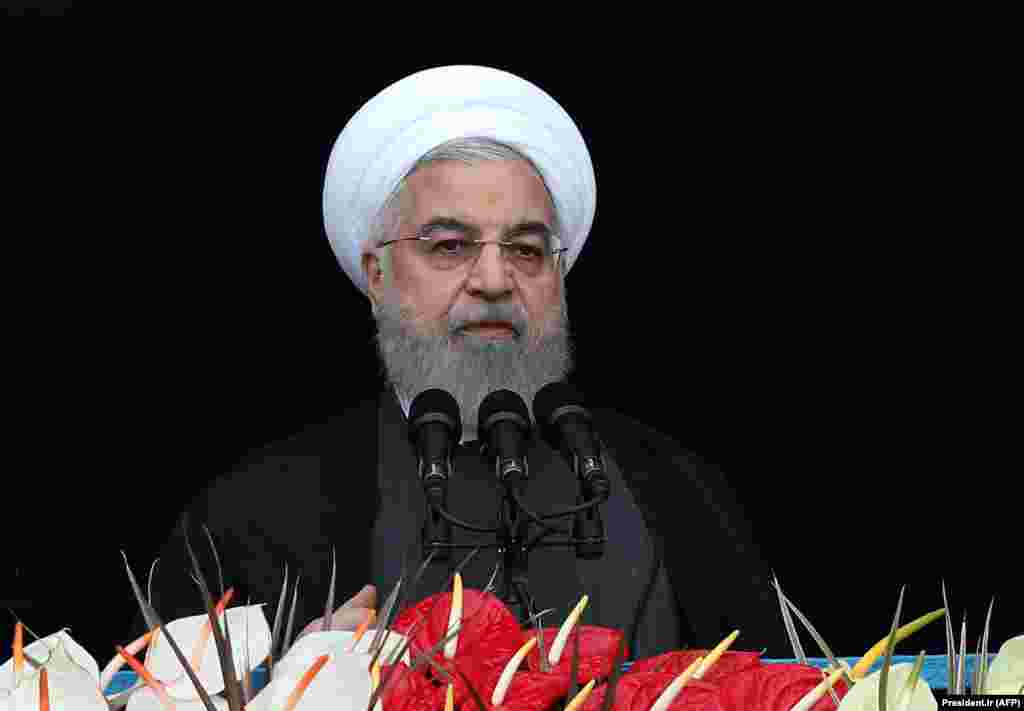
4/9Iranian President Hassan Rohani addresses tens of thousands of people on Azadi (Freedom) Square.
Iran has marked the 40th anniversary of the 1979 Islamic revolution that ended the monarchy and heralded the start of four decades of clerical rule.
Show moreShow less
5/9In his address, Rohani said the "enemy will never reach its evil objectives," vowing that Iran will defeat U.S. sanctions.
Iran has marked the 40th anniversary of the 1979 Islamic revolution that ended the monarchy and heralded the start of four decades of clerical rule.
Show moreShow less
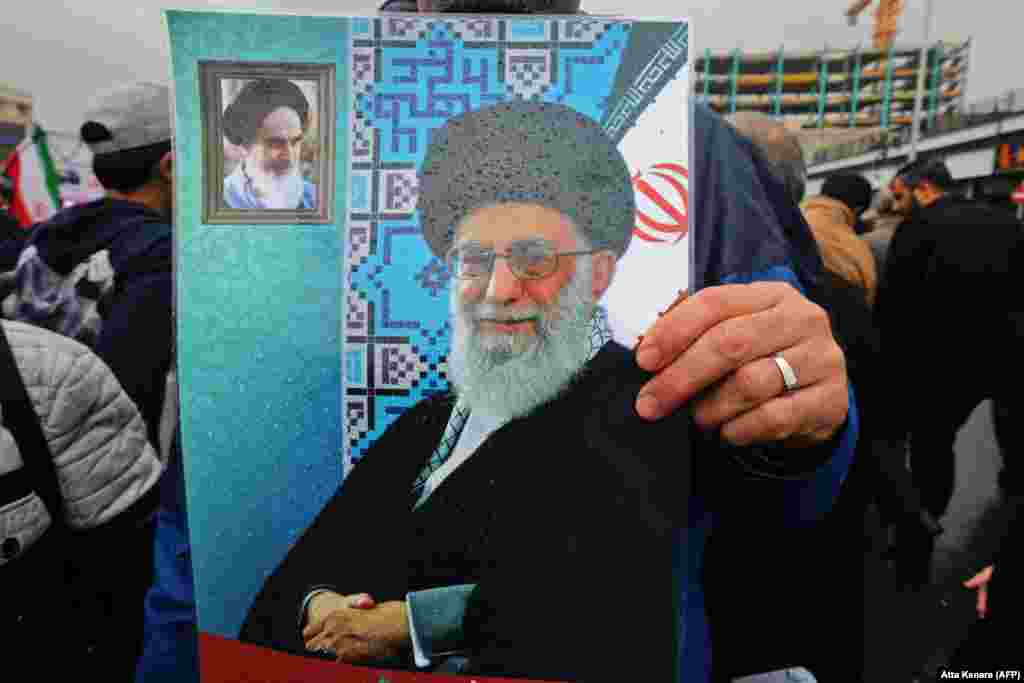
6/9An Iranian holds a poster showing Supreme Leader Ayatollah Ali Khamenei with a small portrait in the corner showing Islamic Revolution founder Ayatollah Ruhollah Khomeini.
Iran has marked the 40th anniversary of the 1979 Islamic revolution that ended the monarchy and heralded the start of four decades of clerical rule.
Show moreShow less
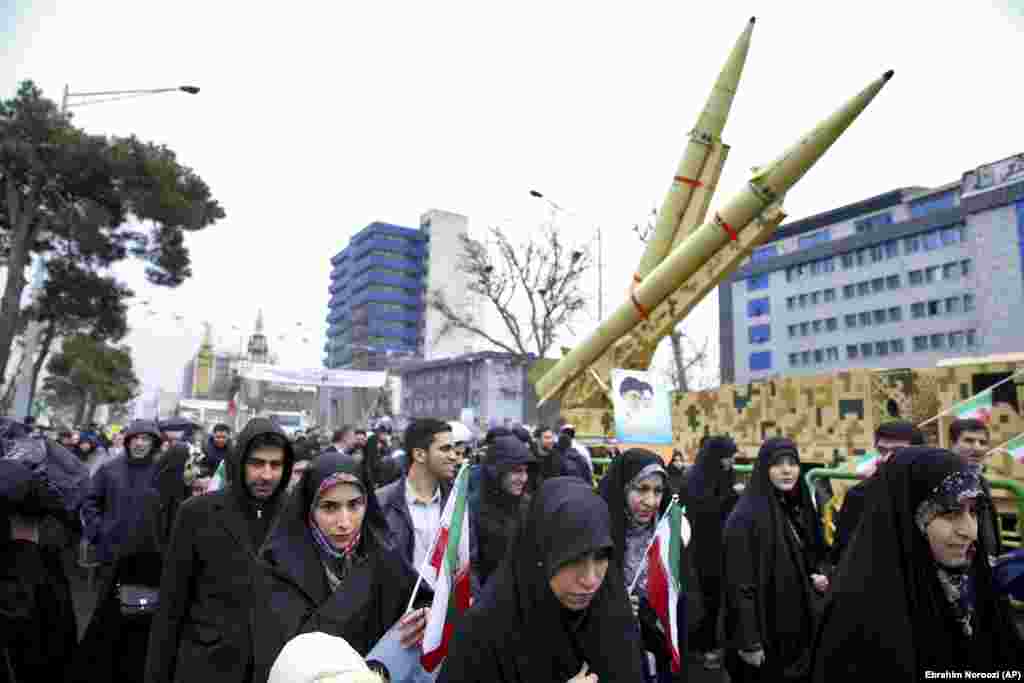
7/9Iranians walk past a missile during a rally in Tehran. Banners held by marchers or hung in the streets bore slogans including "Death to America," "Death to Israel," and "40 years of challenge, 40 years of U.S. defeats."
Iran has marked the 40th anniversary of the 1979 Islamic revolution that ended the monarchy and heralded the start of four decades of clerical rule.
Show moreShow less
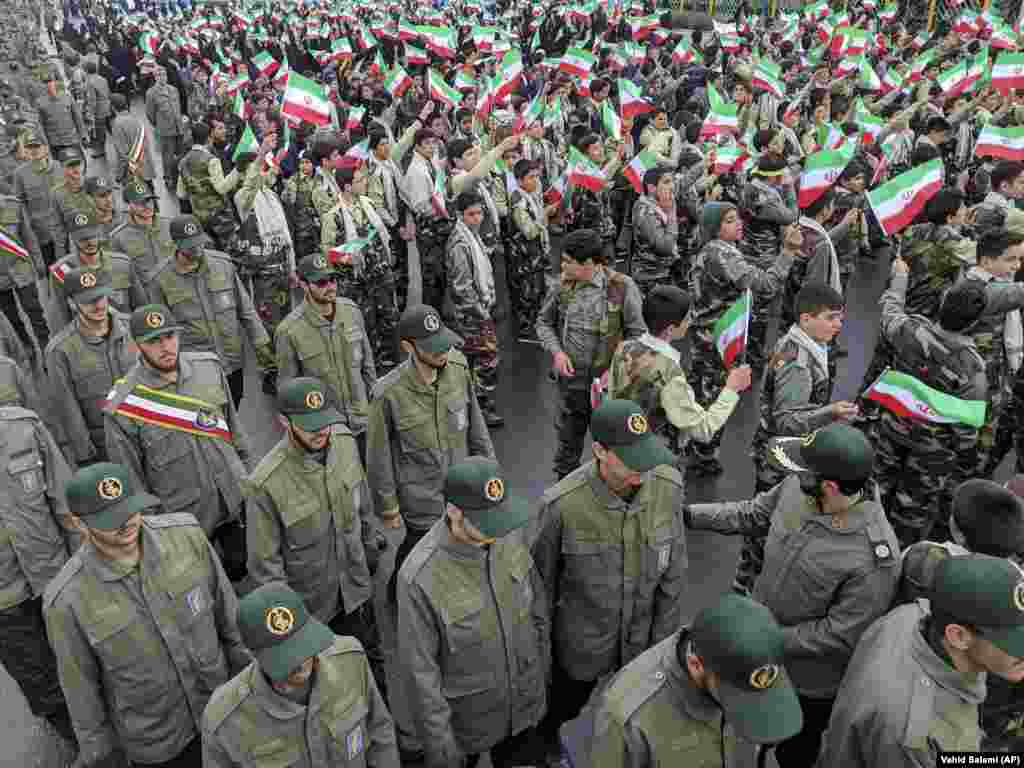
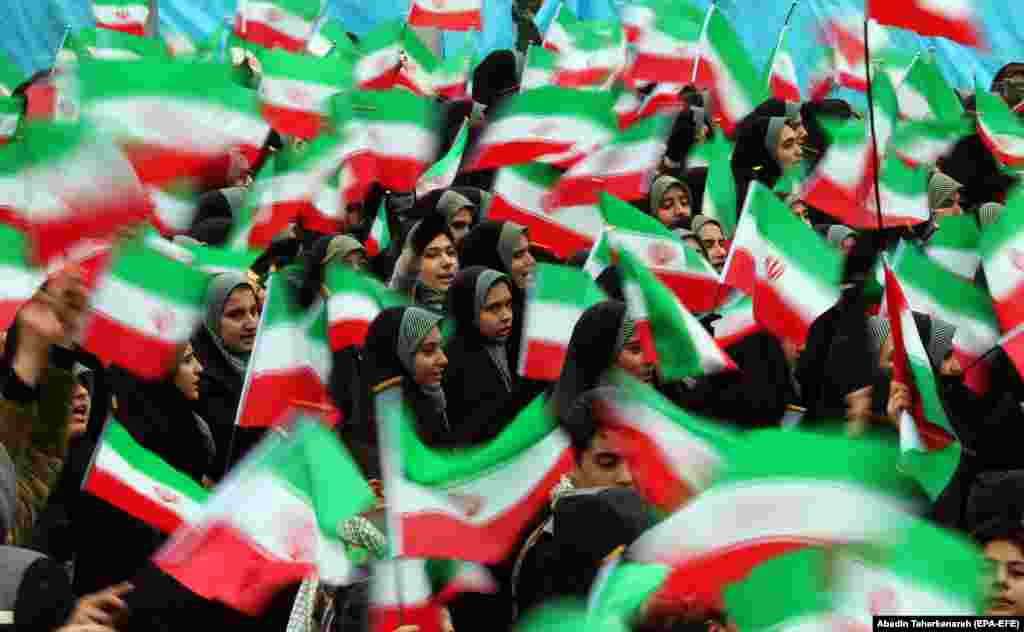
8/9School students wave national flags as Islamic Revolutionary Guards Corps members arrive in Azadi (Freedom) Square.
Iran has marked the 40th anniversary of the 1979 Islamic revolution that ended the monarchy and heralded the start of four decades of clerical rule.
Show moreShow less
9/9Female students wave national flags on Azadi (Freedom) Square.
Iran has marked the 40th anniversary of the 1979 Islamic revolution that ended the monarchy and heralded the start of four decades of clerical rule.
Show moreShow less
Previous slide
Next slide
President Hassan Rohani blasted a U.S. "conspiracy" against Iran as the country marked the 40th anniversary of the 1979 Islamic revolution that ended the monarchy and heralded the start of four decades of clerical rule.
Addressing tens of thousands of people gathered on Tehran's Azadi (Freedom) Square on February 11, Rohani also said that Iran was determined to expand its military power and missile program despite mounting pressure from the United States and its allies.
Hundreds of thousands of soldiers, militia members in camouflage fatigues, clerics, and ordinary citizens flocked to the streets of other Iranian cities and towns to commemorate February 11, 1979, when followers of Ayatollah Ruhollah Khomeini ousted a U.S.-backed monarch, Shah Reza Pahlavi.
Banners held by marchers or hung in the streets bore slogans including "Death to America," "Death to Israel," and "40 years of challenge, 40 years of U.S. defeats."
The festivities to mark the Iranian Revolution start every year on February 1, the day that Khomeini returned from exile to become supreme leader of the Islamic republic. They end on February 11, the day that the outgoing government collapsed.
In Pictures: Iran's 1979 Islamic Revolution
1/30Tehran was crippled by strikes and mass protest against the Shah on September 7, 1978. The day became known as Black Friday and saw demonstrations spread across the country with protesters accusing the Shah of being a U.S. puppet. Martial law was imposed four days later.
Forty years ago, Ayatollah Ruhollah Khomeini spearheaded an Islamic Revolution that deposed Iran's shah. The country's authoritarian monarchy was replaced by a repressive theocracy, and almost overnight, Iran was transformed from a crucial U.S. ally to bitter foe.
Show moreShow less
2/30Despite the declaration of martial law, thousands of defiant demonstrators continued to flood the streets of Tehran on October 9, 1978, to protest against Iran's Shah, Mohammad Reza Pahlavi.
Forty years ago, Ayatollah Ruhollah Khomeini spearheaded an Islamic Revolution that deposed Iran's shah. The country's authoritarian monarchy was replaced by a repressive theocracy, and almost overnight, Iran was transformed from a crucial U.S. ally to bitter foe.
Show moreShow less
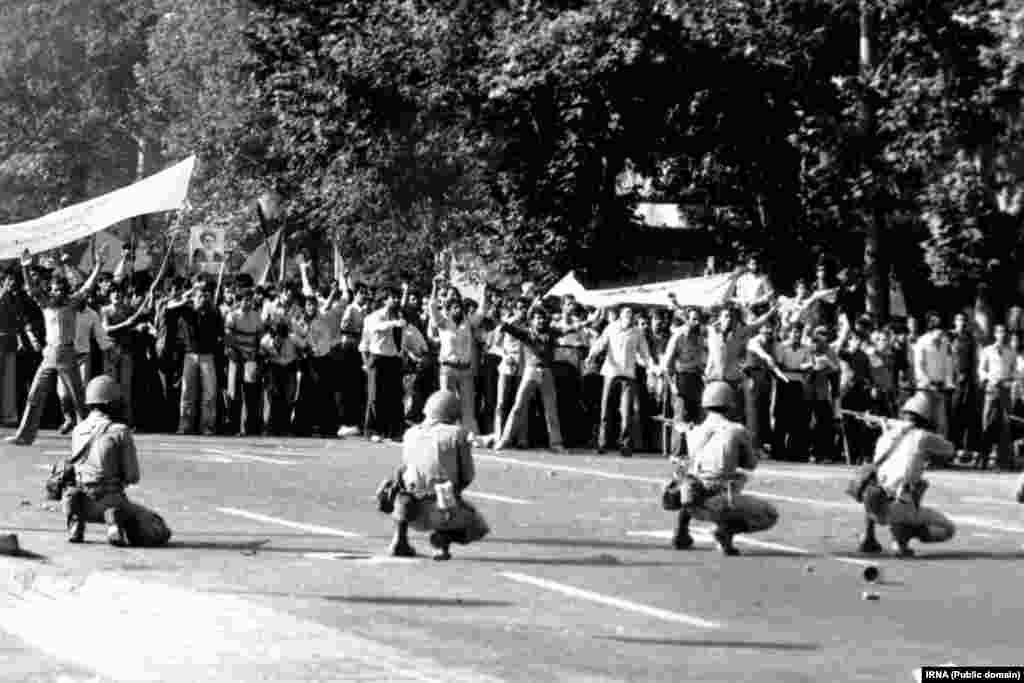
3/30Protesters set fires on the streets of the Iranian capital during antigovernment demonstrations on November 5, 1978. Protests turned deadly later that month when armed soldiers clashed with students at the University of Tehran.
Forty years ago, Ayatollah Ruhollah Khomeini spearheaded an Islamic Revolution that deposed Iran's shah. The country's authoritarian monarchy was replaced by a repressive theocracy, and almost overnight, Iran was transformed from a crucial U.S. ally to bitter foe.
Show moreShow less
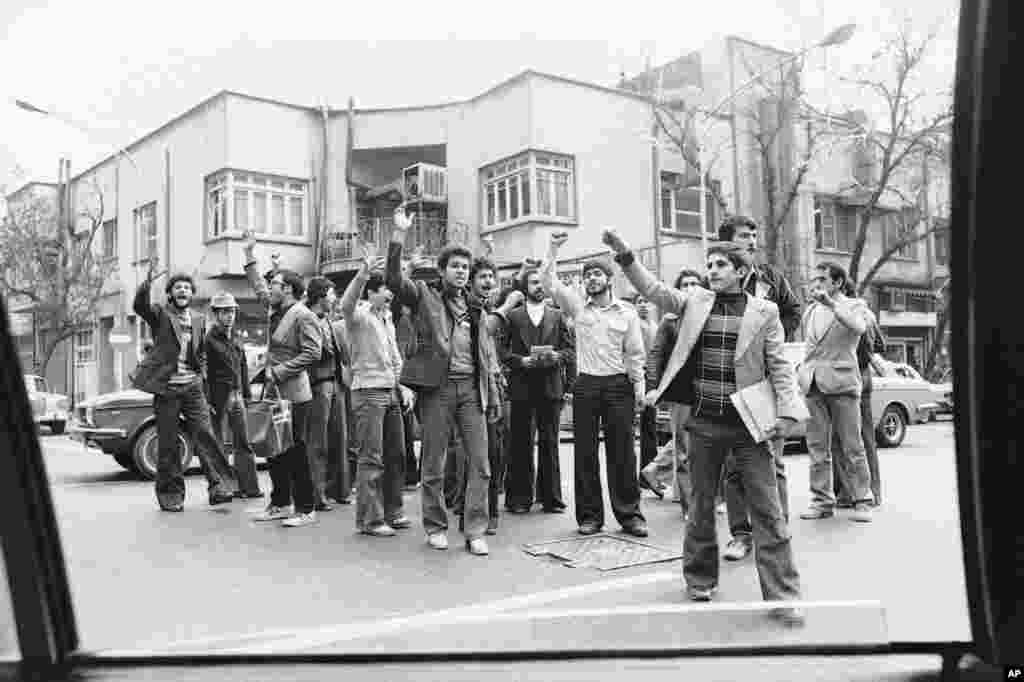
4/30Iranian students shout "Death to the Shah" amid protests in Tehran on November 28, 1978. Mohammad Reza Shah Pahlavi had ruled Iran since 1941. While he modernized the country, he forcefully suppressed dissent and political freedoms.
Forty years ago, Ayatollah Ruhollah Khomeini spearheaded an Islamic Revolution that deposed Iran's shah. The country's authoritarian monarchy was replaced by a repressive theocracy, and almost overnight, Iran was transformed from a crucial U.S. ally to bitter foe.
Show moreShow less
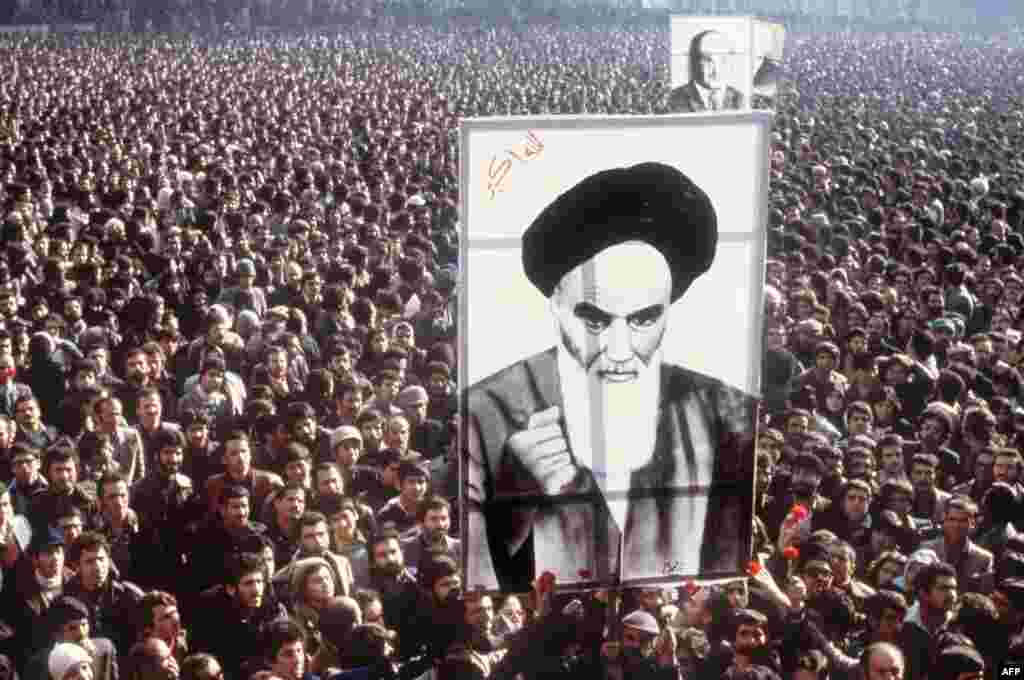
5/30Demonstrators hold up a poster of exiled Islamic leader Ayatollah Ruhollah Khomeini as protests in Tehran grow larger. This anti-Shah demonstration on December 10, 1978 took place near the Shayah monument which was built to commemorate the monarch's rule and power.
Forty years ago, Ayatollah Ruhollah Khomeini spearheaded an Islamic Revolution that deposed Iran's shah. The country's authoritarian monarchy was replaced by a repressive theocracy, and almost overnight, Iran was transformed from a crucial U.S. ally to bitter foe.
Show moreShow less
6/30A mullah and others in Tehran's bazaar on December 16, 1978, reading the latest words from exiled Islamic leader Ayatollah Ruhollah Khomeini.
Forty years ago, Ayatollah Ruhollah Khomeini spearheaded an Islamic Revolution that deposed Iran's shah. The country's authoritarian monarchy was replaced by a repressive theocracy, and almost overnight, Iran was transformed from a crucial U.S. ally to bitter foe.
Show moreShow less
7/30An overturned truck with a Pepsi logo burns in the center of Tehran during riots which paralyzed the city on December 27, 1978.
Forty years ago, Ayatollah Ruhollah Khomeini spearheaded an Islamic Revolution that deposed Iran's shah. The country's authoritarian monarchy was replaced by a repressive theocracy, and almost overnight, Iran was transformed from a crucial U.S. ally to bitter foe.
Show moreShow less
8/30Anti-Shah protests continue to grow as demonstrators hold a poster of Ayatollah Ruhollah Khomeini during mass protests on January 1, 1979. Khomeini had spent 14 years in exile. Cassette tapes of speeches by the 76-year-old Khomeini were smuggled into the country, fueling the unrest.
Forty years ago, Ayatollah Ruhollah Khomeini spearheaded an Islamic Revolution that deposed Iran's shah. The country's authoritarian monarchy was replaced by a repressive theocracy, and almost overnight, Iran was transformed from a crucial U.S. ally to bitter foe.
Show moreShow less
9/30A demonstrator lifted from the ground by a soldier after being clubbed by a stick-wielding army officer (left) during a skirmish in Tehran on January 14, 1979.
Forty years ago, Ayatollah Ruhollah Khomeini spearheaded an Islamic Revolution that deposed Iran's shah. The country's authoritarian monarchy was replaced by a repressive theocracy, and almost overnight, Iran was transformed from a crucial U.S. ally to bitter foe.
Show moreShow less
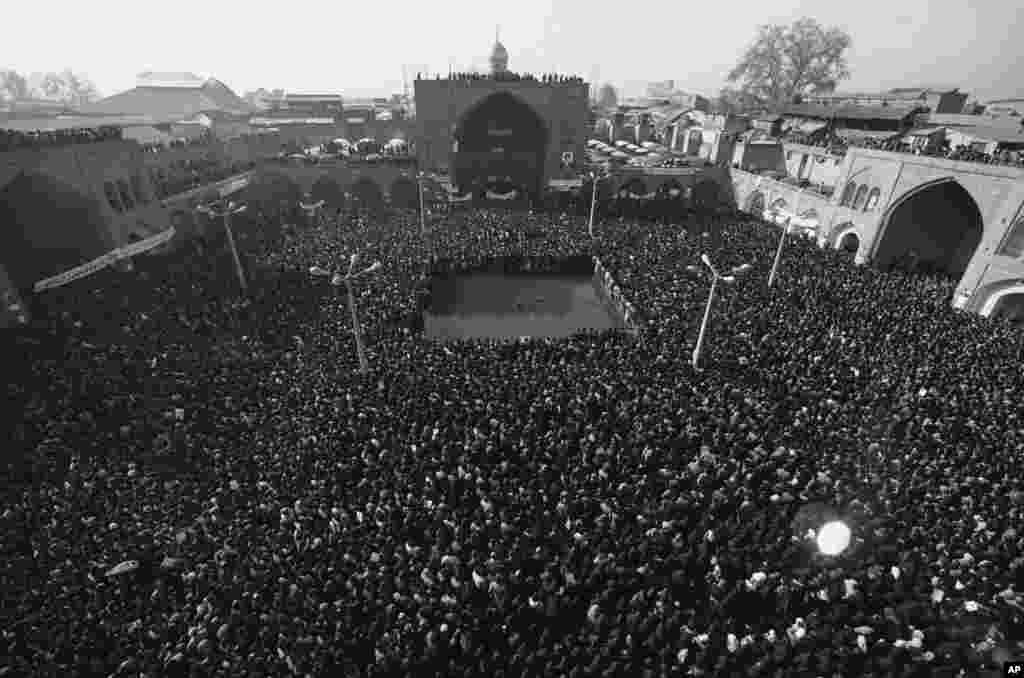
10/30More than 100,000 people gathered outside Tehran's Bazaar Mosque on January 15, 1979. Troops stood by as demonstrators showered them with flowers and kisses while chanting "Long Live Khomeini" and "Death to the Shah."
Forty years ago, Ayatollah Ruhollah Khomeini spearheaded an Islamic Revolution that deposed Iran's shah. The country's authoritarian monarchy was replaced by a repressive theocracy, and almost overnight, Iran was transformed from a crucial U.S. ally to bitter foe.
Show moreShow less
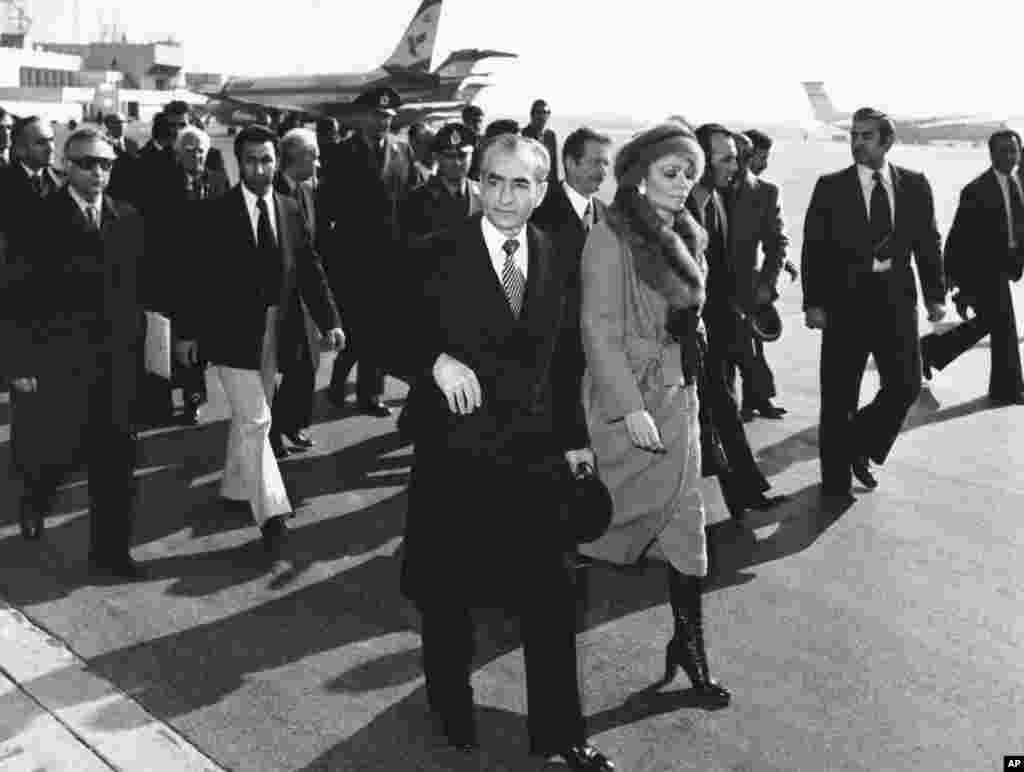
11/30Iran's Shah, Mohammad Reza Pahlavi, and his wife, Empress Farah, walk on the tarmac at Mehrabad Airport in Tehran to board a plane on January 16, 1979. The Shah left Iran for what was officially a vacation. Many Iranians rejoiced with chants of "The Shah is gone!" The man who had ruled the country for 37 years would never return from exile, dying some 13 months later.
Forty years ago, Ayatollah Ruhollah Khomeini spearheaded an Islamic Revolution that deposed Iran's shah. The country's authoritarian monarchy was replaced by a repressive theocracy, and almost overnight, Iran was transformed from a crucial U.S. ally to bitter foe.
Show moreShow less
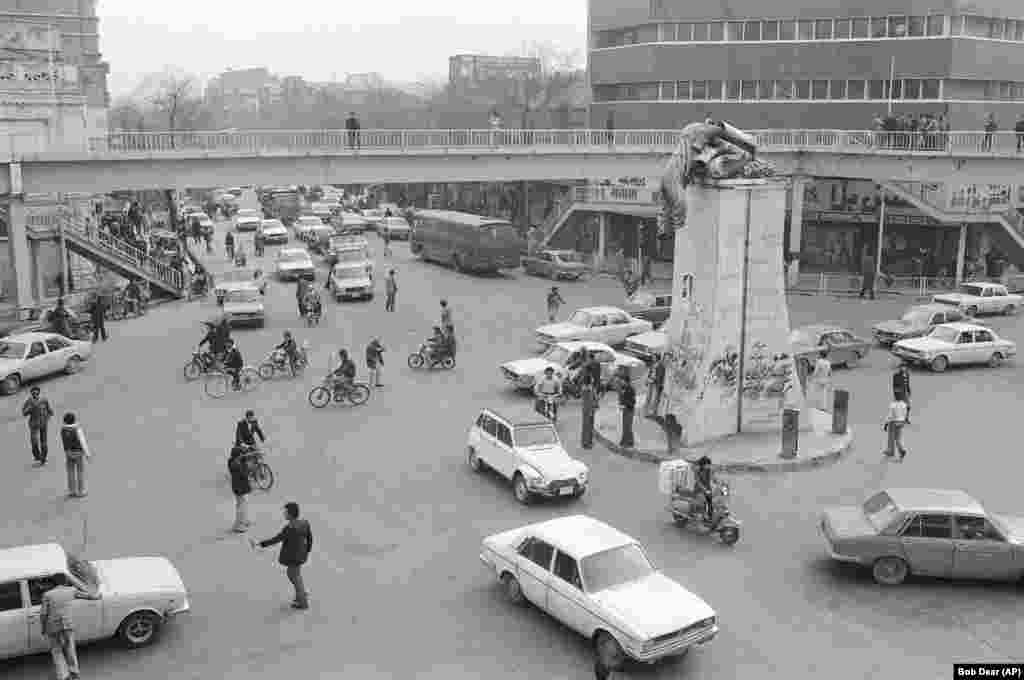
12/30A toppled statue of the Shah in a Tehran traffic circle on January 18, 1979.
Forty years ago, Ayatollah Ruhollah Khomeini spearheaded an Islamic Revolution that deposed Iran's shah. The country's authoritarian monarchy was replaced by a repressive theocracy, and almost overnight, Iran was transformed from a crucial U.S. ally to bitter foe.
Show moreShow less
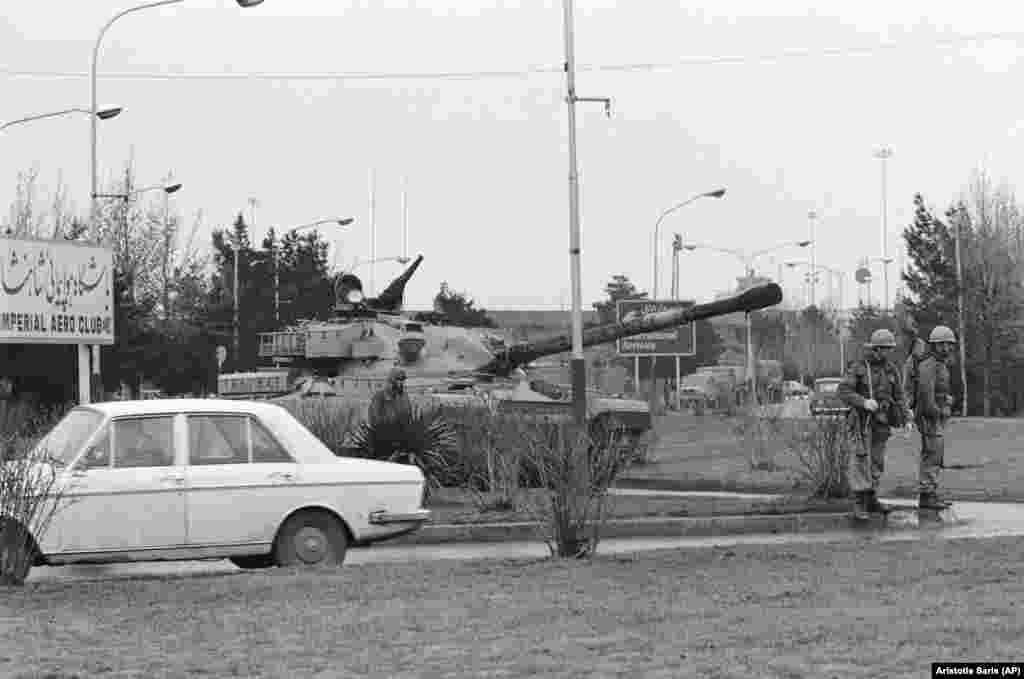
13/30An Iranian army tank and soldiers on a road leading to Tehran's airport. The army prevented an Iranian Airlines jet from taking off for Paris to pick up exiled Islamic leader Ayatollah Khomeini for his return to Iran.
Forty years ago, Ayatollah Ruhollah Khomeini spearheaded an Islamic Revolution that deposed Iran's shah. The country's authoritarian monarchy was replaced by a repressive theocracy, and almost overnight, Iran was transformed from a crucial U.S. ally to bitter foe.
Show moreShow less
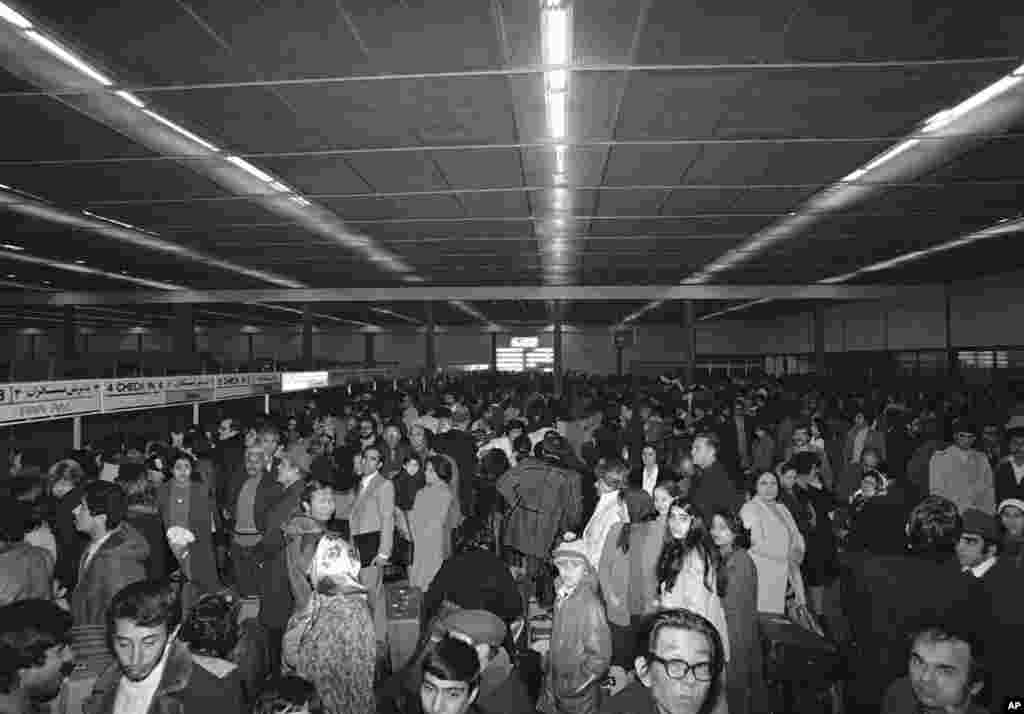
14/30Days after the Shah's departure, hundreds of people, including many foreigners, were desperate to leave Iran. People packed into the departure hall of Tehran's Mehrabad Airport on January 25, 1979, with the hopes of catching a flight out of the country.
Forty years ago, Ayatollah Ruhollah Khomeini spearheaded an Islamic Revolution that deposed Iran's shah. The country's authoritarian monarchy was replaced by a repressive theocracy, and almost overnight, Iran was transformed from a crucial U.S. ally to bitter foe.
Show moreShow less
15/30Severe clashes erupt on January 26, 1979 amid Iran's political instability and leadership vacuum. Antigovernment demonstrators dive for cover as Iranian army soldiers fire live rounds in Tehran.
Forty years ago, Ayatollah Ruhollah Khomeini spearheaded an Islamic Revolution that deposed Iran's shah. The country's authoritarian monarchy was replaced by a repressive theocracy, and almost overnight, Iran was transformed from a crucial U.S. ally to bitter foe.
Show moreShow less
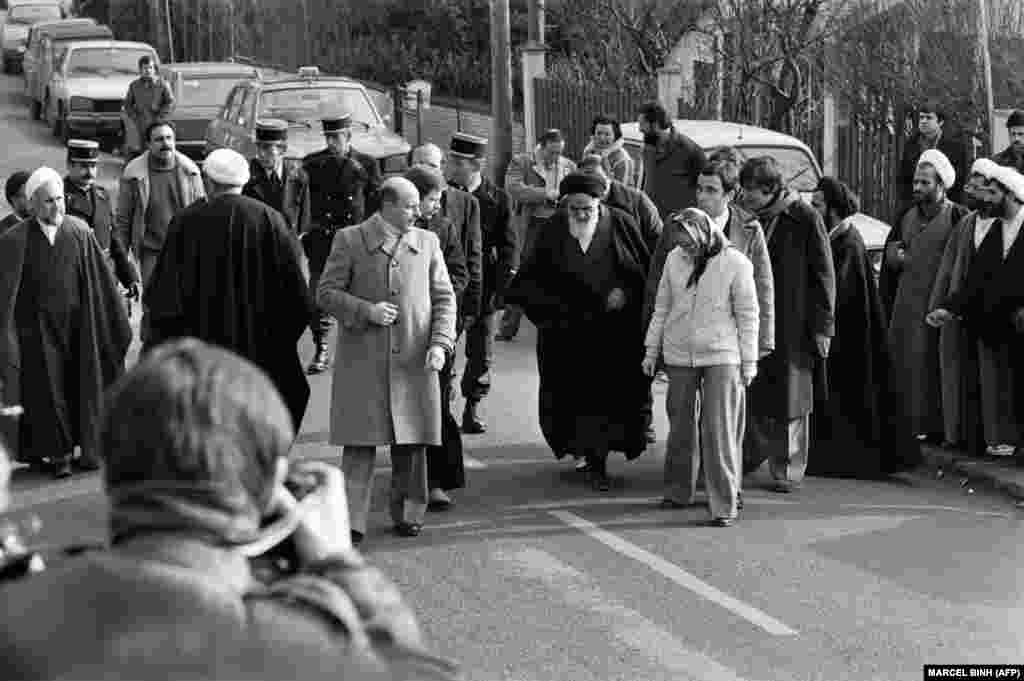
16/30Ayatollah Ruhollah Khomeini leaves his villa in Neauphle-le-Chateau, near Paris, on January 31, 1979, to board an Air France jet bound for Tehran.
Forty years ago, Ayatollah Ruhollah Khomeini spearheaded an Islamic Revolution that deposed Iran's shah. The country's authoritarian monarchy was replaced by a repressive theocracy, and almost overnight, Iran was transformed from a crucial U.S. ally to bitter foe.
Show moreShow less
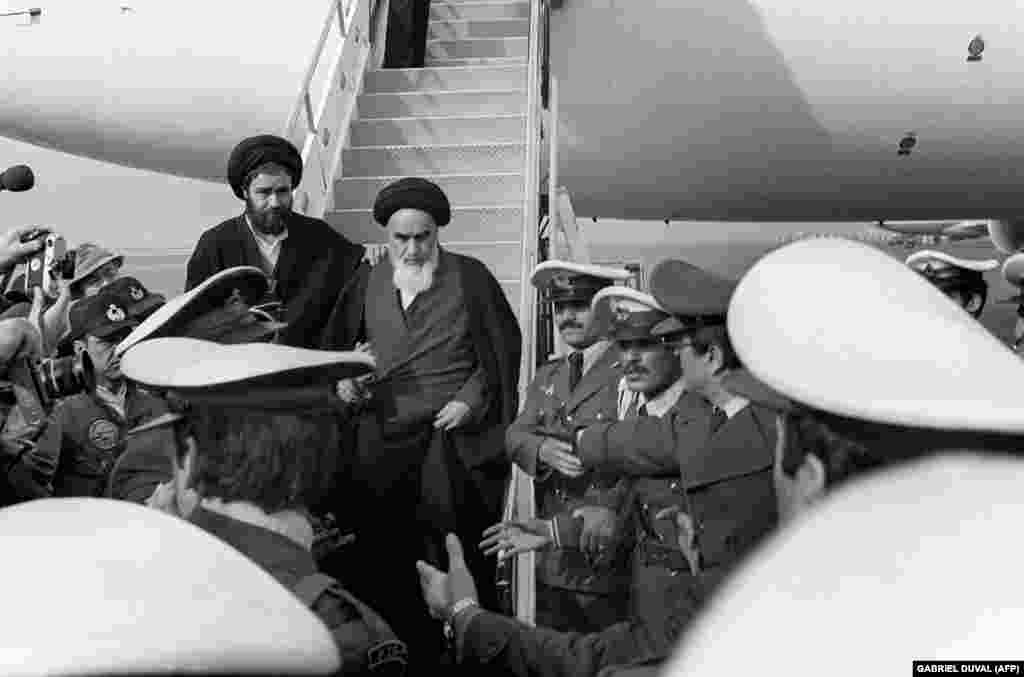
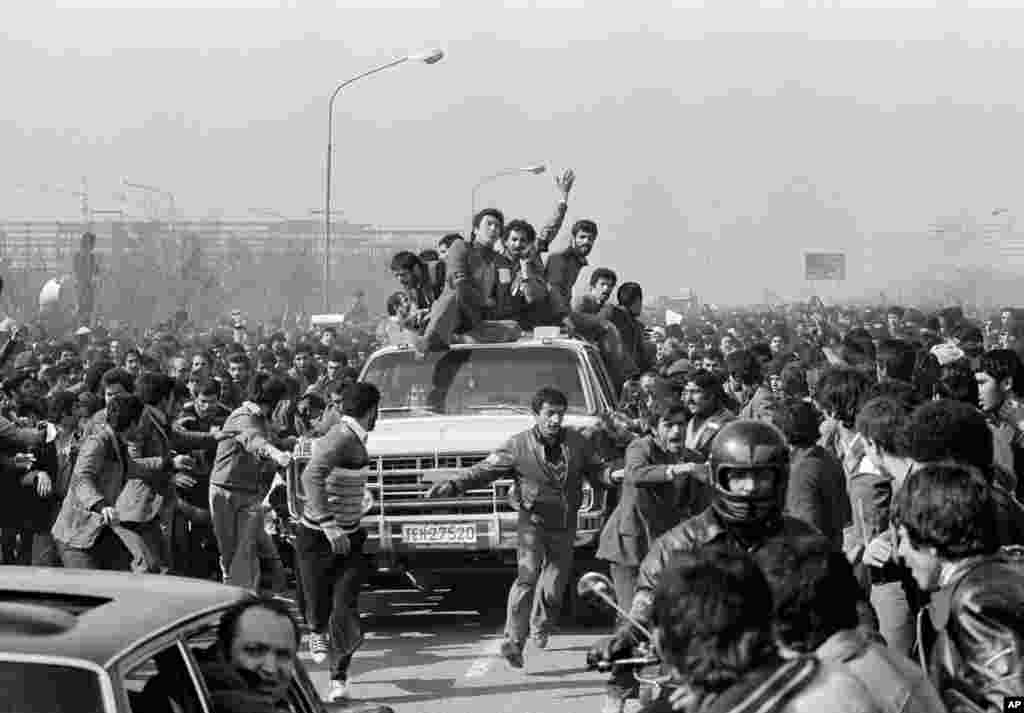
17/30Ayatollah Ruhollah Khomeini arrives in Tehran on February 1, 1979. Some 120 journalists accompanied him on the flight from Paris. Although Iran's U.S.-backed Shah had already fled the country, Khomeini's return from exile is often seen as the true start of Iran's Islamic revolution.
Forty years ago, Ayatollah Ruhollah Khomeini spearheaded an Islamic Revolution that deposed Iran's shah. The country's authoritarian monarchy was replaced by a repressive theocracy, and almost overnight, Iran was transformed from a crucial U.S. ally to bitter foe.
Show moreShow less
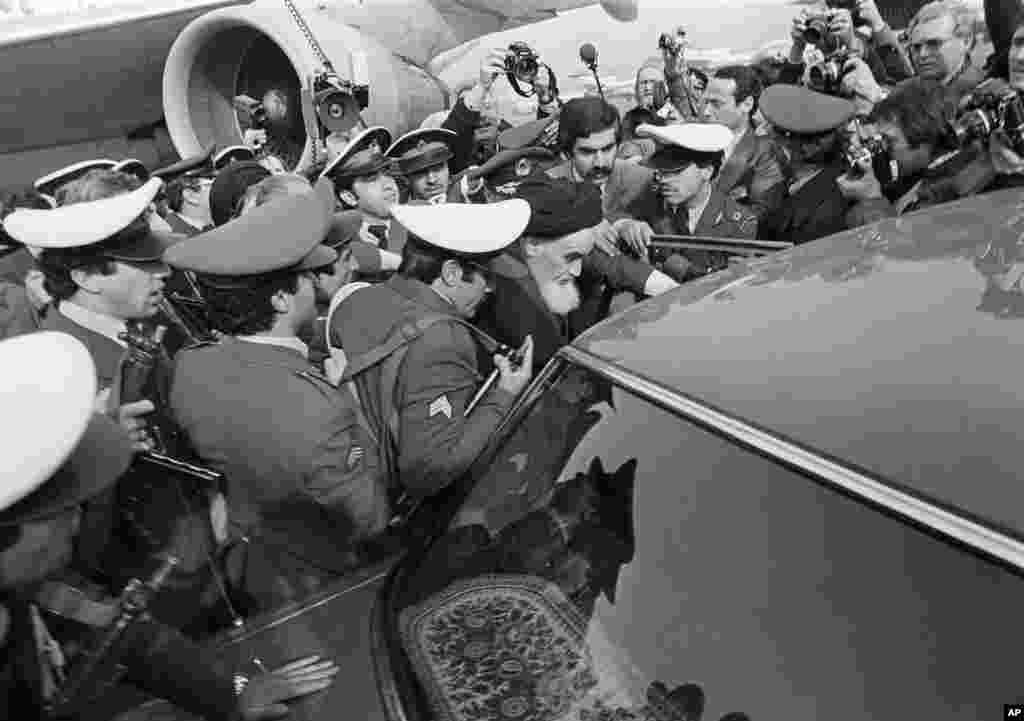
18/30Khomeini was heavily guarded as he tried to leave the airport for his ride through Tehran to visit Behesht-e Zahra cemetery.
Forty years ago, Ayatollah Ruhollah Khomeini spearheaded an Islamic Revolution that deposed Iran's shah. The country's authoritarian monarchy was replaced by a repressive theocracy, and almost overnight, Iran was transformed from a crucial U.S. ally to bitter foe.
Show moreShow less
19/30Supporters lined the streets for Khomeini's motorcade to Behesht-e Zahra cemetery.
Forty years ago, Ayatollah Ruhollah Khomeini spearheaded an Islamic Revolution that deposed Iran's shah. The country's authoritarian monarchy was replaced by a repressive theocracy, and almost overnight, Iran was transformed from a crucial U.S. ally to bitter foe.
Show moreShow less
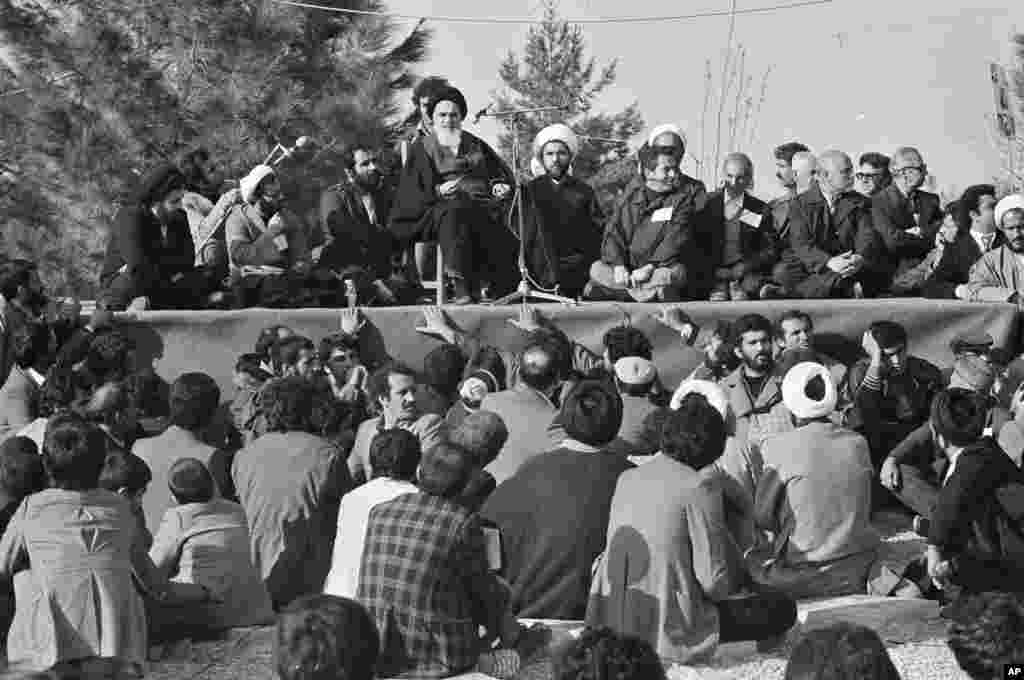
20/30Khomeini delivers a speech at the Behesht-e Zahra cemetery after his return from exile.
Forty years ago, Ayatollah Ruhollah Khomeini spearheaded an Islamic Revolution that deposed Iran's shah. The country's authoritarian monarchy was replaced by a repressive theocracy, and almost overnight, Iran was transformed from a crucial U.S. ally to bitter foe.
Show moreShow less
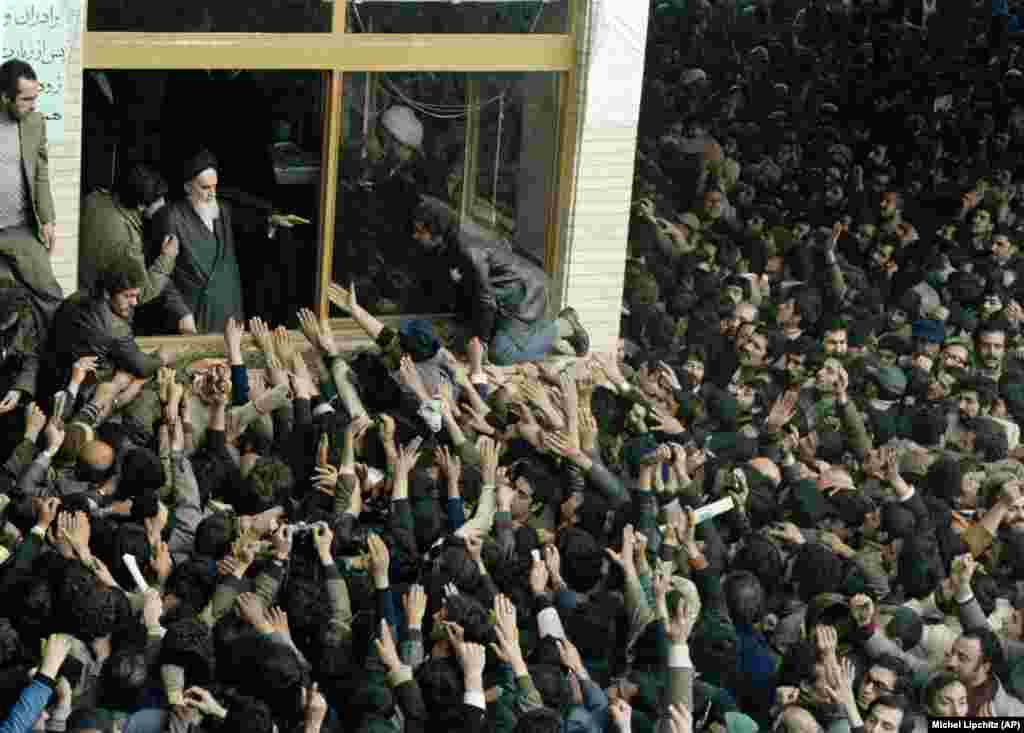
21/30Khomeini with his son, Ahmad, addressing crowds on February 4, 1979.
Forty years ago, Ayatollah Ruhollah Khomeini spearheaded an Islamic Revolution that deposed Iran's shah. The country's authoritarian monarchy was replaced by a repressive theocracy, and almost overnight, Iran was transformed from a crucial U.S. ally to bitter foe.
Show moreShow less
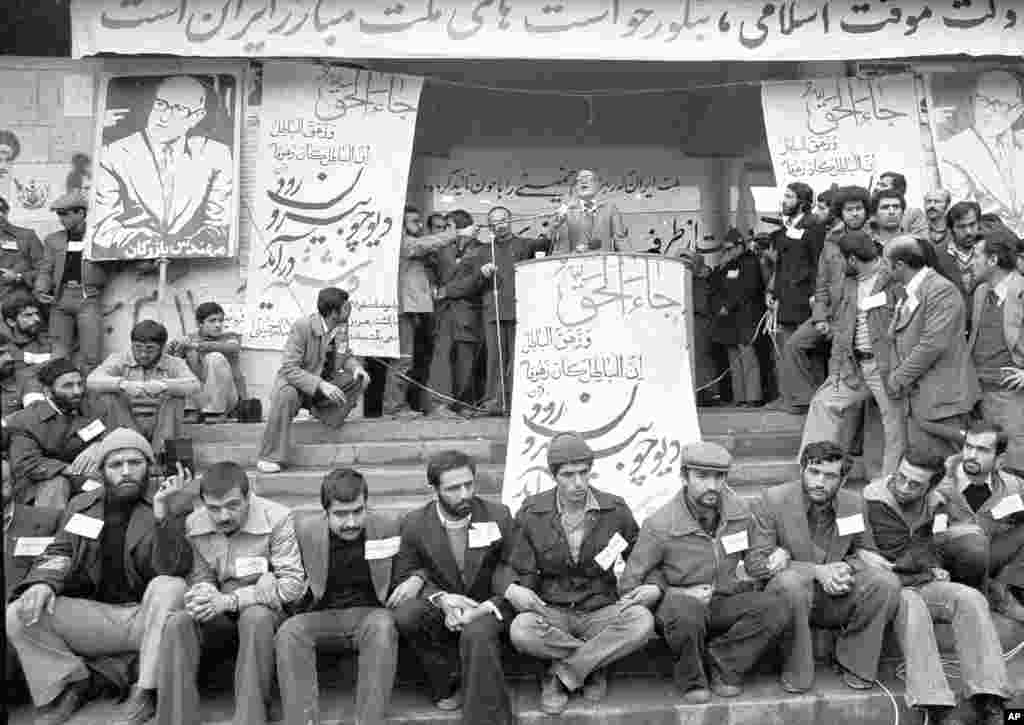
22/30Heavily guarded by security, Mehdi Bazargan makes a speech at Tehran University on February 9, 1979. Bazargan was Ayatollah Ruhollah Khomeini's choice to take over Iran's government. Bazargan declared he would introduce Allah to all phases of Iranian life, revamp the economy, and hold free elections before resigning to make way for an Islamic regime.
Forty years ago, Ayatollah Ruhollah Khomeini spearheaded an Islamic Revolution that deposed Iran's shah. The country's authoritarian monarchy was replaced by a repressive theocracy, and almost overnight, Iran was transformed from a crucial U.S. ally to bitter foe.
Show moreShow less
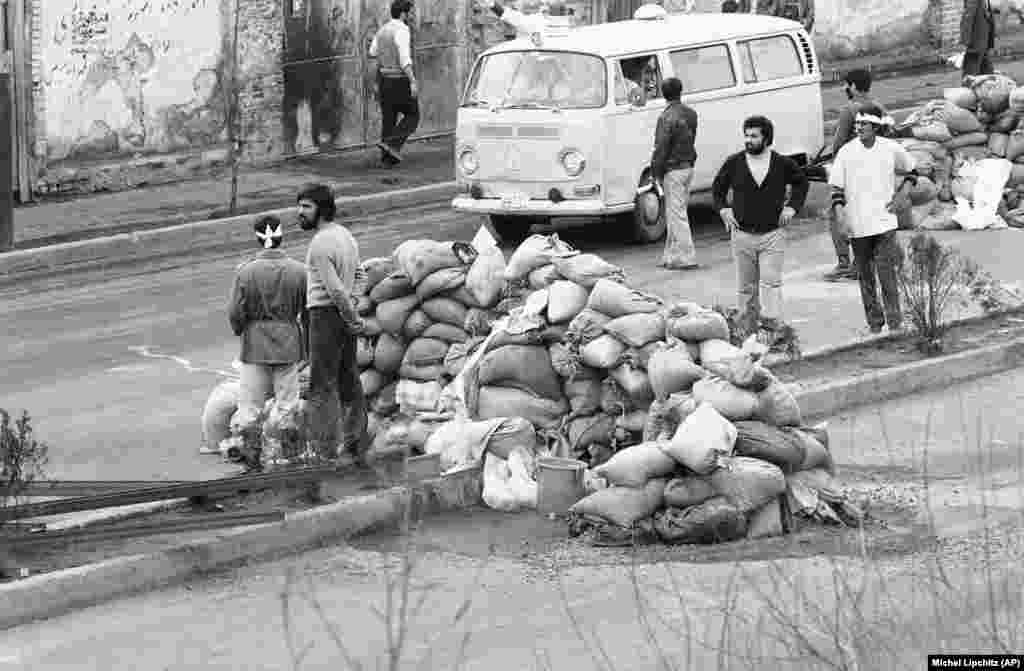
23/30An ambulance passes sandbag roadblocks in Tehran to pick up the wounded from street clashes on February 10, 1979. A shootout between the army, air force cadets, and Khomeini followers left more than 60 people dead and hundreds injured.
Forty years ago, Ayatollah Ruhollah Khomeini spearheaded an Islamic Revolution that deposed Iran's shah. The country's authoritarian monarchy was replaced by a repressive theocracy, and almost overnight, Iran was transformed from a crucial U.S. ally to bitter foe.
Show moreShow less
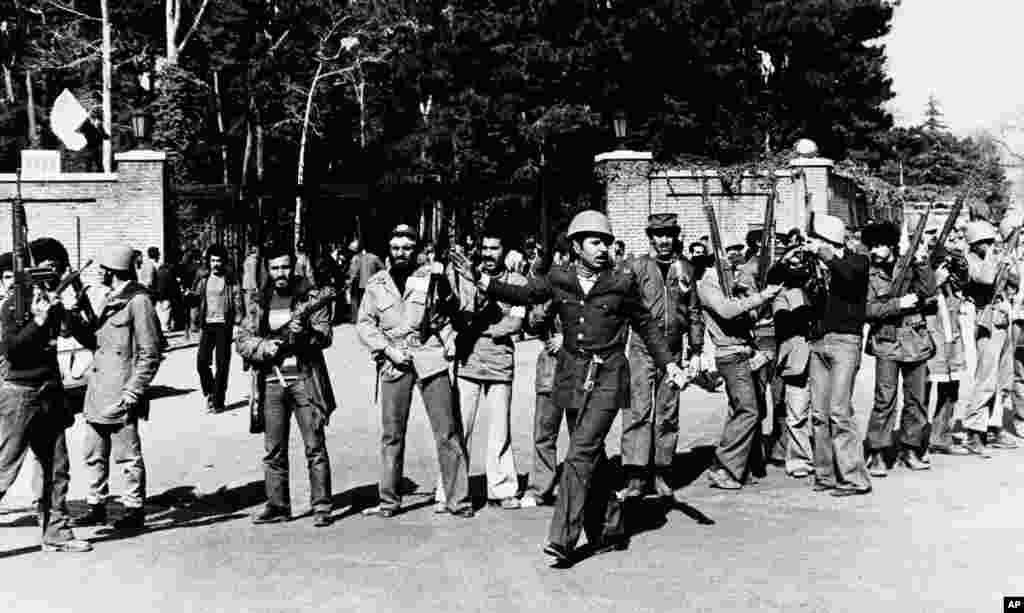
24/30Armed men loyal to the Ayatollah stand in front of the U.S. Embassy in Tehran on February 15, 1979, a day after the compound was stormed. The embassy was briefly held for a few hours before being handed back to the United States. A second attempt to seize the U.S. Embassy would be made in November, leading to a 444-day hostage crisis.
Forty years ago, Ayatollah Ruhollah Khomeini spearheaded an Islamic Revolution that deposed Iran's shah. The country's authoritarian monarchy was replaced by a repressive theocracy, and almost overnight, Iran was transformed from a crucial U.S. ally to bitter foe.
Show moreShow less
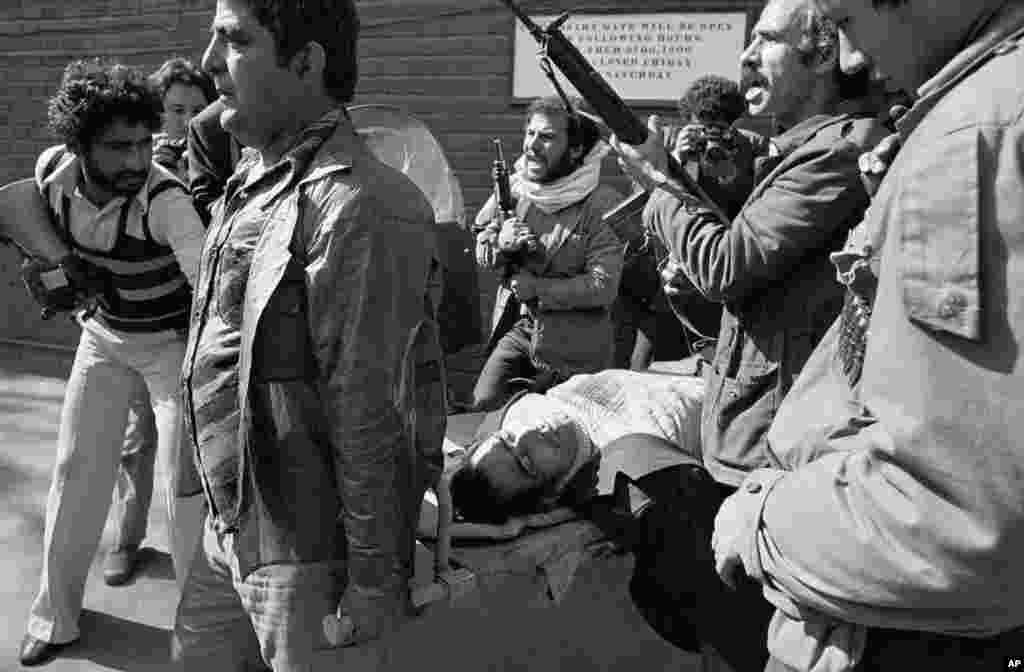
25/30A shooting victim is carried away from the U.S. Embassy by armed men loyal to Ayatollah Khomeini after they had stormed the compound.
Forty years ago, Ayatollah Ruhollah Khomeini spearheaded an Islamic Revolution that deposed Iran's shah. The country's authoritarian monarchy was replaced by a repressive theocracy, and almost overnight, Iran was transformed from a crucial U.S. ally to bitter foe.
Show moreShow less
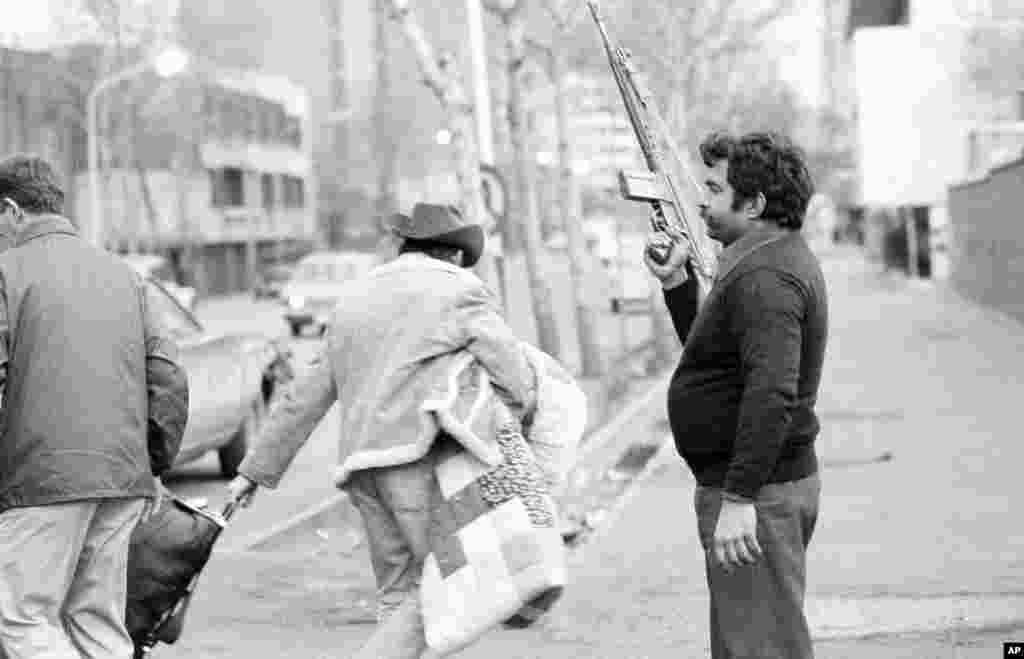
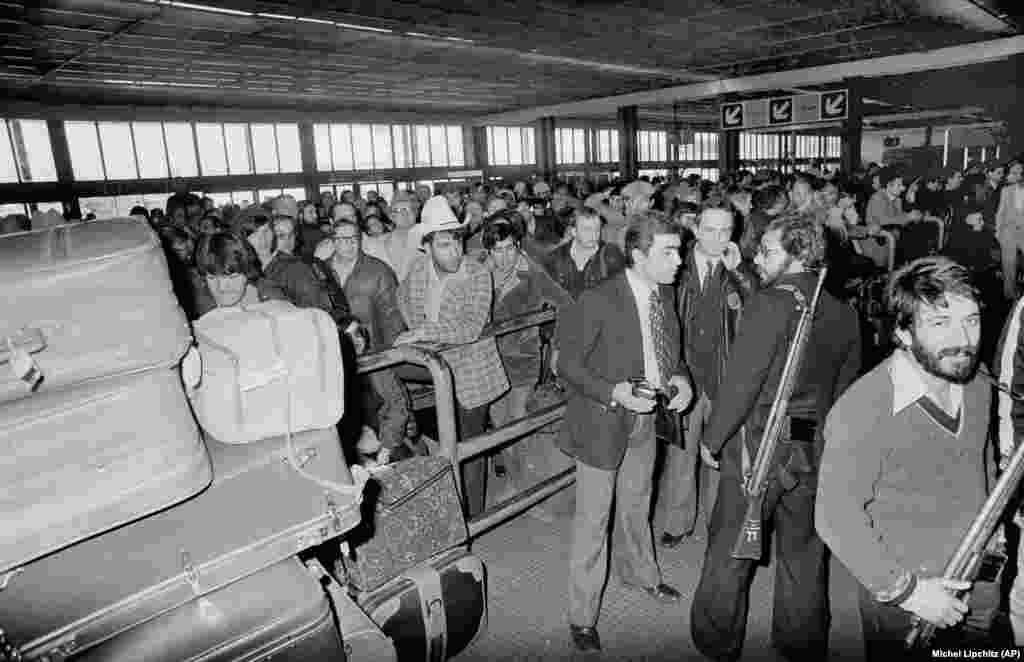
26/30A U.S.citizen carries belongings past an armed Khomeini loyalist who is guarding an evacuee staging area in Tehran on February 17, 1979. Hundreds of Americans began to flee Iran following the first attempt to seize the U.S. Embassy.
Forty years ago, Ayatollah Ruhollah Khomeini spearheaded an Islamic Revolution that deposed Iran's shah. The country's authoritarian monarchy was replaced by a repressive theocracy, and almost overnight, Iran was transformed from a crucial U.S. ally to bitter foe.
Show moreShow less
27/30Armed men loyal to Ayatollah Khomeini stand guard at Teheran's Mehrabad International Airport on February 18, 1979. Hundreds of U.S. citizens attempted to board an evacuation flight to leave Iran.
Forty years ago, Ayatollah Ruhollah Khomeini spearheaded an Islamic Revolution that deposed Iran's shah. The country's authoritarian monarchy was replaced by a repressive theocracy, and almost overnight, Iran was transformed from a crucial U.S. ally to bitter foe.
Show moreShow less
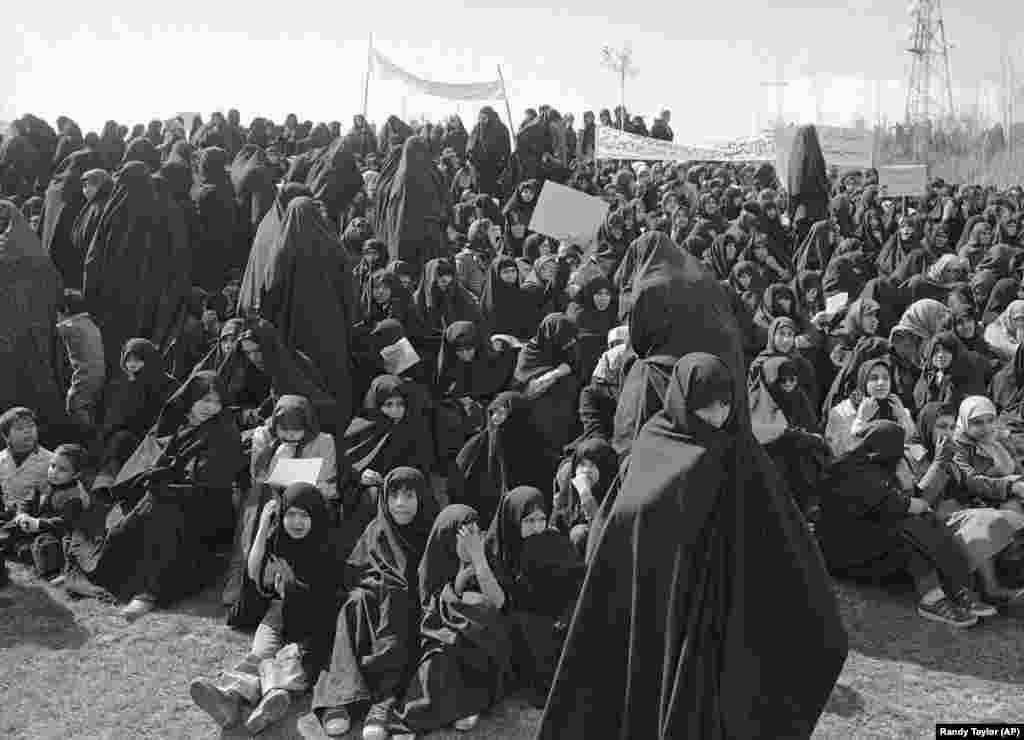
28/30Tens of thousands of Iranian women gather in Tehran on March 16, 1979, to support Ayatollah Khomeini's call for women to adhere to Islamic laws. This included the wearing of a long black garment, the chador.
Forty years ago, Ayatollah Ruhollah Khomeini spearheaded an Islamic Revolution that deposed Iran's shah. The country's authoritarian monarchy was replaced by a repressive theocracy, and almost overnight, Iran was transformed from a crucial U.S. ally to bitter foe.
Show moreShow less
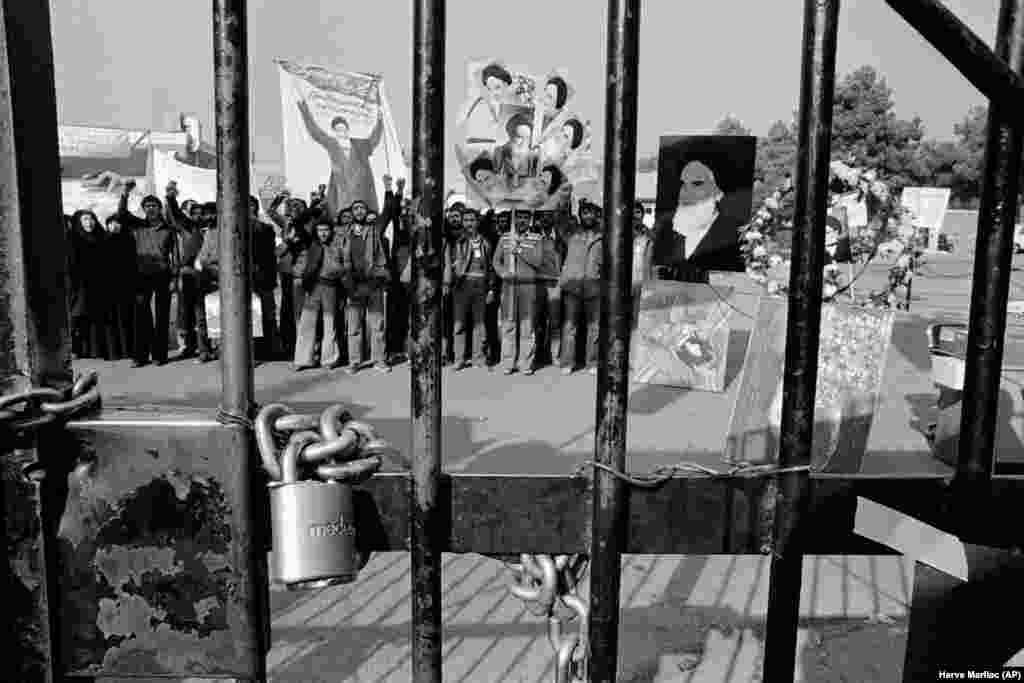
29/30A padlock on the gate of the U.S. Embassy in Tehran on November 27, 1979, with students demonstrating inside after taking control of the compound. They took 52 Americans hostage and demanded the Shah be returned to Iran. The Iran hostage crisis would last 444 days until January 1981.
Forty years ago, Ayatollah Ruhollah Khomeini spearheaded an Islamic Revolution that deposed Iran's shah. The country's authoritarian monarchy was replaced by a repressive theocracy, and almost overnight, Iran was transformed from a crucial U.S. ally to bitter foe.
Show moreShow less
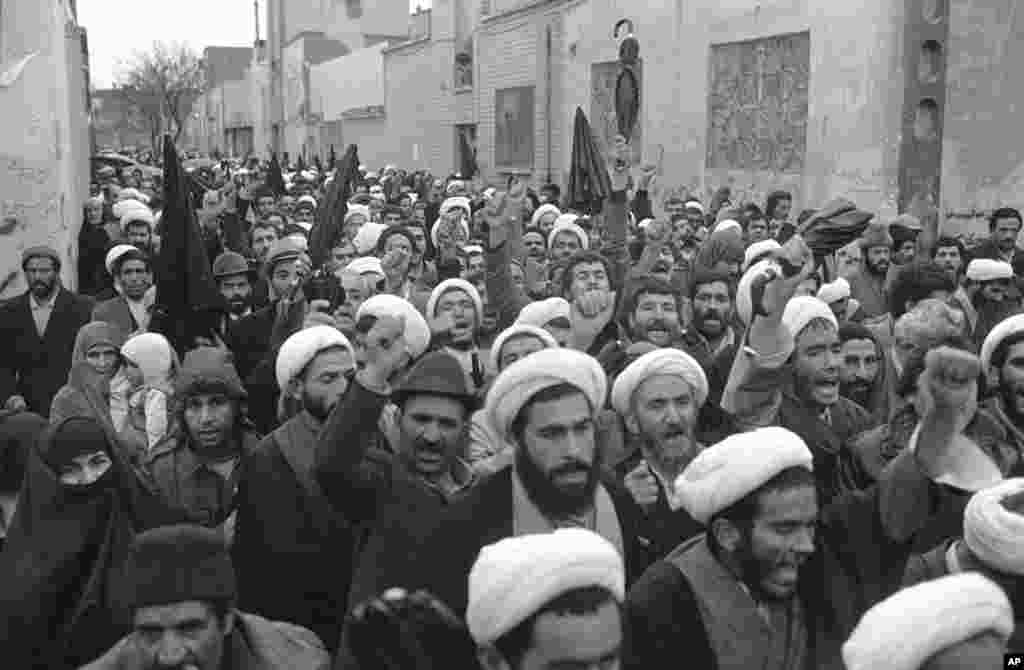
30/30Mullahs march past Ayatollah Khomeini's house in Qom on December 17, 1979 in display of solidarity with the Iranian leader. Khomeini became Iran's Supreme Leader that month.
Forty years ago, Ayatollah Ruhollah Khomeini spearheaded an Islamic Revolution that deposed Iran's shah. The country's authoritarian monarchy was replaced by a repressive theocracy, and almost overnight, Iran was transformed from a crucial U.S. ally to bitter foe.
Show moreShow less
Previous slide
Next slide
This year's celebrations come amid heightened tensions with the United States, which last year withdrew from the 2015 nuclear agreement between Tehran and world powers and reimposed tough sanctions on the Iranian economy.
In a tweet that was also sent out in Persian, Trump said: "40 years of corruption. 40 years of repression. 40 years of terror. The regime in Iran has produced only #40YearsofFailure."
"The long-suffering Iranian people deserve a much brighter future," he added.
Earlier on February 11, Trump's national-security adviser, John Bolton, tweeted: "It's been 40 yrs of failure. Now it's up to the Iranian regime to change its behavior, & ultimately up to the Iranian people to determine the direction of their country."
Iran's Islamic Revolution four decades ago inflicted "failure and broken promises" on the country, Bolton said, adding that Washington would support "the will of the Iranian people, & stand behind them to ensure their voices are heard."
European signatories of the 2015 deal, under which Tehran pledged to curb its nuclear activities in exchange for sanctions relief, have been trying to save the accord.
In a February 8 speech to a gathering of Iranian Army Air Force officers, Iran's Supreme Leader Ayatollah Ali Khamenei said that Iran will not give up the “Death to America” chant as long as Washington continues its hostile policies toward Tehran.
In his address on Tehran’s Azadi Square, Rohani said the "enemy will never reach its evil objectives," vowing that Iran will defeat U.S. sanctions.
"The Iranian people have and will have some economic difficulties but we will overcome the problems by helping each other," he said.
Iran’s president also insisted that Iranians “have not asked and will not ask for permission” to develop different types of missiles, Rohani said.
Following reports of a second failed space launch by Iran in less than a month, the U.S. State Department last week called for “tougher international restrictions to deter Iran’s missile program.”
The European Union has also criticized Iran over its "destabilizing" ballistic-missile program, its "hostile activities" in several EU member states, and its meddling in countries in the Middle East.
Dismissing calls that Iranian regional influence should be curbed, the deputy commander of Iran's Islamic Revolutionary Guards Corps (IRGC) was quoted as saying on February 11 that "the enemy cannot ask us to leave the region.”
“They must leave the region," Brigadier General Hossein Salami said.
Ahead of the celebrations, Iranian officials announced that up to 50,000 prisoners would either be released or have their sentences reduced.
According to official figures, nearly 250,000 people are incarcerated in Iran.
It was not clear whether the amnesty would also apply to political prisoners.
Citing leaked Iranian Judiciary documents, the Paris-based media watchdog also said that the authorities had arrested, imprisoned, or executed at least 860 journalists in the three decades between the 1979 revolution and 2009.
RFE/RL journalists report the news in 24 languages in 18 countries where a free press is banned by the government or not fully established. We provide what many people cannot get locally: uncensored news, responsible discussion, and open debate.