-- Self-appointed leaders of the Ukrainian separatist region of Donetsk appealed to Russia to consider absorbing it to "restore historic justice" and to send in troops.
-- Pro-Russian separatists in the eastern Ukrainian region of Luhansk said they would not allow voting for the May 25 presidential election to be conducted.
-- Diplomats say the European Union agreed to impose sanctions against 13 additional individuals and two companies, believed to be the first time the EU has targeted companies over the Ukraine crisis.
-- Ukrainian President Oleksandr Turchynov called the votes a "sham" and the United States said they were illegal and merely "an attempt to create further division and disorder in the country."
-- RFE/RL's Ukrainian Service said one of its affiliate radio stations in Donetsk was taken off the air by gunmen and replaced by a pro-Russian broadcaster.
-- The Kremlin said Ukrainian officials in Kyiv should hold talks with pro-Russian separatists on the results of the self-rule referendums, adding that it respected the "expression of the people's will."
A reminder that correspondent Robert Coalson's terrific photo gallery explains why the Crimean campaign means so much to Moscow.
The Siege Of Sevastopol: Why The Crimean Campaign Means So Much To Moscow
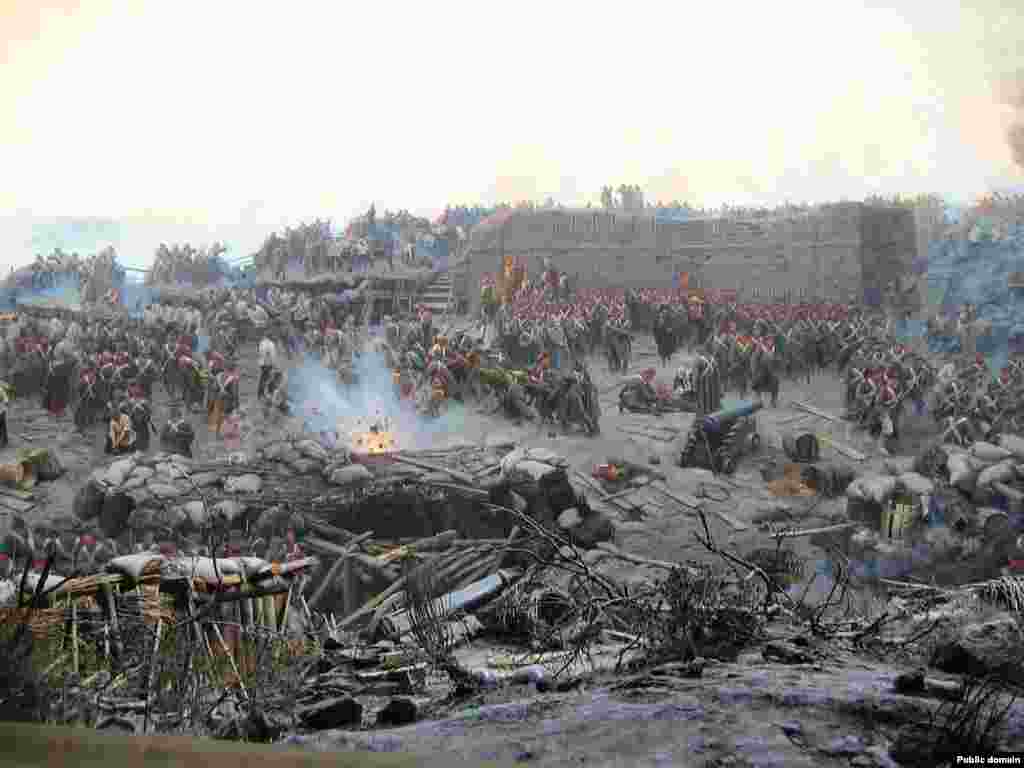
1/12Since its founding in 1783, the port city of Sevastopol has played a crucial role in Russian history. It is the home of Russia's Black Sea Fleet and a commercial seaport. For 11 months in 1854-55, the city was besieged by British, French, and other forces during the Crimean War. After a brave defense, the beleaguered Russians were forced to scuttle the entire fleet and evacuate the ruined city.
(Detail of Franz Roubaud's panoramic painting "The Siege of Sevastopol, October 1853-February 1856")
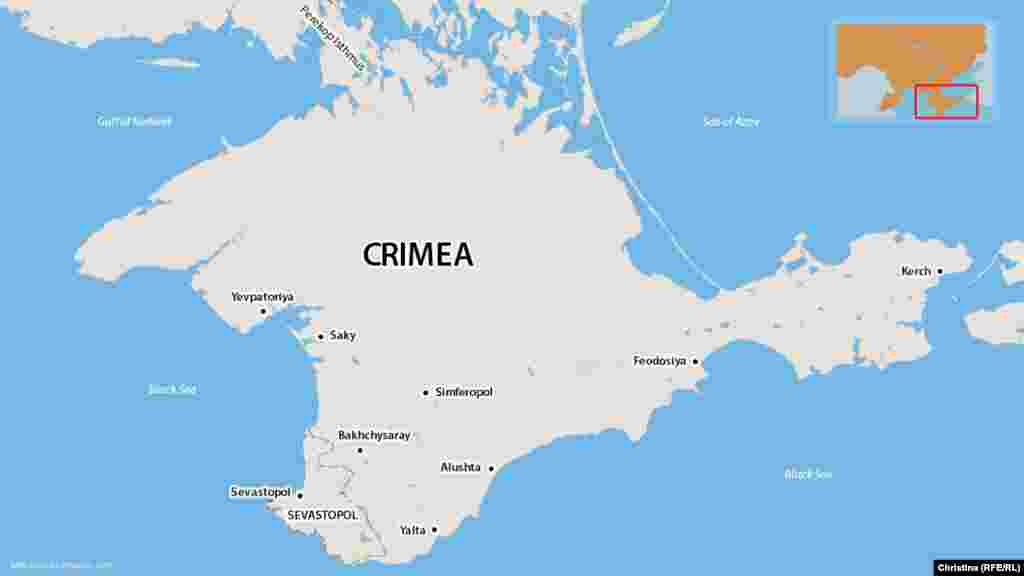
The fierce fighting on the Crimean Peninsula -- and particularly around the strategic port city of Sevastopol -- is one of the most dramatic and impressive pages of the Soviet Union's struggle during World War II. The story highlights the courage and endurance of the Red Army and Soviet civilians. And the Crimean campaign was one of the only bright spots for the Soviet Union during the dark, desperate days of the first two years of the war. In May 1945, Soviet leader Josef Stalin named Sevastopol -- together with Leningrad, Stalingrad, and Odesa -- as the first four "hero cities" of the Soviet Union. Crimea was conquered by the Russian Empire in the 18th century. For most of the Soviet period, it was part of the Russian republic. However, in 1954, the Soviet government transferred it to the Ukrainian republic. After the collapse of the Soviet Union, Russia and the international community agreed to retain Crimea within the borders of the newly independent Ukraine. In March, however, Russia annexed the peninsula following a hastily called referendum, provoking a major international crisis and sparking instability that has since spread to other parts of Ukraine. Russian President Vladimir Putin is expected to attend Victory Day celebrations in Sevastopol on May 9, which marks both the 69th anniversary of victory over Nazi Germany and the 70th anniversary of the liberation of Sevastopol from German occupation. Pride in the Soviet achievements during World War II has played a major role in Moscow's bid to strengthen its influence in the former Soviet states. -- Robert Coalson
Show moreShow less
2/12Crimea was of huge strategic significance during World War II. From bases in and around Sevastopol, the Soviet Union could launch air raids against the Romanian oil fields at Ploiesti, which were crucial to the Nazi war machine. In addition, the German armies -- advancing rapidly through the Soviet Union in the summers of 1941 and 1942 -- hoped to be able to fight through the Kerch Strait and drive on to capture the Soviet oil fields in the Caucasus. Such a maneuver would also enable them to outflank defenders at the crucial Soviet cities of Rostov-on-Don and Stalingrad from the south. Finally, Hitler had a personal fetish for capturing "trophy cities" such as Leningrad, Stalingrad, and Sevastopol.
The fierce fighting on the Crimean Peninsula -- and particularly around the strategic port city of Sevastopol -- is one of the most dramatic and impressive pages of the Soviet Union's struggle during World War II. The story highlights the courage and endurance of the Red Army and Soviet civilians. And the Crimean campaign was one of the only bright spots for the Soviet Union during the dark, desperate days of the first two years of the war. In May 1945, Soviet leader Josef Stalin named Sevastopol -- together with Leningrad, Stalingrad, and Odesa -- as the first four "hero cities" of the Soviet Union. Crimea was conquered by the Russian Empire in the 18th century. For most of the Soviet period, it was part of the Russian republic. However, in 1954, the Soviet government transferred it to the Ukrainian republic. After the collapse of the Soviet Union, Russia and the international community agreed to retain Crimea within the borders of the newly independent Ukraine. In March, however, Russia annexed the peninsula following a hastily called referendum, provoking a major international crisis and sparking instability that has since spread to other parts of Ukraine. Russian President Vladimir Putin is expected to attend Victory Day celebrations in Sevastopol on May 9, which marks both the 69th anniversary of victory over Nazi Germany and the 70th anniversary of the liberation of Sevastopol from German occupation. Pride in the Soviet achievements during World War II has played a major role in Moscow's bid to strengthen its influence in the former Soviet states. -- Robert Coalson
Show moreShow less
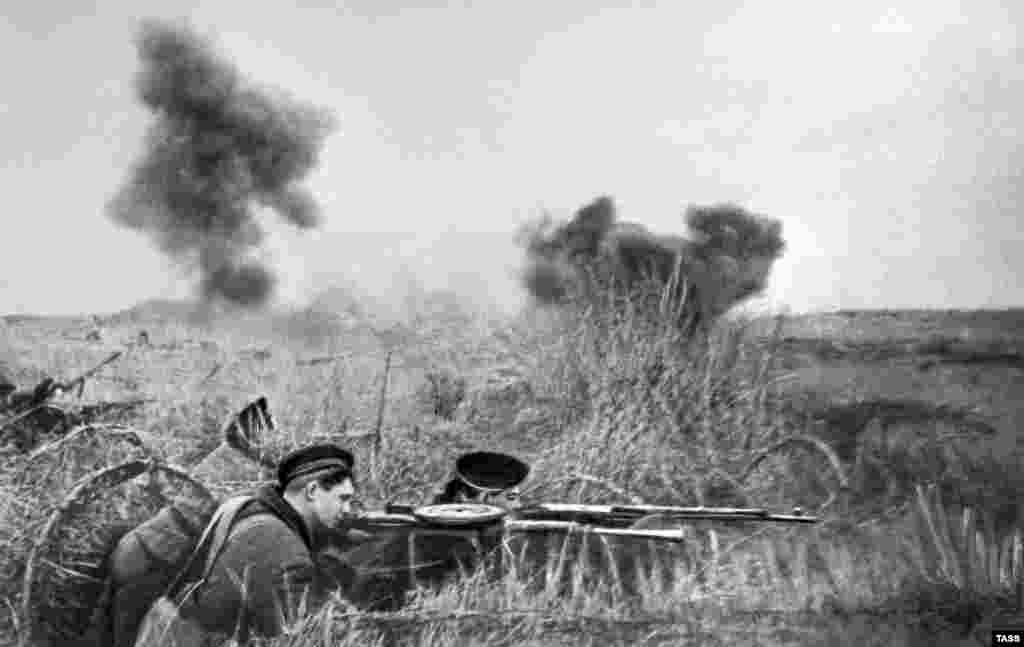
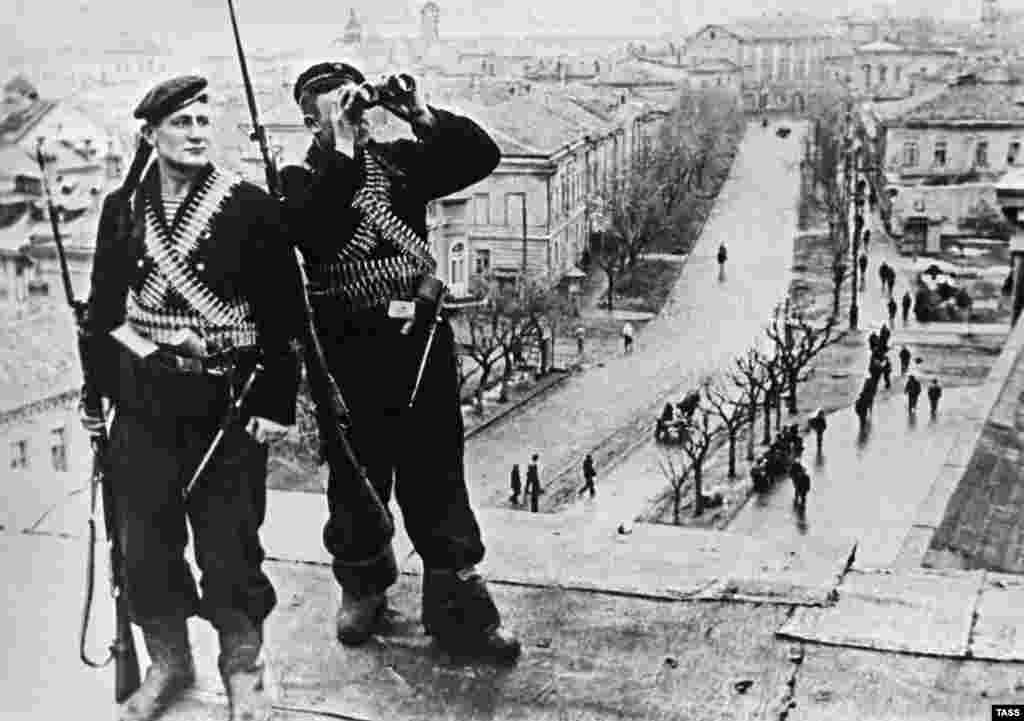
3/12During the siege of Sevastopol, Soviet forces used all resources available. Black Sea Fleet sailors and marines were pressed into infantry duty. The more than 100,000 civilians in Sevastopol at the time of the siege were also mustered into service, performing duties such as building fortifications and moving supplies from the port to the defense perimeter.
(Red Army Marines manning the defensive lines around Sevastopol in 1942)
The fierce fighting on the Crimean Peninsula -- and particularly around the strategic port city of Sevastopol -- is one of the most dramatic and impressive pages of the Soviet Union's struggle during World War II. The story highlights the courage and endurance of the Red Army and Soviet civilians. And the Crimean campaign was one of the only bright spots for the Soviet Union during the dark, desperate days of the first two years of the war. In May 1945, Soviet leader Josef Stalin named Sevastopol -- together with Leningrad, Stalingrad, and Odesa -- as the first four "hero cities" of the Soviet Union. Crimea was conquered by the Russian Empire in the 18th century. For most of the Soviet period, it was part of the Russian republic. However, in 1954, the Soviet government transferred it to the Ukrainian republic. After the collapse of the Soviet Union, Russia and the international community agreed to retain Crimea within the borders of the newly independent Ukraine. In March, however, Russia annexed the peninsula following a hastily called referendum, provoking a major international crisis and sparking instability that has since spread to other parts of Ukraine. Russian President Vladimir Putin is expected to attend Victory Day celebrations in Sevastopol on May 9, which marks both the 69th anniversary of victory over Nazi Germany and the 70th anniversary of the liberation of Sevastopol from German occupation. Pride in the Soviet achievements during World War II has played a major role in Moscow's bid to strengthen its influence in the former Soviet states. -- Robert Coalson
Show moreShow less
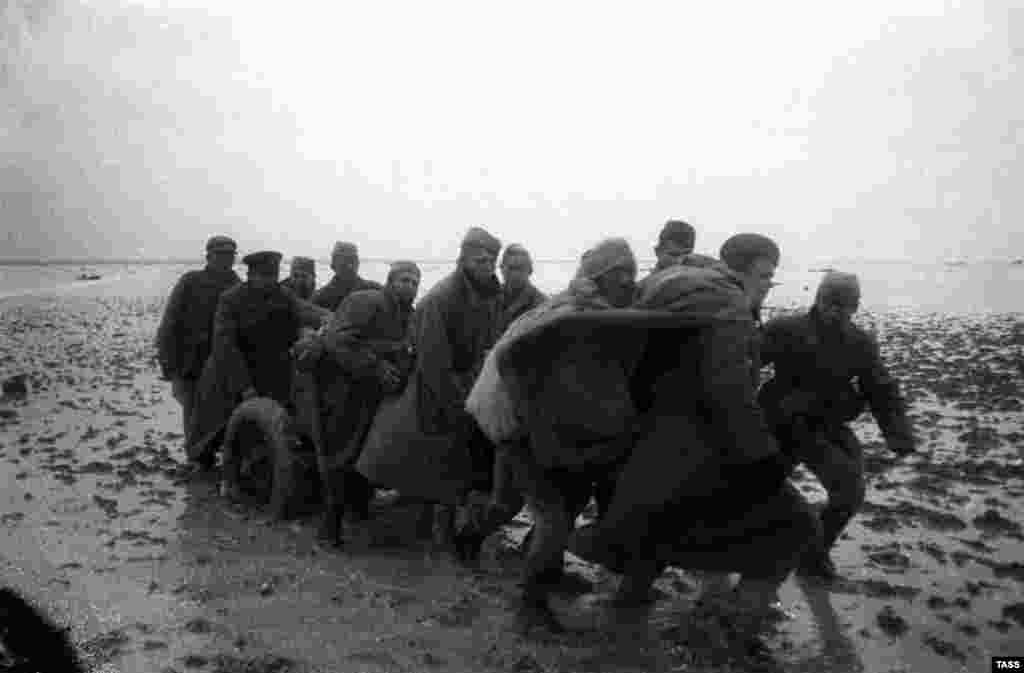
4/12After the German defeat at Stalingrad in February 1943, the tide on the Soviet-German front began to shift. In late 1943, the Soviets prepared to retake Crimea by a combined assault across the Kerch Strait and down the Perekop Isthmus. The Soviets forced German prisoners of war to build walkways through the shallow Syvash Sea to enable Red Army forces to support the attack on the isthmus. By April 1944, the Germans had been pushed back into Sevastopol and the Red Army began its assault on the port.
(Soviet soldiers crossing the Syvash Sea into Crimea in late 1943)
The fierce fighting on the Crimean Peninsula -- and particularly around the strategic port city of Sevastopol -- is one of the most dramatic and impressive pages of the Soviet Union's struggle during World War II. The story highlights the courage and endurance of the Red Army and Soviet civilians. And the Crimean campaign was one of the only bright spots for the Soviet Union during the dark, desperate days of the first two years of the war. In May 1945, Soviet leader Josef Stalin named Sevastopol -- together with Leningrad, Stalingrad, and Odesa -- as the first four "hero cities" of the Soviet Union. Crimea was conquered by the Russian Empire in the 18th century. For most of the Soviet period, it was part of the Russian republic. However, in 1954, the Soviet government transferred it to the Ukrainian republic. After the collapse of the Soviet Union, Russia and the international community agreed to retain Crimea within the borders of the newly independent Ukraine. In March, however, Russia annexed the peninsula following a hastily called referendum, provoking a major international crisis and sparking instability that has since spread to other parts of Ukraine. Russian President Vladimir Putin is expected to attend Victory Day celebrations in Sevastopol on May 9, which marks both the 69th anniversary of victory over Nazi Germany and the 70th anniversary of the liberation of Sevastopol from German occupation. Pride in the Soviet achievements during World War II has played a major role in Moscow's bid to strengthen its influence in the former Soviet states. -- Robert Coalson
Show moreShow less
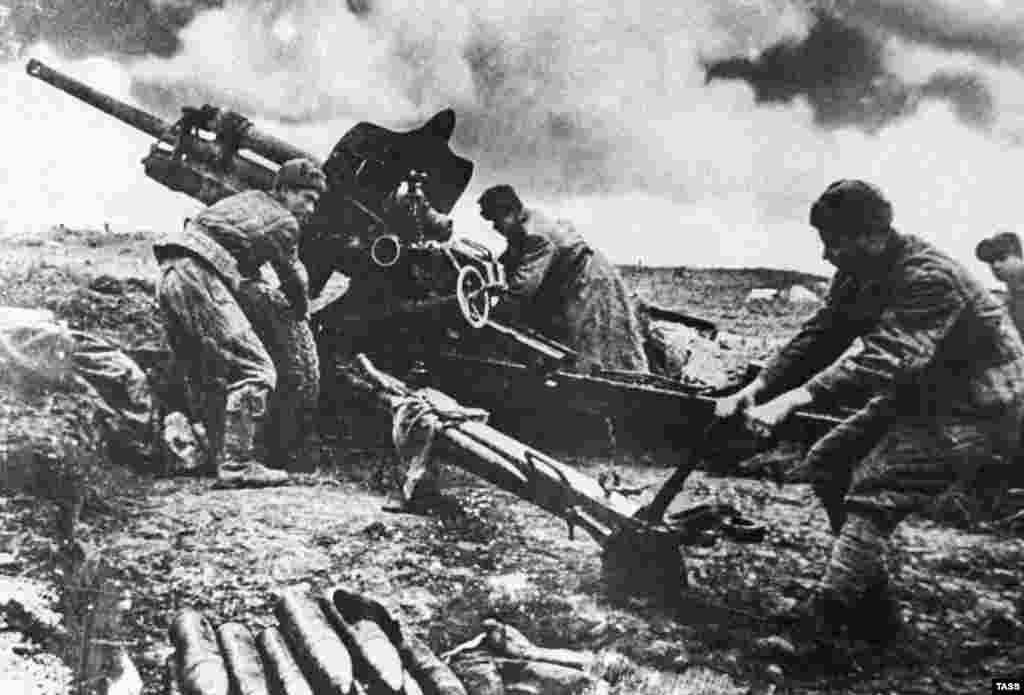
5/12(Soviet artillery firing during a battle on the Kerch Peninsula in 1944)
The fierce fighting on the Crimean Peninsula -- and particularly around the strategic port city of Sevastopol -- is one of the most dramatic and impressive pages of the Soviet Union's struggle during World War II. The story highlights the courage and endurance of the Red Army and Soviet civilians. And the Crimean campaign was one of the only bright spots for the Soviet Union during the dark, desperate days of the first two years of the war. In May 1945, Soviet leader Josef Stalin named Sevastopol -- together with Leningrad, Stalingrad, and Odesa -- as the first four "hero cities" of the Soviet Union. Crimea was conquered by the Russian Empire in the 18th century. For most of the Soviet period, it was part of the Russian republic. However, in 1954, the Soviet government transferred it to the Ukrainian republic. After the collapse of the Soviet Union, Russia and the international community agreed to retain Crimea within the borders of the newly independent Ukraine. In March, however, Russia annexed the peninsula following a hastily called referendum, provoking a major international crisis and sparking instability that has since spread to other parts of Ukraine. Russian President Vladimir Putin is expected to attend Victory Day celebrations in Sevastopol on May 9, which marks both the 69th anniversary of victory over Nazi Germany and the 70th anniversary of the liberation of Sevastopol from German occupation. Pride in the Soviet achievements during World War II has played a major role in Moscow's bid to strengthen its influence in the former Soviet states. -- Robert Coalson
Show moreShow less
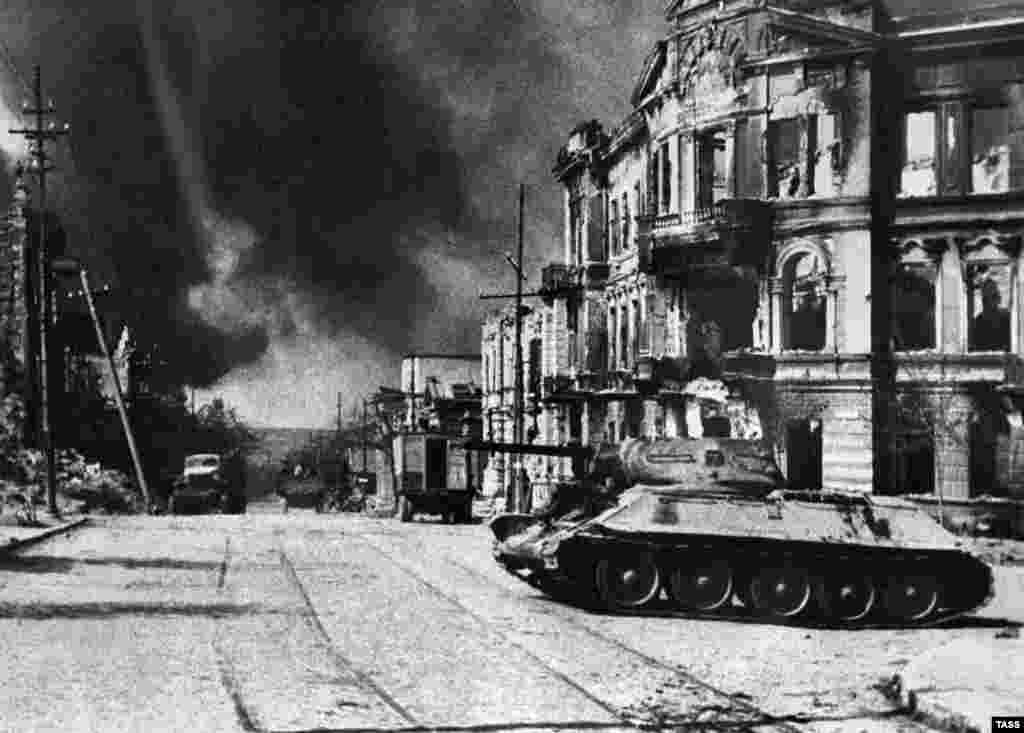
6/12The Germans did not have the time or the resources to rebuild the defenses of Sevastopol. However, the fighting among the ruins was brutal. Hitler's generals advised him to evacuate the city to avoid "another Stalingrad," but he insisted that it be held at all costs.
(Street fighting in Sevastopol in the spring of 1944)
The fierce fighting on the Crimean Peninsula -- and particularly around the strategic port city of Sevastopol -- is one of the most dramatic and impressive pages of the Soviet Union's struggle during World War II. The story highlights the courage and endurance of the Red Army and Soviet civilians. And the Crimean campaign was one of the only bright spots for the Soviet Union during the dark, desperate days of the first two years of the war. In May 1945, Soviet leader Josef Stalin named Sevastopol -- together with Leningrad, Stalingrad, and Odesa -- as the first four "hero cities" of the Soviet Union. Crimea was conquered by the Russian Empire in the 18th century. For most of the Soviet period, it was part of the Russian republic. However, in 1954, the Soviet government transferred it to the Ukrainian republic. After the collapse of the Soviet Union, Russia and the international community agreed to retain Crimea within the borders of the newly independent Ukraine. In March, however, Russia annexed the peninsula following a hastily called referendum, provoking a major international crisis and sparking instability that has since spread to other parts of Ukraine. Russian President Vladimir Putin is expected to attend Victory Day celebrations in Sevastopol on May 9, which marks both the 69th anniversary of victory over Nazi Germany and the 70th anniversary of the liberation of Sevastopol from German occupation. Pride in the Soviet achievements during World War II has played a major role in Moscow's bid to strengthen its influence in the former Soviet states. -- Robert Coalson
Show moreShow less
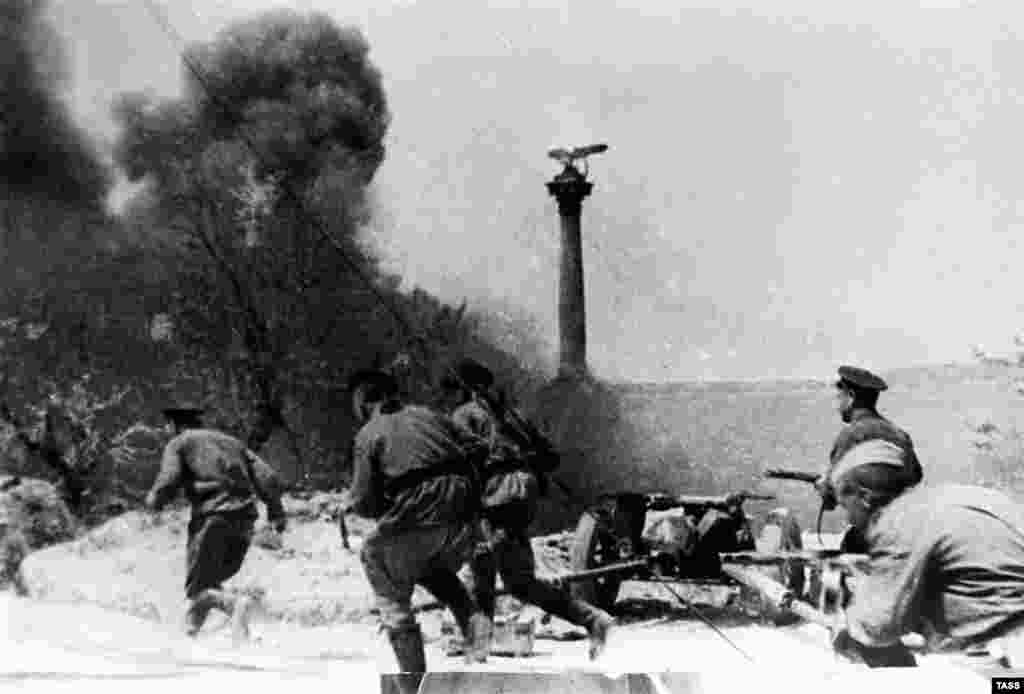
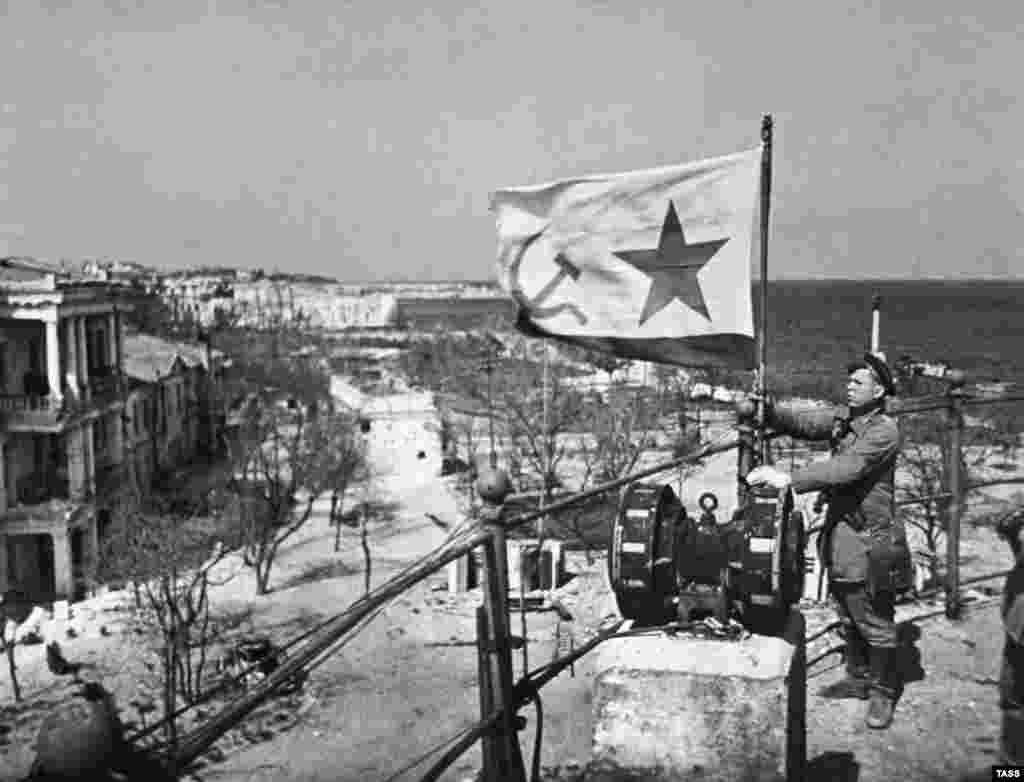
7/12The German forces began evacuating the city in early May 1944. Many of the transport ships were sunk by Soviet bombers. On May 10, bombers sunk the "Totila" and the "Teja" with a loss of some 10,000 lives. In all, the Axis forces lost nearly 60,000 men.
(Soviet forces recaptured Sevastopol on May 9, 1944.)
The fierce fighting on the Crimean Peninsula -- and particularly around the strategic port city of Sevastopol -- is one of the most dramatic and impressive pages of the Soviet Union's struggle during World War II. The story highlights the courage and endurance of the Red Army and Soviet civilians. And the Crimean campaign was one of the only bright spots for the Soviet Union during the dark, desperate days of the first two years of the war. In May 1945, Soviet leader Josef Stalin named Sevastopol -- together with Leningrad, Stalingrad, and Odesa -- as the first four "hero cities" of the Soviet Union. Crimea was conquered by the Russian Empire in the 18th century. For most of the Soviet period, it was part of the Russian republic. However, in 1954, the Soviet government transferred it to the Ukrainian republic. After the collapse of the Soviet Union, Russia and the international community agreed to retain Crimea within the borders of the newly independent Ukraine. In March, however, Russia annexed the peninsula following a hastily called referendum, provoking a major international crisis and sparking instability that has since spread to other parts of Ukraine. Russian President Vladimir Putin is expected to attend Victory Day celebrations in Sevastopol on May 9, which marks both the 69th anniversary of victory over Nazi Germany and the 70th anniversary of the liberation of Sevastopol from German occupation. Pride in the Soviet achievements during World War II has played a major role in Moscow's bid to strengthen its influence in the former Soviet states. -- Robert Coalson
Show moreShow less
8/12(Lenin Street in Sevastopol on May 9, 1944)
The fierce fighting on the Crimean Peninsula -- and particularly around the strategic port city of Sevastopol -- is one of the most dramatic and impressive pages of the Soviet Union's struggle during World War II. The story highlights the courage and endurance of the Red Army and Soviet civilians. And the Crimean campaign was one of the only bright spots for the Soviet Union during the dark, desperate days of the first two years of the war. In May 1945, Soviet leader Josef Stalin named Sevastopol -- together with Leningrad, Stalingrad, and Odesa -- as the first four "hero cities" of the Soviet Union. Crimea was conquered by the Russian Empire in the 18th century. For most of the Soviet period, it was part of the Russian republic. However, in 1954, the Soviet government transferred it to the Ukrainian republic. After the collapse of the Soviet Union, Russia and the international community agreed to retain Crimea within the borders of the newly independent Ukraine. In March, however, Russia annexed the peninsula following a hastily called referendum, provoking a major international crisis and sparking instability that has since spread to other parts of Ukraine. Russian President Vladimir Putin is expected to attend Victory Day celebrations in Sevastopol on May 9, which marks both the 69th anniversary of victory over Nazi Germany and the 70th anniversary of the liberation of Sevastopol from German occupation. Pride in the Soviet achievements during World War II has played a major role in Moscow's bid to strengthen its influence in the former Soviet states. -- Robert Coalson
Show moreShow less
9/12The last pockets of Axis resistance on Crimea were eliminated by May 12, 1944.
(Soviet Marines occupying a position near Kerch in 1944)
The fierce fighting on the Crimean Peninsula -- and particularly around the strategic port city of Sevastopol -- is one of the most dramatic and impressive pages of the Soviet Union's struggle during World War II. The story highlights the courage and endurance of the Red Army and Soviet civilians. And the Crimean campaign was one of the only bright spots for the Soviet Union during the dark, desperate days of the first two years of the war. In May 1945, Soviet leader Josef Stalin named Sevastopol -- together with Leningrad, Stalingrad, and Odesa -- as the first four "hero cities" of the Soviet Union. Crimea was conquered by the Russian Empire in the 18th century. For most of the Soviet period, it was part of the Russian republic. However, in 1954, the Soviet government transferred it to the Ukrainian republic. After the collapse of the Soviet Union, Russia and the international community agreed to retain Crimea within the borders of the newly independent Ukraine. In March, however, Russia annexed the peninsula following a hastily called referendum, provoking a major international crisis and sparking instability that has since spread to other parts of Ukraine. Russian President Vladimir Putin is expected to attend Victory Day celebrations in Sevastopol on May 9, which marks both the 69th anniversary of victory over Nazi Germany and the 70th anniversary of the liberation of Sevastopol from German occupation. Pride in the Soviet achievements during World War II has played a major role in Moscow's bid to strengthen its influence in the former Soviet states. -- Robert Coalson
Show moreShow less
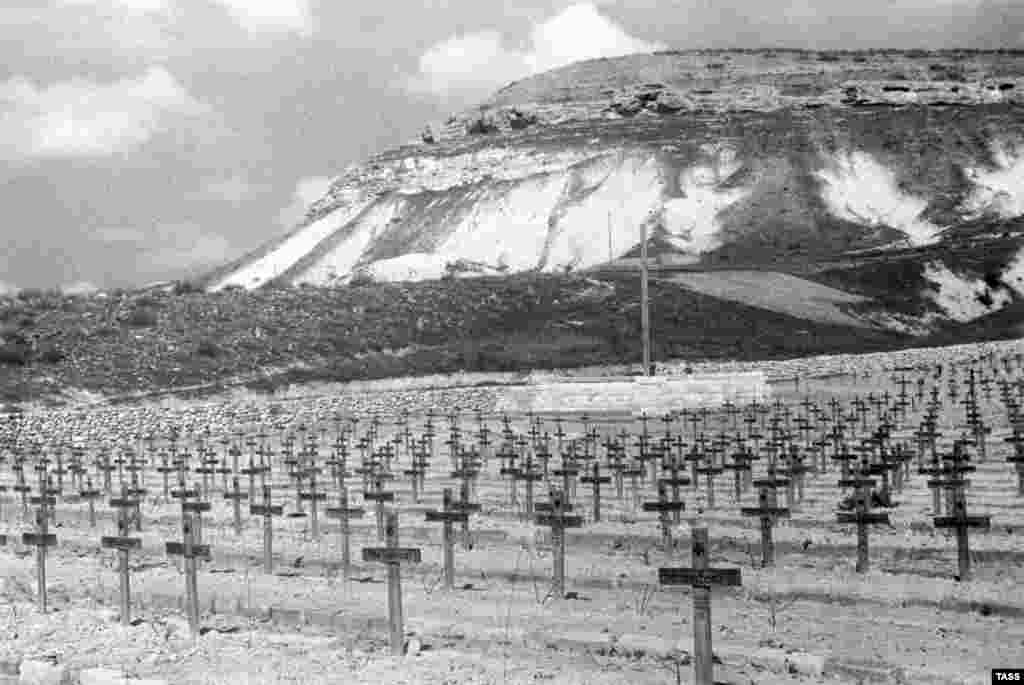
10/12(A German military cemetery near Sevastopol in 1944)
The fierce fighting on the Crimean Peninsula -- and particularly around the strategic port city of Sevastopol -- is one of the most dramatic and impressive pages of the Soviet Union's struggle during World War II. The story highlights the courage and endurance of the Red Army and Soviet civilians. And the Crimean campaign was one of the only bright spots for the Soviet Union during the dark, desperate days of the first two years of the war. In May 1945, Soviet leader Josef Stalin named Sevastopol -- together with Leningrad, Stalingrad, and Odesa -- as the first four "hero cities" of the Soviet Union. Crimea was conquered by the Russian Empire in the 18th century. For most of the Soviet period, it was part of the Russian republic. However, in 1954, the Soviet government transferred it to the Ukrainian republic. After the collapse of the Soviet Union, Russia and the international community agreed to retain Crimea within the borders of the newly independent Ukraine. In March, however, Russia annexed the peninsula following a hastily called referendum, provoking a major international crisis and sparking instability that has since spread to other parts of Ukraine. Russian President Vladimir Putin is expected to attend Victory Day celebrations in Sevastopol on May 9, which marks both the 69th anniversary of victory over Nazi Germany and the 70th anniversary of the liberation of Sevastopol from German occupation. Pride in the Soviet achievements during World War II has played a major role in Moscow's bid to strengthen its influence in the former Soviet states. -- Robert Coalson
Show moreShow less
11/12On May 18, 1944, just days after the final liberation of Crimea, Stalin ordered the Red Army to forcibly deport the more than 200,000 Crimean Tatars who inhabited the peninsula. The Soviet government alleged that the Crimean Tatars had collaborated with the Nazis and sent them to remote locations in Russia and Central Asia. It is estimated that more than half of the entire Crimean Tatar population died during the first year of the deportation. Crimean Tatars began returning to Crimea in the late 1980s and now make up about 20 percent of the population.
(A commemoration ceremony in Simferopol by Crimean Tatars to mark the 69th anniversary of their deportation in 2013)
The fierce fighting on the Crimean Peninsula -- and particularly around the strategic port city of Sevastopol -- is one of the most dramatic and impressive pages of the Soviet Union's struggle during World War II. The story highlights the courage and endurance of the Red Army and Soviet civilians. And the Crimean campaign was one of the only bright spots for the Soviet Union during the dark, desperate days of the first two years of the war. In May 1945, Soviet leader Josef Stalin named Sevastopol -- together with Leningrad, Stalingrad, and Odesa -- as the first four "hero cities" of the Soviet Union. Crimea was conquered by the Russian Empire in the 18th century. For most of the Soviet period, it was part of the Russian republic. However, in 1954, the Soviet government transferred it to the Ukrainian republic. After the collapse of the Soviet Union, Russia and the international community agreed to retain Crimea within the borders of the newly independent Ukraine. In March, however, Russia annexed the peninsula following a hastily called referendum, provoking a major international crisis and sparking instability that has since spread to other parts of Ukraine. Russian President Vladimir Putin is expected to attend Victory Day celebrations in Sevastopol on May 9, which marks both the 69th anniversary of victory over Nazi Germany and the 70th anniversary of the liberation of Sevastopol from German occupation. Pride in the Soviet achievements during World War II has played a major role in Moscow's bid to strengthen its influence in the former Soviet states. -- Robert Coalson
Show moreShow less
12/12In February 1945, the leaders of the three main Allied powers met at a former tsarist palace outside the Crimean town of Yalta to discuss the final stages of the war against Germany and Japan and the postwar order. The meeting resulted in such key decisions as the agreement to accept only the unconditional surrender of Germany and to divide the country and the city of Berlin into four occupation zones. The Allies agreed to German reparations, including the use of forced labor. The Allies agreed to hand over to the Soviets all Soviet citizens regardless of their wishes. Stalin agreed to join the United Nations and to allow free elections in Poland. He also agreed that the Soviet Union would enter the war against Japan within 90 days after Germany's defeat.
(British Prime Minister Winston Churchill (left), U.S. President Franklin Roosevelt (center), and Soviet leader Josef Stalin at the Yalta Conference in February 1945)
The fierce fighting on the Crimean Peninsula -- and particularly around the strategic port city of Sevastopol -- is one of the most dramatic and impressive pages of the Soviet Union's struggle during World War II. The story highlights the courage and endurance of the Red Army and Soviet civilians. And the Crimean campaign was one of the only bright spots for the Soviet Union during the dark, desperate days of the first two years of the war. In May 1945, Soviet leader Josef Stalin named Sevastopol -- together with Leningrad, Stalingrad, and Odesa -- as the first four "hero cities" of the Soviet Union. Crimea was conquered by the Russian Empire in the 18th century. For most of the Soviet period, it was part of the Russian republic. However, in 1954, the Soviet government transferred it to the Ukrainian republic. After the collapse of the Soviet Union, Russia and the international community agreed to retain Crimea within the borders of the newly independent Ukraine. In March, however, Russia annexed the peninsula following a hastily called referendum, provoking a major international crisis and sparking instability that has since spread to other parts of Ukraine. Russian President Vladimir Putin is expected to attend Victory Day celebrations in Sevastopol on May 9, which marks both the 69th anniversary of victory over Nazi Germany and the 70th anniversary of the liberation of Sevastopol from German occupation. Pride in the Soviet achievements during World War II has played a major role in Moscow's bid to strengthen its influence in the former Soviet states. -- Robert Coalson
Show moreShow less
Previous slide
Next slide
16:569.5.2014
Checking in on Dmitry Rogozin's Transdniester visit....
The evening of May 9. On the banks of the Dniester. Moldova's on the other side. Culture Minister [Vladimir] Medinsky and I are catching polite fish.
18:309.5.2014
OSCE Media Freedom Representative Dunja Mijatovic has released a statement denouncing the continuing deterioration of the media freedom situation in Ukraine, the OSCE said. In her May 9 statement, Mijatovic says he is "appalled by this hostile environment for media and again call on all parties to refrain from restrictive and violent practices against journalists."
Mijatovic's statement includes examples of violations against the media, including the disappearance in the Mariupol area of Nikolai Ryabchenko, "a journalist contributing to many local media outlets"; Sergei Garmash, editor of the Ostrov news portal, who was attacked and shot near Donetsk; incidents of armed, unidentified people stopping TV crews to inspect documents and seizing equipment; and more. "The attacks we are witnessing every day in Ukraine are nothing short of gross and severe violations of fundamental human rights," Mijatovic says.
Important to note that there's evidence of the bogus ads purporting to seek Chinese mercenaries to fight for pro-Russian forces in Ukraine, but no proof that Russia is behind them.
19:019.5.2014
UNIAN and Interfax are reporting that an armed group of more than 100 men surrounded and seized a sanatorium in Donetsk and captured some 120 Ukrainian Interior Ministry police. The troops were said to have been using the sanatorium as a barracks when it was surrounded by gunmen from the "Donetsk People's Republic." Reports said shooting broke out and parts of the sanatorium caught fire, and that the troops eventually agreed to surrender their weapons and were put on buses and taken away from the area. It was unclear where they were taken. Ukraine's UNIAN news agency reported the armed group arrived at the sanatorium riding on Kamaz trucks. Our Russian Service cites a similar report in "Novosti Donbassa."
19:029.5.2014
OSCE Secretary-General Lamberto Zannier told reporters today in Kyiv, where he's on a two-day visit:
"It is important to de-escalate, it is important to promote an open dialogue and to engage everybody into this dialogue. We as the OSCE, we are there to support everybody in Ukraine, to support the government, to support the society in this dialogue. This is a dialogue where I think it is important that the parliament, Rada, takes a central role, it is important to bring back the political process from the streets into where it belongs, into the institutions."
"We are also engaging through our long term monitoring mission and then with a very large monitoring operation to support the process around the elections. It is important to engage now, to prepare for a process where everybody engages and where the results will reflect the will of the Ukrainian people."