
Accessibility links

Breaking News

Pashtun Community Revives Norouz Celebrations In Pakistan

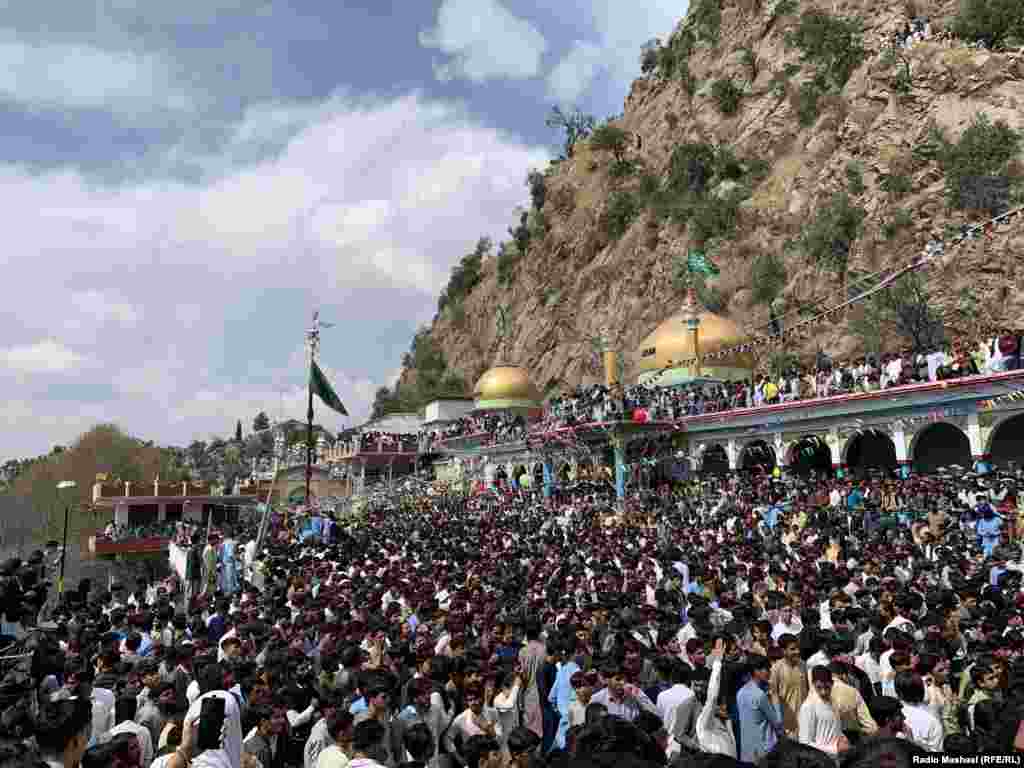
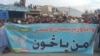
Thousands turn out in Parachinar, the capital of the Kurram district in northwestern Pakistan, to celebrate Norouz, the Persian New Year.

PARACHINAR, Pakistan -- Thousands of men dance to the beat of drums as a Pashtun community in northwestern Pakistan celebrates the arrival of the new year and spring.

They say that Norouz, the traditional spring new year widely marked in Afghanistan, Iran, and Central Asia, is a major cause for celebration.

But these revelers in Parachinar -- the capital of Kurram, a picturesque district in the northwestern province of Khyber Pakhtunkhwa -- are unique among Pakistan's 35 million Pashtuns. Unlike most Pashtuns in Afghanistan, most Pashtuns in Pakistan do not celebrate Norouz.

"It is a major celebration here now," Syed Musheer Hussain, an elderly local tribal leader in Kurram, told RFE/RL's Radio Mashaal. "We celebrate wearing new clothes, dancing, and offering seven dishes to our guests."

He says the festival arrived in Parachinar from Afghanistan in the late 1970s. Many Afghan refugees began to arrive in Kurram after the communist coup in Afghanistan in April 1978.

The residents of Parachinar, unlike most Pashtuns, are Shi'a. They have also hosted a Persian-speaking Shi'ite clan called Hazara Khusi whose members lived among them for generations. Some locals say Pashtun tribes such as Turi and Bangash, to which the majority of Parachinar residents belong, adopted the celebration of Norouz from the Hazara Khusi.
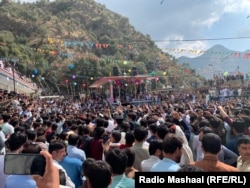
The Norouz festival reportedly arrived in Parachinar from Afghanistan in the late 1970s.

Their Shi'ite faith prompted these communities to visit Shi'ite shrines in Iran, where generations of Shi'ite clerics were trained. Norouz, which means Persian New Year, is a major holiday in Iran.

"This is not a religious celebration, but we also think it is not against the spirit of Islam," said Maulana Khayal Hussain Danish, a Shi'ite cleric.

Danish says the festival has some religious significance for Shi'a because they believe it marks the date when Ali, the son-in-law of Prophet Mohammad, was declared the caliph of Muslims.

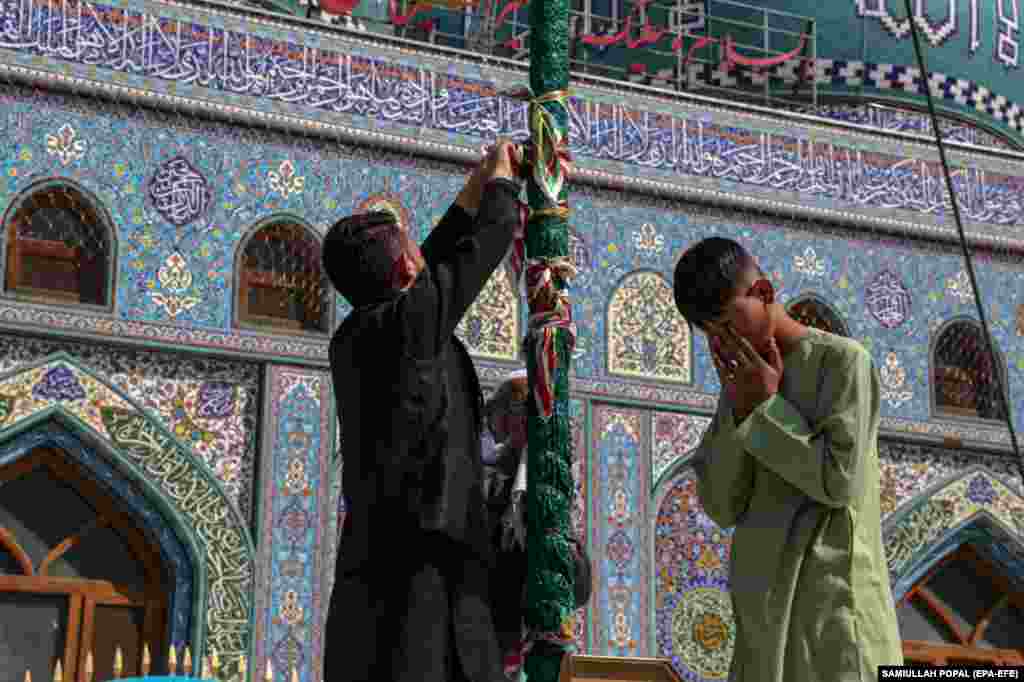
"Raising flags on important shrines is a symbolic celebration of that announcement," Danish told Radio Mashaal.

Experts say the reasons most Pashtuns in Pakistan do not celebrate Norouz are not limited to the rise of fundamentalist Sunni Islam among Pashtun communities over the past 50 years. They said the advent of the British Empire and the rise of the Soviet Union in Central Asia severed cultural links between the Pashtun communities who live today in Pakistan and Afghanistan.

IN PHOTOS: The festival of Norouz is celebrated throughout Central Asia, the Caucasus, and parts of the Middle East.

From Our Regions: Norouz Celebrations Welcome Spring
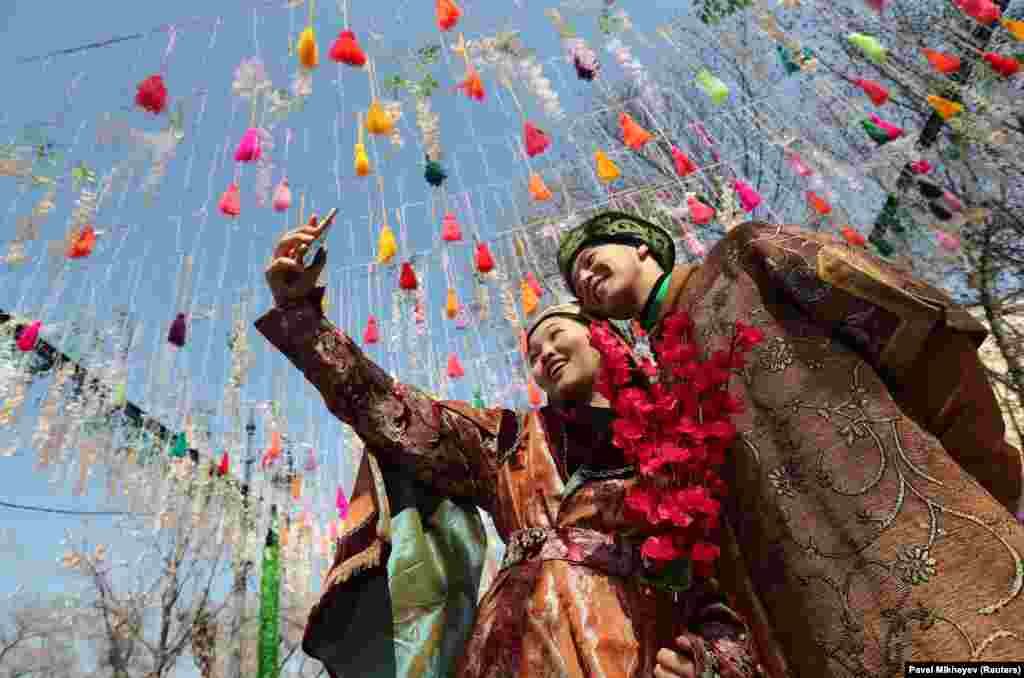
Participants take a selfie in Almaty, Kazakhstan, on March 21.<br />
<br />
Celebrated on the spring equinox, Norouz is a&nbsp;celebration of love, fertility, and spiritual renewal that spreads the message of hope far and wide and lasts for 13 days.
1/17 Participants take a selfie in Almaty, Kazakhstan, on March 21.

Celebrated on the spring equinox, Norouz is a celebration of love, fertility, and spiritual renewal that spreads the message of hope far and wide and lasts for 13 days.
As spring begins, so does the Persian New Year. The festival of Norouz is marked on the spring equinox and is a 13-day celebration of love, fertility, and spiritual renewal that spreads the message of hope far and wide.
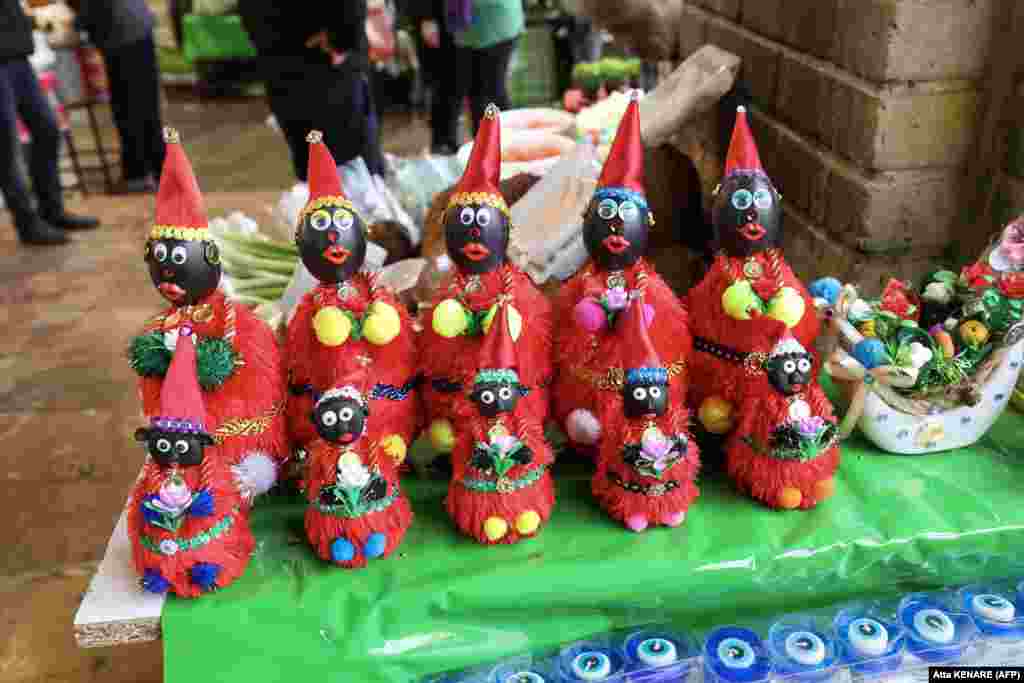
Figures of the fictional folklore character Hajji Firuz, who appears in the streets at the beginning of Norouz, are displayed at a stall in Tehran ahead of the festival.&nbsp;&nbsp;<br />
<br />
<br />
&nbsp;
2/17 Figures of the fictional folklore character Hajji Firuz, who appears in the streets at the beginning of Norouz, are displayed at a stall in Tehran ahead of the festival.  


As spring begins, so does the Persian New Year. The festival of Norouz is marked on the spring equinox and is a 13-day celebration of love, fertility, and spiritual renewal that spreads the message of hope far and wide.
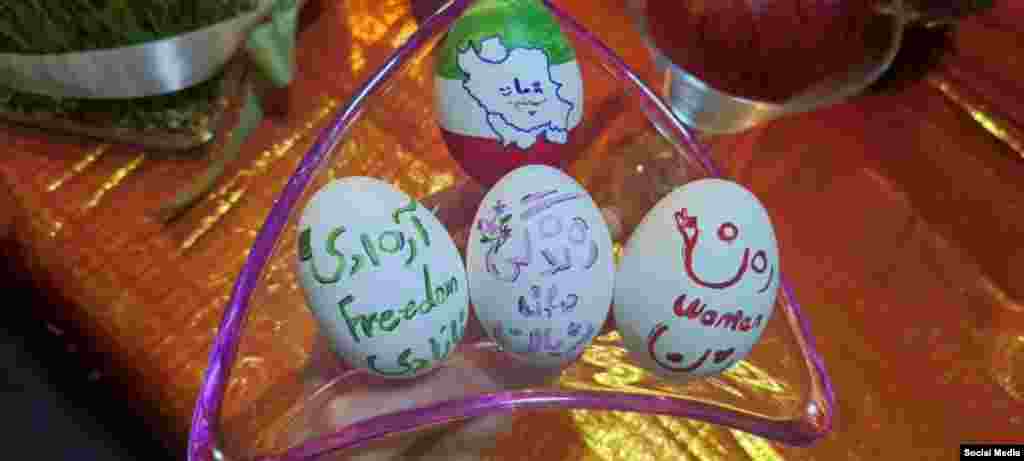
A selection of this year&#39;s Norouz&nbsp;eggs (Haftseen) feature the anti-government slogan &quot;Woman, life, freedom&quot; in Iran. Iran has been rocked by mass protests for the past six months following the death of a young woman in police custody.&nbsp;<br />
<br />
Though Norouz is associated with being Persian and Iranian, the holiday is celebrated throughout Western Asia, Central Asia, the Caucasus, the Black Sea Basin, the Balkans, and South Asia.
3/17 A selection of this year's Norouz eggs (Haftseen) feature the anti-government slogan "Woman, life, freedom" in Iran. Iran has been rocked by mass protests for the past six months following the death of a young woman in police custody. 

Though Norouz is associated with being Persian and Iranian, the holiday is celebrated throughout Western Asia, Central Asia, the Caucasus, the Black Sea Basin, the Balkans, and South Asia.
As spring begins, so does the Persian New Year. The festival of Norouz is marked on the spring equinox and is a 13-day celebration of love, fertility, and spiritual renewal that spreads the message of hope far and wide.
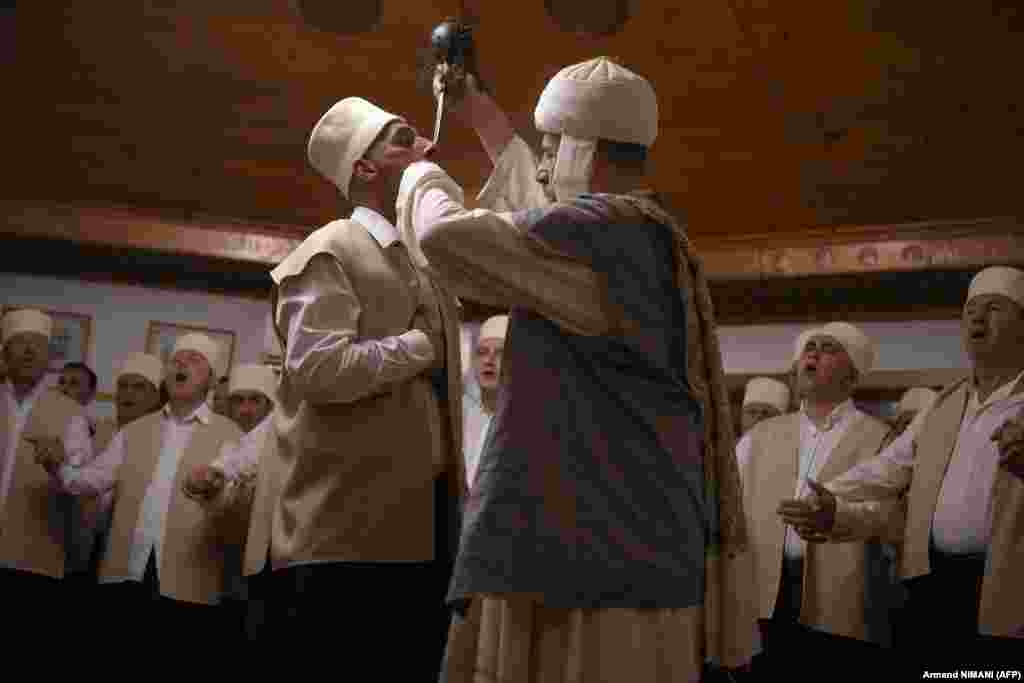
As his fellow Dervishes chant and sway to the hypnotic rhythm of prayer until reaching a trance-like state, a man has his neck pierced with long needles in the town of&nbsp;Gjakova, Kosovo.<br />
<br />
Considered a mystic sect by fellow Muslims in Kosovo and Albania, the dozens of Sufi Dervishes from the Kadiri order celebrate the centuries-old traditions of the spring equinox, known to them as Sultan Nevruz.
4/17 As his fellow Dervishes chant and sway to the hypnotic rhythm of prayer until reaching a trance-like state, a man has his neck pierced with long needles in the town of Gjakova, Kosovo.

Considered a mystic sect by fellow Muslims in Kosovo and Albania, the dozens of Sufi Dervishes from the Kadiri order celebrate the centuries-old traditions of the spring equinox, known to them as Sultan Nevruz.
As spring begins, so does the Persian New Year. The festival of Norouz is marked on the spring equinox and is a 13-day celebration of love, fertility, and spiritual renewal that spreads the message of hope far and wide.
Thousands of Pakistanis celebrate Norouz in Parachinar, a town in the Kurram district of northwestern Pakistan.
5/17 Thousands of Pakistanis celebrate Norouz in Parachinar, a town in the Kurram district of northwestern Pakistan.
As spring begins, so does the Persian New Year. The festival of Norouz is marked on the spring equinox and is a 13-day celebration of love, fertility, and spiritual renewal that spreads the message of hope far and wide.
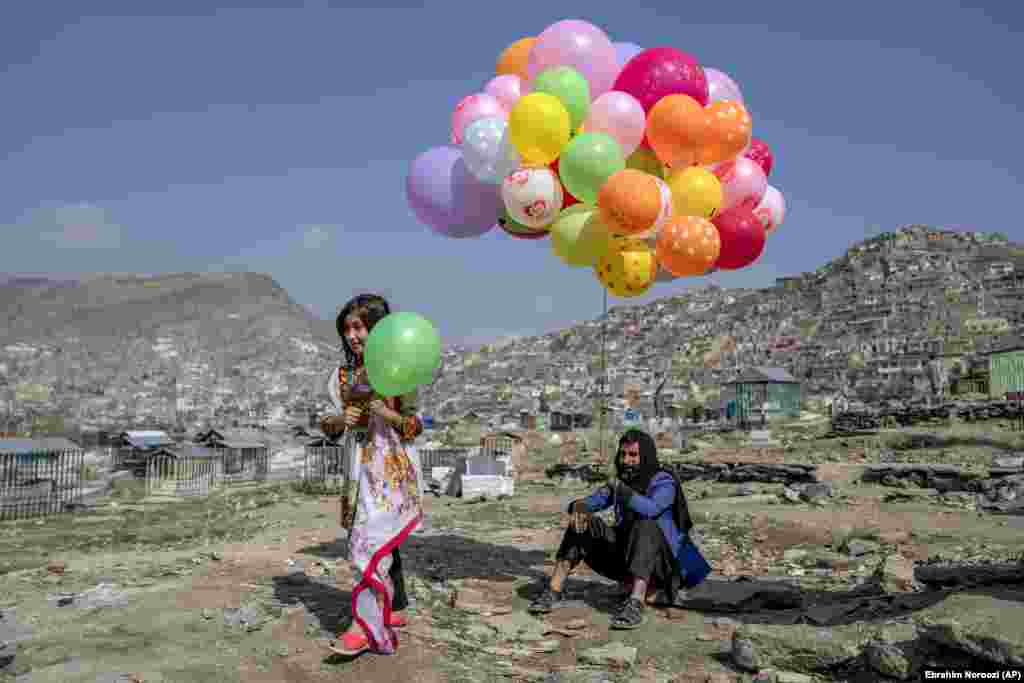
A girl buys a balloon for the Norouz celebration from a vendor at a cemetery in Kabul.<br />
<br />
The Taliban canceled the public holiday, though the militants have insisted those who wish to celebrate will not be prevented from doing so.
6/17 A girl buys a balloon for the Norouz celebration from a vendor at a cemetery in Kabul.

The Taliban canceled the public holiday, though the militants have insisted those who wish to celebrate will not be prevented from doing so.
As spring begins, so does the Persian New Year. The festival of Norouz is marked on the spring equinox and is a 13-day celebration of love, fertility, and spiritual renewal that spreads the message of hope far and wide.
Afghans celebrate in Kabul.&nbsp;<br />
<br />
Norouz means &quot;new day&quot; in the Persian language.<br />
&nbsp;
7/17 Afghans celebrate in Kabul. 

Norouz means "new day" in the Persian language.
 
As spring begins, so does the Persian New Year. The festival of Norouz is marked on the spring equinox and is a 13-day celebration of love, fertility, and spiritual renewal that spreads the message of hope far and wide.
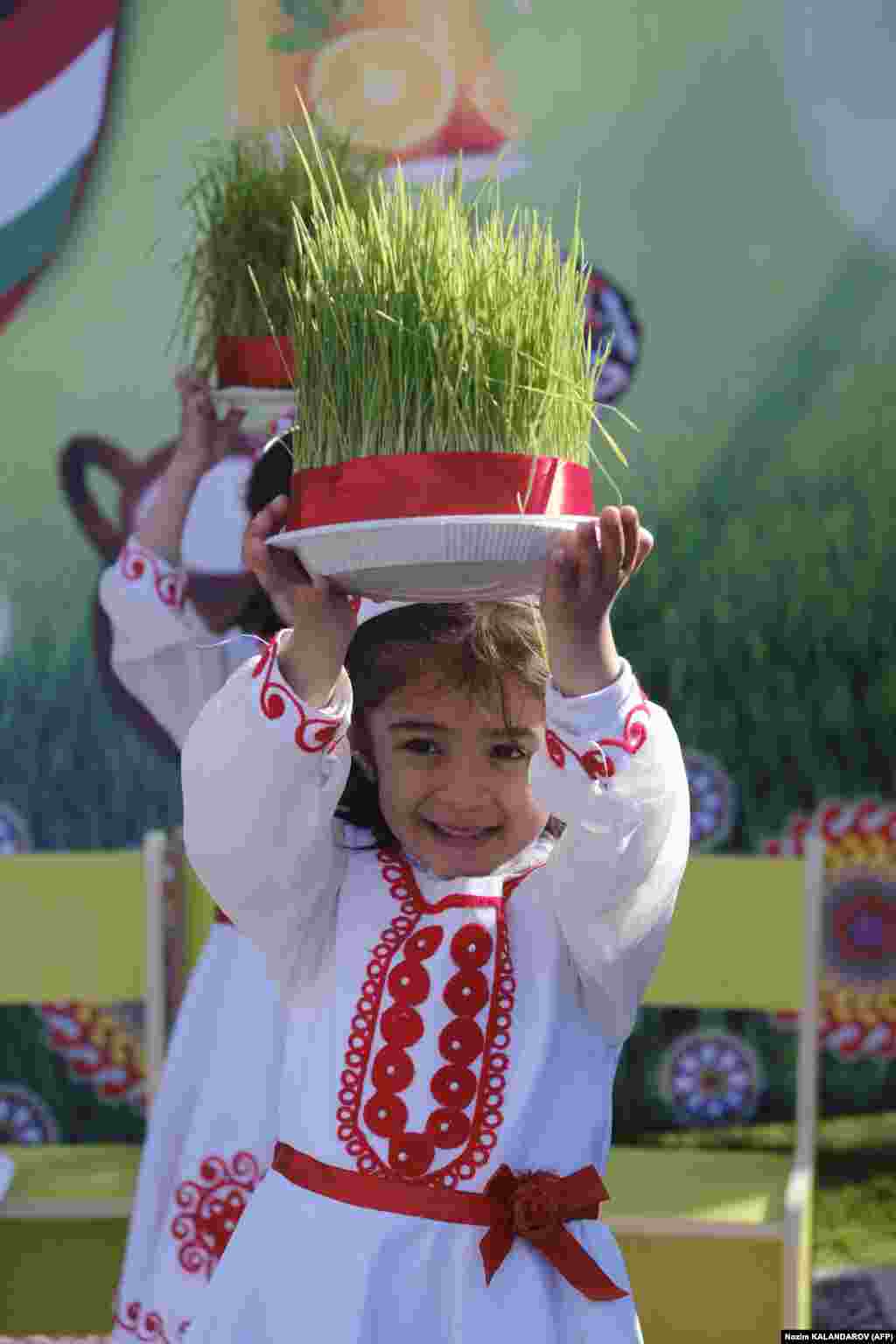
A Tajik girl spins in her colorful traditional dress in&nbsp;Dushanbe.
8/17 A Tajik girl spins in her colorful traditional dress in Dushanbe.
As spring begins, so does the Persian New Year. The festival of Norouz is marked on the spring equinox and is a 13-day celebration of love, fertility, and spiritual renewal that spreads the message of hope far and wide.
Another Tajik girl in Dushanbe marks the first day of spring.
9/17 Another Tajik girl in Dushanbe marks the first day of spring.
As spring begins, so does the Persian New Year. The festival of Norouz is marked on the spring equinox and is a 13-day celebration of love, fertility, and spiritual renewal that spreads the message of hope far and wide.
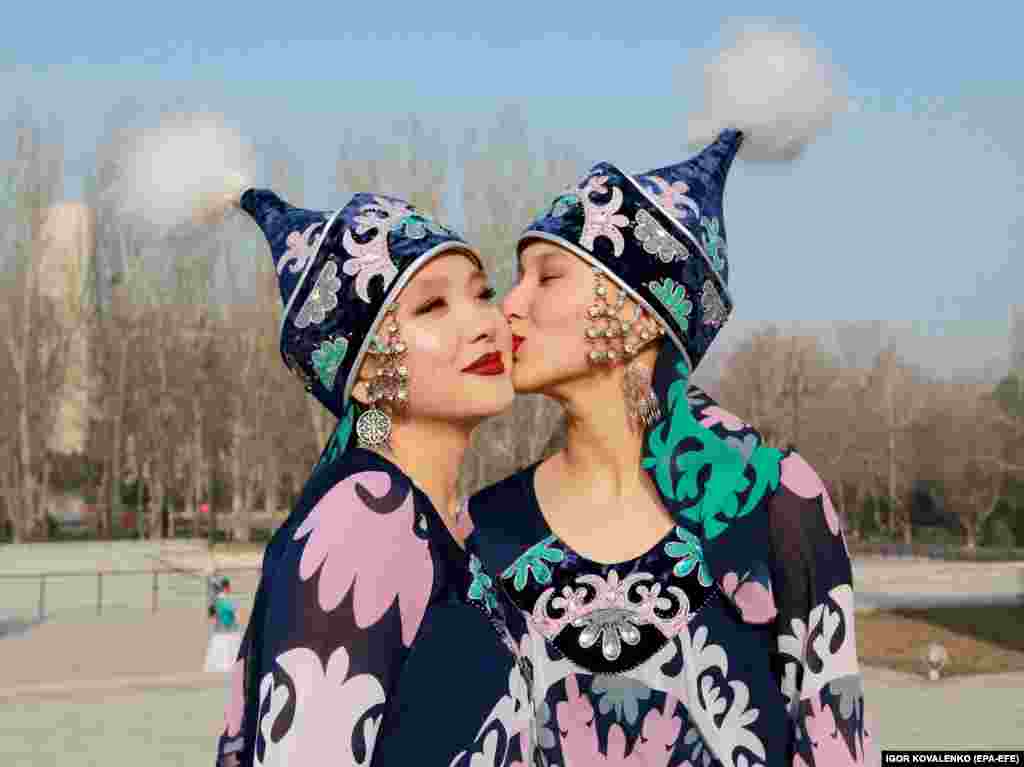
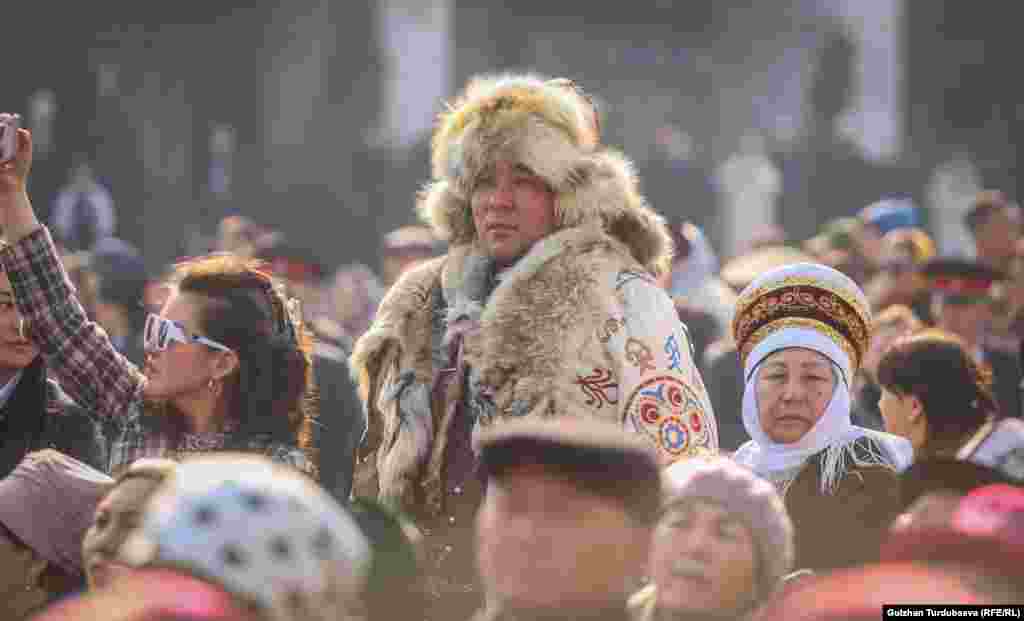
Kyrgyz women wearing traditional costumes celebrate at&nbsp; Ala-Too Square in Bishkek.
10/17 Kyrgyz women wearing traditional costumes celebrate at  Ala-Too Square in Bishkek.
As spring begins, so does the Persian New Year. The festival of Norouz is marked on the spring equinox and is a 13-day celebration of love, fertility, and spiritual renewal that spreads the message of hope far and wide.
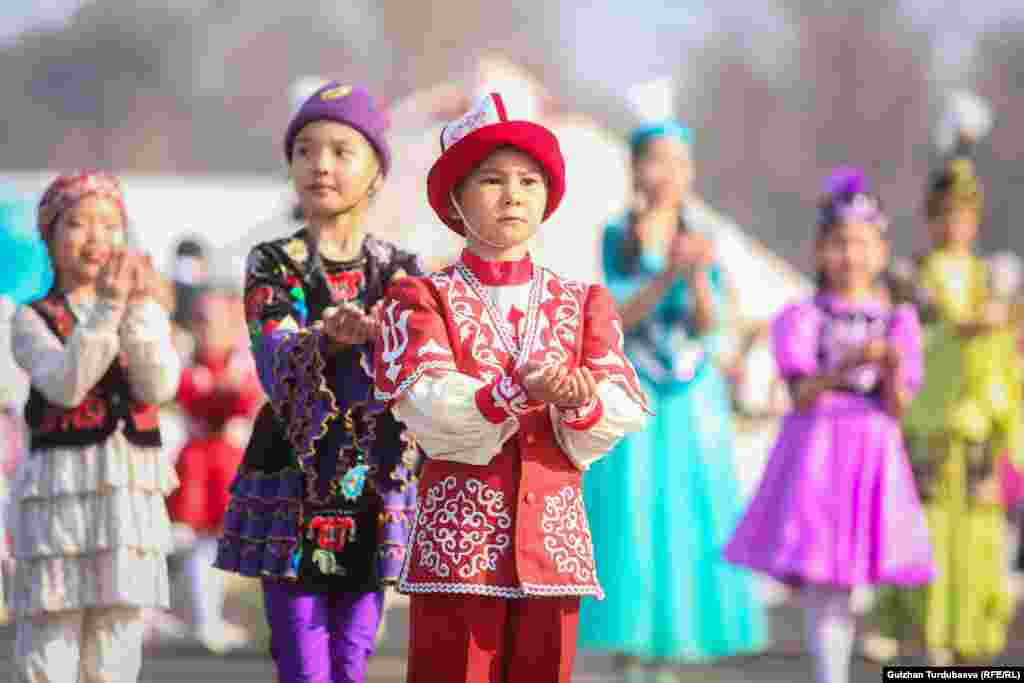
Young children wearing traditional costumes take part in celebrations at Ala-Too Square in Bishkek.
11/17 Young children wearing traditional costumes take part in celebrations at Ala-Too Square in Bishkek.
As spring begins, so does the Persian New Year. The festival of Norouz is marked on the spring equinox and is a 13-day celebration of love, fertility, and spiritual renewal that spreads the message of hope far and wide.
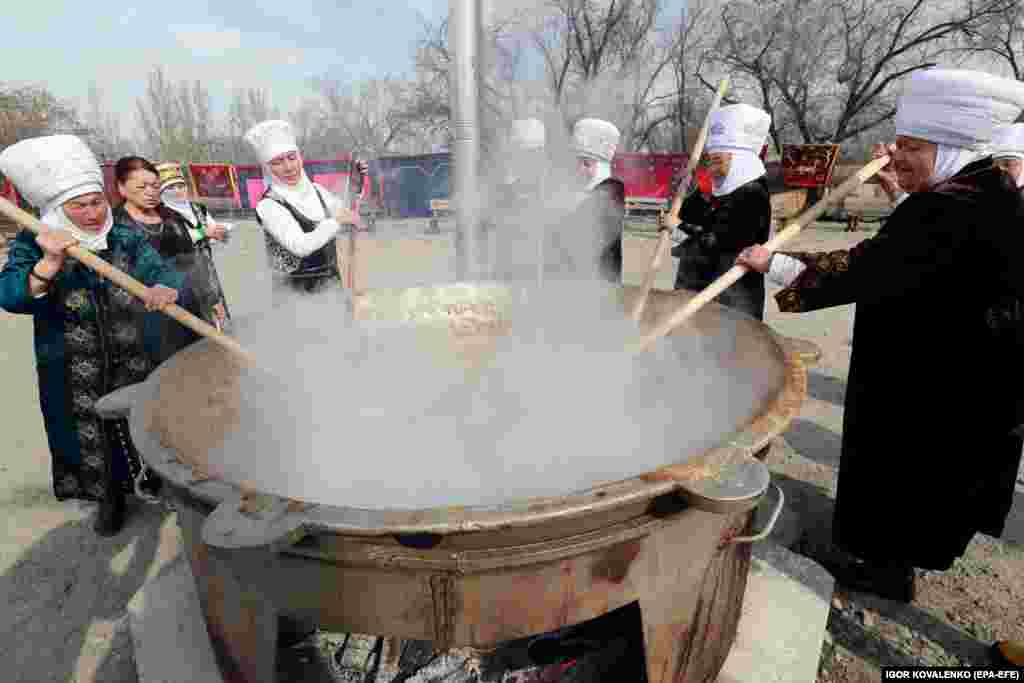
Women cook a traditional dish for the celebrations in Bishkek.
12/17 Women cook a traditional dish for the celebrations in Bishkek.
As spring begins, so does the Persian New Year. The festival of Norouz is marked on the spring equinox and is a 13-day celebration of love, fertility, and spiritual renewal that spreads the message of hope far and wide.
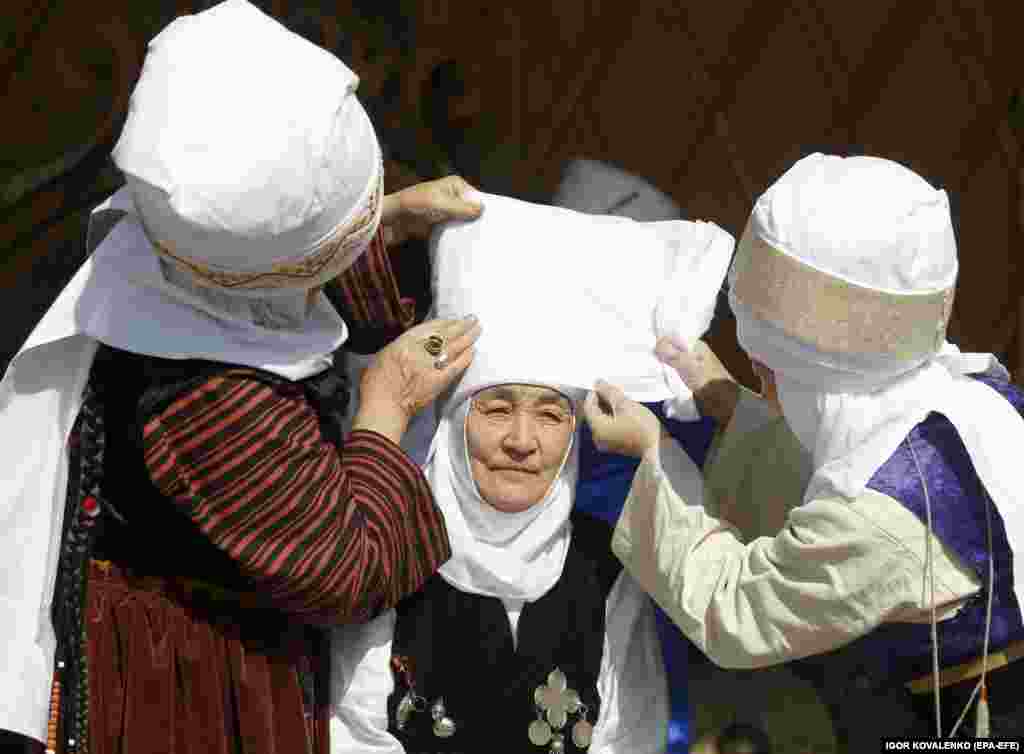
Several woman help another don a traditional hat in Bishkek.
13/17 Several woman help another don a traditional hat in Bishkek.
As spring begins, so does the Persian New Year. The festival of Norouz is marked on the spring equinox and is a 13-day celebration of love, fertility, and spiritual renewal that spreads the message of hope far and wide.
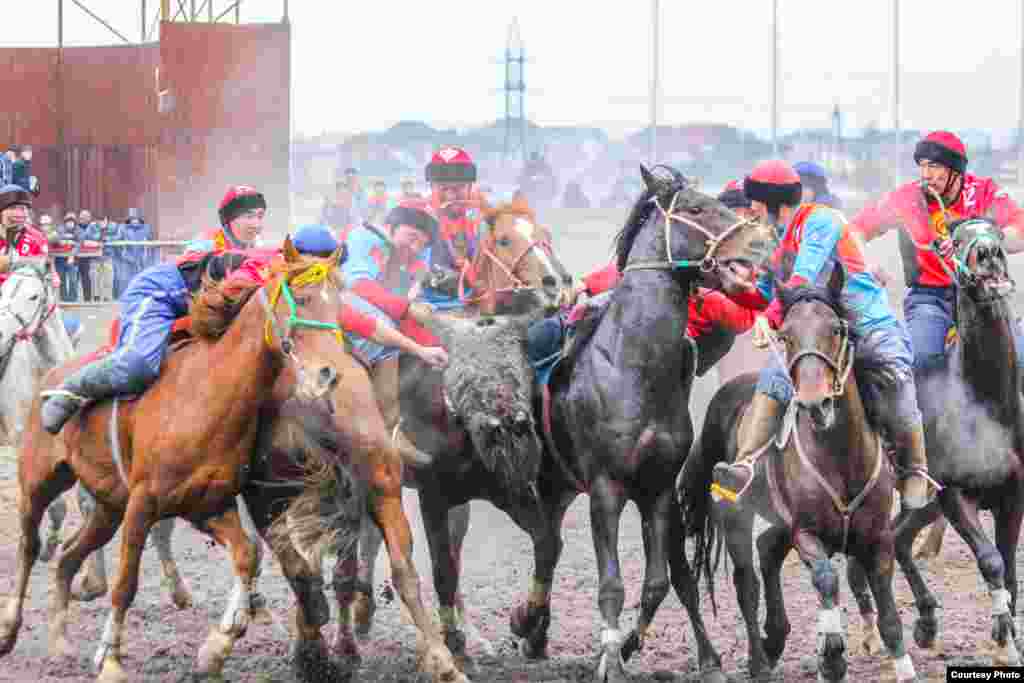
Horsemen show off their riding skills during a kok-boru tournament in Bishkek.
14/17 Horsemen show off their riding skills during a kok-boru tournament in Bishkek.
As spring begins, so does the Persian New Year. The festival of Norouz is marked on the spring equinox and is a 13-day celebration of love, fertility, and spiritual renewal that spreads the message of hope far and wide.
Fans watch the horsemen during their kok-boru tournament in Bishkek.
15/17 Fans watch the horsemen during their kok-boru tournament in Bishkek.
As spring begins, so does the Persian New Year. The festival of Norouz is marked on the spring equinox and is a 13-day celebration of love, fertility, and spiritual renewal that spreads the message of hope far and wide.
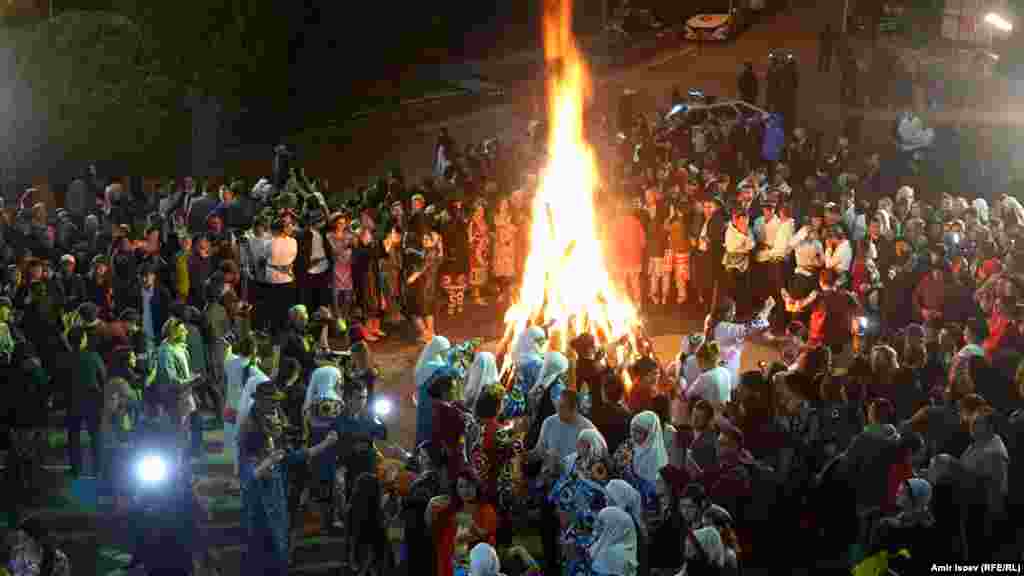
People dance and sing around a large bonfire in&nbsp;Dushanbe.<br />
<br />
&nbsp;
16/17 People dance and sing around a large bonfire in Dushanbe.

 
As spring begins, so does the Persian New Year. The festival of Norouz is marked on the spring equinox and is a 13-day celebration of love, fertility, and spiritual renewal that spreads the message of hope far and wide.
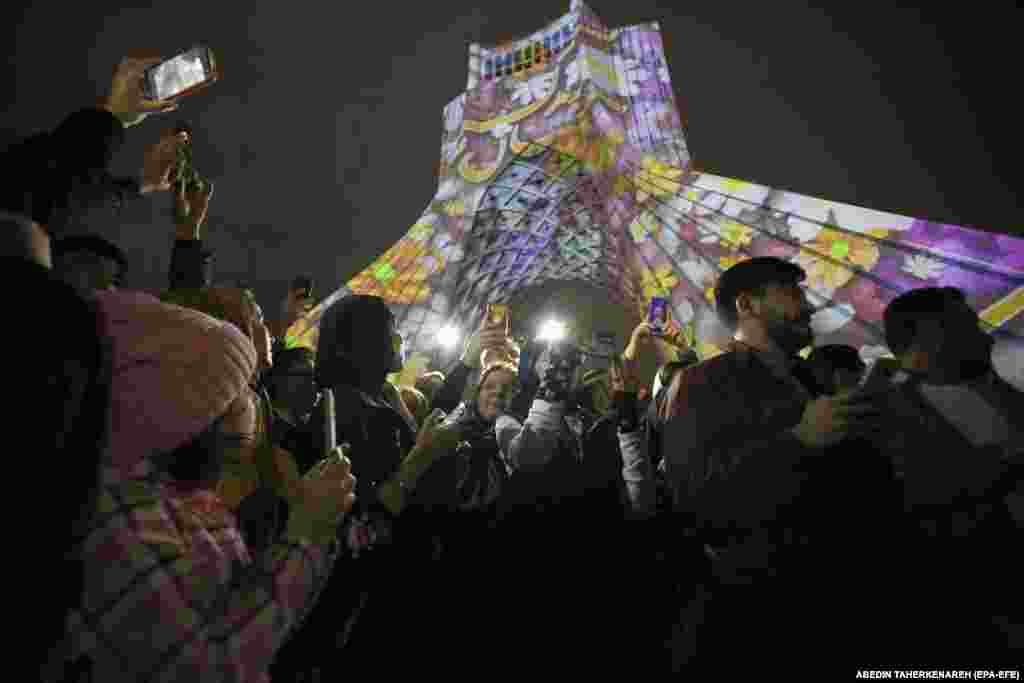
Iranians take pictures as they celebrate near the Azadi Tower in Tehran.<br />
<br />
The Persian New Year, which has been celebrated for at least 3,000 years, is one of the most important celebrations in the greater Persian world.
17/17 Iranians take pictures as they celebrate near the Azadi Tower in Tehran.

The Persian New Year, which has been celebrated for at least 3,000 years, is one of the most important celebrations in the greater Persian world.
As spring begins, so does the Persian New Year. The festival of Norouz is marked on the spring equinox and is a 13-day celebration of love, fertility, and spiritual renewal that spreads the message of hope far and wide.
Previous slide
Next slide

"Norouz was celebrated till the early 20th century," said Afrasiab Khattak, a politician and public intellectual who has studied the issue.

"As long as Qissa Khwani Bazaar had active trade and cultural relations with Central Asia, we shared cultural traits with that region," he added.

Qissa Khwani Bazaar, or the storytellers' market, is an ancient market in Peshawar, the capital of Khyber Pakhtunkhwa. For centuries, it was a key hub for trade with Central Asia.

"But the Stalinist Iron Curtain severed all of our ties with Central Asia," he noted.

By the beginning of the 20th century, the British Empire in India was in control of all the Pashtun territories that make up today's Khyber Pakhtunkhwa and Balochistan provinces. To keep the Russians from expanding in Central Asia to India, the British turned Afghanistan into a buffer state and made part of the Pashtun territories in India a secluded region to create another buffer with Afghanistan.

The British also made other crucial changes. They dropped the Solar Hijri calendar used in Afghanistan and imposed the Gregorian calendar and replaced the use of Pashto and Dari with English.
Khattak says the celebration of Norouz nevertheless continued until the early 1960s.

"The arrival of Salafism and Takfirism in the 1980s during the Afghan jihad seriously undermined almost all the indigenous cultural celebrations, including Norouz," he said, referring to the ultra-puritanical Sunni sect that considered such celebrations un-Islamic.

Fazal Rahim Marwat, a historian, agrees.

He says there is a sea change in Pashtun's relationship with Islam over the past half-century. He says most Pashtuns, who are predominantly Sunni, were exposed to fundamentalism because of the rise of mujahedin and later the Taliban in Afghanistan and the upsurge of puritanical Islamist political parties in Pakistan, some of which advocated sectarianism and opposed festivals such as Norouz because of its pre-Islamic roots.

"With time, the role of religion changes in society, shaping how people celebrate their happiness," he said.

Parachinar's Norouz revelers hope to inspire other Pashtun communities to revive the festival.

Latif Orakzai, a political activist from the neighboring district of Hangu, has been visiting Parachinar during Norouz for years.

He, too, wants the Pashtuns to revive their rich cultural heritage.

"This is a celebration in the entire region, and we must become part of it," he said.

  • 16x9 Image

    Abubakar Siddique

    Abubakar Siddique, a journalist for RFE/RL's Radio Azadi, specializes in the coverage of Afghanistan and Pakistan. He is the author of The Pashtun Question: The Unresolved Key To The Future Of Pakistan And Afghanistan. He also writes the Azadi Briefing, a weekly newsletter that unpacks the key issues in Afghanistan.

This item is part of
XS
SM
MD
LG