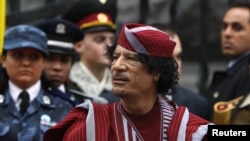
Libyan leader Muammar Qaddafi takes part in an official welcoming ceremony in Kyiv in 2008.
During his life, Muammar Qaddafi earned many sobriquets.
When he took power in 1969, by leading a military coup against Libya's aging king, he was widely termed the "Che Guevara" of Africa, an image he cultivated by funding regional revolutionaries and sporting dark glasses.
In the 1980s, U.S. President Ronald Reagan famously termed him "the mad dog of the Middle East" before bombing Qaddafi's headquarters in Tripoli over his support for terrorist groups in the United States and Europe.
In 2011, when Qaddafi told the media how much his people loved him as Libya rose against him, stunned observers simply called him deluded.
"And when [Qaddafi] can laugh in [when] talking to American and international journalists while he is slaughtering his own people, it only underscores how unfit he is to lead and how disconnected he is from reality," Susan Rice, U.S. ambassador to the United Nations, said in February.
Eccentric Excesses
It would be easy to make fun of Qaddafi, and over the years many observers did, if not for the brutality he showed his own people and his readiness to fuel conflicts across the globe. Often, it seemed Qaddafi deliberately sought to play the buffoon as he cultivated a larger-than-life image.
There was his style of dress, which evolved from the military uniform of his young days to the designer safari suits of his middle age, to the richly brocaded Bedouin robes he wore in his final years like an arrogant emperor.
There was his hyperbolic official title: "Brotherly Leader and Guide of the First of September Great Revolution of the Socialist People's Libyan Arab Jamahiriya."
And there was his egocentric "Green Book," which he considered so essential he made it his country's constitution. And that's not even to mention his 40-member team of highly trained bodyguards, all women and all reportedly sworn virgins, or his Ukrainian nurse, always described in press reports as a voluptuous blonde, who never left his side.
Iron Hand
But if Qaddafi often appeared ridiculously overblown, his buffoonery only helped to hide his tyranny.
He was always ready to sacrifice his countrymen's well-being for his own life of privilege and never more so than in his final days. As Libya erupted against him in February 2011, he threatened to unleash a civil war to stay in power.
Muammar Qaddafi: Snapshots Of A Strongman
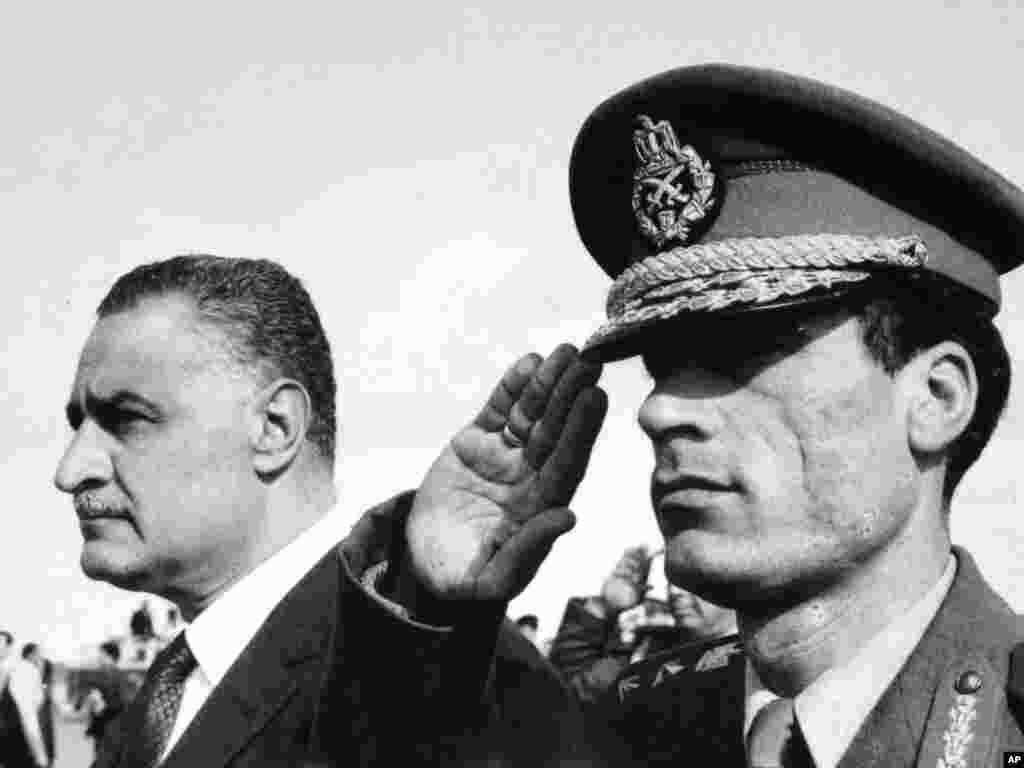
1/17In this 1969 file photo, Qaddafi salutes as he appears with Egypt's Prime Minister Gamal Abdel Nasser, in Suez, Egypt.
Muammar Qaddafi took power in Libya in 1969 and ruled the North African country until he was deposed in 2011.
Show moreShow less
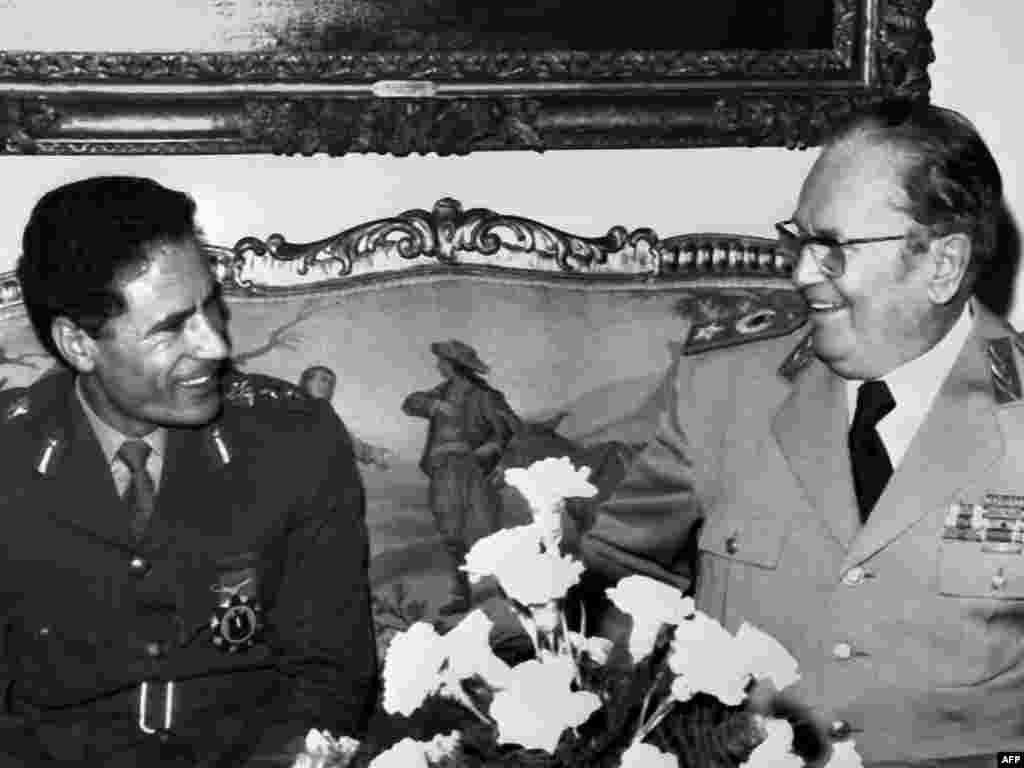
2/17Qaddafi meets with Yugoslav President Josip Broz Tito during a visit to Belgrade on November 20, 1973.
Muammar Qaddafi took power in Libya in 1969 and ruled the North African country until he was deposed in 2011.
Show moreShow less
3/17Qaddafi is pictured during the summit of the Organization of African Unity in Kampala, Uganda, in August 1975.
Muammar Qaddafi took power in Libya in 1969 and ruled the North African country until he was deposed in 2011.
Show moreShow less
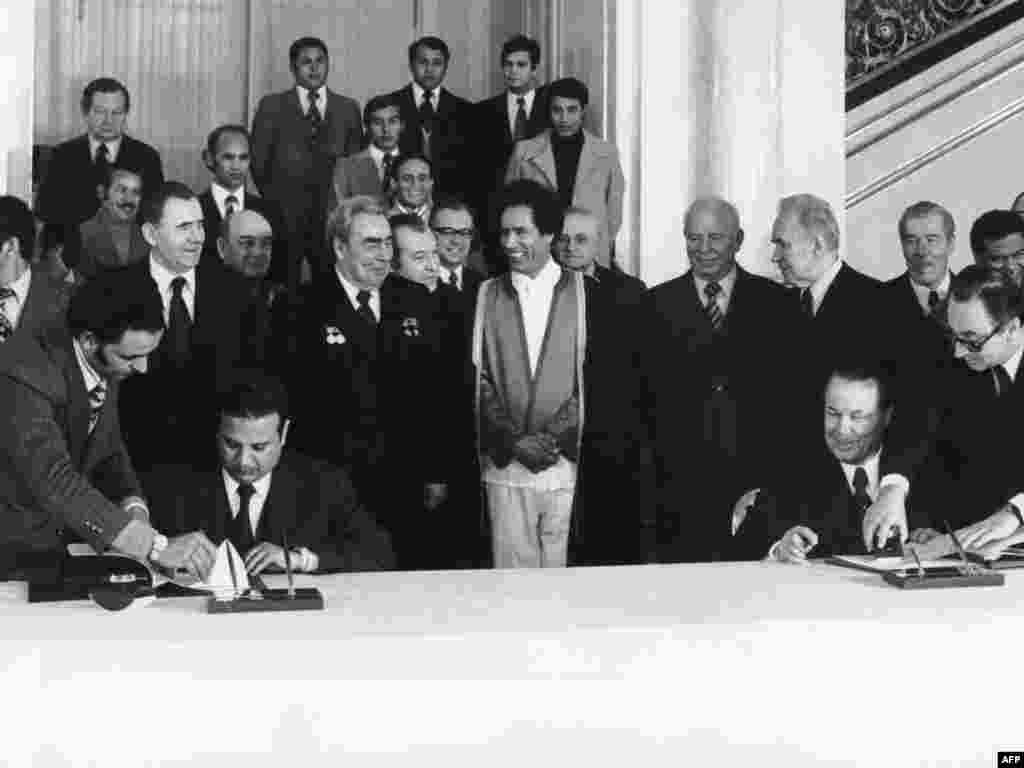
4/17Qaddafi (center) and Soviet leader Leonid Brezhnev (to Qaddafi's right) smile as members of their delegations sign agreements during a visit to Moscow in December 1976.
Muammar Qaddafi took power in Libya in 1969 and ruled the North African country until he was deposed in 2011.
Show moreShow less
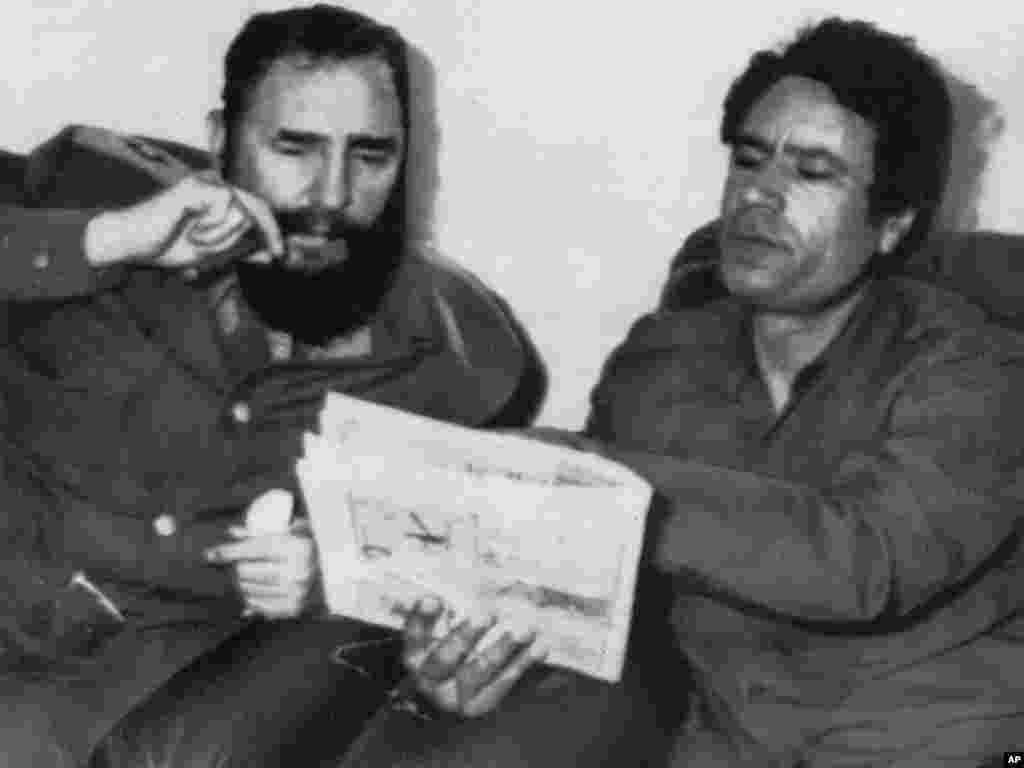
5/17Cuban leader Fidel Castro meets with Qaddafi in Tripoli on March 8, 1977.
Muammar Qaddafi took power in Libya in 1969 and ruled the North African country until he was deposed in 2011.
Show moreShow less
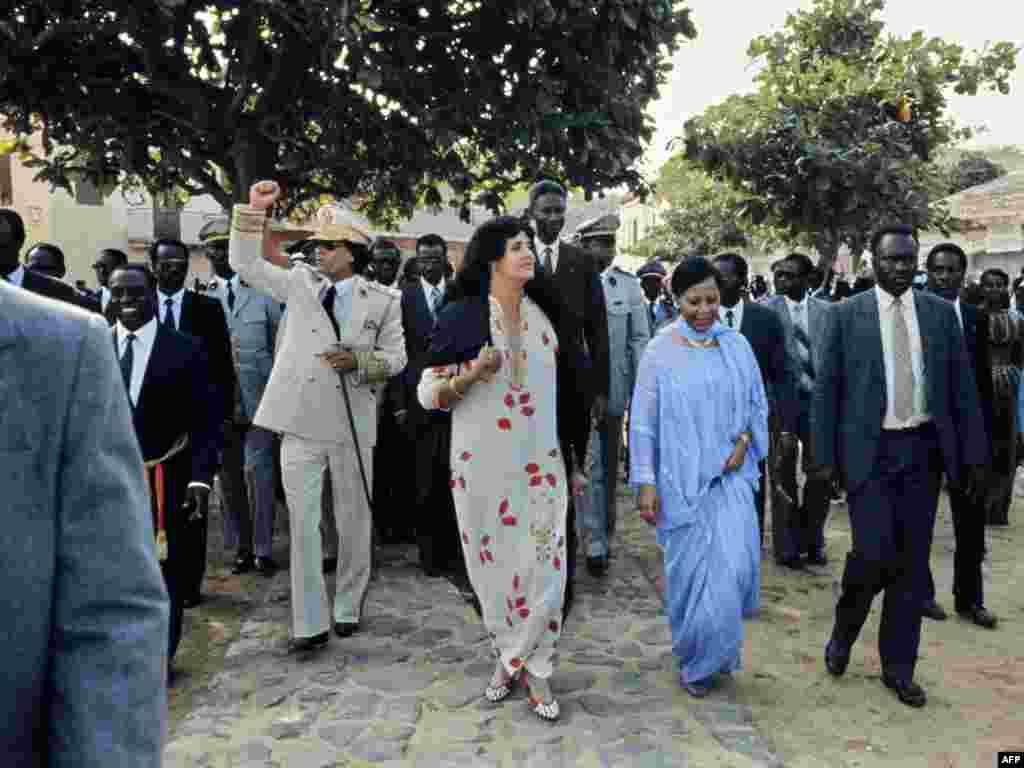
6/17Qaddafi and his wife, Suffiya (in floral print dress), wave to the crowd upon their arrival for an official visit to Senegal in December 1985.
Muammar Qaddafi took power in Libya in 1969 and ruled the North African country until he was deposed in 2011.
Show moreShow less
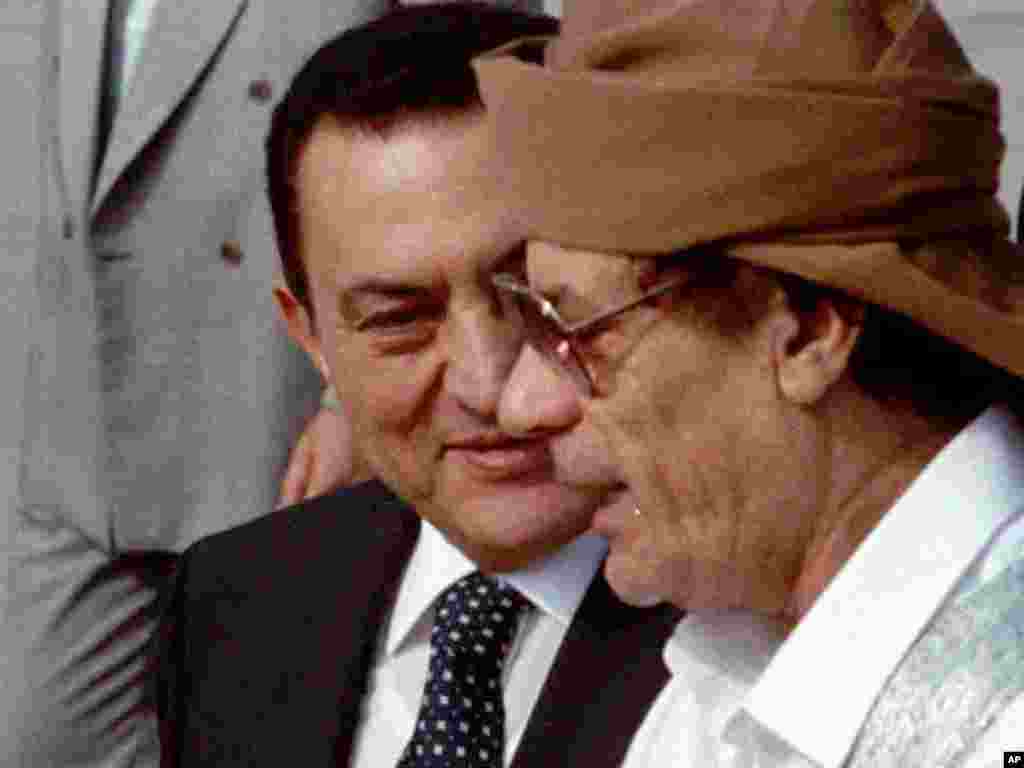
7/17Qaddafi chats with Egyptian President Hosni Mubarak upon his arrival in Cairo on June 22, 1996, to attend an Arab Summit. Mubarak was himself ousted as president by antigovernment protests in February and is now on trial in Cairo.
Muammar Qaddafi took power in Libya in 1969 and ruled the North African country until he was deposed in 2011.
Show moreShow less
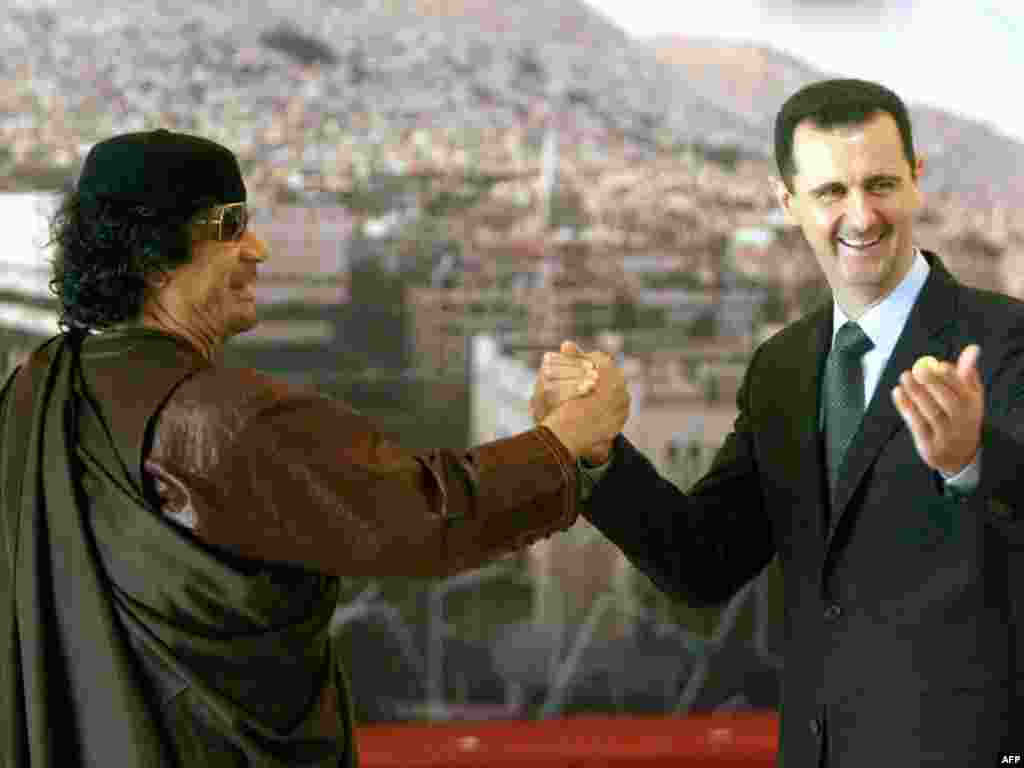
8/17Syrian President Bashar al-Assad, who has dealt with his own antigovernment protests with a violent crackdown, clasps hands with Qaddafi at the opening session of the Arab Summit in Damascus on March 29, 2008.
Muammar Qaddafi took power in Libya in 1969 and ruled the North African country until he was deposed in 2011.
Show moreShow less
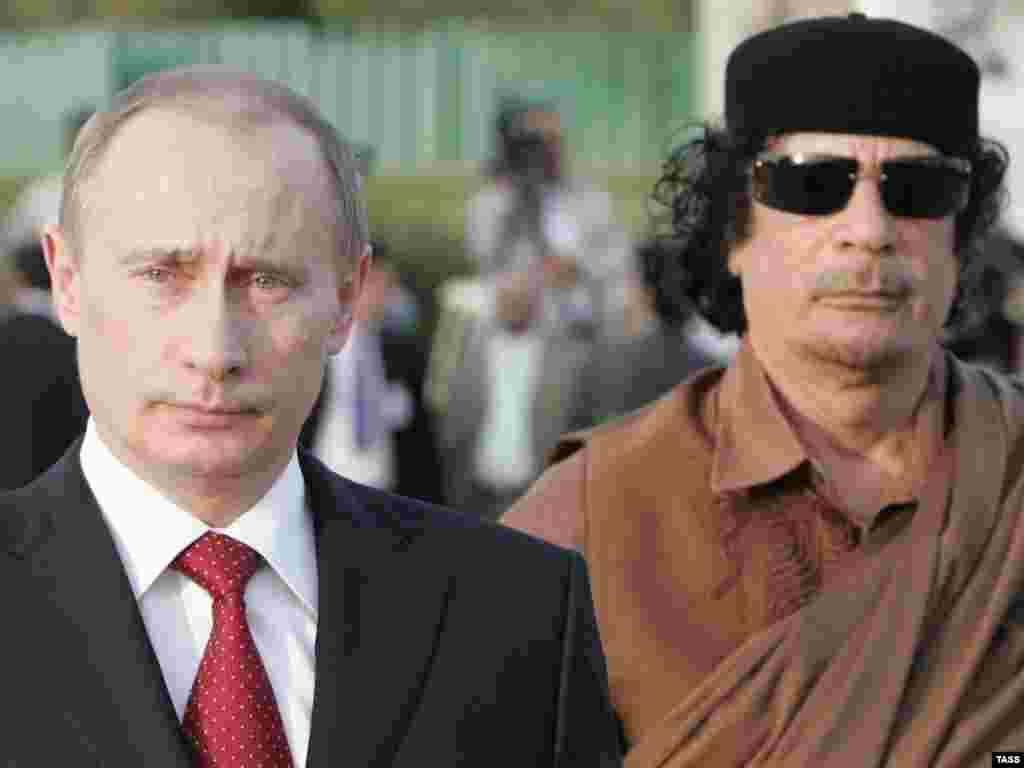
9/17Russian President Vladimir Putin holds talks with Qaddafi at Qaddafi's residence within the Bab al-Aziziya barracks in Tripoli in April 2008.
Muammar Qaddafi took power in Libya in 1969 and ruled the North African country until he was deposed in 2011.
Show moreShow less
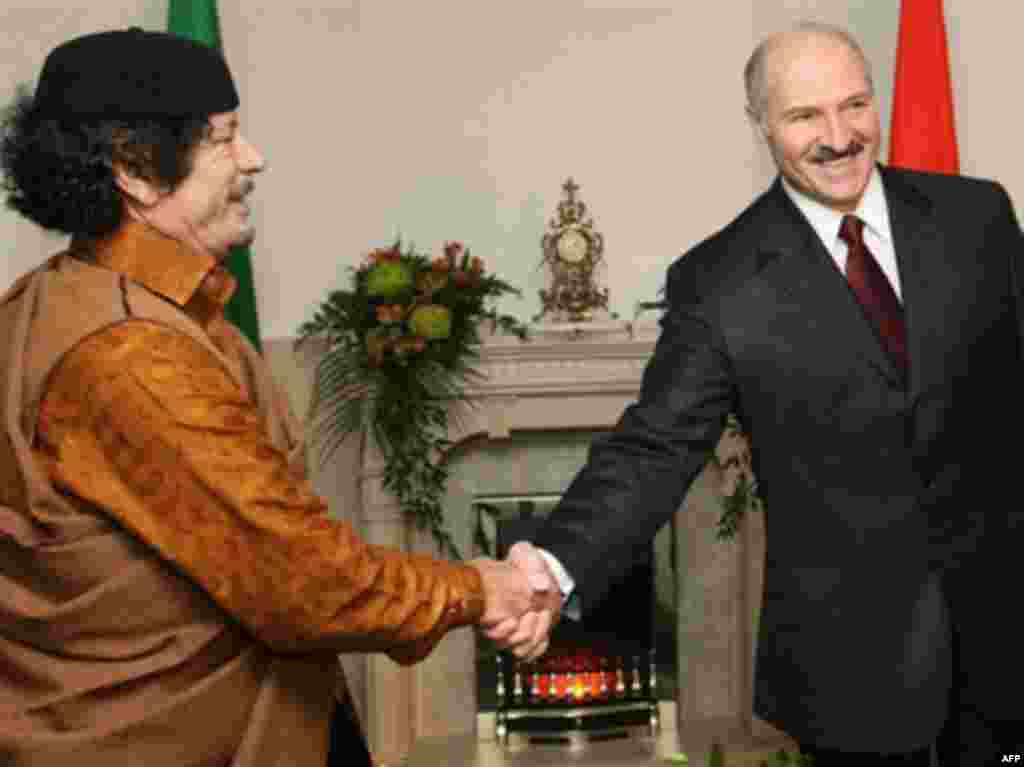
10/17Qaddafi shakes hands with Belarusian President Alyaksandr Lukashenka during the Libyan leader's first visit to Minsk on November 2, 2008.
Muammar Qaddafi took power in Libya in 1969 and ruled the North African country until he was deposed in 2011.
Show moreShow less
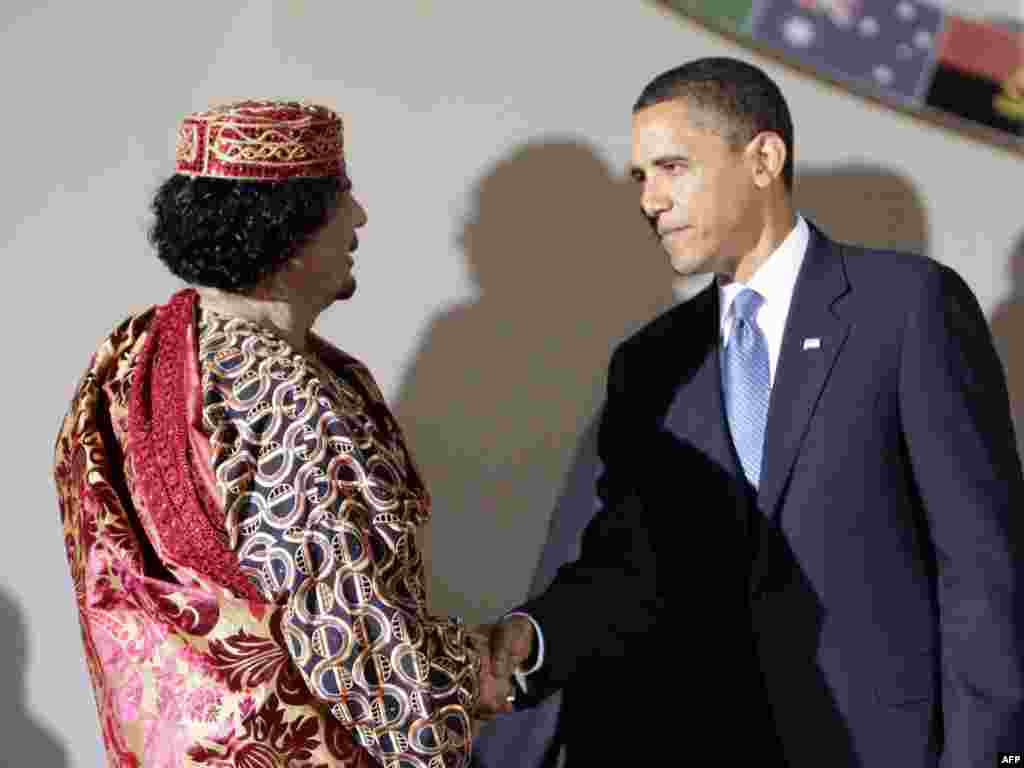
11/17U.S. President Barack Obama shakes hands with Qaddafi during the G8 summit in L'Aquila, Italy, on July 9, 2009.
Muammar Qaddafi took power in Libya in 1969 and ruled the North African country until he was deposed in 2011.
Show moreShow less
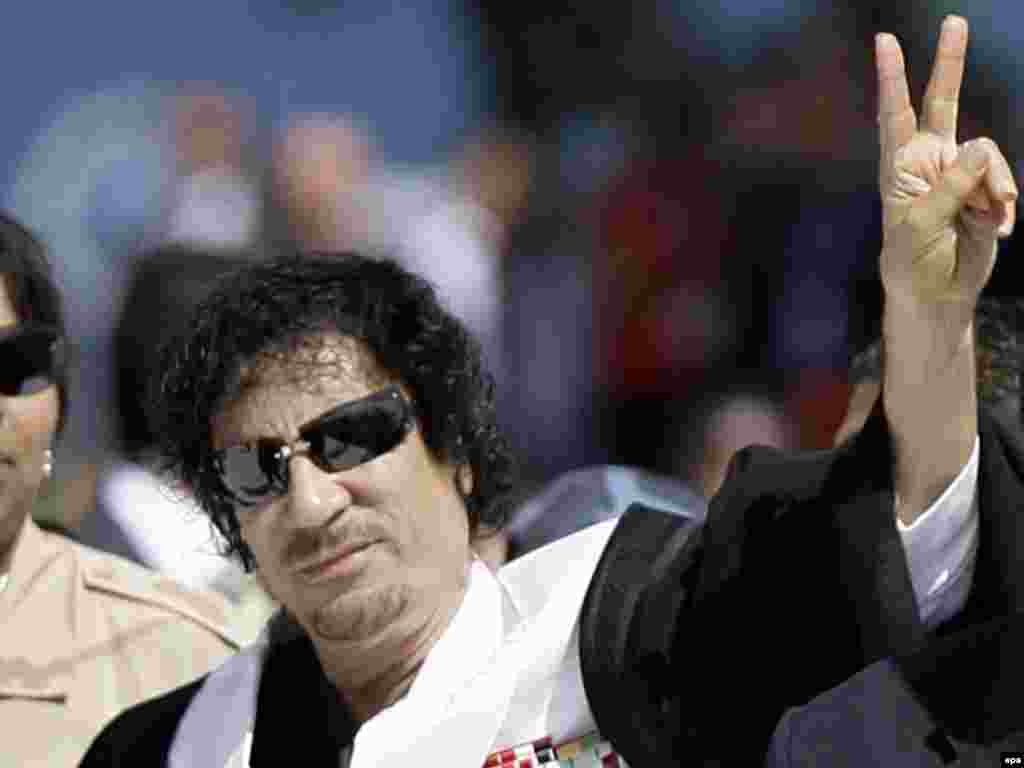
12/17Qaddafi makes the victory sign as he arrives for a session at the G8 summit in L'Aquila, Italy, on July 10, 2009.
Muammar Qaddafi took power in Libya in 1969 and ruled the North African country until he was deposed in 2011.
Show moreShow less
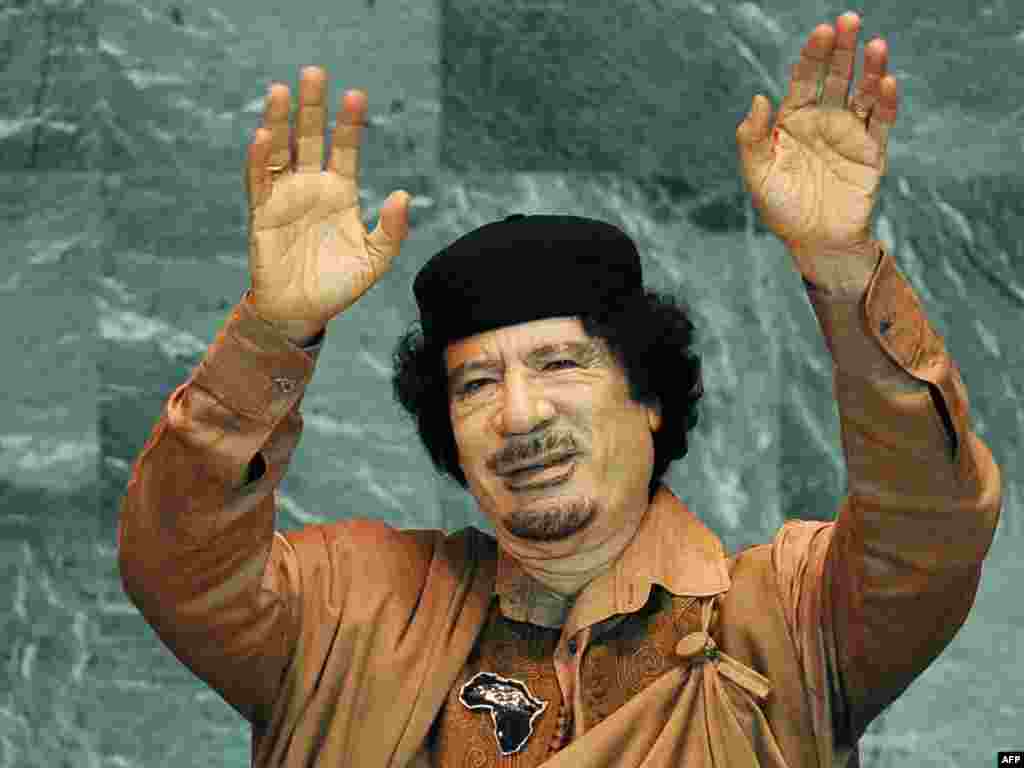
13/17Qaddafi waves before delivering a long, rambling speech to the United Nations General Assembly on September 23, 2009 at UN headquarters in New York. It was his first speech to the General Assembly in his four-decade rule.
Muammar Qaddafi took power in Libya in 1969 and ruled the North African country until he was deposed in 2011.
Show moreShow less
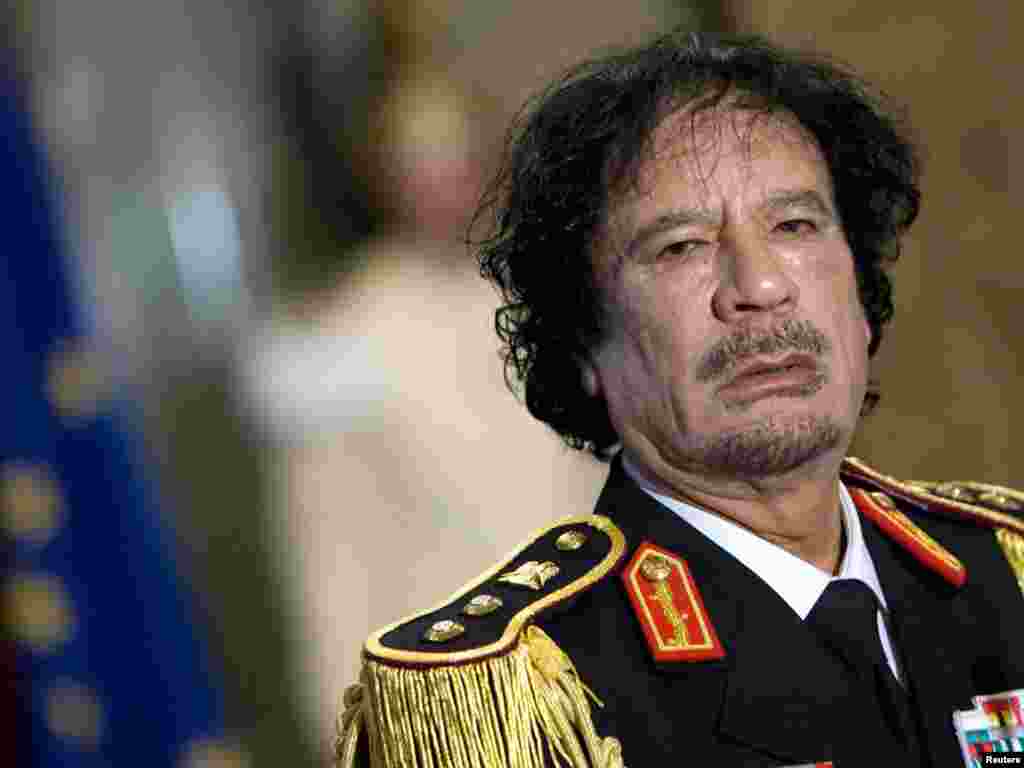
14/17Qaddafi looks on during a news conference in Rome on June 10, 2009.
Muammar Qaddafi took power in Libya in 1969 and ruled the North African country until he was deposed in 2011.
Show moreShow less
15/17Qaddafi delivers a speech during the opening session of a World Summit on Food Security organized by the Food and Agriculture Organization on November 16, 2009, at its headquarters in Rome.
Muammar Qaddafi took power in Libya in 1969 and ruled the North African country until he was deposed in 2011.
Show moreShow less
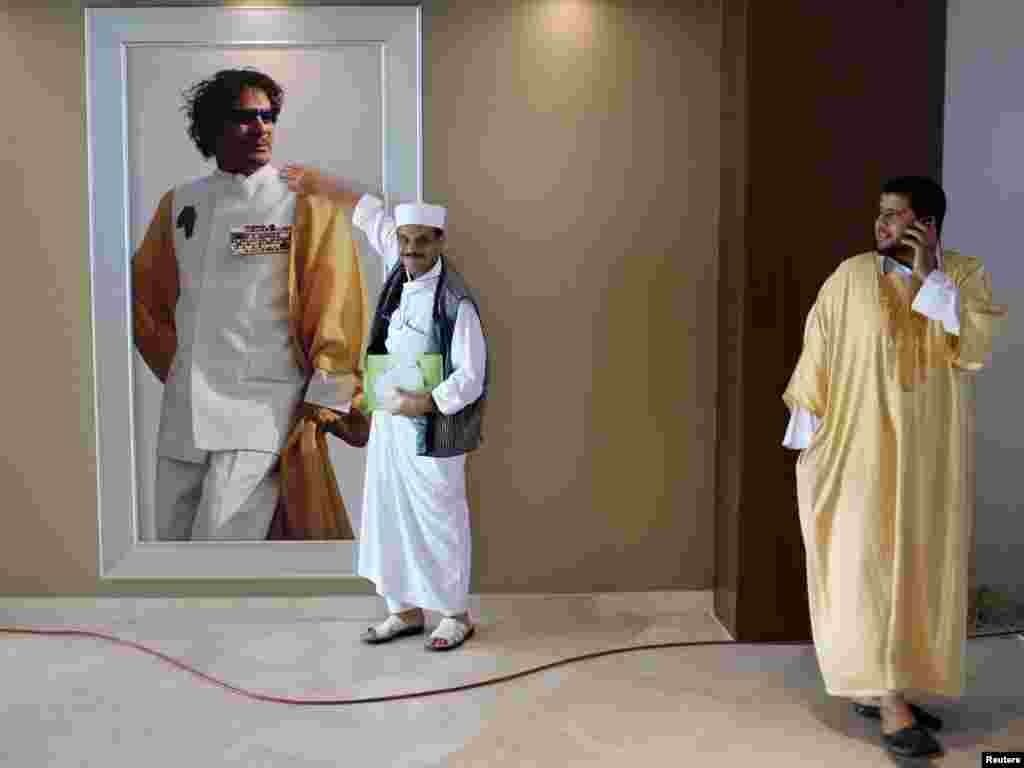
16/17A Libyan man poses for a picture in front of a portrait of Qaddafi during a meeting of senior Libyan clerics in Tripoli on July 27, 2011.
Muammar Qaddafi took power in Libya in 1969 and ruled the North African country until he was deposed in 2011.
Show moreShow less
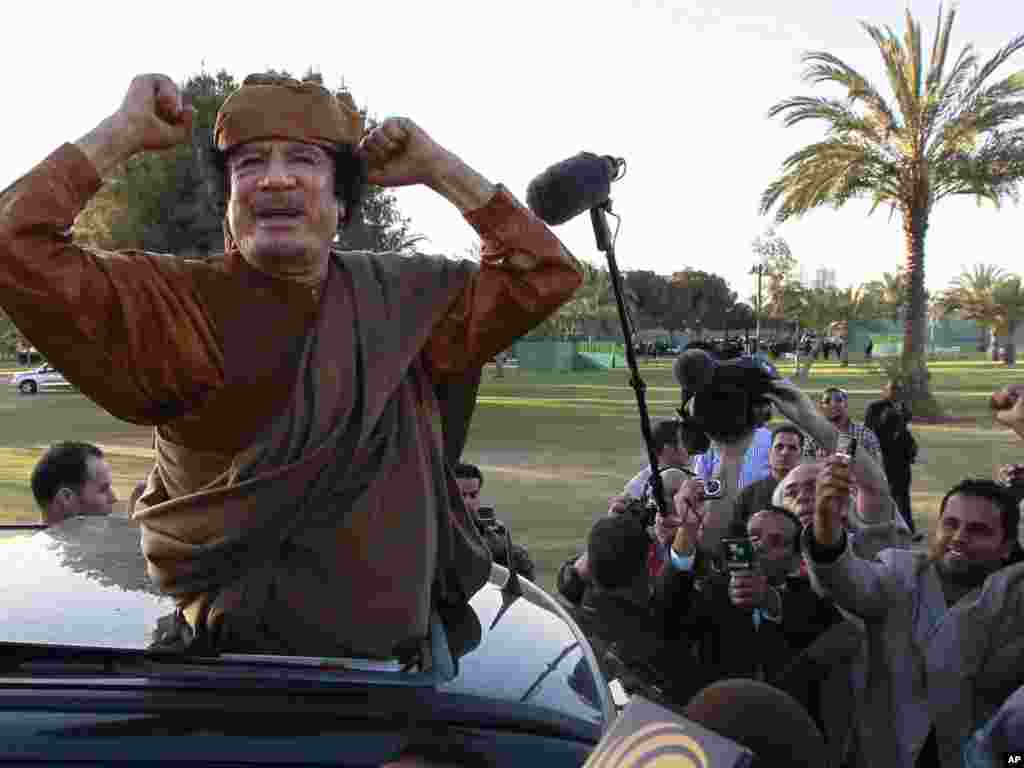
17/17Qaddafi gestures to his supporters in Tripoli on April 10, 2011. Libyan state television aired an audio message from Qaddafi urging loyalists to take arms and fight "traitors and NATO."
Muammar Qaddafi took power in Libya in 1969 and ruled the North African country until he was deposed in 2011.
Show moreShow less
Previous slide
Next slide
"We are capable of destroying the enemies, destroying the enemies by the will of the people -- by the armed people. When necessary, arsenals will be opened to arm all Libyan people, all the Libyan tribes. Libya will turn into red fire and ember," Qaddafi said.
"I came here to greet you and your courage. I would like to tell you in order to respond to them that I am in the middle of the people, in the middle of the crowds, because Muammar Qaddafi is not a president, or a king, and does not have any constitutional authorities. But the people love him and see him."
A Hero To The Poor
Of course, Qaddafi did not initially take power at age 27 with language like this. At that time, in 1969, he emphasized his identity as an ordinary person who served the country by toppling the corrupt and ailing King Idris I. Then he was simply a Bedouin, born in 1942 somewhere in the desert and a humble captain who merely promoted himself to the rank of colonel after the coup.
At first, he endeared himself to the poor, once by famously disguising himself as an old and sick woman seeking treatment from a hospital in the middle of a night. When the door was slammed in his face, he fired the hospital's management the next morning saying even the indigent deserved the best care.
He also initiated welcome public-works projects, including a network of pipes -- the Great Manmade River -- to supply fresh water from beneath the Sahara to the cities of northern Libya
Funding Terror
But over the years, he failed to use Libya's oil wealth to lift his countrymen from poverty. Instead, vast sums went to the elite around him and to fund a police state as repressive as Saddam Hussein's Iraq. Informants watched people in government offices, factories, and schools, and dissidents both at home and living abroad were executed or assassinated.
Qaddafi's powerful security force foiled an assassination attempt by members of the Libyan Army in 1993, crushed an antigovernment riot in Tripoli in 1996, and again crushed unrest in Benghazi in 2006.
At the same time, Qaddafi spent billions in supporting a wide variety of terrorist groups and regimes -- including Iran, Iraq, Syria, Uganda, the Palestine Liberation Organization and its sub-groups, as well as the Irish Republican Army.
He fought an unsuccessful war against Egypt, a disastrous war against Chad that greatly contributed to sparking the ethnic conflict in Darfur, and had a tumultuous relationship with the United States.
The Bill Comes Due
It was the Libyan-orchestrated bombing of a Berlin nightclub popular with U.S. soldiers that led Washington to bomb several of Qaddafi's power centers in Tripoli in 1986. And it was in response to those strikes that Libyan agents blew up a Pan Am flight over Lockerbie, Scotland, in 1988, killing 270 people.
Shortly afterward, the international community rallied to ostracize Libya by slapping stiff sanctions on the country, sanctions that stayed in place for more than a decade.
But if Qaddafi was bloody-minded in confronting the many enemies he made at home and abroad, he also was capable of shrewd strategic shifts when it served his interests.
In 2003, his government took responsibility for the Lockerbie bombings and unilaterally gave up Libya's efforts to develop nuclear weapons. Both gestures led to the lifting of the UN sanctions and to improved relations with the West -- including much-needed new investment in Libya's oil sector.
In recent years, it often seemed Qaddafi had won his gambit to secure enough new oil wealth to assure he could seamlessly hand over power to one of his eight sons.
But his four decades of repressive rule exacted an enormous cost upon his nation and the bill suddenly came due. As his people turned furiously upon him, the Libyan leader was as rich as ever. But no one -- neither his well-paid police force, his elite military corps, nor his foreign mercenaries -- could save him.