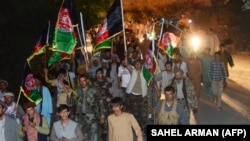
People wave the Afghan flag and chant slogans in support of the Afghan security forces fighting against the Taliban in Panjshir Province.
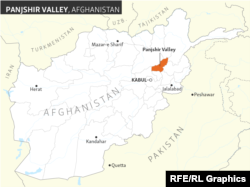
PANJSHIR VALLEY, Afghanistan -- With its soaring cliffs and steep gorges, this famed region has never been conquered by invading forces during more than 40 years of war.
It was a bastion of resistance to occupying Soviet troops in the 1980s and later the Taliban, until that fundamentalist group's brutal regime was toppled by the U.S.-led invasion in 2001.
Now, residents of the Panjshir Valley, which spills from the Hindu Kush Mountains to within about 150 kilometers of Kabul to the south, are gearing up for a new fight against their old nemesis.
The Taliban has captured around half of Afghanistan’s roughly 400 districts and 10 of the country’s 34 provincial capitals in a blistering offensive since the final pullout of foreign forces began on May 1.
The insurgents have seized control of large swaths of territory bordering Panjshir, including nearly all of the northern provinces of Badakhshan, Takhar, and Baghlan, and parts of the eastern province of Laghman.
With the Taliban threatening outside their gates, hundreds of residents have taken up arms to help government forces repel the militants. Former combatants are also training a new generation of fighters.
‘Defend Their Homeland’
“We have started to give combat training to our young men,” says Abdul Ahad Mujahid, one of the instructors.
The 58-year-old is a former member of the mujahedin, the U.S.-backed Islamist guerrilla fighters who battled Soviet forces during Moscow’s 1979-89 occupation. He later joined the Northern Alliance, a coalition of anti-Taliban groups that resisted Taliban rule from 1996-2001.
“We train them for five weeks during which they learn to handle weapons and land mines,” Mujahid says. “Then they are ready to defend their homeland.”
Fleeing Fighting, Afghans Flood Into Kabul And Gather At Pakistan Border
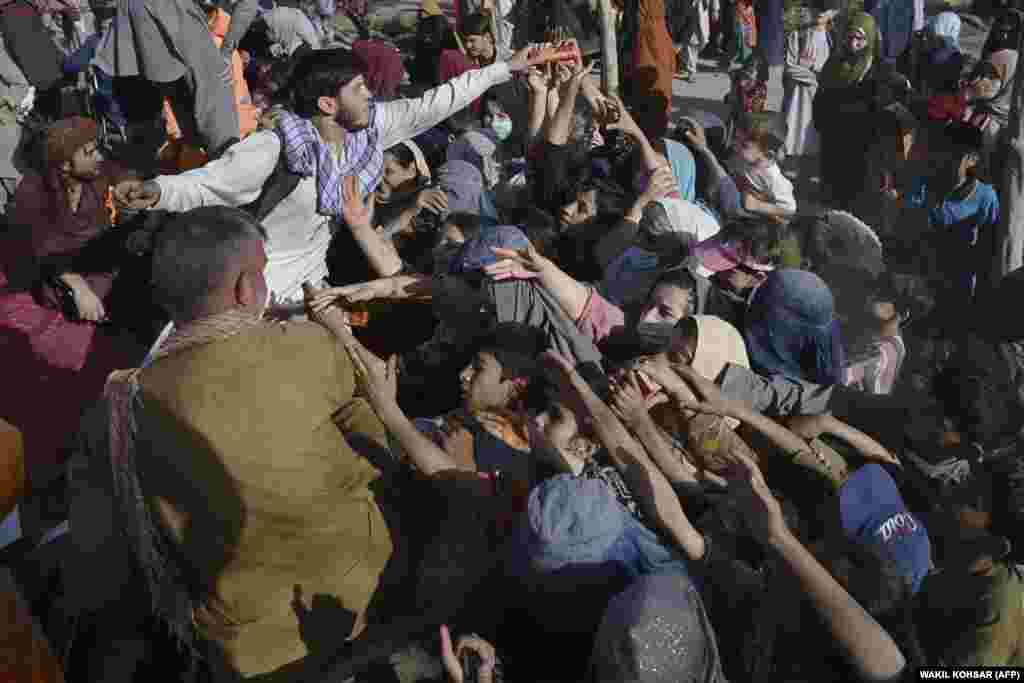
Tens of thousands of people have been flooding into the Afghan capital, Kabul, and gathering at the Pakistan border to escape the escalating fighting between Taliban militants and government forces. As more provincial capitals fell to the Taliban, Afghanistan's Refugees and Repatriations Ministry said that more than 35,000 families had arrived in the capital over the last week and that officials are struggling to provide them food and shelter.
Show moreShow less
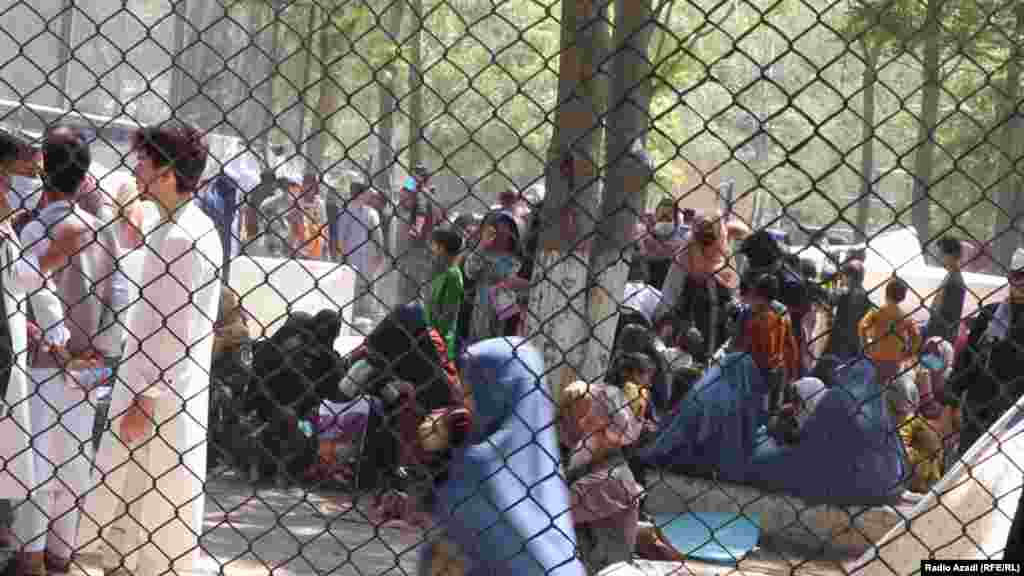
2/18Thousands of internally displaced people (IDPs) flooded into Kabul's northern Khair Khana district on August 11. Many traveled from Badakhshan, Baghlan, Kunduz, Takhar, and other Afghan provinces that have been overrun by Taliban militants.
Tens of thousands of people have been flooding into the Afghan capital, Kabul, and gathering at the Pakistan border to escape the escalating fighting between Taliban militants and government forces. As more provincial capitals fell to the Taliban, Afghanistan's Refugees and Repatriations Ministry said that more than 35,000 families had arrived in the capital over the last week and that officials are struggling to provide them food and shelter.
Show moreShow less
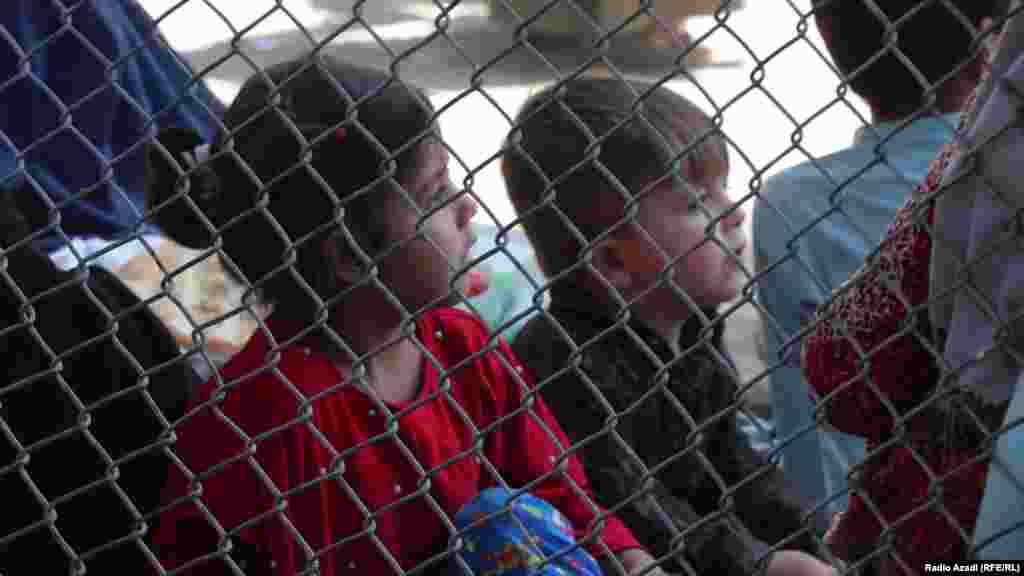
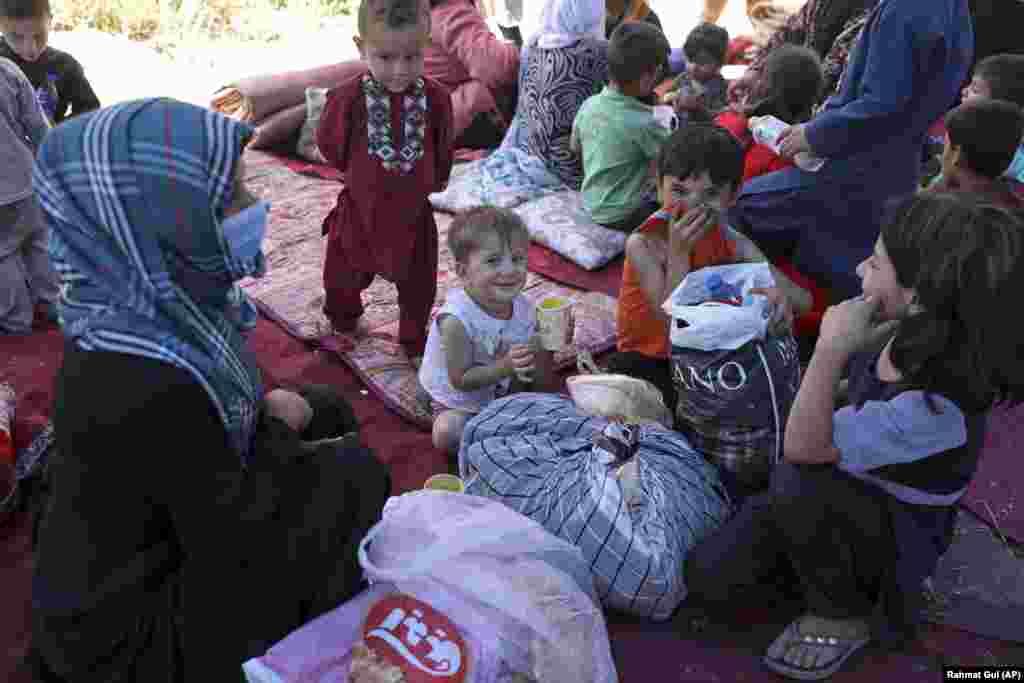
3/18Children who have fled recent fighting find safety in the Afghan capital, Kabul.
Tens of thousands of people have been flooding into the Afghan capital, Kabul, and gathering at the Pakistan border to escape the escalating fighting between Taliban militants and government forces. As more provincial capitals fell to the Taliban, Afghanistan's Refugees and Repatriations Ministry said that more than 35,000 families had arrived in the capital over the last week and that officials are struggling to provide them food and shelter.
Show moreShow less
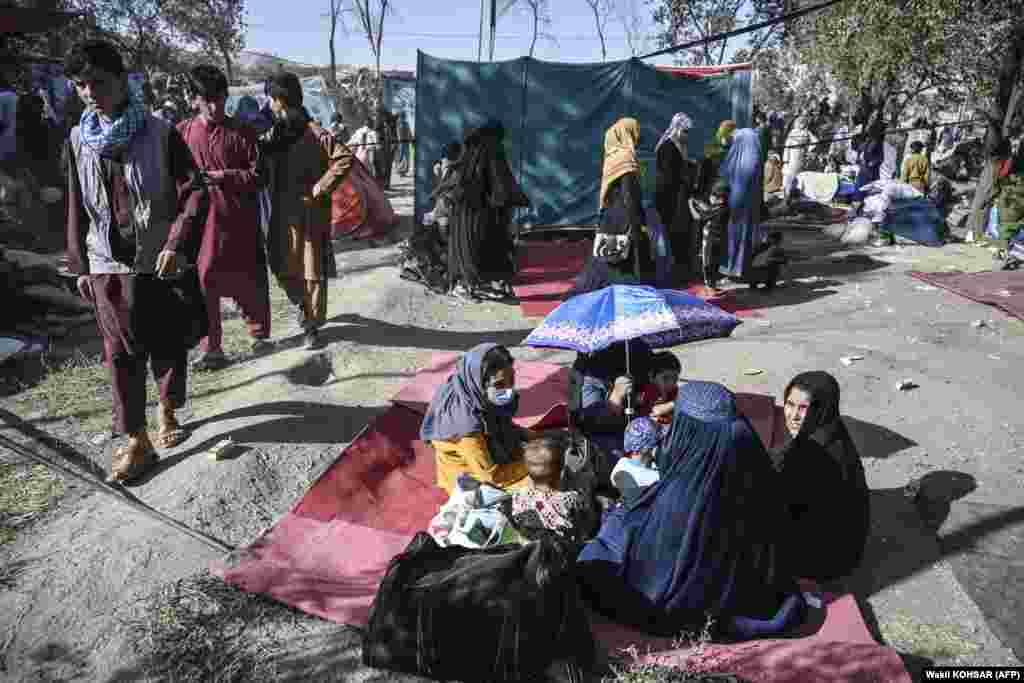
4/18Internally displaced Afghan families rest in a field in Kabul after fleeing Kunduz and Takhar provinces, where fighting raged between Taliban militants and Afghan security forces.
Tens of thousands of people have been flooding into the Afghan capital, Kabul, and gathering at the Pakistan border to escape the escalating fighting between Taliban militants and government forces. As more provincial capitals fell to the Taliban, Afghanistan's Refugees and Repatriations Ministry said that more than 35,000 families had arrived in the capital over the last week and that officials are struggling to provide them food and shelter.
Show moreShow less
5/18Some Afghan families have been living in tents at a makeshift camp in the Sara-e Shamali district of Kabul.
Tens of thousands of people have been flooding into the Afghan capital, Kabul, and gathering at the Pakistan border to escape the escalating fighting between Taliban militants and government forces. As more provincial capitals fell to the Taliban, Afghanistan's Refugees and Repatriations Ministry said that more than 35,000 families had arrived in the capital over the last week and that officials are struggling to provide them food and shelter.
Show moreShow less
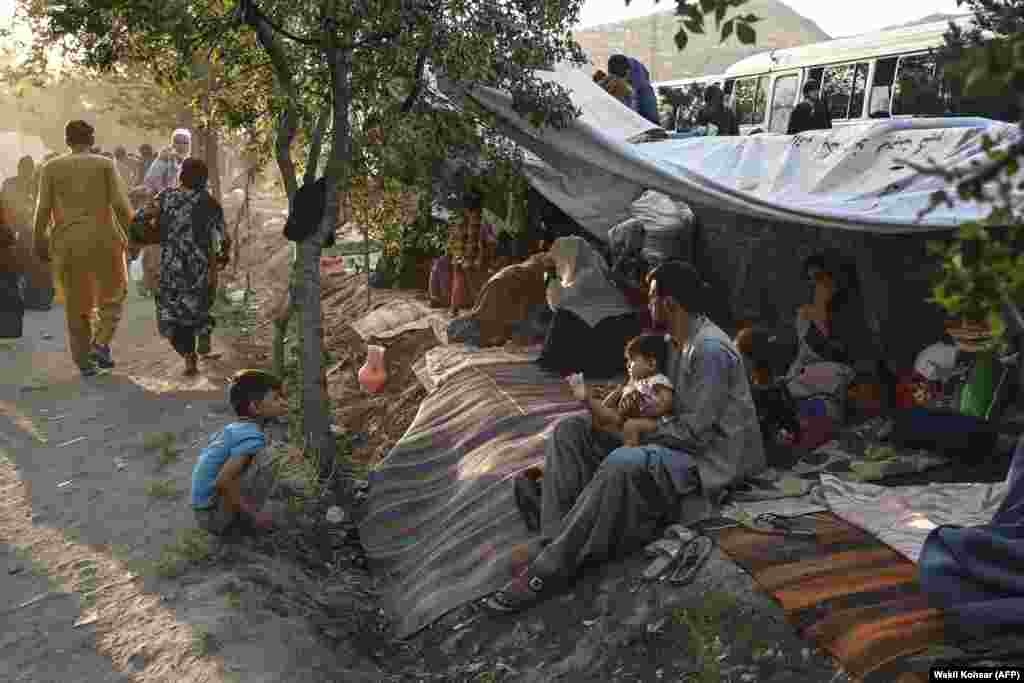
6/18Internally displaced Afghans sit under their shelters at the Sara-e Shamali camp in Kabul.
Tens of thousands of people have been flooding into the Afghan capital, Kabul, and gathering at the Pakistan border to escape the escalating fighting between Taliban militants and government forces. As more provincial capitals fell to the Taliban, Afghanistan's Refugees and Repatriations Ministry said that more than 35,000 families had arrived in the capital over the last week and that officials are struggling to provide them food and shelter.
Show moreShow less
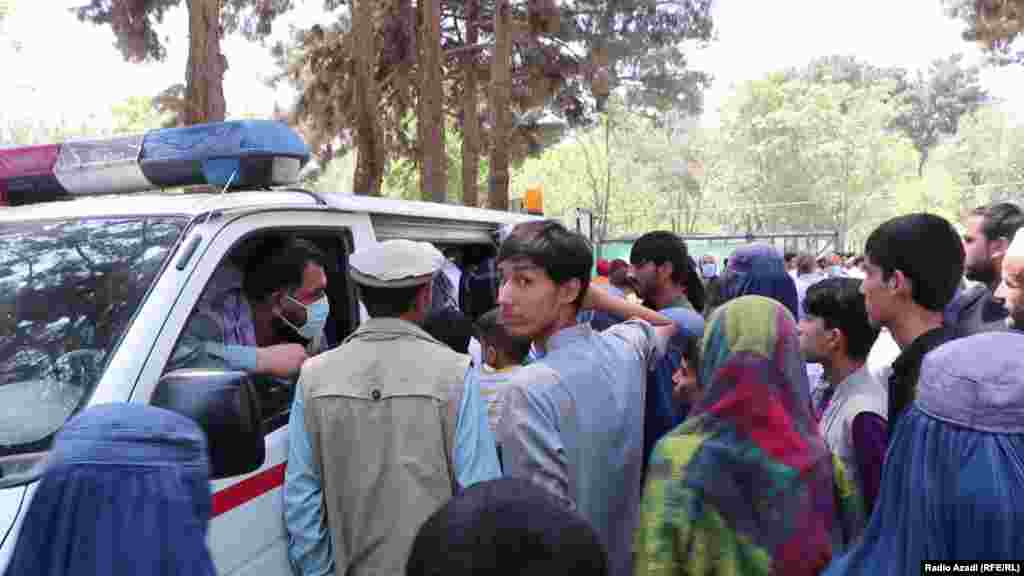
7/18People seeking medical care gather around an ambulance in Kabul's northern Khair Khana district on August 11.
Tens of thousands of people have been flooding into the Afghan capital, Kabul, and gathering at the Pakistan border to escape the escalating fighting between Taliban militants and government forces. As more provincial capitals fell to the Taliban, Afghanistan's Refugees and Repatriations Ministry said that more than 35,000 families had arrived in the capital over the last week and that officials are struggling to provide them food and shelter.
Show moreShow less
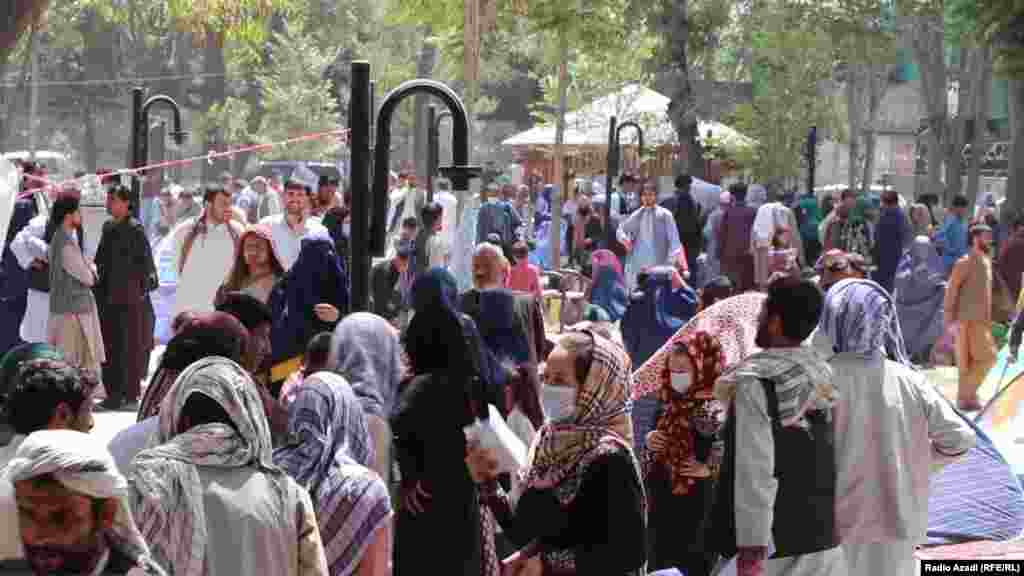
8/18Displaced Afghans have been living in this Kabul park.
Tens of thousands of people have been flooding into the Afghan capital, Kabul, and gathering at the Pakistan border to escape the escalating fighting between Taliban militants and government forces. As more provincial capitals fell to the Taliban, Afghanistan's Refugees and Repatriations Ministry said that more than 35,000 families had arrived in the capital over the last week and that officials are struggling to provide them food and shelter.
Show moreShow less
9/18Displaced children from Afghanistan's northern provinces take refuge in a public park in Kabul.
Tens of thousands of people have been flooding into the Afghan capital, Kabul, and gathering at the Pakistan border to escape the escalating fighting between Taliban militants and government forces. As more provincial capitals fell to the Taliban, Afghanistan's Refugees and Repatriations Ministry said that more than 35,000 families had arrived in the capital over the last week and that officials are struggling to provide them food and shelter.
Show moreShow less
10/18An Afghan child receives medical treatment in a Kabul park.
Tens of thousands of people have been flooding into the Afghan capital, Kabul, and gathering at the Pakistan border to escape the escalating fighting between Taliban militants and government forces. As more provincial capitals fell to the Taliban, Afghanistan's Refugees and Repatriations Ministry said that more than 35,000 families had arrived in the capital over the last week and that officials are struggling to provide them food and shelter.
Show moreShow less
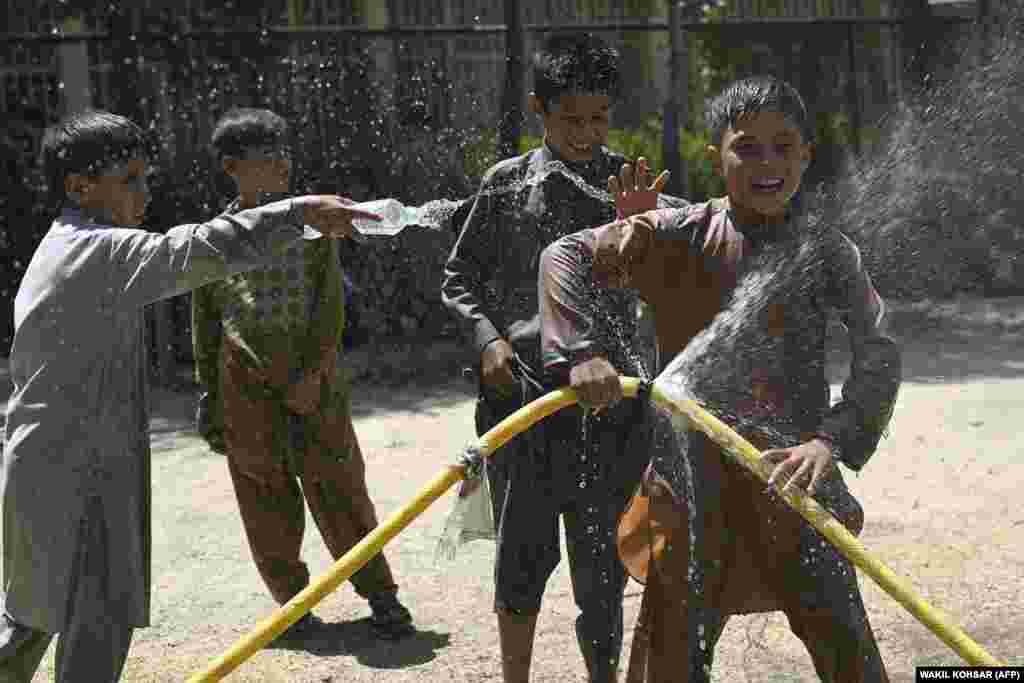
11/18Afghan children cool off while playing with a hose at the Shahr-e Naw park in Kabul.
Tens of thousands of people have been flooding into the Afghan capital, Kabul, and gathering at the Pakistan border to escape the escalating fighting between Taliban militants and government forces. As more provincial capitals fell to the Taliban, Afghanistan's Refugees and Repatriations Ministry said that more than 35,000 families had arrived in the capital over the last week and that officials are struggling to provide them food and shelter.
Show moreShow less
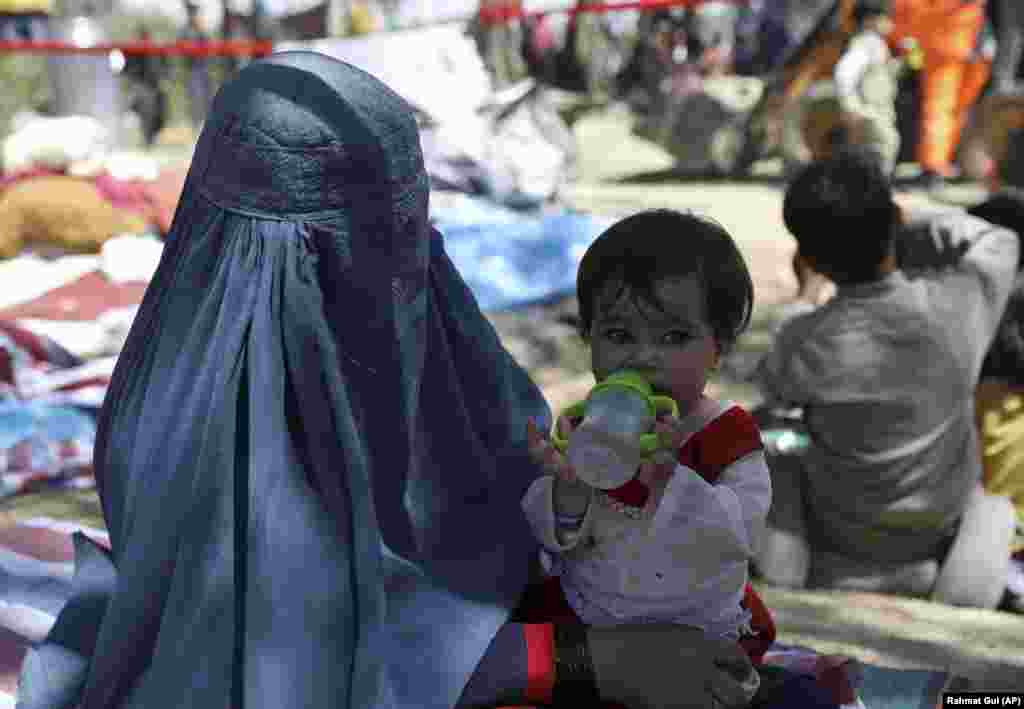
12/18An Afghan woman and child in a Kabul public park.
Tens of thousands of people have been flooding into the Afghan capital, Kabul, and gathering at the Pakistan border to escape the escalating fighting between Taliban militants and government forces. As more provincial capitals fell to the Taliban, Afghanistan's Refugees and Repatriations Ministry said that more than 35,000 families had arrived in the capital over the last week and that officials are struggling to provide them food and shelter.
Show moreShow less
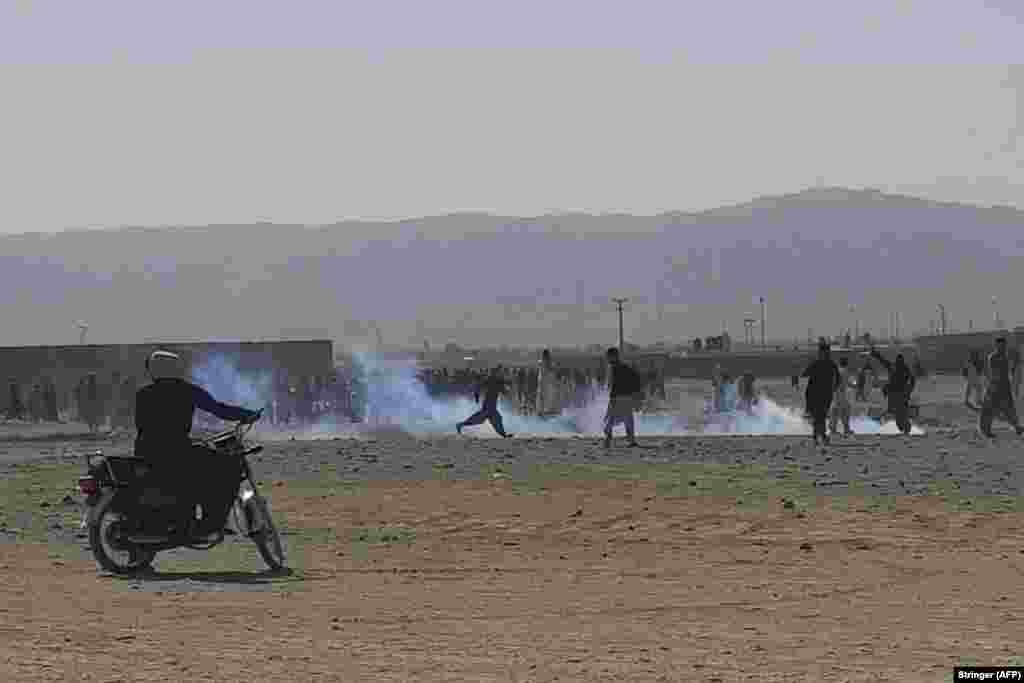
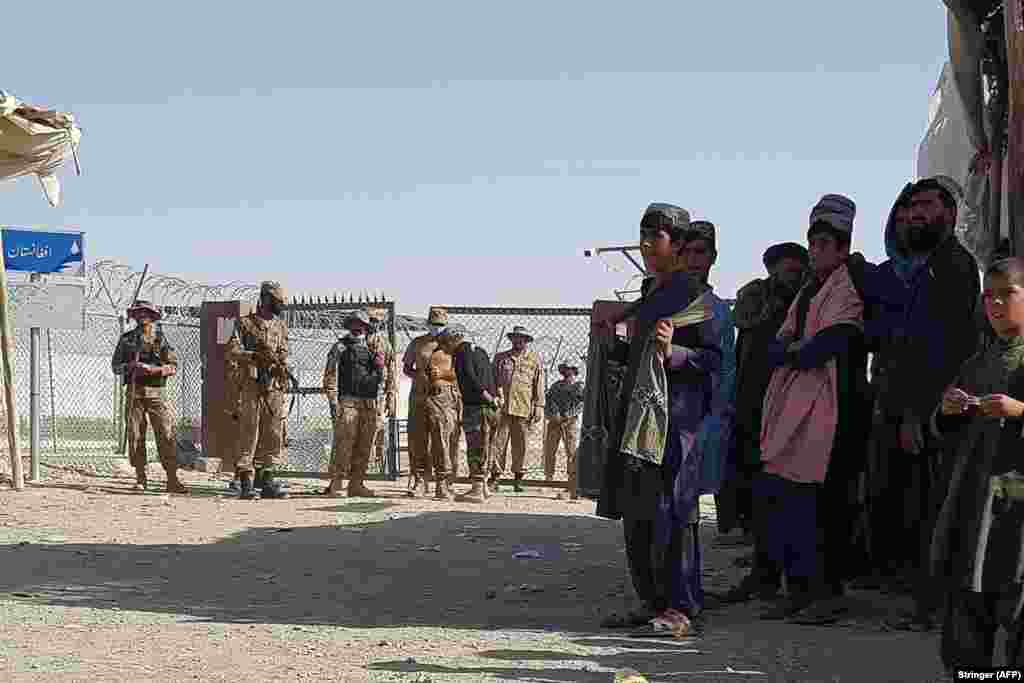
13/18Pakistani security forces use tear gas to disperse displaced Afghans who were gathering at the Pakistani border on August 12. Many Afghans want to get to the Pakistani city of the Chaman border crossing, but it was closed after the Taliban took control of the Kandahar side.
Tens of thousands of people have been flooding into the Afghan capital, Kabul, and gathering at the Pakistan border to escape the escalating fighting between Taliban militants and government forces. As more provincial capitals fell to the Taliban, Afghanistan's Refugees and Repatriations Ministry said that more than 35,000 families had arrived in the capital over the last week and that officials are struggling to provide them food and shelter.
Show moreShow less
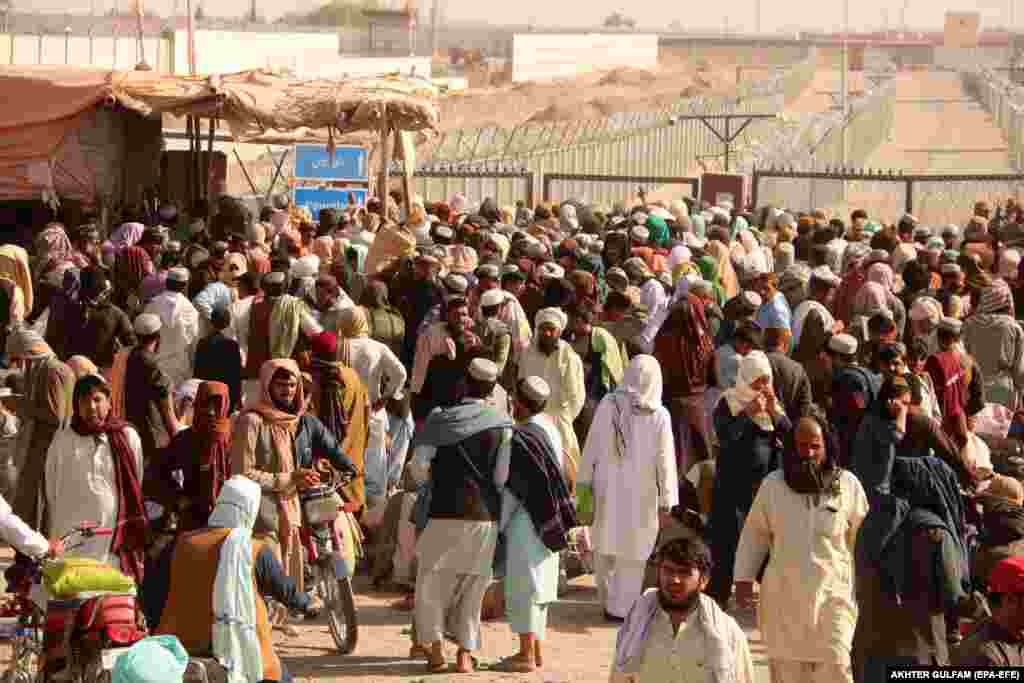
14/18People stranded at the Afghan-Pakistan border on August 11 after the Chaman crossing was closed. The Taliban's shadow governor for Kandahar Province issued a statement a week before, announcing the closure of the border.
Tens of thousands of people have been flooding into the Afghan capital, Kabul, and gathering at the Pakistan border to escape the escalating fighting between Taliban militants and government forces. As more provincial capitals fell to the Taliban, Afghanistan's Refugees and Repatriations Ministry said that more than 35,000 families had arrived in the capital over the last week and that officials are struggling to provide them food and shelter.
Show moreShow less
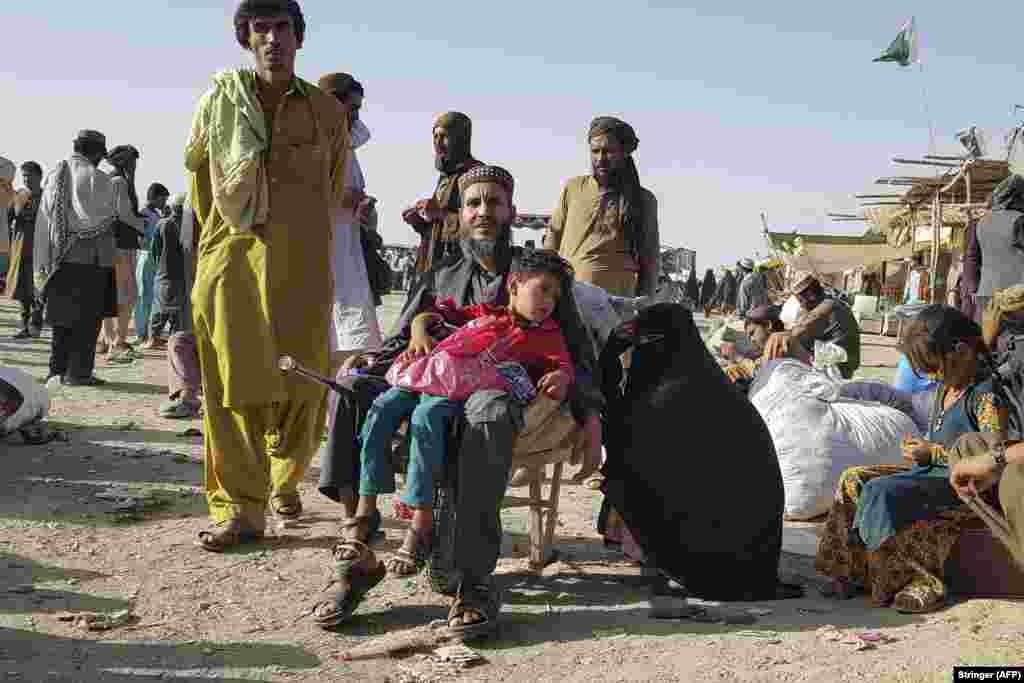
15/18Afghan families stranded at the Afghan-Pakistan border on August 12. The Taliban has taken control of most of Kandahar Province and there has been heavy fighting in the provincial capital as government forces try to hold onto Kandahar city.
Tens of thousands of people have been flooding into the Afghan capital, Kabul, and gathering at the Pakistan border to escape the escalating fighting between Taliban militants and government forces. As more provincial capitals fell to the Taliban, Afghanistan's Refugees and Repatriations Ministry said that more than 35,000 families had arrived in the capital over the last week and that officials are struggling to provide them food and shelter.
Show moreShow less
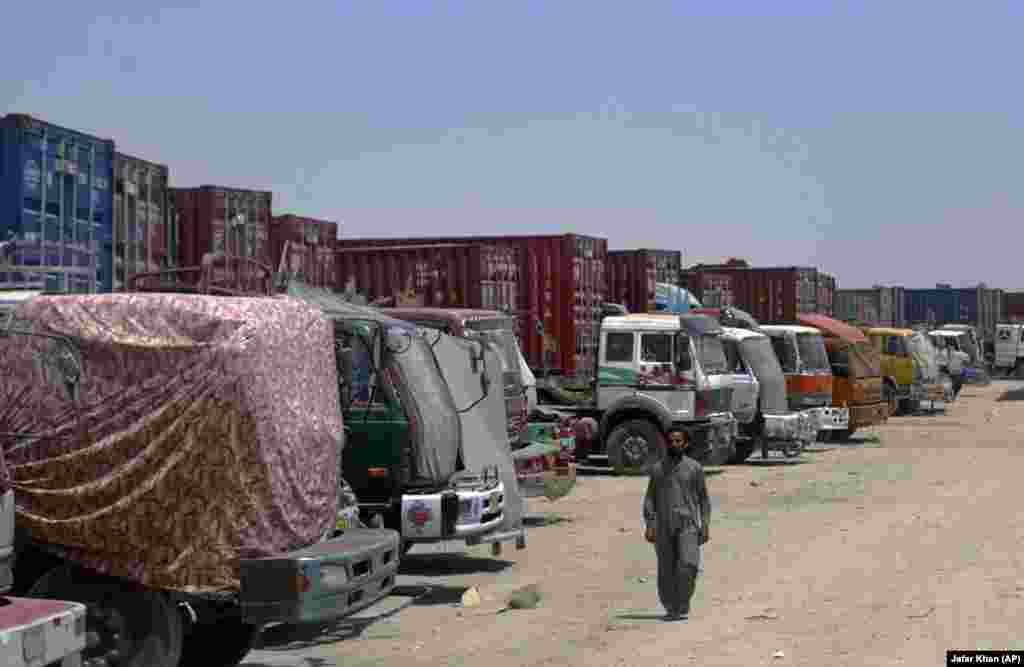
16/18A driver walks past Afghan-bound trucks stuck at the Chaman border crossing.
Tens of thousands of people have been flooding into the Afghan capital, Kabul, and gathering at the Pakistan border to escape the escalating fighting between Taliban militants and government forces. As more provincial capitals fell to the Taliban, Afghanistan's Refugees and Repatriations Ministry said that more than 35,000 families had arrived in the capital over the last week and that officials are struggling to provide them food and shelter.
Show moreShow less
17/18Pakistani soldiers stand guard as stranded Afghans wait for the reopening of the border crossing on August 12.
Tens of thousands of people have been flooding into the Afghan capital, Kabul, and gathering at the Pakistan border to escape the escalating fighting between Taliban militants and government forces. As more provincial capitals fell to the Taliban, Afghanistan's Refugees and Repatriations Ministry said that more than 35,000 families had arrived in the capital over the last week and that officials are struggling to provide them food and shelter.
Show moreShow less
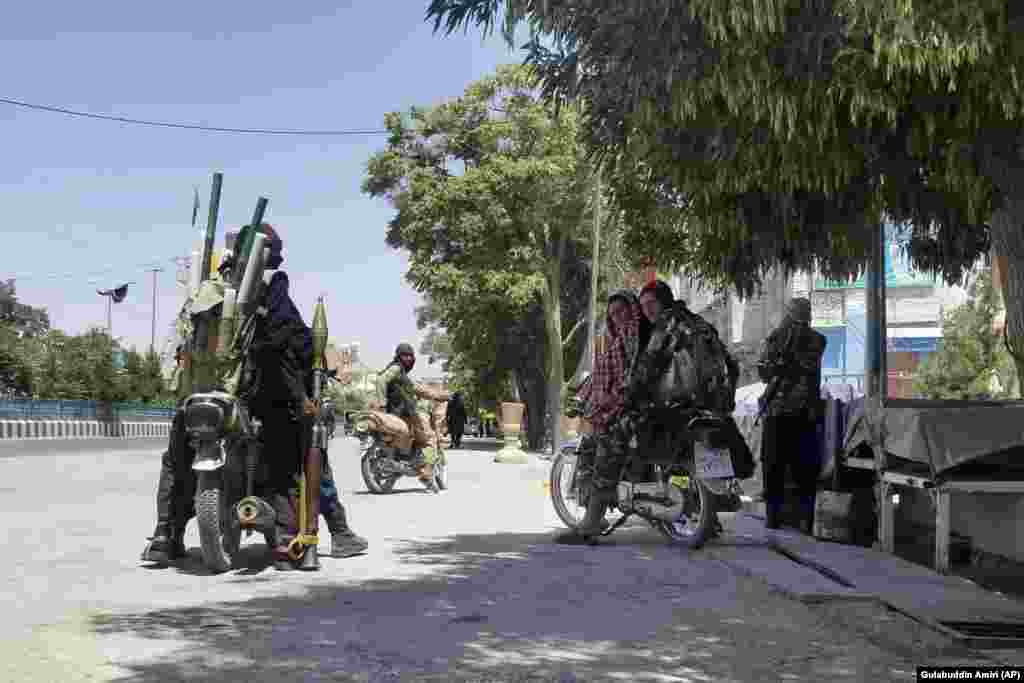
18/18Taliban fighters took control of Ghazni, the capital of Ghazni Province, on August 12. It becomes the 10th Afghan provincial capital to fall to the militants over the past week. Ghazni is located 150 kilometers southwest of Kabul and has major strategic importance. It lies along the Kabul-Kandahar highway that connects the capital with militant strongholds in the south.
Tens of thousands of people have been flooding into the Afghan capital, Kabul, and gathering at the Pakistan border to escape the escalating fighting between Taliban militants and government forces. As more provincial capitals fell to the Taliban, Afghanistan's Refugees and Repatriations Ministry said that more than 35,000 families had arrived in the capital over the last week and that officials are struggling to provide them food and shelter.
Show moreShow less
Previous slide
Next slide
Among the young men receiving training is Yusef Ahmadi.
"We are being trained so we have the skills that we need to fight the enemy. We have done physical fitness and drills. We are currently learning how to handle Kalashnikovs,” he says in reference to the Soviet-designed AK-47 assault rifle, the weapon of choice for guerrillas and militants around the world.
The Panjshir Valley, located in the province of the same name, has so far been largely shielded from Taliban attacks. But recently, the militants have encroached on the valley.
Taliban militants attacked government forces in Panjshir’s Abshar district on August 8, sparking clashes.
Nearly a year ago, the insurgents attacked the same district in an attempt to seize the government headquarters before they were pushed back. Police said 20 villagers were taken hostage by the Taliban but later released.
An Afghan boy sits next to poster bearing the image of the late resistance leader Ahmad Shah Masud.
Abdul Basit, a 26-year-old, says scores of young men from his home district of Rokha are receiving military training.
"We don’t want to go to war without knowing anything,” he says. “We are getting valuable lessons from our instructors. They have experience of fighting the Soviets and the Taliban.”
When their training is completed, the young men will be tasked with defending their villages and districts alongside troops from the Afghan National Army and Afghan National Police.
Second Resistance
The trained fighters are part of the Second Resistance, a civilian militia led by the son of Ahmad Shah Masud, the legendary guerrilla commander who was killed by Al-Qaeda militants posing as journalists just days before the September 11 attacks nearly 10,000 kilometers away in the United States.
The militia headed by the younger Ahmad Masud, a 32-year-old who received his military education in Britain, numbers several thousand men. His fighters have vowed to protect Panjshir and have already been deployed to districts in neighboring provinces to fight alongside government troops.
The Second Resistance is among dozens of loosely formed pro-government militias known collectively as the Public Uprising Forces (PUF).
Kabul has hailed the creation of the militias as a bulwark against advancing Taliban militants. But many of them are loyal to powerful former warlords who hold significant sway in the provinces.
Afghan President Ashraf Ghani, a Western-educated technocrat who has been in office since 2014, has spent years sidelining the country’s key power brokers, many of them ex-warlords who view Kabul with suspicion and resentment.
Regional strongmen have been remobilizing their old militias lately in anticipation of what many expect to be a bloody new chapter in a decades-old conflict.
Taliban fighters firing mortars in the Panjshir Valley in 1996.
Armed groups loyal to regional and local warlords have rearmed and reappeared in the country’s northern, western, and central regions.
Their resurgence coincides with waning confidence in the weak Afghan government and beleaguered Afghan security forces ahead of the complete withdrawal of foreign forces from Afghanistan by August 31.
There are fears that the return of the private militias -- many organized along ethnic lines -- could further undermine support for the central government and drag Afghanistan back into the chaos of the 1990s.
During its brutal civil war from 1992-96, Afghanistan descended into lawlessness as warlords and the Taliban essentially carved up the country into fiefdoms. Rival ethnic militias fought pitched battles for control of Kabul, killing some 100,000 people and leaving the capital in tatters.
More than two decades later, it is unclear what the Taliban's new push toward Kabul -- and its defense by a second generation of "lions" like those mobilizing to meet the Taliban threat in Panjshir -- means for a population still desperate for an end to the fighting.
Written by Frud Bezhan in Prague based on reporting by RFE/RL’s Radio Azadi correspondents in Afghanistan. Their names are being withheld for their protection.
RFE/RL's Radio Azadi is one of the most popular and trusted media outlets in Afghanistan. Nearly half of the country's adult audience accesses Azadi's reporting on a weekly basis.
Frud Bezhan is Senior Regional Editor in the English-language Central Newsroom at RFE/RL, leading coverage of the Middle East, South Asia, and Central Asia. Previously, he was the Regional Desk Editor for the Near East, with a primary focus on Iran, Afghanistan, and Pakistan. As a correspondent, he reported from Afghanistan, Turkey, Kosovo, and Western Europe.