




![Ayatollah Ahmad Khatami called on the authorities to keep "foreign networks" blocked, saying they were "teaching people to riot [and] commit crimes."](https://gdb.rferl.org/7f216fc6-9ccc-4673-83bd-e9aaa879c766_cx34_cy13_cw66_w250_r1_s.jpg)
Iran's judiciary has acknowledged the arrest of around 100 alleged leaders of ongoing public unrest over gasoline rationing and price hikes that have been met with a fierce official response and bellicose warnings against further crossing the regime.
The sweeps and detentions are the worst Iran has seen since socioeconomic woes sparked street protests in late 2017 and they have been accompanied by increasingly dire threats from Iranian officials, including one that some protesters should face death sentences.
Iranian authorities have historically underreported casualty and detention figures during times of protest, and a near-nationwide block on Internet access has made it difficult to independently assess the situation.
The Office of the UN High Commissioner for Human Rights and outside groups have suggested that dozens of demonstrators have been killed and many more injured, with many more in detention.
Tehran called outside figures "fabricated" and said nine people had been confirmed killed and more than 1,000 arrested.
Reports and leaked images this week suggested the protests had spread to over 100 Iranian cities since the government announcement of the fuel restrictions on November 15.
In Tehran, Ayatollah Ahmad Khatami told worshipers on November 22 that "some of the leaders of the unrest were anarchists that deserve the death sentence."
He accused them of targeting mosques and other Islamic institutions.
Other officials have described demonstrators as "thugs" and "rioters" and blamed "foreign foes" for a "plot" against Iran's clerically dominated leadership.
Basij paramilitary Brigadier General Salar Abnoosh said a "coalition of evil" made up of Israel, the United States, and Saudi Arabia was behind the "sedition," according to the semiofficial news agency ISNA.
Earlier, the official website of the hard-line Islamic Revolutionary Guards Corps (IRGC) praised the military for taking "timely action" against "rioters" and suggested that calm had been restored.
There were reports saying that dozens of gas stations, banks, shops, and public property had been damaged or destroyed by protesters.
Extensive Damage Revealed In Tehran From Iranian Gas-Hike Protests


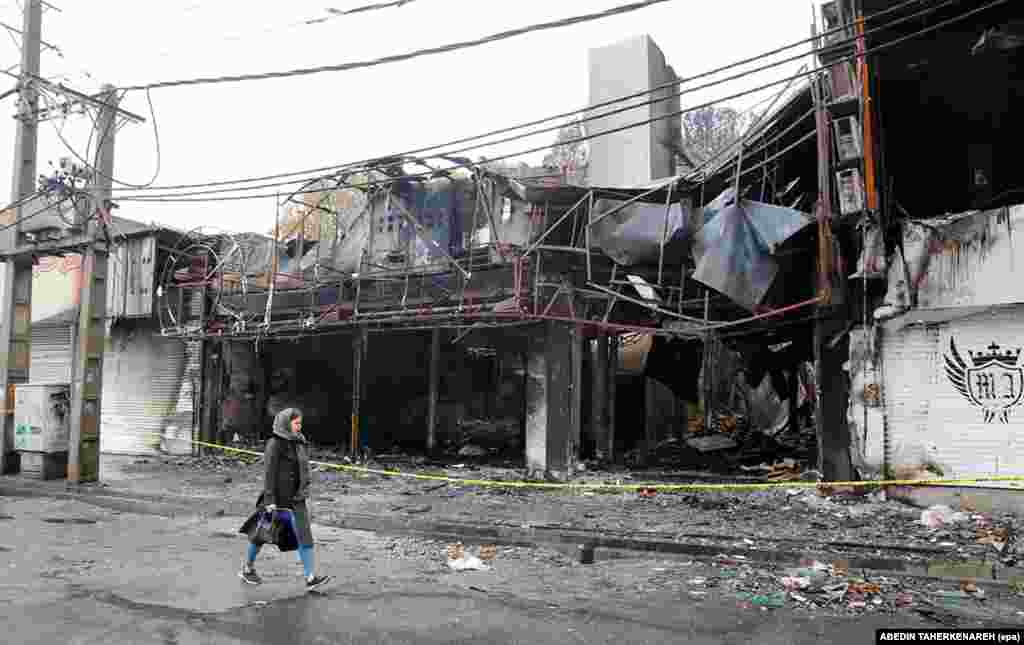
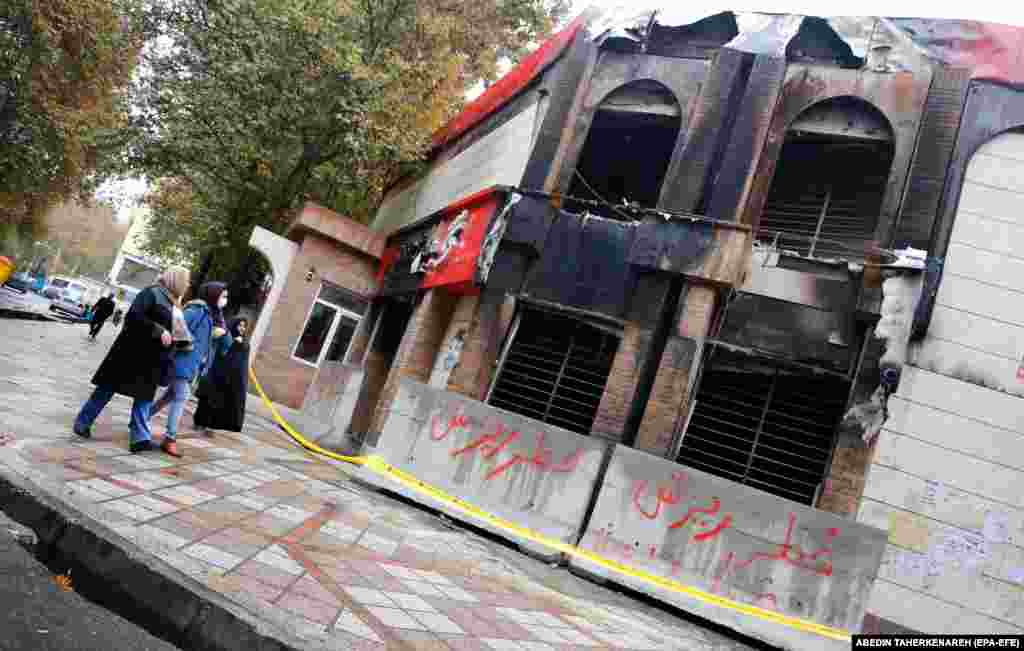
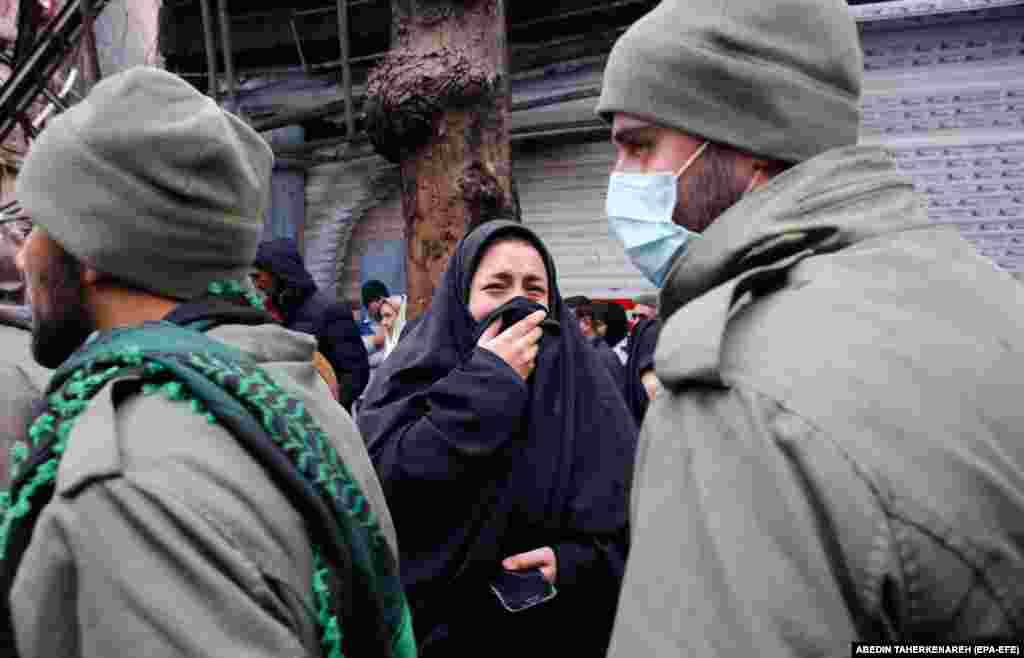


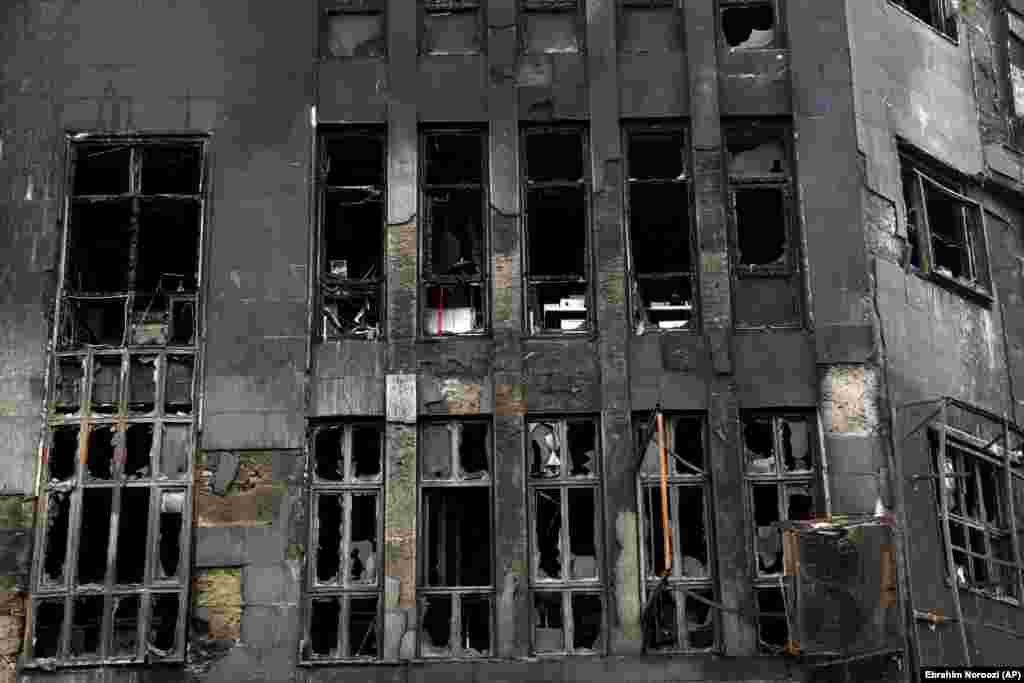

Click image to open gallery
Iranian state-run Press TV has cited U.S. sanctions as necessitating the fuel rationing and subsidy cuts, and acknowledged that they had been delayed over "the move's probable backlash."
"Approximately 100 leaders, heads, and main figures of the recent unrest were identified and arrested in various parts of the country by the Islamic Revolutionary Guards Corps," Reuters quoted judiciary spokesman Gholamhossein Esmaili as saying on November 22 in a reference to the feared branch of Iran's armed forces, citing the official IRNA news agency.
Six days into what international net-freedom group NetBlocks.org called "a near-total Internet shutdown" in Iran, the group said on November 22 that Iranians' connectivity to the outside world was still at a trickle.
U.S. President Donald Trump on November 21 accused Tehran of disconnecting Iranians from the Internet to cover up dozens of killings over the previous week amid the protests.
Iran is stinging economically from U.S. sanctions reimposed after Trump last year abandoned a 2015 nuclear deal between Tehran and world powers to trade curbs on Iran's disputed nuclear program for sanctions relief.
On November 22, the United States imposed sanctions on Iran's communications minister, Mohammad Javad Azari-Jahromi, for his role in "wide-scale Internet censorship."
The U.S. Treasury Department said it would block any of Azari-Jahromi's property under U.S. jurisdiction.
"Iran's leaders know that a free and open Internet exposes their illegitimacy, so they seek to censor Internet access to quell anti-regime protests," Treasury Secretary Steven Mnuchin said in the statement.
Jahromi had said that web access was already restored in some places and that officials aimed to return the entire country to full access.
But a private IT company was quoted by news agency dpa as saying on November 22 that the connections most Iranians use on smartphones were still out in the capital, although some ADSL connections were working.
The day before, U.S. Secretary of State Mike Pompeo called on Iranians to send the United States videos, photos, and other information "documenting the regime's crackdown" on protesters, as authorities in Iran are slowly easing up their blockage of Internet access. He vowed that "the U.S. will expose and sanction the abuses."
In a Friday Prayer sermon broadcast live on state television on November 22, Ayatollah Khatami called on the authorities to keep "foreign networks" blocked after reconnection, saying they were "teaching people to riot [and] commit crimes."
Khatami is a member of the Assembly of Experts that is tasked with overseeing the Iranian supreme leader's work and choosing future supreme leaders.
Local media have said some demonstrators could face execution.
The UN rights commissioner cited reports suggesting that "dozens of people may have been killed and many people injured" and Amnesty International said at least 106 protesters were believed to have died.
The European Union earlier in the day said it expected Iranian authorities to restore communications and exercise "maximum restraint" in handling the protests, saying the rights to freedom of expression and assembly "must be guaranteed."
Protesters should "demonstrate peacefully," spokeswoman Maja Kocijancic said, adding that "any violence is unacceptable."