Rakhat Aliev, a former son-in-law of Nursultan Nazarbaev who became an opponent of the long-ruling Kazakh president, has been found dead in a Vienna jail in what Austrian officials said was a suicide.
Aliev's lawyer voiced doubt that he killed himself and called for a "very thorough" investigation.
An Austrian court spokeswoman said on February 24 that Aliev, who was being held on murder charges he dismissed as politically motivated, had "committed suicide."
The warden of Josefstadt prison, Peter Prechtl, said Aliev hanged himself with bandages on a coat hook in a single-person cell in the prison's medical unit, where he had been placed at his own request.
Austrian media quoted Aliev's lawyer, Klaus Ainedter, as saying that he "seriously doubts" that the 52-year-old killed himself.
"I visited him yesterday. There was no indication of a suicide risk," Ainedter said.
"We trust that his death will be investigated very thoroughly and that the cause of death will be established clearly," he told the Austrian APA news agency, adding that he does not want to accuse anyone of any wrongdoing.
Prison warden Prechtl said that Aliev "was not seen as suicidal" and was allowed to stay in his cell alone without precautions.
He said Aliev's cell was checked regularly but that the cell's bathroom was not under surveillance.
Kazakh Foreign Ministry spokesman Nurzhan Aitmakhanov said on February 24 that the ministry was checking the reports about Aliev's death.
Darigha Nazarbaeva
Many journalists and government critics in Kazakhstan told RFE/RL that Aliev's death sounded suspicious as Kazakhstan is getting ready for an early presidential election this year and Aliev had promised to reveal "more facts" about his former father-in-law's alleged misdeeds.
A well-known independent Kazakh journalist, Sergei Duvanov, told RFE/RL that he hopes Austrian investigators will find out if any other inmates had access to Aliev's cell. He also expects all details to be made public about what happened overnight from February 23 to February 24 in the Josefstadt prison and, specifically, in Aliev's cell.
Aliev was married for many years to Nazarbaev's eldest daughter, Darigha, and served as deputy chief of Kazakhstan’s National Security Committee under Nazarbaev, who has led the energy-producing Central Asian state since the Soviet era.
But Aliev fled to Austria, where he had served as ambassador, amid an investigation into the abduction and killing of the two Kazakh bankers in 2007.
Austrian authorities repeatedly refused to extradite Aliev, citing concerns that he might not face a fair trial in Kazakhstan, but opened their own investigation in 2011 and charged him with the murders in December 2014.
Rakhat Aliev, Imprisoned Former Kazakh Diplomat, Found Dead In Austria
1/11In the early 2000s, Rakhat Aliev was one of the most influential politicians in Kazakhstan. Trained as a physician, Aliev served as the deputy chief of the National Security Committee and later as the deputy commander of the presidential guard. In 2002, he was unexpectedly sent into "honorable exile" as the Kazakh ambassador to Austria.
Rakhat Aliev, a former son-in-law of the Kazakh president turned prominent government critic, was found dead in a jail in Vienna on February 24. Aliev was being held on murder charges, which he had dismissed as politically motivated. Austrian authorities have said his death appears to be a suicide, but Aliev's lawyer has voiced doubts and called for a "very thorough" investigation. Here are some photographs from a life full of controversy.
Show moreShow less
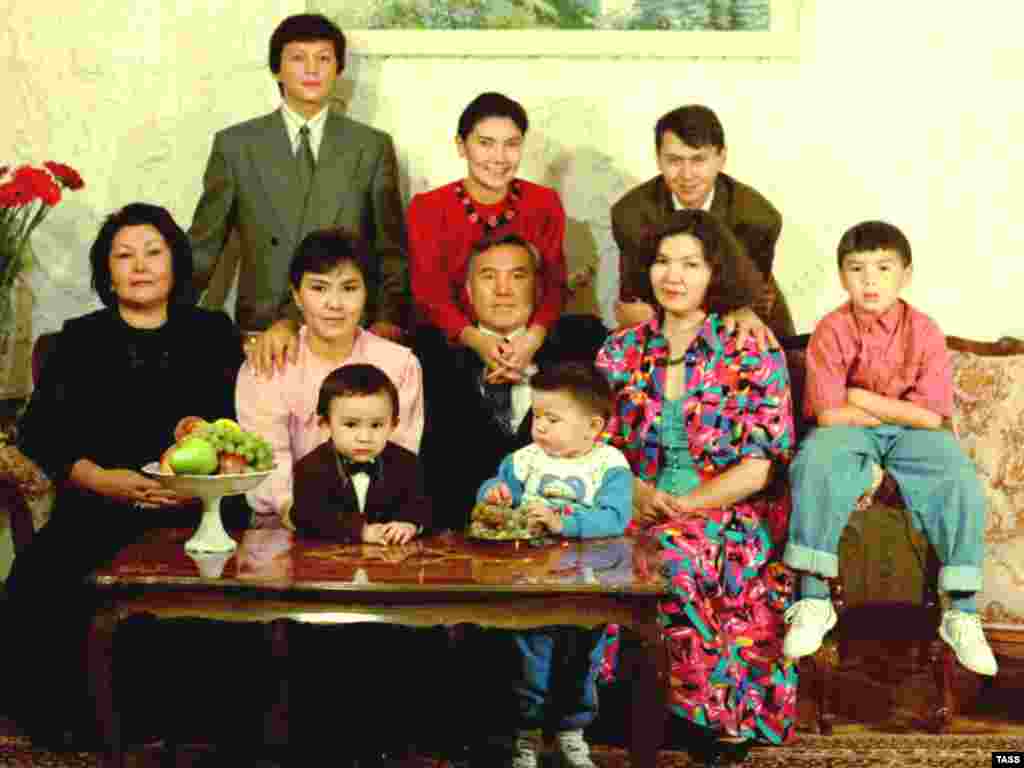
2/11Rakhat Aliev (top right) with his wife, Darigha Nazarbaeva (top center), the eldest daughter of Kazakh President Nursultan Nazarbaev (center), in 1992.
Rakhat Aliev, a former son-in-law of the Kazakh president turned prominent government critic, was found dead in a jail in Vienna on February 24. Aliev was being held on murder charges, which he had dismissed as politically motivated. Austrian authorities have said his death appears to be a suicide, but Aliev's lawyer has voiced doubts and called for a "very thorough" investigation. Here are some photographs from a life full of controversy.
Show moreShow less
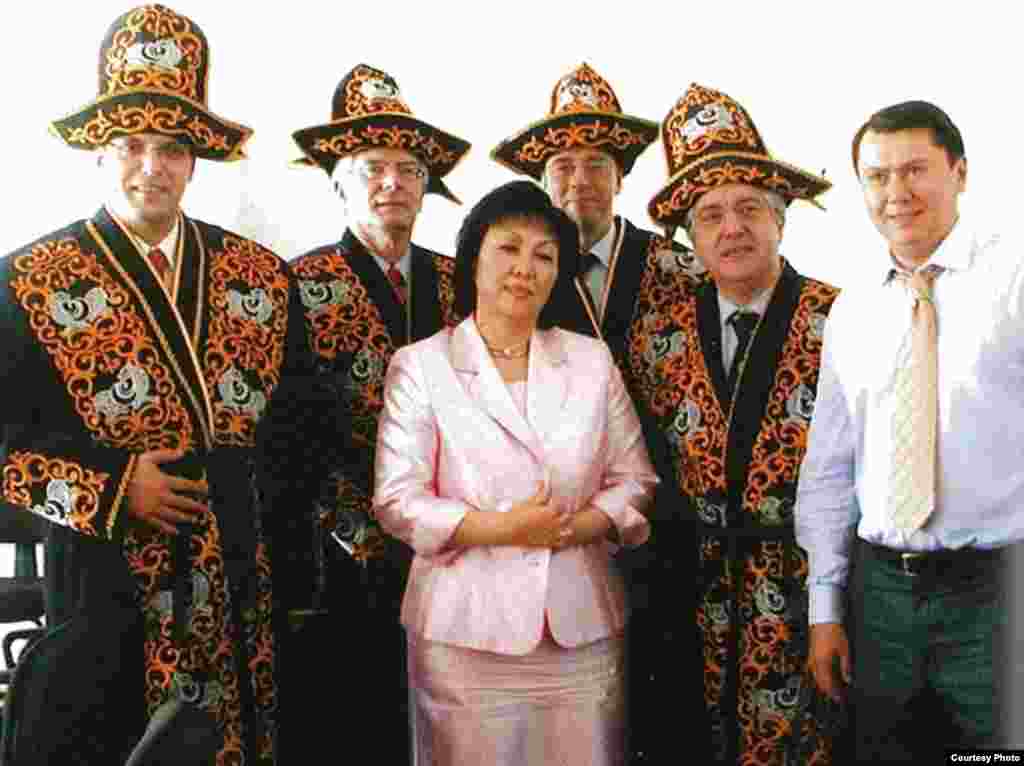
3/11Aliev poses with diplomats in 2004. While serving as the Kazakh ambassador to Austria, he actively pushed for Kazakhstan to take over the chairmanship of the OSCE, which it achieved in 2010.
Rakhat Aliev, a former son-in-law of the Kazakh president turned prominent government critic, was found dead in a jail in Vienna on February 24. Aliev was being held on murder charges, which he had dismissed as politically motivated. Austrian authorities have said his death appears to be a suicide, but Aliev's lawyer has voiced doubts and called for a "very thorough" investigation. Here are some photographs from a life full of controversy.
Show moreShow less
4/11After returning to Kazakhstan in 2005, Aliev was appointed deputy foreign minister.
Rakhat Aliev, a former son-in-law of the Kazakh president turned prominent government critic, was found dead in a jail in Vienna on February 24. Aliev was being held on murder charges, which he had dismissed as politically motivated. Austrian authorities have said his death appears to be a suicide, but Aliev's lawyer has voiced doubts and called for a "very thorough" investigation. Here are some photographs from a life full of controversy.
Show moreShow less
5/11In 2007, the Kazakh Interior Ministry launched an investigation into Aliev, accusing him of involvement in the abduction of two Kazakh bankers, who were later found dead. Aliev was also charged in absentia with coordinating the activities of a criminal group. He called the charges politically motivated, and said he was being persecuted for his plans to run in the 2012 presidential election.
Rakhat Aliev, a former son-in-law of the Kazakh president turned prominent government critic, was found dead in a jail in Vienna on February 24. Aliev was being held on murder charges, which he had dismissed as politically motivated. Austrian authorities have said his death appears to be a suicide, but Aliev's lawyer has voiced doubts and called for a "very thorough" investigation. Here are some photographs from a life full of controversy.
Show moreShow less
6/11Aliev and Darigha Nazarbaeva had two sons and a daughter. After charges were made against Aliev, a court annulled the couple's marriage in his absence.
Rakhat Aliev, a former son-in-law of the Kazakh president turned prominent government critic, was found dead in a jail in Vienna on February 24. Aliev was being held on murder charges, which he had dismissed as politically motivated. Austrian authorities have said his death appears to be a suicide, but Aliev's lawyer has voiced doubts and called for a "very thorough" investigation. Here are some photographs from a life full of controversy.
Show moreShow less
7/11After the scandal known as "Rakhatgate," Darigha Nazarbaeva withdrew from Kazakhstan's political scene. She returned in 2012, when she was elected to parliament as a member of the ruling Nur Otan party led by her father, President Nursultan Nazarbaev. In the same time frame, Nazarbaeva told the media she had no contact with her former husband.
Rakhat Aliev, a former son-in-law of the Kazakh president turned prominent government critic, was found dead in a jail in Vienna on February 24. Aliev was being held on murder charges, which he had dismissed as politically motivated. Austrian authorities have said his death appears to be a suicide, but Aliev's lawyer has voiced doubts and called for a "very thorough" investigation. Here are some photographs from a life full of controversy.
Show moreShow less
8/11Aliev's father, Mukhtar (left), President Nursultan Nazarbaev, Rakhat Aliev, and Sara Nazarbaeva in a photo predating the criminal charges. While Aliev remained in Austria, Kazakh authorities unsuccessfully requested his extradition. Kazakh officials later added new charges of plotting o overthrow the government and organizing the murder of an opposition leader in 2006.
Rakhat Aliev, a former son-in-law of the Kazakh president turned prominent government critic, was found dead in a jail in Vienna on February 24. Aliev was being held on murder charges, which he had dismissed as politically motivated. Austrian authorities have said his death appears to be a suicide, but Aliev's lawyer has voiced doubts and called for a "very thorough" investigation. Here are some photographs from a life full of controversy.
Show moreShow less
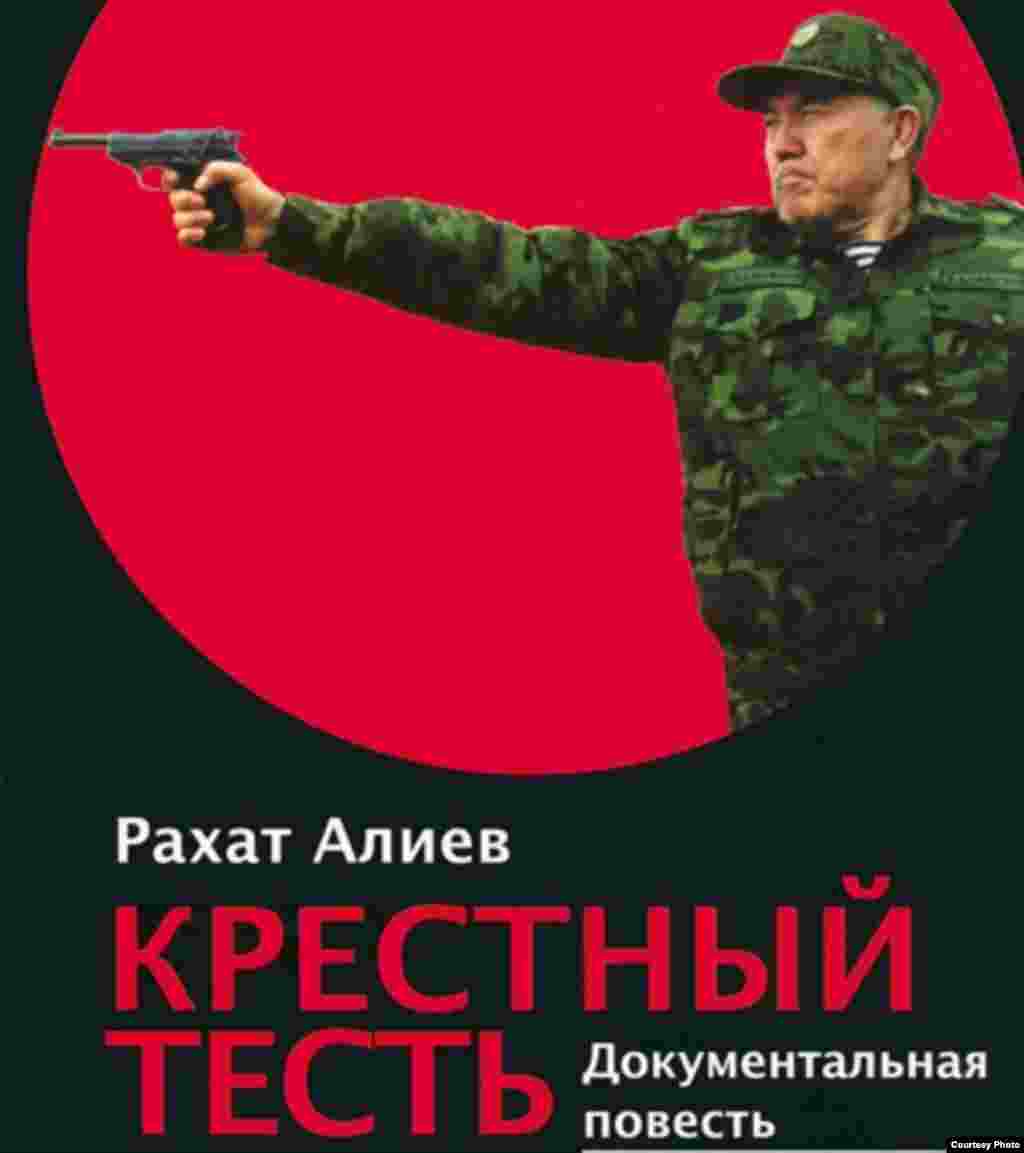
9/11While in Austria, Aliev published a book titled "Godfather-In-Law," in which he revealed what he claimed to be the inner workings of Kazakh politics. Kazakh authorities banned the book and introduced a criminal penalty for distributing it.
Rakhat Aliev, a former son-in-law of the Kazakh president turned prominent government critic, was found dead in a jail in Vienna on February 24. Aliev was being held on murder charges, which he had dismissed as politically motivated. Austrian authorities have said his death appears to be a suicide, but Aliev's lawyer has voiced doubts and called for a "very thorough" investigation. Here are some photographs from a life full of controversy.
Show moreShow less
10/11Aliev and his father-in-law in 2001. In June 2014, Aliev was arrested in Vienna. His lawyers said he had turned himself in. Austrian authorities charged him with involvement in the killings of two Kazakh bankers in 2007.
Rakhat Aliev, a former son-in-law of the Kazakh president turned prominent government critic, was found dead in a jail in Vienna on February 24. Aliev was being held on murder charges, which he had dismissed as politically motivated. Austrian authorities have said his death appears to be a suicide, but Aliev's lawyer has voiced doubts and called for a "very thorough" investigation. Here are some photographs from a life full of controversy.
Show moreShow less
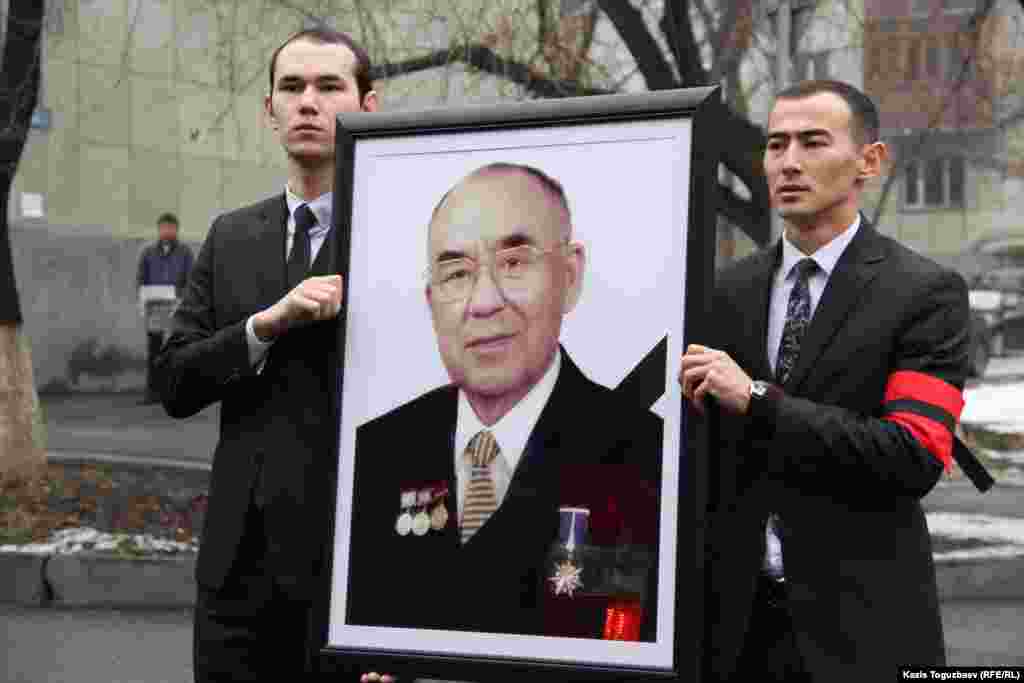
11/11Aliev's father, Mukhtar, died in Almaty last month. On February 23, Rakhat Aliev posted a letter online addressed to his late father, in which he said he was sorry he was unable to "fulfill a son's duty" to attend the funeral.
Rakhat Aliev, a former son-in-law of the Kazakh president turned prominent government critic, was found dead in a jail in Vienna on February 24. Aliev was being held on murder charges, which he had dismissed as politically motivated. Austrian authorities have said his death appears to be a suicide, but Aliev's lawyer has voiced doubts and called for a "very thorough" investigation. Here are some photographs from a life full of controversy.
Aliev had been in Austrian custody since June, when he turned himself in to authorities.
In 2008, a Kazakh court sentenced him in absentia to 40 years in prison after convicting him of plotting to overthrow the government and organizing a criminal group that abducted people.
In 2013, Kazakh authorities named Aliev as a suspect in ordering the murder of opposition leader Altynbek Sarsenbaiuly and two associates.
Sarsenbaiuly, a prominent opposition politician who had been ambassador to Russia, information minister, and Kazakh Security Council chairman, was shot dead execution-style near Almaty in 2006.
In 2007, after he fled to Austria, Aliyev told RFE/RL that he had received by fax a Kazakh court ruling annulling his marriage to Darigha Nazarbaeva, with whom he had two sons and a daughter.
As reports of Aliev's death made headlines in Kazakhstan on February 24, his ex-wife, a lawmaker, was chairing parliamentary discussions on the state budget for 2015-17.
When an RFE/RL correspondent asked Nazarbaeva in the parliament building about the news of her ex-husband's death, she ignored the question and walked away.
Aliev's father, Mukhtar Aliev, died in Almaty last month at the age of 81.
Mukhtar Aliev left for Europe in 2007, shortly after his son fled Kazakhstan.
He returned unexpectedly to Kazakhstan in 2009, saying he needed to help his wife, whom he described as being "under house arrest."
On February 23, Rakhat Aliev posted a letter addressed to his late father on Facebook, in which he says he is sorry he was unable to "fulfill the son's duty" and could not attend his funeral. Aliev ended the letter saying he believed a "time will come" when he will be able to fulfill his duties as a son and visit his father's grave.
With reporting by Wiener Zeitung, heute.at, and TASS
RFE/RL journalists report the news in 24 languages in 18 countries where a free press is banned by the government or not fully established. We provide what many people cannot get locally: uncensored news, responsible discussion, and open debate.