


Romanian President Calls Meeting To Seek 'Urgent Action' As COVID Infections Soar
Romanian President Klaus Iohannis (file photo)
Romanian President Klaus Iohannis has called a meeting of government officials on October 20 to "establish clear, restrictive measures" to reduce the spread of COVID-19 infections after the country hit daily records in both coronavirus infections and deaths.
"I decided to convene a meeting tomorrow with all those responsible for establishing clear, restrictive measures…that can reduce the spread of infections," Iohannis saidin a press statement on October 19.
He said the "lack of concrete action on the part of the authorities is alarming" and called the situation a "national drama of terrible proportions" as he urged Romanians to get vaccinated, wear a mask, avoid crowds, and practice social distancing.
"Whether we are talking about the green certificate or other measures to reduce mobility and human interaction, we must not waste any more time…no matter how unpopular it may seem," he said, referring to the so-called green pass that some countries have implemented as proof of inoculation for entry into restaurants, gyms, and other indoor places.
He avoided identifying those responsible for the failure of the vaccination program in Romania but said it has moved too slowly and preparations were poor.
Romania on October 19 confirmed a record high of 18,863 new COVID-19 infections and 574 deaths in one day. It was the first time the country of 19 million surpassed 500 deaths in a single day.
Inside Romania's Hospitals As COVID Crisis Intensifies
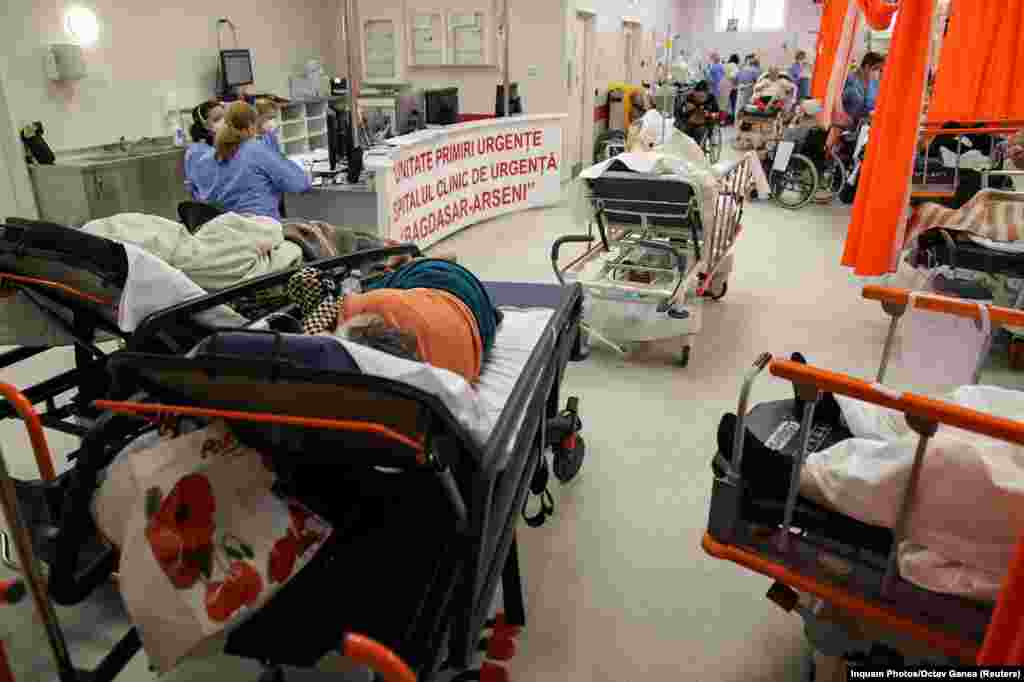
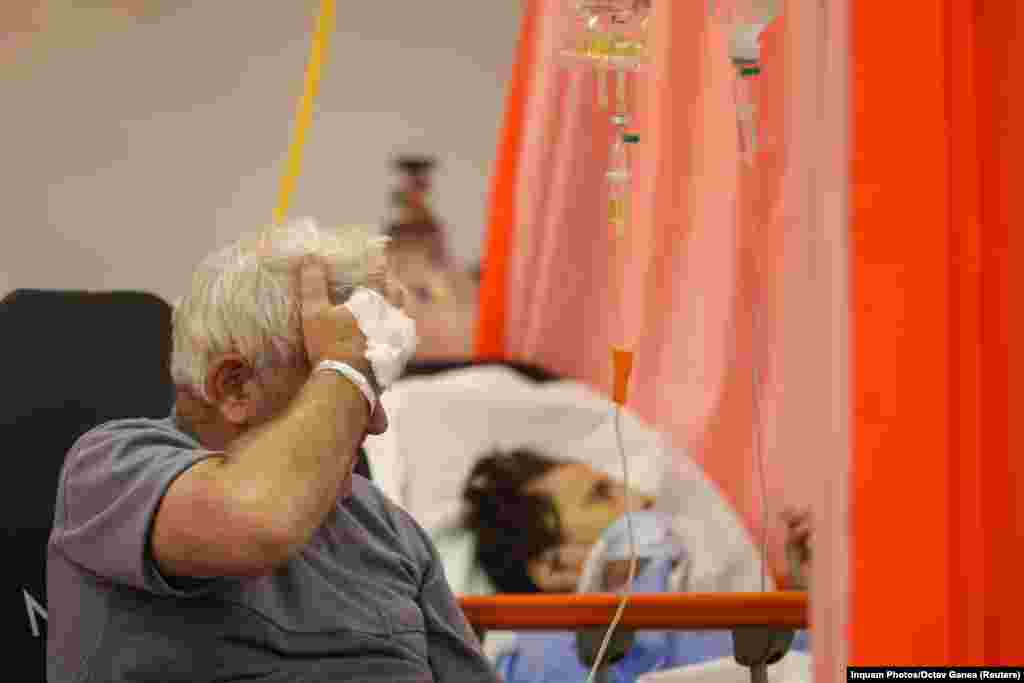
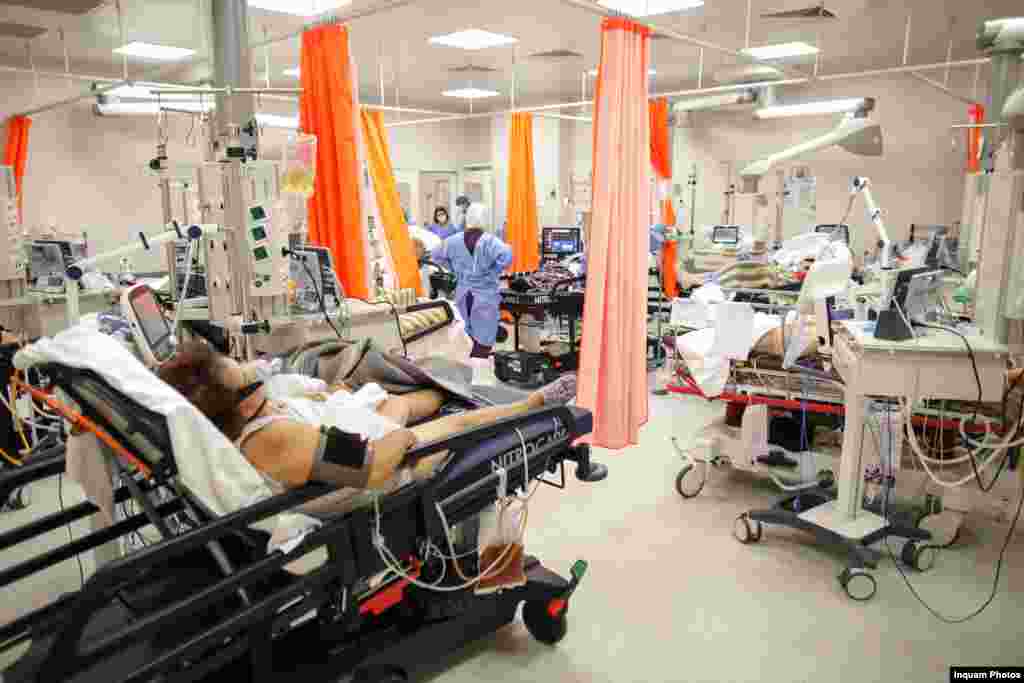
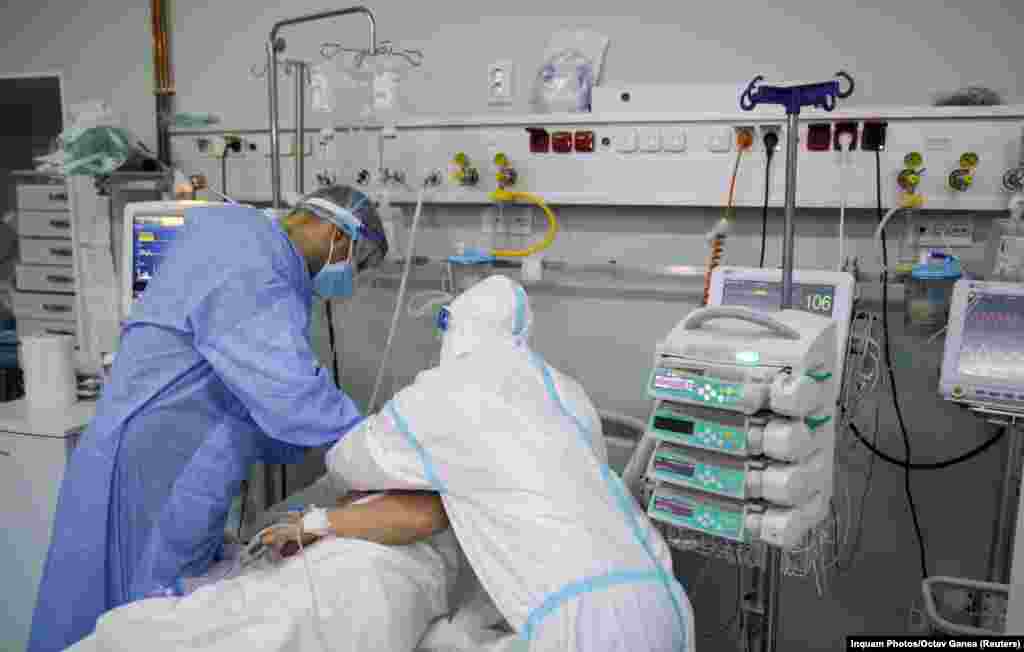
1/12Medical staff are surrounded by COVID-19 patients in the intensive-care unit of the Bagdasar-Arseni Hospital in Bucharest on October 19.
New photos from the intensive-care units of several Bucharest hospitals capture the scale of the health crisis now gripping Romania.
2/12Coronavirus patients in the intensive-care unit of the Bagdasar-Arseni Hospital in Bucharest on October 19. Intensive-care doctor Claudiu Rusu told Reuters on October 19 that hospitals in the capital were stretched beyond capacity. "There isn't enough room to take all the cases that need us," he said.
New photos from the intensive-care units of several Bucharest hospitals capture the scale of the health crisis now gripping Romania.
4/12The same day these photos were taken in the Bagdasar-Arseni Hospital, Romania confirmed a record high of 18,863 new COVID-19 infections and 574 deaths in a single day.
New photos from the intensive-care units of several Bucharest hospitals capture the scale of the health crisis now gripping Romania.
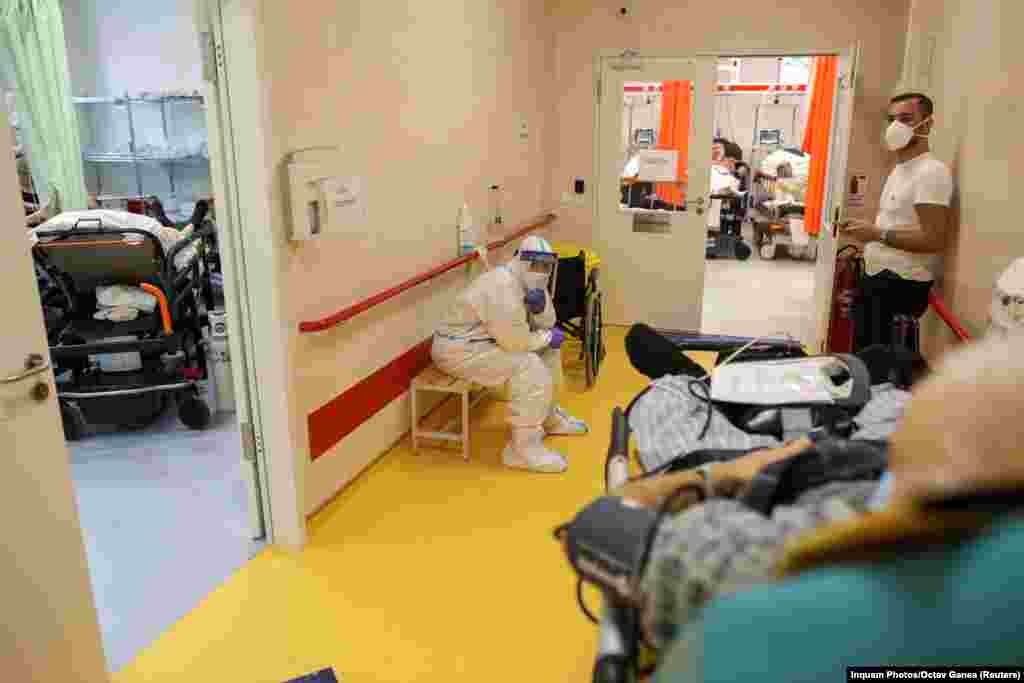
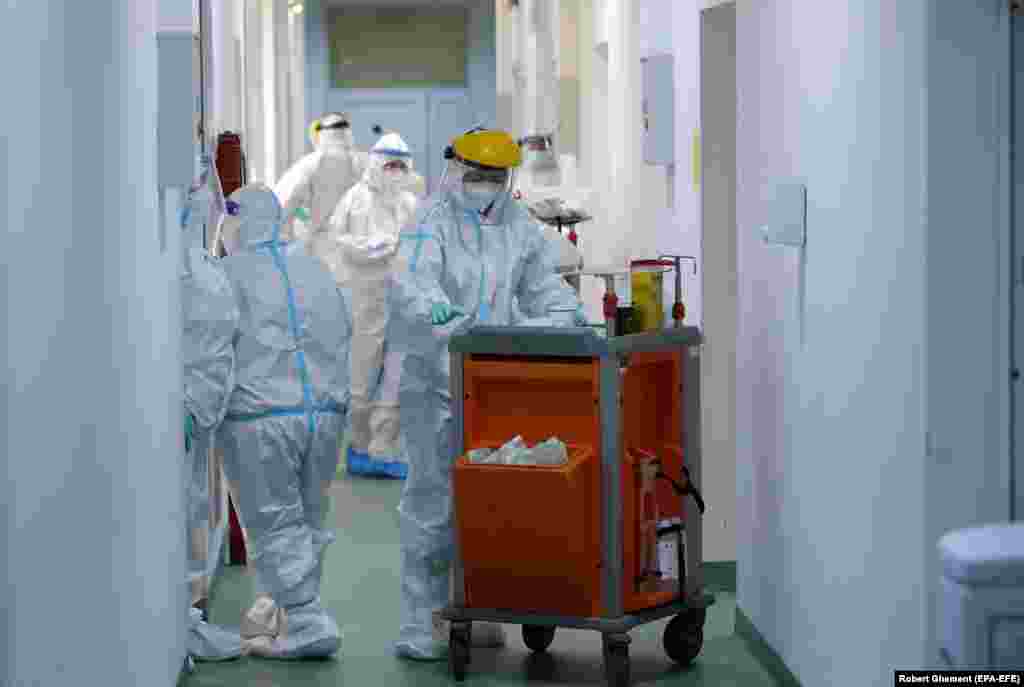
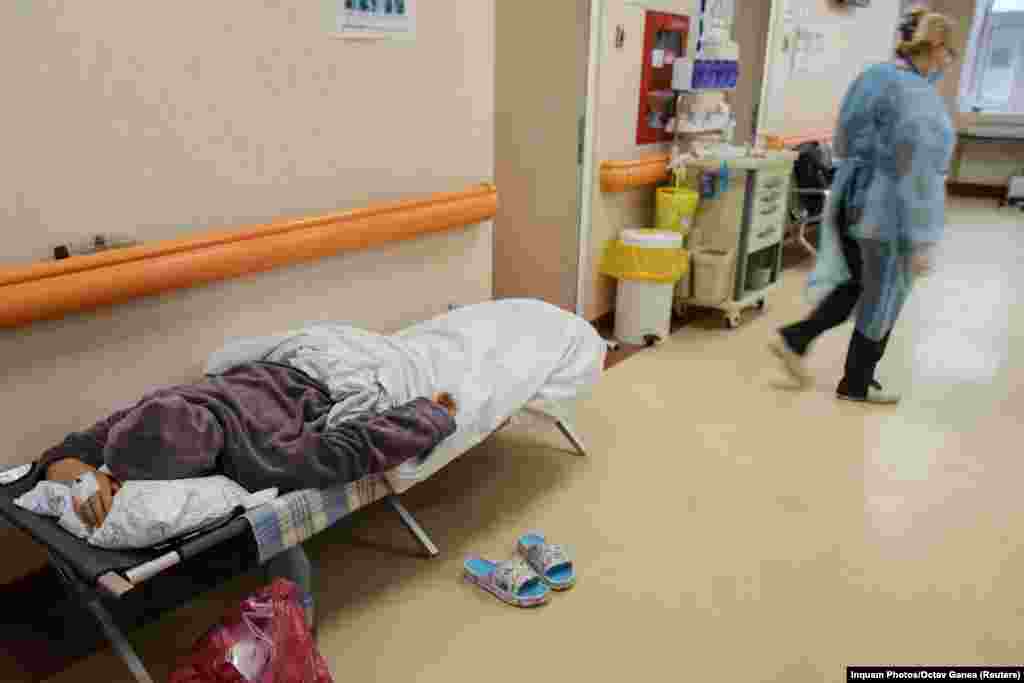
5/12A crowded corridor in the Bagdasar-Arseni Hospital. There are currently around 1,800 COVID-19 patients in intensive care in Romania. The country has one of the EU's least developed health-care systems.
New photos from the intensive-care units of several Bucharest hospitals capture the scale of the health crisis now gripping Romania.
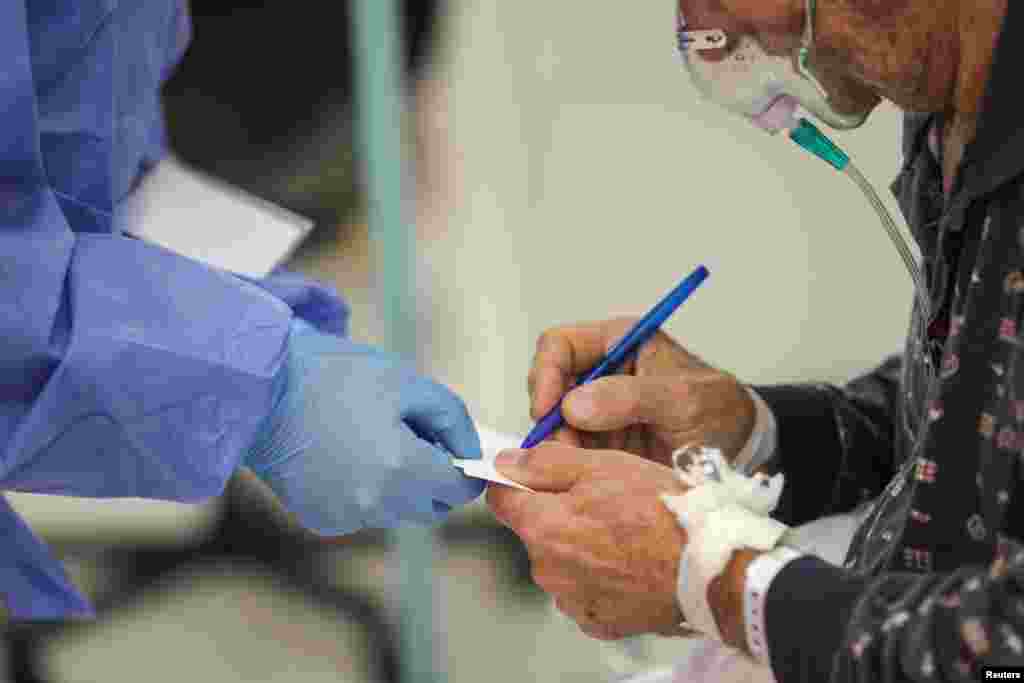
6/12Staff of the Marius Nasta Pneumology Institute in Bucharest adjust a breathing mask on a coronavirus patient's face on October 17. Romania's president said on October 19 the crisis in Romania's overflowing hospitals was a "national drama of terrible proportions," blaming low vaccination rates among the Romanian population and a sluggish response from the authorities for the soaring coronavirus infection rates.
New photos from the intensive-care units of several Bucharest hospitals capture the scale of the health crisis now gripping Romania.
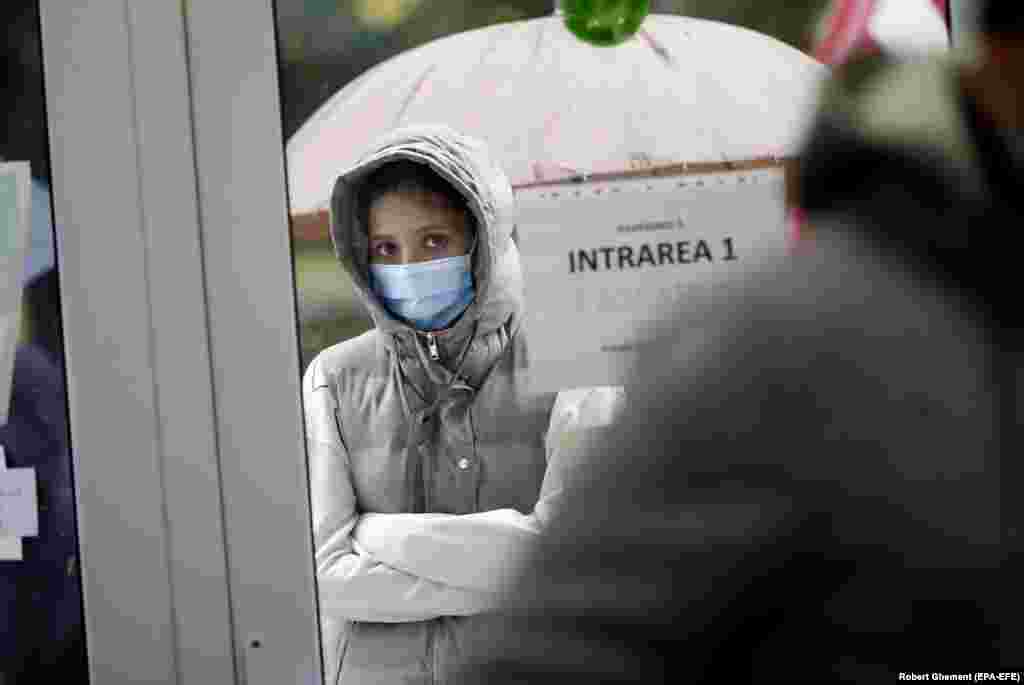
7/12A woman looks through the window of the reception hall at the COVID-19 section of the Marius Nasta Institute of Pneumology in Bucharest on October 15.
New photos from the intensive-care units of several Bucharest hospitals capture the scale of the health crisis now gripping Romania.
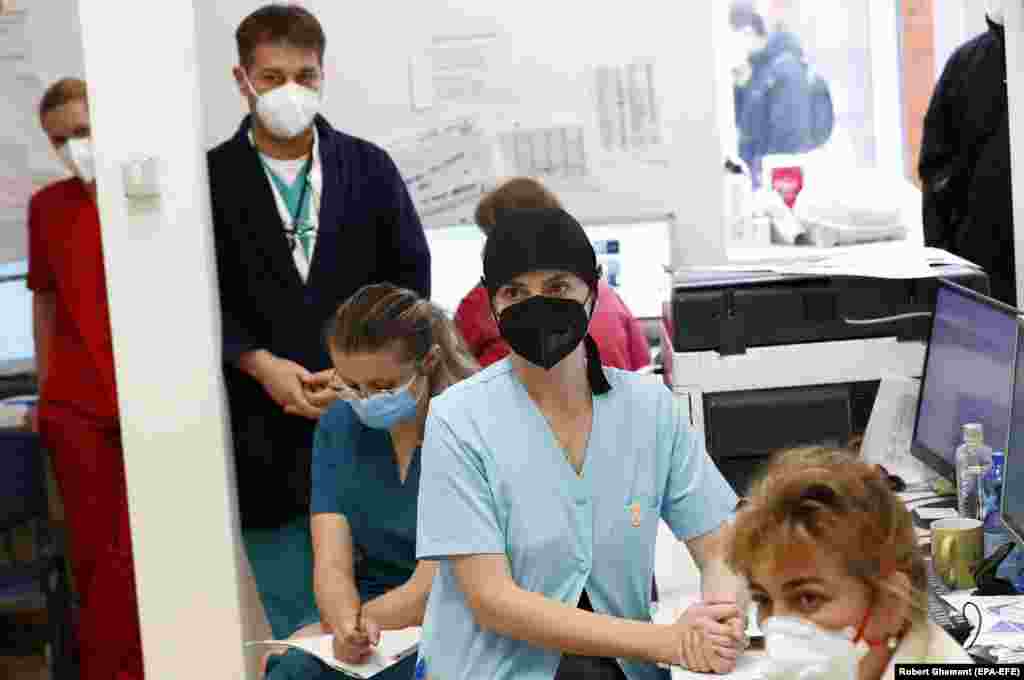
10/12Medical staff listen to a presentation by a psychiatrist on how to cope with stress at the main operations room of COVID-19 section of the Marius Nasta Institute of Pneumology on October 15.
New photos from the intensive-care units of several Bucharest hospitals capture the scale of the health crisis now gripping Romania.
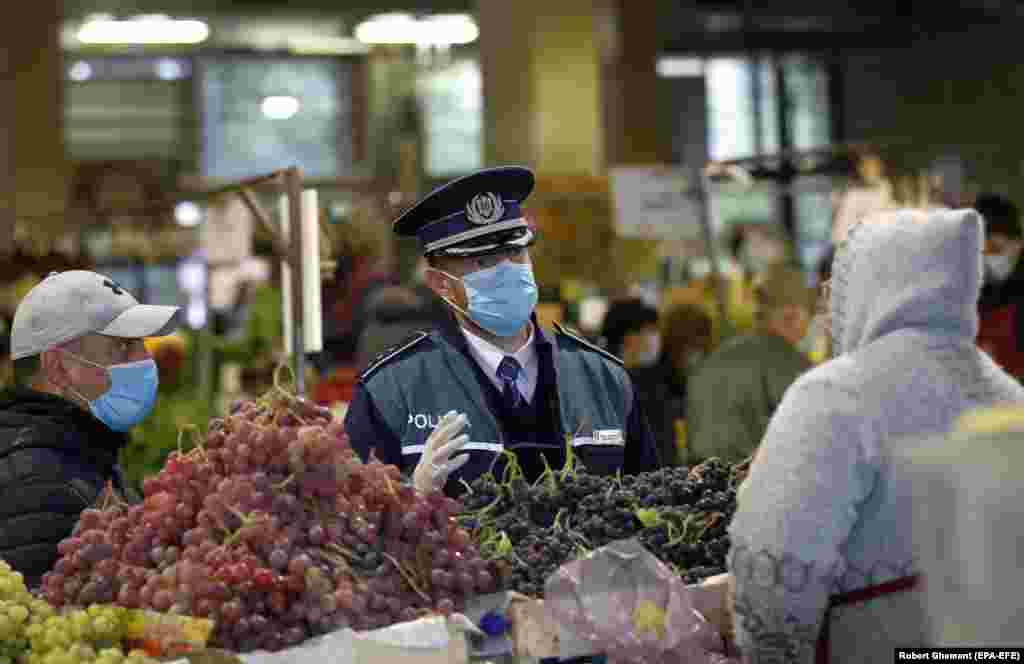
12/12A policeman speaks to fruit sellers at a market in Bucharest on October 16. President Klaus Iohannis suggested restrictive new measures are likely. "Whether we are talking about the green certificate or other measures to reduce mobility and human interaction, we must not waste any more time...no matter how unpopular it may seem," he said on October 19.
New photos from the intensive-care units of several Bucharest hospitals capture the scale of the health crisis now gripping Romania.
Previous slide
Next slide
The number of newly infected "is not a simple number," he said. "There are 18,863 hearts of Romanians who today beat with the fear of the unknown. Each of them with families and loved ones who may have contracted the disease."
The number of deaths represents 574 hearts of Romanians that stopped beating because they lost the fight with this deadly virus, he told a news conference.
"People who, just a few weeks ago, enjoyed life, dreamed and made plans for the future, now leave behind the tears and despair of those who mourn their death," he said.
He also noted the more than 1,800 coronavirus patients in intensive care, adding that the lives of millions of Romanians have changed, often irreversibly, due to the pandemic.
Iohannis called for increases in vaccinations, saying it is the only thing that has worked in all countries where the pandemic has slowed, and he gave assurances that the vaccines available are safe and effective.
Romania has the second-lowest vaccination rate in the European Union behind Bulgaria. Just 34 percent of adults are fully inoculated, compared to the bloc average of 74 percent.
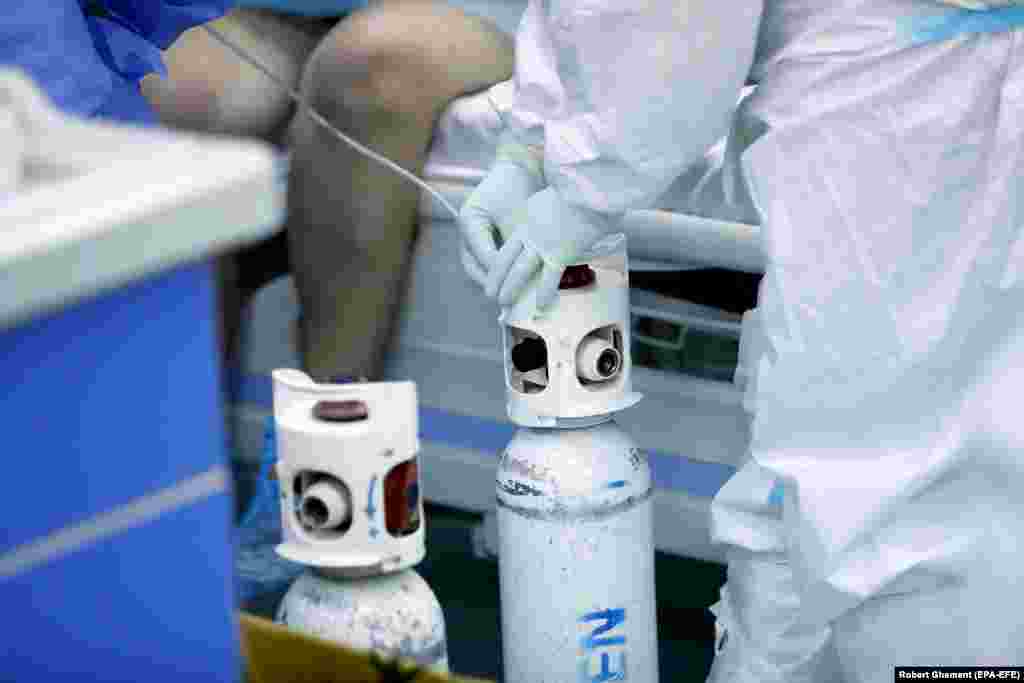
In response to the disaster, the World Health Organization (WHO) will send a senior expert to Romania to help strengthen the country's pandemic response and will facilitate the distribution of 34,000 rapid COVID-19 diagnostic tests and 200 oxygen concentrators to treat virus patients.
"An urgent priority is to boost vaccination among vulnerable groups, reduce the risk of hospitalization and death, and relieve pressure on the health system," Heather Papowitz, a WHO expert, said in a statement.

After a decade-long closure, RFE/RL's Romanian Service relaunched in 2019 on digital platforms to help address declining media independence in Romania and the spread of disinformation.