




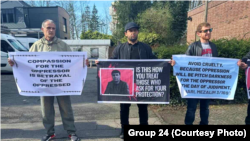
A Tajik opposition activist who was deported from Germany in June, has been sentenced to 17 years in prison on charges that include online calls for extremism, according to two sources in Dushanbe who spoke to RFE/RL on condition of anonymity.
Asadullo Boboev, a 54-year-old member of the Europe-based opposition Reforms and Development of Tajikistan movement, is the latest Tajik opposition figure to be deported from abroad and sentenced to a lengthy prison term in Dushanbe.
Other activists deported from Germany, Austria, and Poland have also been imprisoned after their return to Tajikistan in recent years, leaving fellow exiled dissidents fearful for their safety and increasingly doubtful that Western governments still support their struggle for democratic change.
Two Tajik opposition figures living in Europe told RFE/RL that Boboev's case had intensified their anxiety about being forcibly returned to Tajikistan. But they also described a deeper sense of disillusionment, saying that the deportation of political opponents from European countries has undermined their confidence in the protection they once expected from the West.

"It discourages the opposition when someone is deported from a democratic European country and then brutally sentenced,” said Farhod Odinaev, a member of the Islamic Renaissance Of Tajikistan -- the former Islamic Renaissance Party of Tajikistan (IRPT).
"This shows that no country is protecting Tajik opposition members, and it will discourage them in their struggle," he said.
Tajikistan's government has long pursued a brutal crackdown on its political opponents. The IRPT and another leading opposition movement, Group 24, have been banned and labelled terrorist organizations.
Several officials, members, and supporters of both movements languish in Tajik prisons on extremism-related charges, while dozens have left the country fearing persecution.
Opposition figures and rights advocates have repeatedly disputed the government's accusations against political activists, saying they are used to silence dissent.
In its most recent country report on human rights practices, published in August 2025, the US State Department said it opposes the forced return or extradition of Tajik political dissidents as it sees it as part of a campaign of "transnational repression" by the Central Asian nation's government.
Left On Their Own
A former Tajik university professor who spoke to RFE/RL on condition of anonymity said the deportation cases reflected what he saw as a broader retreat by Western governments from supporting democratic change in countries such as Tajikistan.
"In the recent past, Western governments and organizations provided political backing to the opposition," he said.
Governments in Central Asia understood that crackdowns on political opponents, independent media, and protests could damage their relations with Western countries, he added.
"That is not the case anymore,” said the former professor, who is based in Russia. “Opposition activists might feel that they are left on their own."
Deported Despite Warnings
Boboev was deported from Germany along with his 19-year-old son over their expired residency permits, despite warnings that he could face persecution if returned.
Human Rights Watch criticized the deportation, warning that Boboev faced the risk of detention and mistreatment in Tajikistan.
“Boboev’s criticism of the Tajik government made him a clear target,” said Hugh Williamson, the watchdog's Europe and Central Asia director. He called on Berlin to investigate the deportation and press Tajik authorities over Boboev's detention.
Germany's opposition Left Party (Die Linke) also sought answers, submitting a parliamentary inquiry in September asking the government to explain Boboev's deportation.

German authorities did not respond to RFE/RL's requests for comment at the time of the deportation in June.
Boboev's wife and daughter were allowed to remain in Germany.
His relatives later learned in August that he was being held at a detention facility run by Tajikistan's State Committee for National Security in Dushanbe.
On October 19, sources familiar with the case told RFE/RL’s Tajik Service that a court in the Tajik capital had sentenced him to 17 years in prison on September 21.
Tajik authorities have not publicly provided details of the case, and RFE/RL's attempts to contact court officials have been unsuccessful.

Boboev is the latest in a series of Tajik opposition activists deported from Europe and subsequently handed lengthy prison sentences.
In 2024, Tajik activist Farrukh Ikromov was sentenced to 23 years in prison after being deported from Poland, while Bilol Qurbonaliev, a member of the banned Group 24 movement, received a 10-year sentence after his deportation from Germany in 2023.
Hizbullo Shovalizoda, a member of the banned IRPT, was sentenced to 20 years after being deported from Austria in 2020.
Dilmurod Ergashev, who was expelled from Germany in 2024, received an eight-year sentence.
“We fear that the same thing could happen to any one of us,” said Hisomiddin Roziq, a Tajik opposition activist living in Warsaw. He added that Tajik authorities were pressuring his family to persuade him to return home.