


Accessibility links

Breaking News

Taliban’s Capture Of Afghan Cities Boosts ‘Narrative Of Inevitable Conquest’

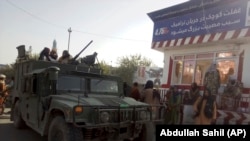
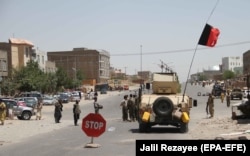
Taliban fighters stand guard at a checkpoint in Kunduz City in northern Afghanistan on August 9.

In the span of just a few days, the Taliban appears to have changed the complexion of the 20-year war in Afghanistan.

After seizing control of large swaths of the countryside during a months-long offensive, the militants captured six of Afghanistan’s 34 provincial capitals during a four-day blitz -- putting them in control of an entire province for the first time since the U.S.-led invasion in 2001.

In a major setback to the internationally backed government in Kabul, the Taliban has taken over the southwestern town of Zaranj, the northern towns of Sheberghan, Taloqan, Sar-e Pol, and Aybak, and most of the strategic northeastern city of Kunduz since August 6.

The insurgents have also captured around half of the country’s roughly 400 districts and half a dozen lucrative border crossings in recent months.

The Taliban’s dramatic military gains since the start of the final withdrawal of foreign forces on May 1 have fueled fears that it could topple the weak, deeply divided Afghan government and overrun the country's battered security forces.

But observers say the gains do not spell an outright victory for the militant group.

“If and when all anti-Taliban forces are aligned with one another, a complete Taliban victory is not inevitable,” says Davood Moradian, director of the Afghan Institute for Strategic Studies, a Kabul-based think tank.

Afghanistan’s leaders have failed to establish serious and coherent resistance to the Taliban, a failure driven by the country’s fractious internal politics.

Afghan President Ashraf Ghani, a Western-educated technocrat who has been in office since 2014, has spent years sidelining the country’s key power brokers, many of them powerful former warlords, who view Kabul with suspicion and resentment.

“Our imperial presidential system, compounded by Ashraf Ghani’s authoritarian character, has been a major impediment,” says Moradian, referring to Afghanistan’s heavily centralized presidential system.

Damaged Buildings, Fleeing Families: Taliban Overruns Six Provincial Capitals Including Kunduz

Afghans inspect damaged shops in the northern city of Kunduz after clashes between Taliban fighters and Afghan security forces on August 8. With some 375,000 inhabitants, Kunduz would be the most significant city to fall since the Taliban launched an all-out offensive in May as U.S.-led forces began the final stages of their withdrawal.
1/11 Afghans inspect damaged shops in the northern city of Kunduz after clashes between Taliban fighters and Afghan security forces on August 8. With some 375,000 inhabitants, Kunduz would be the most significant city to fall since the Taliban launched an all-out offensive in May as U.S.-led forces began the final stages of their withdrawal.
Heavy fighting damaged dozens of buildings and forced civilians to flee after Taliban militants overran six Afghan provincial capitals, including the strategic northern provincial capital of Kunduz.
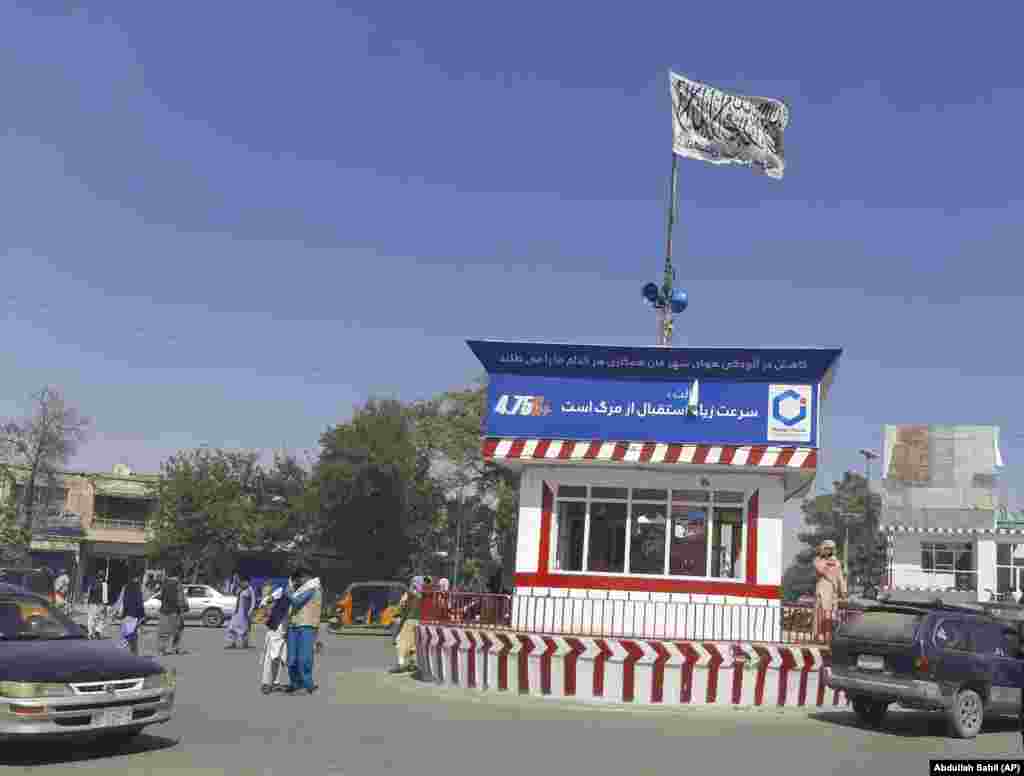
A Taliban flag flies on the main square of the city of Kunduz after fighting between Taliban and Afghan security forces. Government forces in Kunduz appeared to be only in control of the airport and their own base, with all key government buildings in the city in the militants&#39; hands. The main prison in Kunduz was also reportedly under Taliban control.<br />
&nbsp;
2/11 A Taliban flag flies on the main square of the city of Kunduz after fighting between Taliban and Afghan security forces. Government forces in Kunduz appeared to be only in control of the airport and their own base, with all key government buildings in the city in the militants' hands. The main prison in Kunduz was also reportedly under Taliban control.
 
Heavy fighting damaged dozens of buildings and forced civilians to flee after Taliban militants overran six Afghan provincial capitals, including the strategic northern provincial capital of Kunduz.
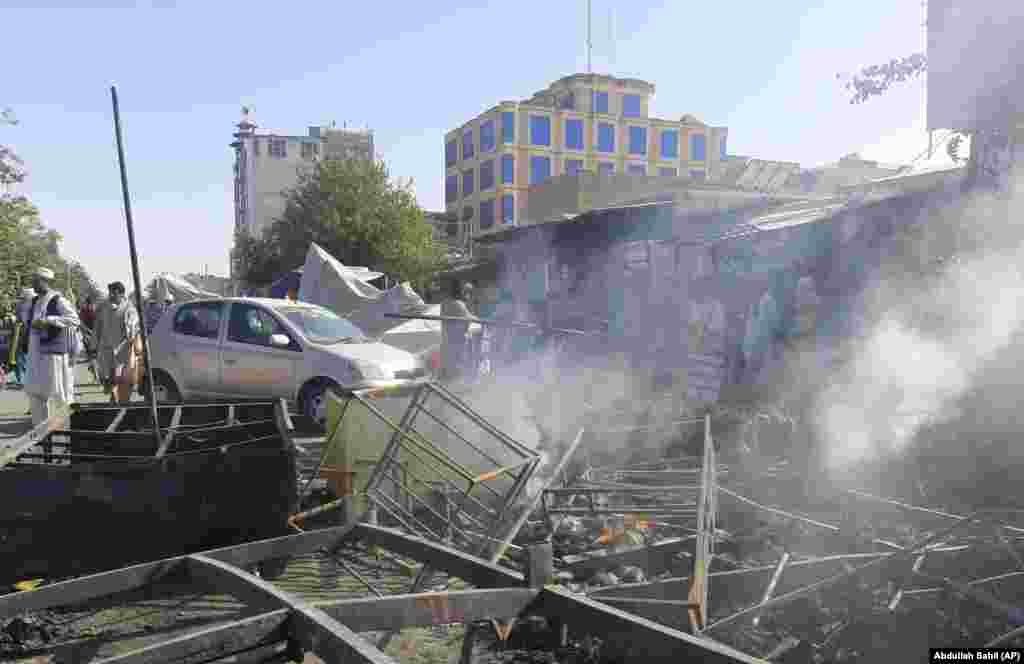
Smoke rises from damaged shops in Kunduz. The Afghan Defense Ministry denied Kunduz had fallen, saying in a statement on August 8 that commandos launched a clearance operation in the city, adding that the main intersection in the city center had been recaptured and the national TV building cleared of Taliban fighters.
3/11 Smoke rises from damaged shops in Kunduz. The Afghan Defense Ministry denied Kunduz had fallen, saying in a statement on August 8 that commandos launched a clearance operation in the city, adding that the main intersection in the city center had been recaptured and the national TV building cleared of Taliban fighters.
Heavy fighting damaged dozens of buildings and forced civilians to flee after Taliban militants overran six Afghan provincial capitals, including the strategic northern provincial capital of Kunduz.
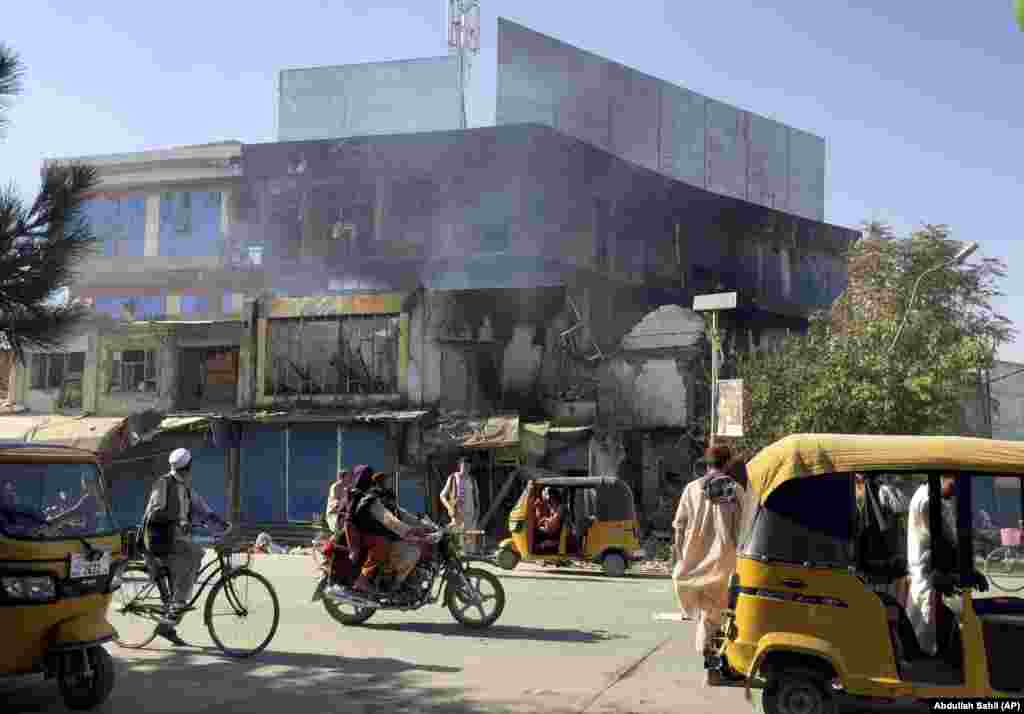
Damaged shops in the city of Kunduz were left smoldering after heavy fighting between Taliban militants and Afghan security forces.
4/11 Damaged shops in the city of Kunduz were left smoldering after heavy fighting between Taliban militants and Afghan security forces.
Heavy fighting damaged dozens of buildings and forced civilians to flee after Taliban militants overran six Afghan provincial capitals, including the strategic northern provincial capital of Kunduz.
Damaged buildings in Kunduz.
5/11 Damaged buildings in Kunduz.
Heavy fighting damaged dozens of buildings and forced civilians to flee after Taliban militants overran six Afghan provincial capitals, including the strategic northern provincial capital of Kunduz.
Displaced families sit inside a school in the Ghaziabad district of the northern part of Kunar Province on August 7. They fled their homes following fighting between Afghan security forces and Taliban militants. Over 9,000 families have been displaced in the province and are in desperate need of food and shelter.
6/11 Displaced families sit inside a school in the Ghaziabad district of the northern part of Kunar Province on August 7. They fled their homes following fighting between Afghan security forces and Taliban militants. Over 9,000 families have been displaced in the province and are in desperate need of food and shelter.
Heavy fighting damaged dozens of buildings and forced civilians to flee after Taliban militants overran six Afghan provincial capitals, including the strategic northern provincial capital of Kunduz.
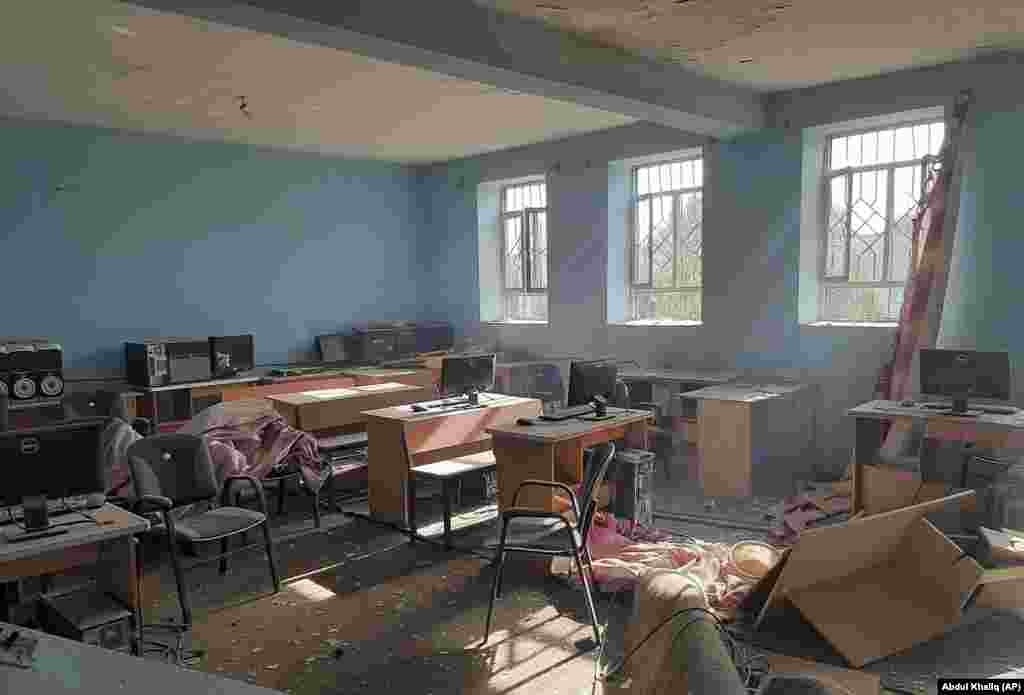
A school damaged by air strikes in&nbsp;Lashkar Gah, the capital of southern Helmand Province.&nbsp;A Defense Ministry statement on August 8 confirmed that air strikes were carried out against Taliban positions, killing 54 fighters and wounding 23 others.
7/11 A school damaged by air strikes in Lashkar Gah, the capital of southern Helmand Province. A Defense Ministry statement on August 8 confirmed that air strikes were carried out against Taliban positions, killing 54 fighters and wounding 23 others.
Heavy fighting damaged dozens of buildings and forced civilians to flee after Taliban militants overran six Afghan provincial capitals, including the strategic northern provincial capital of Kunduz.
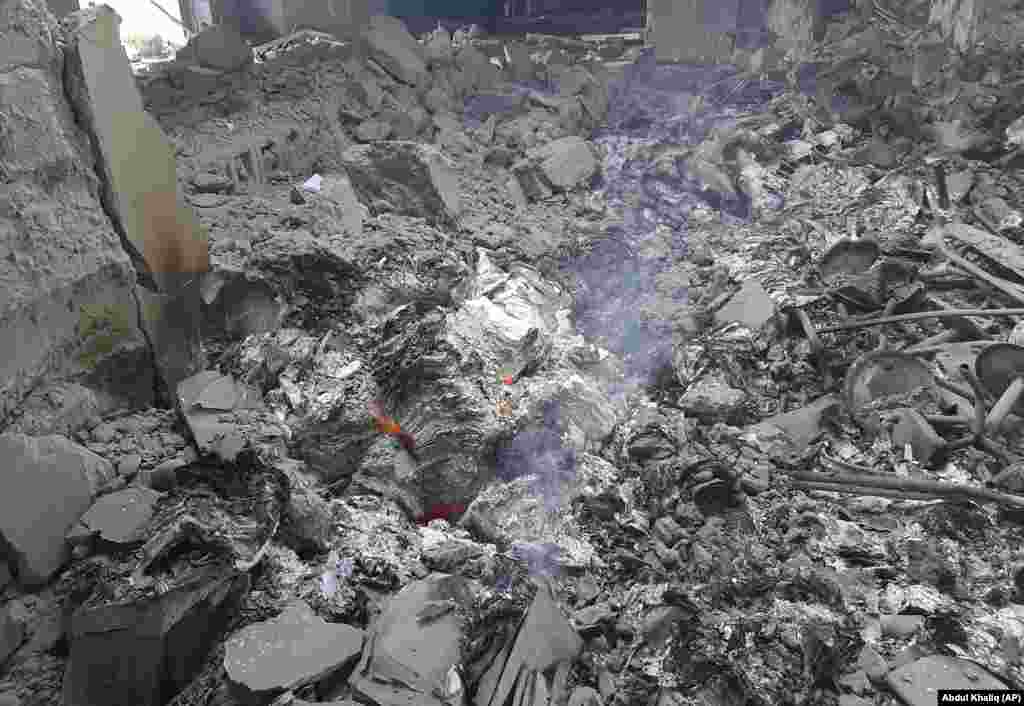
The charred remains of a school library in Lashkar Gah following an air strike.&nbsp;
8/11 The charred remains of a school library in Lashkar Gah following an air strike. 
Heavy fighting damaged dozens of buildings and forced civilians to flee after Taliban militants overran six Afghan provincial capitals, including the strategic northern provincial capital of Kunduz.
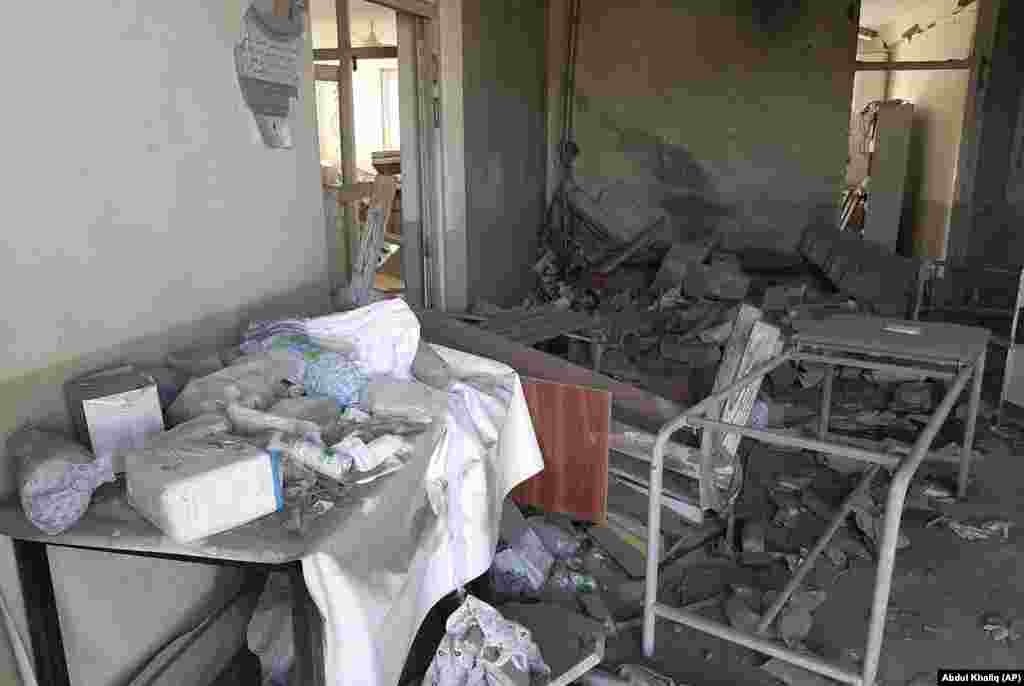
A damaged health clinic in Lashkar Gah. On August 8, provincial council member Majid Akhund said government air strikes damaged the clinic and a local high school.
9/11 A damaged health clinic in Lashkar Gah. On August 8, provincial council member Majid Akhund said government air strikes damaged the clinic and a local high school.
Heavy fighting damaged dozens of buildings and forced civilians to flee after Taliban militants overran six Afghan provincial capitals, including the strategic northern provincial capital of Kunduz.
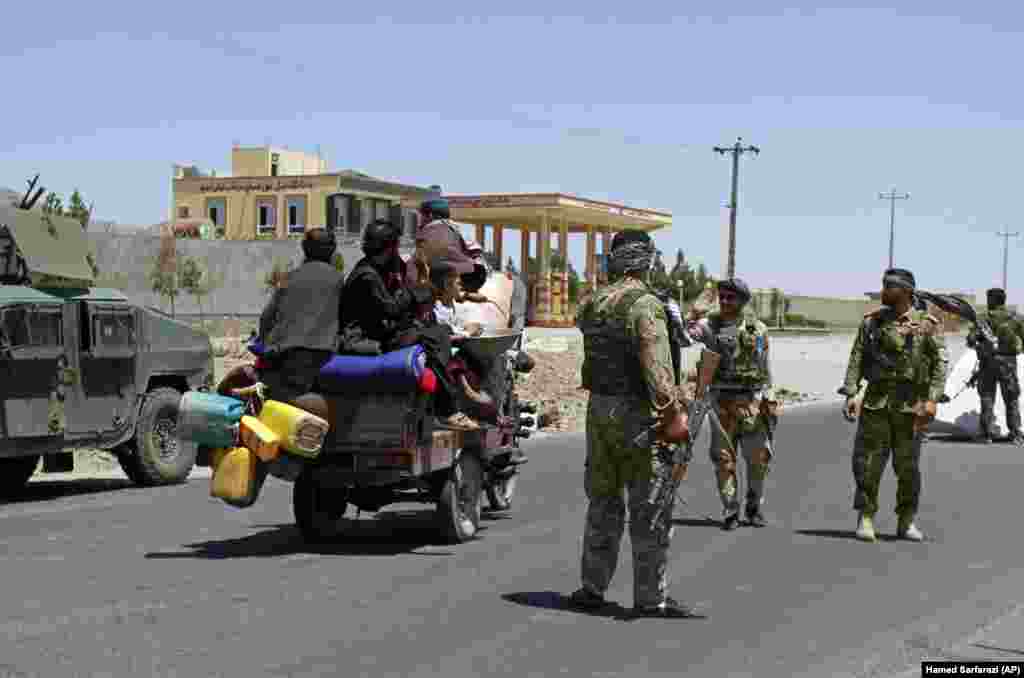
People flee the northwestern Afghan city of Herat as government troops patrol the streets. Afghan security forces took back parts of the city following intense battles with Taliban fighters on August 8.
10/11 People flee the northwestern Afghan city of Herat as government troops patrol the streets. Afghan security forces took back parts of the city following intense battles with Taliban fighters on August 8.
Heavy fighting damaged dozens of buildings and forced civilians to flee after Taliban militants overran six Afghan provincial capitals, including the strategic northern provincial capital of Kunduz.
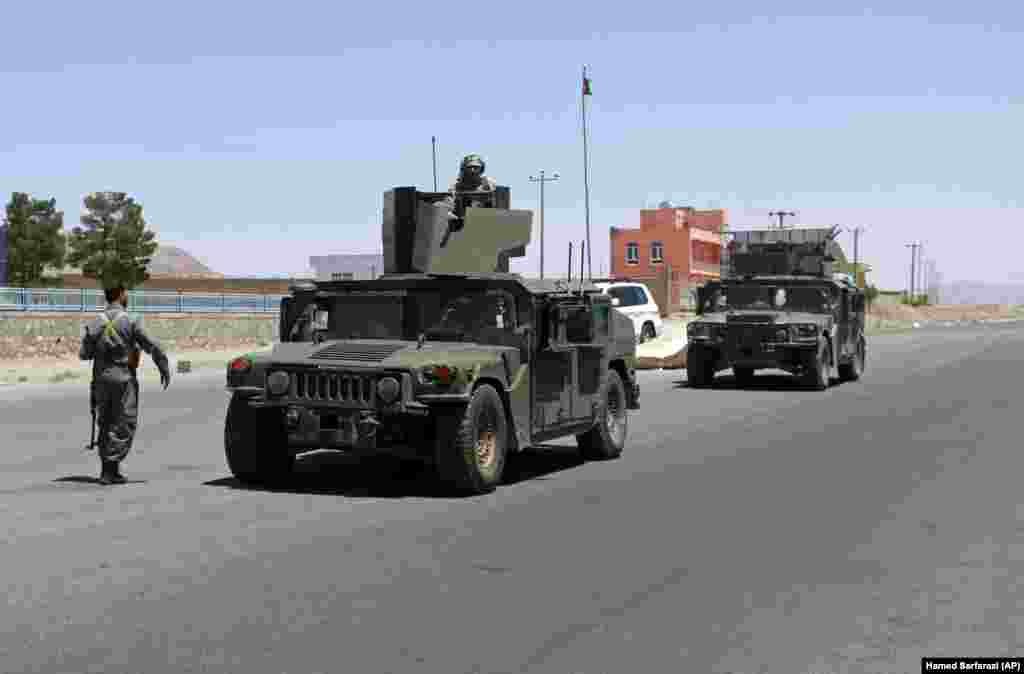
Afghan security personnel on patrol in Herat after fighting Taliban militants on the outskirts of the city on August 8.
11/11 Afghan security personnel on patrol in Herat after fighting Taliban militants on the outskirts of the city on August 8.
Heavy fighting damaged dozens of buildings and forced civilians to flee after Taliban militants overran six Afghan provincial capitals, including the strategic northern provincial capital of Kunduz.
Previous slide
Next slide


Kabul has hailed the creation of pro-government militias as a bulwark against advancing Taliban militants. But many of the loosely formed civilian militias, collectively known as the Public Uprising Forces (PUF), are loyal to powerful former warlords who hold significant sway in the provinces.

Many militia leaders have complained that they have yet to receive arms and supplies from Kabul.

Ghani met with some of the regional strongmen on August 9 to “expedite efforts to mobilize, equip, and strengthen” the PUF, the presidential palace said.

In a rare success story, a civilian militia led by former warlord Ismail Khan last week helped government forces successfully repel a multi-pronged Taliban assault on the western city of Herat, Afghanistan’s third largest.

“Herat provides the way forward in challenging and slowing the Taliban’s momentum,” Moradian says.

‘Strategic Danger’

Jonathan Schroden, a former military adviser to the U.S. military and a security expert with the U.S.-based nonprofit research and analysis organization CAN, says the Taliban’s military position has been boosted by capturing Kunduz and Zaranj, in particular.

Kunduz, the capital of the province of the same name, is the country’s fifth-largest city and is a strategic prize given its location next to Central Asia. Zaranj, although remote and sparsely populated, is an important commercial hub near the border with Iran.
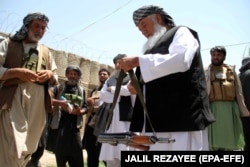
Former warlord Ismail Khan with his militiamen in the western city of Herat.


“But the real strategic danger is that these actions further the Taliban’s narrative of inevitable conquest,” Schroden said. “Their momentum has the potential to create domino effects via tribes, militias, and families deciding to bandwagon with the Taliban as the seemingly stronger side.”

Government forces have focused on repelling Taliban assaults on major cities in the country’s west and south, including Herat, Kandahar, and Lashkar Gah. The loss of any of these major cities would signify a major shift in the balance of power in Afghanistan, analysts say.

Fierce clashes are raging between government forces and the Taliban in and around the three cities, where the Taliban has faced strong resistance and suffered significant casualties.

The government’s concentration of forces and supplies to major cities could see the Taliban capture more of the smaller population centers.

“We should probably expect to see another tranche of northern provincial capitals fall in the weeks to come,” Schroden said.

The Taliban offensive has forced the displacement of hundreds of thousands of people and led to a dramatic rise in civilian casualties as dozens are killed or wounded daily.

UN special envoy for Afghanistan Deborah Lyons last week said the war in Afghanistan had entered a deadlier and more destructive phase "reminiscent of Syria recently, or Sarajevo in the not-so-distant past."

Severely Weakened

Observers say the foreign military exit, which is more than 95 percent complete, has severely weakened Afghanistan’s security forces, which have relied heavily on U.S. air support, intelligence, and logistics to keep the Taliban at bay.
Afghan government forces fighting alongside a civilian militia in Herat on August 4.


It is unclear if U.S. forces will continue air strikes in support of Afghan forces after the troop deadline. Washington has escalated air strikes in recent weeks to prevent the Taliban from capturing major cities and boosting morale among battered government troops.

The Afghan Air Force, a critical bulwark against the advancing Taliban, is stretched and dangerously overused. It is heavily dependent on foreign contractors, many of whom have left the country. Likewise, the Afghan special forces, the best trained and armed government force, has been exhausted as it is deployed across the country to repel Taliban attacks.

Afghan military experts say government forces suffer from poor leadership and communication, low morale, and dwindling resources.

In some cases, the Taliban has captured cities and provincial capitals after heavy clashes with Afghan security forces, who have complained about overdue salaries, shortages of ammunition and food, and delays in sending air and ground reinforcements.

In some cases, the militants have seized control of areas without firing a bullet, including Zaranj and Aybak, at times with the help of local elders who have negotiated the surrender of entire districts and towns to the Taliban.

  • 16x9 Image

    Frud Bezhan

    Frud Bezhan is Senior Regional Editor in the English-language Central Newsroom at RFE/RL, leading coverage of the Middle East, South Asia, and Central Asia. Previously, he was the Regional Desk Editor for the Near East, with a primary focus on Iran, Afghanistan, and Pakistan. As a correspondent, he reported from Afghanistan, Turkey, Kosovo, and Western Europe.

XS
SM
MD
LG