



Accessibility links

Breaking News

The Week In Russia: A 'Political Prisoner' Walks Free, Siberian Schoolchildren Go Hungry, And Moscow Backs Its Man In Caracas

Belarusian escort Anastasia Vashukevich was back in the news this week.

Editor's Note: To receive Steve Gutterman's Week In Russia each week via e-mail, subscribe by clicking here.

Belarusian escort Nastya Rybka walks free -- for now, at least -- while Russia and Japan make no visible progress toward a World War II peace treaty and a political crisis in Venezuela pits Moscow against Washington in the Western Hemisphere. President Vladimir Putin's ratings take another hit and a Siberian ombudsman says schoolchildren are fainting from hunger.

Here are some of the key developments in Russia over the past week and some of the takeaways going forward.

‘Nastya Rybka’

Some press conferences are more equal than others.

That seems to be the case in Moscow, at least, where you never quite know what’s going to happen when you go to one. Over the years, press conferences have been interrupted by egg-throwing thugs, dragged down by interminable questions that are “more of an observation, really” -- and sometimes simply called off for no apparent reason.

That’s not quite what happened with a press conference that Belarusian escort Anastasia Vashukevich, aka Nastya Rybka, and self-styled sex guru Aleksandr Kirillov were supposed to hold on January 23, a day after their unexpected release from police custody following their detention upon arrival from Thailand, where they had been jailed for months on prostitution-related charges.

Instead, they just didn’t show up. That left a lawyer -- who seemed schooled in the kind of elusive, entirely unsatisfactory response that Russian officials often deal out -- to face the media.

He said nothing of interest, but Vashukevich surfaced a few hours later, apologizing in a scratchy voice and explaining that she was sick and needed a few days to recover.

She did not say much of substance either, though -- promising to “tell all” once she gets better, but not specifying whether that includes details about one of the claims that has featured in lead paragraphs of stories about her since she burst to prominence almost a year ago: that she has tapes that could include evidence of Russian meddling in the 2016 U.S. presidential election.

Anyway, though, it’s far from clear that her appearance at the event would have shed light on another key question: Why was she detained in Russia, and why was she freed?

Little is clear -- and media reports say she remains under suspicion, leaving open the possibility she could be back behind bars in the future.

The Tycoon And The Ex-Kremlin Aide

The answers may lie in the intricate but sometimes brutal rivalries within the Russian security services and the elite, the relationships in President Putin’s circle, and what the Kremlin wants the country to know about -- or more precisely, what it wants to keep secret.

Vashukevich, 28, became prominent when Kremlin foe Aleksei Navalny published an expose based largely on photos and video she had posted on social media that showed her on billionaire Oleg Deripaska’s yacht with the Kremlin-connected tycoon and Sergei Prikhodko, a deputy prime minister at the time and a longtime former foreign-policy aide to Putin.

After Vashukevich was detained roughly by plainclothes men at Sheremetyevo International Airport on January 17 -- apparently on suspicion of luring others in prostitution, a crime punishable by up to three years in prison -- several commentators said she should be pronounced a political prisoner.

The argument was essentially that the Kremlin and its allies were sending a clear message to the usually younger lovers, mistresses, and others in a position to learn compromising information about those in the top echelons of the elite, whether related to crime, corruption, politics, or personal matters: Shut up or else.

Gone Fishin’

That interpretation was bolstered by Navalny’s evidence-based claim that Deripaska engineered her arrest. It was undermined by the release of Vashukevich, but not entirely: The point had already been made, perhaps, and freeing ‘Nastya Rybka’ while leaving charges in place could let the Kremlin evade allegations of political persecution while keeping her under its thumb.

Plus, putting her in pretrial detention might have risked making Deripaska seem too strong. In a move that might have been related to both the brouhaha over Vashukevich and the U.S. sanctions imposed on the aluminum magnate, Deripaska wrote on Instagram on January 21 that instead of the glitzy World Economic Forum in Davos, Switzerland, he went to Lake Baikal.

“To fish,” he added -- words widely seen as a wry reference to Vashukevich, whose ‘Rybka’ alias means little fish.

If a no-show press conference can be described in Orwellian terms, the recent diplomatic dance between Russia and Japan over a handful of windswept islands might be more suited to the U.S. comedian Eddie Murphy.

In particular, there’s a routine in which Murphy acts like a child who has bought an ice cream cone and seems at least as happy that nobody else can have it as that he can.

'I’ve Got Some Ice Cream’

Holding the invisible cone out to an imaginary kid who was unable to buy ice cream, he offers a lick but then pulls it back and says gleefully: “Psych!”

Something like that unfolded over the past several months, with Russia seeming to dangle the prospect of a deal under which it would cede two of the Kurile Islands to Japan -- only to pull back after Tokyo leaned in for a lick.

“Painstaking work” remains before Russia and Japan can finally sign a World War II peace treaty and resolve the territorial dispute, Putin said after Kremlin talks with Japanese Prime Minister Shinzo Abe on January 21.

The Kurile Islands: Why Russia And Japan Never Made Peace After World War II

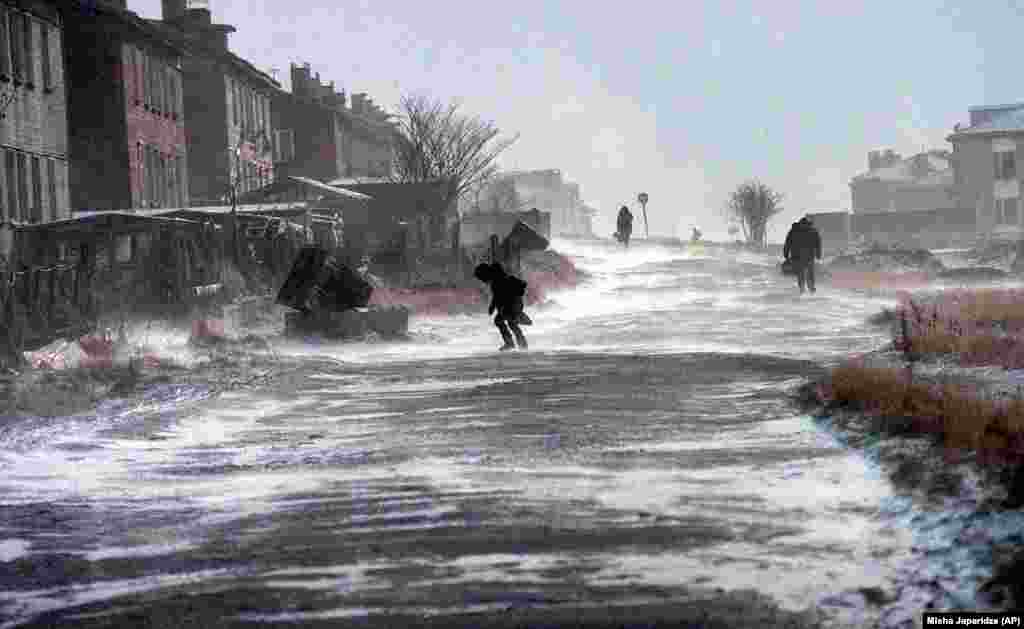
A young dog sidesteps a Reuters photographer on Kunashir Island, one of four islands that Russia has settled but Japan calls its Northern Territories. Kunashir lies just 20 kilometers from the Japanese mainland.<br />
<br />
&nbsp;
1/16 A young dog sidesteps a Reuters photographer on Kunashir Island, one of four islands that Russia has settled but Japan calls its Northern Territories. Kunashir lies just 20 kilometers from the Japanese mainland.

 
For Russia, they are the justly earned spoils of war. For Japan, the Kurile Islands are stolen territory, lost to Soviet aggression and Western interference. More than 70 years after the last shot was fired in World War II, the two countries remain locked in a stalemate over four wave-battered islands. (A version of this gallery was originally published in April 2017.)
A Russian woman touches up her lipstick on Kunashir. The dispute over the islands means a peace treaty has never been signed between Russia and Japan to formally end World War II hostilities. As <strong><a href="https://youtu.be/Jm8YwiSt8Uk?t=849" target="_blank">one local woman</a></strong> put it, &quot;There is no war, but there is no peace either.&quot;
2/16 A Russian woman touches up her lipstick on Kunashir. The dispute over the islands means a peace treaty has never been signed between Russia and Japan to formally end World War II hostilities. As one local woman put it, "There is no war, but there is no peace either."
For Russia, they are the justly earned spoils of war. For Japan, the Kurile Islands are stolen territory, lost to Soviet aggression and Western interference. More than 70 years after the last shot was fired in World War II, the two countries remain locked in a stalemate over four wave-battered islands. (A version of this gallery was originally published in April 2017.)
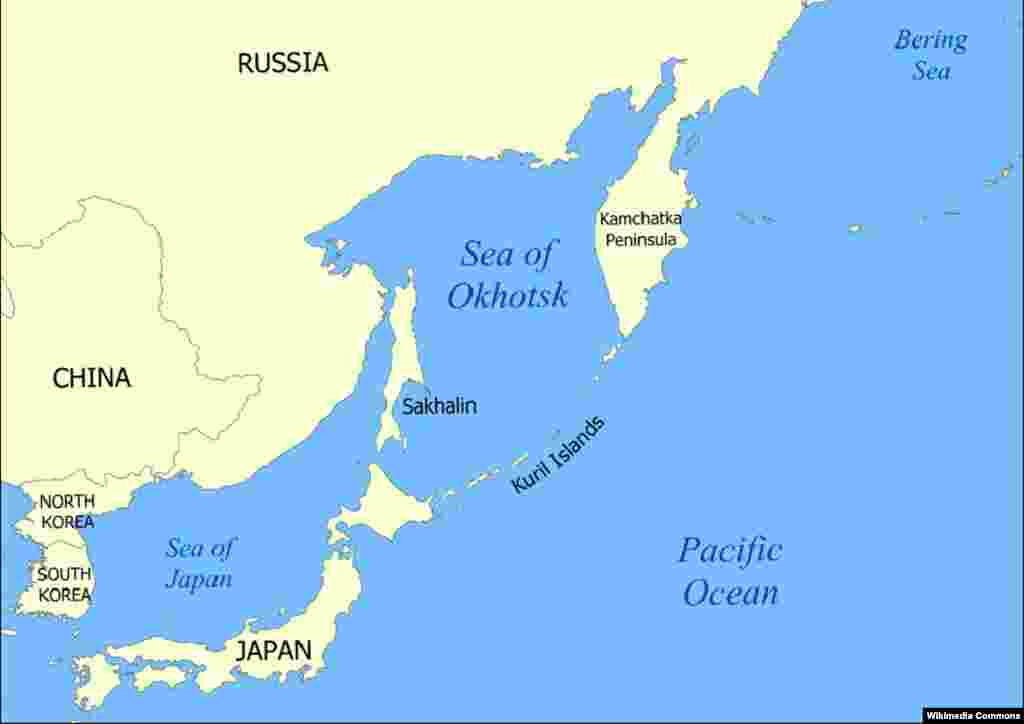
The Kurile Islands (center) lie like a trail of droplets between Japan and Russia. Historically the boundary between the two countries has been tugged up and down the island chain, but after World War II that boundary slid south, hard against the Japanese mainland.
3/16 The Kurile Islands (center) lie like a trail of droplets between Japan and Russia. Historically the boundary between the two countries has been tugged up and down the island chain, but after World War II that boundary slid south, hard against the Japanese mainland.
For Russia, they are the justly earned spoils of war. For Japan, the Kurile Islands are stolen territory, lost to Soviet aggression and Western interference. More than 70 years after the last shot was fired in World War II, the two countries remain locked in a stalemate over four wave-battered islands. (A version of this gallery was originally published in April 2017.)
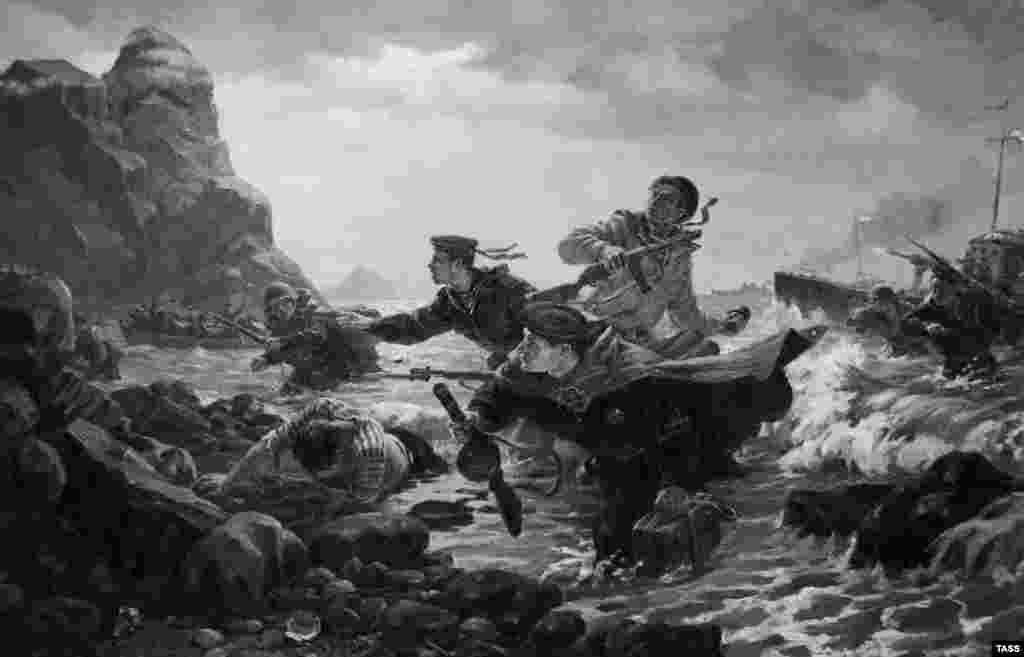
In the waning days of World War II, the United States and United Kingdom promised Moscow the Kurile Islands in return for entering the fight against Japan. This Soviet-era painting depicts the landing of Soviet forces on one of the islands.
4/16 In the waning days of World War II, the United States and United Kingdom promised Moscow the Kurile Islands in return for entering the fight against Japan. This Soviet-era painting depicts the landing of Soviet forces on one of the islands.
For Russia, they are the justly earned spoils of war. For Japan, the Kurile Islands are stolen territory, lost to Soviet aggression and Western interference. More than 70 years after the last shot was fired in World War II, the two countries remain locked in a stalemate over four wave-battered islands. (A version of this gallery was originally published in April 2017.)
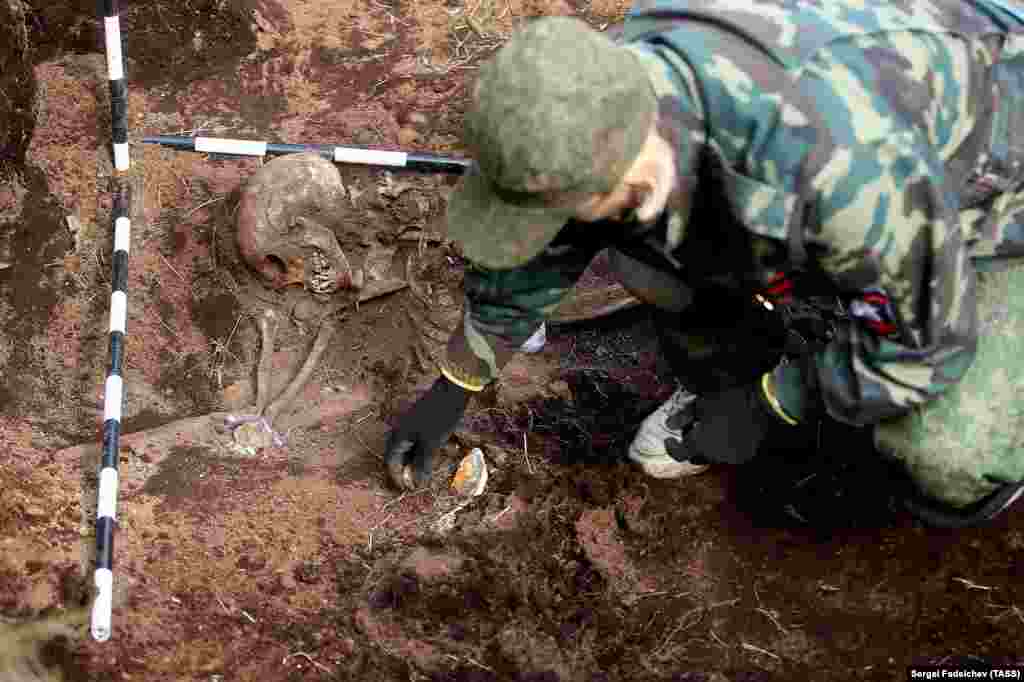
The remains of a Soviet soldier killed during the operation to seize the Kurile Islands in 1945. Japan claims the four islands closest to the Japanese mainland are not part of the Kurile chain and the U.S.S.R. therefore had no right to capture them.
5/16 The remains of a Soviet soldier killed during the operation to seize the Kurile Islands in 1945. Japan claims the four islands closest to the Japanese mainland are not part of the Kurile chain and the U.S.S.R. therefore had no right to capture them.
For Russia, they are the justly earned spoils of war. For Japan, the Kurile Islands are stolen territory, lost to Soviet aggression and Western interference. More than 70 years after the last shot was fired in World War II, the two countries remain locked in a stalemate over four wave-battered islands. (A version of this gallery was originally published in April 2017.)
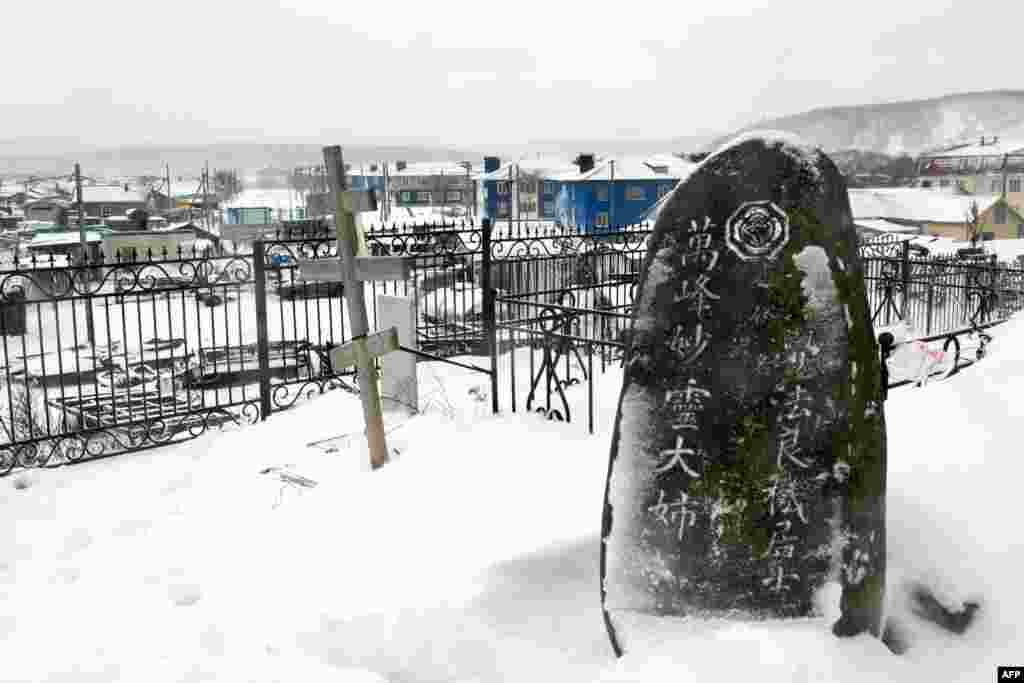
A Japanese gravestone on Kunashir Island. Once captured in 1945, there was a period of uneasy cohabitation (which is the subject of a <strong><a href="https://www.youtube.com/watch?v=528jtlguk6g" target="_blank">2014 animated film</a></strong>) before Josef Stalin ordered the forceful eviction of the Japanese population to mainland Japan in 1947.
6/16 A Japanese gravestone on Kunashir Island. Once captured in 1945, there was a period of uneasy cohabitation (which is the subject of a 2014 animated film) before Josef Stalin ordered the forceful eviction of the Japanese population to mainland Japan in 1947.
For Russia, they are the justly earned spoils of war. For Japan, the Kurile Islands are stolen territory, lost to Soviet aggression and Western interference. More than 70 years after the last shot was fired in World War II, the two countries remain locked in a stalemate over four wave-battered islands. (A version of this gallery was originally published in April 2017.)
Winter on Kunashir in 1998. Today, around 19,000 Russians populate the disputed Kurile Islands.
7/16 Winter on Kunashir in 1998. Today, around 19,000 Russians populate the disputed Kurile Islands.
For Russia, they are the justly earned spoils of war. For Japan, the Kurile Islands are stolen territory, lost to Soviet aggression and Western interference. More than 70 years after the last shot was fired in World War II, the two countries remain locked in a stalemate over four wave-battered islands. (A version of this gallery was originally published in April 2017.)
Dusk in the harbor on Kunashir Island. Fishing is the main source of income for the Russians here, but infrastructure is ragged and economic prospects for locals are generally bleak. A Japanese man who was evicted in 1947 described his former homeland as &quot;a wasteland&quot; <strong><a href="https://youtu.be/3G8-oMYHo7k?t=504" target="_blank">when he visited</a></strong> in 2005.
8/16 Dusk in the harbor on Kunashir Island. Fishing is the main source of income for the Russians here, but infrastructure is ragged and economic prospects for locals are generally bleak. A Japanese man who was evicted in 1947 described his former homeland as "a wasteland" when he visited in 2005.
For Russia, they are the justly earned spoils of war. For Japan, the Kurile Islands are stolen territory, lost to Soviet aggression and Western interference. More than 70 years after the last shot was fired in World War II, the two countries remain locked in a stalemate over four wave-battered islands. (A version of this gallery was originally published in April 2017.)
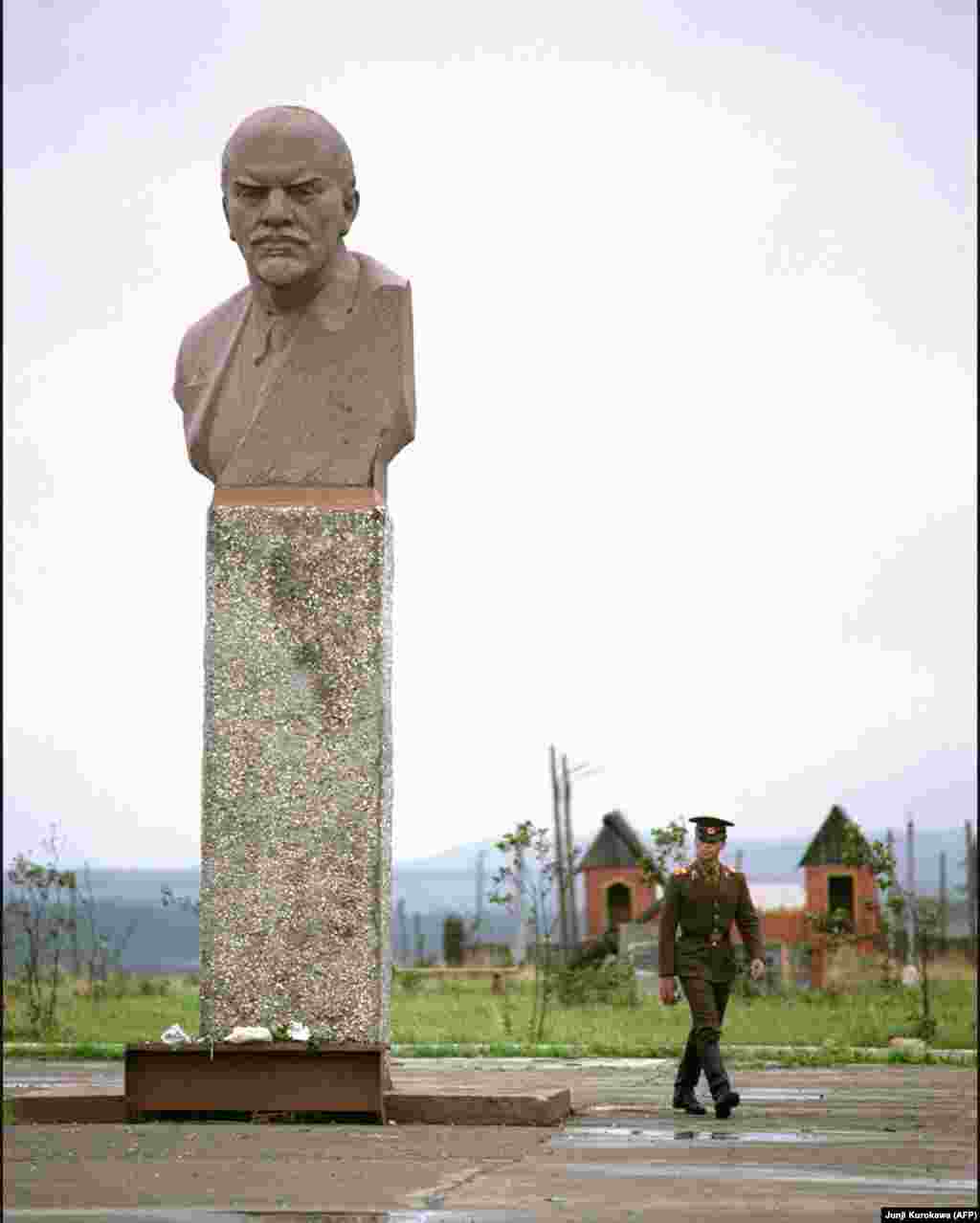
A Soviet soldier on Kunashir Island in 1989. Shortly after the Soviet Union collapsed, Kurile islanders heId a mock referendum on asking Japan to take ownership of the islands. A Russian official on the islands <strong><a href="https://youtu.be/3G8-oMYHo7k?t=1029" target="_blank">seethed at the memory</a></strong>, &quot;Most of these people are nobody, nothing.&quot;
9/16 A Soviet soldier on Kunashir Island in 1989. Shortly after the Soviet Union collapsed, Kurile islanders heId a mock referendum on asking Japan to take ownership of the islands. A Russian official on the islands seethed at the memory, "Most of these people are nobody, nothing."
For Russia, they are the justly earned spoils of war. For Japan, the Kurile Islands are stolen territory, lost to Soviet aggression and Western interference. More than 70 years after the last shot was fired in World War II, the two countries remain locked in a stalemate over four wave-battered islands. (A version of this gallery was originally published in April 2017.)
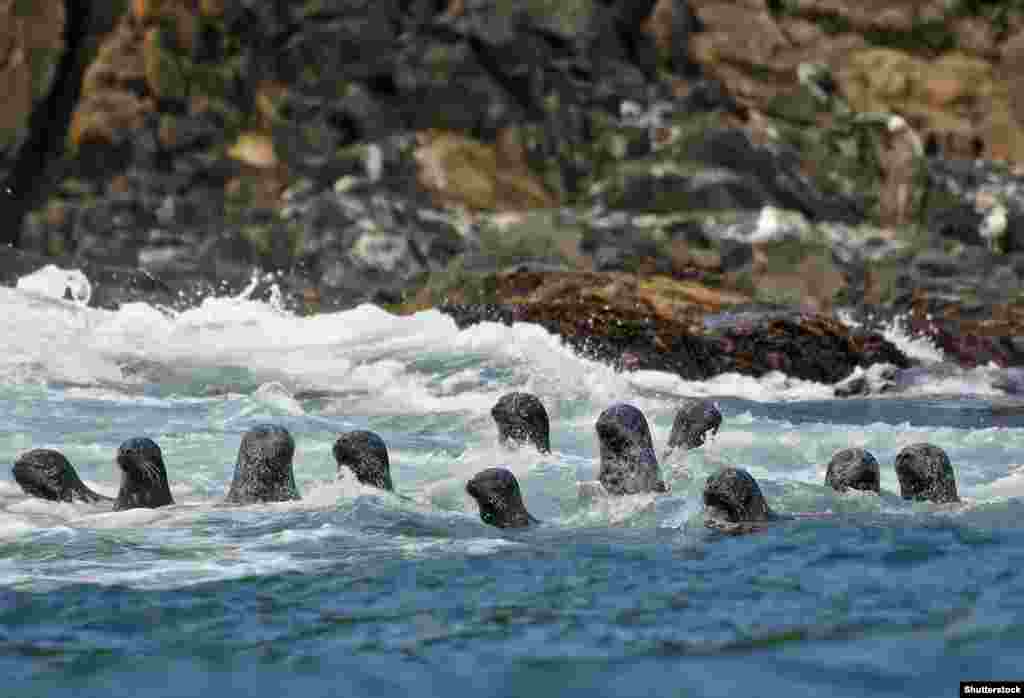
Seals swimming off Kunashir Island. Waters around the disputed islands teem with sea life worth an <strong><a href="http://www.ponarseurasia.org/sites/default/files/policy-memos-pdf/pepm_226_Gorenburg_Sept2012.pdf" target="_blank">estimated</a></strong> $4 billion per year in potential fisheries value. Japanese authorities have vowed to carefully exploit the fishing and tourism potential of the Kuriles if Russia returns the four islands.&nbsp;
10/16 Seals swimming off Kunashir Island. Waters around the disputed islands teem with sea life worth an estimated $4 billion per year in potential fisheries value. Japanese authorities have vowed to carefully exploit the fishing and tourism potential of the Kuriles if Russia returns the four islands. 
For Russia, they are the justly earned spoils of war. For Japan, the Kurile Islands are stolen territory, lost to Soviet aggression and Western interference. More than 70 years after the last shot was fired in World War II, the two countries remain locked in a stalemate over four wave-battered islands. (A version of this gallery was originally published in April 2017.)
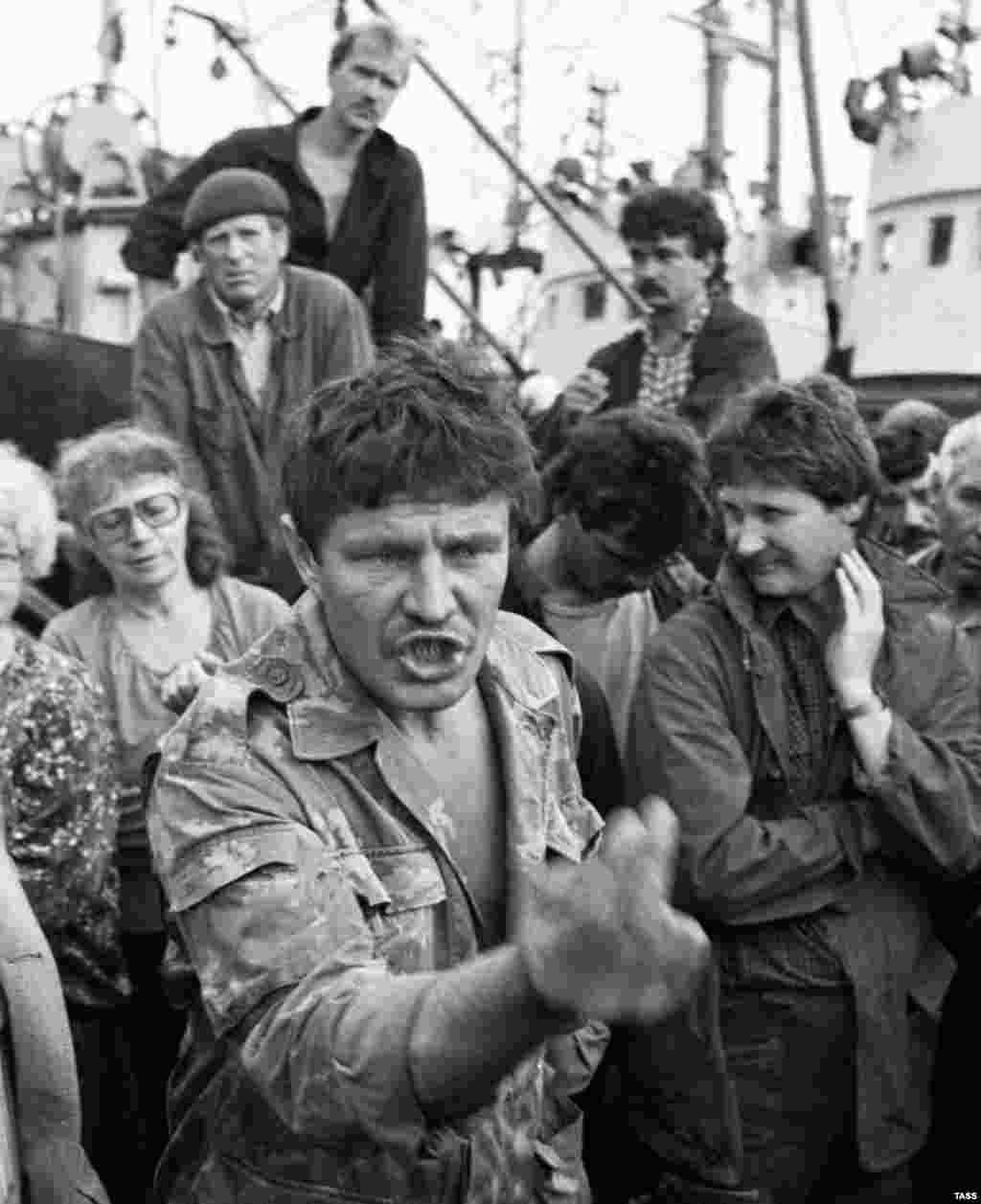
Russian fishermen at a rally defending Russia&#39;s possession of the Kuriles in the early &#39;90s. A 2016 poll showed 78 percent of Russian mainlanders were opposed to returning the disputed islands to Japan.
11/16 Russian fishermen at a rally defending Russia's possession of the Kuriles in the early '90s. A 2016 poll showed 78 percent of Russian mainlanders were opposed to returning the disputed islands to Japan.
For Russia, they are the justly earned spoils of war. For Japan, the Kurile Islands are stolen territory, lost to Soviet aggression and Western interference. More than 70 years after the last shot was fired in World War II, the two countries remain locked in a stalemate over four wave-battered islands. (A version of this gallery was originally published in April 2017.)
A Japanese tank rusting on one of the Kurile Islands. After losing more than 20 million Soviet citizens in World War II, the idea of returning land to an ally of Nazi Germany is unthinkable to most Russians.&nbsp;One politician made Russia&#39;s position clear in a 2002 statement: &quot;[Japan]&nbsp;must remember they lost the war and signed an unconditional surrender; they put themselves politically and territorially at the winners&#39; mercy.&quot;
12/16 A Japanese tank rusting on one of the Kurile Islands. After losing more than 20 million Soviet citizens in World War II, the idea of returning land to an ally of Nazi Germany is unthinkable to most Russians. One politician made Russia's position clear in a 2002 statement: "[Japan] must remember they lost the war and signed an unconditional surrender; they put themselves politically and territorially at the winners' mercy."
For Russia, they are the justly earned spoils of war. For Japan, the Kurile Islands are stolen territory, lost to Soviet aggression and Western interference. More than 70 years after the last shot was fired in World War II, the two countries remain locked in a stalemate over four wave-battered islands. (A version of this gallery was originally published in April 2017.)
A nuclear submarine near the Kurile Island chain in 1998. Another factor wedding Russia to the islands is current military strategy. Deepwater channels between the Kuriles allow Russian submarines a stealthy corridor to the Pacific Ocean.
13/16 A nuclear submarine near the Kurile Island chain in 1998. Another factor wedding Russia to the islands is current military strategy. Deepwater channels between the Kuriles allow Russian submarines a stealthy corridor to the Pacific Ocean.
For Russia, they are the justly earned spoils of war. For Japan, the Kurile Islands are stolen territory, lost to Soviet aggression and Western interference. More than 70 years after the last shot was fired in World War II, the two countries remain locked in a stalemate over four wave-battered islands. (A version of this gallery was originally published in April 2017.)
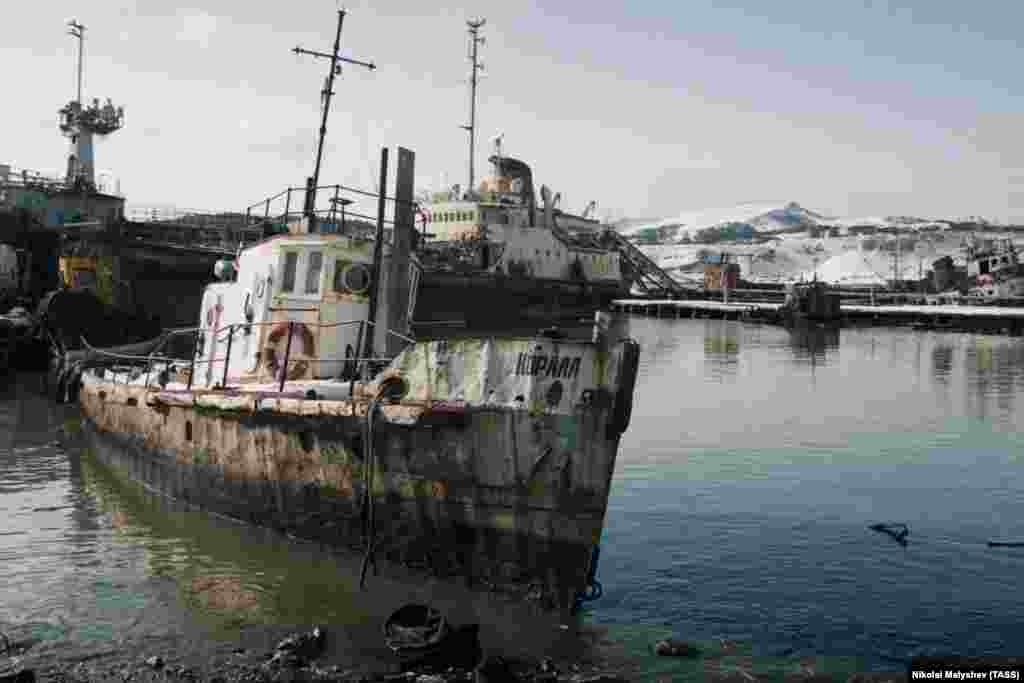
Russian fishing boats on Shikotan, one of the smaller disputed islands. With the prospect of the United States establishing a military outpost on the Kuriles if returned to Japan, Russia is unlikely ever to agree to a handover of all the disputed islands. But one possibility could end the dispute in what Russian President Vladimir Putin has called a &quot;hikiwake&quot; (the term for &quot;draw&quot; in judo).
14/16 Russian fishing boats on Shikotan, one of the smaller disputed islands. With the prospect of the United States establishing a military outpost on the Kuriles if returned to Japan, Russia is unlikely ever to agree to a handover of all the disputed islands. But one possibility could end the dispute in what Russian President Vladimir Putin has called a "hikiwake" (the term for "draw" in judo).
For Russia, they are the justly earned spoils of war. For Japan, the Kurile Islands are stolen territory, lost to Soviet aggression and Western interference. More than 70 years after the last shot was fired in World War II, the two countries remain locked in a stalemate over four wave-battered islands. (A version of this gallery was originally published in April 2017.)
The most palatable solution for both sides might be what has been dubbed&nbsp;&quot;two islands plus alpha,&quot; in which Japan would receive the Shikotan (pictured) and Habomai islands (and their fishing grounds), plus one more yet-to-be-defined concession from Russia. In return, Japan would renounce claims to the two larger, militarized islands, Kunashir and Etorofu.
15/16 The most palatable solution for both sides might be what has been dubbed "two islands plus alpha," in which Japan would receive the Shikotan (pictured) and Habomai islands (and their fishing grounds), plus one more yet-to-be-defined concession from Russia. In return, Japan would renounce claims to the two larger, militarized islands, Kunashir and Etorofu.
For Russia, they are the justly earned spoils of war. For Japan, the Kurile Islands are stolen territory, lost to Soviet aggression and Western interference. More than 70 years after the last shot was fired in World War II, the two countries remain locked in a stalemate over four wave-battered islands. (A version of this gallery was originally published in April 2017.)
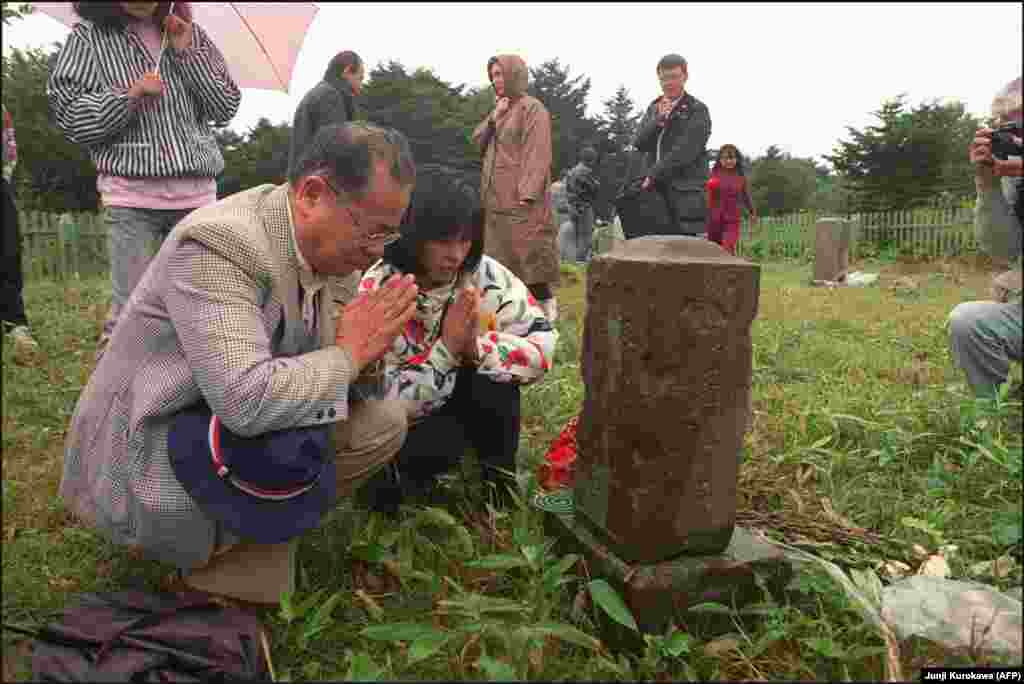
Japanese former residents visiting relatives&#39; graves on Kunashir island. Analysts suggest that &quot;alpha&quot; might include fishing rights for Japan near the two larger islands or the rights for Japanese citizens to visit and do business on the disputed islands. If Russia and Japan can find an &quot;alpha&quot; that is acceptable to both sides, a peace treaty can be signed and World War II might finally, formally end for these two nations.
16/16 Japanese former residents visiting relatives' graves on Kunashir island. Analysts suggest that "alpha" might include fishing rights for Japan near the two larger islands or the rights for Japanese citizens to visit and do business on the disputed islands. If Russia and Japan can find an "alpha" that is acceptable to both sides, a peace treaty can be signed and World War II might finally, formally end for these two nations.
For Russia, they are the justly earned spoils of war. For Japan, the Kurile Islands are stolen territory, lost to Soviet aggression and Western interference. More than 70 years after the last shot was fired in World War II, the two countries remain locked in a stalemate over four wave-battered islands. (A version of this gallery was originally published in April 2017.)
Previous slide
Next slide

OK, we get it.

Of course, it takes two to disagree. While it seems unclear whether Russia really is considering handing over Shikotan and a group of islets called Habomai, Abe’s readiness to abandon Japan’s claim to the two larger islands -- which Russia has made clear is a condition -- is also in question. ​

Tough Sell

Still, some analysts think there's a chance of a deal. Carnegie Moscow Center Director Dmitry Trenin says there’s a window of opportunity to get it done, but that convincing the public in both countries is a high hurdle.

“Politicians will make decisions and diplomats will seek to work out mutually acceptable solutions, but the key question will be public ratification of agreements, if and when these agreements are reached,” Trenin wrote.

In Russia, he warned, “The Kremlin will not be able to coerce the people into accepting its point of view. It will have to convince them, if it has valid arguments.”

To quote Putin, that sounds like “painstaking work” -- and the kind of work that, unlike negotiating with foreign governments in private or trolling them in public, Russian authorities don't often do.

Another foreign leader who reportedly did not get what he wanted out of talks with Putin this week was Turkish President Recep Tayyip Erdogan, who has been pursuing a "safe zone" along its border with Syria to provide security and stem the flow of migrants as the United States withdraws troops.

Venezuela

When it comes to the unfolding crisis in Venezuela, it remains to be seen whether Putin will get what he wants.

Russia certainly has a lot to lose: Embattled President Nicolas Maduro and his late predecessor, Hugo Chavez, have given Moscow its biggest foothold on the South American continent.
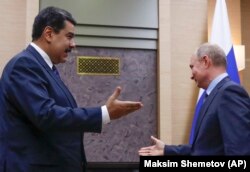
Putin and his Venezuelan counterpart Nicolas Maduro

Russia has poured money into the oil-producing country, whose leaders have been deeply at odds with Washington since Chavez came to power 20 years ago, and sent nuclear-capable bombers halfway around the world just last month in a jab at the United States.

Win or lose, though, Russia is certain to keep using the upheaval as a platform for criticism of Washington and its actions worldwide.

Closer to home, the Kremlin suffered an apparent setback when Facebook removed hundreds of pages and accounts it said were part of two online disinformation campaigns targeting users across much of the former Soviet Union and Europe.

The U.S.-based social network said that one of the operations, with 289 pages and 75 accounts, was linked to Russian state-funded media outlet Sputnik. Posing as independent and targeting users in the Baltics, Central Asia, the Caucasus, and Central and Eastern Europe, the people behind the accounts posted on issues such as anti-NATO sentiment, protest movements, it said.

Poll Problems

In Russia, meanwhile, opinion polls continued to point to potential problems for Putin.

An early-January survey by state-supported pollster VTsIOM put the number of Russians naming Putin as one of the politicians they trust to handle “important matters of state” at 33.4 percent -- the lowest since at least 2006 and four percentage points below the numbers recorded amid the wave of protests that erupted late in 2011, after he announced plans to return to the Kremlin after a hiatus.

Hunger Pangs

When it comes to indicators of economic performance, there are at least two kinds: hard numbers and anecdotal evidence.

Two of the latter jumped out this week in Russia -- one in the Far East, where a local resident suggests the New Year came in with less of a bang than usual.

“Observation from my colleague in Vladivostok: during the 2019 New Year festivities people used noticeably less fireworks than in previous years,” Artyom Lukin, a scholar at the Far Eastern Federal University tweeted. “Explanation: with stagnant economy, people are feeling the pinch. No money to spare and the mood is not that cheerful.”

The other was farther west, in the coal-mining Kemerovo Oblast in Siberia, where the regional ombudsman told lawmakers that a growing number of children have been fainting from hunger at school -- some, he suggested, because straitened family finances mean they go without breakfast and cannot afford to buy lunch.

  • 16x9 Image

    Steve Gutterman

    Steve Gutterman is the editor of the Russia/Ukraine/Belarus Desk in RFE/RL's Central Newsroom in Prague and the author of The Week In Russia newsletter. He lived and worked in Russia and the former Soviet Union for nearly 20 years between 1989 and 2014, including postings in Moscow with the AP and Reuters. He has also reported from Afghanistan and Pakistan as well as other parts of Asia, Europe, and the United States.

This item is part of
XS
SM
MD
LG