




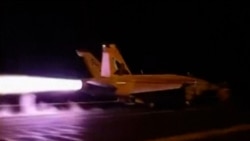


The US military said it launched dozens of strikes against targets linked to Iran's powerful Islamic Revolutionary Guards Corps (IRGC) in response to Iranian attacks on American troops in Jordan after President Donald Trump had vowed to retaliate and "hit them very hard."
The US military's Central Command (CENTCOM) said in a statement late on July 29 that military command centers, missile, and drone facilities, coastal surveillance and defense sites, and Iran's maritime capabilities were hit in the barrage that lasted around two hours.
"The strikes aimed to further diminish threats posed by Iran and its proxies to American forces, commercial shipping, and neighboring Gulf countries," it added.
The overnight attacks came after Iran confirmed it had fired ballistic missiles at US military bases in Jordan, which Trump had said would be responded to even though Washington continues to look for a peaceful settlement to the five-month-old war.
With a June memorandum of understanding aimed at pausing attacks to allow for peace talks obliterated by a resumption in hostilities by both sides, fear have grown that the war could be spreading further in the Middle East.
Iran has struck targets this week in Egypt, while the US hit Iranian proxy groups in Iraq.
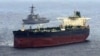
Tehran has also continued to target commercial vessels in the Strait of Hormuz, control of which has become the focus of much of the recent fighting.
"I think this latest round of strikes just underscores the really tough situation that the US has found itself in, with an escalatory spiral that has proven extremely hard to get out of," Allison Minor, director of the Atlantic Council’s Project for Middle East Integration and former director for Arabian Peninsula affairs at the White House National Security Council during Trump’s first term, told RFE/RL in an interview.
"The Iranian regime is making it clear that they will end this conflict on their own terms, and that they’re not afraid of continued confrontation with the US."
While the Iranian missiles fired at targets in Jordan were intercepted, The Egyptian cabinet confirmed that a drone had caused a fire at a US-owned gas storage tanker in the Mediterranean port of Damietta. It was the first attack on a target inside Egypt since the war broke out on February 28.
In Kuwait, the military said an Iranian attack caused severe damage to a building belonging to a Chinese company, killing a worker and causing significant damage.
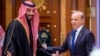
Pakistan, which helped mediate the memorandum of understanding that now lies in tatters, said on July 30 that talks were still being held between Washington and Tehran to try and end the fighting, though it gave no details.
"Negotiations between parties are ongoing, particularly on (the) Strait of Hormuz and to de-escalate," Pakistani Foreign Ministry spokesman Tahir Andrabi told reporters in Islamabad on July 30.
When asked about reaching a peace deal with Tehran, Trump told Fox News on July 29 that "we're going to let them keep talking."
Earlier in the week, he said there were "good talks" with Iran and a "good chance" of reaching a deal, though he added that military operations could resume if negotiations failed.