


Accessibility links

Breaking News

Who Was Behind The Deadly Attack At The Orthodox Monastery In Kosovo?

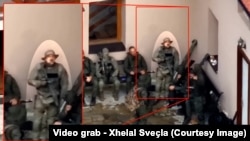
Kosovar Interior Minister Xhelal Svecla posted a video on social media that he said clearly showed Milan Radoicic, a fugitive vice president of the Serbian List party who was thought to be hiding in Serbia, taking part in the September 24 monastery attack.

PRISTINA -- Kosovar officials continued on September 26 to pull back the curtain on an alleged plot to destabilize the country, sharing video evidence purporting to show a fugitive Serb politician among dozens of gunmen in a deadly siege at a monastery in northern Kosovo two days earlier.

The deadly gun and grenade battle around the 14th-century Orthodox monastery, situated in the village of Banjska in the Zvecan municipality, has shattered months of uneasy calm since violent ethnic Serb protests against the forcible seating of ethnic Albanian mayors in late May highlighted the untenability of the status quo between Serbia and its former province.

Outside diplomatic pressure has continued to mount on Pristina and Belgrade to find a way to put their shared history of violence behind them and normalize bilateral relations in a hot spot of ethno-nationalist resentment and intransigence. Serbia refuses to recognize its former province's 2008 declaration of independence and Belgrade has continued to unilaterally support ethnic Serbs through parallel institutions and ethnic-based political parties, which Pristina regards as illegal meddling.

But the path to normalization appears even shakier as clues emerge as to the identity of the group that, during the fighting, killed a sergeant from the Kosovo Police.

Video And Other Evidence

Kosovar Interior Minister Xhelal Svecla on September 26 posted a video on social networks that he said clearly showed Milan Radoicic, a fugitive vice president of the Serbian List party who was thought to be hiding in Serbia, organizing and participating in the monastery attack. Serbian List is the main party representing the Serb minority in Kosovo. RFE/RL can not confirm that the man shown in the video is Radoicic.

Radoicic is already wanted by Kosovar authorities for alleged witness intimidation. He was also named in a December 2019 indictment as the alleged leader of a criminal group that planned the 2018 assassination in North Mitrovica of moderate Kosovar Serb politician Oliver Ivanovic, although the warrant for his arrest was withdrawn without explanation in March 2021. The United States imposed sanctions on Radoicic in 2021 for alleged involvement in transnational organized crime.

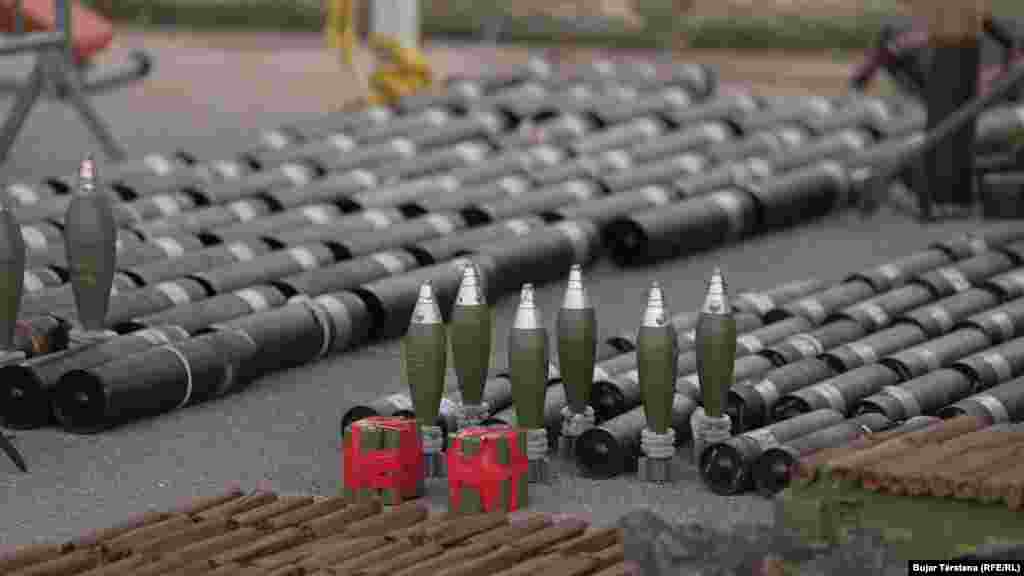
Kosovo Police Display Confiscated Weapons Following Monastery Attack
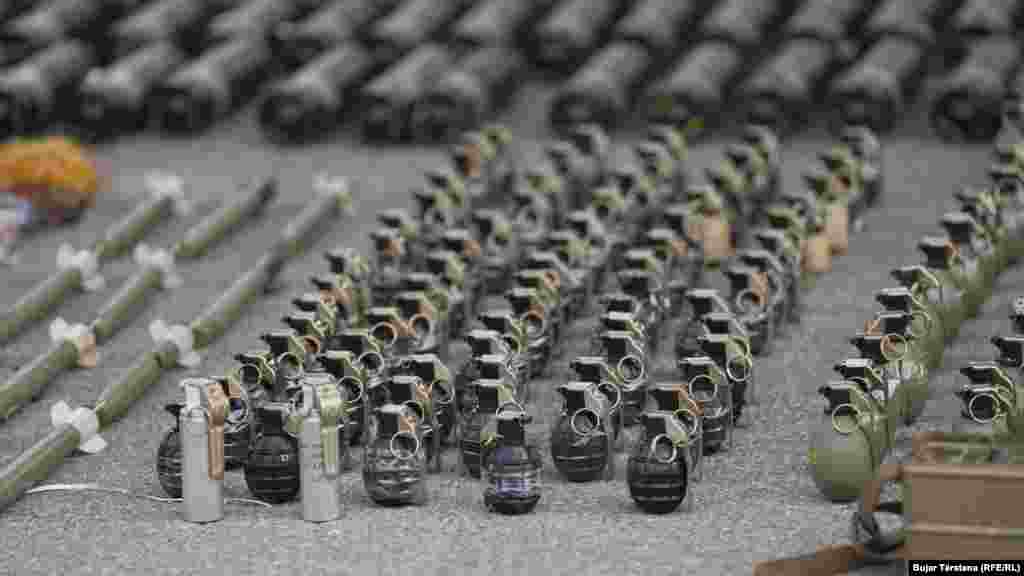
Hand grenades confiscated from the northern, Serb-majority district where an attack on an Orthodox monastery left four people dead, including a police officer, were exhibited to journalists by Kosovar police on September 25.<br />
&nbsp;
1/14 Hand grenades confiscated from the northern, Serb-majority district where an attack on an Orthodox monastery left four people dead, including a police officer, were exhibited to journalists by Kosovar police on September 25.
 
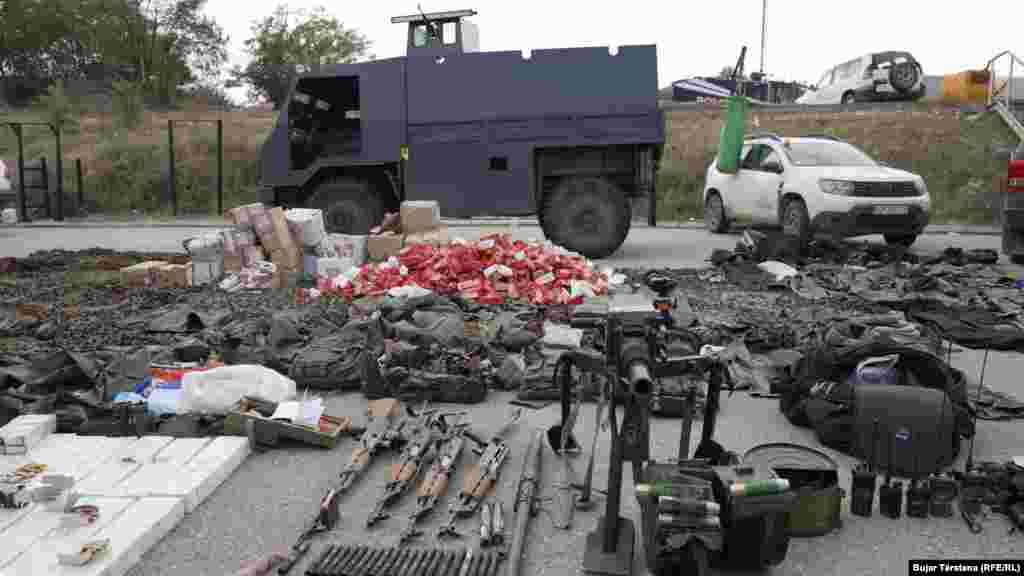
Kosovar police displayed weapons, vehicles, ammunition, and other items confiscated during searches in a northern, ethnic Serb-dominated district where an attack on an Orthodox monastery left four people dead, including a police officer.
Artillery pieces were also confiscated.<br />
<br />
Roads into the village of Banjska, where the monastery is located, remained blocked by police on September 26, and authorities were searching homes trying to identify the masterminds behind the attack two days earlier.
2/14 Artillery pieces were also confiscated.

Roads into the village of Banjska, where the monastery is located, remained blocked by police on September 26, and authorities were searching homes trying to identify the masterminds behind the attack two days earlier.
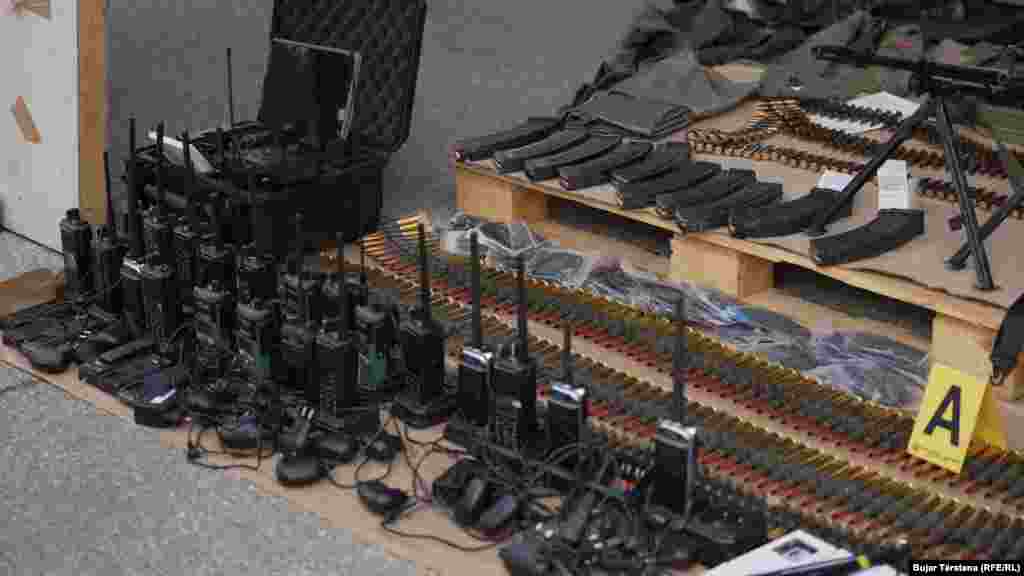
Kosovar police displayed weapons, vehicles, ammunition, and other items confiscated during searches in a northern, ethnic Serb-dominated district where an attack on an Orthodox monastery left four people dead, including a police officer.
Radio communications equipment along with bullets and cartridges were displayed.<br />
<br />
A total of eight people have been arrested so far, according to Veton Elshani, a top regional police official, and access to the village remains blocked.<br />
<br />
&quot;The police still haven&#39;t finished their work, they don&#39;t know when it will happen, maybe today during the day,&quot; he told RFE/RL.
3/14 Radio communications equipment along with bullets and cartridges were displayed.

A total of eight people have been arrested so far, according to Veton Elshani, a top regional police official, and access to the village remains blocked.

"The police still haven't finished their work, they don't know when it will happen, maybe today during the day," he told RFE/RL.
Kosovar police displayed weapons, vehicles, ammunition, and other items confiscated during searches in a northern, ethnic Serb-dominated district where an attack on an Orthodox monastery left four people dead, including a police officer.
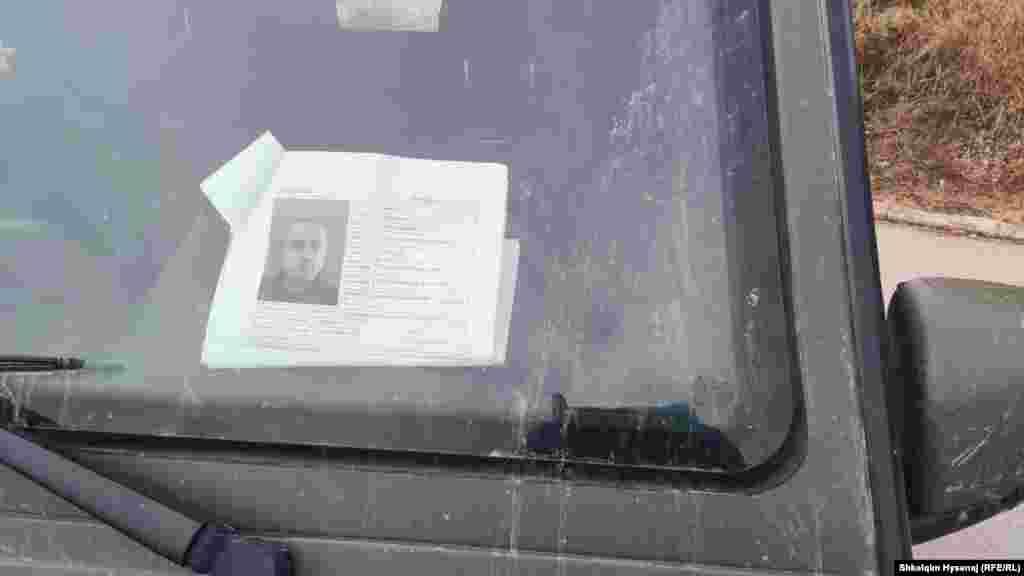
The general director of the Kosovo Police, Gazmend Hoxha, said that in a Mercedes car with Belgrade license plates, a gun permit was found in the name of Millan Radoicic.<br />
<br />
Around 30 people dressed in military-like uniforms stormed the Serbian Orthodox complex in Banjska on September 24, sparking a gunbattle with Kosovar police.
4/14 The general director of the Kosovo Police, Gazmend Hoxha, said that in a Mercedes car with Belgrade license plates, a gun permit was found in the name of Millan Radoicic.

Around 30 people dressed in military-like uniforms stormed the Serbian Orthodox complex in Banjska on September 24, sparking a gunbattle with Kosovar police.
Kosovar police displayed weapons, vehicles, ammunition, and other items confiscated during searches in a northern, ethnic Serb-dominated district where an attack on an Orthodox monastery left four people dead, including a police officer.
A permit to carry weapons for personal use issued to Millan Radoicic was displayed in the vehicle.<br />
<br />
Three attackers were killed, along with a Kosovar police officer. Kosovar Prime Minister Albin Kurti declared a day of mourning for the slain officer.
5/14 A permit to carry weapons for personal use issued to Millan Radoicic was displayed in the vehicle.

Three attackers were killed, along with a Kosovar police officer. Kosovar Prime Minister Albin Kurti declared a day of mourning for the slain officer.
Kosovar police displayed weapons, vehicles, ammunition, and other items confiscated during searches in a northern, ethnic Serb-dominated district where an attack on an Orthodox monastery left four people dead, including a police officer.
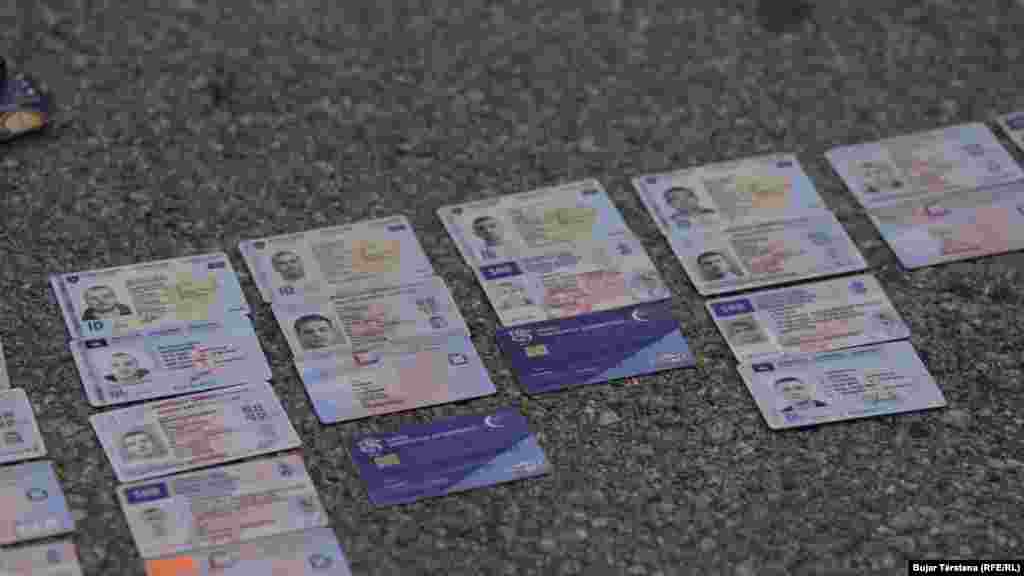
Identity cards and bank cards suspected to belong to the attackers were also shown.<br />
<br />
Among those arrested, four had radio communications equipment, police said, and a &quot;significant amount&quot; of weaponry, ammunition, and other equipment was also found.
6/14 Identity cards and bank cards suspected to belong to the attackers were also shown.

Among those arrested, four had radio communications equipment, police said, and a "significant amount" of weaponry, ammunition, and other equipment was also found.
Kosovar police displayed weapons, vehicles, ammunition, and other items confiscated during searches in a northern, ethnic Serb-dominated district where an attack on an Orthodox monastery left four people dead, including a police officer.
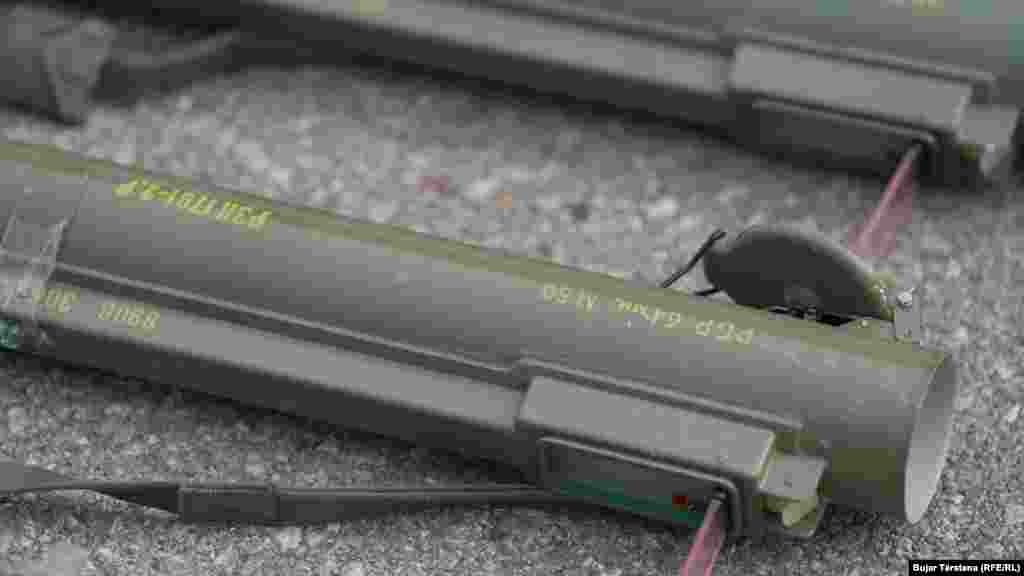
A single-use hand-held rocket launcher was found at the scene.<br />
<br />
The attack, and the murkiness of its circumstances, comes as tensions continue to mount in the ethnic Serb-dominated north of Kosovo.<br />
<br />
&nbsp;
7/14 A single-use hand-held rocket launcher was found at the scene.

The attack, and the murkiness of its circumstances, comes as tensions continue to mount in the ethnic Serb-dominated north of Kosovo.

 
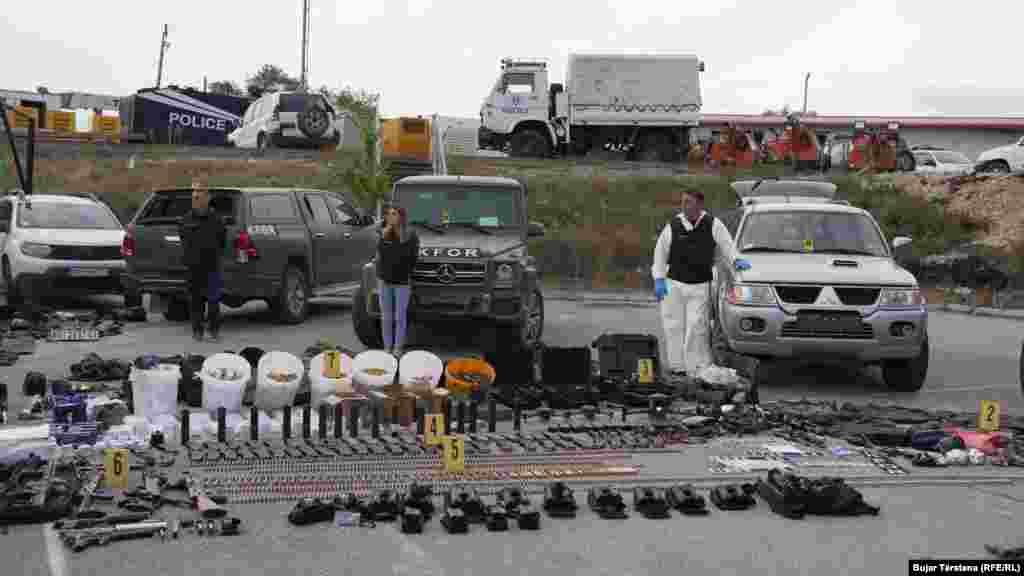
Kosovar police displayed weapons, vehicles, ammunition, and other items confiscated during searches in a northern, ethnic Serb-dominated district where an attack on an Orthodox monastery left four people dead, including a police officer.
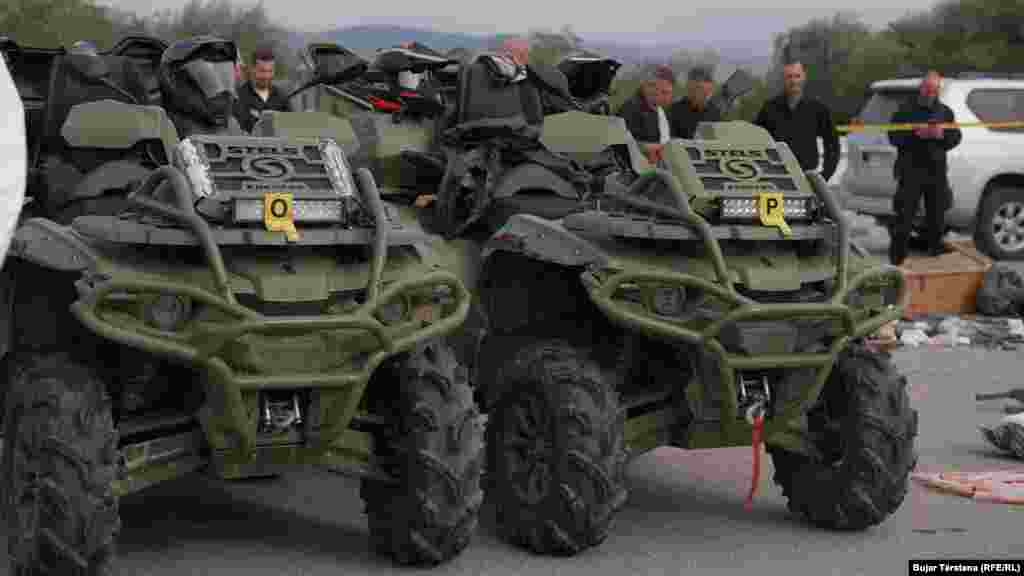
In addition to weapons and ammunition, the Kosovo Police said they also found military vehicles.<br />
<br />
Serbia does not recognize Kosovo&rsquo;s 2008 declaration of independence, and squabbling and conflicts have erupted over things like license-plate registrations and municipal elections.
8/14 In addition to weapons and ammunition, the Kosovo Police said they also found military vehicles.

Serbia does not recognize Kosovo’s 2008 declaration of independence, and squabbling and conflicts have erupted over things like license-plate registrations and municipal elections.
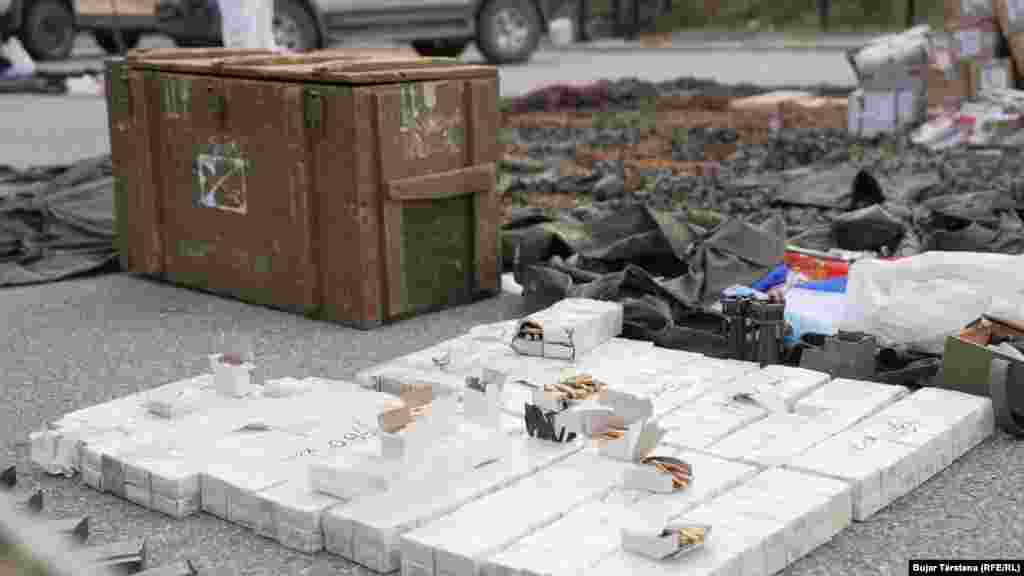
Kosovar police displayed weapons, vehicles, ammunition, and other items confiscated during searches in a northern, ethnic Serb-dominated district where an attack on an Orthodox monastery left four people dead, including a police officer.
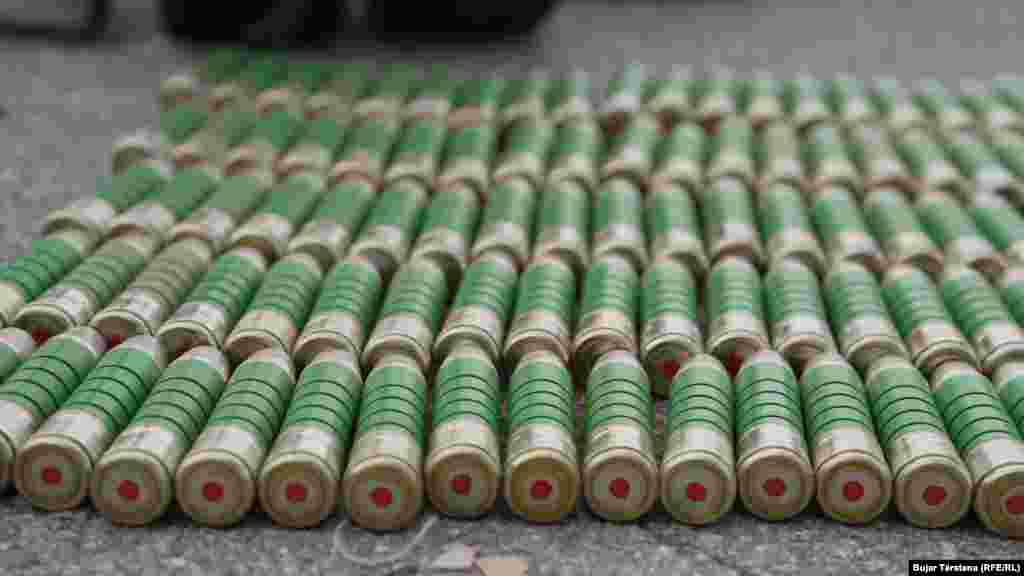
Confiscated ammunition<br />
<br />
At least six of the suspected attackers who escaped were now in Serbia receiving treatment at a hospital there, Kosovar Interior Minister Xhelal Svecla told reporters, and he demanded that Serbia hand them over to Kosovar authorities.
9/14 Confiscated ammunition

At least six of the suspected attackers who escaped were now in Serbia receiving treatment at a hospital there, Kosovar Interior Minister Xhelal Svecla told reporters, and he demanded that Serbia hand them over to Kosovar authorities.
Kosovar police displayed weapons, vehicles, ammunition, and other items confiscated during searches in a northern, ethnic Serb-dominated district where an attack on an Orthodox monastery left four people dead, including a police officer.
Crates of ammunition, a Serbian flag, and other confiscated items are displayed.<br />
<br />
Serbian President Aleksandar Vucic has denied that Belgrade was involved in the incident. He also repeated that Serbia would &quot;never&quot; recognize Kosovo&#39;s independence, &quot;neither formally nor informally.&quot;
10/14 Crates of ammunition, a Serbian flag, and other confiscated items are displayed.

Serbian President Aleksandar Vucic has denied that Belgrade was involved in the incident. He also repeated that Serbia would "never" recognize Kosovo's independence, "neither formally nor informally."
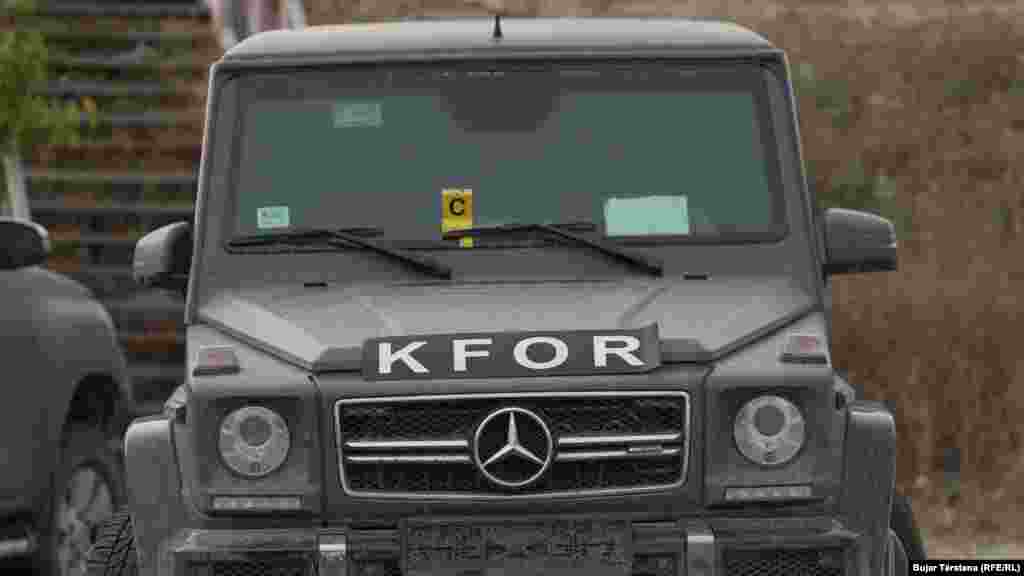
Kosovar police displayed weapons, vehicles, ammunition, and other items confiscated during searches in a northern, ethnic Serb-dominated district where an attack on an Orthodox monastery left four people dead, including a police officer.
This vehicle, which is suspected to have been used by the attackers, had a sticker with the inscription KFOR, the NATO-led peacekeeping force in Kosovo.
11/14 This vehicle, which is suspected to have been used by the attackers, had a sticker with the inscription KFOR, the NATO-led peacekeeping force in Kosovo.
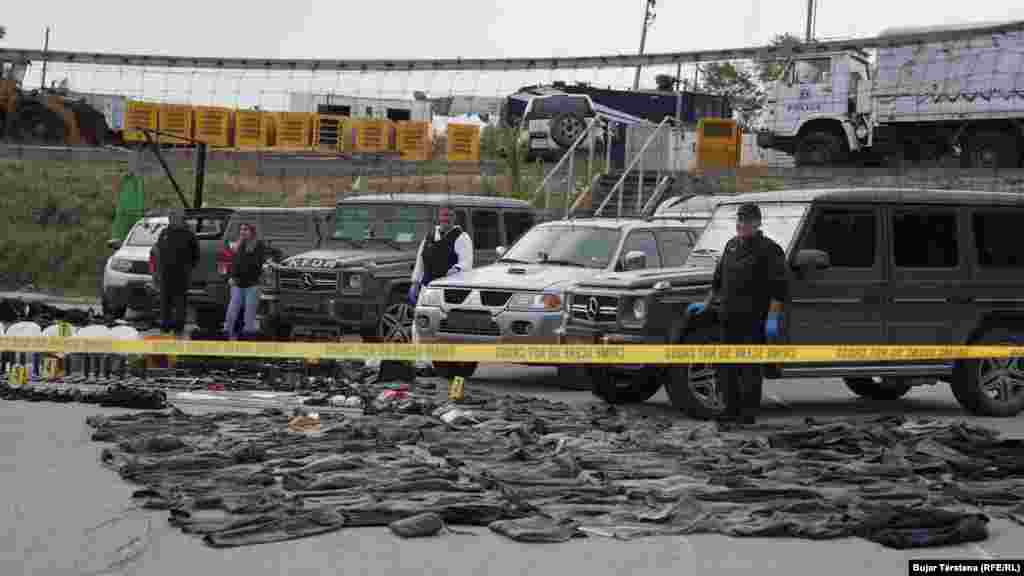
Kosovar police displayed weapons, vehicles, ammunition, and other items confiscated during searches in a northern, ethnic Serb-dominated district where an attack on an Orthodox monastery left four people dead, including a police officer.
Military-style vehicles and clothing
12/14 Military-style vehicles and clothing
Kosovar police displayed weapons, vehicles, ammunition, and other items confiscated during searches in a northern, ethnic Serb-dominated district where an attack on an Orthodox monastery left four people dead, including a police officer.
An armored car confiscated by the Kosovo Police was also presented.
13/14 An armored car confiscated by the Kosovo Police was also presented.
Kosovar police displayed weapons, vehicles, ammunition, and other items confiscated during searches in a northern, ethnic Serb-dominated district where an attack on an Orthodox monastery left four people dead, including a police officer.
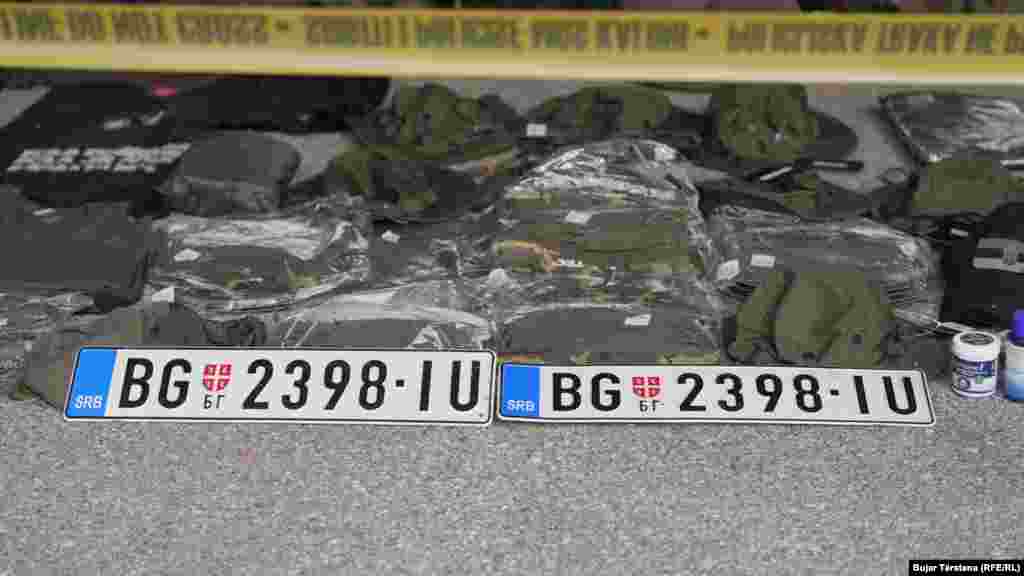
Vehicle license plates with Belgrade registration<br />
<br />
The United States&#39; top diplomat called on both Kosovo and Serbia to avoid worsening tensions.
14/14 Vehicle license plates with Belgrade registration

The United States' top diplomat called on both Kosovo and Serbia to avoid worsening tensions.
Kosovar police displayed weapons, vehicles, ammunition, and other items confiscated during searches in a northern, ethnic Serb-dominated district where an attack on an Orthodox monastery left four people dead, including a police officer.
Previous slide
Next slide

At a press conference a day earlier where weapons, vehicles, and other items confiscated after the siege were exhibited, Svecla said maps and plans had been found and that the September 24 attack was months in the making. He said the plotters hoped to involve "hundreds of people to destabilize our country."

Hours after the shooting had ended, Svecla said the attackers included "members of Civil Protection," a nebulous formation with its historical roots in former civil defense structures that were dissolved or reluctantly integrated into Kosovar institutions during EU efforts to bring lasting peace to the region. Later, Kosovar officials said members of a shadowy group called the Northern Brigade were also involved. Less is known about Northern Brigade, which appears to have become publicly active with a guerrilla graffiti campaign only about a year ago.

Civil Protection operated as a response unit against natural disasters in northern Kosovo independently from Pristina's authority from 2006 until 2015-16, when its ranks were either disbanded or folded into Kosovar institutions under pressure from the European Union. At the time, it was said to entail about 800 individuals, slightly over half of whom were slated for integration into Kosovar institutions.

The Kosovar Center for Security Studies, an independent think tank, noted that Civil Protection is seen as particularly dangerous because so many of its members have undergone military-style training.
Many Serbs, however, including the leadership of the Serbian List party, resented Civil Protection's disbandment. Some former Civil Protection members morphed into a loose affiliation of Serbs who opposed Kosovar authority and independence, possibly continuing to enjoy support from Belgrade among the "parallel institutions" that serve Serbs in Kosovo and that Pristina regards as illegal.

In mid-June, Svecla announced the arrest of Civil Protection's purported leader, Serb Milun "Lune" Milenkovic, for allegedly organizing the violent unrest in northern Kosovo in late May, when ethnic Serbs protested the forcible seating of ethnic Albanian mayors, clashing with Kosovo police and troops from the NATO-led peacekeeping force KFOR.

Weeks later, Pristina designated Civil Defense and Northern Brigade as terrorist organizations. Prime Minister Albin Kurti said Kosovar security intelligence assessed the presence of both groups as "a serious and direct threat to the constitutional order and security of Kosovo."

At the time, a Serb member of Kosovo's government, Community and Returns Minister Nenad Rasic, called the decision on the "terrorist" designation "premature" and said it further reduced the number of potential "interlocutors" in majority-Serb areas.

The United States was a critic of the designation, too. The State Department took the unusual step of saying the decision "should have been coordinated with Kosovo's closest international partners, including those who have a primary responsibility for ensuring Kosovo's stability," which was seen as another sign of increasing U.S. frustration at the Kurti government's actions with respect to Serbs and normalization with Serbia.
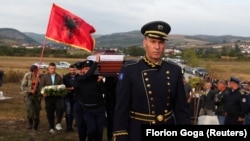
Police officers carry the coffin during a funeral for a colleague killed in the Kosovo shoot-out, near Vushtrri, Kosovo, on September 25.

Analysts and experts agree that the group responsible was likely organized and trained. Avni Islami, a professor of security science at AAB University in Pristina, said the attackers appeared to be part of a "structured group." He likened the attackers to the Russian mercenaries that have fought alongside Russian troops in Ukraine and waged war in Africa, saying it looked like "an imitation of the Wagner Group."

Mentor Vrajolli, from the Kosovar Center for Security Studies, said the group appeared to have been "trained, prepared, and have received quite expensive resources to be able to operate." He said it was virtually "impossible" for the Serbian authorities to have been unaware of their activities.

"So now the question arises: Was the Serbian state directly involved in this structure or were radical elements mixed in? This is difficult to confirm," Vrajolli said. "But since there are people arrested, then the information about who encouraged their organization will be found."

Serbia Link?

From nearly the outset, top Kosovar officials have alleged Serbian state involvement. In his first statement about the shoot-out at the monastery, Kurti described "at least 30 heavily armed people, professionals, military, and police," who were wearing "uniforms."
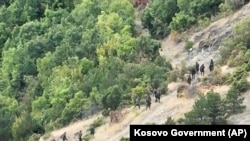
This photo taken by a drone on September 24 shows a group of armed men walking along a mountain path near the Banjska monastery in Kosovo.

Kurti said the group responsible was linked to "organized crime with political, financial, and logistical support from official Belgrade" and "criminals orchestrated by Serbia." From the United States, where she was attending the UN General Assembly, Kosovar President Vjosa Osmani blamed "Serbia's criminal groups" and "Serbia's destabilizing attempts." Interior Minister Svecla said the attack was supported by the "state of Serbia" and pointed a finger at Serbian President Aleksandar Vucic.


Kosovar officials also suggested, once the shooting was over but with many of the alleged gunmen still on the loose, that some of the assailants had fled across the border into Serbia.

Kosovar Police General Director Gazmend Hoxha described fugitive Radoicic -- who according to Kosovar authorities was among the gunmen -- as "close to" Vucic. Hoxha also alleged that "the provision of weapons and logistical means to this terrorist group, including the entry into Kosovo of more than 26 motor vehicles, [are] suspected to have been actively aided and supported by the government of Serbia."

Serbia has hit back at the accusations. When he broke his silence late on September 24, Vucic rejected any suggestion that the attackers' "uniforms" resembled those of the Serbian police or military. After stressing his condemnation of the killing of the "Albanian police officer," Vucic sought to draw a link between the incident and the Kurti government's treatment of ethnic Serbs, who are thought to compose 1-2 percent of Kosovo's population of around 2 million people.
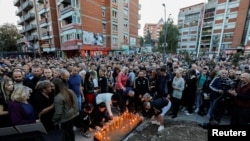
Kosovo Serbs in Mitrovica hold a vigil on September 26 for those killed in the attack.

The Serbian leader said two of the three individuals killed so far by Kosovar police (another body was found the following day) were from North Mitrovica, the ethnically riven city on the Ibar River that essentially divides four majority-Serb municipalities from the rest of Kosovo.

"The Serbs who rebelled," Vucic said, "are not people from central Serbia, as the media in Pristina claimed, but from Kosovo, people who are refusing to endure Kurti's terror." He went on to argue that Kurti is the "sole culprit" and "is to blame for all of this."

Serbia declared September 27 a day of mourning over the "tragic events" in Kosovo and the Serbian List party has called for three days of mourning for "the death of our fellow citizens in a tragic event in Banjska."

At the very least, the incident complicates efforts to normalize relations between Serbia and Kosovo. Observers warn that a reappearance of organized violence to exploit bitterness between ethnic Serbs and majority ethnic Albanians in Kosovo could deal a severe blow to Western-mediated talks to allow Pristina and Belgrade to more fully participate in international institutions.

"[T]his seems to be a reasonably well-organized development, and that does make it more dangerous because it suggests that there are groups on the ground that see it in their interests to provoke violence and that are prepared to organize and to seek weapons that would enable them to produce an escalation in violence," Charles Kupchan, a Georgetown professor and former National Security Council expert in the Clinton and Obama administrations, told RFE/RL's Balkan Service.

Written by Andy Heil based on reporting by RFE/RL Balkan Service correspondents Bekim Bislimi and Dragan Stavljanin and RFE/RL's Balkan Service
  • 16x9 Image

    Bekim Bislimi

    Bekim Bislimi is a correspondent with RFE/RL's Kosovo Service.

  • 16x9 Image

    Dragan Stavljanin

    Dragan Stavljanin is the foreign affairs editor of RFE/RL's Balkan Service. He has published numerous articles and written two books, The Cold Peace: The Caucasus And Kosovo and The Balkanization Of The Internet And The 'Death' Of The Journalist.

  • 16x9 Image

    RFE/RL's Balkan Service

    In 2019, RFE/RL's Balkan Service marked 25 years of reporting in one of the world’s most contested regions, championing professionalism and moderation in a media landscape that is sharply divided along ethnic and partisan lines.

This item is part of
XS
SM
MD
LG