Abubakar Siddique, a journalist for RFE/RL's Radio Azadi, specializes in the coverage of Afghanistan and Pakistan. He is the author of The Pashtun Question: The Unresolved Key To The Future Of Pakistan And Afghanistan.
Weeks after the Afghan government freed thousands of Taliban prisoners in return for the release of hundreds of government soldiers, there is little evidence that former combatants are returning to the battlefield.
As infection rates and death toll mount across Pakistan because of a growing coronavirus outbreak, the country’s healthcare system is facing an unprecedented crisis amid a lack of beds, oxygen, and medicine, as well as attacks on medical staff
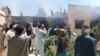
A tribal posse in southeast Afghanistan burned down the houses of four families whose male members are accused of murdering seven members of a rival family.
With rapidly rising confirmed coronavirus cases and limited testing, Pakistan seems to be on a trajectory toward herd immunity despite no official acknowledgment that this is the country’s default approach to combating the coronavirus pandemic.
In a visible attempt to jump-start talks between the Afghan government and the Taliban, Pakistan’s powerful army chief General Qamar Javed Bajwa visited Afghanistan amid the coronavirus pandemic that is taking a mounting toll on the neighboring countries.
For decades, remittances from hundreds of thousands of expatriate workers in the Gulf have proved a lifeline for Pakistan’s fledgling economy.
Most members of Afghanistan’s estimated 1,000-strong Hindu and Sikh minority are weighing leaving the country.
The resumption of a court case in Pakistan this week has reinforced a key question about why Islamabad wants to remove a top judge who is widely reputed to be one of the most competent and honest in the country.
A controversy is growing in Afghanistan after a healer claimed he has found a cure for treating COVID-19, the disease caused by the coronavirus, which has killed more than 370,000 people worldwide in the ongoing pandemic.
A lockdown prompted by the coronavirus pandemic has destroyed most of this year’s honey crop in Pakistan while hitting beekeepers and traders with millions of dollars in losses.
Khanzada Asfandyar Khattak, a dance artist, is using his spin, whirl, and moves to beat stay-at-home isolation during the coronavirus pandemic.
As Afghans enjoy a brief respite from violence during a rare cease-fire during the Muslim holy festival of Eid al-Fitr, government officials, Taliban, and international diplomats reflect on the human and material toll this impoverished country is enduring because of fighting.
The coronavirus pandemic has devastated tourism in an alpine valley of northwestern Pakistan that had barely recovered from years of Taliban control and the military operations that displaced the region’s entire population a decade ago.
In a sign that efforts to roll back the autonomy of Pakistan’s provinces is snowballing into a crisis, politicians in three minority provinces in the country have criticized the recently constituted government commission tasked with dividing federal resources between Islamabad and four provinces.
They braved great risks to flee danger in their Balochistan homeland in southwestern Pakistan, where thousands have been killed and disappeared amid a separatist rebellion that began two decades ago.
In a sign that some rural Afghan farmers are attempting to protect themselves amid the looming uncertainty wrought by the coronavirus pandemic, poppy cultivation has increased in a southern Afghan province.
As the world grapples with the economic fallout of the coronavirus pandemic, one country is possibly turning the challenge into a prospect for greater economic gain.
Load more