

Welcome to Wider Europe, RFE/RL's newsletter focusing on the key issues concerning the European Union, NATO, and other institutions and their relationships with the Western Balkans and Europe's Eastern neighborhoods.
I'm RFE/RL Europe Editor Rikard Jozwiak, and this week I am drilling down on two issues: whether the EU could drop some of its Belarus sanctions and the road map for the most advanced EU candidates.

Briefing #1: Will The EU Soon Lift Potash Sanctions On Belarus?
What You Need To Know: When the EU, after weeks of negotiations, agreed on September 22 to remove the Russian oligarchs Alisher Usmanov and Mikheil Fridman from its sanctions blacklist, the discussion in Brussels quickly turned to what other restrictive measure could come next. It certainly won’t be any other new individuals as the rest of the blacklist of names was prolonged by an unprecedented three years, to September 2029, as part of a deal that struck off the above mentioned pair.
The obvious answer might be ,sectoral sanctions on Russia, which target all types of exports and imports to and from Russia on everything from oil to aluminum and wood, which the bloc has imposed in various rounds ever since the full-scale invasion of Ukraine back in 2022. Those are up for renewal via unanimity in July, and there is every indication that EU member states will pick them apart. But perhaps the sanctions regime to watch is the Belarusian one, created after the fraudulent presidential election in 2020 and the subsequent crackdown on the opposition and civil society there. This package must be extended by the end of February 2027, and there are already whispers in Brussels that it might be loosened -- particularly when it comes to the current EU prohibition on Belarus’s biggest export, potash.
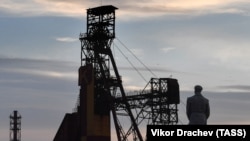
Deep Background: The bloc essentially has triple sanctions on Belarus potash: an import ban, a transfer ban, and restrictive measures on the Belarusian Potash Company and Belaruskali. The latter is one of the largest potash fertilizer companies in the world and the largest single source of revenue for the government of strongman leader Aleksandr Lukashenko. EU diplomats that RFE/RL has spoken to have indicated that it is too early to predict right now how the decision surrounding the extension will pan out. They also indicated that at least the transit ban could be removed even though many believe that most of the measures will remain. What the EU does in February will be closely monitored beyond Europe, notably in the United States, which dropped its Belarus potash sanctions in March this year. And there are plenty of signs that Washington would like Brussels to do the same, especially as it would be easier to transport the product to the United States via some of Belarus’s neighbors -- who also happens to be the most hawkish EU members vis-a-vis the Lukashenko regime.
In May, RFE/RL revealed that the US State Department had sent a letter to Lithuania, Poland, and Ukraine asking them to allow potash to transit through their territories: “The United States is interested in exploring potential routes for the transit of Belarusian potash to alleviate global shortages via Poland, Lithuania, or Ukraine and looks forward to future discussions with you on this topic.” Then in September, US President Donald Trump posted on the Truth Social network that "the United States is working on a massive Deal with respect to the purchase of Potash from Belarus" in a bid to get the product on cheaper terms than what it currently gets from the world’s biggest potash exporter, Canada, which Washington is embroiled in a trade war with. The social media post was followed up by comments from Trump’s Belarus envoy John Coale, who in an interview with The New York Times said that "the agreement on potash fertilizer is making significant progress towards the transportation of potash fertilizer from Belarus to the United States, which is what President Trump is seeking." Coale also noted that the issue had been discussed with Lithuanian President Gitanas Nausėda.
Drilling Down:
- In parallel, there have also been some deals recently that would indicate -- even though no one has said so publicly -- that the United States is providing both Lithuania and Poland with sweeteners to push them to allow potash to transit their territories.
- Lithuanian Foreign Minister Kestutis Budrys and US Secretary of State Marco Rubio signed a bilateral framework agreement on critical minerals cooperation earlier in September. Around the same time, it was announced that Washington would return with a new rotational force to Lithuania with up to 1,000 US troops to be stationed there for nine months from October.
- Regarding Poland, Washington and Warsaw are reportedly inching closer to a final agreement on a permanent US military base in the country. Meanwhile, Polish Foreign Minister Radek Sikorski, after a decade of public spats and snubs, met with his Belarusian counterpart, Maksim Ryzhenkov, recently on the sidelines of the UN General Assembly in New York.
- The question is if Lithuania will be tempted to change its position, as the issue is especially tricky for Vilnius for three main reasons: Firstly, before the EU sanctions, the majority of Belarusian potash exports went via Lithuania's Baltic sea port in Klaipeda. If this business were to resume -- and it does remain the cheapest option -- it would likely cause plenty of political controversy and public outrage in the Baltic state.
- Second, the decision regarding sanctions renewal would come during Lithuania’s stint as president of the Council of the EU during the first half of 2027. That would put Lithuania in a very awkward position. However, some diplomats have noted that Vilnius could get another country to do the nasty work while hiding behind the neutrality and “honest-broker" position of the EU presidency chair.
- Finally, there is a national ruling, which has been upheld by Lithuanian courts, that allowing the transit of Belarusian potash is against the country's national-security interests and that to reverse this, Lithuanian intelligence must provide an updated assessment showing that this is no longer the case.
- But, come February, the urgency to drop the potash sanctions could have abated. Diplomats speaking to RFE/RL have noted that the United States probably doesn't see the EU lifting Belarus sanctions as a priority despite all the recent noise -- especially as Belarus may not be able to replace Canada any time soon. Lukashenko himself recently admitted that the country’s output had decreased and wouldn’t be able to match US demand. To complicate things further, most of Belarus's current potash production is heading to Brazil and China anyway.
- There is also the question of how the potash would get to market as Klaipeda has diversified to other exports, the Polish port of Gdansk has got little spare capacity, and mainly export coal and Black Sea exports via Odesa remain limited due to constant drone and missile attacks in the region.
Briefing #2: The Road Maps For The Most Advanced EU Candidate Countries
What You Need To Know: While the European Commission President Ursula von der Leyen made all the headlines about Canada potentially becoming an associate member of the European Union in her big annual address to the European Parliament earlier in September, there was one statement on enlargement that went almost completely unnoticed (perhaps as it was delivered in French at the end of von der Leyen's hourlong sprawling speech). The point of great interest was that the European Commission will soon propose road maps for the most advanced EU hopefuls. Von der Leyen’s enlargement commissioner Marta Kos later that same day posted on X that the road maps will “set out a clear priority list” that would include “timelines and deliverables.” This caught EU member state diplomats a little by surprise as they hadn’t explicitly been asking for such a thing nor quite understood what it even meant.
Speaking to EU officials in the European Commission, however, they all noted that work on such documents has begun and is following a strict schedule. The idea is that the commission will first present, on October 6, its so-called “pre-enlargement strategy.” That will mention the road maps even though the accompanying documents will largely deal with what is known as “safeguard measures” for potential new EU members. Those are things such as gradual voting rights in the sensitive areas of foreign policy, enlargement, and EU budget negotiations. EU leaders are then expected to discuss this strategy when they meet in Brussels for a summit on October 15-16. But they may also touch on the potential road maps, as some may not be too keen on the European Commission setting specific dates on future enlargement as it is becoming an increasingly sensitive political issue in some member states.
Deep Background: It is, in other words, not clear if these road maps will materialize and, if they do, whether they will actually have explicit dates. But if they do come, they will be part of the annual enlargement package that sketches out progress -- or lack thereof -- on all of candidate countries, which is currently scheduled for October 28. Issuing road maps has been done before, most recently for the last country that joined the bloc: Croatia. Croatia’s road map was published in late 2008 and set a very ambitious goal: to finish negotiations by the end of 2009. This was a different era, when the EU was still very keen to expand, but even this was a tall order given that Zagreb had only finished negotiations on four chapters out of 33. In the end, the country managed to close all chapters by mid-2011 and became a fully fledged member of the bloc two years later after all other 27 member states had ratified its association treaty. This shows, if anything, that the European Commission setting dates and targets for closing accession talks is essentially guess work. Because it is, after all, the EU member states and not the commission that give the green light via unanimity to open and close every negotiation chapter.
Drilling Down:
- Yet, the European Commission is attempting to try again now, 18 years later. For starters, it isn’t totally clear which countries the potential new road maps would cover. Von der Leyen stated that it will cover the most advanced candidate countries, which in Brussels these days means Montenegro, Albania, Moldova, and Ukraine -- in that order.
- However, there are still doubts whether the front-runner Montenegro really needs a road map right now, as they are further ahead than Croatia was back in 2008. Podgorica has closed negotiations on 18 out of the 33 remaining policy chapters and still harbors the very ambitious goals of completing talks on the rest by the end of this year and to be a fully fledged member by 2028. Any road map pointing out anything different would be quite awkward for Podgorica.
- Then you are left with Albania, Moldova, and Ukraine, who would potentially be sensitive to different timelines. Albania has opened all chapters and closed three, so is clearly ahead of the other two.
- It's trickier with Moldova and Ukraine, as to date they have been coupled on everything enlargement related. So far, they have both opened two clusters out of the six that all 33 enlargement chapters are divided into. The prediction in Brussels is that Kyiv and Chisinau will remain coupled as long as all clusters/chapters are not opened but that Moldova will rush ahead once it comes to the closing of chapters. According to EU officials with knowledge of the process, Moldova could close chapters already by the end of this year, while Ukraine, due to a lack of key reforms, is currently slated to close chapters in 2027.
- Right now, however, it is all about opening the final clusters. And here it is still Hungary that is currently slowing down Ukraine (and by extension Moldova). But there is still hope that Budapest will gradually give the green light to opening the remaining four this year even though other EU member states may hide behind Budapest here, notably France and Poland.
- Most likely, the fairly unproblematic clusters could be opened in October. Optimistically speaking, the final two -- the trickier cluster 4, which includes complicated policy files such as transport, and cluster 5, with the even trickier agriculture file -- could be opened in November or even December.
Looking Ahead
Look out for von der Leyen’s fall trip to the western Balkans, which starts on September 30. The journey will take her to EU hopefuls Albania, Kosovo, Montenegro, and North Macedonia. Notably, she won’t travel to Bosnia-Herzegovina and Serbia, with the explanation that both countries are heading for general elections later in October. Most European diplomats, however, see especially the Belgrade snub as a reaction to what was widely perceived as Serbia’s glorification of the recently deceased convicted war criminal Ratko Mladic.
That's all for this week!
Feel free to reach out to me on any of these issues on X @RikardJozwiak, or on e-mail at jozwiakr@rferl.org.
Until next time,
Rikard Jozwiak