


Accessibility links

Breaking News

A Decade After Bin Laden’s Killing, Terrorism Still Haunts Pakistan

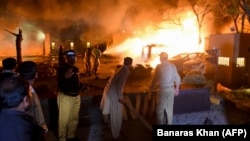
Police and firefighters arrive at the scene of an explosion at a five-star hotel in Quetta, the capital of southwestern Balochistan Province, on April 21.

It was only two decades ago that Pakistan’s rulers took pride in making their country a frontline ally in the U.S.-led war on terrorism following the attacks of September 11.

But since the killing of Al-Qaeda leader Osama bin Laden in a U.S. special forces raid inside a Pakistani garrison town in 2010, Islamabad has struggled in its attempts to portray itself as a victim rather than a perpetrator of terrorism.

Experts maintain that Pakistan has failed to prioritize battling terrorism and extremism over its international standing, domestic security, and foreign relations. Meanwhile, its leaders have insisted they won their domestic war on terrorism.

It appears the international community is taking no chances. As U.S. troops make their final withdrawal from Afghanistan, NATO allies have adopted diplomatic and financial tools to hold Pakistan accountable for sheltering and supporting militant groups. Afghanistan and India in particular have demanded Islamabad rein in jihadists.

Ten Years Later: The Killing Of Osama Bin Laden

The September 11 terror attacks in New York (pictured), Washington, D.C., and Pennsylvania in 2001 gave renewed urgency to the hunt for Saudi terrorist leader Osama bin Laden. The search had begun in the 1990s.
1/19 The September 11 terror attacks in New York (pictured), Washington, D.C., and Pennsylvania in 2001 gave renewed urgency to the hunt for Saudi terrorist leader Osama bin Laden. The search had begun in the 1990s.
On May 2, 2011, a night raid by elite U.S. commandos resulted in the death of the world’s most wanted man.
A photograph believed to show bin Laden at a judo class in Saudi Arabia in the early 1980s. Bin Laden was the son of a billionaire construction mogul with close personal links to the Saudi royal family.<br />
<br />
Jimmy Wu, a judo instructor who shared this photo from his time in Saudi Arabia, told Reuters that he remembers the tall martial arts student once scolding him after Wu&#39;s wife walked into the judo center, telling him that no women should be there. &quot;[Bin Laden] did not approve [of her presence],&quot; he said.
2/19 A photograph believed to show bin Laden at a judo class in Saudi Arabia in the early 1980s. Bin Laden was the son of a billionaire construction mogul with close personal links to the Saudi royal family.

Jimmy Wu, a judo instructor who shared this photo from his time in Saudi Arabia, told Reuters that he remembers the tall martial arts student once scolding him after Wu's wife walked into the judo center, telling him that no women should be there. "[Bin Laden] did not approve [of her presence]," he said.
On May 2, 2011, a night raid by elite U.S. commandos resulted in the death of the world’s most wanted man.
A training camp for jihadists fighting against the Soviet forces who invaded Afghanistan in 1979<br />
<br />
Bin Laden used his inherited wealth to fund training camps in Pakistan, where foreign fighters could drill for combat and cross the border into Afghanistan to fight Soviet troops. The Saudi millionaire personally fought in the latter stages of the war, which ended in 1989 when the Soviet Union pulled out of Afghanistan.&nbsp;
3/19 A training camp for jihadists fighting against the Soviet forces who invaded Afghanistan in 1979

Bin Laden used his inherited wealth to fund training camps in Pakistan, where foreign fighters could drill for combat and cross the border into Afghanistan to fight Soviet troops. The Saudi millionaire personally fought in the latter stages of the war, which ended in 1989 when the Soviet Union pulled out of Afghanistan. 
On May 2, 2011, a night raid by elite U.S. commandos resulted in the death of the world’s most wanted man.
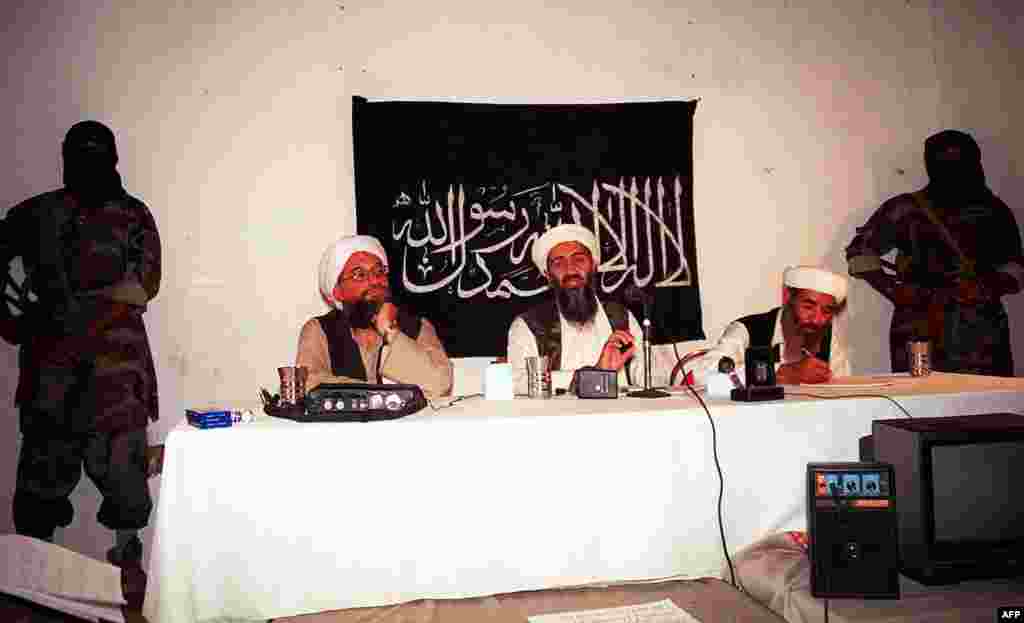
Around the end of the Soviet-Afghan War, bin Laden (photographed at center in 1998) formed what became known as Al-Qaeda. The terrorist leader then declared war on &ldquo;Jews and crusaders&quot; and proclaimed that killing Westerners is &quot;an individual duty for every Muslim.&rdquo;
4/19 Around the end of the Soviet-Afghan War, bin Laden (photographed at center in 1998) formed what became known as Al-Qaeda. The terrorist leader then declared war on “Jews and crusaders" and proclaimed that killing Westerners is "an individual duty for every Muslim.”
On May 2, 2011, a night raid by elite U.S. commandos resulted in the death of the world’s most wanted man.
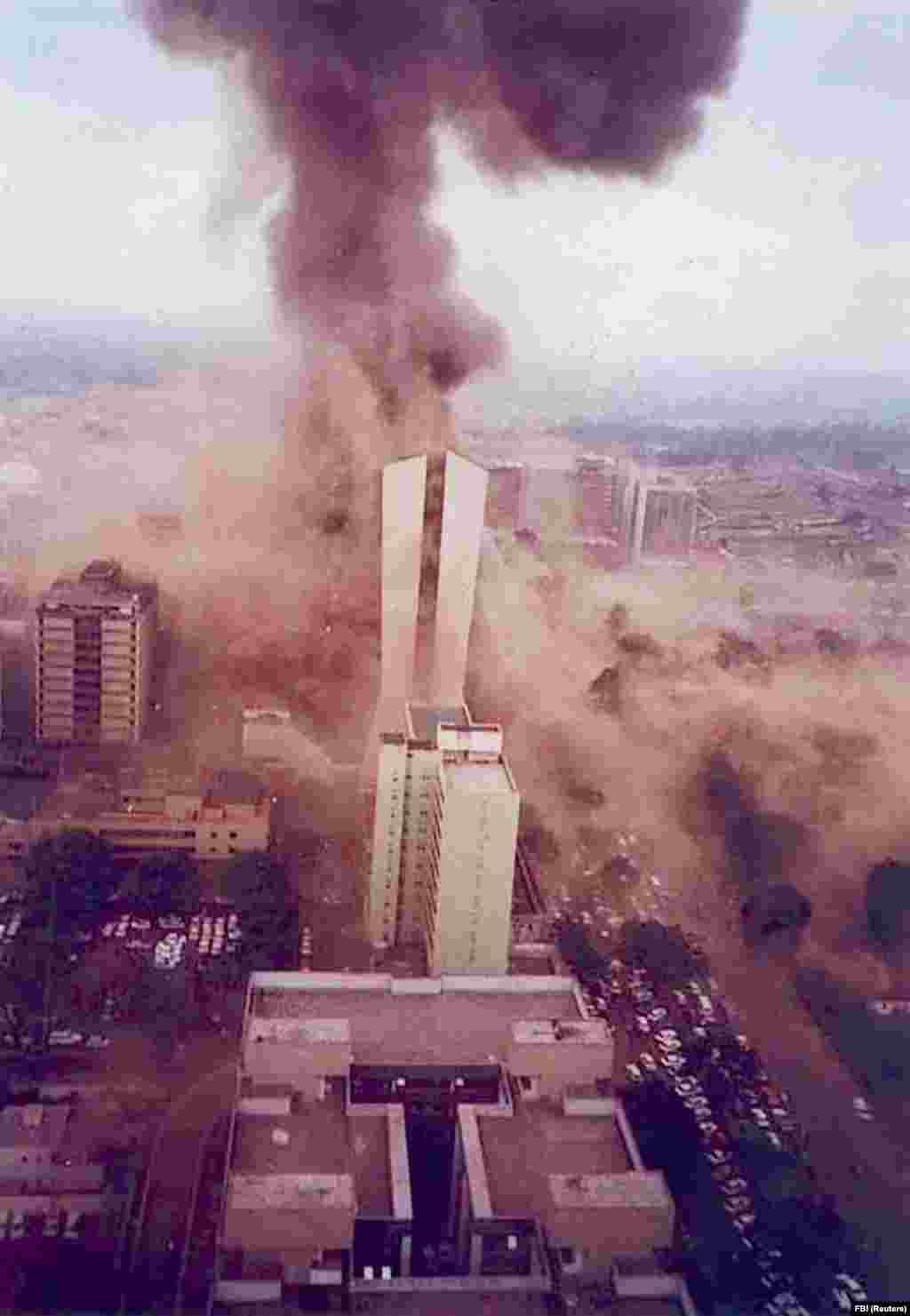
A plume of smoke shoots into the sky moments after a truck-bomb explosion at the U.S. Embassy in Nairobi, Kenya, in 1998.<br />
&nbsp;<br />
Through the 1990s, bin Laden claimed responsibility for several terror attacks, including the truck bombings of U.S. embassies in Kenya and Tanzania. The vast majority of the 224 people killed in the attacks were local Africans.
5/19 A plume of smoke shoots into the sky moments after a truck-bomb explosion at the U.S. Embassy in Nairobi, Kenya, in 1998.
 
Through the 1990s, bin Laden claimed responsibility for several terror attacks, including the truck bombings of U.S. embassies in Kenya and Tanzania. The vast majority of the 224 people killed in the attacks were local Africans.
On May 2, 2011, a night raid by elite U.S. commandos resulted in the death of the world’s most wanted man.
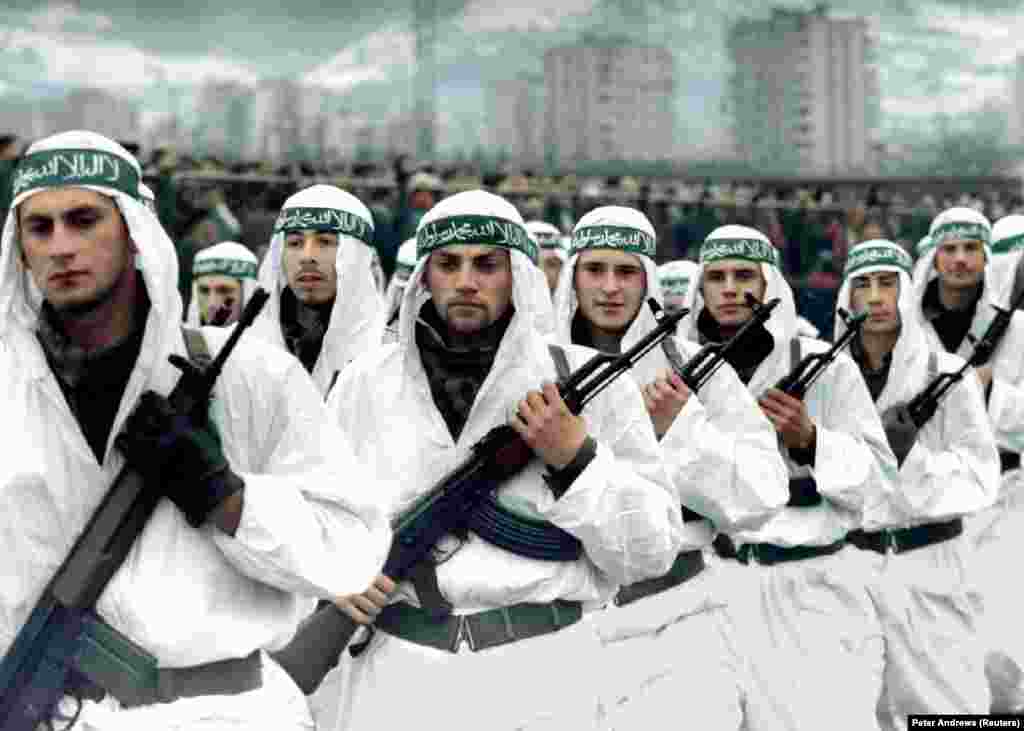
A Muslim brigade of the Bosnian Army marches in a parade in Zenica in 1995.<br />
&nbsp;<br />
Bin Laden is also <a href="https://www.researchgate.net/publication/236757018_Al_Qaeda_The_Balkans_Connection">widely believed</a> to have been involved in helping channel foreign jihadists to fight alongside Bosnian Muslims during the wars in the 1990s in former Yugoslavia. The foreign Islamist fighters <a href="https://www.voanews.com/europe/seeds-jihad-planted-balkans">were notorious</a> for their brutality.<br />
&nbsp;
6/19 A Muslim brigade of the Bosnian Army marches in a parade in Zenica in 1995.
 
Bin Laden is also widely believed to have been involved in helping channel foreign jihadists to fight alongside Bosnian Muslims during the wars in the 1990s in former Yugoslavia. The foreign Islamist fighters were notorious for their brutality.
 
On May 2, 2011, a night raid by elite U.S. commandos resulted in the death of the world’s most wanted man.
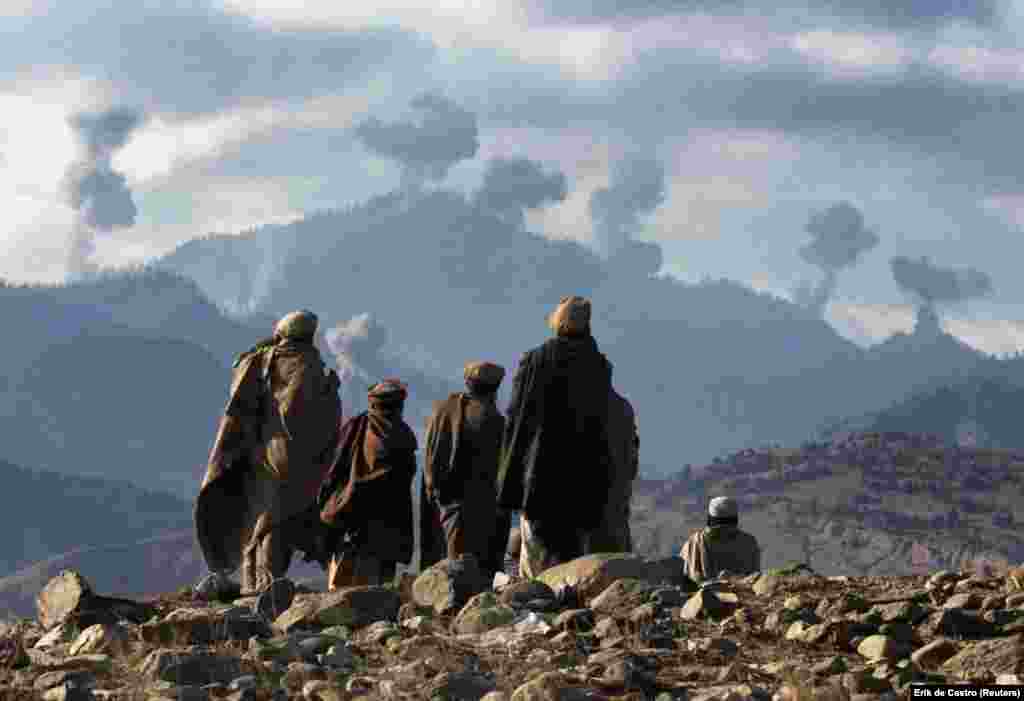
Afghan fighters watch explosions from U.S. bombs rock Afghanistan&rsquo;s Tora Bora mountain complex in December 2001.<br />
&nbsp;<br />
When the United States invaded Afghanistan in the wake of the September 11 attacks, a massive aerial assault backed by ground fighters was launched on a series of mountain caves known as Tora Bora. Bin Laden and his Al-Qaeda fighters were believed to be hiding inside Tora Bora in those mountains before he escaped to Pakistan.
7/19 Afghan fighters watch explosions from U.S. bombs rock Afghanistan’s Tora Bora mountain complex in December 2001.
 
When the United States invaded Afghanistan in the wake of the September 11 attacks, a massive aerial assault backed by ground fighters was launched on a series of mountain caves known as Tora Bora. Bin Laden and his Al-Qaeda fighters were believed to be hiding inside Tora Bora in those mountains before he escaped to Pakistan.
On May 2, 2011, a night raid by elite U.S. commandos resulted in the death of the world’s most wanted man.
Bin Laden watches himself on television, likely at his hideaway in Abbottabad, Pakistan, in an undated home video.<br />
&nbsp;<br />
The Islamist fugitive managed to evade both the bombs and the U.S. Special Forces when he slipped across the border into Pakistan.
8/19 Bin Laden watches himself on television, likely at his hideaway in Abbottabad, Pakistan, in an undated home video.
 
The Islamist fugitive managed to evade both the bombs and the U.S. Special Forces when he slipped across the border into Pakistan.
On May 2, 2011, a night raid by elite U.S. commandos resulted in the death of the world’s most wanted man.
CIA surveillance drone photos showing a new compound in Abbottabad<br />
&nbsp;<br />
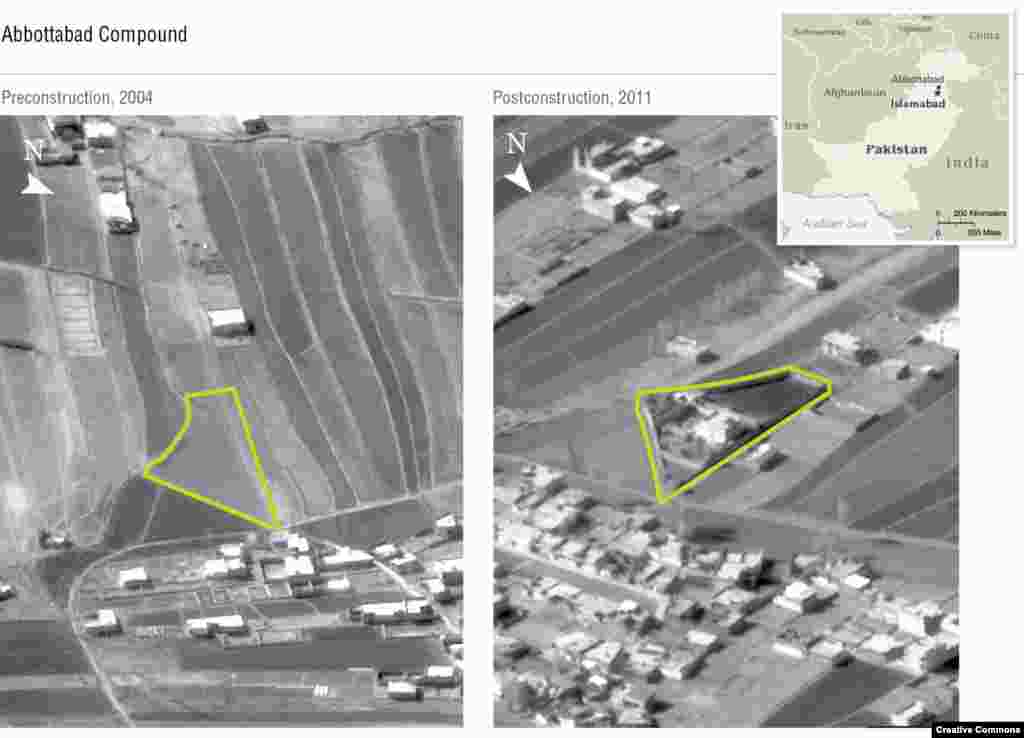
Bin Laden made his way to the northern Pakistani city of Abbottabad, where a large compound ringed with high walls was built around 2005. Locals noticed that the compound&#39;s residents burned their garbage instead of putting it out to be collected.
9/19 CIA surveillance drone photos showing a new compound in Abbottabad
 
Bin Laden made his way to the northern Pakistani city of Abbottabad, where a large compound ringed with high walls was built around 2005. Locals noticed that the compound's residents burned their garbage instead of putting it out to be collected.
On May 2, 2011, a night raid by elite U.S. commandos resulted in the death of the world’s most wanted man.
An illustration of the Abbottabad compound, which featured a &ldquo;privacy wall&rdquo; on the upper balcony<br />
&nbsp;<br />
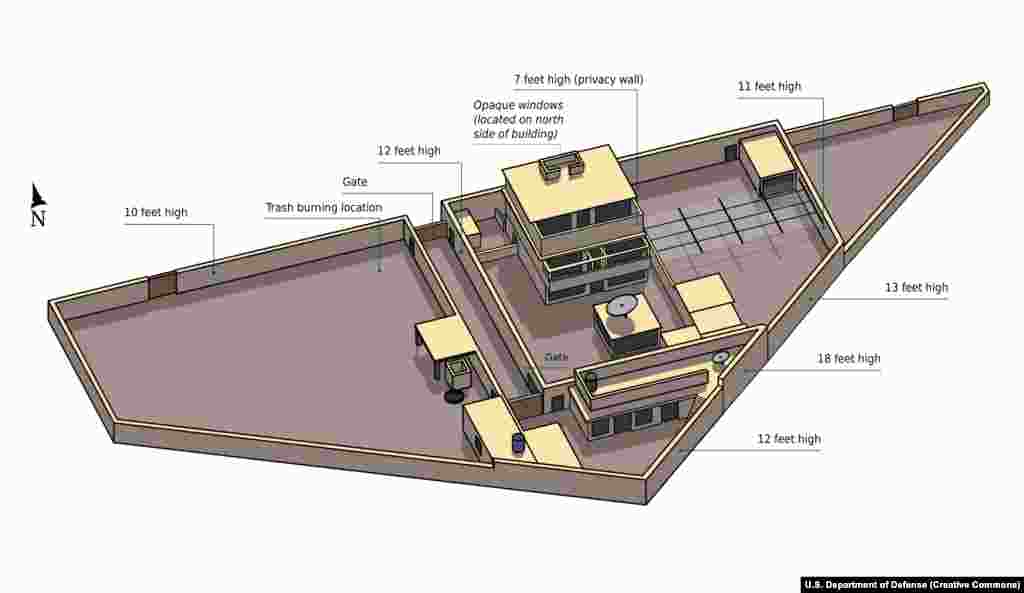
Accounts differ as to how bin Laden was eventually tracked to the noticeable property, but spying on the building was reportedly relatively easy due to its height.
10/19 An illustration of the Abbottabad compound, which featured a “privacy wall” on the upper balcony
 
Accounts differ as to how bin Laden was eventually tracked to the noticeable property, but spying on the building was reportedly relatively easy due to its height.
On May 2, 2011, a night raid by elite U.S. commandos resulted in the death of the world’s most wanted man.
A suburb in Abbottabad (file photo)<br />
&nbsp;<br />
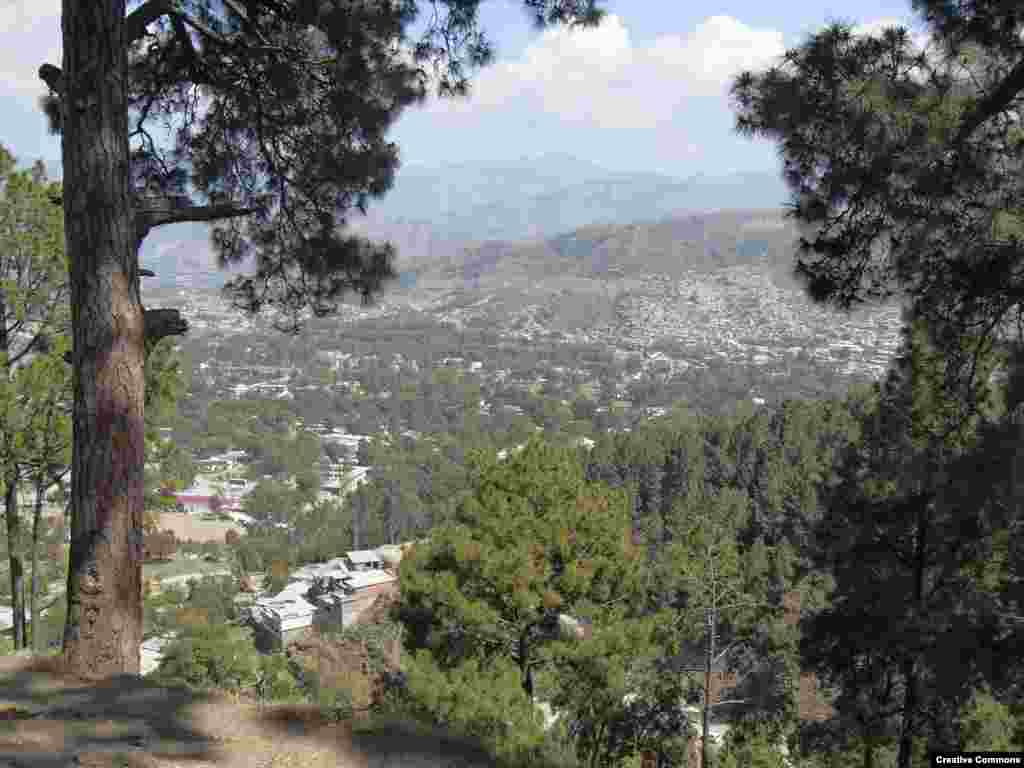
By 2010, a CIA surveillance team that had spent months in a nearby house &ldquo;observing from behind mirrored glass&rdquo; with telephoto lenses and infrared equipment was confident its mysterious inhabitants were bin Laden and his family.
11/19 A suburb in Abbottabad (file photo)
 
By 2010, a CIA surveillance team that had spent months in a nearby house “observing from behind mirrored glass” with telephoto lenses and infrared equipment was confident its mysterious inhabitants were bin Laden and his family.
On May 2, 2011, a night raid by elite U.S. commandos resulted in the death of the world’s most wanted man.
U.S. Navy Seals during training (file photo)<br />
&nbsp;<br />
In the early morning of May 2, 2011, dozens of U.S. Navy Seal commandos were flown from an air base in Afghanistan to the compound in Abottabad. The teams flew in stealth-coated helicopters and skimmed low above the terrain to avoid being detected by the Pakistani military.<br />
&nbsp;
12/19 U.S. Navy Seals during training (file photo)
 
In the early morning of May 2, 2011, dozens of U.S. Navy Seal commandos were flown from an air base in Afghanistan to the compound in Abottabad. The teams flew in stealth-coated helicopters and skimmed low above the terrain to avoid being detected by the Pakistani military.
 
On May 2, 2011, a night raid by elite U.S. commandos resulted in the death of the world’s most wanted man.
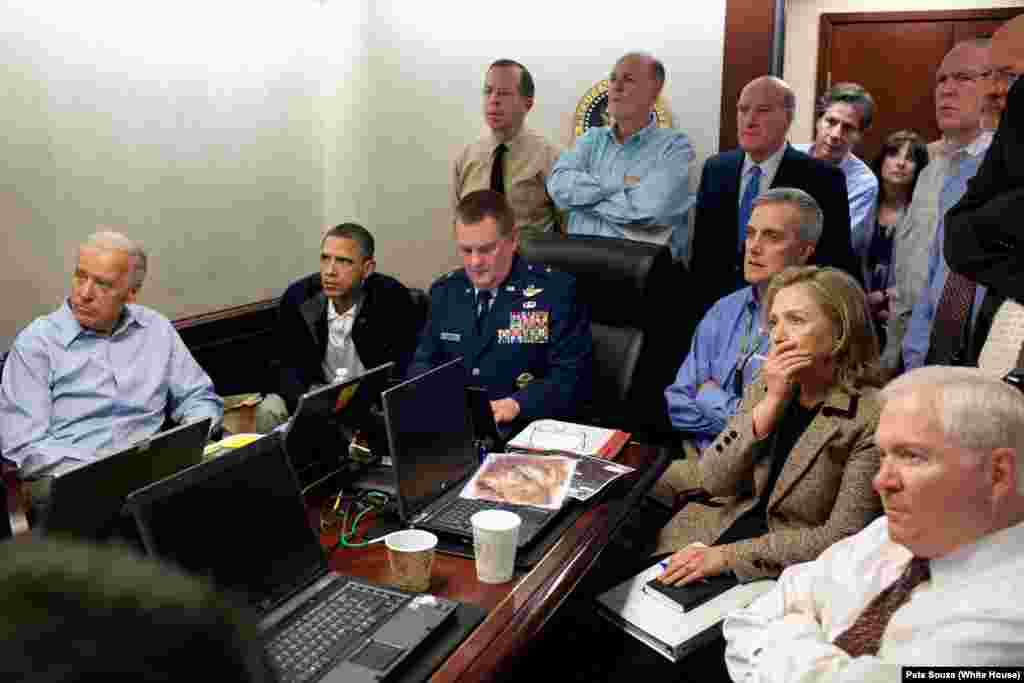
U.S. President Barack Obama (second from left) and then-Vice President Joe Biden (left) along with members of the national security team watch the raid unfold.<br />
&nbsp;<br />
Biden was reportedly the only top official who opposed the attack taking place at that time.
13/19 U.S. President Barack Obama (second from left) and then-Vice President Joe Biden (left) along with members of the national security team watch the raid unfold.
 
Biden was reportedly the only top official who opposed the attack taking place at that time.
On May 2, 2011, a night raid by elite U.S. commandos resulted in the death of the world’s most wanted man.
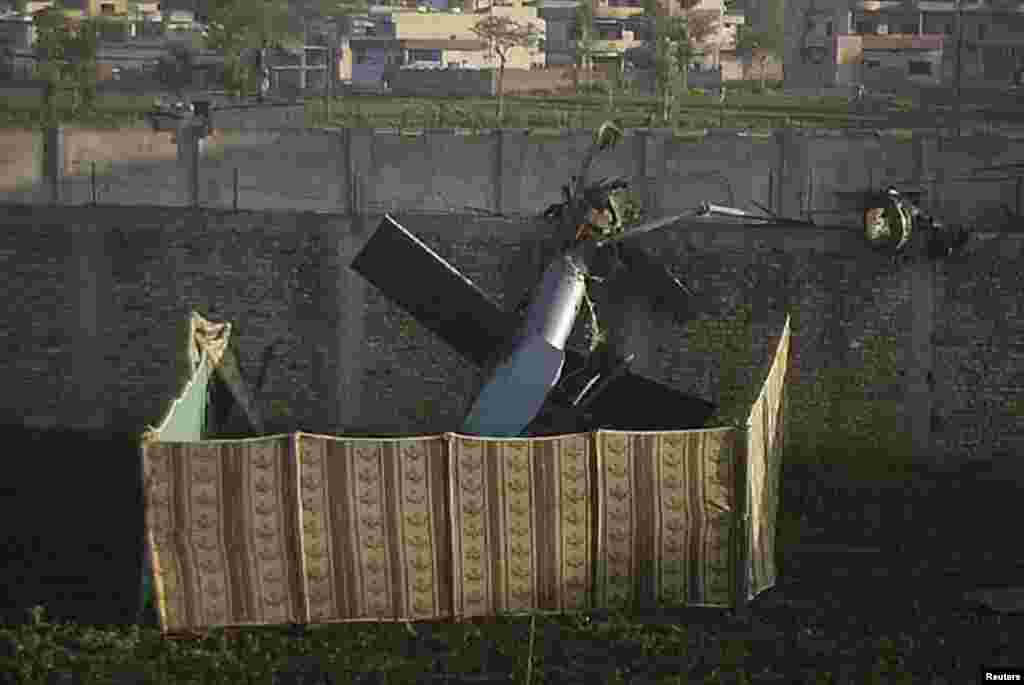
The tail rotor of a destroyed U.S. helicopter at the compound<br />
&nbsp;<br />
The raid began badly when turbulence created by the compound walls caused one helicopter to lose lift and crash. But the commandos and a trained Belgian Malinois dog forced their way inside the residence and killed bin Laden. The Navy Seals destroyed the downed chopper with explosives before cramming into another helicopter with bin Laden&rsquo;s body for their escape.<br />
<br />
&nbsp;
14/19 The tail rotor of a destroyed U.S. helicopter at the compound
 
The raid began badly when turbulence created by the compound walls caused one helicopter to lose lift and crash. But the commandos and a trained Belgian Malinois dog forced their way inside the residence and killed bin Laden. The Navy Seals destroyed the downed chopper with explosives before cramming into another helicopter with bin Laden’s body for their escape.

 
On May 2, 2011, a night raid by elite U.S. commandos resulted in the death of the world’s most wanted man.
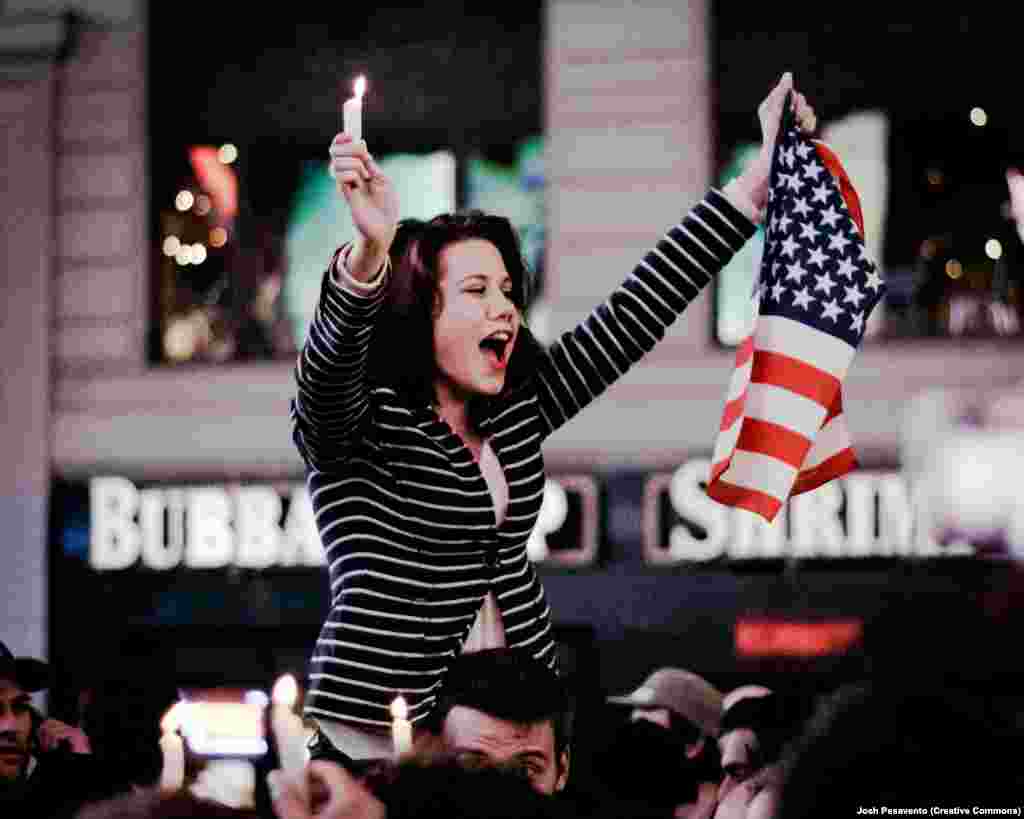
A New Yorker celebrates the news of bin Laden&rsquo;s killing.<br />
&nbsp;<br />
After a DNA test on the Al-Qaeda leader&rsquo;s corpse confirmed his identity, he was buried by U.S. forces at sea within 24 hours of his death, per Islamic custom.<br />
&nbsp;
15/19 A New Yorker celebrates the news of bin Laden’s killing.
 
After a DNA test on the Al-Qaeda leader’s corpse confirmed his identity, he was buried by U.S. forces at sea within 24 hours of his death, per Islamic custom.
 
On May 2, 2011, a night raid by elite U.S. commandos resulted in the death of the world’s most wanted man.
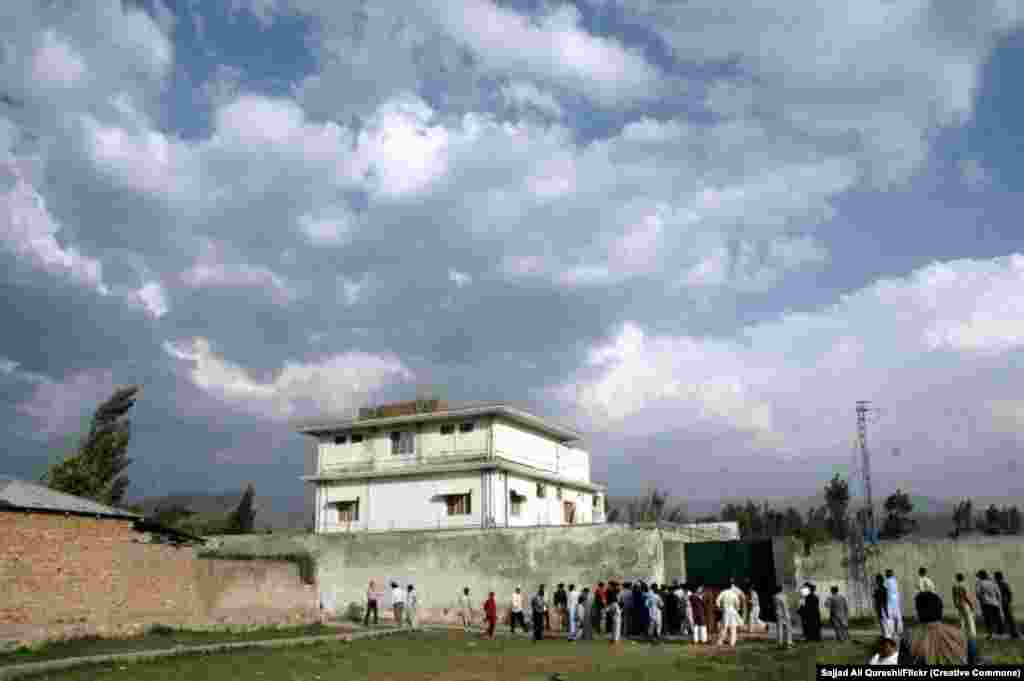
Locals gather around bin Laden&rsquo;s compound on May 4, 2011.<br />
&nbsp;<br />
The location of the compound, a short walk from a Pakistani military base, raised suspicion that the military had known about bin Laden&rsquo;s whereabouts.<br />
&nbsp;
16/19 Locals gather around bin Laden’s compound on May 4, 2011.
 
The location of the compound, a short walk from a Pakistani military base, raised suspicion that the military had known about bin Laden’s whereabouts.
 
On May 2, 2011, a night raid by elite U.S. commandos resulted in the death of the world’s most wanted man.
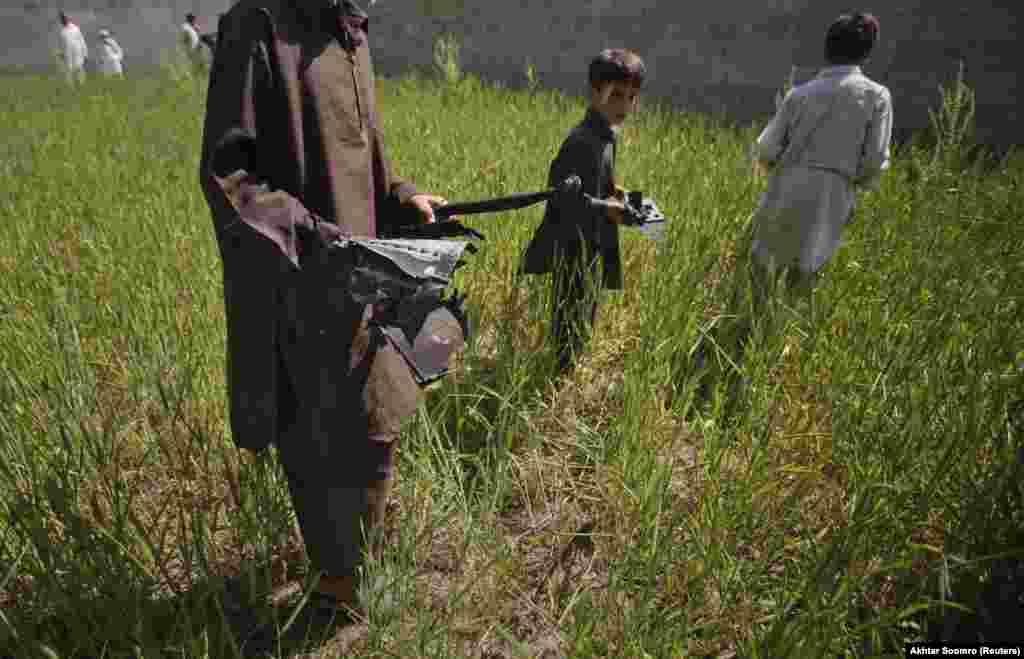
Local boys collect pieces from a U.S. helicopter one day after it was destroyed by the American commandos after crashing at bin Laden&#39;s compound.<br />
&nbsp;<br />
In 2020, Pakistani Prime Minister Imran Khan <a href="https://www.businessinsider.com/osama-bin-laden-perceived-as-a-hero-in-pakistan-2020-1">acknowledged</a> probable &ldquo;linkages&rdquo; between his country&rsquo;s military and bin Laden when the Al-Qaeda leader was hiding in Pakistan, but denied any high-level ties existed.
17/19 Local boys collect pieces from a U.S. helicopter one day after it was destroyed by the American commandos after crashing at bin Laden's compound.
 
In 2020, Pakistani Prime Minister Imran Khan acknowledged probable “linkages” between his country’s military and bin Laden when the Al-Qaeda leader was hiding in Pakistan, but denied any high-level ties existed.
On May 2, 2011, a night raid by elite U.S. commandos resulted in the death of the world’s most wanted man.
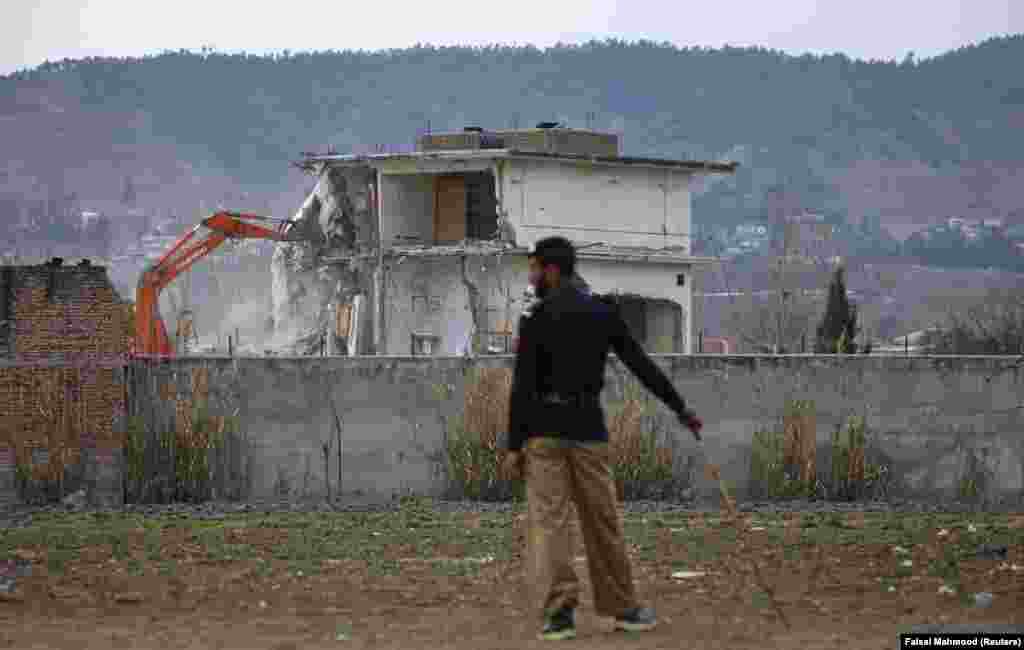
The compound being demolished in 2012<br />
&nbsp;<br />
Photos of bin Laden&rsquo;s body have never been released, reportedly because of their gruesome nature.
18/19 The compound being demolished in 2012
 
Photos of bin Laden’s body have never been released, reportedly because of their gruesome nature.
On May 2, 2011, a night raid by elite U.S. commandos resulted in the death of the world’s most wanted man.
A man walks in 2012 near the the place where bin Laden&rsquo;s compound used to stand.<br />
&nbsp;<br />
<a href="https://www.google.com/maps/d/viewer?hl=en&amp;ie=UTF8&amp;msa=0&amp;ll=34.169095973975175%2C73.24243084030395&amp;spn=0.001991%2C0.003015&amp;t=h&amp;source=embed&amp;mid=19XnetI4RXFx-AtJcfz9FqZ6UuU8&amp;z=19">Satellite images from 2021</a> show dozens of new houses have been built in the neighborhood since 2011, but the former site of the compound remains empty and has been used by locals to play cricket.
19/19 A man walks in 2012 near the the place where bin Laden’s compound used to stand.
 
Satellite images from 2021 show dozens of new houses have been built in the neighborhood since 2011, but the former site of the compound remains empty and has been used by locals to play cricket.
On May 2, 2011, a night raid by elite U.S. commandos resulted in the death of the world’s most wanted man.
Previous slide
Next slide

“Pakistan has acted against some militant groups that specifically target the state but has allowed groups that are key to its regional [ambitions] to remain active,” Husain Haqqani, Pakistan’s former ambassador to the United States, told Gandhara. “Pressure from the UN Financial Action Task Force (FATF) has also led the country to act on groups and especially their financing,” he added, alluding to Islamabad’s gray listing by the international money-laundering watchdog that says Islamabad must overcome “serious deficiencies” in fighting terrorist financing although it has made “significant progress.”

“There is still a long way to go,” Haqqani, now a senior fellow and director for South and Central Asia at the Hudson Institute think tank in Washington, says of Pakistan’s counterterrorism efforts.

The country’s security establishment has long used asymmetric warfare through Islamist militant groups, he adds, as a lever of its regional foreign policy against eastern neighbor and archrival India and western neighbor Afghanistan.
“Till the time that this policy changes, blowback and criticism will not make any difference,” he noted.

Domestic Blowback

Asfandyar Mir, a South Asia security specialist, says Pakistan has seen “remarkable” success in reducing the level of violence that plagued the country from 2008 to 2012 when Taliban and Al-Qaeda militants controlled large areas and suicide attacks were an almost daily occurrence.

This success is owed to a “combination of Pakistani military operations, U.S. drone strikes, and major increases in policing and surveillance capacity in the mainland of the country,” Mir told Gandhara. “Yet, at the same time, Pakistan failed to cut off the drivers of the militancy.”

“Pakistan maintained its alliance with the Afghan Taliban, which enabled the TTP,” he added, mentioning the banned Tehrik-e Taliban Pakistan by its acronym. “More recently, the TTP has resurged in eastern Afghanistan, which has been enabled by the Afghan Taliban as well as Al-Qaeda.”
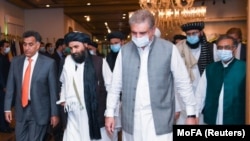
Pakistani Foreign Minister Shah Mahmood Qureshi walks with Mullah Abdul Ghani Baradar (second left), the leader of the Taliban delegation, upon his arrival in Islamabad for talks on August 25, 2020.

Mir, a postdoctoral fellow at the Center for International Security and Cooperation at Stanford University, says Islamabad’s relations with the Afghan Taliban and other pro-state militants have triggered angry protests from the country’s ethnic Pashtun minority in the former Federally Administered Tribal Areas (FATA), where alleged atrocities by state-backed militant are frequent.

This, he argues, is partly the result of Islamabad’s failure to implement the counterterrorism strategy it adopted after TTP militants allegedly massacred 150 students and teachers at a school in the northwestern city of Peshawar in December 2014.

“This failure is proving to be especially consequential these days given the persistence of the highly radical Tehrik-e Labaik Pakistan (TLP),” Mir noted. Last month, a series of TLP protests crippled major Pakistani cities. The group has demanded the expulsion of the French ambassador after President Emmanuel Macron defended the publication of satirical cartoons depicting the Prophet Muhammad, which many Muslims deem blasphemous.

Ahmed Rashid, the author of several best-selling books on Afghanistan and Pakistan, says the rise of the TLP, a group that had “been tutored by the intelligence services,” is a sign that Islamabad is repeating its mistake of nurturing hard-line Islamist groups that turn against their architects.
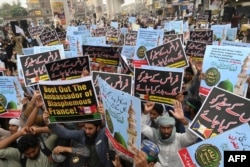
Supporters of Tehrik-e Labbaik Pakistan (TLP) block a street with their protest after their leader was detained following his calls for the expulsion of the French ambassador, in Lahore on April 20.

“A lot of these militant groups are still around,” he told Gandhara. “Groups such as Lashkar-e Taiba, Jaish-e Muhammad -- these are some of the old groups -- some of which have been caught but the rest are free,” he added as he explained that the country has failed to dismantle the financial wherewithal and political and covert support for militant groups that have engaged in attacks in India and Afghanistan.

Neighborhood Troubles

Pakistani Army chief General Qamar Javed Bajwa, arguably the country’s most powerful official, recently said Islamabad is consolidating its gains after overpowering terrorism and extremism.

“Our long campaign against the tide of terrorism and extremism manifests our resolve and national will,” he told a conference in Islamabad in March while counting the military’s efforts to rehabilitate the former FATA districts. “We have come a long way and yet we are a bit short of our final objective, but we are determined to stay the course.”

Pakistan’s neighbors, however, are taking his pronouncement with a grain of salt. In Kabul, Afghan President Ashraf Ghani wants Islamabad to use its leverage with the Taliban to deliver peace in his country.

Afghan President Ashraf Ghani (right) and Pakistani Prime Minister Imran Khan attend a joint news conference at the Presidential Palace in Kabul on November 19, 2020.

“If Pakistan chooses to support the Taliban, however, then Islamabad would be opting for enmity with the Afghan nation and would be foregoing the enormous economic benefits that peace and regional connectivity would offer,” Ghani wrote in an essay in Foreign Affairs magazine this week.

“Pakistan would become an international pariah, as it would be left with no leverage in the aftermath of the U.S. troop withdrawal,” he warned. “The Pakistani government miscalculated in its response to the United States’ plan of action for Afghanistan and the region, but it is not too late for Islamabad to emerge as a partner and stakeholder in an orderly peace process.”

New Delhi, for its part, has long demanded Islamabad rein in the terrorist networks it holds responsible for attacks in Indian cities, military bases, and the disputed Himalayan region of Kashmir. Islamabad has also accused India and Afghanistan of supporting militant ethnonationalists and even the TTP. Both have rejected the allegations, pointing to the killings of bin Laden, Afghan Taliban leader Mullah Akhtar Muhammad Mansur, and other senior militant leaders on Pakistani soil as proof of Islamabad’s complicity in fomenting such groups.

Relations With Washington

Haqqani was Pakistan’s envoy in Washington when the Navy Seals team killed bin Laden near the Pakistani military academy in the early hours of May 2, 2011. He recalls that the incident highlighted the lack of trust between the two allies.

“Pakistan felt that the U.S. had betrayed its trust by undertaking this raid without informing Pakistan,” he said. “The United States, however, felt betrayed that the world’s most wanted terrorist was found in a country that was for a long time America’s ‘most allied ally.’”

In the years following bin Laden’s killing, Mir argues, Washington found it difficult to coerce Pakistan due to the United States’ reliance on Pakistani supply routes to Afghanistan, the cooperation deemed necessary to prevent Al-Qaeda attacks in the West, and the need to secure the country’s nuclear arms program. He says the reduced threat from Al-Qaeda finally enabled the administration of U.S. President Donald Trump to cut military aid to Pakistan.

But he says there are still “concerns and friction” regarding Pakistan's ties to the Afghan Taliban and anti-India jihadists.

“Former Trump admin officials believe that cuts in aid combined with the FATF pressure have restrained Pakistan on the use of anti-India jihadists, but that restraint is reversible,” he noted. “On [the] Afghan Taliban, U.S. asks have shifted from "’kill and capture’ Taliban leaders to compel and convince them to negotiate a peace settlement.”

Mir says Islamabad’s future relations with Washington depend on its role in Afghanistan. “If the conflict there doesn't mitigate and Pakistan fails to persuade the Taliban to step back, the relationship may deteriorate further,” he said.

Rashid says the suffering will continue in Pakistan if Islamabad fails to rein in militants, adding that the resurgence of terrorist attacks in various parts of the country is a reminder that Islamabad’s failure to effectively control terrorism comes at a cost.

“It is the civilians who are paying the price most of all,” he said.

  • 16x9 Image

    Abubakar Siddique

    Abubakar Siddique, a journalist for RFE/RL's Radio Azadi, specializes in the coverage of Afghanistan and Pakistan. He is the author of The Pashtun Question: The Unresolved Key To The Future Of Pakistan And Afghanistan. He also writes the Azadi Briefing, a weekly newsletter that unpacks the key issues in Afghanistan.

XS
SM
MD
LG