




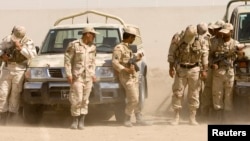
For decades, millions of Afghans fleeing war, persecution, and poverty have sought refuge in neighboring Iran.
But crossing the 921-kilometer-long border has become increasingly dangerous for many Afghans as the Iranian authorities violently crack down on illegal migrants.
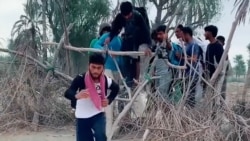
At least 10 Afghans were shot dead by Iranian border guards on December 1, according to Taliban officials, after they entered Iran illegally from western Afghanistan's Farah Province.
It's the latest in a growing number of deadly incidents where Afghan refugees and migrants have been shot and killed after crossing into Iran.
'Dead Bodies'
The bodies of the slain Afghans were handed over to their families on December 2. Taliban officials said the 10 Afghans were killed while trying to cross the border during the night. Two members of the group are still missing, they said.
The deaths triggered angry protests in Herat, the largest city in western Afghanistan. Protestors, some of whom knew the victims, said they were young men who were seeking jobs in Iran to provide for their impoverished families back home.

Noor Ahmad Islamjar, the Taliban’s governor for Herat, told local media that “protecting human life at border areas is a fundamental principle of good neighborly relations.”
Islamjar said the killings on the Iranian border “have sparked public outrage and are a serious concern” for the Taliban government and urged Tehran to “conduct a transparent and comprehensive investigation.”
Iranian officials have not commented on the incident.
Sayed Suleiman Agha Bahir, the Taliban’s deputy governor in the neighboring southwestern province of Nimroz, said that the bodies of over 100 Afghans killed while crossing Iran have been handed over to them in recent months.
“On some days we receive up to five dead bodies,” he told local media last week.
History Of Violence
The shootings on December 1 were not an isolated incident.
In November, seven Afghans were shot dead by border guards near the Iranian city of Saravan, according to the human rights group Haalvsh.
It also reported the killing of at least six Afghans, including children, in Iran’s Sistan-Baluchistan Province, which borders Afghanistan, in September.
In October 2024, the United Nations' mission in Afghanistan called for an investigation into reports that dozens of Afghan migrants had been shot and killed on the Afghanistan-Iran border.
The shootings highlight the risks Afghans are willing to take to escape poverty and the dire economic situation in their country.
The Taliban’s seizure of power in 2021 worsened one of the world’s largest humanitarian crises. Without international development assistance, the Afghan economy has further shrunk as joblessness and poverty rise. Meanwhile, the hard-line Islamist group has committed gross human rights violations, including extrajudicial killings and torture, leading to an exodus to neighboring countries.
The rugged and desolate Iranian border -- used by drug traffickers and human smugglers -- has long been dangerous. But the rising number of Afghans killed illegally crossing the border have coincided with Iran’s renewed push to deport millions of Afghan refugees and migrants.
In the first eight months of the year, Tehran deported 1.1 million Afghans, according to the UN refugee agency, UNHCR. That’s in addition to the around 1 million Afghans who were evicted from the country last year.
Iran has set a deadline until the end of the year for all undocumented Afghans to leave the country. UNHCR estimates that some 4 million Afghans, most of them undocumented, live in Iran.
Maher Mohmand, an Afghan human rights activist, said people are “leaving Afghanistan because of hunger and because of poverty.”
He said that international humanitarian conventions require Tehran to care for all Afghans arriving on its territory. “Instead of killing them, [Iran should] provide them with [economic] opportunities,” Mohmand added.

