




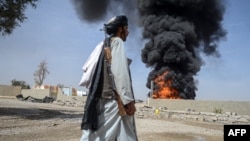
The leadership of the Tehrik-e Taliban Pakistan (TTP) has been ordered to relocate inside Taliban-controlled Afghanistan where it is allegedly based, two members of the militant group told RFE/RL, in a move aimed at reducing tensions with Islamabad.
Pakistan has accused the Afghan Taliban of sheltering the TTP, also known as the Pakistani Taliban, and carried out deadly air strikes in Afghanistan targeting the group. Islamabad’s attacks have triggered retaliatory attacks by the Afghan Taliban and brought the neighbors to the brink of all-out war.
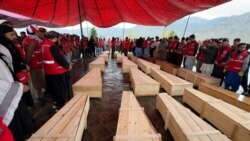
A Pakistani air strike on a hospital in Kabul in March killed over 100 people, according to the UN. The Afghan Taliban said hundreds of civilians were killed in the deadliest-ever attack carried out by Pakistani forces. Islamabad claimed the strike had targeted military installations and TTP infrastructure.

The Afghan Taliban has repeatedly denied that it is harboring the TTP, with which it has close ideological, organizational, and tribal ties. A senior Taliban official said the claim that Kabul was relocating TTP leaders was baseless and part of Pakistan’s “mind games.”
“They [Pakistan] want to kill two birds with one stone,” the official, who requested anonymity, told RFE/RL’s Radio Azadi. “They are trying to say that we accept that the TTP is here in Afghanistan. And on the other hand, they are trying to say that we are expelling them.”
Taliban 'Hospitality'
The two TTP members, who spoke to RFE/RL on condition of anonymity because they were not authorized to speak to the media, said the group’s leadership, including mid-to-high-ranking commanders, were ordered to relocate from their residences in Kabul to a location south of the capital.
Some TTP commanders have already left the Afghan capital, and others are preparing to move, the TTP members said.
Accompanying them are members of the Turkestan Islamic Party (TIP) -- an Uyghur extremist group that China blames for unrest in its western province of Xinjiang -- and remnants of the Al-Qaeda terrorist network, the TTP members said. Both militant groups have suspected ties to the Afghan Taliban.
The alleged order for the removal of the militants from Kabul came after talks between Pakistani, Chinese, and Afghan Taliban officials in the Chinese city of Urumqi on April 1-7.
A Pakistani official familiar with the talks told RFE/RL that Islamabad and Beijing raised the issue of the Afghan Taliban’s “hospitality” to foreign militant groups.
Kabul, Islamabad, and Beijing have not publicly commented on the talks last month. Following the discussions, Pakistan has halted its air strikes inside Afghanistan, although sporadic cross-border attacks have continued.
Significant Resentment
The alleged order to relocate the TTP leadership has caused significant resentment within the militant group, the two TTP members said.
Many members of both groups are from the Pashtun ethnic group that straddles the porous 2,600-kilometer-long Afghanistan-Pakistan border.
The TTP leadership is believed to have taken shelter in Afghanistan after the Afghan Taliban seized power in 2021 following the withdrawal of international troops. Many TTP foot soldiers are believed to be operating along the border.
A year later, the Afghan Taliban facilitated peace talks between Islamabad and the TTP. But the truce it brokered failed in November 2022.
Since then, Pakistan has pressured the Afghan Taliban, its longtime ally, to rein in and dismantle the TTP, experts said. But the Taliban has refused, with Islamabad responding by conducting air strikes in Afghanistan.
Islamabad had supported the Afghan Taliban since the group first emerged in the 1990s, including allegedly during the group’s 20-year insurgency against the US-backed Afghan government.
The strategy, experts say, was to install a pliant government in Kabul that would secure Pakistani interests. But that strategy appears to have backfired.
Formed in 2007, the TTP has waged an increasingly deadly insurgency against Islamabad since the Afghan Taliban returned to power. The extremist group has killed hundreds of Pakistani security personnel in recent years.
Fears Of Full-Blown Conflict
In October, the TTP claimed responsibility for an attack in northwestern Pakistan that killed 11 soldiers. Just days later, Pakistan carried out unprecedented drone strikes in the center of Kabul as well as air strikes in the country’s east.
Fierce fighting erupted between Taliban fighters and Pakistani security forces, leaving dozens dead and key border crossings closed.
In February, Pakistan carried out its biggest-ever attacks on Afghanistan, including targeting two of the country’s largest cities, heightening fears of an all-out war between the two neighbors.
Pakistani jets on February 27 bombed military targets in Kabul, the southern city of Kandahar, home to the Taliban’s spiritual leader Mullah Haibatullah Akhundzada, and in the eastern provinces of Nangarhar, Paktia, Paktika, and Laghman, the Pakistani Army said.
In retaliation, Afghanistan’s Taliban government said it launched drone and rocket attacks targeting military installations and security forces in northwestern Pakistan.
Sami Yousafzai, a London-based Afghan analyst, said the Pakistani air strikes in Kabul have undermined the authority of the Afghan Taliban, which rules the country of some 40-million people with an iron fist.
“The mood has shifted in Kabul regarding the Pakistani Taliban following Pakistan’s air strikes,” Yousafzai said.
He added that the Taliban leadership now views the TTP as a liability, although it is unwilling to expel the group from Afghan soil.

