


Accessibility links

Breaking News

Roads Clogged As Ethnic Armenians Flee Nagorno-Karabakh; Mass Casualties Reported In Fuel Depot Blast

Updated
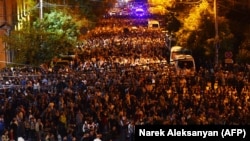
Armenians take part in an anti-government protest in central Yerevan on September 24.

Thousands of ethnic Armenians continue to clog roads leading to Armenia from Nagorno-Karabakh, where new reports say a powerful explosion at a fuel depot has led to more than 200 casualties, with local health officials struggling to deal with the disaster.

Separatist officials in Karabakh said the blast occurred at a fuel warehouse near the Stepanakert-Askeran Highway and that rescue crews are at the site. The cause was not yet known.

The region's rights ombudsman, Gegham Stepanian, said at least 200 people who were lining up to get fuel for their trip to Armenia were hurt and that the majority were in severe or grave condition. The number of deaths was not stated.

Officials said most of the injured needed to be air-lifted to other sites where health facilities can handle the high number of casualties.

The reports come as Armenia struggles to deal with a flood of refugees fleeing Karabakh following Azerbaijan’s victory over separatist forces there.

Armenia's government said that as of 5 p.m. local time on September 25, at least 6,650 refugees had entered the country, while de facto officials inside Nagorno-Karabakh said gas stations would provide free fuel for those making the move.

Unrest mounted on the streets of Yerevan, where dozens of demonstrators were detained after they blocked streets to protest the policies of Prime Minister Nikol Pashinian.

The European Union said Brussels will play host to senior envoys from Azerbaijan and Armenia on September 26. Charles Michel, will lead the talks and national-security advisers from France and Germany will participate.

Meanwhile, top officials from the U.S. administration arrived in Yerevan on September 25 to meet with Armenian leaders. Among the group were U.S. Agency for International Development (USAID) chief Samantha Power and State Department official for the region Yuri Kim.

WATCH: Almost 5,000 people from Nagorno-Karabakh had crossed into Armenia as of midday on September 25, according to the Armenian government as it rushed to accommodate the influx of refugees.
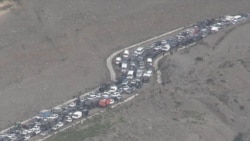
Traffic Jam At Lachin Corridor As Ethnic Armenians Flee Nagorno-Karabakh
please wait

No media source currently available

0:00 0:03:24 0:00

"The United States is deeply concerned about reports on the humanitarian conditions in Nagorno-Karabakh and calls for unimpeded access for international humanitarian organizations and commercial traffic," USAID said in a statement.

Power delivered a letter from President Joe Biden to Pashinian expressing the support of the American people for Armenia, officials said.

According to the Armenian government, Pashinian told Power during their meeting: "You are aware that, unfortunately, the process of ethnic cleansing of the Armenians of Nagorno-Karabakh continues. It is happening right now, and it is a very tragic fact."

The first of several hundred refugees from the region began arriving in Armenia on September 24, with Nagorno-Karabakh leaders saying nearly all of the estimated 120,000 ethnic Armenians are likely to leave as soon as possible, saying they did not want to live under Azerbaijani control even though Baku has vowed to protect the rights of civilians there.

WATCH: Opposition supporters protested at several locations in the Armenian capital, Yerevan, on September 25.

Armenian Protesters Block Traffic In Yerevan
please wait

No media source currently available

0:00 0:01:08 0:00

"The authorities [of Nagorno-Karabakh] will continue to stay in place and implement state administration until they fully ensure the process of transporting citizens who wish to go to Armenia," a statement by the de facto government said.

"Due to traffic jams, it is currently not possible to organize the transport of seriously and extremely seriously injured people."

As Armenia began accepting refugees, anger over the quick loss of the region last week continued to spill out in the streets of Yerevan.

Media reports quoted police as saying more than 200 demonstrators had been detained so far on September 25, with reports from RFE/RL correspondents in Yerevan saying the protests continue, with groups of people roaming the streets urging others to join them.

Ethnic Armenians Flee Nagorno-Karabakh As Yerevan Protests Grow
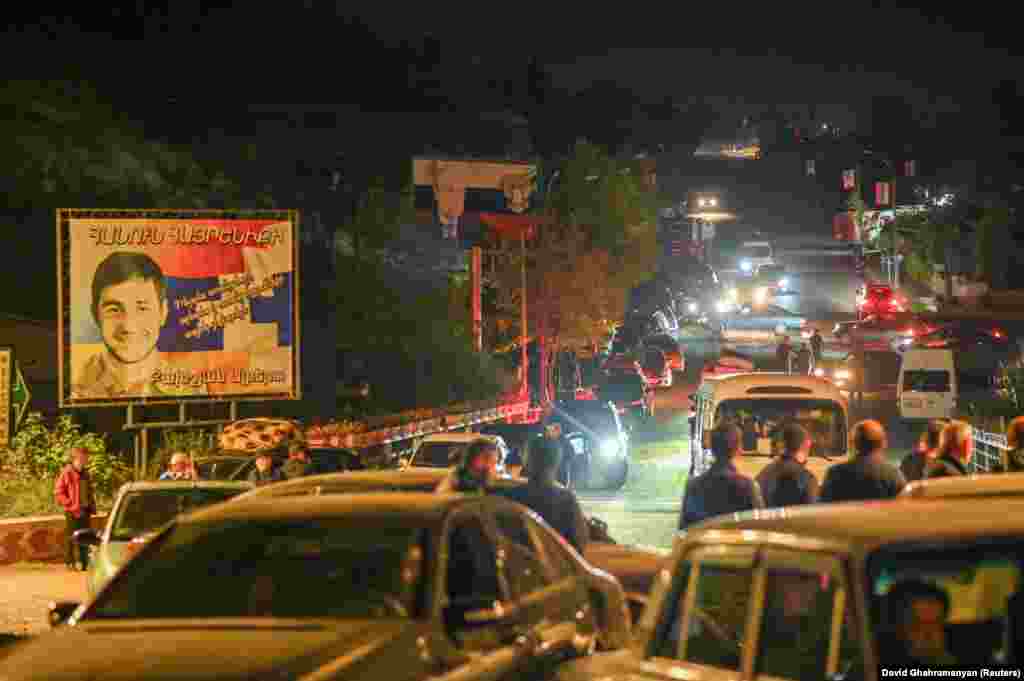
This was the scene late on September 24 as ethnic Armenians prepared to flee Nagorno-Karabakh past a billboard featuring the Russian flag, and Vladimir Putin. The photo was taken in the city known as Stepanakert in Armenian, and Xankendi in Azeri. 
1/10 This was the scene late on September 24 as ethnic Armenians prepared to flee Nagorno-Karabakh past a billboard featuring the Russian flag, and Vladimir Putin. The photo was taken in the city known as Stepanakert in Armenian, and Xankendi in Azeri. 
An exodus from the breakaway Nagorno-Karabakh region of Azerbaijan in the face of a lightning offensive launched by Baku is fueling a political crisis in Armenia.
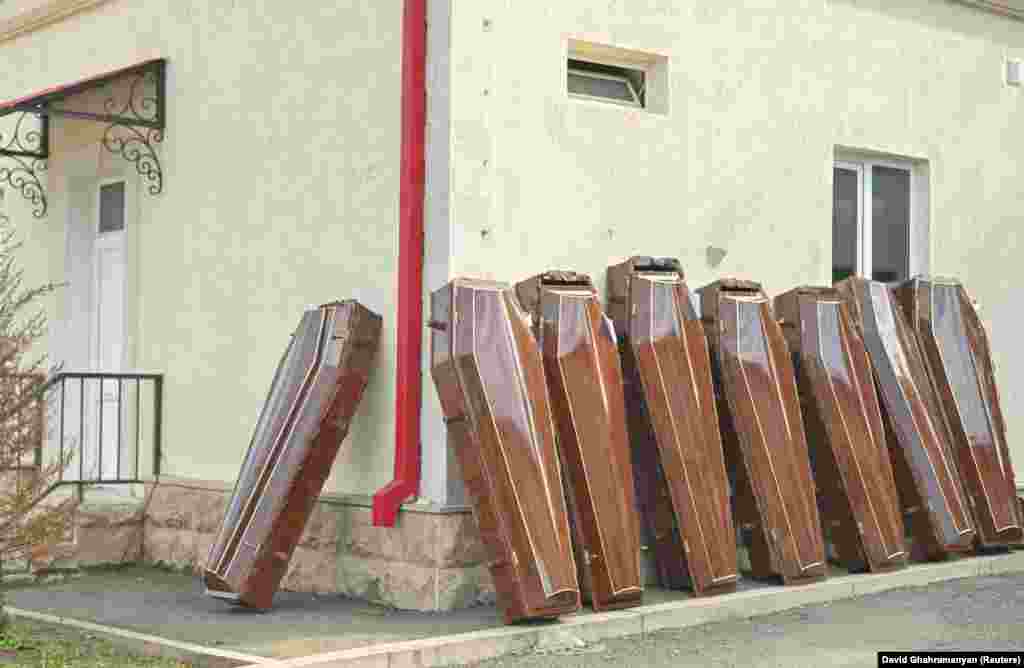
Coffins outside a morgue in Stepanakert on September 24. Funerals of ethnic Armenian soldiers and civilians took place on September 24 after Baku launched an attack on the Nagorno-Karabakh region, which the separatist authorities claim killed at least 200 people. 
2/10 Coffins outside a morgue in Stepanakert on September 24. Funerals of ethnic Armenian soldiers and civilians took place on September 24 after Baku launched an attack on the Nagorno-Karabakh region, which the separatist authorities claim killed at least 200 people. 
An exodus from the breakaway Nagorno-Karabakh region of Azerbaijan in the face of a lightning offensive launched by Baku is fueling a political crisis in Armenia.
Refugees from Nagorno-Karabakh arrive in the southern Armenian city of Goris on September 24.<br />
<br />
Nagorno-Karabakh is internationally recognized as part of Azerbaijan but has been inhabited by ethnic Armenians for centuries. The two countries have fought several wars for control of the region and since December 2022, Baku has maintained a blockade on the region that cut off food and medicine supplies.<br />
&nbsp;
3/10 Refugees from Nagorno-Karabakh arrive in the southern Armenian city of Goris on September 24.

Nagorno-Karabakh is internationally recognized as part of Azerbaijan but has been inhabited by ethnic Armenians for centuries. The two countries have fought several wars for control of the region and since December 2022, Baku has maintained a blockade on the region that cut off food and medicine supplies.
 
An exodus from the breakaway Nagorno-Karabakh region of Azerbaijan in the face of a lightning offensive launched by Baku is fueling a political crisis in Armenia.
Refugees from Nagorno-Karabakh arrive in the village of Kornidzor, near Goris, on September 24.<br />
<br />
RFE/RL&rsquo;s Armenian Service spoke to some refugees who said: &quot;We slept in cars.&nbsp;We are from the village of Mets Shen, more are coming, people have all left the village.&quot;
4/10 Refugees from Nagorno-Karabakh arrive in the village of Kornidzor, near Goris, on September 24.

RFE/RL’s Armenian Service spoke to some refugees who said: "We slept in cars. We are from the village of Mets Shen, more are coming, people have all left the village."
An exodus from the breakaway Nagorno-Karabakh region of Azerbaijan in the face of a lightning offensive launched by Baku is fueling a political crisis in Armenia.
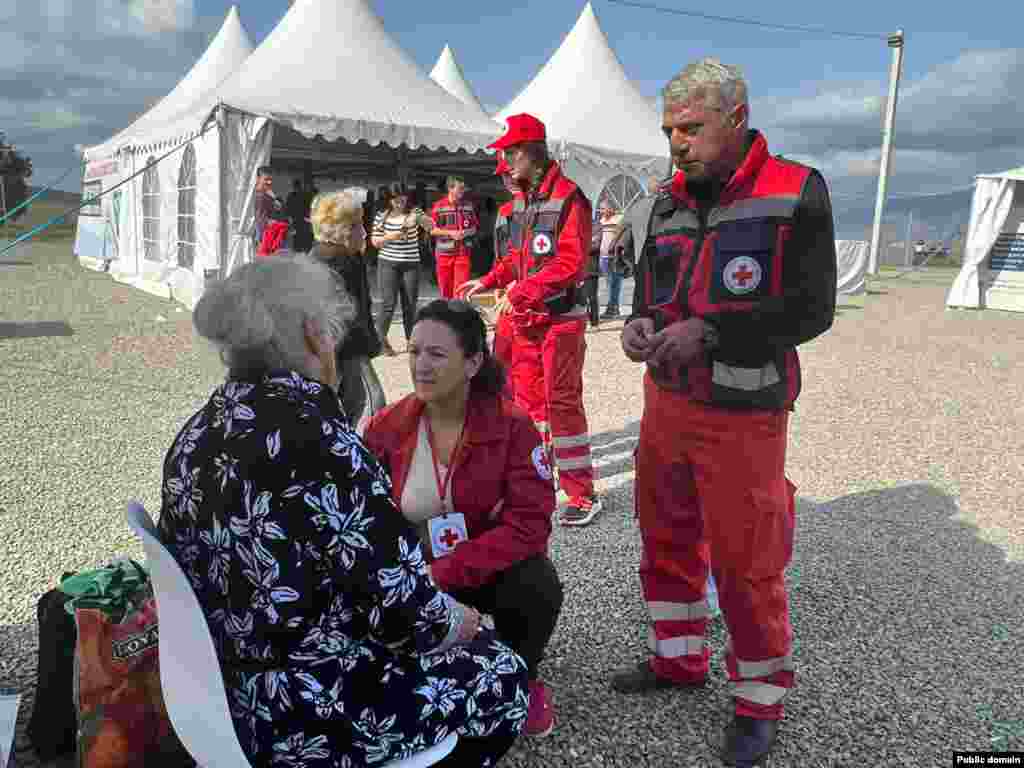
Red Cross workers speak with a refugee in Kornidzor on September 24.&nbsp;<br />
<br />
Some residents of Nagorno-Karabakh are moving from isolated villages toward Stepenakert amid increasing uncertainty. &quot;We are still moving to Stepanakert,&quot; one ethnic Armenian villager told RFE/RL. &quot;Let&#39;s see what is decided.&nbsp;It&#39;s still uncertain,&quot; they said.&nbsp;
5/10 Red Cross workers speak with a refugee in Kornidzor on September 24. 

Some residents of Nagorno-Karabakh are moving from isolated villages toward Stepenakert amid increasing uncertainty. "We are still moving to Stepanakert," one ethnic Armenian villager told RFE/RL. "Let's see what is decided. It's still uncertain," they said. 
An exodus from the breakaway Nagorno-Karabakh region of Azerbaijan in the face of a lightning offensive launched by Baku is fueling a political crisis in Armenia.
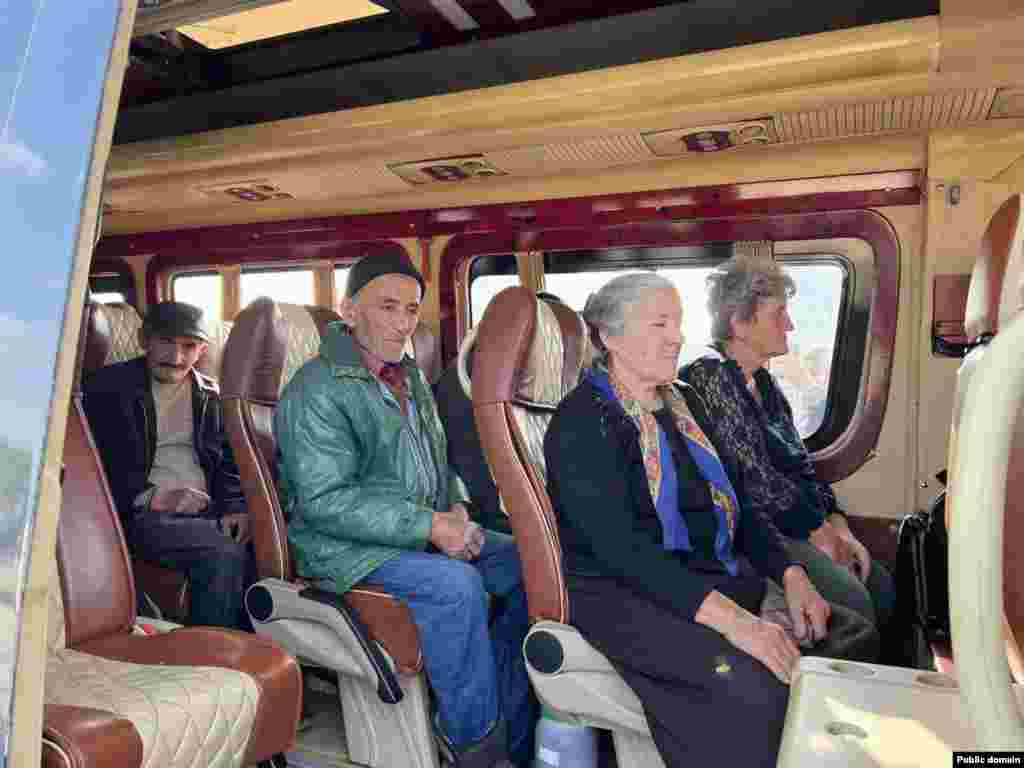
Refugees from Nagorno-Karabakh arrive in a bus in Kornidzor on September 24.<br />
<br />
&nbsp;
6/10 Refugees from Nagorno-Karabakh arrive in a bus in Kornidzor on September 24.

 
An exodus from the breakaway Nagorno-Karabakh region of Azerbaijan in the face of a lightning offensive launched by Baku is fueling a political crisis in Armenia.
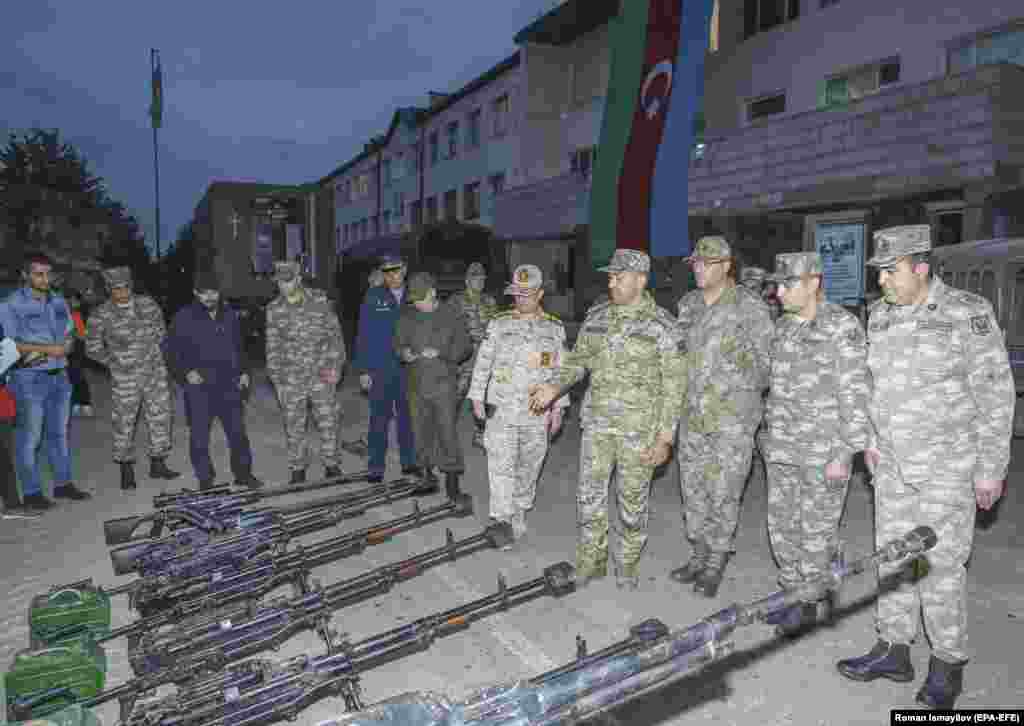
In a photo released on September 24, Azerbaijani military personnel, and one unidentified Iranian serviceman (center) in Susa stand alongside weapons that Azerbaijan says were captured from ethnic Armenian fighters. On September 19, a military operation was launched by Baku against ethnic Armenians in Nagorno-Karabakh.<br />
&nbsp;
7/10 In a photo released on September 24, Azerbaijani military personnel, and one unidentified Iranian serviceman (center) in Susa stand alongside weapons that Azerbaijan says were captured from ethnic Armenian fighters. On September 19, a military operation was launched by Baku against ethnic Armenians in Nagorno-Karabakh.
 
An exodus from the breakaway Nagorno-Karabakh region of Azerbaijan in the face of a lightning offensive launched by Baku is fueling a political crisis in Armenia.
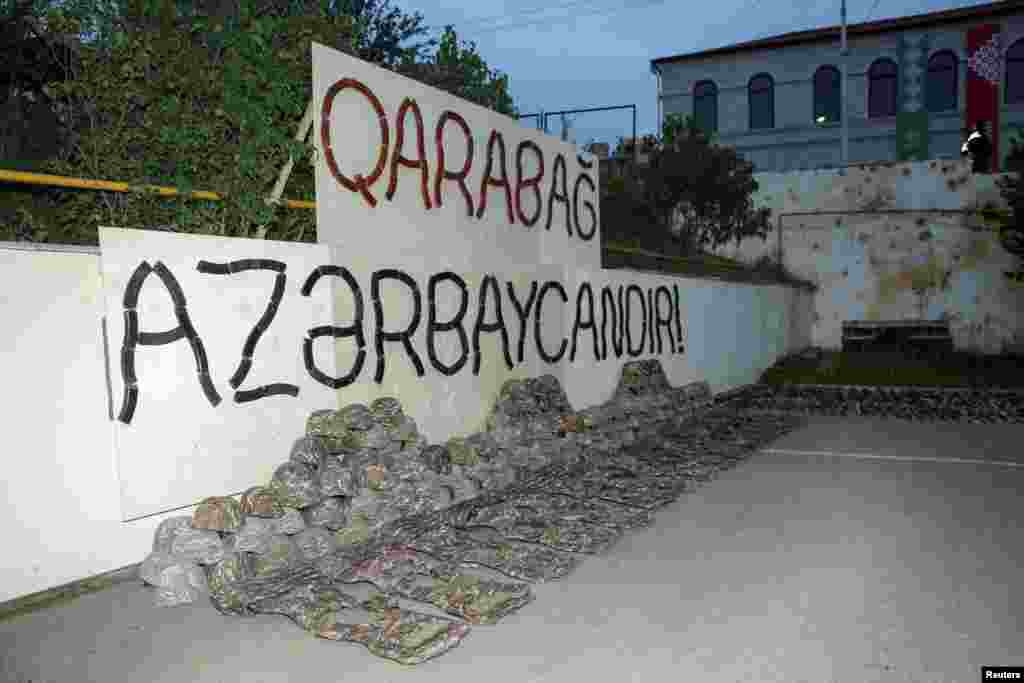
Uniforms of ethnic Armenian soldiers displayed under a sign made with automatic rifle magazines says &quot;Karabakh is Azerbaijan!&quot; in Susa, known as Shushi in Armenian. The military of the separatist region began to be disbanded after a September 20 agreement was reached between Azerbaijan and ethnic Armenian authorities.&nbsp;
8/10 Uniforms of ethnic Armenian soldiers displayed under a sign made with automatic rifle magazines says "Karabakh is Azerbaijan!" in Susa, known as Shushi in Armenian. The military of the separatist region began to be disbanded after a September 20 agreement was reached between Azerbaijan and ethnic Armenian authorities. 
An exodus from the breakaway Nagorno-Karabakh region of Azerbaijan in the face of a lightning offensive launched by Baku is fueling a political crisis in Armenia.
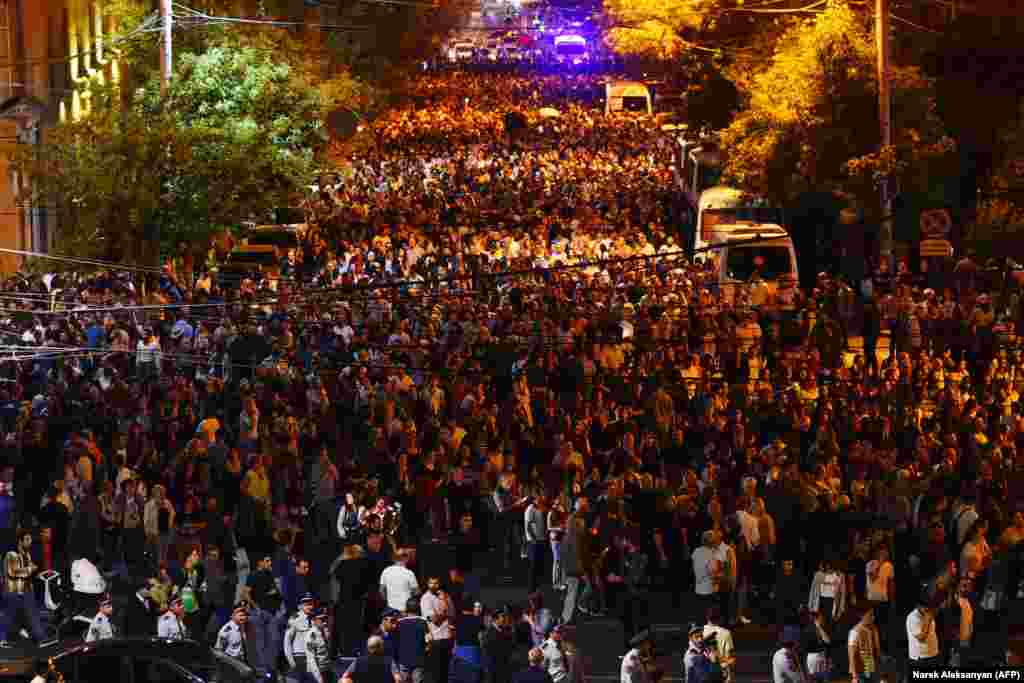
Thousands of protesters gather in Yerevan on the evening of September 24. Many in Armenia are pointing the finger at Prime Minister Nikol Pashinian for the escalating crisis in Nagorno-Karabakh.
9/10 Thousands of protesters gather in Yerevan on the evening of September 24. Many in Armenia are pointing the finger at Prime Minister Nikol Pashinian for the escalating crisis in Nagorno-Karabakh.
An exodus from the breakaway Nagorno-Karabakh region of Azerbaijan in the face of a lightning offensive launched by Baku is fueling a political crisis in Armenia.
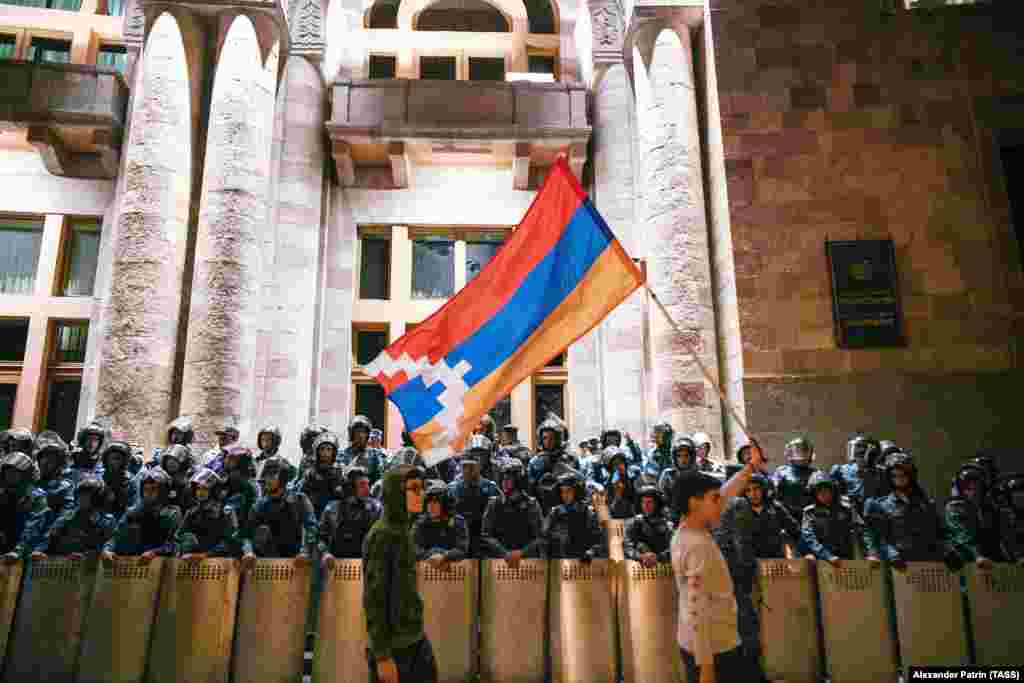
Young protesters wave the flag of the separatist Nagorno-Karabakh region in front of riot police guarding Armenia&rsquo;s government building in Yerevan on September 22.
10/10 Young protesters wave the flag of the separatist Nagorno-Karabakh region in front of riot police guarding Armenia’s government building in Yerevan on September 22.
An exodus from the breakaway Nagorno-Karabakh region of Azerbaijan in the face of a lightning offensive launched by Baku is fueling a political crisis in Armenia.
Previous slide
Next slide

The unrest comes as Turkish President Recep Tayyip Erdogan met his ally, Azerbaijani President Ilham Aliyev, in Azerbaijan's autonomous Naxcivan exclave -- a strip of Azerbaijani territory nestled among Armenia, Iran, and Turkey -- to discuss the situation in Nagorno-Karabakh.

Erdogan insisted Baku’s victory in last week's offensive in Nagorno-Karabakh opened a window of opportunity for normalization of relations in the wider region. He called Azerbaijan’s actions “a source of pride” for Tukey.

Aliyev again vowed to protect the rights of Karabakh’s Armenians, even as the flood of refugees toward Armenia mounted.

Erdogan and Aliyev again discussed the idea of creating a land corridor through Armenian territory to Naxcivan, thus linking their two countries -- a plan Armenia has long rejected. The project, if put in place, would likely intensify political pressure on Pashinian from his opposition.

Pashinian has been on rocky political footing since overwhelming Azerbaijani forces retook much of the territory in and around Nagorno-Karabakh held for decades by ethnic Armenians in a six-week war in late 2020 that led to a Russian-brokered cease-fire.

Discontent over his leadership grew after the breakaway leadership in Nagorno-Karabakh was thrashed last week by a lightning Azerbaijani offensive that led Baku to declare victory in returning its sovereignty to the territory.

Pashinian and many Armenians blame Russia -- which has traditionally served as Armenia's protector in the region -- for failing to use its peacekeeping force to protect ethnic Armenians in Karabakh.

Armenia is a member of the Collective Security Treaty Organization (CSTO) that Russia has tried to position as a counterweight to NATO, although as recently as this month its armed forces were conducting exercises with U.S. forces.
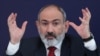
State Department spokesman Matthew Miller told reporters in Washington on September 25 that Moscow had shown “that it cannot be relied on as a security partner" following its failure to support Armenians in Karabakh.

The Russian peacekeepers have been in place since a cease-fire that ended six weeks of fighting in 2020 in which Azerbaijan recaptured much of the territory and seven surrounding districts controlled since the 1990s by ethnic Armenians with Yerevan's support.

With reporting by AFP
  • 16x9 Image

    RFE/RL's Armenian Service

    RFE/RL’s Armenian Service, operating out of a bureau in Yerevan, is a leading source of trusted reporting and technical innovation, reaching outsized audiences when developments demand authoritative, up-to-the-minute news most.

  • 16x9 Image

    RFE/RL's Azerbaijani Service

    Despite near-total government control over the media, RFE/RL's Azerbaijani Service has built a high-impact social-media presence in Azerbaijan and a reputation as a leading source of independent news.

This item is part of
XS
SM
MD
LG