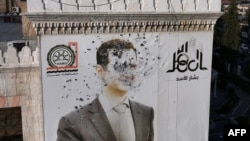
A bullet-riddled portrait of ousted Syrian President Bashar al-Assad hangs over Hama's municipality building after it was defaced following the capture of the city by anti government fighters earlier this month.
Ousted Syrian President Bashar al-Assad said he only left the country in the late hours of December 8 after a Russian air base allegedly came under attack by rebel forces and officials in Moscow ordered "an immediate evacuation."
In what appear to be Assad's first public comments since the fall of his regime in war-torn Syria, a post on the Syrian presidency Telegram social media page on December 16 said the departure from the Hmeimim air base "was neither planned, nor did it occur during the final hours of the battles."
Russia had intervened in the 14-year civil war between government forces and rebels to help keep Assad in power.
But the strongman leader fled Syria as the U.S.-designated terrorist organization Hayat Tahrir al-Sham (HTS) and its allies -- some of whom are linked with Turkey -- overran government forces in a blitz offensive.
Assad's whereabouts were unknown for a brief period before officials in Moscow said on December 9 that he had been granted political asylum in Russia by President Vladimir Putin after more than five decades of iron-fisted rule by his family.
In the post, Assad said he "never considered stepping down or seeking refuge, nor was such a proposal made by any individual or party."
Reuters reported last week that Assad's departure from the country took even relatives and senior officials by surprise.
The HTS has since moved quickly to establish an interim government, and its leader, Riad al-Asaad, has said he is confident the factions that helped topple Assad will unite as one force. HTS and the transitional government have insisted the rights of all Syrians will be protected.
European Union foreign policy chief Kaja Kallas said on December 16 that Russia and another of Syria's staunch allies, Iran, shouldn't have influence over the country's future.
"Many foreign ministers emphasized that it should be a condition for the new leadership to eliminate Russian influence [in Syria]," Kallas told reporters at a meeting of EU foreign ministers in Brussels, adding the bloc would raise the issue of Russia's military bases in the country.
The future of Russia's bases -- the Hmeimim airbase in Latakia and the Tartus naval facility -- have been thrown into question with the fall of Assad.
Shaky Ground: Inside The Russian Military Bases In Syria
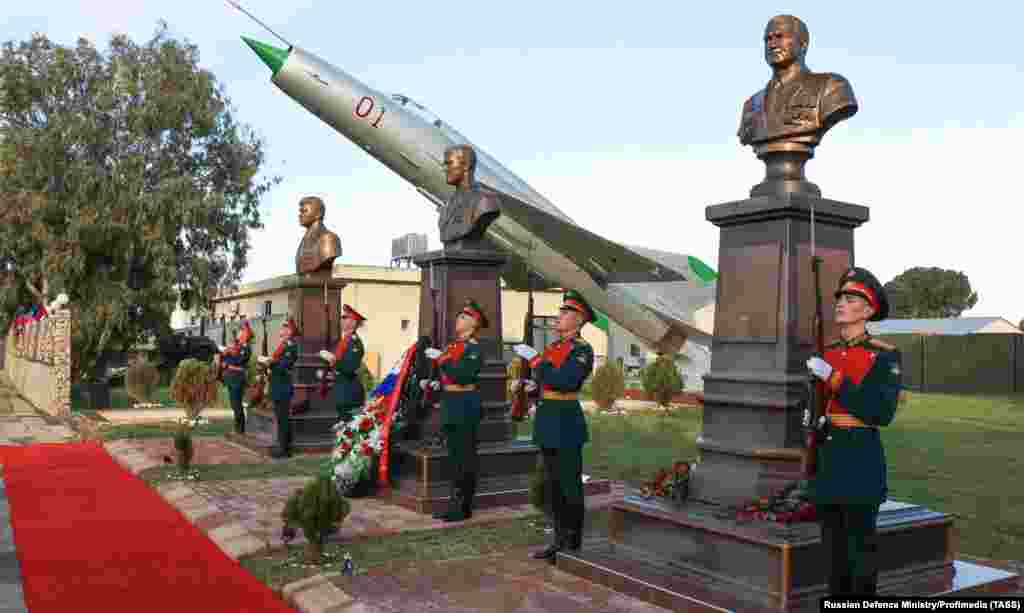
1/12A memorial event for Russian pilot Roman Filipov at the Hmeimim air base near Latakia, Syria, in February 2023.
Satellite images made on December 13 show Russia appears to be withdrawing equipment from the Hmeimim base after the recent toppling of its ally, President Bashar al-Assad.
Photographs taken during the rule of Syria's deposed president, Bashar al-Assad, show life inside Russia's air and naval facilities in the Middle Eastern country.
Show moreShow less
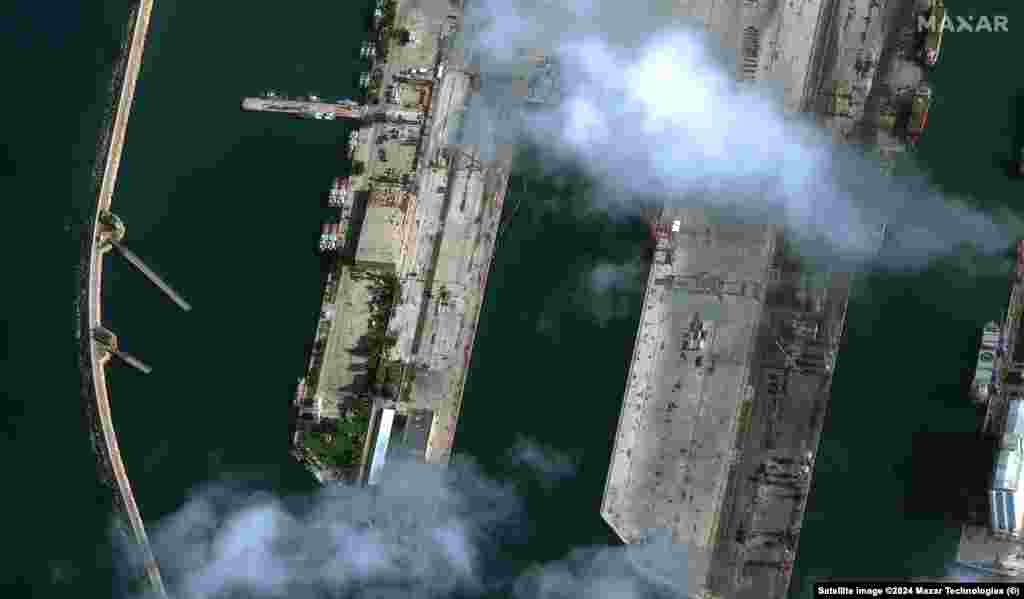
2/12A satellite view of Russia’s naval facility in Tartus, on Syria’s Mediterranean coast on December 13, 2024.
The Kremlin has reportedly been in talks with militant group Hayat Tahrir al-Sham (HTS), now the de facto government in Syria, over the future of Russia’s Syrian bases.
Photographs taken during the rule of Syria's deposed president, Bashar al-Assad, show life inside Russia's air and naval facilities in the Middle Eastern country.
Show moreShow less
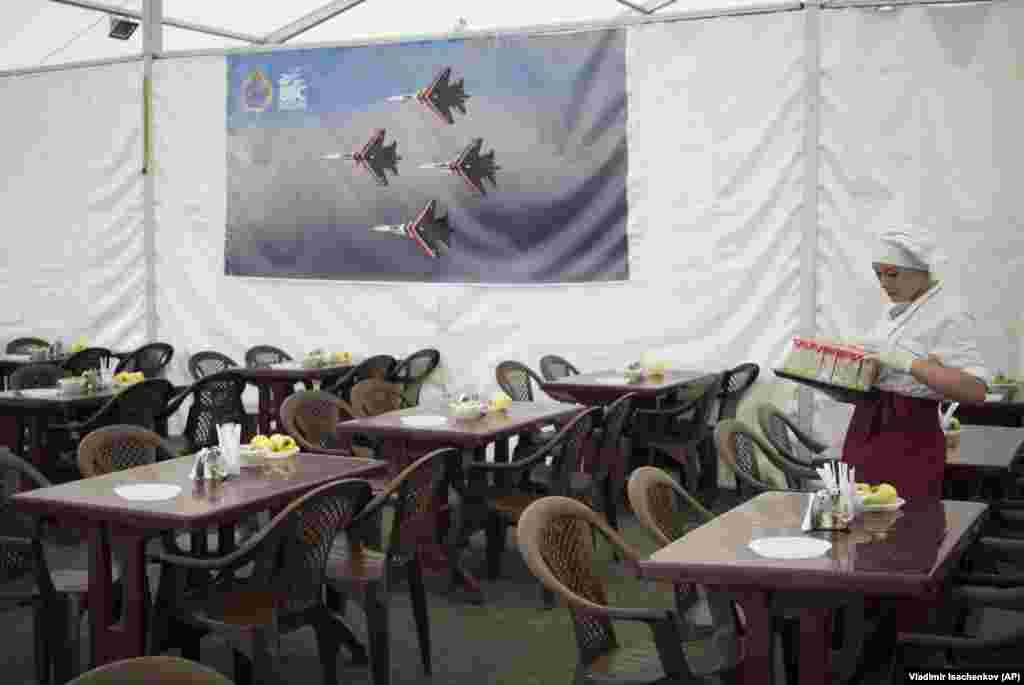
3/12A Russian cafeteria worker prepares tables at the Hmeimim base in October 2015.
Robert E. Hamilton, the head of Eurasia research at the Foreign Policy Research Institute, told RFE/RL Syria's new rulers may be reluctant to tolerate bases from which the Kremlin "launched years of attacks on HTS, other opposition groups, and on Syrian civilians," throughout the country’s civil war.
Photographs taken during the rule of Syria's deposed president, Bashar al-Assad, show life inside Russia's air and naval facilities in the Middle Eastern country.
Show moreShow less
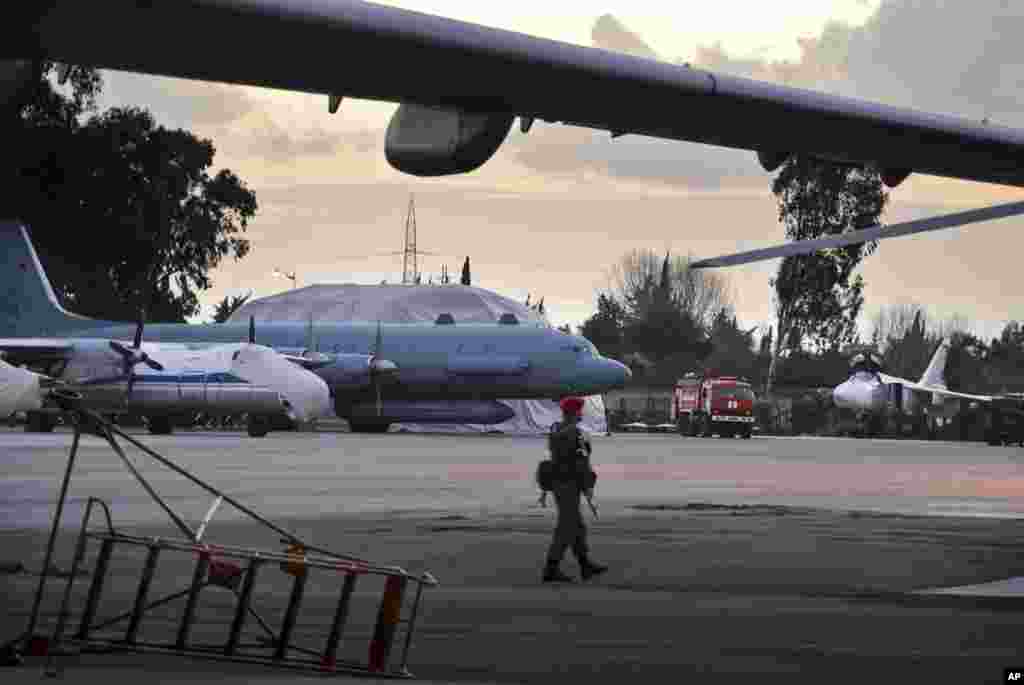
4/12A Russian military policeman patrols the Hmeimim air base in March 2016.
Hamilton says it remains to be seen whether talks between Russia and HTS, "are about ensuring an orderly withdrawal of Russian forces from Syria, or about ensuring Russia can maintain its bases there."
Photographs taken during the rule of Syria's deposed president, Bashar al-Assad, show life inside Russia's air and naval facilities in the Middle Eastern country.
Show moreShow less
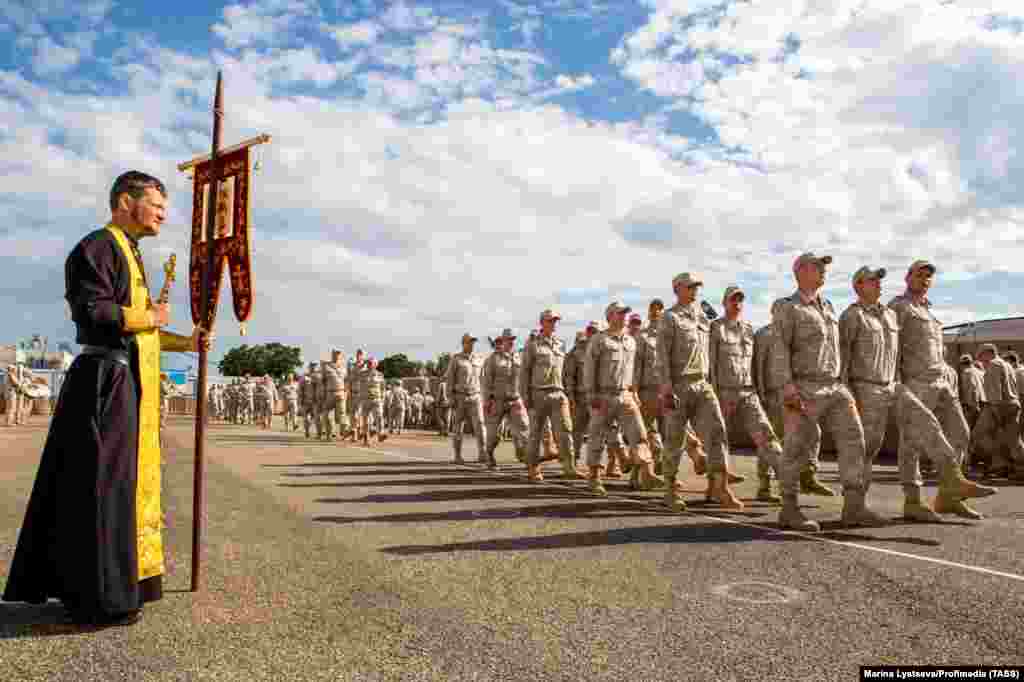
5/12Russian troops march past an Orthodox priest at the Hmeimim base in April 2018. The soldiers are wearing sand-colored Russian uniforms issued to some servicemen based in Syria.
Ben Dubow, a senior fellow at the Center for European Policy Analysis, told RFE/RL the current talks between Russia and HTS could result in "a greatly reduced Russian presence," in the Syrian bases compared to the active combat phase during Assad’s rule.
Photographs taken during the rule of Syria's deposed president, Bashar al-Assad, show life inside Russia's air and naval facilities in the Middle Eastern country.
Show moreShow less
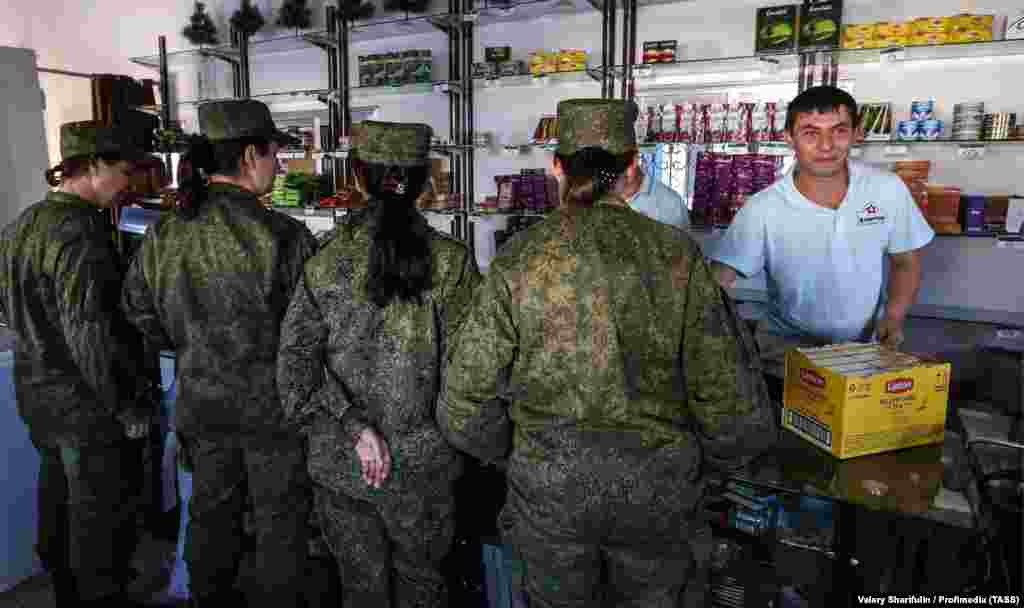
6/12Russian servicewomen wait at a store inside the Hmeimim base in February 2016.
Dubow said Moscow might be able to negotiate a reduced foothold in Syria, "to continue possessing vital transit stations for projecting power across the Middle East and Africa."
Photographs taken during the rule of Syria's deposed president, Bashar al-Assad, show life inside Russia's air and naval facilities in the Middle Eastern country.
Show moreShow less
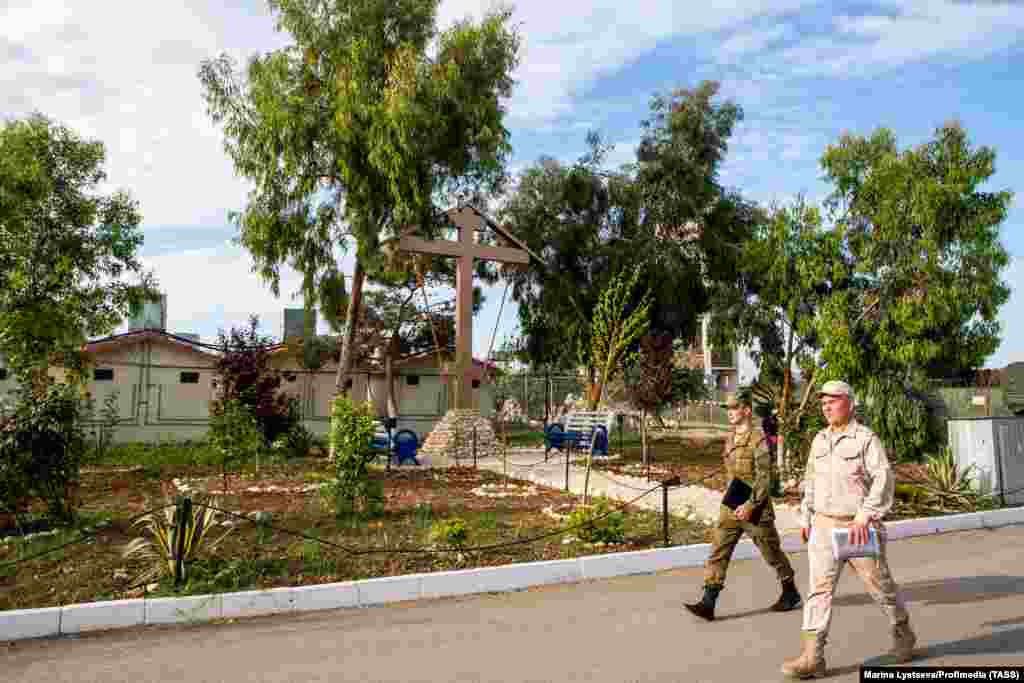
7/12Russian soldiers walk past an Orthodox cross at the Hmeimim base in April 2018.
The Hmeimim air base has been a hub for Russian military aircraft since 2015, when the Kremlin moved to shore up Assad’s forces in the Syrian civil war.
Photographs taken during the rule of Syria's deposed president, Bashar al-Assad, show life inside Russia's air and naval facilities in the Middle Eastern country.
Show moreShow less
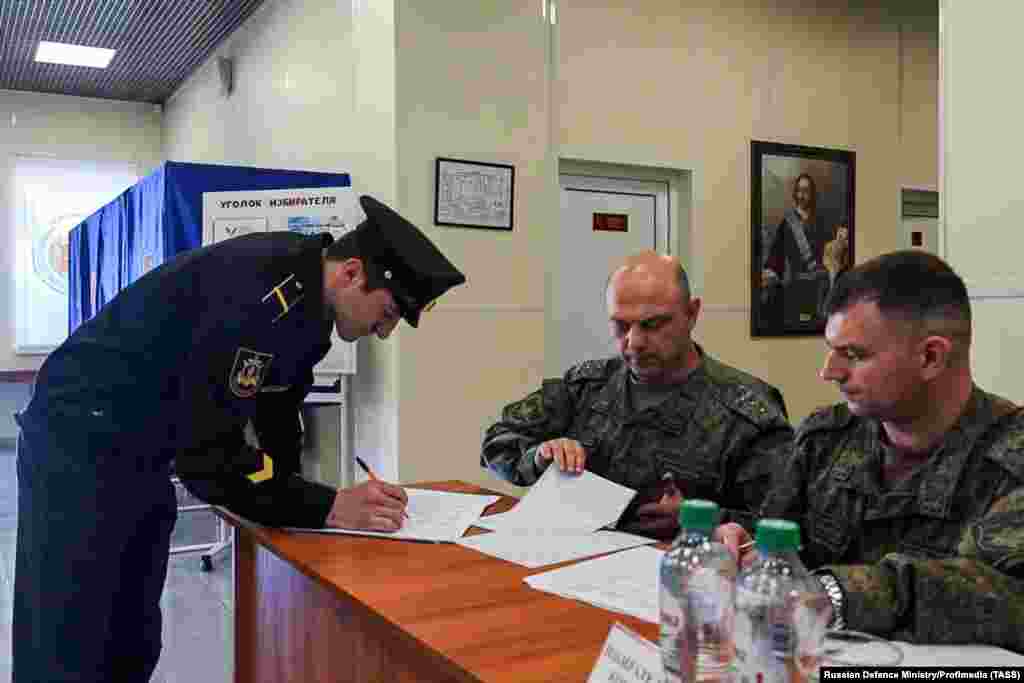
8/12A Russian sailor votes in the March 2024 presidential election near a portrait of Peter the Great, in the Tartus naval facility.
In 2017, Russia signed a 49-year lease on the Hmeimim base, and the Tartus naval facility (pictured) which was first established by the Soviets in 1971. Those agreements have been rendered meaningless by the collapse of the Assad government in Syria.
Photographs taken during the rule of Syria's deposed president, Bashar al-Assad, show life inside Russia's air and naval facilities in the Middle Eastern country.
Show moreShow less
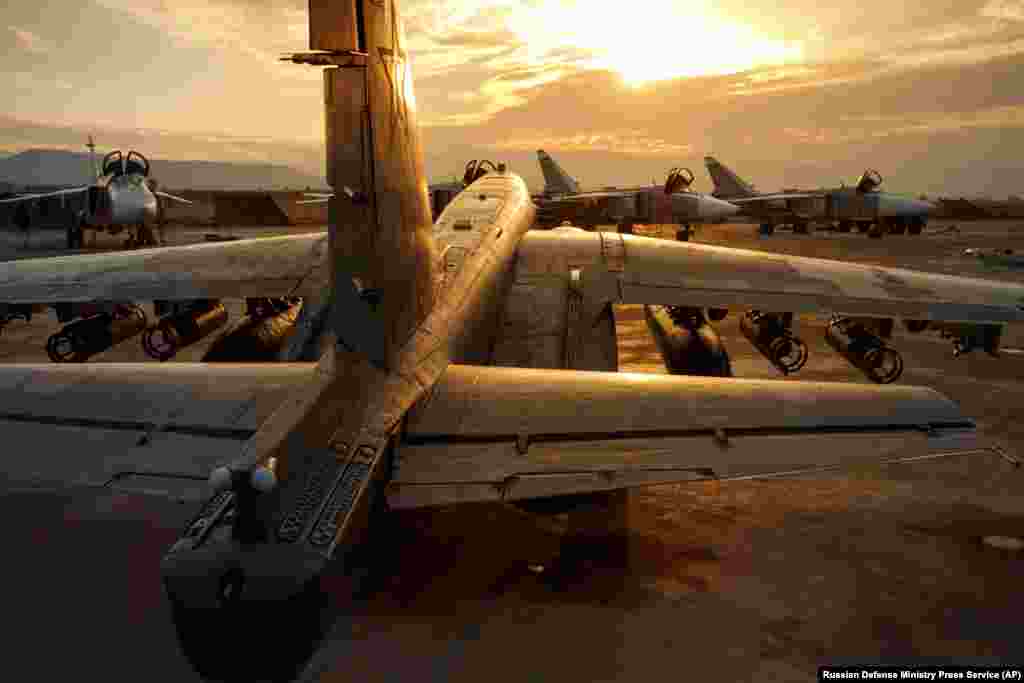
9/12A bomb-laden Su-25 jet at the Hmeimim air base in December 2015.
Russia's lease agreement obliged Assad’s military to safeguard the perimeter of the Hmeimim base, while giving Moscow legal jurisdiction over the facilities inside. Negotiating perimeter protection from Syria’s new rulers will be vital for the Russian bases in an era of wire-controlled drones immune to jamming.
Photographs taken during the rule of Syria's deposed president, Bashar al-Assad, show life inside Russia's air and naval facilities in the Middle Eastern country.
Show moreShow less
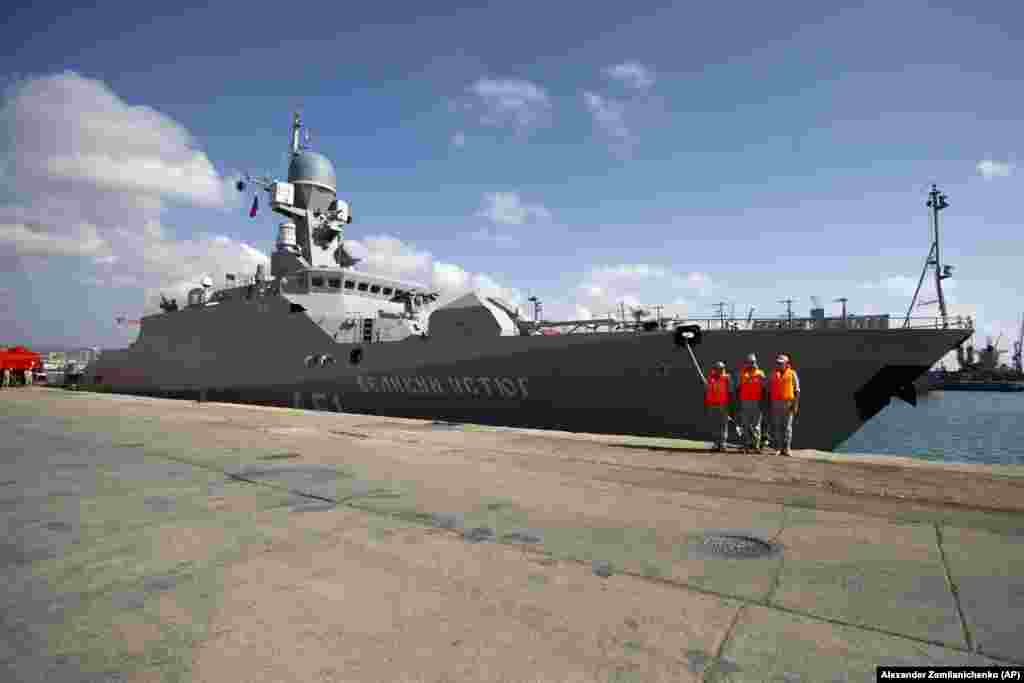
10/12A Russian corvette anchors in Tartus in September 2019.
Russian Deputy Foreign Minister Mikhail Bogdanov told Russian media on December 13: “the bases are still there, where they always were, on Syrian territory. No other decisions have been made for the moment."
Photographs taken during the rule of Syria's deposed president, Bashar al-Assad, show life inside Russia's air and naval facilities in the Middle Eastern country.
Show moreShow less
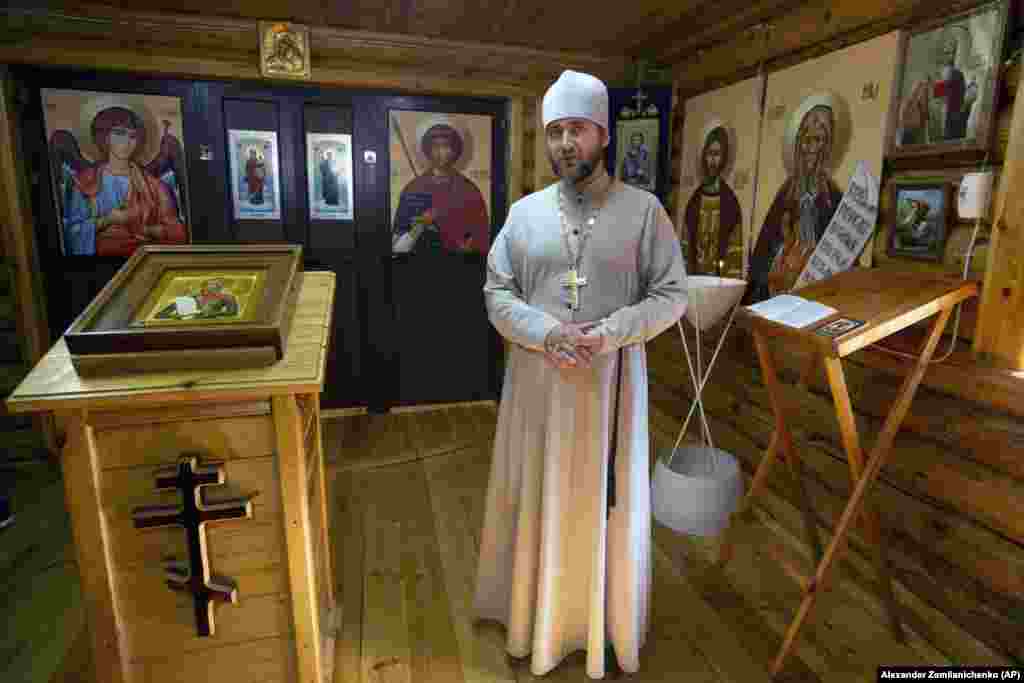
11/12A Russian Orthodox priest stands inside a chapel at the Tartus naval facility in September 2019.
A Britishintelligence report issued on December 13 linked the collapse of the Assad regime and subsequent shaky status of Russia's Syrian bases to the Kremlin's invasion of Ukraine.
Photographs taken during the rule of Syria's deposed president, Bashar al-Assad, show life inside Russia's air and naval facilities in the Middle Eastern country.
Show moreShow less
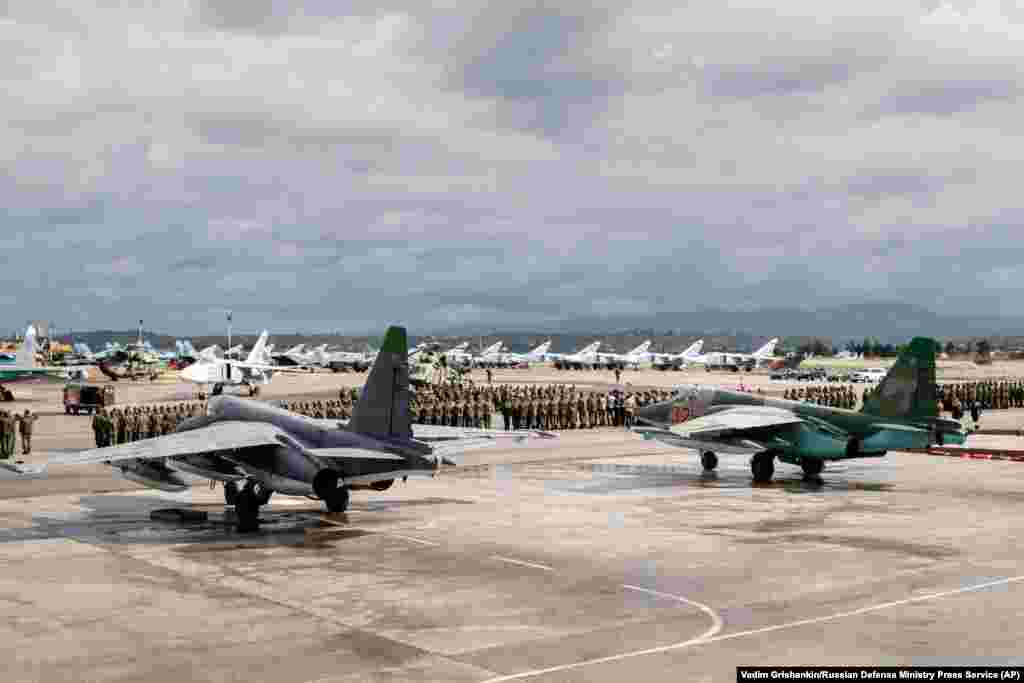
12/12Russian personnel line up on the tarmac of the Hmeimim air base in March 2016.
The British intelligence report cited "Russia's prioritization of the Ukraine conflict" as having "degraded Russia's ability and capacity to keep the Assad regime in power."
Photographs taken during the rule of Syria's deposed president, Bashar al-Assad, show life inside Russia's air and naval facilities in the Middle Eastern country.
Show moreShow less
Previous slide
Next slide
Reuters quoted Syrian military and security sources in contact with the Russians as saying that Moscow was pulling back its forces from the front lines and withdrawing some heavy equipment from the country.
The Main Intelligence Directorate of the Ukrainian Defense Ministry (HUR) said on December 15 that Russian military personnel still in Syria are experiencing a lack of food and drinking water as an evacuation of troops and equipment continues.
It added that Russian personnel are experiencing these problems at the bases in Tartus and Hmeimim and on ships anchored offshore in the Mediterranean Sea.
RFE/RL journalists report the news in 24 languages in 18 countries where a free press is banned by the government or not fully established. We provide what many people cannot get locally: uncensored news, responsible discussion, and open debate.