


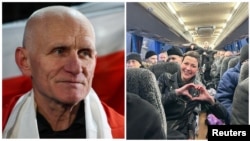
Belarus's authoritarian government has freed 123 prisoners after Washington indicated it was lifting sanctions on Belarusian fertilizer exports, the latest step in Minsk's efforts to repair ties with the West after years of isolation.
The US mediator, Belarusian media, human rights watchdogs, and Ukrainian officials reported that President Aleksandr Lukashenko had pardoned 123 prisoners, including some prominent opposition figures.
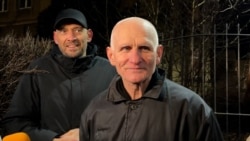
Those freed include 2020 protest leader Maryya Kalesnikava and Nobel laureate Ales Byalyatski as well as citizens of several other countries. One American was released, an unnamed US official told AFP.


US President Donald Trump's envoy to the country, John Coale, announced the prisoner release, using the total number that likely included those freed since the end of November.
"Another 156 political prisoners released thanks to President Trump's leadership! An important step in US-Belarus relations. We discussed regional security and migration issues in Vilnius [with Lithuanian leaders] and in Minsk with President Lukashenko," Coale wrote on X.
Coale separately told Reuters that it was "probable" that a further release of prisoners could take place in the coming months, without being specific.
Belarus has been subject to crippling Western sanctions imposed following the country's cooperation with Russia in its full-scale invasion of Ukraine in February 2022. It has conducted a series of prisoner releases, although hundreds of people -- many classified as political prisoners -- remain in custody.

Dzianis Kuchynski, a representative of Belarusian opposition leader Svyatlana Tsikhanouskaya's office, said all of the political prisoners released on December 13 were safe and had left Belarus.
Kyiv officials said 114 of the released prisoners had arrived in Ukraine. The other nine were believed to have been sent to Lithuania.
Kalesnikava Urges Release Further Releases
Following her arrival in Ukraine, Kalesnikava called for the release of all political prisoners in Belarus.
"I'm thinking of those who are not yet free, and I'm very much looking forward to the moment when we can all embrace, when we can all see one another, and when we will all be free," she said.
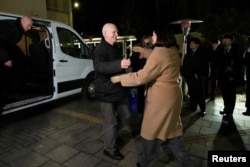
Byalyatski told RFE/RL and other media in Vilnius that "Our fight continues."
"The Nobel Prize was, I think, a certain acknowledgement of our activity, our aspirations that have not yet come to fruition, therefore the fight continues," Byalyatski added.
The Norwegian Nobel Committee expressed "profound relief and heartfelt joy" at the release of Byalyatski, who was a co-recipient of the 2022 Peace Prize but had been imprisoned since 2021.

"At the same time, more than 1,200 political prisoners remain behind bars in Belarus, and their continued detention starkly illustrates the ongoing, systemic repression in the country," Jorgen Watne Frydnes, Nobel Committee chairman told AFP.
European Commission chief Ursula von der Leyen welcomed the release, which she said included EU citizens, and resolved "to keep fighting for all remaining prisoners behind bars in Belarus because they had the courage to speak truth to power."
A Deal With Trump
According to reports in the Belarusian state media, the prisoners were pardoned as a result of a deal with Trump.
The prisoners were released after reports in state media quoted Coale as saying Washington was lifting sanctions on potash, a Belarusian fertilizer export.
Reporting on December 13, the Belarusian state news agency Belta outlined the topics covered during Coale's two days of talks with Lukashenko in Minsk.
"In accordance with the instructions of President Trump, the United States is lifting sanctions on potash," Coale was quoted as saying. "This is a very good move on the part of the United States for Belarus."

Belarus is a major global producer of potash, a key fertilizer ingredient.
He said the two sides also discussed the prospect of improving relations. "We talked about the future, about how to move forward on the path of rapprochement between the US and Belarus," Coale said. "That's our goal."
One year after Belarus's rigged presidential election, the US Treasury Department imposed wide-ranging sanctions on Minsk in August 2021.
The sanctions had targeted Belaruskali -- the country's largest fertilizer producer -- for being "a major source of tax revenue and foreign currency for the Lukashenko regime."
Coale said he had discussed a wide range of issues with Lukashenko. "We talked about the war between Ukraine and Russia, about Venezuela," he said.

Coale said that given Lukashenko's long friendship with Russian President Vladimir Putin, Washington wanted his help in influencing the Kremlin.
"Your president has a long history with President Putin and has the ability to advise him. This is very useful in this situation," Coale said.
He noted that Lukashenko might be able to change Putin's mind in the context of the ongoing talks to end the war in Ukraine.
"Naturally, President Putin may accept some advice and not others. This is a way to facilitate the process," he said.