




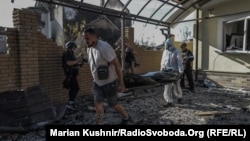
KYIV -- The death toll from an overnight Russian drone strike on Ukraine’s Bucha district in the Kyiv region has risen to 38, as rescue operations continued on August 29 and officials fear that the toll could rise further.
Tymur Tkachenko, a top district administration official, said on his Telegram channel that rescuers and relevant services continued to work at the scene.
Local authorities say the August 28 drone strike in the Kyiv region caused a major fire and explosions at a nearby warehouse, which is said to be the major cause of the casualties.
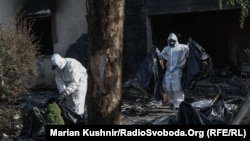
Tkachenko said that dozens of people including children, suffered injuries in the attack, which caused a large fire that spread to residential buildings in the village of Myla.
Earlier, he had said that the death toll may not be final and expressed his "sincere condolences to the families and loved ones” of those affected.
Reporting from the scene, RFE/RL’s Ukrainian Service correspondent Maryan Kushnir said that “the whole area is in ruins,” adding that the strike also affected a nursing home, where “many” people were killed.
According to Tkachenko, those killed in Bucha also included the head of the Dmytrivka community in the district, Taras Didych. The district official said it was a “great loss” for the region.
Tkachenko said an operational headquarters has been set up in Dmytrivka to provide food as well as other support to the people in the affected region.
Fireballs In The Sky
Multiple media outlets and video footage circulating on social media show an explosion followed by fireballs rising into the sky.
Ukraine's Prosecutor-General's Office said in a statement that an investigation had been launched to look into the apparent placement and storage of explosives near residential areas.
Ukrainian President Volodymyr Zelenskyy said more than 300 emergency service employees are working on the rescue operations.
"There was a strike on the warehouse followed by a detonation. Unfortunately, there is significant destruction of the surrounding infrastructure -- residential buildings, a boarding house for the elderly and people with disabilities were damaged," Zelenskyy said.
As sounds of detonations continued in the village, local resident Zhanna told RFE/RL that she had lost her husband in the incident, adding that he had previously survived the Russian occupation.
“Why can’t this be organized?” she asked through tears, referring to the placement of explosives in the village.
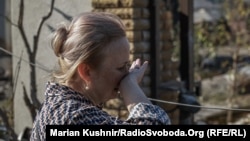
Another Myla local, Oleksandr, said the village’s residents didn’t know what was stored in the warehouse there. “Nobody told us anything... People aren’t informed. I think everything is being done the wrong way.”
Earlier, Ukrainian Prime Minister Serhiy Koretsky criticized the officials for storing explosive materials near residential areas. He said making such mistakes was "criminal negligence.”
In July, a similar incident occurred in the Vyshneve region of Kyiv where a Russian strike caused explosions at a warehouse, killing nine people and damaging more than 280 houses.
Zelenskyy said he had heard about the prime minister’s statement and that "those who allowed this must be held accountable for their decisions.”
Meanwhile, Polish Prime Minister Donald Tusk asked for air support for Ukraine in the face of continued “escalation” from Russia.
In a social media post, Tusk said that “the escalation from Russia's side is progressing,” adding that “Ukraine needs greater air support, which is also crucial for our security.”
The Polish prime minister said the next six months will be decisive, calling it “a task for all of Europe” to get ready for “various scenarios.”
“We cannot rule out provocations from Russia against one of NATO's members,” he warned.

