




Welcome back to The Farda Briefing, an RFE/RL newsletter that tracks the key issues in Iran and explains why they matter.
I'm RFE/RL correspondent Kian Sharifi. In this edition of the Farda Briefing, I'm looking at how Israel is shifting its focus to Iran’s missile program as the most pressing existential threat and whether that’s a prelude to another war.
What You Need To Know
• Is Iran Drifting Toward A 1923-Style Meltdown?: Iran has been battling double-digit inflation for years, and the dollar’s value has exploded, and now stands at roughly 100 times higher than a decade ago. It’s not quite at hyperinflation levels like Venezuela, Argentina, or Germany in 1923, but the warning lights are flashing. More on this in RFE/RL’s Radio Farda analysis in Persian here.
• International Calls To Stop Execution Of Female Activist: Prominent women worldwide and UN experts this week called on Iran to immediately release Zahra Shahbaz Tabari, a 67-year-old electrical engineer facing execution. Tabari was sentenced to death in October for “baghi,” or armed rebellion against the Islamic republic. Her alleged crime? Possessing a piece of cloth with the slogan “Women, Resistance, Freedom” -- a play on the “Women, Life, Freedom” motto that became a rallying cry during Iran’s 2022 protests. Authorities claim she intended to display it publicly.
• Tehran’s Growing Cafe Culture: Cafes in Iran -- especially in Tehran, where they've exploded in number lately -- aren't just spots for coffee or hanging out anymore. They're like a mirror reflecting all the social, cultural, and even political shifts over the past four decades. They’re now one of the biggest signs of urban life buzzing with the changes in society. Read Radio Farda’s report in Persian here.
The Big Issue

More Missiles, More Problems
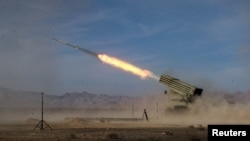
For weeks now Israeli officials and media have turned their attention to Iran’s missile program. They see it as Israel’s biggest headache right now -- huge enough to top Prime Minister Benjamin Netanyahu’s list when he sits down with US President Donald Trump on December 29.
Iran, of course, swears it’s all about self-defense. Tehran has poured tons of cash into missiles and drones to make up for its outdated air force. Remember the war back in June? It took Israel no time to establish dominance over Iranian airspace.
Why it matters: Iran is rebuilding its missile stockpile fast after the June war, and Israeli leaders worry it’s ramping up big time. If US media reports are spot on, Netanyahu is heading to Trump with a pitch for fresh strikes to knock it back.
During the 12-day war earlier this year, Israel took out senior Iranian military commanders and, with help from the United States, set back Iran’s nuclear program -- which Tehran still maintains is peaceful. Missile factories were hit too, but not hard enough to stop production.
Iran fired off about 550 missiles at Israel, and 36 slipped through defenses. Experts talking with Radio Farda say Iran is restocking more quickly than Israel can buy more interceptors. What if the next barrage overwhelms everything?
What’s being said: Farzin Nadimi, a senior fellow at The Washington Institute, told Radio Farda that smashing Iran’s missile game could force a “surrender or fundamental doctrinal shift,” maybe even a dash for nukes.
Meanwhile, Hamidreza Azizi, a fellow at the German Institute for International and Security Affairs, says curbing missiles is tough, and Washington knows that. He figures the real play is squeezing a weakened Iran for wins like ditching uranium enrichment at home or ending support for Hezbollah and the Houthis.
That's all from me for now. This is our final edition of the Farda Briefing in 2025. Our next Iran newsletter, with a new look and a new name, will land in your inbox in January.
Merry Christmas and Happy New Year -- see you soon.
Kian Sharifi
If you enjoyed this briefing and don't want to miss the next edition, subscribe here. It will be sent to your inbox every Friday.