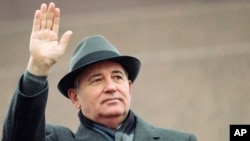
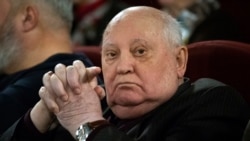
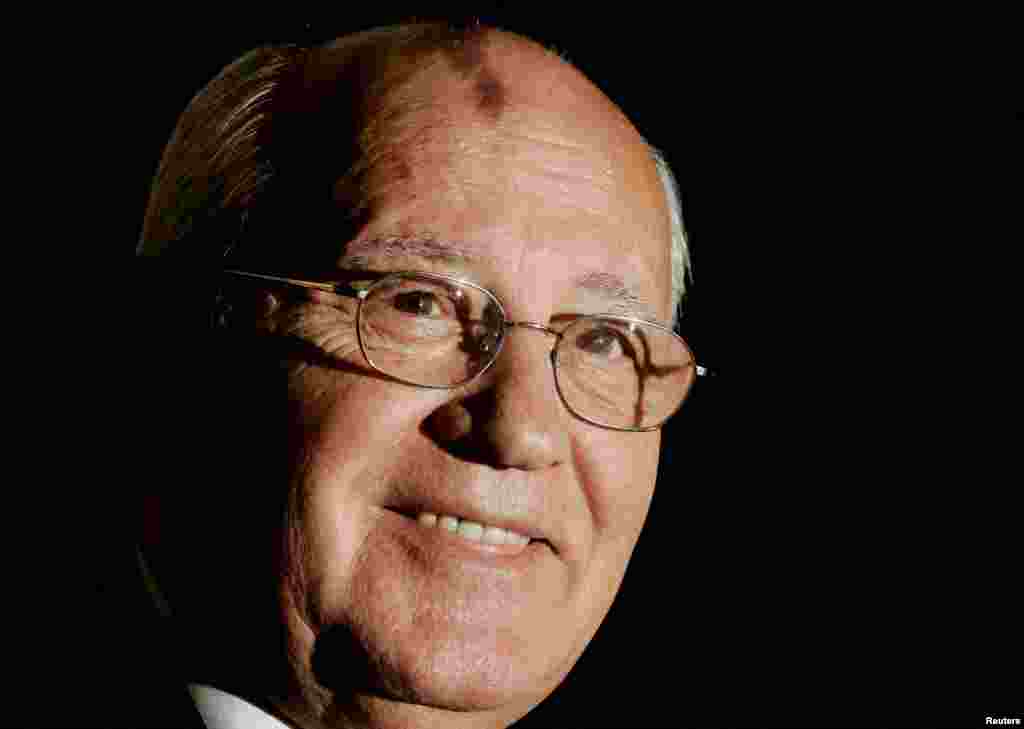
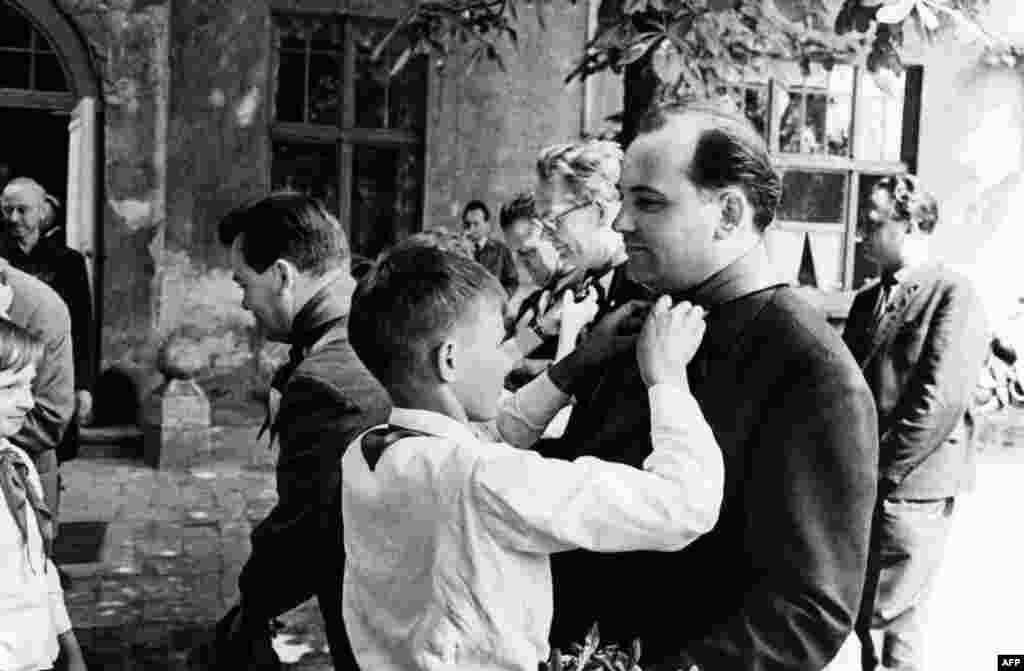
The late Soviet President Mikhail Gorbachev leaves behind a legacy that has divided his fellow Russians.
Russian historian Andrei Zubov was 33 years old and attending a conference in Leningrad in 1985 when he heard that Mikhail Gorbachev, 54, had been elevated to the post of general secretary of the Communist Party of the Soviet Union.
"I remember I couldn't believe my ears," he told RFE/RL's Russian Service. "I understood right away that the enormous iceberg of that totalitarian, communist machine was falling apart…. Until that moment, there was only a dead end."
Gorbachev's death on August 30 at the age of 91 has again exposed deep divisions among Russians, with many excoriating him for supposedly destroying a global superpower while others praise him for opening up a previously unimaginable world of individual opportunity.
In the years before Gorbachev came to power, Zubov said, "we felt like we were living in an occupied country."
"Decent people tried to isolate themselves entirely or at least to have minimal contact with the dirt and the lies the completely suffused the Communist Party system," he said.
Many Russians -- including many who loudly support Vladimir Putin and believe he has "raised Russia from its knees" over 23 years as president or prime minister -- blame Gorbachev personally for the collapse of the Soviet empire, ignoring strong evidence that the system had grown unviable.
"It all happened because of the weakness and lack of will of a man who in the course of six years destroyed our homeland," Vladimir Solovyov, a hard-line pro-Kremlin publicist and television personality, said on his vlog the day after Gorbachev's death. "In just six years, he betrayed the entire socialist camp. Did he understand what he was doing? No, he didn't."
Pro-Kremlin historian Modest Kolerov wrote on Telegram that Gorbachev's passing filled him with "pain…for the country he intentionally destroyed and the tens of millions of victims that resulted from that murder. I'm glad he lived so long because now even the youngest of our children know what he was…. The U.S.S.R is dead. Russia lives. The struggle continues."
St. Petersburg blogger Anatoly Nesmiyan expressed disappointment that Gorbachev was never the primary defendant at a "tribunal to investigate the crimes against our country."
Others, however, focused not on what Gorbachev purportedly did to the Soviet Union, but on what he did for individual Soviet citizens. For a brief period at least, the perceived balance of power between the state and the individual -- weighted heavily in favor of the former throughout Russian history, and particularly from the Bolshevik takeover through dictator Josef Stalin's Great Terror and the Era of Stagnation -- shifted under Gorbachev.
"Gorbachev rejected enormous power, dismantled a totalitarian government, and gave our countries freedom," wrote Fyodor Velembovsky, a former opposition politician and activist with the now-banned Memorial human-rights group, which was created under Gorbachev's liberalization and managed to preserve hundreds of first-hand accounts of Stalin's crimes before being banned by Putin, on Twitter.
"Gorbachev placed the interests of people above the interests of the state," Kirill Martynov, a journalist formerly with Novaya Gazeta -- which was created by Gorbachev using money from his 1990 Nobel Peace Prize -- and who now heads Novaya Gazeta.Europe, told RFE/RL. "The significance of Gorbachev has yet to be appreciated."
Mikhail Gorbachev: A Life In Pictures
1/25Former Soviet leader Mikhail Gorbachev, who died on August 30 at age 91, speaks during a news conference marking the 20th anniversary of perestroika at the U.S. Chamber of Commerce in Washington, D.C., on October 21, 2005.
Gorbachev said: "The more I think about my life, the more I see that the biggest and most important events took place unexpectedly."
The legacy of Mikhail Gorbachev, the man who oversaw the breakup of the Soviet Union, remains a divisive topic in Russia. But whether lauded by advocates of his "openness" or loathed by people who see the U.S.S.R.'s collapse as a disaster, his influence on modern history was enormous.
Show moreShow less
2/25Mikhail Sergeyevich Gorbachev was born on March 2, 1931. Misha, as he was known, is seen with his grandparents at age 3.
The legacy of Mikhail Gorbachev, the man who oversaw the breakup of the Soviet Union, remains a divisive topic in Russia. But whether lauded by advocates of his "openness" or loathed by people who see the U.S.S.R.'s collapse as a disaster, his influence on modern history was enormous.
Show moreShow less
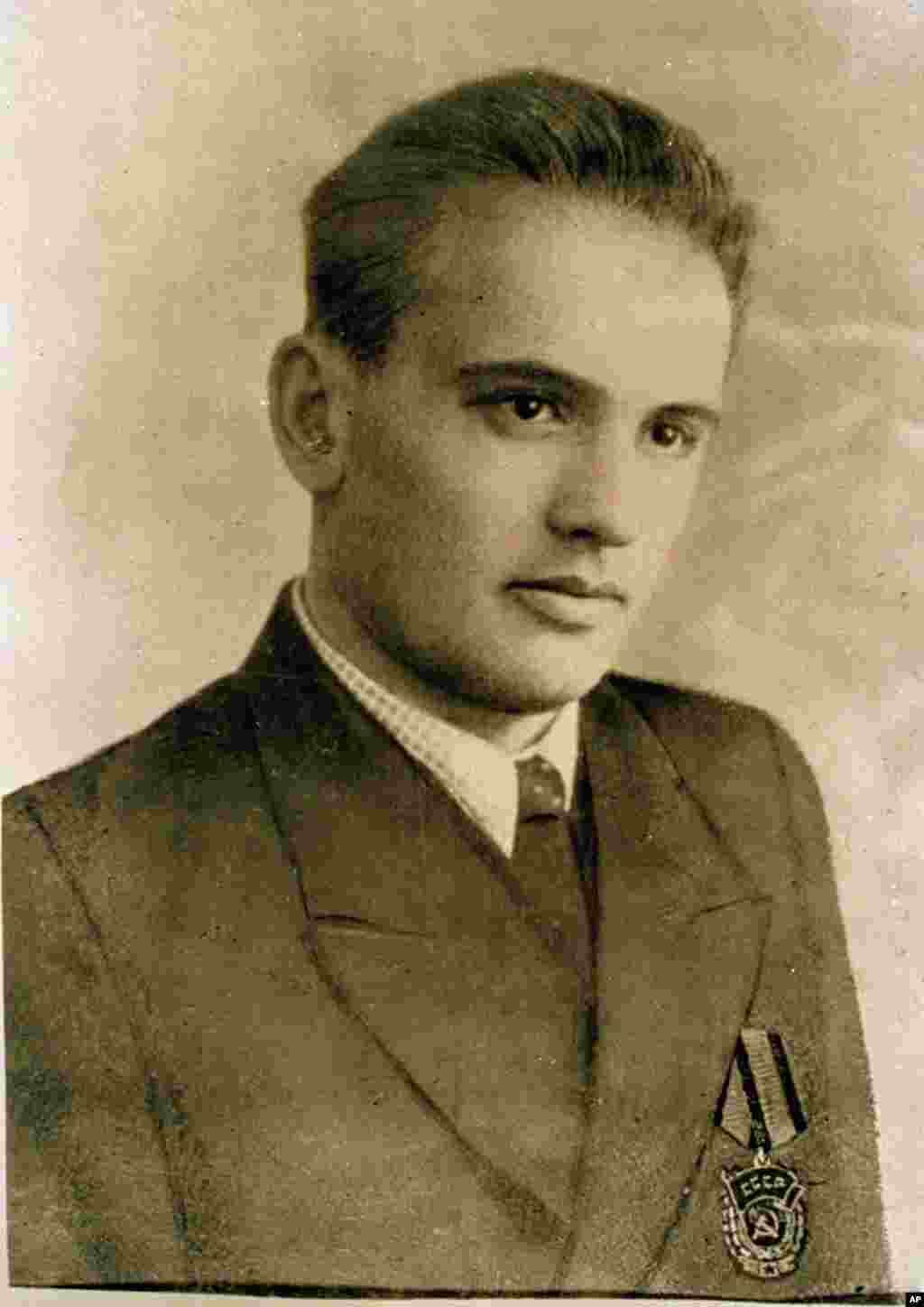
3/25A young Gorbachev at the age of 19, wearing the Red Banner of Labor medal he received for driving a harvest combine on the plains of southern Russia.
The legacy of Mikhail Gorbachev, the man who oversaw the breakup of the Soviet Union, remains a divisive topic in Russia. But whether lauded by advocates of his "openness" or loathed by people who see the U.S.S.R.'s collapse as a disaster, his influence on modern history was enormous.
Show moreShow less
4/25A portrait of Raisa Gorbacheva and Mikhail Gorbachev, who were married in September 1953. They were married for 46 years before Raisa died of leukemia in 1999.
The legacy of Mikhail Gorbachev, the man who oversaw the breakup of the Soviet Union, remains a divisive topic in Russia. But whether lauded by advocates of his "openness" or loathed by people who see the U.S.S.R.'s collapse as a disaster, his influence on modern history was enormous.
Show moreShow less
5/25A young Gorbachev leads a Communist Party delegation in Stavropol in 1966. It was in Stavropol that he began his career in the party that he would eventually come to lead.
The legacy of Mikhail Gorbachev, the man who oversaw the breakup of the Soviet Union, remains a divisive topic in Russia. But whether lauded by advocates of his "openness" or loathed by people who see the U.S.S.R.'s collapse as a disaster, his influence on modern history was enormous.
Show moreShow less
6/25Gorbachev (third from right) at a celebration in Stavropol in the 1960s of the October Revolution. The young communist rose quickly through the ranks of the party.
The legacy of Mikhail Gorbachev, the man who oversaw the breakup of the Soviet Union, remains a divisive topic in Russia. But whether lauded by advocates of his "openness" or loathed by people who see the U.S.S.R.'s collapse as a disaster, his influence on modern history was enormous.
Show moreShow less
7/25With his wife, Raisa, and British Prime Minister Margaret Thatcher in 1984.
The legacy of Mikhail Gorbachev, the man who oversaw the breakup of the Soviet Union, remains a divisive topic in Russia. But whether lauded by advocates of his "openness" or loathed by people who see the U.S.S.R.'s collapse as a disaster, his influence on modern history was enormous.
Show moreShow less
8/25His first meeting with U.S. President Ronald Reagan, in Geneva in November 1985. Gorbachev had been elected general secretary of the Communist Party in March 1985.
The legacy of Mikhail Gorbachev, the man who oversaw the breakup of the Soviet Union, remains a divisive topic in Russia. But whether lauded by advocates of his "openness" or loathed by people who see the U.S.S.R.'s collapse as a disaster, his influence on modern history was enormous.
Show moreShow less
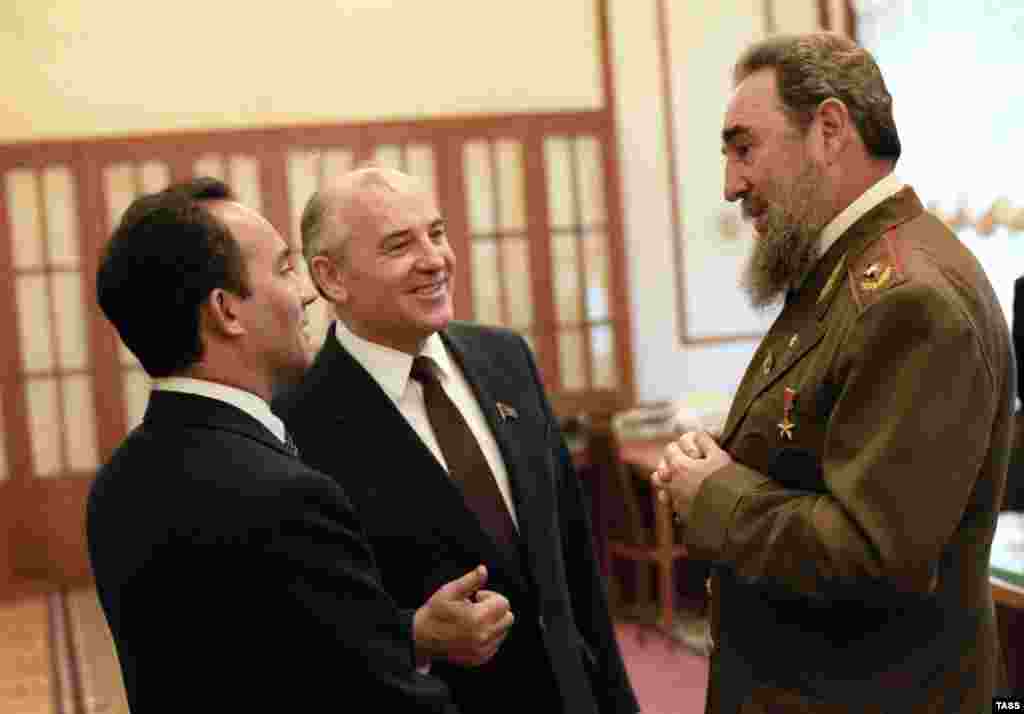
9/25With Cuban President Fidel Castro at the Kremlin in March 1986. It was the same year Gorbachev began his initiative of perestroika (restructuring), which he hoped would encourage "initiative and creative endeavor" and help kick-start the stagnant Soviet economy.
The legacy of Mikhail Gorbachev, the man who oversaw the breakup of the Soviet Union, remains a divisive topic in Russia. But whether lauded by advocates of his "openness" or loathed by people who see the U.S.S.R.'s collapse as a disaster, his influence on modern history was enormous.
Show moreShow less
10/25Gorbachev and U.S. Vice President George H.W. Bush wave to city residents in Washington, D.C., during an official visit on December 10, 1987.
The legacy of Mikhail Gorbachev, the man who oversaw the breakup of the Soviet Union, remains a divisive topic in Russia. But whether lauded by advocates of his "openness" or loathed by people who see the U.S.S.R.'s collapse as a disaster, his influence on modern history was enormous.
Show moreShow less
11/25Reagan and Gorbachev sign the Intermediate-Range Nuclear Forces (INF) Treaty at the White House in December 1987. In 1988, further reforms arrived with Gorbachev's policy of glasnost (openness), which allowed for greater freedoms of expression for Soviet citizens.
The legacy of Mikhail Gorbachev, the man who oversaw the breakup of the Soviet Union, remains a divisive topic in Russia. But whether lauded by advocates of his "openness" or loathed by people who see the U.S.S.R.'s collapse as a disaster, his influence on modern history was enormous.
Show moreShow less
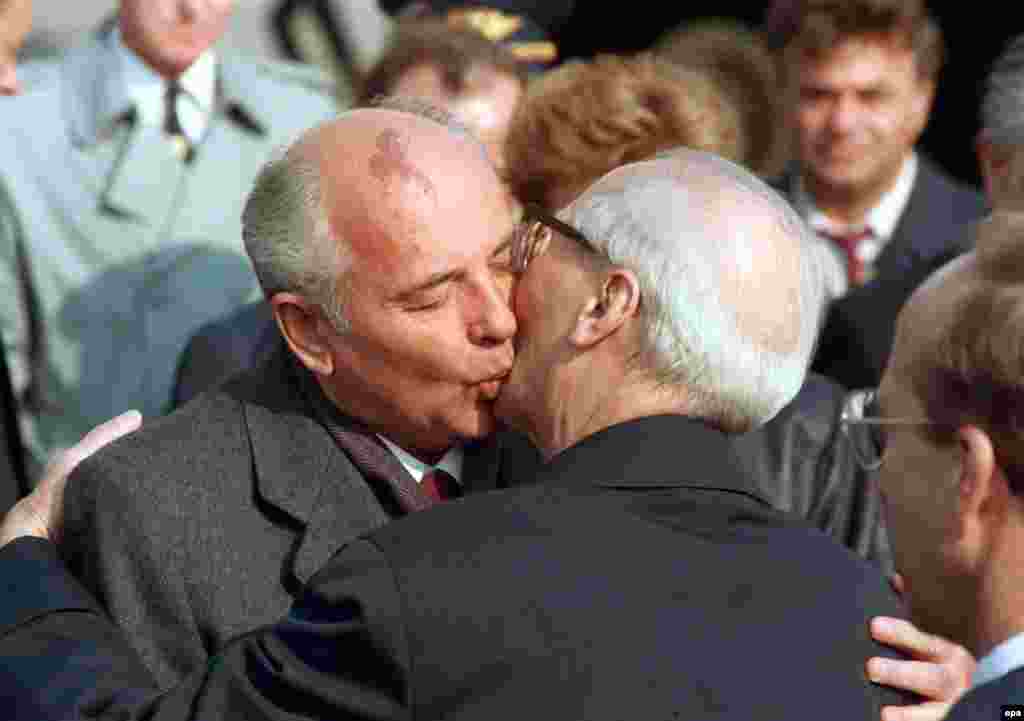
12/25Gorbachev embraces East German leader Erich Honecker after arriving in East Berlin for ceremonies on October 6, 1989, marking the 40th anniversary of the founding of the German Democratic Republic. A month later, the Berlin Wall collapsed and East Germans flooded to the West.
The legacy of Mikhail Gorbachev, the man who oversaw the breakup of the Soviet Union, remains a divisive topic in Russia. But whether lauded by advocates of his "openness" or loathed by people who see the U.S.S.R.'s collapse as a disaster, his influence on modern history was enormous.
Show moreShow less
13/25Gorbachev shakes hands with Pope John Paul II in the first-ever meeting between a Kremlin chief and a pontiff, in the Vatican on December 1, 1989.
The legacy of Mikhail Gorbachev, the man who oversaw the breakup of the Soviet Union, remains a divisive topic in Russia. But whether lauded by advocates of his "openness" or loathed by people who see the U.S.S.R.'s collapse as a disaster, his influence on modern history was enormous.
Show moreShow less
14/25Czechoslovak President Vaclav Havel shakes hands with Gorbachev as they exchange documents on the withdrawal of Soviet troops in Moscow on February 26, 1990.
The legacy of Mikhail Gorbachev, the man who oversaw the breakup of the Soviet Union, remains a divisive topic in Russia. But whether lauded by advocates of his "openness" or loathed by people who see the U.S.S.R.'s collapse as a disaster, his influence on modern history was enormous.
Show moreShow less
15/25Gorbachev and Soviet Foreign Minister Eduard Shevardnadze meet West German Chancellor Helmut Kohl and Foreign Minister Hans-Dietrich Genscher in July 1990 to discuss the terms of German reunification.
The legacy of Mikhail Gorbachev, the man who oversaw the breakup of the Soviet Union, remains a divisive topic in Russia. But whether lauded by advocates of his "openness" or loathed by people who see the U.S.S.R.'s collapse as a disaster, his influence on modern history was enormous.
Show moreShow less
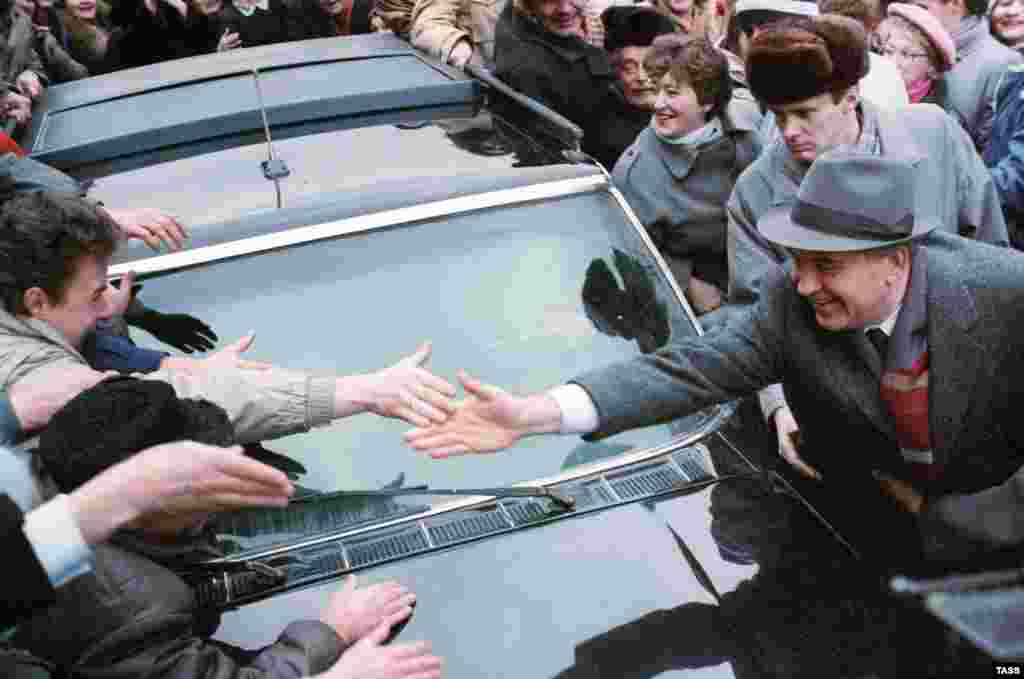
16/25Gorbachev shakes hands with onlookers during an official visit to Vilnus, Lithuania, on January 30, 1991.
The legacy of Mikhail Gorbachev, the man who oversaw the breakup of the Soviet Union, remains a divisive topic in Russia. But whether lauded by advocates of his "openness" or loathed by people who see the U.S.S.R.'s collapse as a disaster, his influence on modern history was enormous.
Show moreShow less
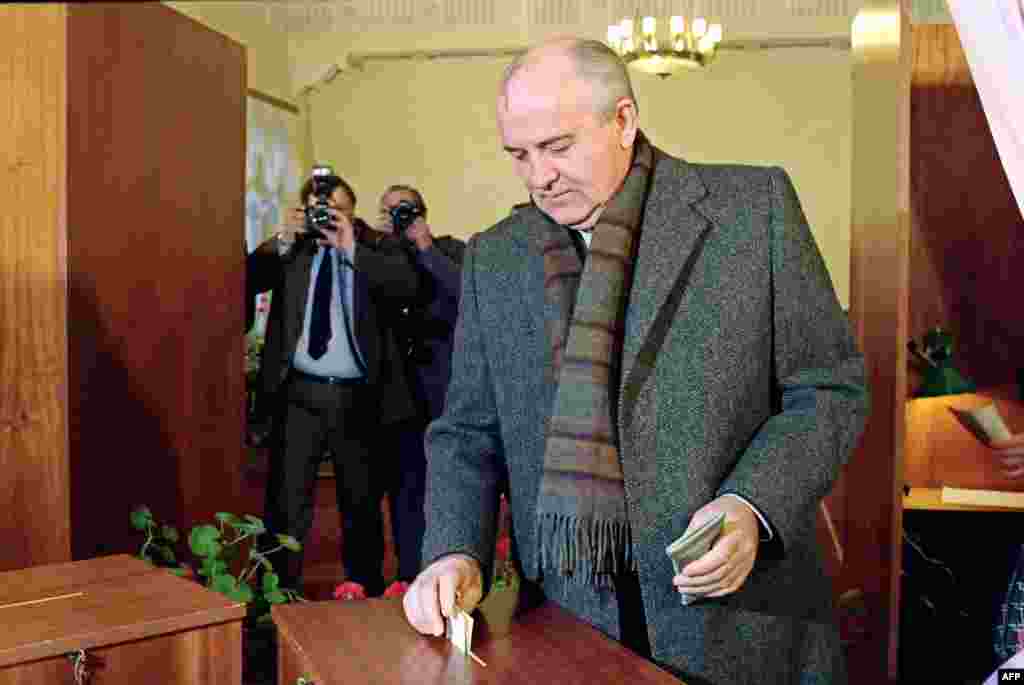
17/25Gorbachev casts his ballot in Moscow on March 17, 1991, in a referendum to decide whether the Soviet Union would remain a unified state or not.
The legacy of Mikhail Gorbachev, the man who oversaw the breakup of the Soviet Union, remains a divisive topic in Russia. But whether lauded by advocates of his "openness" or loathed by people who see the U.S.S.R.'s collapse as a disaster, his influence on modern history was enormous.
Show moreShow less
18/25U.S. President George H.W. Bush and Gorbachev exchange pens after signing the historic Strategic Arms Reduction Treaty (START), which cut the superpowers' nuclear arsenals by up to one-third, in Moscow on July 31, 1991.
The legacy of Mikhail Gorbachev, the man who oversaw the breakup of the Soviet Union, remains a divisive topic in Russia. But whether lauded by advocates of his "openness" or loathed by people who see the U.S.S.R.'s collapse as a disaster, his influence on modern history was enormous.
Show moreShow less
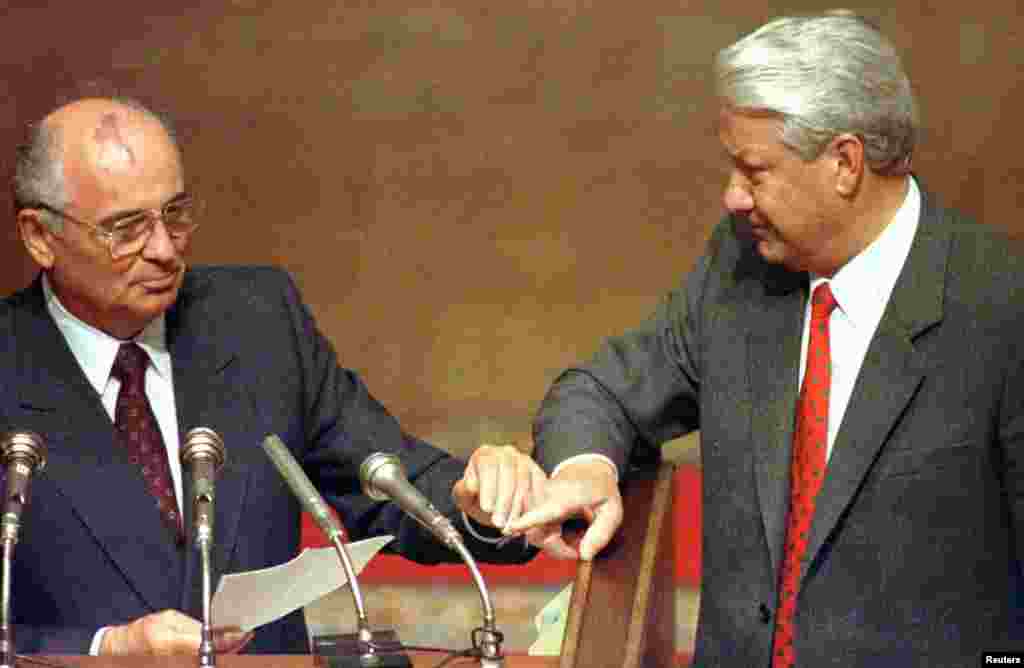
19/25A moment of humiliation: Following a failed coup, Gorbachev is forced by Russian President Boris Yeltsin to read out a list of alleged plotters at an extraordinary session of the Russian Supreme Soviet in Moscow on August 23, 1991.
The legacy of Mikhail Gorbachev, the man who oversaw the breakup of the Soviet Union, remains a divisive topic in Russia. But whether lauded by advocates of his "openness" or loathed by people who see the U.S.S.R.'s collapse as a disaster, his influence on modern history was enormous.
Show moreShow less
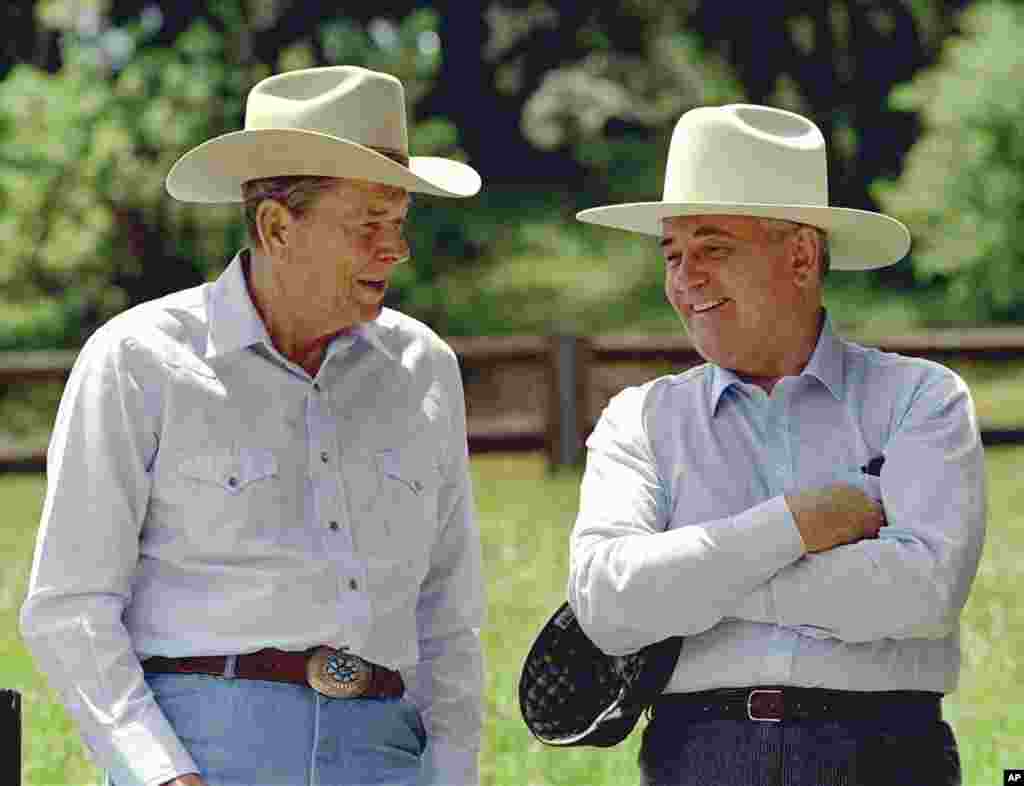
20/25Gorbachev and U.S. President Ronald Reagan don cowboy hats while enjoying a moment at Reagan's Rancho del Cielo in California on May 2, 1992. The two men forged a relationship not only based on mutual respect but friendship that helped end the Cold War.
The legacy of Mikhail Gorbachev, the man who oversaw the breakup of the Soviet Union, remains a divisive topic in Russia. But whether lauded by advocates of his "openness" or loathed by people who see the U.S.S.R.'s collapse as a disaster, his influence on modern history was enormous.
Show moreShow less
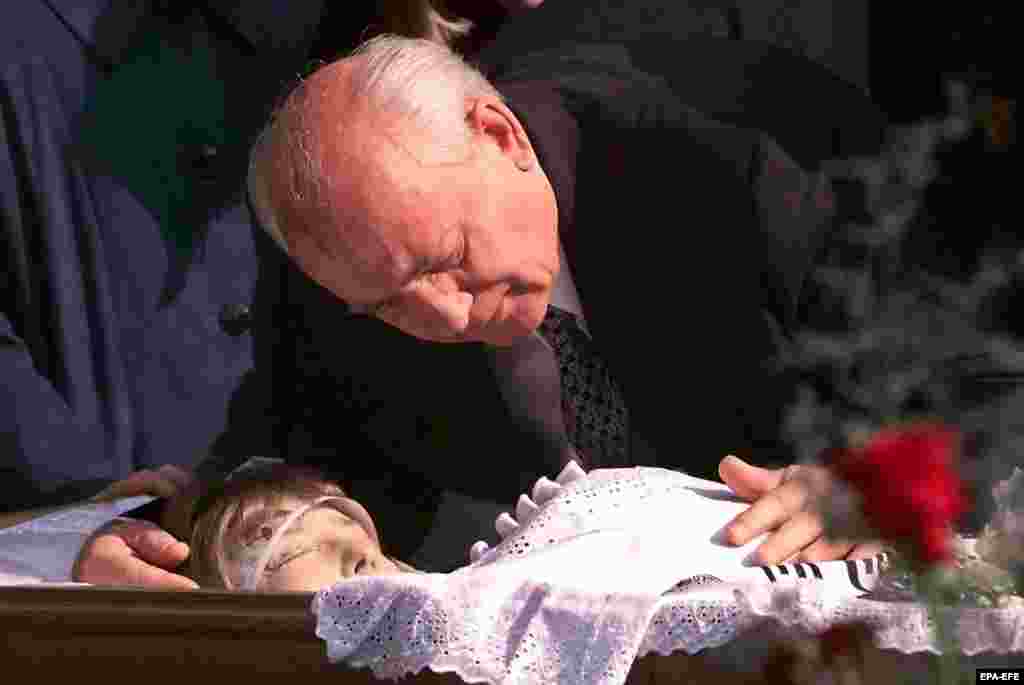
21/25Gorbachev bids a last farewell to his wife, Raisa Gorbacheva, during her funeral in Moscow on September 23, 1999. They were married for 46 years.
The legacy of Mikhail Gorbachev, the man who oversaw the breakup of the Soviet Union, remains a divisive topic in Russia. But whether lauded by advocates of his "openness" or loathed by people who see the U.S.S.R.'s collapse as a disaster, his influence on modern history was enormous.
Show moreShow less
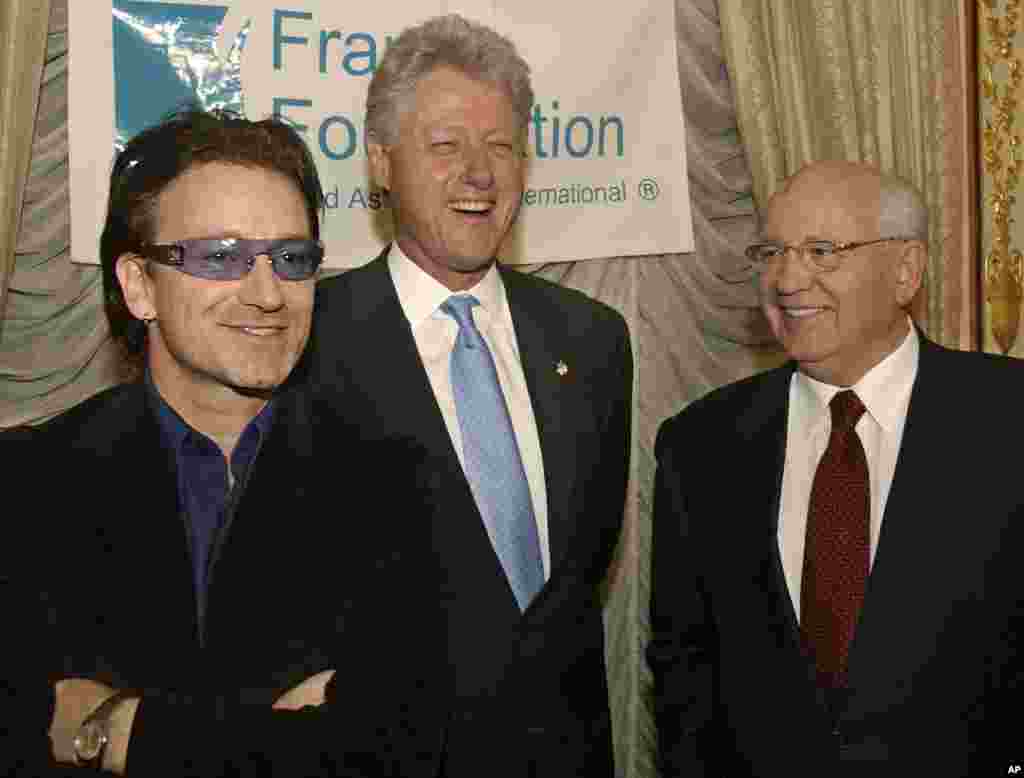
22/25U.S. President Bill Clinton (center) shares a laugh with Gorbachev and U2 singer Bono before a dinner at the Russian Embassy in New York on March 10, 2002.
The legacy of Mikhail Gorbachev, the man who oversaw the breakup of the Soviet Union, remains a divisive topic in Russia. But whether lauded by advocates of his "openness" or loathed by people who see the U.S.S.R.'s collapse as a disaster, his influence on modern history was enormous.
Show moreShow less
23/25Gorbachev speaking to Russian President Vladimir Putin at a news conference in Schleswig, Germany, in December 2004.
Gorbachev would share criticism of Vladimir Putin, but he commended Russia's occupation and annexation of Crimea from Ukraine, reportedly saying, "I would have done the same." However, following Russia’s invasion of Ukraine in February, Gorbachev's assessment of his successor reportedly took a sharp turn downward.
The legacy of Mikhail Gorbachev, the man who oversaw the breakup of the Soviet Union, remains a divisive topic in Russia. But whether lauded by advocates of his "openness" or loathed by people who see the U.S.S.R.'s collapse as a disaster, his influence on modern history was enormous.
Show moreShow less
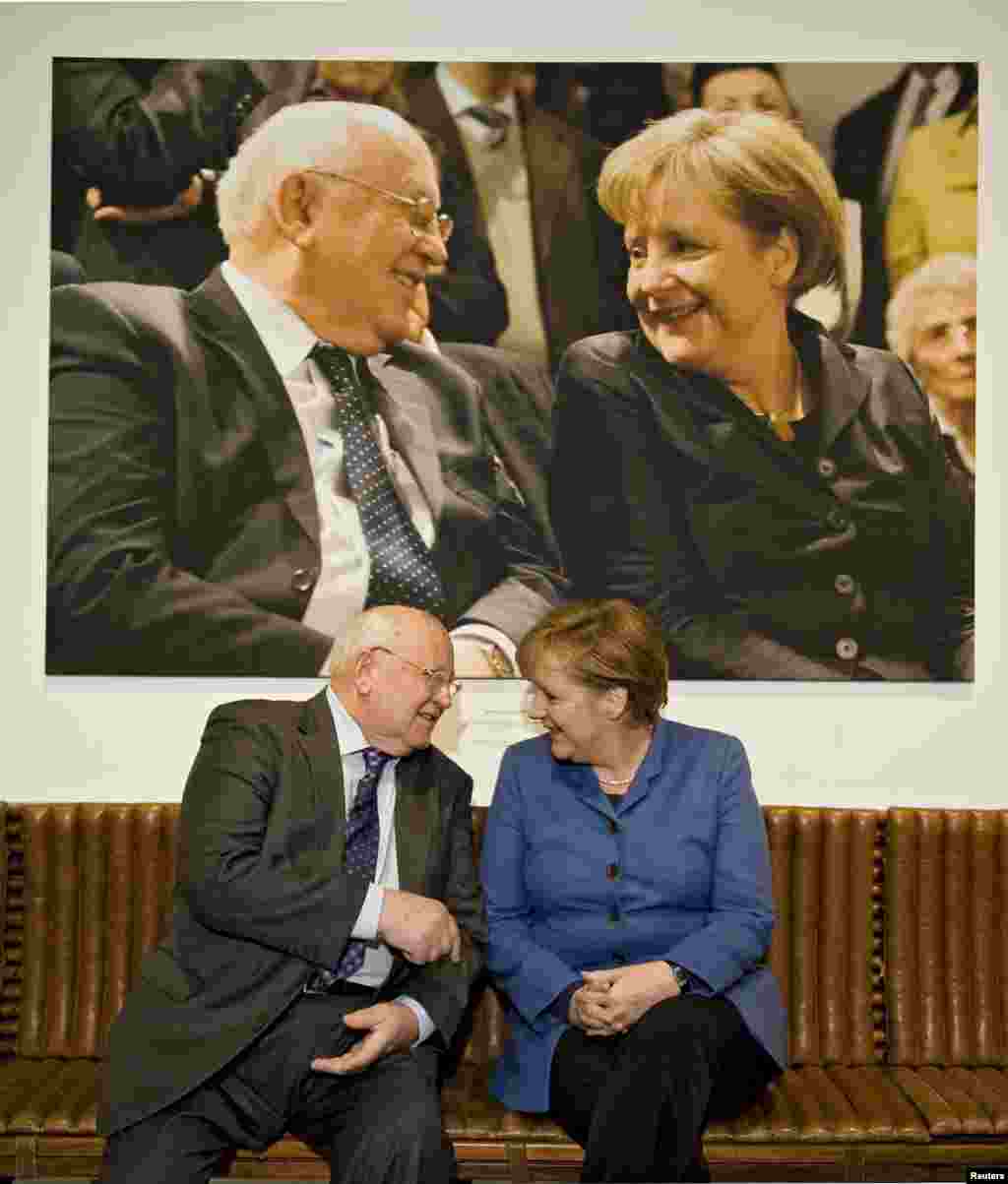
24/25With German Chancellor Angela Merkel at an exhibition in Berlin on February 24, 2011, marking Gorbachev's 80th birthday.
The legacy of Mikhail Gorbachev, the man who oversaw the breakup of the Soviet Union, remains a divisive topic in Russia. But whether lauded by advocates of his "openness" or loathed by people who see the U.S.S.R.'s collapse as a disaster, his influence on modern history was enormous.
Show moreShow less
25/25Nobel Peace laureates (left to right) Lech Walesa, Mikhail Gorbachev, Frederik Willem de Klerk, and Jimmy Carter at a panel discussion in Chicago in April 2012.
The legacy of Mikhail Gorbachev, the man who oversaw the breakup of the Soviet Union, remains a divisive topic in Russia. But whether lauded by advocates of his "openness" or loathed by people who see the U.S.S.R.'s collapse as a disaster, his influence on modern history was enormous.
Show moreShow less
Previous slide
Next slide
Aleksei Tabalov, a former staffer for opposition politician Aleksei Navalny from the Urals city of Chelyabinsk, wrote on Facebook that Gorbachev wanted to save the Soviet Union, but failed.
"He failed because the Soviet Union was built from the beginning upon fear," he wrote. "But under Gorbachev, fear left the Soviet Union. And that, most likely, was his greatest achievement."
'He Destroyed A Totalitarian Monster'
Former television journalist Maria Phillimore-Slonim wrote on Facebook: "I will always be grateful to him. He gave us hope."
"The main thing that Gorbachev, personally, did for me, personally, was at our first meeting he washed away forever my fear in front of the throne," exiled businessman and Kremlin critic Mikhail Khodorkovsky, who spent a decade in prison under Putin on charges that he says were politically motivated, wrote on Telegram. "And that changed my life."
Historian Yury Pivovarov also lauded Gorbachev for lifting the veil of fear that dominated life in the Soviet Union.
"He didn't destroy the country," Pivovarov said. "He destroyed a totalitarian monster, and that is to his eternal glory. But this is also an achievement of the Russian people. We were the first nation in the world to create a totalitarian regime and to destroy it by ourselves, without foreign tanks."
But he laments that no thorough de-Stalinization or de-communization was ever carried out in Russia.
"And now we have added the task of de-Putinization as well," he said.
Under Putin, journalist Martynov added, "Gorbachev's legacy is being erased line by line."
"He was against war, and these guys have launched a war," he said. "He was for parliamentarism, and parliament has been erased. He was for freedom of the press and freedom of assembly, but these have been destroyed. And so on, one after another."
"Gorbachev was the one who brought an end to the phenomenon of political prisoners in our long-suffering country, but now they are back," Martynov added, noting that Navalny had to express his condolences to Gorbachev's loved ones from prison.
Written by RFE/RL feature writer Robert Coalson based on reporting by RFE/RL Russian Service correspondents Mikhail Sokolov and Ilshat Zaripov.