



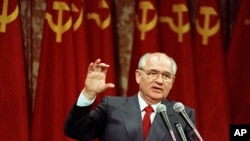
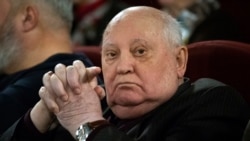
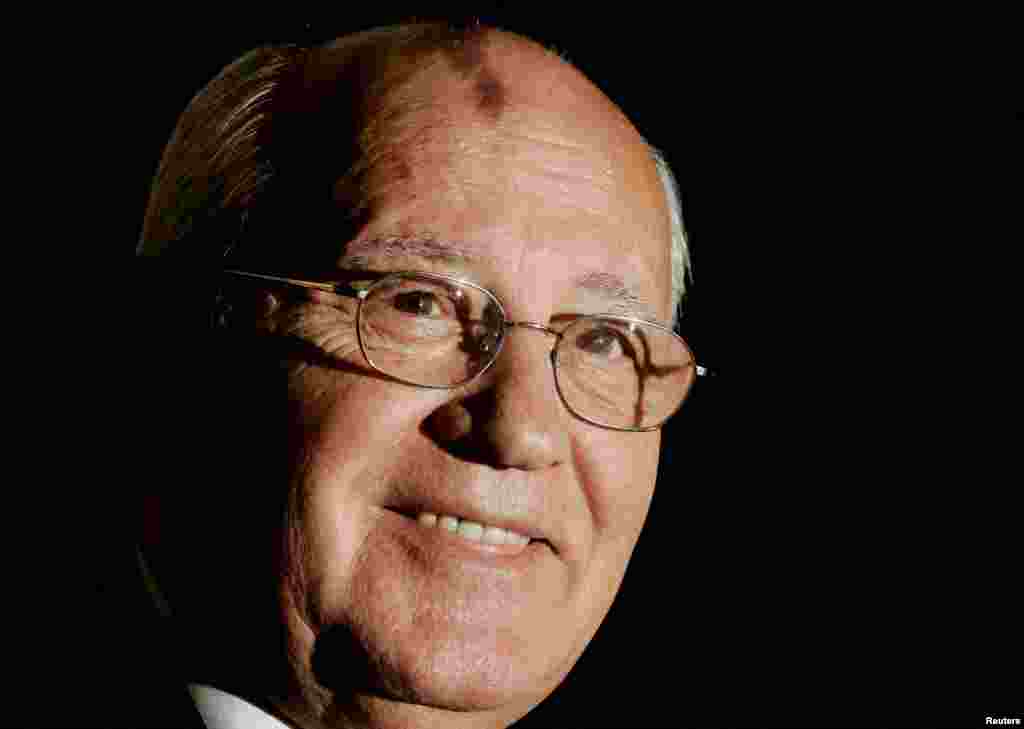
Mikhail Gorbachev, who presided over the demise of the Soviet Union and helped end decades of Cold War fear, earning a Nobel Peace Prize and the lasting enmity of millions of Russians bitter about the chaos unleashed by the collapse of the world’s largest country, has died. He was 91.
The Central Clinical Hospital on the outskirts of Moscow told the state news agency TASS that Gorbachev died on the evening of August 30 "after a serious and prolonged illness."
TASS quoted a source familiar with the family's wishes as saying he would be buried at Moscow's Novodevichy Cemetery alongside his wife, Raisa, who died in 1999.
Born in a rural corner of Russia to parents whose families had been peasants before the Bolshevik Revolution less than 15 years earlier, Gorbachev became one of the most influential figures of the 20th century, gathering global accolades for his role in reducing the threat of a nuclear apocalypse and in freeing millions of people in his country and beyond from Soviet oppression.
Just as notably, the last leader of the Soviet Union was a target of the scorn of millions of his own countrymen. Many blamed him for the life-changing economic and social upheaval that accompanied the country’s collapse and for the loss of a mighty empire that once spanned 11 time zones -- from the Berlin Wall and the Baltic Sea to the Bering Strait and Central Asia.
This was Gorbachev’s paradox: loved and loathed for a process that he set in motion and whose ultimate result was foreseen by few – least of all himself, perhaps. It was a result that Russian President Vladimir Putin, who rose to power less than a decade after Gorbachev resigned and remains in the Kremlin today, once called the “greatest geopolitical catastrophe” of the 20th century.
Historians will continue to debate the degree to which Gorbachev's revolution, which led to the freeing of Central and Eastern Europe from nearly half a century of communist dominion and the disintegration of the Soviet Union itself, was intentional. Gorbachev made clear he never meant to bring down the country, repeating almost as a mantra that “the union could have been preserved.”
But despite occasional reversals, he ultimately sided with the forces of change that he helped unleash. And in retrospect – a dozen years after the Soviet Union was done -- Gorbachev insisted that those momentous changes were the result of a conscious and very personal decision.
"Other people could have [come into office] and they might have done nothing to put the country on the road to humane, free, and democratic development," he said in an interview with RFE/RL in 2003. Gorbachev, in good health at the time, added: “I could have remained general secretary to this day, if I'd had the inclination" -- a reference to the title of the leader of the Communist Party of the Soviet Union, who was also the leader of the country.
Humble Beginnings
In any case, Gorbachev will rank alongside such towering 20th-century figures as Winston Churchill, Mahatma Gandhi, Nelson Mandela, Josef Stalin, and Mao Zedong – leaders who changed the fate of nations and had a profound impact on the lives of millions of people.
Little in Gorbachev's early life presaged his future as a world leader, particularly one who would wrench a huge country from what many thought would be its path for decades to come, and change the world.
WATCH: Former Soviet leader Mikhail Gorbachev, who has died aged 91, presided over the collapse of the Soviet bloc and the end of the Cold War.

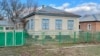
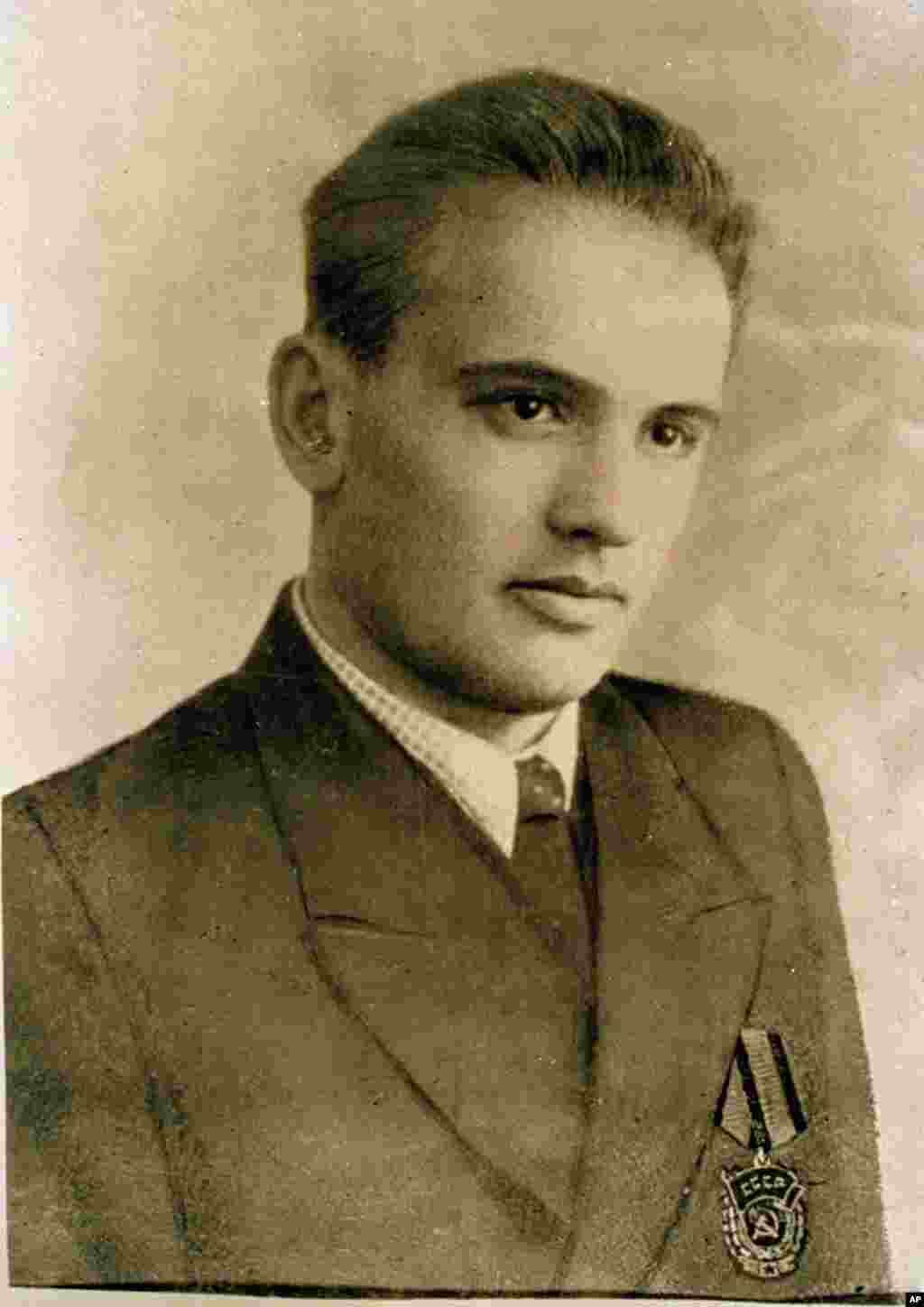
Born on March 2, 1931, into a poor family in Privolnoye, a village in southern Russia’s Stavropol region, Gorbachev grew up amid the immense upheavals that roiled the Soviet Union in the first two decades of his life: collectivization, Stalin’s “Great Terror,” and the Great Patriotic War, as World War II is best known within Russia.
At about age 21, Gorbachev joined the Communist Party while studying law at Moscow State University in 1952 -- four years before Nikita Khrushchev’s devastating critique undermined the cult of personality surrounding Stalin, who died in 1953, and his rule.
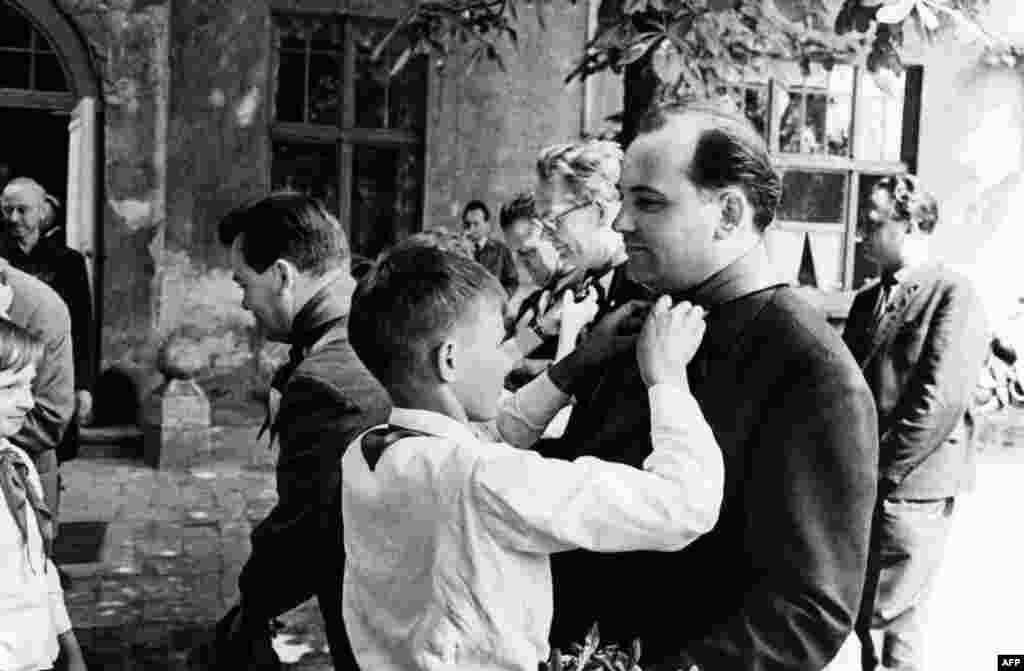
After marrying classmate Raisa Titorenko, who was at the time completing a degree in Marxist philosophy, Gorbachev returned to southern Russia, where he began to climb the ladder of the regional communist bureaucracy, focusing on the regional specialty: agriculture.
By 1970, Gorbachev had risen to the top of the party hierarchy in Stavropol.
Thanks to the fact that bigwigs often visited the region for their summer holidays, Gorbachev gained the attention of senior officials from Moscow -- among them Yury Andropov, who would head the KGB for 15 years and then serve a short stint as Soviet leader before his death in 1984.
'The State Is There To Serve The People'
In 1980, Gorbachev was appointed a full member of the Communist Party's Politburo in Moscow. Following the death of Andropov and then Andropov's successor, Konstantin Chernenko, Gorbachev emerged as the party’s general secretary and leader of the country in March 1985.
To the surprise of many Kremlin watchers and Soviet citizens, Gorbachev almost immediately began calling for reform, espousing twin doctrines that would become bywords for his time: "glasnost" (openness) and "perestroika" (restructuring).
"The state is there to serve the people," he said. "The people are not there to serve the state."
That, according to Gorbachev, would be the new guiding principle.
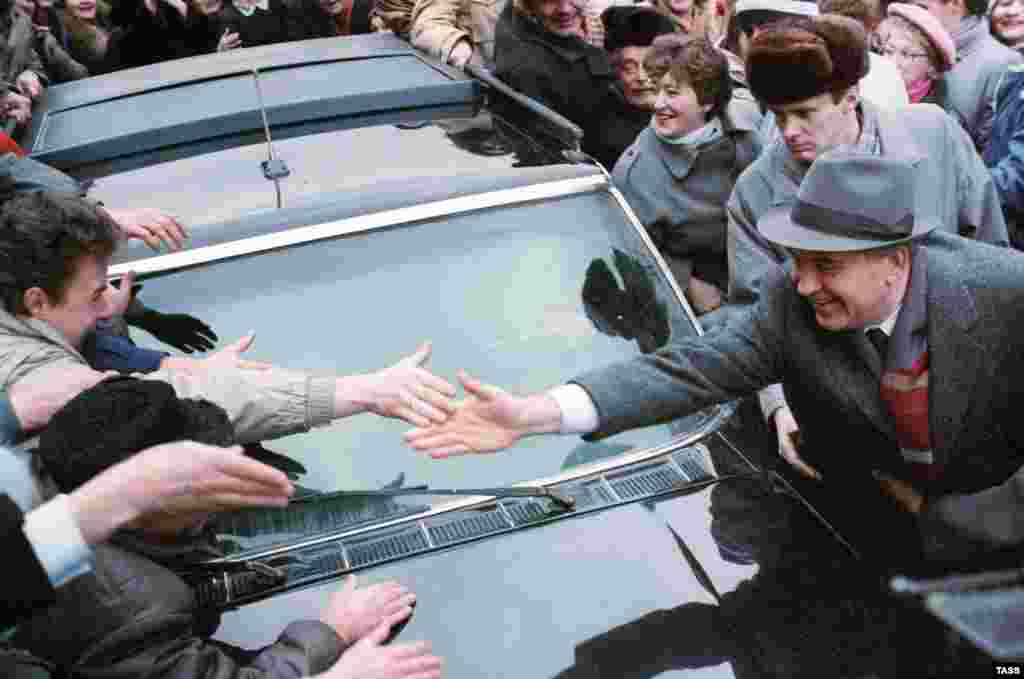
Following years of stodgy, stagnant leadership by Leonid Brezhnev, Andropov, and Chernenko, Gorbachev and Raisa brought new style to the Kremlin, traveling around the U.S.S.R. and abroad, plunging into crowds, and leading impromptu discussions on the street.
A relaxation of economic regulations brought the rebirth of small businesses, cafes, and restaurants for the first time since Lenin's New Economic Policy in the 1920s. A partial lifting of censorship led to a renaissance in cultural life. Literary journals published previously banned authors and theaters staged ever-more daring productions.
The disaster at the Chernobyl nuclear power plant in Ukraine in 1986 forced a reluctant leadership to allow even greater freedom of expression and information. The government began to release political prisoners -- most famously Andrei Sakharov, the physicist who designed nuclear weapons and later campaigned against them, resulting in his internal exile from 1980 to 1986.
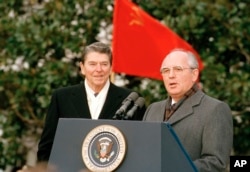
Gorbachev called for an end to the arms race, and he improved relations with Washington, helping remove thousands of warheads that threatened Europe with destruction by signing the Intermediate-Range Nuclear Forces (INF) treaty with U.S. President Ronald Reagan in 1987. In 1989, he ended the Soviet war in Afghanistan, begun 10 years earlier under Brezhnev.
End Of An Empire
But all was not well in the empire. By 1989, what had begun as an effort to reform the Soviet Union's economy and foreign policy had precipitated a crisis in industry and encouraged cries for self-determination that would soon engulf the entire region.
Gorbachev vastly underestimated the degree of economic decay. Shortages of basic household goods and foodstuffs were growing, and conservatives within the Communist Party grew ever more strident in their criticism of Gorbachev's leadership.
He had also not counted on the fact that greater freedom would fan the forces of nationalism. Historic grievances between Armenia and Azerbaijan over the disputed Nagorno-Karabakh region turned into ethnic pogroms, and later full-scale war. The Kremlin struggled with increasingly adamant independence movements in the Baltic republics – where anger over the decades of postwar domination by Moscow was strong.
In the U.S.S.R.'s Central European satellites, anti-communist ferment led to Poland electing dissident Tadeusz Mazowiecki as the country's first non-communist prime minister in more than 40 years.
In Hungary, the cathartic event that signaled the death knell of communism was a funeral. Imre Nagy, the leader of the 1956 uprising against the Soviet Union, was given a state burial 31 years after being hanged for treason. At the ceremony, attended by tens of thousands and broadcast live on national television, opposition leader Viktor Orban called for free elections and the withdrawal of Soviet troops.
WATCH: In August 1991, a group of Soviet hard-liners locked Mikhail Gorbachev up in his Crimean dacha and tried to keep the U.S.S.R. together by force. Facing massive protests, they gave up just three days after taking power, when the first civilian blood was spilled in Moscow. The Communist Party was banned after the coup's failure, and the Soviet Union officially broke up later that year -- putting 15 independent countries on the map.
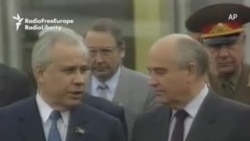
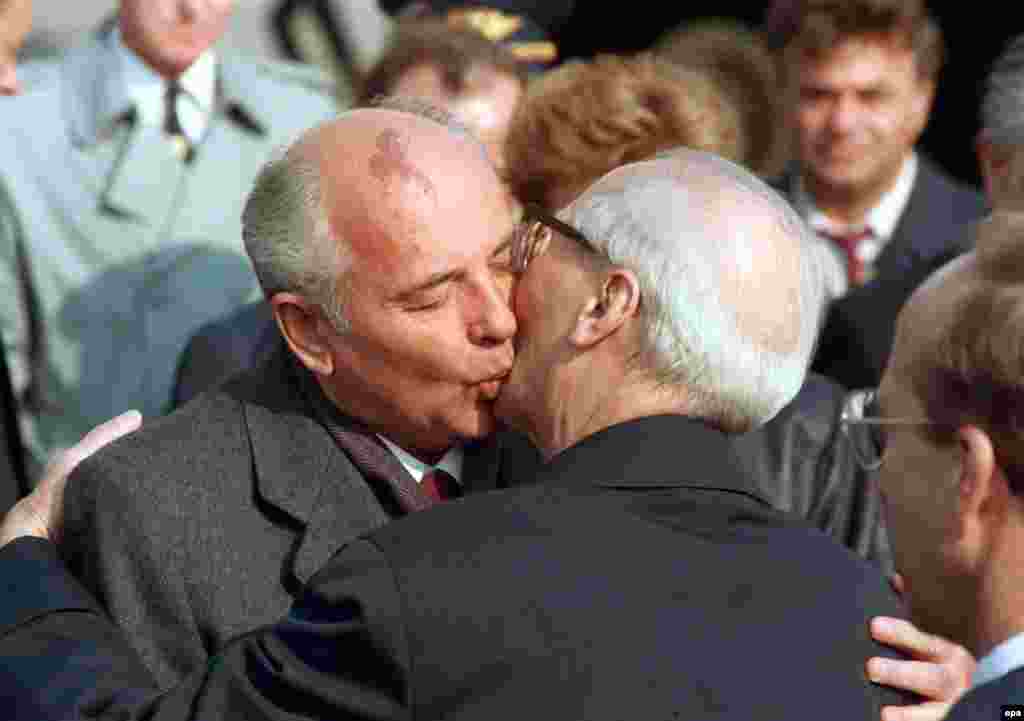
Autumn saw revolt spread to Moscow's other European colonies. In October 1989, during a visit to East Berlin to mark the 40th anniversary of the establishment of the German Democratic Republic, Gorbachev signaled that Moscow would not try to turn back the clock. He told East German leader Erich Honecker it was "up to the people themselves to decide what is good for their country."
A month later, the Berlin Wall fell.
"We have given up pretending to have a monopoly on truth,” Gorbachev said a few weeks after that in a speech in Rome a day before his historic meeting with Pope John Paul II. “We no longer think that those who don’t agree with us are enemies.”
'Freedom Of Choice'
A year earlier, addressing the United Nations, Gorbachev -- the leader of a country in the thrall of a single-party system for decades, headed by a dictator or a handful of men in the Politburo -- had spoken of the “compelling necessity of the principle of freedom of choice,” calling it “a universal principle to which there should be no exceptions.”
In 1990, Gorbachev was awarded the Nobel Peace Prize for his contribution to reducing East-West tensions, but he had precious little time to reflect on his achievement. While feted across Europe and the rest of the world, he continued to confront growing unrest at home.
On August 4, 1991, Gorbachev left with his family for his annual vacation in Crimea on the Black Sea, intending to complete a new version of a union treaty aimed to keep the U.S.S.R. together as centrifugal force was pulling it apart.
On August 18, Gorbachev's chief of staff, accompanied by a group of senior government officials, arrived at the presidential dacha at Foros. They demanded that Gorbachev sign a decree declaring a state of emergency -- or resign. Gorbachev refused to do either. The officials confiscated the codes needed to launch the Soviet Union's nuclear weapons, the "nuclear briefcase." Gorbachev and his family were, in effect, under house arrest.
State television announced the imposition of a state of emergency “starting at 1600 Moscow time, on August 19, 1991," claiming it was in response “to demands by broad sections of the population for the most decisive measures to prevent society from sliding toward a national catastrophe.”
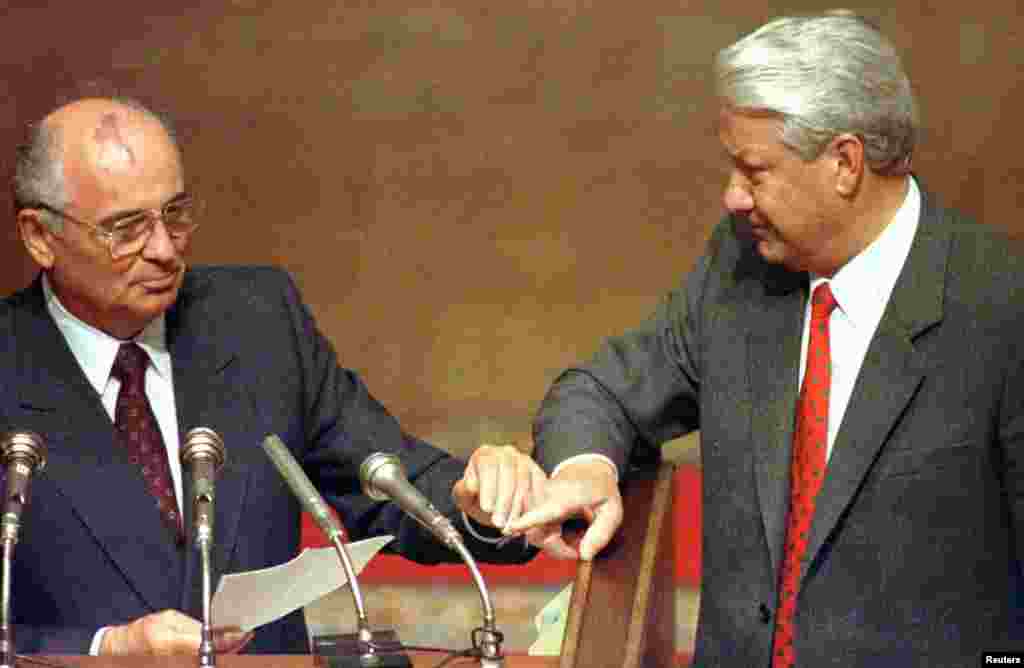
Three days later, the coup collapsed, thanks to the incompetence of the plotters and the resistance demonstrated by Russia's nascent political leader, Boris Yeltsin, and crowds of citizens who came out into the streets to oppose the attempted takeover.
'A Different Direction'
In the months that followed more republics declared independence from Moscow. On December 8, Yeltsin, along with the leaders of Belarus and Ukraine, signed accords proclaiming the Soviet Union’s end and announcing the creation of a new entity called the Commonwealth of Independent States (CIS).
Gorbachev stayed on in the Kremlin for a few more weeks, but power had slipped from his hands. On December 25, he resigned – stepping down as the leader of a country that had effectively ceased to exist.
"I am taking this decision as a matter of principle. I campaigned for the independence of peoples and for the sovereignty of the republics," he said as he announced his resignation on live TV. "But at the same time, I campaigned for the preservation of a single state on the territory of the whole country. But events have gone in another direction.”
WATCH: Former Soviet leader Mikhail Gorbachev recalled the collapse of the U.S.S.R., in an interview with Lyudmila Telen of RFE/RL's Russian Service in 2011.
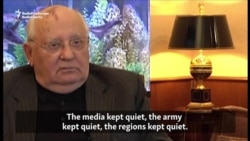
Despite Gorbachev’s repeated insistence to the contrary, those contradictory goals -- sovereignty and a single state, freedom and the continuation of dominance, even if in a diminished form -- may have been impossible to achieve at that time and place.
As he acknowledged defeat on that front, though, Gorbachev stressed that “what has been accomplished should be properly valued. Society has received liberty, it has been freed from its shackles -- both politically and spiritually -- and that is the main achievement."
He carried that argument into his last years, where he went on the lucrative global lecture circuit, out of the limelight he once reflected so brilliantly.
Gorbachev And Putin
Some of the greatest attention Gorbachev attracted once out of power came when he appeared in an advertisement for Pizza Hut, a U.S. restaurant chain whose arrival in Moscow symbolized the freedom of choice he had advocated. The restaurant, and Gorbachev’s pitch, represented a triumph of Western capitalism over the communism he long embraced and even, in effect, Moscow’s defeat in the Cold War.
But as a statesman, who -- wittingly or unwittingly -- initiated and then presided over the end of his country, he made a mark on history which helped to define the world we know today.
In 1991, he founded The Gorbachev Foundation, in an effort to maintain a voice in Russian affairs, and in 1996 ran for president but came in a distant seventh in a field of 10, with 0.5 percent of the vote. Later, he became a sometime critic of Putin, to whom Yeltsin handed the presidency on the last day of 1999.
Gorbachev called on Putin "not to be afraid of his own people" in an interview with the BBC in 2013, after Russia passed laws fining organizers of unsanctioned protests and imposing stiffer libel penalties to protect officials from criticism.
He also said Putin's inner circle was "full of thieves and corrupt officials" -- but stopped short of suggesting that the president was one of them.
And Gorbachev was an approving voice for some of Putin’s most controversial actions on the international stage, including Moscow’s 2014 seizure of Ukraine’s Crimean Peninsula. Suggesting he viewed the annexation in terms of Russia’s national interests, he told media he would have acted "the same way" had he had the choice.
However, he continued to criticize many of Putin's repressive domestic policies and opposed Putin's decision to return to the presidency in 2012, when Dmitry Medvedev turned out to have been a placeholder after four years of hinting at reform. In 2013, Gorbachev commented that "politics is increasingly turning into imitation democracy."
In an interview with RFE/RL in 2012, Gorbachev mildly rebuked Putin, echoing the gentle criticism he expressed over many years about the Russian leader and the way he tightened the screws during his tenure, rolling back some of the progress made toward democracy and human rights since Gorbachev’s era.
“I would do everything not to be in his position,” he said. “During his first presidential term, I thought that Vladimir Vladimirovich would -- at all necessary costs -- do a lot of positive things to stabilize the country. He did do a lot. He had a chance for thorough work on the advancement of Russia towards democracy. In my opinion, he did not succeed.”
“And now I doubt whether he set himself such a task,” he said.
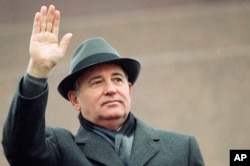
Gorbachev was also harshly critical of the United States, largely blaming Washington for poor ties by charging that it failed to develop good relations with Russia after the Soviet collapse.
In positions echoed by or echoing Putin’s, he accused the United States of relishing its status as the world's sole superpower and lambasted the eastward expansion of NATO. He opposed NATO's bombing of Yugoslavia in 1999 and the U.S. invasion of Iraq in 2003. He criticized U.S. President Donald Trump's 2018 decision to withdraw from the INF Treaty, which he had negotiated and signed with Reagan in 1987, as "not the work of a great mind."
However, while Gorbachev said that the West gave the Soviet Union no promise that NATO would not enlarge eastward beyond Germany, Putin has frequently asserted that it did. He has made that argument a key part of his litany of grievances against the United States and the alliance, and part of the justification for his decision to launch a large-scale invasion of Ukraine in February 2022.
The ailing Gorbachev, who turned 91 a week after the invasion, had made few public comments since then, about the war in Ukraine or anything else.
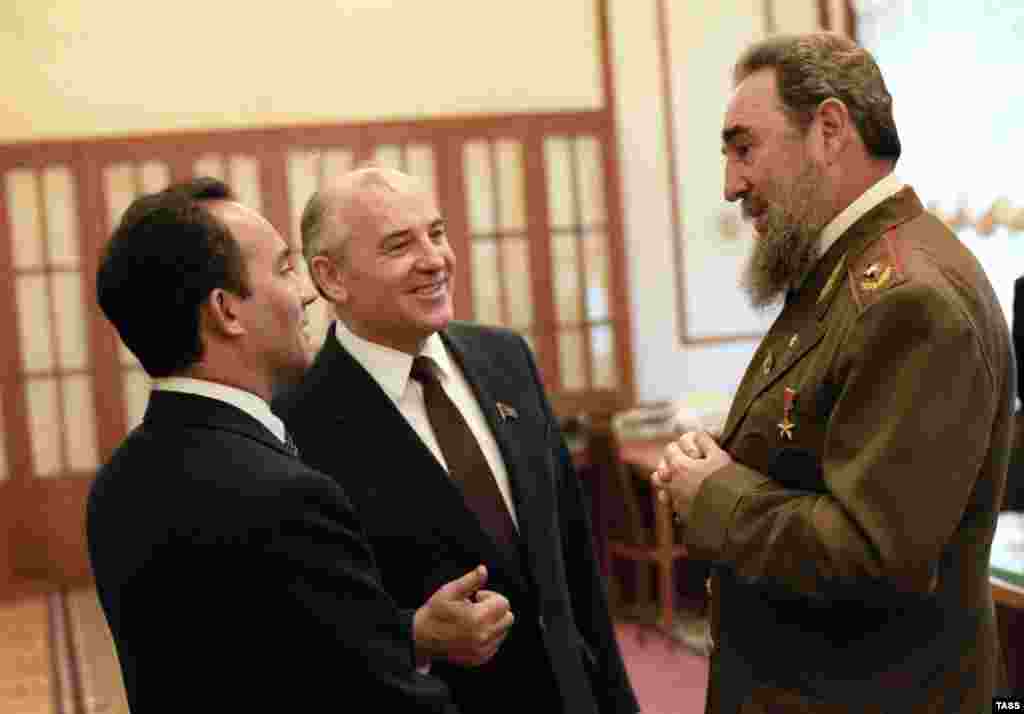
Mikhail Gorbachev: A Life In Pictures









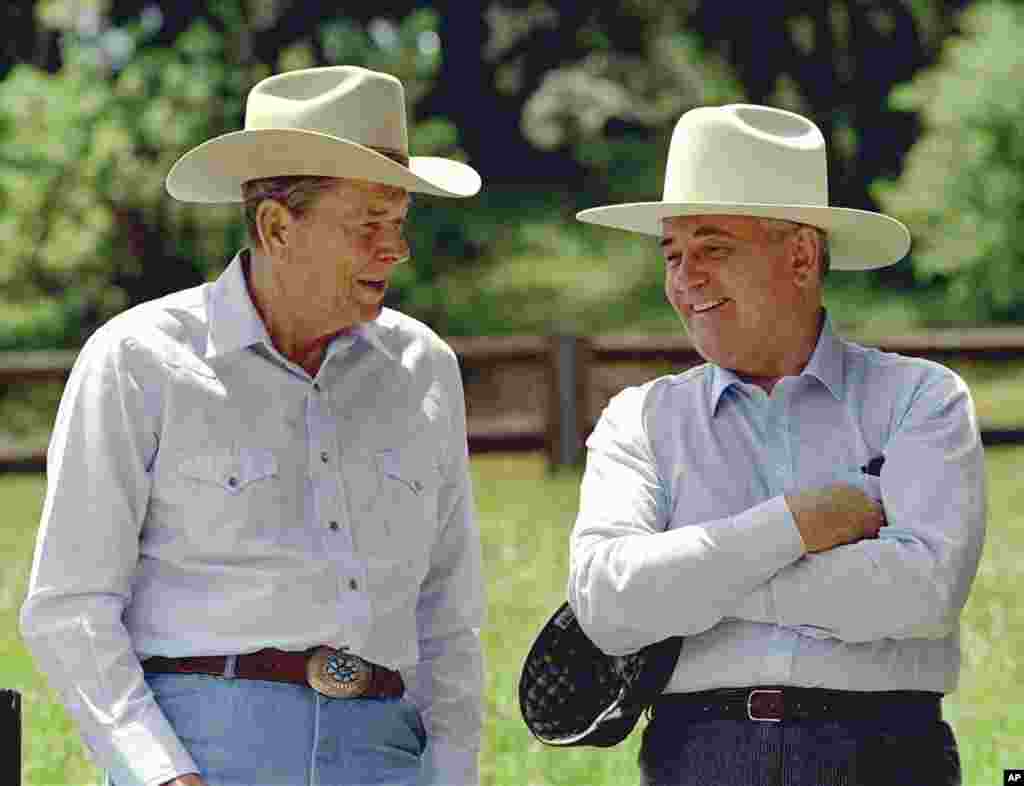
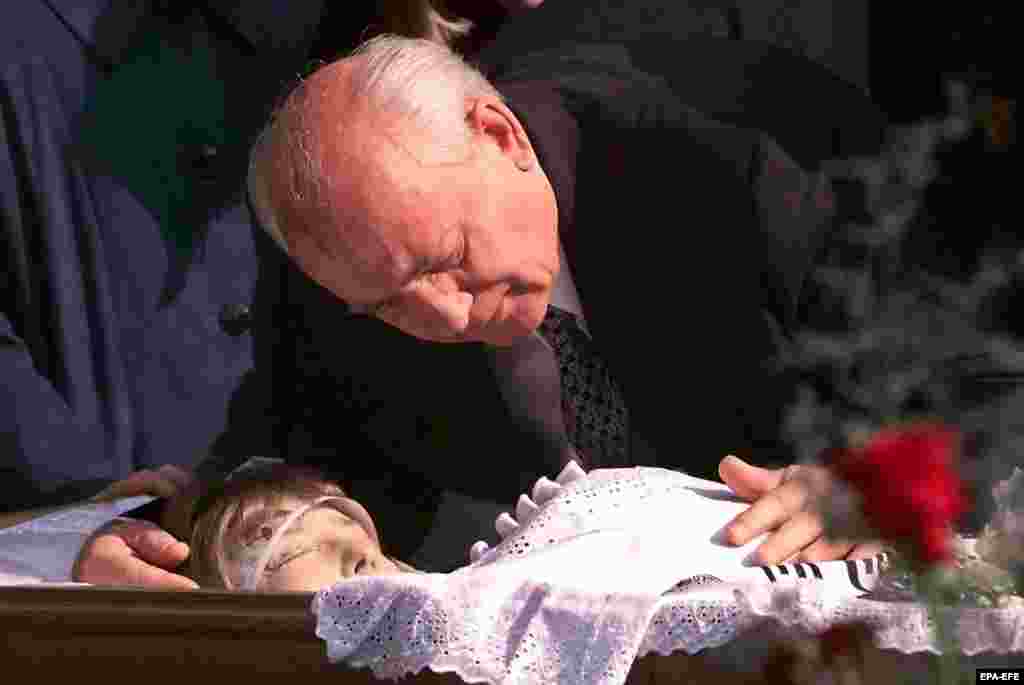
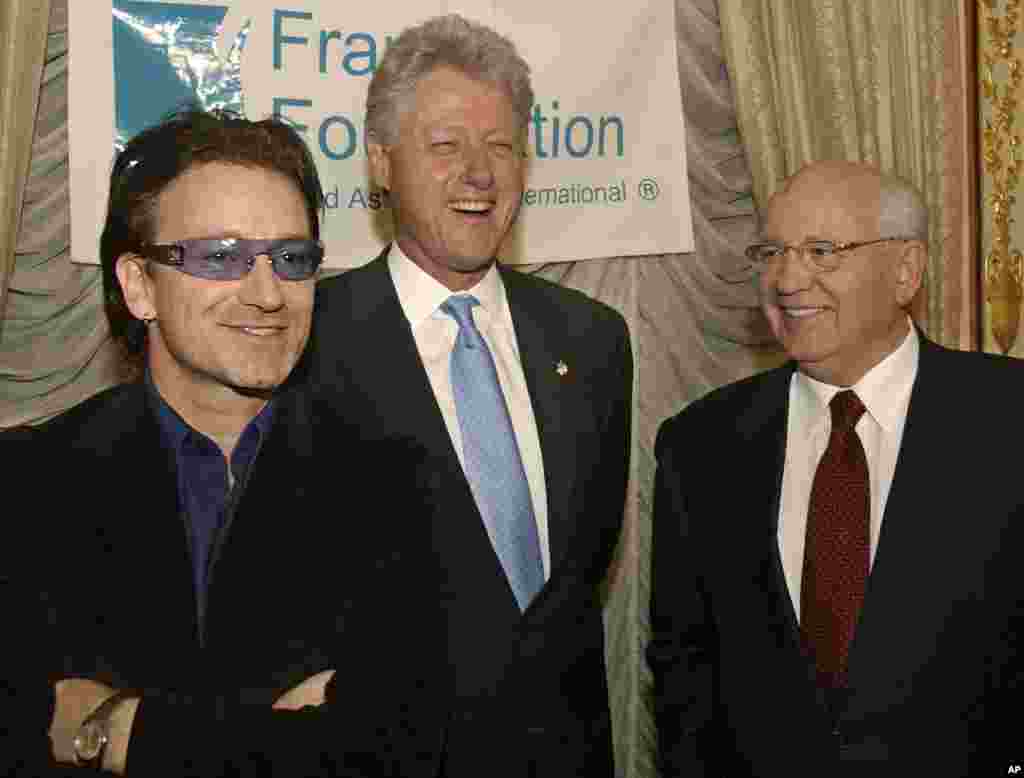

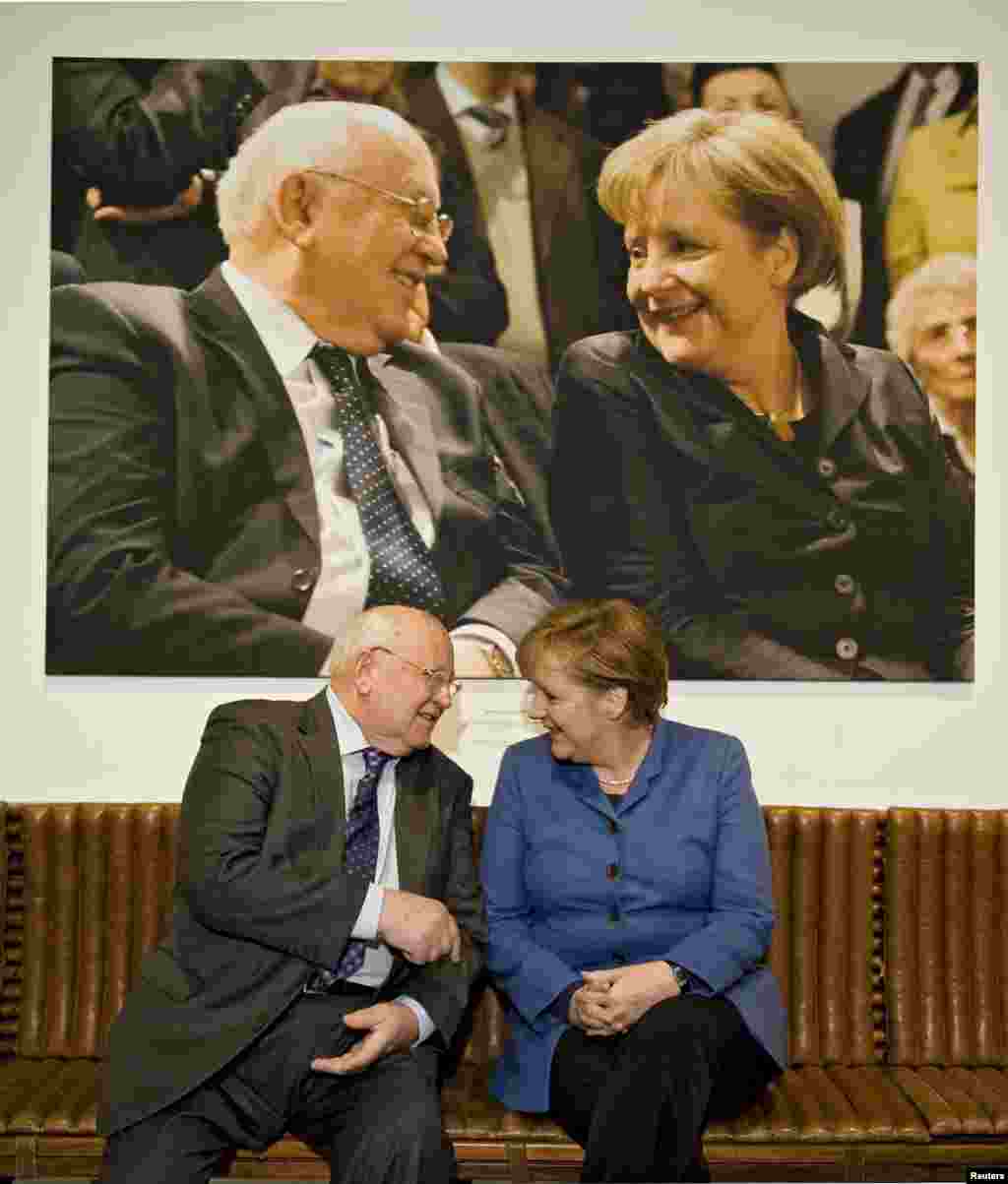

According to Aleksei Venediktov, a prominent Russian journalist who kept in touch with the former Soviet leader, Gorbachev's assessment of Putin reportedly took a sharp turn downward after the invasion, however.
"I can tell you that Gorbachev is upset, of course. He understands. It was his life's work," Venediktov said.
One of Gorbachev's most enduring contributions to post-Soviet Russia may have been in the area of journalism, a profession under increasing repression and threat from Putin's government. In 1993, three years after winning the Nobel Peace Prize, Gorbachev used some of his prize money to invest in a small, independent newspaper called Novaya gazeta, helping it buy its first computers.
Twenty-eight years later, Dmitry Muratov, a co-founder of the paper and its longtime editor in chief, became a co-winner of the 2021 Nobel Peace Prize "for [his] efforts to safeguard freedom of expression, which is a precondition for democracy and lasting peace."
In March 2022, Novaya gazeta suspended its operations after receiving warnings regarding its coverage of Russia's war on Ukraine from Roskomnadzor, which would have allowed the state media regulator to pursue its closure through court action.
At Home Abroad
The ambiguities in how Gorbachev viewed Russia’s course in the world today are mirrored by ambiguity within Russia itself over how to regard the Soviet era that Gorbachev did so much to bring to a close.
Gorbachev was lionized abroad. A 2011 celebration of his 80th birthday at London's Royal Albert Hall was attended by Israeli President Shimon Peres, former Polish President and Solidarity leader Lech Walesa, and many other dignitaries. In earlier years, he traveled the world regularly giving sold-out speeches and presentations, collecting honors and applause from world leaders.
Immediately after the end of the Soviet Union, Russians appeared to overwhelmingly welcome the opportunity to write a new history for a newly independent Russia. In recent years, however, polls routinely show that more than half of all Russian citizens believe the collapse of the Soviet Union should have been avoided, which was reflected in Putin’s open lament for the Soviet past.
Russians’ bitterness over the Soviet collapse also manifested itself in their feelings – in many cases ambivalence or outright disgust -- about Gorbachev himself.
A poll published in 2016 by the state-funded Public Opinion Foundation found just 9 percent of Russians had a “good” opinion of Gorbachev, while 39 percent regarded him “badly” and 42 percent were ambivalent. In the same survey, 58 percent said he played a negative role in Russian history, while 15 percent said his role was positive.
Another poll, conducted in 2013 by the independent Levada Center, asked Russians their attitude toward Gorbachev and his era. A slim majority said they viewed him negatively, while a plurality said they were ambivalent. Asked about the “perestroika” era Gorbachev initiated, 66 percent said on the whole they viewed the era negatively.
Gorbachev’s wife, Raisa, died of leukemia in 1999. In 2009, Gorbachev released an album of romantic ballads entitled Songs For Raisa to raise funds for charity.
The couple’s only child, Irina, was born in 1957 and trained as a doctor in Stavropol and Moscow. She now serves as vice president of Gorbachev’s foundation, and has two children of her own.
After 2011, Gorbachev suffered declining health and underwent several operations. In 2015, he stopped traveling abroad.