


Accessibility links

Breaking News

Putin's Regime 'Is Over,' Says Analyst, And 'Something New Is Starting In Russia'

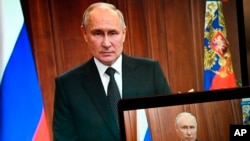
Russian President Vladimir Putin is seen on monitors as he addresses the nation in Moscow on June 24 after Yevgeny Prigozhin, leader of the Wagner private mecernary group, called for armed rebellion and reached the southern city of Rostov-on-Don with his troops.

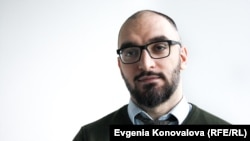
After Yevgeny Prigozhin, the leader of the Wagner mercenary group, ordered -- and then called off -- his forces to march on Moscow, RFE/RL's Georgian Service spoke to Konstantin Eggert, an independent journalist and political analyst, about how this has significantly weakened Russian President Vladimir Putin's grip on power.

Eggert provides regular commentary and analysis on Russian affairs for Deutsche Welle, Germany's international broadcaster, and was previously head of the BBC Russian Service's Moscow bureau and hosted a program at the independent Russian television channel, Dozhd (Rain).
Konstantin Eggert
Konstantin Eggert

RFE/RL: What have we just seen? What are we witnessing?

Konstantin Eggert: It is very difficult to determine what we've seen; we have definitely seen something that looked like a real military rebellion against Putin, in spite of the fact that Putin was not directly mentioned. But it is clear that this undermined and continues to undermine the Putin system.

For some reason, Prigozhin [has told us] that he is stopping the advance of his mercenaries and he wants to avoid bloodshed, as if he didn't understand that when he was speeding toward Moscow. And the intermediary seems to be [Belarusian President Alyaksandr] Lukashenka of all people. The question of what we've seen becomes really important and really unanswerable in some ways, because there are mechanisms here which we just don't understand.

However, let me say one thing: This event has significantly weakened Putin's grip on his own system. It has significantly weakened his ability to prosecute the war. It has created chaos among the millions of Russian civil servants on whose shoulders this regime stands…. I think that the Putin regime, as we knew it, is over, and something new is starting in Russia. Maybe, by the way, worse, although it's difficult to imagine something worse, especially if you are Ukrainian. But I do not think we can presume anymore that Putin is in full control of the country and that he is really the master of his fate.

RFE/RL: Why would Prigozhin do all of this in the first place?

Eggert: At this moment, we don't know. But the mere fact that at least on the surface of it, it was Lukashenka who stopped the advance on Moscow, means that, in the eyes of the Russian bureaucracy, Putin is no longer tops. He depends on Lukashenka to communicate with Prigozhin, and this means Putin -- who was saying in the morning that Prigozhin was essentially a traitor -- is now negotiating with this traitor [via] an intermediary who is supposed to be his junior partner.

The Tavberidze Interviews
Since the beginning of Russia's full-scale invasion of Ukraine in February 2022, Vazha Tavberidze of RFE/RL's Georgian Service has been interviewing diplomats, military experts, and academics who hold a wide spectrum of opinions about the war's course, causes, and effects. To read all of his interviews, click here.

There is no way to explain it [other] than to say that Putin was really afraid and he really needed a way out. And Prigozhin was also afraid, because although, let's say 15,000 well-trained fighters is a force that could force its way into Moscow, I do not think it is enough to hold the city and to command the full control of the country.

I do suppose that all this means [is] that both sides understood [that] for now, [and] it is best for them to pretend that they have come to an agreement. But this elevates Prigozhin to the level of Putin. And this, of course, also hits Putin very hard.

We're dealing with a new political reality. It doesn't matter, in these circumstances, whether the rest of the country, the so-called ordinary people, whether they really understood what happened or not; a lot of them will continue to remain passive. But a lot of them, especially in the south of Russia, were very much disturbed by what happened.

Secondly, it is clear that those who Putin relied on running Russia, that means the local FSB (Federal Security Service) directors, policemen, heads of state corporations, people like that, they now know that Putin is no longer at least in full control. It's not the end of the story.

RFE/RL: Can Putin sleep at night knowing that Prigozhin is out there? As long as he breathes, as long as he is alive, can Putin sleep at night?

Eggert: Everything you've seen so far looks [like] a better version of a Tom Clancy novel. I cannot imagine how Putin sleeps and whether he will continue to sleep, or whether he will resign, or whether Prigozhin will be eliminated. I think that Prigozhin understands that his chances of survival are probably not that high.

I suppose that an important element of all this is that we'll be seeing what happens with the [Ukraine] war. I suppose that somehow it all has to do with the aggression against Ukraine. I think we'll see very soon some kind of indication of what's going to happen, because without some kind of decision on that, other things will be difficult.

RFE/RL: You say that cracks are showing in Putin's system. There's one particular aspect that was always brought up whenever people tried to explain the longevity of Putin and his system: that average Russians tolerated Putin for so long because of the premise that he brought stability. That, as bad as he was, at least things were stable in the country. This time, however, buildings are burning, not in Ukraine but in Rostov-on-Don and Voronezh. What will that do to Putin's so-called stabilocracy?

Eggert: The situation in Russia, as far as society is concerned, is very simple. The society, the majority of it, was dormant. We haven't seen, let's say, a lot of pro-Prigozhin demonstrations. We haven't seen any anti-Prigozhin demonstrations or anyone demonstrating in Moscow for Putin. We haven't seen a lot of massive mutinies in the Russian Army. It is a society that will probably agree that OK, thank God the bloodshed was averted. So, we'll try to go back to normal. "Narod bezmolvstvuet" -- the people are silent -- is the final line of Aleksandr Pushkin's to my mind most important play, Boris Godunov, which is about the Time of Troubles in Russia in the early 17th century.

The fact that "the people are silent" is not relevant to the power struggle that will continue. This is no longer the regime we've seen before. Lots of people will be looking at Putin now from a different angle.

Prigozhin, Wagner Troops Cheered As They Leave Rostov-on-Don As March On Moscow Ends

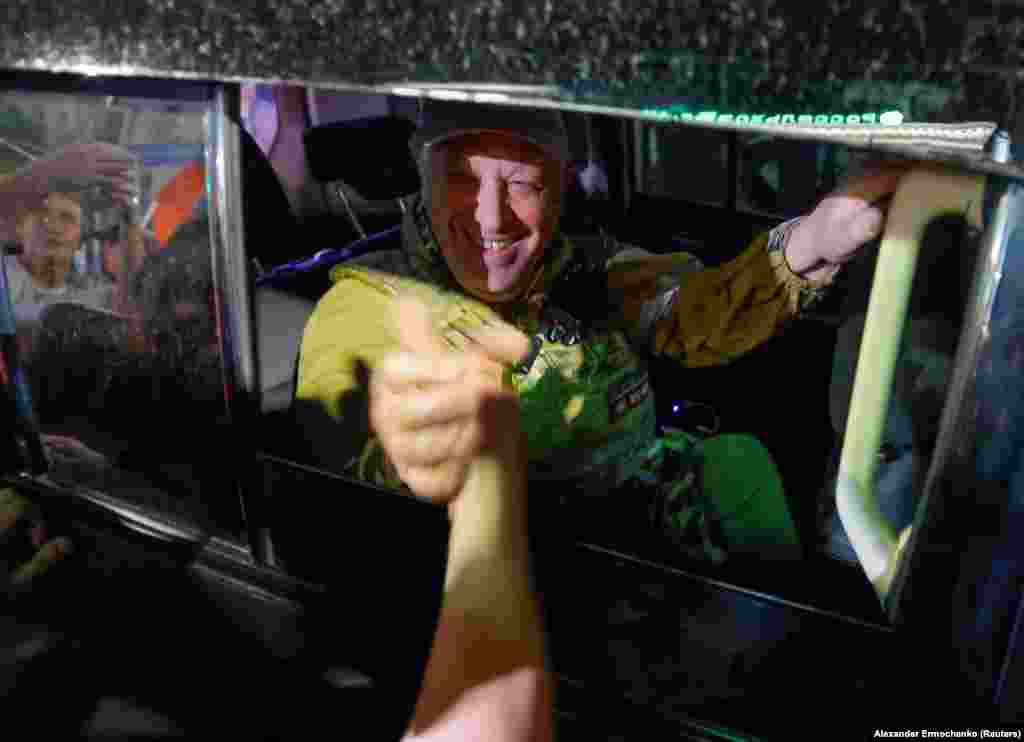
Yevgeny Prigozhin, leader of the Wagner mercenary group, sits inside a military vehicle as a local resident takes a picture with him on a street in Rostov-on-Don, Russia, on June 24.<br />
<br />
Prigozhin, who sent his fighters to topple the military leaders in Moscow, will leave for Belarus, and a criminal case against him will be dropped as part of a deal to avoid &quot;bloodshed,&quot; the Kremlin said on June 24.<br />
<br />
<br />
&nbsp;
1/12 Yevgeny Prigozhin, leader of the Wagner mercenary group, sits inside a military vehicle as a local resident takes a picture with him on a street in Rostov-on-Don, Russia, on June 24.

Prigozhin, who sent his fighters to topple the military leaders in Moscow, will leave for Belarus, and a criminal case against him will be dropped as part of a deal to avoid "bloodshed," the Kremlin said on June 24.


After a tense, chaotic 24 hours that handed President Vladimir Putin the biggest threat to his more than two-decade hold on power and raised the possibility of civil war, Yevgeny Prigozhin abruptly ordered his forces to abandon their advance toward Moscow.
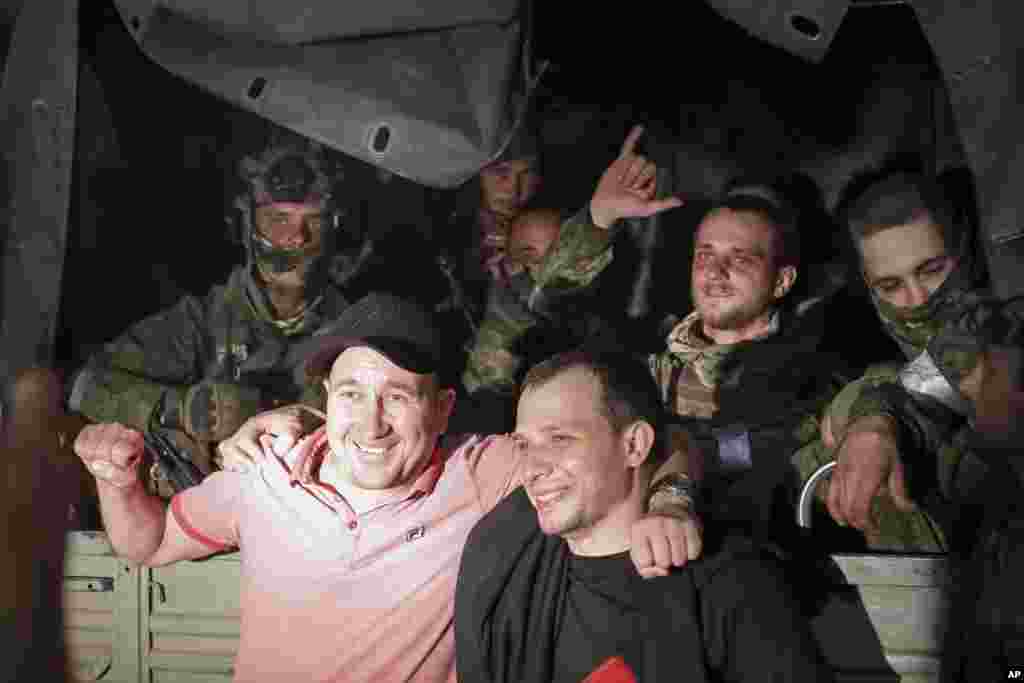
Two men pose for a photo with members of the Wagner mercenary group as they wait in their military vehicle on a street in Rostov-on-Don.<br />
<br />
The &quot;march for justice&quot; by Prigozhin and his troops was the biggest internal challenge President Vladimir Putin has faced to his rule.
2/12 Two men pose for a photo with members of the Wagner mercenary group as they wait in their military vehicle on a street in Rostov-on-Don.

The "march for justice" by Prigozhin and his troops was the biggest internal challenge President Vladimir Putin has faced to his rule.
After a tense, chaotic 24 hours that handed President Vladimir Putin the biggest threat to his more than two-decade hold on power and raised the possibility of civil war, Yevgeny Prigozhin abruptly ordered his forces to abandon their advance toward Moscow.
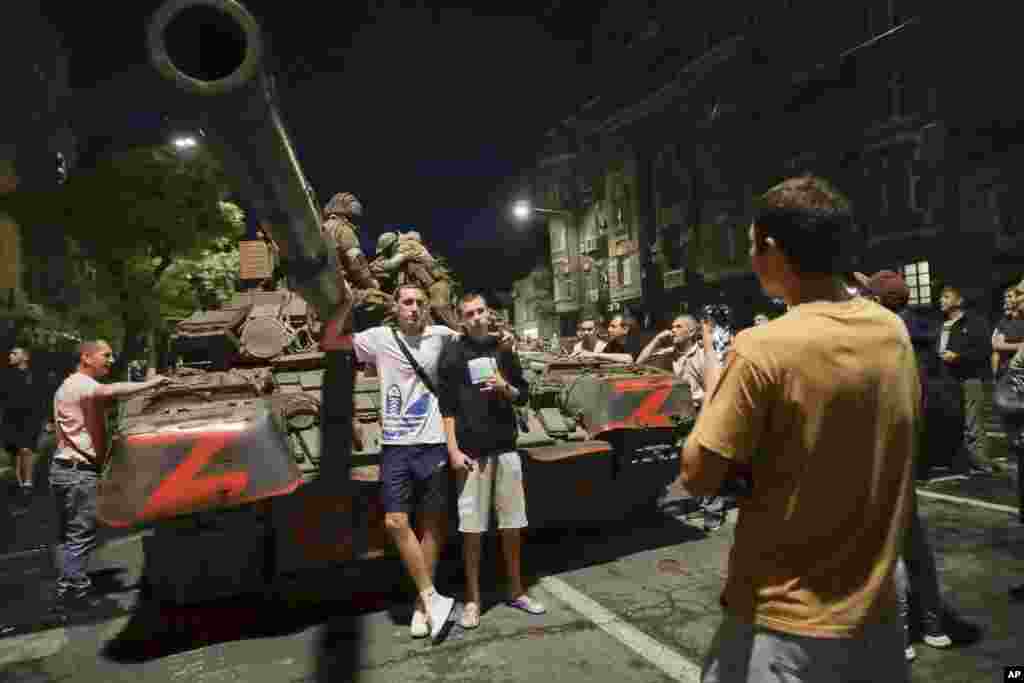
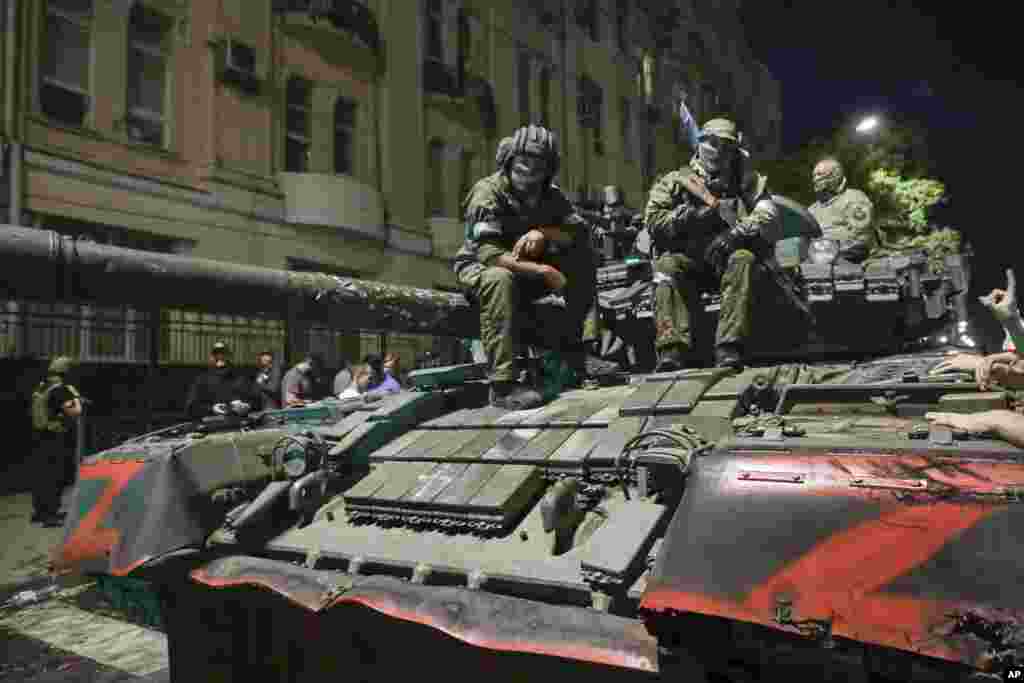
Civilians pose for photos as members of the Wagner mercenary group sit atop their tank in&nbsp;Rostov-on-Don.&nbsp;<br />
<br />
On June 23, the Wagner mercenary group entered Russia from Ukrainian territory in order to seize the Southern Military District&#39;s administrative center. Prigozhin claimed that a missile had struck a Wagner camp in Ukraine &quot;from the rear&quot; and charged the Russian military with carrying out the attack.<br />
<br />
&nbsp;
3/12 Civilians pose for photos as members of the Wagner mercenary group sit atop their tank in Rostov-on-Don. 

On June 23, the Wagner mercenary group entered Russia from Ukrainian territory in order to seize the Southern Military District's administrative center. Prigozhin claimed that a missile had struck a Wagner camp in Ukraine "from the rear" and charged the Russian military with carrying out the attack.

 
After a tense, chaotic 24 hours that handed President Vladimir Putin the biggest threat to his more than two-decade hold on power and raised the possibility of civil war, Yevgeny Prigozhin abruptly ordered his forces to abandon their advance toward Moscow.
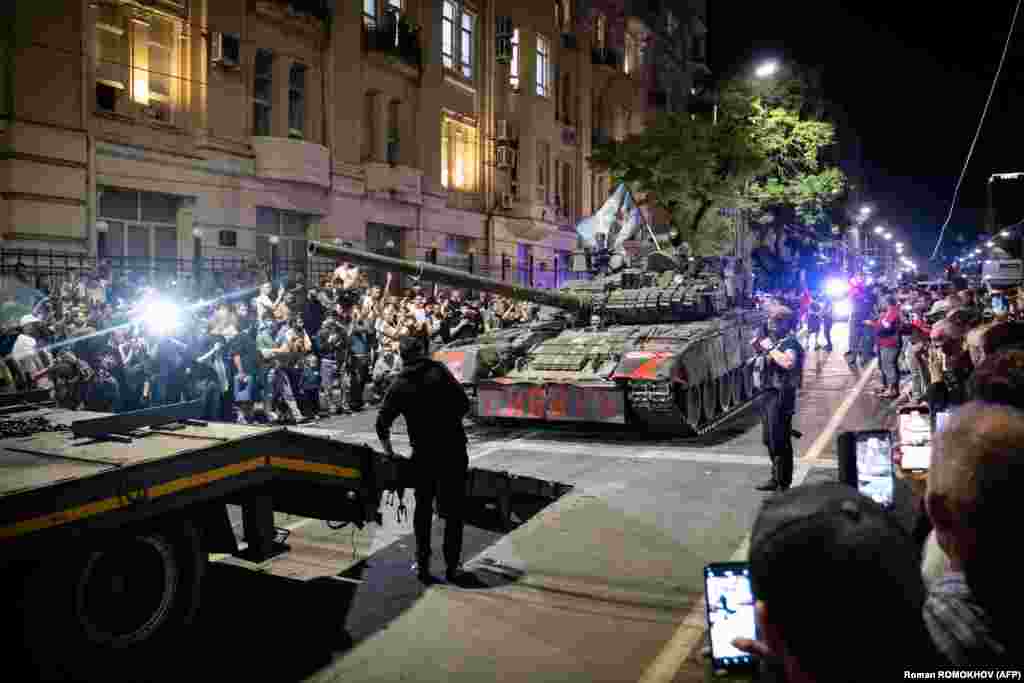
Members of the Wagner Group prepare to pull out from the headquarters of the Southern Military District in Rostov-on-Don to return to their base late on June 24.<br />
<br />
Russia&rsquo;s Federal Security Service announced a criminal case against Prigozhin for &ldquo;incitement to armed rebellion&rdquo; after he vowed to lead a &ldquo;march of justice&rdquo; against top officials in Russia&rsquo;s Defense Ministry.<br />
<br />
<br />
<br />
&nbsp;
4/12 Members of the Wagner Group prepare to pull out from the headquarters of the Southern Military District in Rostov-on-Don to return to their base late on June 24.

Russia’s Federal Security Service announced a criminal case against Prigozhin for “incitement to armed rebellion” after he vowed to lead a “march of justice” against top officials in Russia’s Defense Ministry.


After a tense, chaotic 24 hours that handed President Vladimir Putin the biggest threat to his more than two-decade hold on power and raised the possibility of civil war, Yevgeny Prigozhin abruptly ordered his forces to abandon their advance toward Moscow.
People cheer and wave a Wagner flag near the military headquarters in Rostov-on-Don.<br />
<br />
The Kremlin said Belarusian strongman Alyaksandr Lukashenka helped mediate the deal. Kremlin spokesman Dmitry Peskov said Putin and Lukashenka had guaranteed Prigozhin&#39;s safety.<br />
<br />
&nbsp;
5/12 People cheer and wave a Wagner flag near the military headquarters in Rostov-on-Don.

The Kremlin said Belarusian strongman Alyaksandr Lukashenka helped mediate the deal. Kremlin spokesman Dmitry Peskov said Putin and Lukashenka had guaranteed Prigozhin's safety.

 
After a tense, chaotic 24 hours that handed President Vladimir Putin the biggest threat to his more than two-decade hold on power and raised the possibility of civil war, Yevgeny Prigozhin abruptly ordered his forces to abandon their advance toward Moscow.
People show their support for the paramilitary outfit as they wait for orders to leave the city.
6/12 People show their support for the paramilitary outfit as they wait for orders to leave the city.
After a tense, chaotic 24 hours that handed President Vladimir Putin the biggest threat to his more than two-decade hold on power and raised the possibility of civil war, Yevgeny Prigozhin abruptly ordered his forces to abandon their advance toward Moscow.
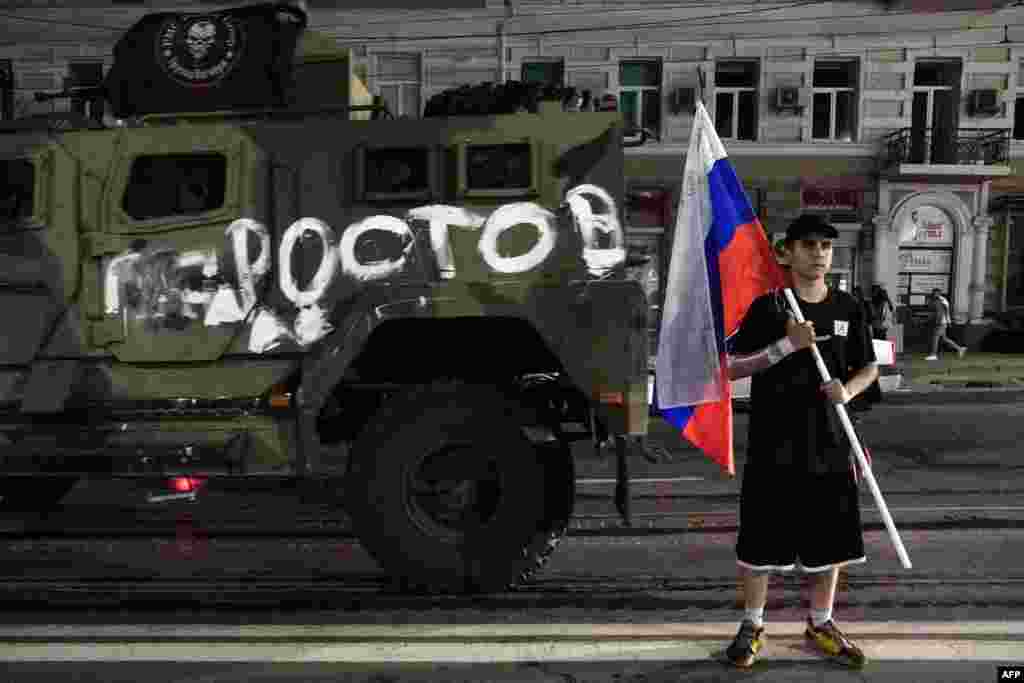
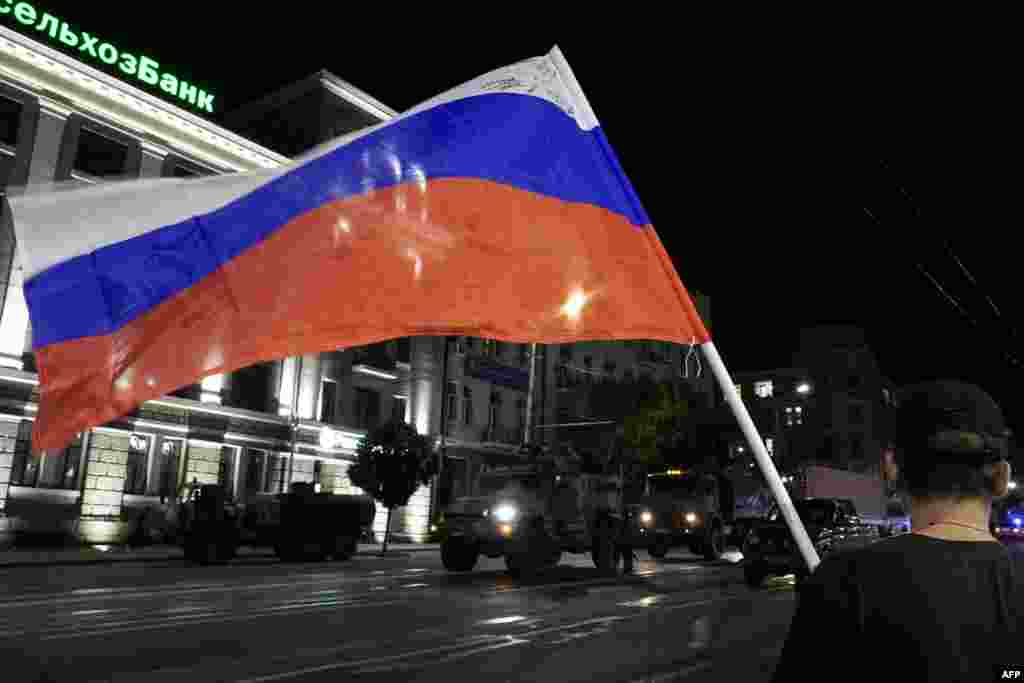
A man holds the Russian national flag in front of a Wagner vehicle with a painting that reads &quot;Rostov.&quot;<br />
<br />
&nbsp;
7/12 A man holds the Russian national flag in front of a Wagner vehicle with a painting that reads "Rostov."

 
After a tense, chaotic 24 hours that handed President Vladimir Putin the biggest threat to his more than two-decade hold on power and raised the possibility of civil war, Yevgeny Prigozhin abruptly ordered his forces to abandon their advance toward Moscow.
Members of Wagner sit atop a tank.<br />
&nbsp;
8/12 Members of Wagner sit atop a tank.
 
After a tense, chaotic 24 hours that handed President Vladimir Putin the biggest threat to his more than two-decade hold on power and raised the possibility of civil war, Yevgeny Prigozhin abruptly ordered his forces to abandon their advance toward Moscow.
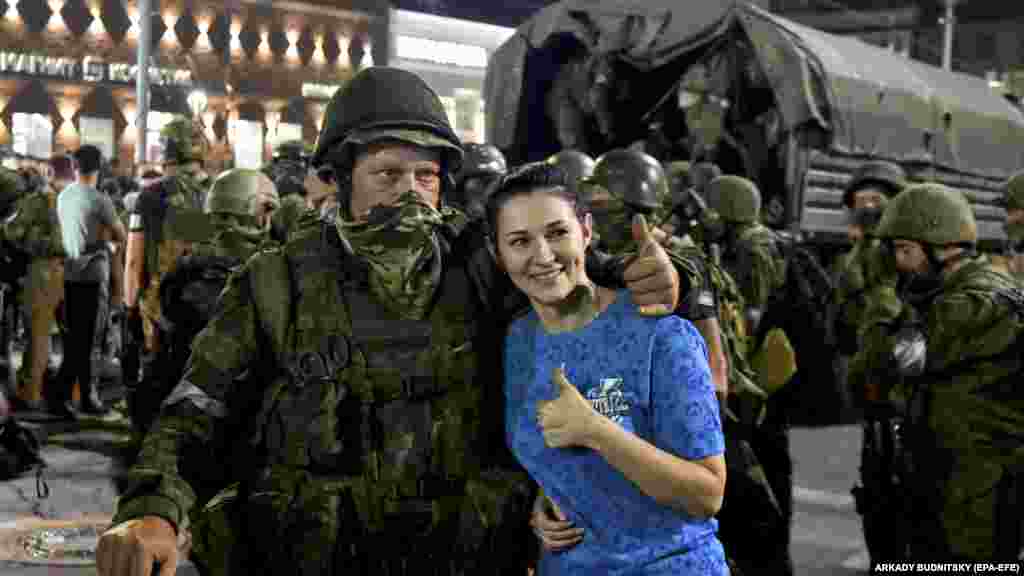
A woman poses for a photo with a Wagner member.
9/12 A woman poses for a photo with a Wagner member.
After a tense, chaotic 24 hours that handed President Vladimir Putin the biggest threat to his more than two-decade hold on power and raised the possibility of civil war, Yevgeny Prigozhin abruptly ordered his forces to abandon their advance toward Moscow.
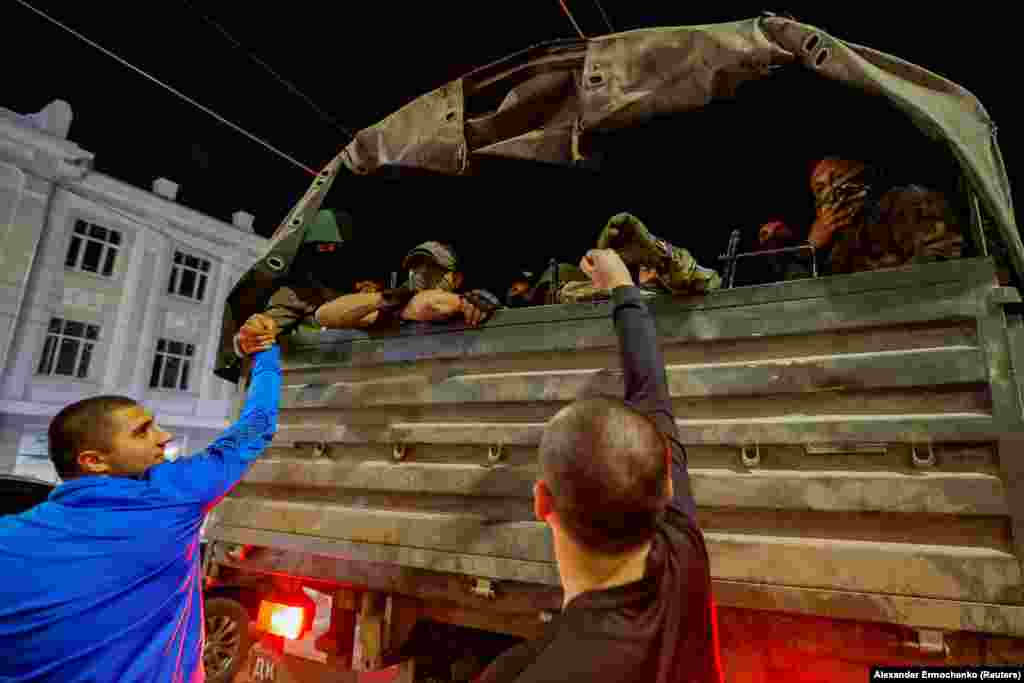
Wagner members begin to pull out.<br />
<br />
Kremlin spokesman Dmitry Peskov said the troops who joined Prigozhin&nbsp;in the uprising will not face prosecution, and those who did not will be offered contracts by the Defense Ministry.
10/12 Wagner members begin to pull out.

Kremlin spokesman Dmitry Peskov said the troops who joined Prigozhin in the uprising will not face prosecution, and those who did not will be offered contracts by the Defense Ministry.
After a tense, chaotic 24 hours that handed President Vladimir Putin the biggest threat to his more than two-decade hold on power and raised the possibility of civil war, Yevgeny Prigozhin abruptly ordered his forces to abandon their advance toward Moscow.
A man waves the Russian flag as members of the Wagner group pull out from the headquarters of the Southern Military District in Rostov-on-Don to return to their base late on June 24.
11/12 A man waves the Russian flag as members of the Wagner group pull out from the headquarters of the Southern Military District in Rostov-on-Don to return to their base late on June 24.
After a tense, chaotic 24 hours that handed President Vladimir Putin the biggest threat to his more than two-decade hold on power and raised the possibility of civil war, Yevgeny Prigozhin abruptly ordered his forces to abandon their advance toward Moscow.
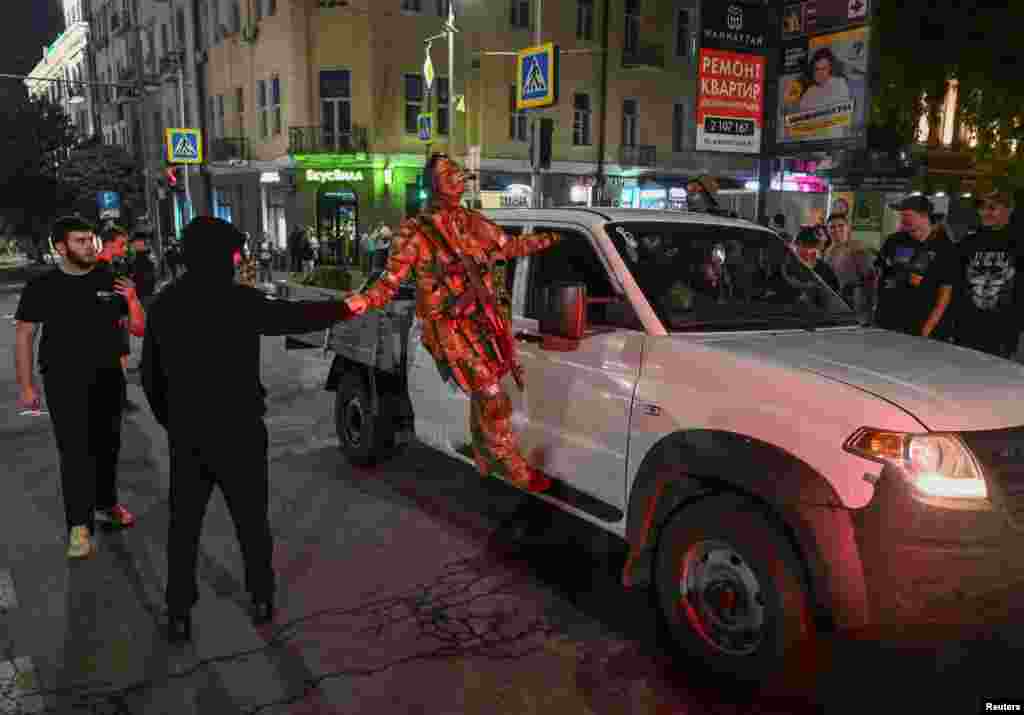
Prigozhin smiles for cameras as he shakes somebody&#39;s hand while leaving the headquarters of the Southern Military District amid the group&#39;s pullout from the city of Rostov-on-Don.
12/12 Prigozhin smiles for cameras as he shakes somebody's hand while leaving the headquarters of the Southern Military District amid the group's pullout from the city of Rostov-on-Don.
After a tense, chaotic 24 hours that handed President Vladimir Putin the biggest threat to his more than two-decade hold on power and raised the possibility of civil war, Yevgeny Prigozhin abruptly ordered his forces to abandon their advance toward Moscow.
Previous slide
Next slide

We'll be trying to understand what happened. This stability, at least as far as significant decision-makers in the country, is gone. And you will not be able to recuperate it. Because if this was a huge play staged by Putin, which I think is unlikely, then how can you trust the person that can play such tricks on you? If it wasn't, then it's clear that Putin had to basically scramble and save himself.

In both cases, I think we'll see more cleavages inside the Russian system. Whatever happens, Putin has shortened his stay in the Kremlin, that is if he will stay in the Kremlin.

RFE/RL: Finally, a somewhat philosophical question, or a moral conundrum. In a nutshell, whatever Prigozhin's real motivations might have been, it boils down to Russians killing other Russians because they disagree about how to kill Ukrainians. What does that say about modern Russia?

Eggert: It just adds to the picture: that of a very significant moral crisis inside society. A moral crisis that, I'm afraid, may lead to Russian society never being able to rise again and do something good about its own country. What's happened definitely shows to us the depths of the moral crisis that Russian society is undergoing: It is not for Putin, it is not against Putin, it is OK to kill others as long as it basically doesn't touch upon me that much. It is OK for armed gangs to capture the cities and then for them to retreat.

It is a society where citizens are in the minority. This means that whoever is in the Kremlin will be able to basically present society with any choice he or she chooses, and there is a very high chance that society will just accept it.

This is the main issue here. It's not an issue so much of arms or demographics, as important as they are. It is an issue of a society that basically agrees to any order coming from above -- some gladly, some grudgingly, some actually want to isolate themselves from reality and did it pretty successfully until recently.

Any change that may come in such circumstances will definitely come from intra-elite struggles rather than some kind of popular democratic revolution. This, to me, is probably the perspective we will be facing in the coming weeks and months.

This interview has been edited for clarity and length.
  • 16x9 Image

    Vazha Tavberidze

    Vazha Tavberidze is a staff writer with RFE/RL's Georgian Service. As a journalist and political analyst, he has covered issues of international security, post-Soviet conflicts, and Georgia's Euro-Atlantic aspirations. His writing has been published in various Georgian and international media outlets, including The Times, The Spectator, The Daily Beast, and IWPR.

This item is part of
XS
SM
MD
LG