
Accessibility links

Breaking News

Interview: Russia's Ties To Venezuela Give It 'Nuisance Power' Over The U.S.

Russian President Vladimir Putin (right) meets with Venezuelan President Nicolas Maduro in Moscow on October 3, 2017.

As the political standoff in Venezuela escalates, Moscow has become increasingly ardent in its support for embattled socialist President Nicolas Maduro since Washington and other capitals recognized opposition leader Juan Guaido's claim to being Venezuela's interim leader.

Russian Foreign Minister Sergei Lavrov -- whose country considers Caracas a "strategic partner" and which has some $20 billion in loans and investments in the country -- said on January 24 that the United States was "trying to act as the ruler of other people's destinies" by "meddling in their domestic affairs," while other Russian officials cautioned Washington not to intervene militarily.

RFE/RL senior correspondent Robert Coalson asked Mikael Wigell, a senior research fellow specializing in Latin America at the Finnish Institute of International Affairs, to outline what is at stake for Moscow in the unfolding crisis in Venezuela.
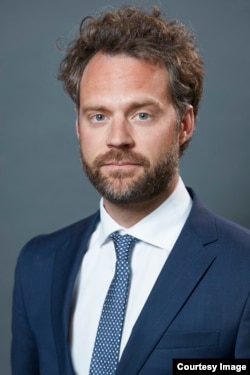
Mikael Wigell
Mikael Wigell

RFE/RL: Could you give us an idea of the main elements of the "strategic partnership" between Russia and Venezuela?

Mikael Wigell:
Historically, they don't have a very close relationship. It is really only in the last 15 years or so that they have started to develop this relationship. From Venezuela's side, it has to do with its leaders' anti-Americanism and accelerating authoritarianism, for which it sought support. [The late] Presidents Hugo Chavez and Maduro have generally been quite keen to ally themselves with authoritarian regimes that don't demand adherence to human rights and democracy -- and that oppose the United States.

For Russia's part, it has to do with balancing against the United States and also with certain economic interests. In practice, the relationship has revolved around Russia supplying Venezuela with arms and loans in exchange for assets, especially in Venezuela's oil and gas sectors.

RFE/RL: It sounds as if the relationship is really mostly an aspect of each country's relationship with the United States. Or are there direct mutual bilateral interests?

Wigell:
It is a bit of both. Certainly, Moscow's interest in Venezuela is driven by its quite tense relations with the United States and it wants to [provide a counterbalance to] the United States. Establishing close relations with Venezuela gives Moscow a certain nuisance power in relation to the United States, and that can be used as a bargaining chip in future dealings with the United States. It also can be kind of a showcase for Russia's aspirations to be considered a global power.

Oil, Loans, Military: Russia's Exposure to Venezuela

SOVEREIGN DEBT

In November 2017, Russia agreed to restructure Venezuelan sovereign debt of $3.15 billion, with repayments lasting 10 years.

ROSNEFT-PDVSA TIES

Rosneft, Russia's biggest oil producer and one of the largest globally, operates in Venezuela and has also issued loans to state oil and gas company PDVSA, backed by oil supplies.

According to Rosneft, PDVSA paid $500 million debt during the third quarter of last year, with the outstanding obligations standing at $3.1 billion then.

RUSSIAN OIL COMPANIES

Rosneft, whose chief executive Igor Sechin is a frequent visitor to Venezuela, has stakes in a number of oil projects in the country. Total oil production from those projects was 8 million tons in 2017, or 161,000 barrels per day.

Rosneft's share in that oil production was 3 million tons, according to the last publicly available Rosneft documents.

MILITARY

The first credit line for gun purchases was signed in Moscow in 2006 by former President Hugo Chavez and Russian leader Vladimir Putin. Since then, similar agreements have allowed Venezuela to buy Kalashnikov rifles, Sukhoi planes, tanks, and other military equipment.

-- Reuters

But Russia also has certain economic interests in Venezuela which have to do with its arms sales. Venezuela is a big purchaser of Russian arms, and Russia has also gained very favorable assets and contracts in Venezuela's oil-and-gas sector.

RFE/RL: Analysts have described the governments of both Maduro and Putin as "mafia states." Is this a useful prism for comparing the two countries and understanding their relationship and interaction?

Wigell:
Maduro's government is certainly kleptocratic. It is deeply implicated in the drug trade. It is deeply corrupted. In fact, its whole political-survival strategy is one of trying to tie criminal elements to itself, even giving key ministerial positions to criminals so that they would have an incentive to uphold the regime under any circumstances. These criminals know that if there is a democracy, they might end up in court, so they will do anything to prop up Maduro's strategy.

So it is kind of a mafia strategy of deliberately corrupting everyone in order to unite them against any regime change.

Now, there are some similarities to the regime in Russia regarding this sort of strategy. Certainly Russian criminal elements and criminal organizations are very much present on the ground in Venezuela. And they have ties to the Venezuelan regime, and they also have certain ties to Moscow. There are these ties that go via these criminal elements, forming a certain element in the Venezuela-Russia relationship.

RFE/RL: There have been many reports of Russia providing other forms of assistance for various friendly leaders around the world, in Syria and in Africa, for instance. I'm talking about reports of mercenaries, of Russian security firms serving as presidential bodyguards or coping with demonstrators. I'm talking about reports of the hacking of political enemies or the use of computer data and political consulting to help Moscow's friends, etc. Is there evidence that this sort of thing is happening in Venezuela?

Wigell:
That sort of technical support for the Maduro regime in Venezuela, so far, has mostly been provided by the Cubans. There are thousands of Cuban intelligence operatives in Venezuela helping with spying on opposition elements and internal policing. Russians are not that prominent in that sector in Venezuela, as far as I know. There are Russian elements in Venezuela that are implicated in illicit trade and corruption networks and the drugs trade. We know that Russian organized criminals are on the ground in Venezuela in those trades. But not so much on the security side with propping up the regime. The Cubans really account for that.

RFE/RL: And where does China fit in in all of this? China has much more financial investment in Venezuela and buys much more Venezuelan oil than Russia. Is China playing a shadow role in the current crisis?

Wigell:
In many respects, the Maduro regime's survival depends very much on China. Venezuela is currently economically extremely dependent on China. And China is currently sitting on the fence a bit. It is deeply worried about the future of Maduro's regime because it has so much at stake. It is specifically worried that if the opposition comes to power, will it honor the contracts and loan agreements and oil contracts that Venezuela has with China?

So far, the opposition has not been willing to give any guarantees of honoring those contracts, and that is why China is not willing to withdraw its support from the Maduro regime. But should the opposition give some guarantees to China that it will honor those contracts, then Maduro's position would be really precarious and China might actually switch sides.

PHOTO GALLERY: Venezuela In Crisis As Opposition Leader Declares Himself Acting President (CLICK TO VIEW)

Venezuela In Crisis As Opposition Leader Declares Himself Acting President

A police officer fires rubber bullets during a protest against the government of Venezuelan President Nicolas Maduro in Caracas on January 23. Maduro was sworn in early in January following his reelection in a poll considered fraudulent by much of the international community.
1/15 A police officer fires rubber bullets during a protest against the government of Venezuelan President Nicolas Maduro in Caracas on January 23. Maduro was sworn in early in January following his reelection in a poll considered fraudulent by much of the international community.
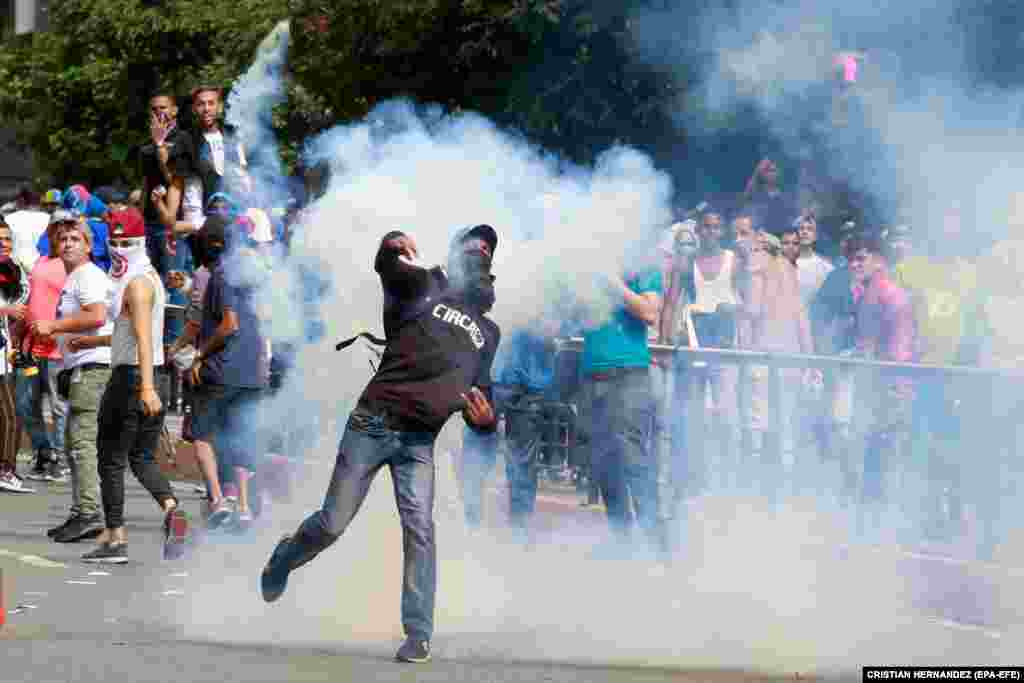
Venezuelan opposition leader Juan Guaido declared himself interim president on January 23 as tens of thousands of people demonstrated against socialist President Nicolas Maduro. Some of the nationwide protests have turned violent, reportedly leaving at least four people dead. With Venezuela in the midst of economic collapse, Maduro was reelected last year in a vote labeled illegitimate at home and abroad.
Members of the national police force clash with protesters during an antigovernment demonstration in Caracas on January 23.
2/15 Members of the national police force clash with protesters during an antigovernment demonstration in Caracas on January 23.
Venezuelan opposition leader Juan Guaido declared himself interim president on January 23 as tens of thousands of people demonstrated against socialist President Nicolas Maduro. Some of the nationwide protests have turned violent, reportedly leaving at least four people dead. With Venezuela in the midst of economic collapse, Maduro was reelected last year in a vote labeled illegitimate at home and abroad.
Juan Guaido, the head of Venezuela&#39;s National Assembly, declares himself the country&#39;s acting president during the mass protests on January 23. U.S. President Donald Trump said he recognized Guaido as interim president, prompting Maduro&#39;s government to break off diplomatic ties with Washington.&nbsp;<br />
<br />
&nbsp;
3/15 Juan Guaido, the head of Venezuela's National Assembly, declares himself the country's acting president during the mass protests on January 23. U.S. President Donald Trump said he recognized Guaido as interim president, prompting Maduro's government to break off diplomatic ties with Washington. 

 
Venezuelan opposition leader Juan Guaido declared himself interim president on January 23 as tens of thousands of people demonstrated against socialist President Nicolas Maduro. Some of the nationwide protests have turned violent, reportedly leaving at least four people dead. With Venezuela in the midst of economic collapse, Maduro was reelected last year in a vote labeled illegitimate at home and abroad.
Antigovernment protesters hold up their hands as Guaido took an oath swearing himself in as acting president.&nbsp;
4/15 Antigovernment protesters hold up their hands as Guaido took an oath swearing himself in as acting president. 
Venezuelan opposition leader Juan Guaido declared himself interim president on January 23 as tens of thousands of people demonstrated against socialist President Nicolas Maduro. Some of the nationwide protests have turned violent, reportedly leaving at least four people dead. With Venezuela in the midst of economic collapse, Maduro was reelected last year in a vote labeled illegitimate at home and abroad.
Protesters face off with police in Caracas.&nbsp;At least four people were reported to have died in overnight clashes before the nationwide protests.&nbsp;
5/15 Protesters face off with police in Caracas. At least four people were reported to have died in overnight clashes before the nationwide protests. 
Venezuelan opposition leader Juan Guaido declared himself interim president on January 23 as tens of thousands of people demonstrated against socialist President Nicolas Maduro. Some of the nationwide protests have turned violent, reportedly leaving at least four people dead. With Venezuela in the midst of economic collapse, Maduro was reelected last year in a vote labeled illegitimate at home and abroad.
Paramedics rescue a wounded member of the national guard during clashes with opposition demonstrators. The January 23 protests took place on the anniversary of&nbsp;the 1958 uprising that overthrew Venezuela&#39;s military dictatorship.
6/15 Paramedics rescue a wounded member of the national guard during clashes with opposition demonstrators. The January 23 protests took place on the anniversary of the 1958 uprising that overthrew Venezuela's military dictatorship.
Venezuelan opposition leader Juan Guaido declared himself interim president on January 23 as tens of thousands of people demonstrated against socialist President Nicolas Maduro. Some of the nationwide protests have turned violent, reportedly leaving at least four people dead. With Venezuela in the midst of economic collapse, Maduro was reelected last year in a vote labeled illegitimate at home and abroad.
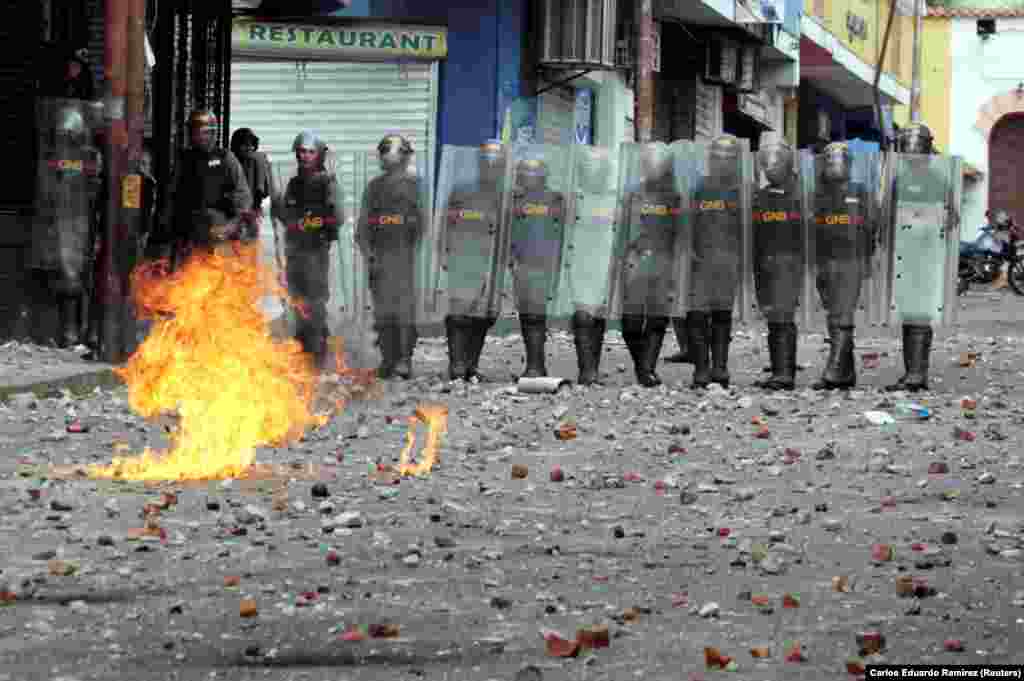
Security forces hold their position during protests in Tachira, western Venezuela.<br />
&nbsp;
7/15 Security forces hold their position during protests in Tachira, western Venezuela.
 
Venezuelan opposition leader Juan Guaido declared himself interim president on January 23 as tens of thousands of people demonstrated against socialist President Nicolas Maduro. Some of the nationwide protests have turned violent, reportedly leaving at least four people dead. With Venezuela in the midst of economic collapse, Maduro was reelected last year in a vote labeled illegitimate at home and abroad.
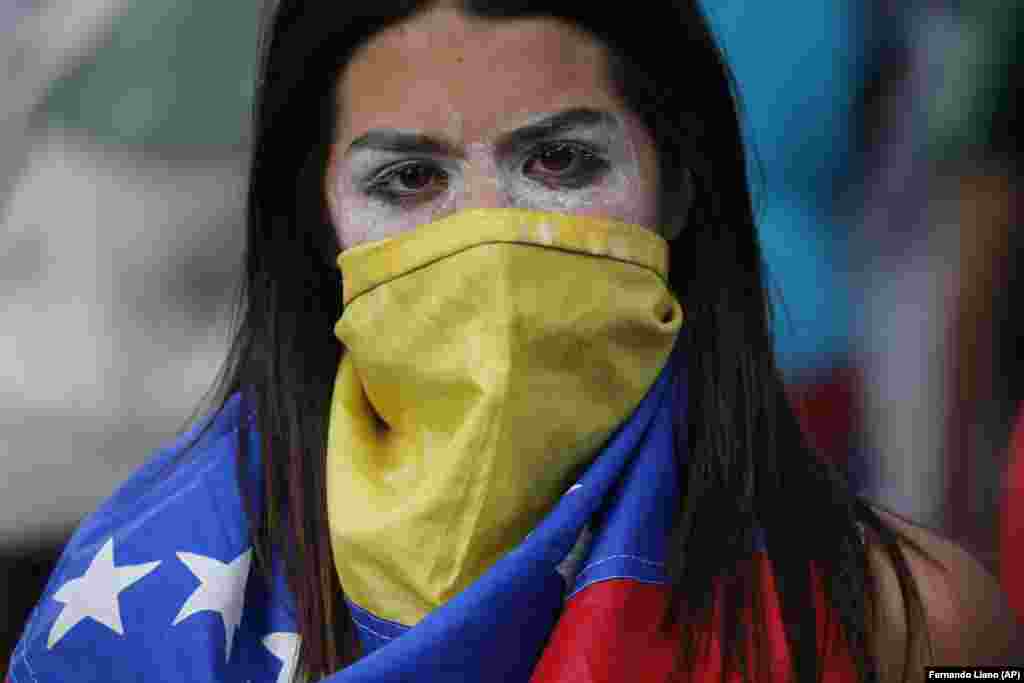
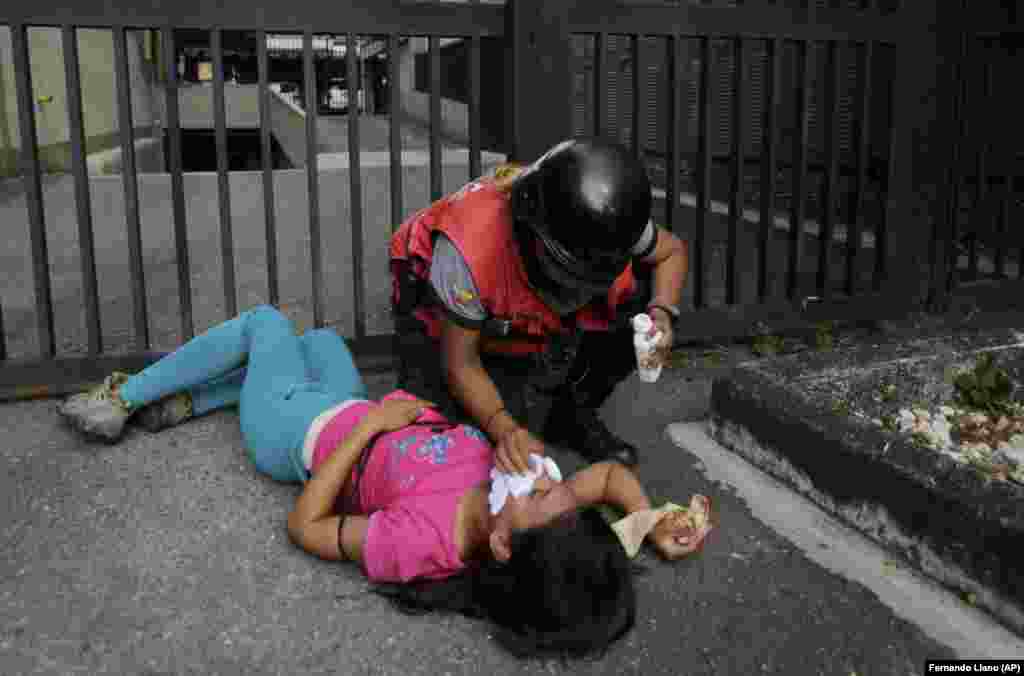
An antigovernment uses toothpaste around her eyes to help lessen the effects of tear gas.
8/15 An antigovernment uses toothpaste around her eyes to help lessen the effects of tear gas.
Venezuelan opposition leader Juan Guaido declared himself interim president on January 23 as tens of thousands of people demonstrated against socialist President Nicolas Maduro. Some of the nationwide protests have turned violent, reportedly leaving at least four people dead. With Venezuela in the midst of economic collapse, Maduro was reelected last year in a vote labeled illegitimate at home and abroad.
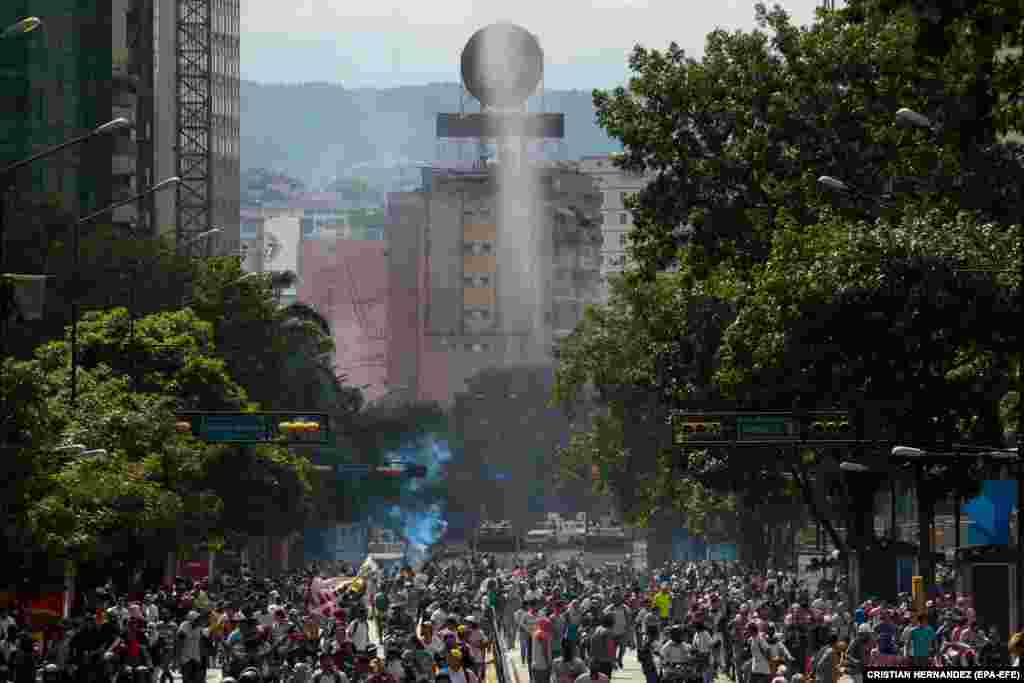
Demonstrators take to the streets of Caracas after members of the opposition called for people to ignore the legitimacy of Maduro&#39;s second term. Along with charges of election fraud, ​Maduro has been&nbsp;criticized for his handling of Venezuela&#39;s collapsing economy and for alleged human rights abuses.&nbsp;
9/15 Demonstrators take to the streets of Caracas after members of the opposition called for people to ignore the legitimacy of Maduro's second term. Along with charges of election fraud, ​Maduro has been criticized for his handling of Venezuela's collapsing economy and for alleged human rights abuses. 
Venezuelan opposition leader Juan Guaido declared himself interim president on January 23 as tens of thousands of people demonstrated against socialist President Nicolas Maduro. Some of the nationwide protests have turned violent, reportedly leaving at least four people dead. With Venezuela in the midst of economic collapse, Maduro was reelected last year in a vote labeled illegitimate at home and abroad.
An officer takes his position as thousands demonstrate in Caracas.
10/15 An officer takes his position as thousands demonstrate in Caracas.
Venezuelan opposition leader Juan Guaido declared himself interim president on January 23 as tens of thousands of people demonstrated against socialist President Nicolas Maduro. Some of the nationwide protests have turned violent, reportedly leaving at least four people dead. With Venezuela in the midst of economic collapse, Maduro was reelected last year in a vote labeled illegitimate at home and abroad.
A supporter of President Nicolas Maduro&#39;s government wears a button depicting Argentine-born revolutionary leader Che Guevara while taking part in a counterprotest.&nbsp;
11/15 A supporter of President Nicolas Maduro's government wears a button depicting Argentine-born revolutionary leader Che Guevara while taking part in a counterprotest. 
Venezuelan opposition leader Juan Guaido declared himself interim president on January 23 as tens of thousands of people demonstrated against socialist President Nicolas Maduro. Some of the nationwide protests have turned violent, reportedly leaving at least four people dead. With Venezuela in the midst of economic collapse, Maduro was reelected last year in a vote labeled illegitimate at home and abroad.
Opposition demonstrators chant slogans in Caracas.&nbsp;
12/15 Opposition demonstrators chant slogans in Caracas. 
Venezuelan opposition leader Juan Guaido declared himself interim president on January 23 as tens of thousands of people demonstrated against socialist President Nicolas Maduro. Some of the nationwide protests have turned violent, reportedly leaving at least four people dead. With Venezuela in the midst of economic collapse, Maduro was reelected last year in a vote labeled illegitimate at home and abroad.
A confrontation in Caracas
13/15 A confrontation in Caracas
Venezuelan opposition leader Juan Guaido declared himself interim president on January 23 as tens of thousands of people demonstrated against socialist President Nicolas Maduro. Some of the nationwide protests have turned violent, reportedly leaving at least four people dead. With Venezuela in the midst of economic collapse, Maduro was reelected last year in a vote labeled illegitimate at home and abroad.
A paramedic helps a protester suffering from the effects of tear gas.&nbsp;
14/15 A paramedic helps a protester suffering from the effects of tear gas. 
Venezuelan opposition leader Juan Guaido declared himself interim president on January 23 as tens of thousands of people demonstrated against socialist President Nicolas Maduro. Some of the nationwide protests have turned violent, reportedly leaving at least four people dead. With Venezuela in the midst of economic collapse, Maduro was reelected last year in a vote labeled illegitimate at home and abroad.
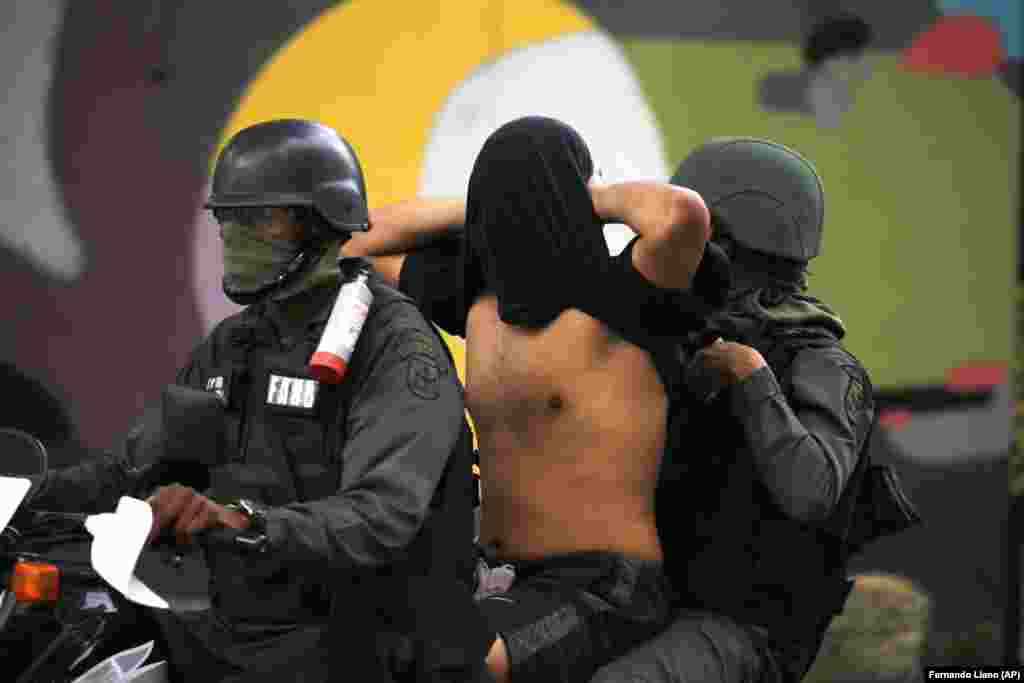
Troops&nbsp;detain an antiovernment protester.
15/15 Troops detain an antiovernment protester.
Venezuelan opposition leader Juan Guaido declared himself interim president on January 23 as tens of thousands of people demonstrated against socialist President Nicolas Maduro. Some of the nationwide protests have turned violent, reportedly leaving at least four people dead. With Venezuela in the midst of economic collapse, Maduro was reelected last year in a vote labeled illegitimate at home and abroad.
Previous slide
Next slide


RFE/RL: And finally, is there anything else that you think it is important for people to understand about the Russian interest in the Venezuela crisis?

Wigell:
What is happening in Venezuela is quite illustrative of what is going on in many parts of the world, with Russia actively trying to prop up autocrats and using them to disrupt the liberal, rules-based world order by all sorts of means -- from the economic to the corrupt to the clandestine.

It is also important not to exaggerate Russia's power in this. It is largely a nuisance. With an economy smaller than Italy's, Russia is not really that well-equipped to play the long game. China is by far the more relevant player, whether in Venezuela or in the region or in many other regions. Russia does not have the economic means to take on responsibility for the Venezuelan economy, that is clear.

Venezuela is still quite a big country and it is really in very bad shape for the time being. But Moscow is worried about its current contracts and current investments in Venezuela and what will happen with them should the regime fall.

  • 16x9 Image

    Robert Coalson

    Robert Coalson worked as a correspondent for RFE/RL from 2002 to 2024.

This item is part of
XS
SM
MD
LG