




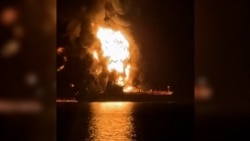

All 23 Georgian crew members aboard a Malta-flagged tanker struck by Iran off the Iraqi coast have been rescued, a relative of one of the sailors told RFE/RL's Georgian Service.
Two oil tankers sailing in Iraqi territorial waters were struck in the Persian Gulf early on March 12, with sailors describing a coordinated attack involving drones and explosive devices.
Iranian state television confirmed that Iranian forces had attacked the tankers, reporting that at least one vessel was hit by an Iranian unmanned vehicle from the water.
One of the targeted ships was the Malta-flagged tanker Zefyros, which included the 23 Georgian sailors, while the second vessel that was hit, Safesea Vishnu, was sailing under a Marshall Islands flag and was chartered by an Iraqi company, according to the Iraqi State Organization for Marketing of Oil (SOMO).
"I spoke with him around midnight and everything was fine," Nincho Surmanidze, the wife of Georgian sailor Irakli Jashi, told RFE/RL. "Then he called me again around 2:30 a.m. and quickly said: 'We're all OK, everyone survived.'"
Later in the morning, she said, her husband told her a drone had struck their tanker, triggering a fire that heavily damaged the vessel.
"He said everything burned," Surmanidze added.
According to Iraqi authorities, 38 sailors were rescued from the tankers targeted in the attack and were transported to an Iraqi port.
At least one sailor was killed, Iraqi officials said, though the victim's identity and nationality have not been disclosed.
Surmanidze said her husband had been working aboard the vessel for about six months and had been scheduled to return to Georgia on March 10 before the ship was delayed due to the conflict in the Middle East.
"If there had been no war in the region, he would have already been home," she said.
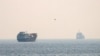
The attack occurred amid rising tensions across the region as Iran retaliates for ongoing US and Israeli air strikes.
Much of Tehran's campaign appears aimed at disrupting global energy markets, especially hitting targets around the Gulf, including vessels, raising security risks for commercial shipping routes that are vital to the oil and gas industries.
Some analysts say the reported use of drones, remotely detonated explosives, and unmanned vehicles in the water suggests a sophisticated maritime strike designed to damage tankers while limiting direct confrontation.
Officials at Georgia's Maritime Transport Agency and the Foreign Ministry were not available to comment when contacted by RFE/RL's Georgian Service, saying information about the incident would be released later.



