




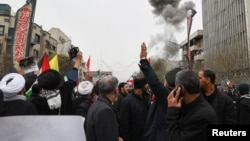
Several senior Iranian officials, including President Masud Pezeshkian, took to the streets of Tehran for the annual Al-Quds Day rally in support of the Palestinian cause despite an intense wave of air strikes by the United States and Israel.
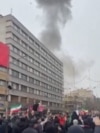
Striking a defiant tone, judiciary chief Gholam Hossein Mohseni Ejei, national police chief Ahmad-Reza Radan, and Foreign Minister Abbas Araqchi, also joined thousands of Iranians in the capital on March 13, state TV images showed, as plumes of smoke rose from sites around the city.
The demonstration came on a day US Defense Secretary Pete Hegseth said would be the heaviest day of bombardment in a campaign that has seen over 15,000 targets hit since it began on February 28.
Hegseth added that the volume of return fire from Iran has sharply decreased from earlier in the conflict because Iran's "missiles, their missile launchers and drones [are] being destroyed or shot out of the sky."
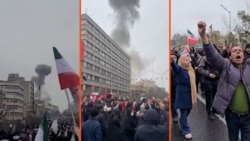

"Their missile volume is down 90 percent, their one-way attack drones yesterday -- down 95 percent," Hegseth added.
Earlier in the day, US Central Command said all six crew members were dead after a giant US refueling plane crashed in Iraq after an apparent midair collision, while a French soldier was killed in the country’s Kurdistan region as the conflict continued to spill over regional borders.
CENTCOM, which is responsible for American forces in the Middle East, on March 13 said a KC-135 refueling aircraft crashed in western Iraq, said the identities of the service members are being withheld until 24 hours after next of kin have been notified.
"The circumstances of the incident are under investigation. However, the loss of the aircraft was not due to hostile fire or friendly fire," CENTCOM said of the crash that occurred a day earlier.
The second plane landed safely in Israel, CENTCOM officials said.
The KC-135 is the workhorse of the US military’s air-refueling missions, allowing other planes to carry out missions without having to land.
On March 2, US military officials said three F-15 fighter jets crashed in Kuwait after being hit by friendly fire from Kuwaiti air defenses.
All six of the crew from the three F-15s ejected and parachuted to the ground before being located by rescuers, Central Command said.
First Confirmed French Fatality
Separately, French President Emmanuel Macron said one soldier was killed during a drone attack in the Irbil region of Iraqi Kurdistan.
"This attack against our forces engaged in the fight against Daesh since 2015 is unacceptable," Macron said, using the local name for the Islamic State extremist group.
"Their [French soldiers] presence in Iraq is strictly within the framework of the fight against terrorism. The war in Iran cannot justify such attacks."
It is not known where the drone came from or who fired it. The French military earlier said that at least six soldiers had been injured, with one of them later dying.
It was the first confirmed death of a French soldier since the United States and Israel launched their massive air campaign against neighboring Iran. France is not participating directly in the US-Israeli war effort.
Tehran has fired back with retaliatory strikes in the region, but it was not known if Iran or an allied militia in Iraq was responsible for the attack. Islamic State and Al-Qaeda extremists are also active in parts of the Middle East country.
Ashab Alkahf, an Iran-linked group in Iraq, later said that French interests in the region are now considered targets.
The Crucial Strait
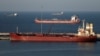
Meanwhile, as the war entered its second week, Iran continued to strike back at US Arab allies in the Gulf region and attack commercial ships transiting the crucial Strait of Hormuz.
Supreme Leader Mojtaba Khamenei, in what are purported to be his first public comments since being named to succeed his late father, said Iran must continue to keep the key Gulf shipping lane closed, hours after several vessels were targeted in strikes as Tehran looks to choke off oil supplies from leaving the Middle East.
In the statement, which was read out on Iranian state TV by a female presenter on March 12, Khamenei, who has yet to be seen or heard from in public since the start of the war, said Iran will continue to seek to strike targets where "the enemy has little experience and will be severely vulnerable."
Hegseth said Khamenei is wounded and likely disfigured, calling his statement "a weak one, actually, but there was no voice and there was no video."
Iran's Islamic Revolutionary Guards Corps (IRGC) said the hard-line military force intends to keep the Strait of Hormuz closed to traffic, saying it was following instructions from the new supreme leader.
The United States has suggested it is prepared to escort ships through the strait, a move that would likely increase tensions in the region.
Iran Targets Israel
Iran once again fired missiles waves of missiles toward Israel early on March 13, officials in Tel Aviv said. Emergency services reporting that two were injured in the country's north.
Israeli Prime Minister Benjamin Netanyahu, in his first news conference since the start of the war on February 28, spoke again of helping the Iranian people to bring down the regime in Tehran.
"I will not detail the actions we are taking. We are creating the optimal conditions for toppling the regime, but I won't deny that I can't tell you with all certainty that the people of Iran will topple the regime -- a regime is toppled from the inside," he said.
"But we can definitely help and we are helping."
Hours later, Iranian media reported several explosions in the capital, Tehran. Details were not immediately available.
Israel also maintained its offensive against Iran-allied Hezbollah forces in Lebanon, with the military moving further into southern Lebanon.
The military told residents to "move immediately north of the Zahrani River," 40 kilometers from the Israeli border.
It said Hezbollah had fired some 200 rockets toward it overnight, in what it called was the biggest barrage so far of the war.
Elsewhere, Saudi Arabia said it intercepted dozens of drones entering its airspace.
"Twelve drones were intercepted and destroyed after entering Saudi airspace," a ministry spokesperson said after authorities reported at least 16 other drones were also shot down.
Journalists reported witnessing explosions that rattled the central financial area of Dubai early on March 13.
Turkish state media reported on March 13 that sirens were heard at the Incirlik Air Base, a NATO facility in southern Turkey that houses US forces. No further information was immediately available.
If an Iranian missile attack is confirmed, it would be the third time since the war began that the Turkish airspace has been violated.

