




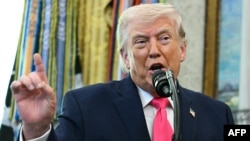
President Donald Trump said the United States is "talking to the right people in Iran" about a deal to end the war, while Tehran launched attacks on Israel and Kuwait and US media outlets reported that thousands more troops may be headed to the region.
The New York Times and Israel's Channel 12 reported that the US has sent Iran a 15-point peace plan. The reports cited unnamed officials and there was no immediate comment from the Trump administration or Tehran.
Trump's comments on March 24 came a day after he said that "very good and productive" talks had taken place and senior Iranian figures denied Tehran was negotiating with Washington.
"We're actually talking to the right people and they want to make a deal so badly -- you have no idea how badly they want to make a deal," Trump said in remarks at the White House. "We're in negotiations right now," he said.
For the second time in two days, he said Iran had agreed it would never have nuclear weapons. Iran's nuclear program, which Tehran maintains is purely peaceful, is at the heart of international tension over the Middle Eastern country.
Trump said that US envoy Steve Witkoff and Jared Kushner were involved in the negotiations, along with Vice President JD Vance and Secretary of State Marco Rubio. He have no timetable for any meetings or calls.

Trump did not name or otherwise identify anyone the United States is negotiating with. He said “we’re dealing with a new group of people” after killing the longtime supreme leader, Ali Khamenei, and numerous other senior Iranian figures.
He said this group had given the US a “very big present" that "arrived today" and was related to oil and gas. He did not say what it was but suggested it was related to the Strait of Hormuz, a crucial artery for oil and gas shipments from the Persian Gulf to global markets.
The New York Times, citing two unnamed officials, said it was "unclear how widely" the 15-point plan to resolve the conflict, which was delivered via Pakistan, "had been shared among Iranian officials."
Israel's Channel 12, which cited three sources, said the US was seeking a month-long cease-fire to discuss the plan, which it said included keeping the Strait of Hormuz open, dismantling Iran's nuclear program, ending its backing of proxy groups, and the removal of all sanctions on Tehran, among other things.
Postponed Deadline On Strait Of Hormuz
While Iran continues to launch attacks on Israel, Persian Gulf countries, and US assets in the region, and is effectively blocking the Strait of Hormuz, Trump said that “this war has been won” and that Iran is “totally defeated.”
On March 23, Trump said in a post that the United States and Iran had held "very good and productive" conversations about a "complete and total resolution of hostilities in the Middle East." He said he was postponing by five days a deadline he had set for Iran to free up the Strait of Hormuz or see its power plants destroyed by US strikes.
Iran’s parliament speaker and others denied negotiations with the US had been held, but US media reports suggested that there had been at least initial contact between the sides through intermediaries.
Following reports that negotiations could take place in Pakistan this week, Prime Minister Shehbaz Sharif said in a social media post on March 24 that his country "stands ready and honored to be the host to facilitate meaningful and conclusive talks for a comprehensive settlement of the ongoing conflict.”
But the war, which began with US and Israeli air strikes on Iran on February 28, continued with few signs of abating. US media outlets, citing unnamed officials, reported that the US is planning to send thousands of soldiers from the elite 82nd Airborne Division to the Middle East.
The Wall Street Journal reported that the Pentagon is planning to send a combat unit of roughly 3,000 soldiers from the division to the region. Soldiers in the unit "train to parachute into hostile or contested territory to secure airfields and land," the Journal said.
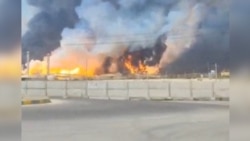
Iran launched attacks on Kuwait and Israel, where officials said at least six people were injured in Tel Aviv on March 24 by falling debris after incoming Iranian missiles and drones were shot down.
Kuwait said its air-defense systems responded to "missile and drone attacks" and that reported sounds of explosions were caused by the interception of these weapons in the skies.
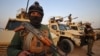
Also on March 24, Iraq's military blamed the US and Israel for air strikes that hit a regional headquarters of the Popular Mobilization Forces (PMF), Iraq's umbrella group for Iran-backed Shi'ite militias, as well as a home used by its leader, killing at least 15 fighters.
Diplomatic Progress Unclear
Meanwhile, the Financial Times reported that Iran has told International Maritime Organization member states that "non-hostile vessels" may transit the Strait of Hormuz if they coordinate with Iranian authorities.
The Financial Times cited what it said was a letter from Iran's Foreign Ministry that was circulated among IMO members and stated that vessels linked to the US, Israel, and "other participants in the aggression...do not qualify for innocent or non-hostile passage."
The letter said Tehran had “taken necessary and proportionate measures to prevent the aggressors and their supporters from exploiting the Strait of Hormuz to advance hostile operations against Iran,” according to the Financial Times.
Kenneth Pollack, a former White House and CIA analyst now at the Middle East Institute (MEI), said there is little evidence to support claims of imminent diplomatic progress despite the efforts of several countries to broker talks.
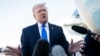
"My understanding is that the Iranians have responded with huge preconditions -- US paying reparations, removing all of our forces from the region -- which are nonstarters for Trump," Pollack told RFE/RL in Washington on March 23.
"Trump's remarks seem to be mostly about calming the markets rather than reflecting a true, imminent breakthrough," he emphasized.
The outbreak of the conflict has sent oil prices soaring, upended energy and stock markets, driven up fuel costs, fueled global inflation fears, and rocked the Middle East and the West, with concerns the fighting will spill over and engulf the region.
The threat of strikes on Gulf electricity grids raised fears of mass disruption to desalination for drinking water and further rattled oil markets.
Trump's initial comments on talks to end the war helped push the price of benchmark Brent crude oil down some 10 percent on March 23, though the strikes across the Middle East on March 24 pushed it back up around 3 percent to more than $102.84 per barrel.