

Iranians Around The World Protest Mass Killings In Iran
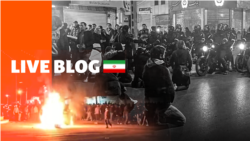
Protests have been held in the Georgian capital, Tbilisi, and in other cities around the world to denounce the mass killing of protesters in Iran. Exiled Iranians and supporters have demonstrated outside their country's' embassies following a brutal crackdown on anti-government rallies. (RFE/RL's Georgian Service, Tea Topuria, Will Tizard)

Beheadings And Industrial Drugs: The Bizarre Reasons Iranian Officials Are Giving For The Deaths Of Protesters
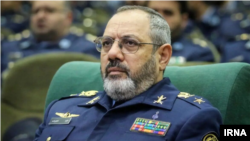
Iranian Defense Minister Aziz Nasirzadeh has claimed that the protesters were given "industrial drugs" and that some of those killed "had consumed so many drugs that they died without any complications."
Nasirzadeh also said that most of the victims "were killed by stabbing and strangulation" and that "nearly 60 percent of them were killed by blows close to the head."
The claims echo the statements -- many of them bizarre -- that other Iranian officials have given to explain how so many protesters died. For example, Iranian President Masud Pezeshkian and Foreign Minister Abbas Araqchi have claimed, without providing any evidence, that Islamic State methods such as "beheading" were being used during the protests -- although it is unclear by whom. Other officials attributed the violence and killings of protesters to "terrorists."
These claims contradict the abundance of footage that shows security officers shooting protesters, plus postmortem images showing gunshot wounds to victims' bodies.
In comments carried by state media, the defense minister also attributed the violence to US and Israeli agents, adding: "We are monitoring the enemy's supply lines for equipment and are ready to confront them. We will not allow this threat to reemerge in a new form."
They've 'Killed A Mountain Of People': Iranians Leaving Country Describe Scale Of Crackdown
Iranians leaving their country spoke to RFE/RL about the scale of the deadly crackdown on protests. The death toll is at more than 2,600 demonstrators, according to the US-based human rights monitor HRANA. But many groups fear the number is far higher. The interviewees, who remain anonymous for safety reasons, have recently traveled outside Iran, where a digital blackout continues to block access to the Internet. (RFE/RL's Radio Farda, RFE/RL's Armenian Service, RFE/RL's Tajik Service)
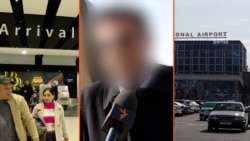
It's now been a week since the Internet blackout began in Iran, according to the NetBlocks digital rights monitor.
US Sanctions Iranian Officials Over Brutal Crackdown
On January 15, US Treasury Secretary Scott Bessent said the United States had imposed sanctions on Iranian officials and banking networks, accusing them of violently cracking down on protests and laundering oil revenues.
"At the direction of President Trump, the Treasury Department is sanctioning key Iranian leaders involved in the brutal crackdown against the Iranian people," Bessent said in a statement.
"Treasury will use every tool to target those behind the regime's tyrannical oppression of human rights."
Iranian authorities have waged one of the most brutal crackdowns ever after people across the country took to the streets in anti-government protests seen as one of the biggest challenges to clerical rule since the 1979 Islamic Revolution.
Read more here.
Canada's foreign minister has announced the death of one of the country's citizens in the Iran protests.
Mourners Chant 'Death To Khamenei' At Funeral Of 16-Year-Old Protester
Video footage from the funeral of Alireza Seydi, a 16-year-old boy who was killed in the nationwide protests, shows a large crowd chanting slogans against Iran's Supreme Leader Ayatollah Ali Khamenei.
According to reports, Seydi, who is from Abdanan, a city in southwestern Iran, was shot dead on January 9 during protests in Tehran.
At Seydi's funeral, which was reportedly held on January 11, mourners are heard on the video chanting "Death to Khamenei."
RFE/RL has verified that the footage was captured in Abdanan at the Martyrs of Abdanan cemetery. However, the exact date on which the footage was recorded could not be independently confirmed.
Due to the internet and telecommunications blackouts, as well as the government's refusal to provide statistics, the exact number of deaths is still unknown. As of January 14, the Oslo-based Iran Human Rights organization had confirmed 3,428 deaths, while the US-based HRANA rights group verified 2,435 so far.
UN Security Council To Hold Emergency Meeting On Iran
At the request of the United States, the United Nations Security Council will hold an emergency meeting on January 15 to "provide clarification on the situation in Iran."
Amnesty International has also called for an urgent meeting of the Security Council in order to prevent "further killings in Iran" and saying that global diplomatic action is necessary.
In a report on the current situation in Iran, Amnesty said that verified videos and credible witness accounts from Iran indicate widespread extrajudicial killings on an unprecedented scale.
Due to the internet shutdown and information blackout, the exact number of people killed in the protests is still unknown. On January 14, the Norway-based Iran Human Rights organization said that at least 3,428 protesters have been killed and thousands injured since the start of the protests. Other human rights organizations have warned that the number of victims could be in the thousands.
US State Department Responds To Iran Deploying Drones To Monitor Protesters
The US State Department’s Persian account on the X network has responded to the Iranian government's use of military drones to monitor protesters.
A post on the account on January 15 said: "During these protests, the Iranian regime has used military drone technology against peaceful protesters. These drones are being used to identify, track, and pursue individuals so that security forces can arrest them."
The US State Department added: "The regime of the Islamic republic of Iran views Iranian citizens as enemy combatants and is waging war against them. The world is watching what this regime is doing, and it will not be forgotten."
Despite the Internet shutdown, a number of eyewitnesses had previously made similar statements.
International Lawyers Ask UN To Intervene In Killing Of Protesters
Following the violent and widespread crackdown on protesters in recent protests in Iran, lawyer Marzieh Mohebi announced that she had sent a letter signed by 60 lawyers to the UN secretary-general asking for immediate intervention.
The Iranian lawyer, who lives abroad, published a photo of the letter on X.
The 60 lawyers hail from the bar associations in Iran, France, the United States, Germany, Turkey, and Ukraine.
They have made this request to the UN secretary-general based on the legal principle of the "Responsibility to Protect," also known as R2P in international law.
According to the R2P, "The international community, through the United Nations, also has the responsibility to use appropriate diplomatic, humanitarian and other peaceful means, in accordance with Chapters VI and VIII of the Charter, to help to protect populations from genocide, war crimes, ethnic cleansing and crimes against humanity."
The call comes after reports of a rising death toll from recent protests in Iran, which rights groups say could be in the thousands.
As of January 14, the Oslo-based organization Iran Human Rights (IHRNGO) had confirmed 3,428 deaths, while the US-based HRANA rights group verified 2,435 so far. Many warn, however, that the actual number is likely much higher due to the lack of telecommunications and Internet blackout.
Separately, the 1Kalemah lawyers network -- a group of Iranian-born lawyers around the world working to challenge the country's judiciary -- issued a statement on January 14 calling the killing of protesters a "crime against humanity."
"The right of the Iranian people to legitimately defend their lives and property against an illegitimate government that violates fundamental rights and engages in massacres is protected, and they can use any means and means against officials and agents to bypass the Islamic Republic system," the statement said.
The lawyers added: "The Iranian people have the right to choose their own path of struggle against this religious tyranny, and to welcome any humanitarian support from free countries... States committed to human rights standards, based on the principle of universal jurisdiction and according to the circumstances, are obliged to prosecute, try and punish the perpetrators of these crimes."