



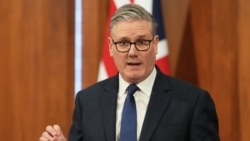
US-Iran Talks Begin In Pakistan
Talks between US and Iranian negotiators have begun in Islamabad, according to media reports.
It's not immediately clear if the talks are face-to-face or if the US and Iranian teams are in separate rooms, with Pakistani mediators relaying messages between them.
Either way, these are the highest-level negotiations between the two countries since the Islamic Revolution in 1979.
The US delegation is led by Vice President JD Vance, accompanied by President Donald Trump's special envoy Steve Witkoff and son-in-law Jared Kushner. The Iranian team is led by parliamentary Speaker Mohammad Baqer Qalibaf and Foreign Minister Abbas Araqchi.
The talks are aimed at securing peace following the announcement of a two-week cease-fire by Trump on April 8.
There are many sticking points. Tehran says Israel's ongoing strikes in Lebanon against its proxy force, Hezbollah, is a cease-fire violation. Washington says the same about Iran's near-total blockade of the Strait of Hormuz.
Hormuz Statements Highlight A Stumbling Block In Talks
As negotiations continue in Islamabad, a social media post by US President Donald Trump and reports by Iranian state media have have underscored the fraught nature of the talks.
Writing on his Truth Social platform, Trump said "We're now clearing out the Strait of Hormuz."
He did not add any details, although the post came after an Axios report that US naval vessels had passed through the crucial waterway for the first time since US and Israeli air strikes began the war with Iran on February 28.
The Wall Street Journal also reported that two US warships had transited the strait.
Iranian state media have denied the US naval presence. Instead, they said, a single US vessel turned back after being warned it would soon be attacked if it did not change course.
The details of what is actually happing in the strait are not immediately clear.
But the competing statements highlight one of the key stumbling blocks in the talks: Washington is demanding Iran reopen the Strait, while Iran sees its chokehold on the waterway as its most significant piece of leverage.
Islamabad Talks Are 'Face-To-Face,' White House Official Says
WASHINGTON -- A White House official has said the talks in Islamabad are direct, "face-to-face" talks with US, Iranian, and Pakistani officials in the same room.
This is significant. Many previous rounds of talks have been indirect, with negotiating teams in separate rooms while intermediaries relay messages between them. It was not clear earlier what format today's talks were taking place in.
As we noted earlier, these are the highest-level negotiations between the two countries since the Islamic Revolution in 1979.
They come after more than a month of conflict starting with US and Israeli air strikes on Iran on February 28. In response, Iran has fired ballistic missiles at numerous neutral countries in the Persian Gulf as well as Israel and effectively closed the Strait of Hormuz, one of the most important international shipping lanes.
Lebanese Prime Minister Cancels US Trip Amid Hezbollah Pressure
Lebanese Prime Minister Nawaf Salam has canceled a trip to the United States next week amid pressure from Iran-backed Hezbollah.
It's not clear whether or how this will affect talks with Israel, which were scheduled to take place under US mediation next week.
The Lebanese government is desperate for Israel to stop strikes on Hezbollah, an Iran-backed proxy force based in Lebanon that is considered a terrorist organization by Israel and the United States.
Hezbollah attacked Israel in early March, following the US and Israeli air strikes on Iran on February 28. Israel says its strikes on Hezbollah amount to self-defense and are not covered by the current US-Iran truce.
Announcing his decision to cancel his visit in a social media post, Salam said it was "in order to follow up on the government's work from Beirut."
Earlier, a senior Hezbollah lawmaker in Lebanon said the planned talks with Israel broke Lebanese law. The group also organized a protest in Beirut denouncing Salam.
US Central Command Says Clearing Mines In Strait Of Hormuz
Following earlier reports of US naval vessels in the Strait of Hormuz, the US Central Command (CENTCOM) has now named two ships that it says are clearing mines in the crucial waterway.
Two guided-missile destroyers, the USS Frank E. Peterson and the USS Michael Murphy, "transited the Strait," CENTCOM said in a statement posted on social media.
"Today, we began the process of establishing a new passage and we will share this safe pathway with the maritime industry soon to encourage the free flow of commerce," CENTCOM commander Brad Cooper said according to the statement.
Earlier, US President Donald Trump had said that the United States were "clearing out the Strait of Hormuz."
Iranian state media had reported that a single US vessel approached the area but pulled back after being warned by Iranian armed forces.
Iran mined the strait following the US and Israeli air strikes on February 28, effectively closing it to international shipping that previously transported some 20 percent of global oil supplies as well as gas and other vital commodities.
The US has demanded reopening the strait, which is an international waterway, as part of peace negotiations ongoing in Islamabad today. Iran, however, is demanding recognition that it controls the strait and has the right to charge a toll for using it.
UPDATE: Iran's Islamic Revolutionary Guards Corps (IRGC) threatened to deal "severely" with any military vessels crossing through the Strait of Hormuz, state TV reported on April 12 following US remarks that two of its naval ships had cleared mines in the waterway.
US-Iran Talks Ongoing, White House Official Says
WASHINGTON -- A senior White House official told RFE/RL that trilateral talks in Islamabad were "ongoing," several hours after they began.
The official did not add any details on the talks, that the White House said earlier were taking place "face-to-face" and involved "a suite of experts" as well as US Vice President JD Vance, President Donald Trump's special envoy Steve Witkoff, and his son-in-law Jared Kushner.
Iranian state media have reported that talks will continue into the night or tomorrow. They have also said that negotiators had "serious disagreement" over the Strait of Hormuz (see our previous post for more details on that issue). The Financial Times reported this was causing a "stalemate."
The US-Iran talks are being mediated by Pakistan, the host nation for the meeting.
White House Says 'In-Person' Iran Talks Ongoing In Early Morning Hours Of April 12
WASHINGTON -- A senior White House official said that "in-person" trilateral talks involving US, Iranian, and Pakistani officials were ongoing in the early morning hours of April 12 as negotiators looked to battle through several contentious issues in hopes of reaching a peace deal.
World of the apparent face-to-face talks came at 2 a.m. Pakistan time. Local officials said talks had stretched for about eight hours over three sessions.
It was not immediately clear how long the talks would last or if further sessions would be held later on April 12.
Meanwhile, US President Donald Trump said he was not concerned about whether a deal would be struck in Islamabad.
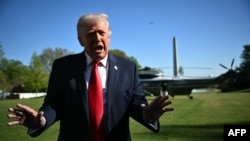
"Whether we make a deal or not makes no difference to me. The reason is because we've won," Trump told reporters in Washington.
"We're in very deep negotiations with Iran. We win regardless. We've defeated them militarily," Trump said.
"We defeated their navy, we defeated their air force, we defeated their antiaircraft, we defeated their radar. We defeated their leaders. Their leaders are all dead...we'll open up the Strait, even though we don't use it, because we have a lot of other countries in the world that do use it, that are either afraid or weak..."
"Regardless what happens, we win. We totally defeated that country. And so let's see what happens. Maybe they make a deal, maybe they don't. From the standpoint of America, we win," he said.
Earlier, the White House said that talks were "face-to-face" and involved "a suite of experts" as well as US Vice President JD Vance, Trump's special envoy Steve Witkoff, and his son-in-law Jared Kushner.
Iranian state media reported that negotiators had "serious disagreement" over the Strait of Hormuz (see our previous post for more details on that issue). The Financial Times reported this was causing a "stalemate."
Iranian media also reported that the current talks with US officials may be the "last opportunity" to settle a "framework" for a deal with Washington.
The US-Iran talks are being mediated by Pakistan, the host nation for the meeting.
With reporting by RFE/RL's Alex Raufoglu
Iran Says Talks Pause After 15 Hours, To Resume Despite 'Differences,' While US Tight-Lipped
WASHINGTON -- Iran’s government said the third session of talks between the US and Iran ended in the early hours of April 12 in Islamabad and will continue later in the day despite "differences" between the two sides.
A senior White House official did not confirm to RFE/RL that the talks had ended for the first day, saying only, "15 hours and counting." Sources told RFE/RL that the US delegation was still at the Serena Hotel negotiation site in Islamabad around 4 a.m., about an hour after Iranian sources said talks had been paused.
Some observers said it was possible the sides were still exchanging notes but that active face-to-face negotiations had ended shortly after 3 a.m.
The Iranian government, in a post on X, did not specify a time when the talks would resume in the Pakistani capital.

“With Pakistan's proposal and the acceptance of the negotiating delegations of Iran and America, the continuation of negotiations with Pakistan's mediation will proceed for one more round and after a pause on Sunday [April 12],” Iran’s government said in the post.
The Pakistani-hosted trilateral "in-person" negotiations played out in three sessions over about 15 hours, with occasional breaks taken by the delegations as negotiators looked to battle through several contentious issues in hopes of reaching a peace deal.
The specific points of contention were not immediately disclosed, but US President Donald Trump’s demands have focused on Iran allowing the free flow of vessels through the Strait of Hormuz and that it give up its supplies of enriched uranium that could be used to build a nuclear weapon.
Tehran has insisted it would have control of shipping traffic through the strait, that it retain its supplies of enriched uranium, and that it receive reparations for damages from the US-Israeli air strikes that began on February 28.
In addition, Tehran has said Israel must end its attacks on Iran-allied Hezbollah militants in Lebanon.
The apparent face-to-face sessions mark the most significant contact by Washington and Tehran since the 1979 Islamic Revolution. The US formally broke relations with Iran in April 1980 and the two countries typically hold talks through intermediaries.
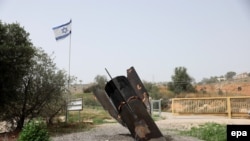
In Photos: Week Six Of The Iran War
Meanwhile, Trump on April 12 said he was not concerned about whether a deal would be struck in Islamabad.
"Whether we make a deal or not makes no difference to me. The reason is because we've won," Trump told reporters in Washington.
"We're in very deep negotiations with Iran. We win regardless. We've defeated them militarily," Trump said.
"We defeated their navy, we defeated their air force, we defeated their antiaircraft, we defeated their radar. We defeated their leaders. Their leaders are all dead...we'll open up the Strait, even though we don't use it, because we have a lot of other countries in the world that do use it, that are either afraid or weak..."
"Regardless what happens, we win. We totally defeated that country. And so let's see what happens. Maybe they make a deal, maybe they don't. From the standpoint of America, we win," he said.
Earlier, the White House said that talks were "face-to-face" and involved "a suite of experts" as well as US Vice President JD Vance, Trump's special envoy Steve Witkoff, and his son-in-law Jared Kushner.
With reporting by RFE/RL's Alex Raufoglu
JD Vance Set To Meet Reporters Following Marathon Negotiation Session
US Vice President JD Vance early on April 12 is scheduled to meet with reporters following a marathon negotiation session with Iranian officials, his office said.
It was not immediately clear if Vance would take questions or solely deliver a statement. It was due to begin shortly after 6 a.m. in Islamabad.
Vance held "in-person" trilateral talks with Iranian officials and Pakistani mediators in Islamabad. The talks lasted more than 15 hours, with occasional breaks, and concluded early in the morning.
JD Vance: 'We Have Not Reached Agreement' As Talks Break Off After 21 Hours
US Vice President JD Vance early on April 12 said that “we have not reached an agreement” and that Iran has "chosen not to accept our terms” after negotiations broke off following 21 hours of talks.
Vance did not go into details, but said the US needed an "affirmative commitment" that Iran would not seek a nuclear weapon and would not seek the tools that would enable them to quickly achieve a nuclear weapon.
"We just could not get to a situation where the Iranians were willing to accept our terms," Vance told reporters at around 6:30 a.m. before heading back to the US after a marathon negotiation session.
"We were quite flexible, quite accommodating," he said.
Vance did not specify the next steps. There was no immediate comment on whether Tehran's refusal to accept US terms would lead to the resumption of US and Israeli air strikes against Iran and, in turn, Iranian retaliatory missile and drone launches against Israel and Gulf states.
Vance was in Islamabad to conduct "in-person" trilateral discussions with Iranian officials and Pakistani mediators. He said other issues, along with the nuclear situation, were also discussed.
"We leave here with a very simple proposal, a method of understanding that is our final and best offer. We'll see if the Iranians accept it,” he said.